
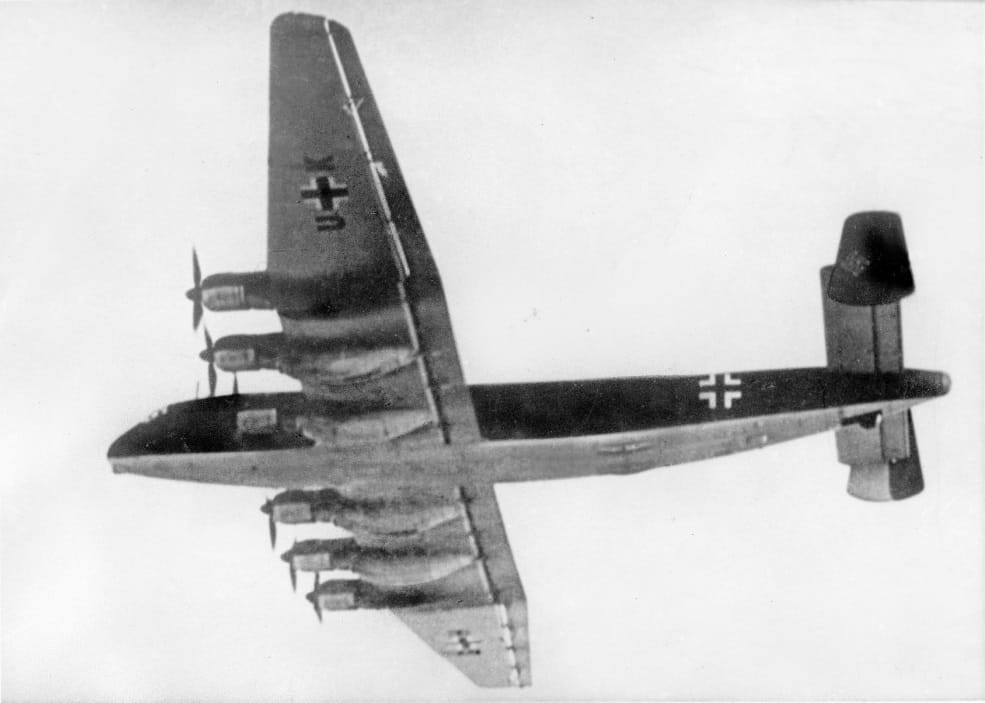
It is one of the Second World War's most durable legends: that in January 1944 a giant six-engined German bomber took off from occupied France, crossed the Atlantic, flew to within sight of Manhattan, photographed the skyline, and slipped home again undetected — a 32-hour round trip to the doorstep of New York. It is a wonderful story. It is also, almost certainly, not true.
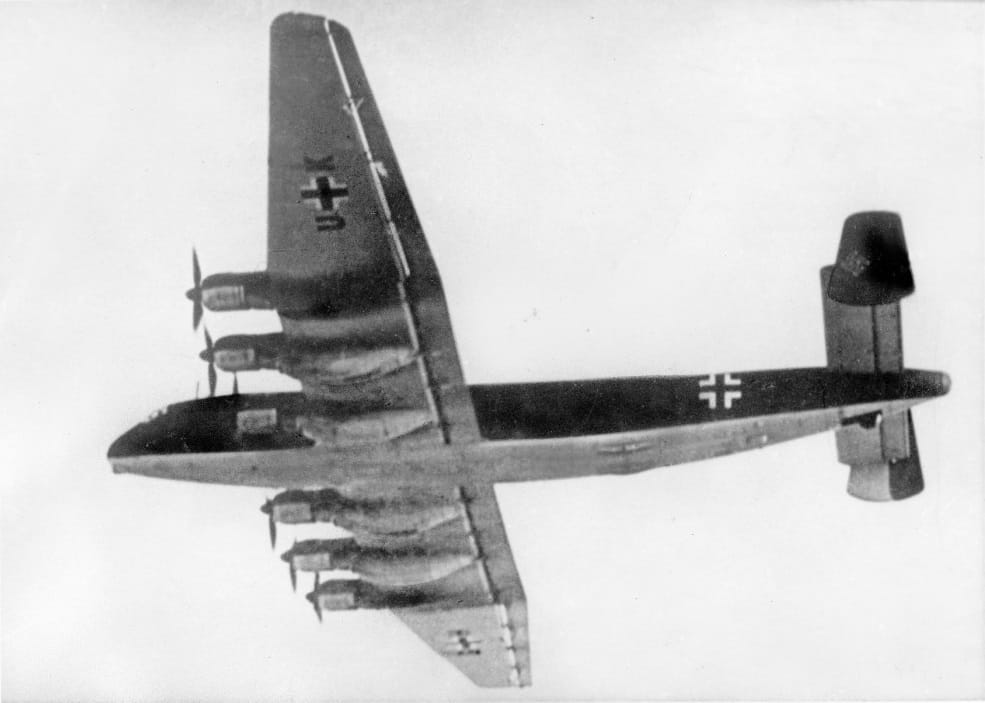
The aircraft at the centre of it was real enough: the Junkers Ju 390, a genuine long-range heavy aircraft and one of the contenders for the Luftwaffe's fabled "Amerika Bomber." The flight to New York, however, appears to be a myth — and the evidence against it is unusually solid.
Informazioni rapide
| Aeromobili | Junkers Ju 390 |
| Motori | Six BMW 801 radials |
| Lignaggio | Developed from the Junkers Ju 290 / Ju 90 family |
| Prototypes built | Two (V1 and V2) |
| Programma | Contender for the "Amerika Bomber" |
| Contrarre | 26 aircraft ordered, cancelled 20 June 1944 |
| The legend | A January 1944 flight to within ~20 km of New York |
| Verdict | Debunked by historians; no supporting evidence |
The Amerika Bomber dream
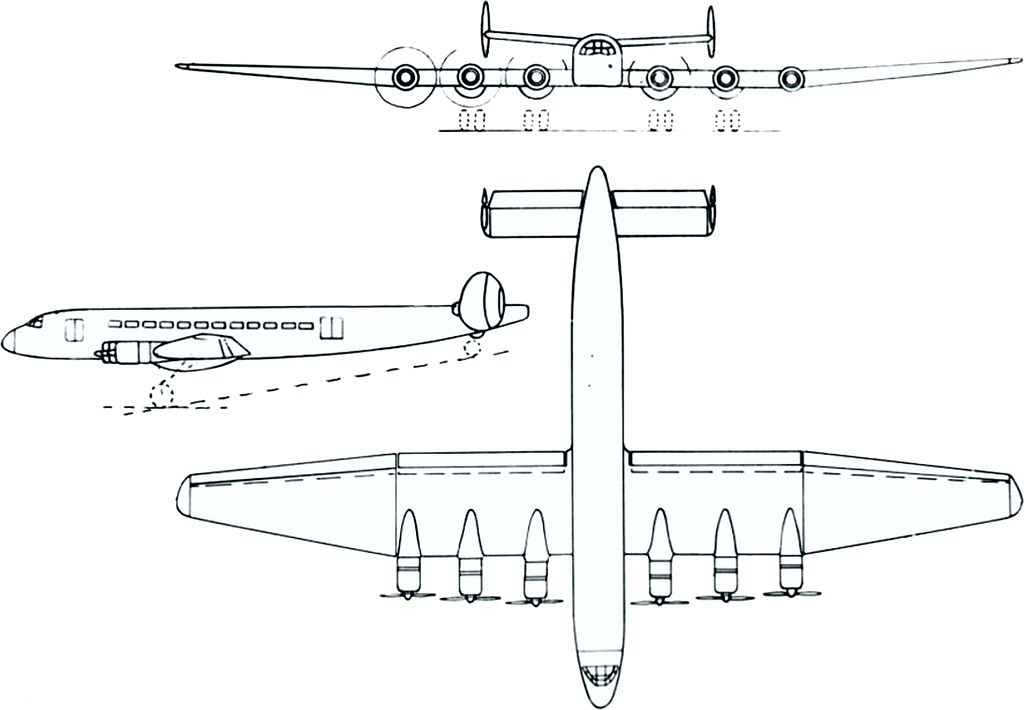
Nazi Germany genuinely wanted the ability to strike the American mainland, and the "Amerika Bomber" requirement spawned a string of exotic proposals. The Ju 390 was among the more realistic: a stretched, six-engined development of the Ju 290 maritime patrol aircraft, with enormous range. Only two prototypes were ever built, and an order for 26 was cancelled in June 1944 as Germany's priorities collapsed inward toward defending the Reich.
The legend
The New York story entered the literature through a well-known reference work, and it has been repeated ever since. In its usual form, a Ju 390 prototype flew from Mont-de-Marsan in south-west France, reached the American coast near New York, and returned safely — proof, supposedly, that Germany could have bombed Manhattan.
Why it almost certainly never happened
The problem is that the aircraft has an alibi. Historians Karl Kössler and Günter Ott traced the movements of both prototypes in detail. According to the logbook of test pilot Hans Pancherz, the Ju 390 V1 was flown to Prague on 26 November 1943 and continued test flying there until late March 1944 — nowhere near France when the New York flight was supposed to have taken place. The second prototype, the V2, was not even completed until June 1944, with flight testing beginning that September. Neither aircraft could have been over Long Island in January.
The trail of the story itself is just as telling. The aviation historian Dr. Kenneth P. Werrell found that it originated in two British intelligence reports from August 1944, based partly on the interrogation of prisoners. The photographs those reports claimed had been taken of the Long Island coast have never been found — and, in all likelihood, never existed.
Why the story survives
Myths endure because they capture a fear that felt real. In 1944, Americans genuinely worried about a Luftwaffe strike on the East Coast, and a six-engined giant with transatlantic range made that fear tangible. The Ju 390 was exactly the kind of aircraft that could have tried it — which is precisely why the legend attached itself to this machine and not another.
The truth is quieter but no less interesting: Germany built a capable, long-legged aircraft, flew it a handful of times, and cancelled it before it could matter. The Ju 390 never buzzed New York. It barely flew at all. And that gap — between what a weapon could do and what it actually did — is where most of aviation's best legends live.
Sources: Kössler & Ott; Kenneth P. Werrell; J.R. Smith & Tony Kay, German Aircraft of the Second World War; Wikipedia.

0 Commenti