
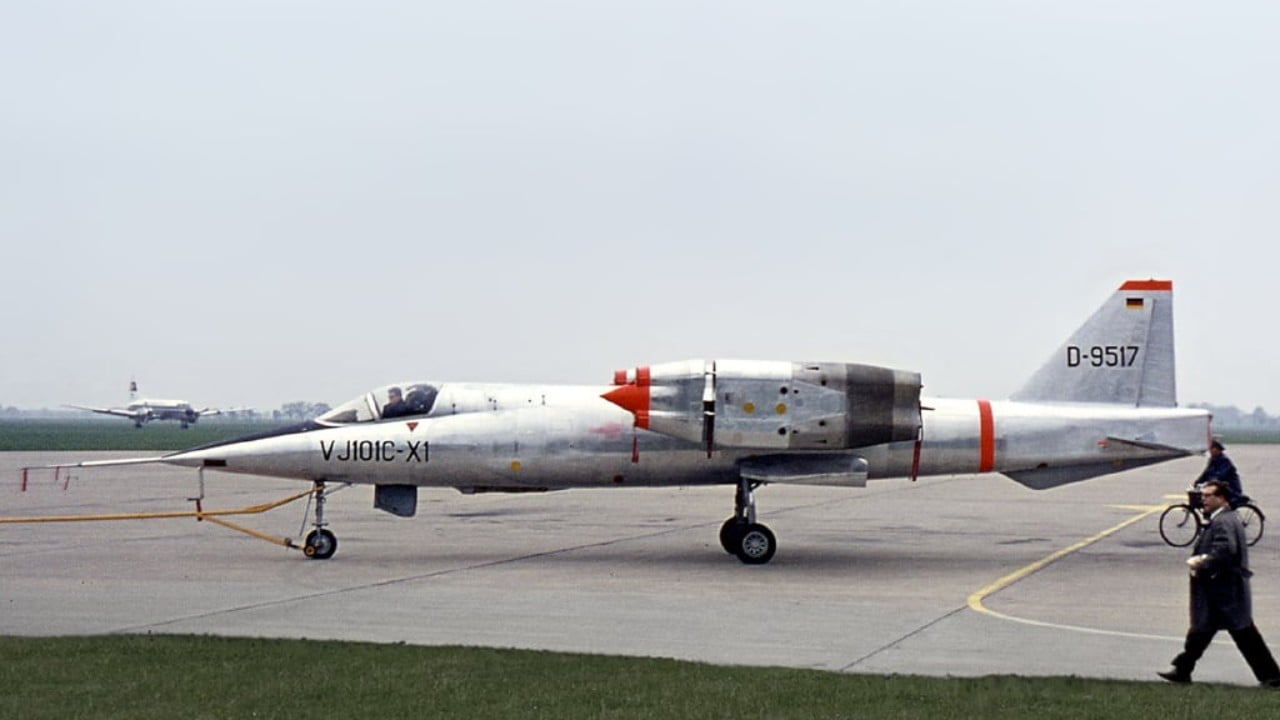
On 29 July 1964, a silver test aircraft from southern Germany went faster than sound. That alone was nothing new in 1964; the Bell X-1 had done it 17 years earlier. What made the EWR VJ 101 C special was that it could also take off straight up, hover, and land vertically like a helicopter. It was the first VTOL aircraft ever to fly supersonic.
Germany wanted it as a vertical-take-off Caccia stellare F-104 that would not need a runway. That runway was the first thing Soviet bombs would hit. Two prototypes were built, one crashed, and the programme was cancelled in 1968.
Informazioni rapide
- Tipo: Experimental supersonic VTOL fighter
- Costruttore: EWR, a joint venture of Bölkow, Heinkel and Messerschmitt
- Prototypes: Two: VJ 101 C X-1 (D-9517) and X-2 (D-9518)
- Motori: Six Rolls-Royce/MAN RB145 turbojets, 12.2 kN (2,750 lbf) each
- First hover: 10 April 1963 (X-1)
- First transition: 20 September 1963
- Supersonic: Mach 1.04 on 29 July 1964, the first VTOL aircraft past Mach 1
- Annullato: 1968
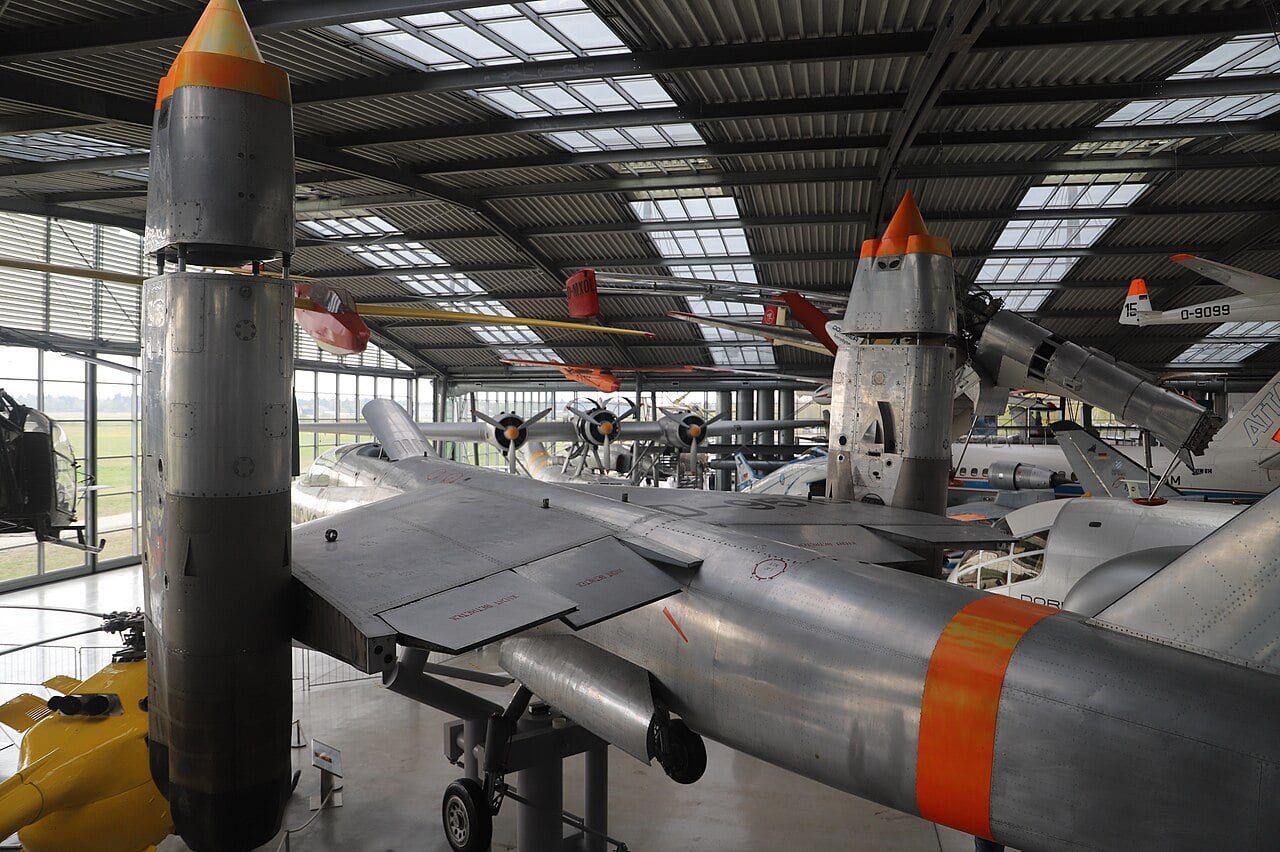
- Sopravvissuto: X-2, Deutsches Museum Flugwerft Schleissheim
A Fighter Without a Runway
The idea grew out of a hard Cold War calculation. Once West Germany was allowed to build combat aircraft again in the late 1950s, its planners worried that NATO's airfields would be destroyed in the opening hours of a war. In 1957 the government asked German companies to study vertical take-off fighters, and the target was demanding: interceptor performance on a par with the F-104G Starfighter the Luftwaffe was about to buy.
Bölkow, Heinkel and Messerschmitt were pushed into a joint venture, Entwicklungsring Süd, or EWR. The defence ministry held back a development contract until they cooperated. By late 1960 EWR had proposed a Mach 2 interceptor, the VJ 101 D, and Bonn ordered two experimental aircraft to prove the concept first. They became the VJ 101 C.
British Pathé newsreel from 1963 showing Germany's vertical take-off jet in hover tests.
Six Engines, Two Ways to Lift
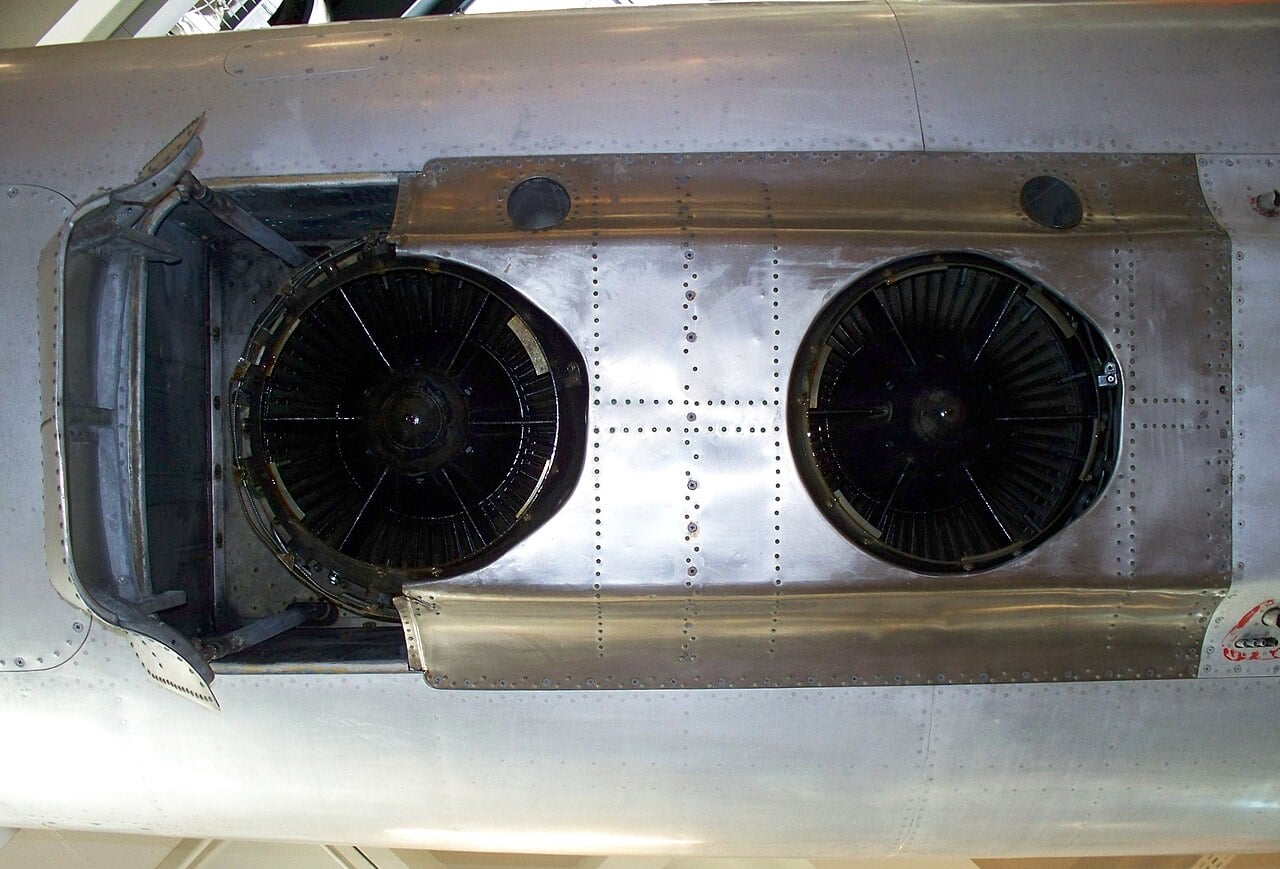
The VJ 101 C solved the lift problem in two ways at once. Two Rolls-Royce/MAN RB145 turbojets sat vertically in the fuselage behind the cockpit and blew straight down. Four more RB145s were mounted in pairs in nacelles on the wingtips, and the whole nacelles swivelled: pointing down for take-off and hover, rotating forward for normal flight. Each engine produced about 12.2 kN of thrust.
Before anything flew, EWR tested the controls on a "Wippe", a seesaw rig with a cockpit on a beam and a single lift engine in the middle. A skeletal hover rig with three RB108 engines followed, tethered from May 1961 and flying freely from March 1962. Balancing a jet on columns of thrust needed an autopilot that worked at every moment, and the VJ 101 relied on one completely.
Hover, Transition, Mach 1
The X-1 made its first hover on 10 April 1963 with EWR chief test pilot George Bright at the controls, according to German Wikipedia. On 20 September 1963 it made the hardest manoeuvre in VTOL flying, the transition from hover to wing-borne flight. Then, on 29 July 1964, it reached Mach 1.04. No vertical take-off aircraft had flown supersonic before.
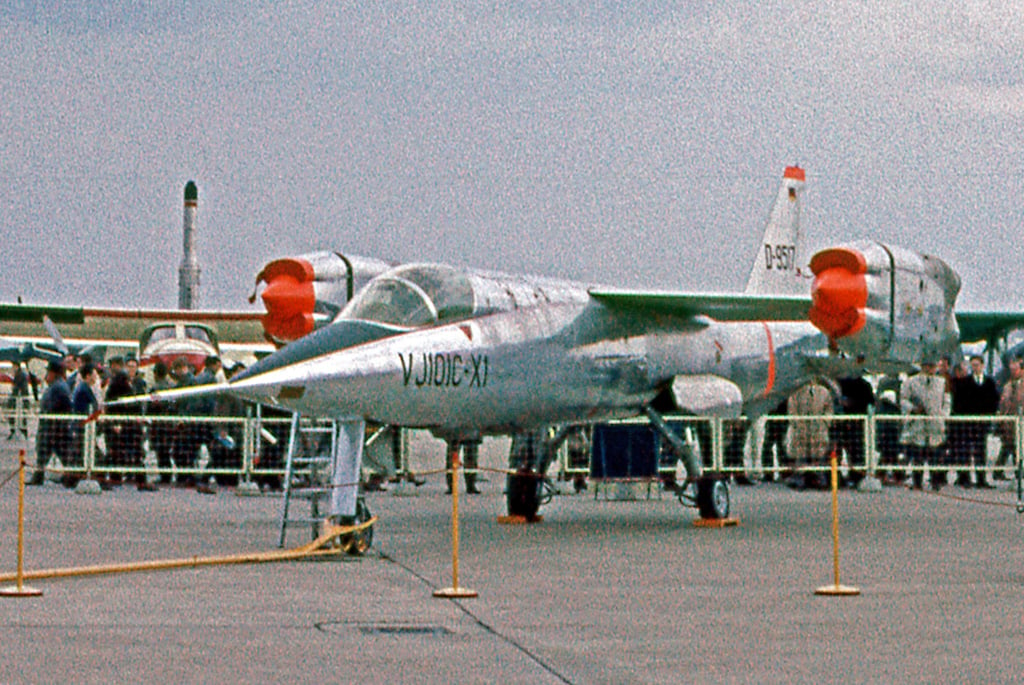
Seven weeks later it was gone. On 14 September 1964 a fault in the flight control system sent the X-1 out of control. Bright ejected and survived with injuries. The second aircraft, X-2, first flew on 12 June 1965 with afterburners added to its wingtip engines and a new autopilot, and made its first transition on 22 October 1965.
Retro Transport's short history of the EWR VJ 101, Germany's forgotten supersonic VTOL fighter.
Why It Was Cancelled
The VJ 101 did not fail technically. The requirement changed. The defence ministry turned the interceptor into a general-purpose fighter, which needed longer endurance at low level, and that broke the delicate weight balance of a jet lifted by its own engines. NATO's wider competition for a supersonic VTOL strike fighter collapsed in the mid-1960s too, and in 1968 the programme ended. The Mach 2 VJ 101 D was never built.
The X-2 survives at the Deutsches Museum's Flugwerft Schleissheim near Munich. It is a reminder that Germany came close to fielding a supersonic jump jet decades before the F-35B.
Period film of the VJ 101 hovering, transitioning and flying.
Sources: Wikipedia (English and German) on the EWR VJ 101; Deutsches Museum; British Pathé; Retro Transport


0 Comments