

Somewhere over the Sonoran Desert there is a yellow and blue two-seater turning in the evening light, and the person who owns it also built it. Not assembled it from a crate over a weekend. Built it, over several years, in a garage, with a rivet gun.
That aircraft is legal, insurable, and free to fly across the United States, because the Federal Aviation Administration will certify an aeroplane that a private individual made at home, provided the individual did enough of the work. Everybody in general aviation calls the dividing line the “51 percent rule”.
There is only one problem with that name. The regulation does not contain the number 51, or the word percent, anywhere at all.
Quick Facts: Experimental amateur-built certification in the United States
The regulation: 14 CFR 21.191(g), which issues an experimental certificate for “operating amateur-built aircraft”
The actual test: The “major portion” of the aircraft must have been fabricated and assembled by amateur builders
Where 51 percent comes from: FAA Advisory Circular 20-27G, which defines major portion as more than 50 percent of fabrication and assembly tasks
The builder’s purpose: The project must be undertaken “solely for their own education or recreation”
How it is measured: The Amateur-Built Aircraft Fabrication and Assembly Checklist, applied to kits by the National Kit Evaluation Team
The paperwork: A notarised FAA Form 8130-12 eligibility statement, plus builder’s logs and photographs
Operating rules: 14 CFR 91.319: day VFR unless otherwise authorised, no congested areas without approval, no carrying persons or property for hire
Who may inspect it afterwards: The primary builder, via a repairman certificate under 14 CFR 65.104, or an FAA-certificated mechanic
The regulation never says 51 percent
Here is the whole of the relevant paragraph. Section 21.191 lists the purposes for which the FAA issues experimental airworthiness certificates, and paragraph (g) covers amateur-built aircraft:
Two things are doing the work in that sentence, and neither is a percentage.
The first is major portion. The second, and the one people forget, is solely for their own education or recreation. That clause is why you cannot build an aeroplane this way in order to sell it, and why the category has never been a back door into cheap commercial manufacturing. The certificate is issued on the basis of why you built it as much as how much of it you built.
The famous number arrives one level down, in guidance rather than regulation. FAA Advisory Circular 20-27G, Certification and Operation of Amateur-Built Aircraft, puts it in a note:
So the rule of thumb is accurate, and it is also second-hand. That distinction matters more than it sounds, because the thing being counted is not weight, not cost, not hours and not parts. It is tasks.
What the FAA counts as fabrication
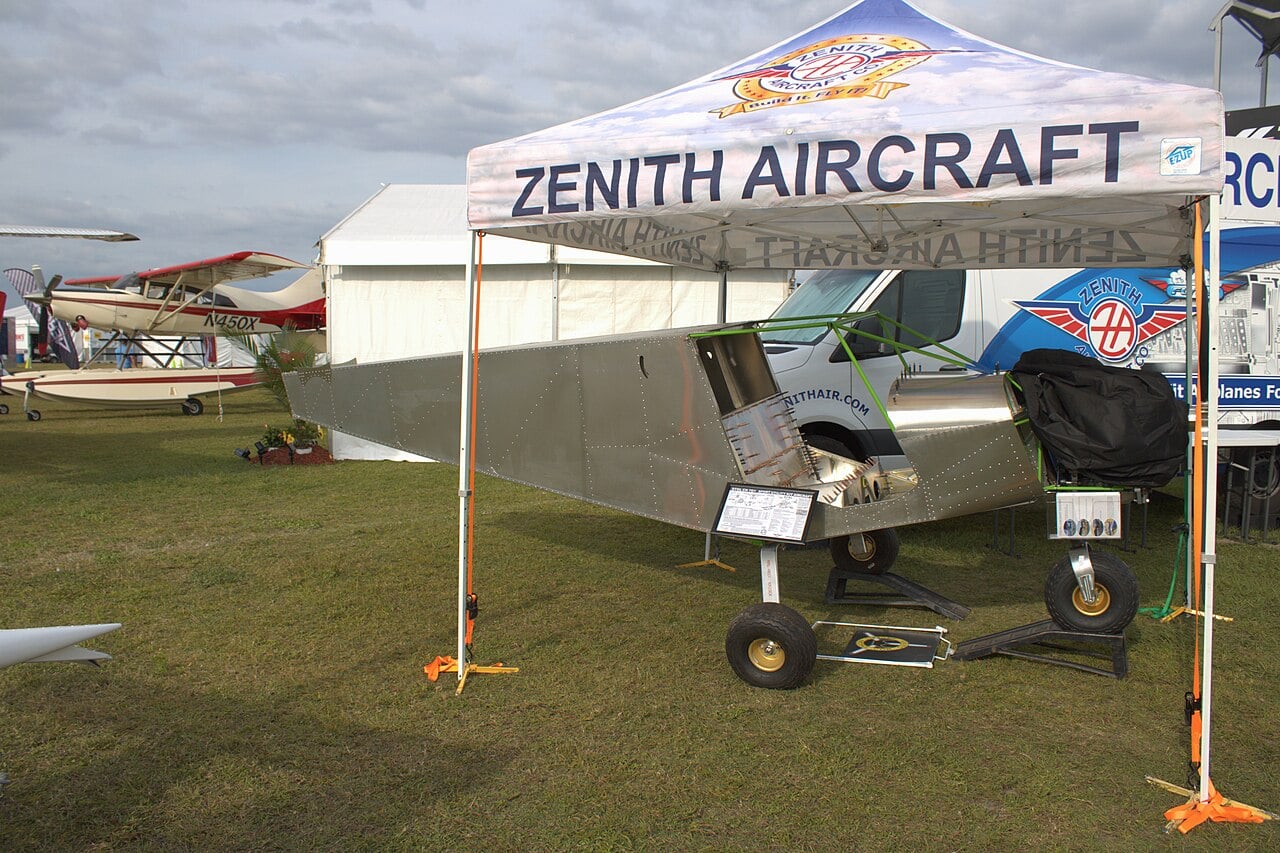
The counting is done with a document called the Amateur-Built Aircraft Fabrication and Assembly Checklist. A kit manufacturer submits a kit, and the FAA’s National Kit Evaluation Team works through the checklist deciding which tasks the kit has already done and which ones are left for the builder. Kits that pass go on the FAA List of Amateur-Built Aircraft Kits, and the published arithmetic is exactly what you would expect: a kit credited at 49 percent by the manufacturer leaves 51 percent for the amateur builder.
The advisory circular is unusually precise about what fabrication means, and the definition is worth reading if you have ever wondered why builders talk about their aircraft in verbs:
“The definition of fabrication is to perform work on any material, part, or component, such as layout, bending, countersinking, straightening, cutting, sewing, gluing/bonding, lay-up, forming, shaping, trimming, drilling, deburring, machining, applying protective coatings, surface preparation and priming, riveting, welding, or heat treating, and transforming the material, part, or component toward or into its finished state.”
Deburring is on that list. So is priming. The rule is not asking whether you built something impressive; it is asking whether you did the work.
There is a matching set of things you do not get credit for. Salvaged major assemblies taken off a type-certificated aeroplane earn nothing, and neither does the labour of restoring them. And converting a certificated aircraft into an amateur-built one is simply not permitted, a position the FAA traces back to 1952 and the Civil Aeronautical Manual, which warned even then that the provision was not meant to be used “to avoid obtaining approval of major alterations to aircraft previously certificated in another category”.
The FAA’s own short briefing on amateur-built certification, from the agency’s Aviation Maintenance Safety Minute series.
What you may buy, and who may help you
The most common misreading of the rule is that a builder must make everything. The advisory circular says the opposite in plain terms: the FAA does not expect you to fabricate every part of the aircraft. Engines, propellers, landing gear, wheels and brakes, instruments and standard aircraft hardware can all be bought on the open market, and none of it counts against you.
Beyond that there is a whole category of work the FAA calls non-checklist items, on which you may have unlimited commercial help. Painting is one. Interior upholstery is another. So is avionics installation, which is why a homebuilt aeroplane can have a professionally fitted glass panel without its certificate being in any danger.
Where the line bites is on the checklist tasks themselves. Commercial builder-assist centres are legal and widespread, but what they are allowed to sell is bounded, and the advisory circular draws the boundary with real force: commercial educational assistance “cannot exceed a demonstration on how to perform the task”, and the builder “must still perform the task to receive credit”. Somebody may show you how to set a rivet. They may not set it for you and have it count.
Any task genuinely contracted out, to a third party or to the kit manufacturer, cannot push the builder’s share below the major portion. At the end of it all the builder signs a notarised FAA Form 8130-12 certifying that the major portion was fabricated and assembled for their own education or recreation, and declaring how much commercial assistance was used and where it came from. The evidence behind that signature is the builder’s log: dated, sequential, photographed. The FAA may also turn up for a pre-cover inspection while the structure is still open, and it is explicit that it will never do any of the construction work itself.
One quirk is worth knowing, because it saves unfinished projects. If a half-built aeroplane is sold on, the first builder’s work counts toward the second builder’s major portion. The catch is evidential rather than legal: without the original builder’s documentation, the FAA may simply be unable to find that the rule was met.
What the airworthiness inspection itself looks like when a builder uses a Designated Airworthiness Representative, from a builder-focused channel.
What the certificate gives you, and what it costs you
An experimental amateur-built certificate buys remarkable freedom in the hangar and rather less in the air. The operating limitations come from 14 CFR 91.319, and they are real.
You may not fly for any purpose other than the one the certificate was issued for. You may not carry people or property for compensation or hire in the operations the rule lists. You may not operate over a densely populated area or in a congested airway unless the FAA has authorised it in your operating limitations. You must fly day VFR unless specifically authorised otherwise, you must tell air traffic control that the aircraft is experimental when you use their services, and you must tell every person you carry that they are getting into an experimental aeroplane.
In exchange, the builder gets something no certificated owner has. Under 14 CFR 65.104 the primary builder of the aircraft can hold a repairman certificate (experimental aircraft builder) and perform the annual condition inspection on the aeroplane they built. The privilege is deliberately narrow: that person, that aircraft.
The rule that keeps coming back
For something so settled, the 51 percent rule attracts an enormous amount of argument, and the most recent round is on the record.
When the FAA published its Modernization of Special Airworthiness Certification final rule in July 2025, the rulemaking that the general aviation world knows as MOSAIC, at least one commenter used the opportunity to go after the rule directly, asking the agency either to eliminate it or to modify it. The FAA’s answer was procedural rather than philosophical: it restated what 21.191(g) requires, noted that the proposal had not been part of the rulemaking, and declined.
“FAA disagrees with this recommendation as it is outside the scope of this rulemaking. Such a proposal would require appropriate notice to the public and opportunity for comment.”
Which is the regulatory way of saying: not today, and not without a proper argument in public. The rule survived.
MOSAIC did change something adjacent, though, and it matters to anyone who owns a homebuilt they did not build. Until that rule, the condition-inspection privilege under 65.104 was effectively limited to the person who built the major portion, because there was no other way to demonstrate the necessary knowledge. The FAA concluded that this is no longer true, and that light-sport repairman training covers the same ground. A light-sport repairman may now inspect aircraft in the relevant category and class, which gives second and third owners of amateur-built aeroplanes a route that did not previously exist. The builder’s own privilege stays exactly as narrow as it was.
It is worth being clear that MOSAIC is a light-sport rule that happened to touch this corner. It did not rewrite what amateur-built means. The major portion test, the education-or-recreation purpose, the checklist and the notarised form are all still there, and a kit that wants to be on the FAA’s list still has to leave the builder more than half the tasks.
Which is, in the end, the quiet achievement of the whole arrangement. A regulator agreed to certify aircraft built by people with no manufacturing approval of any kind, on the strength of a checklist, a logbook and a notarised signature. Thousands of them are flying. One of them was over the Sonoran Desert at sunset, and somebody in a garage put every rivet in it.
A full-length documentary following a Van’s RV-8 build from kit to first flight, which is the best available answer to the question of what “major portion” feels like in practice.
Sources: 14 CFR 21.191, 21.193, 91.319 and 65.104 (eCFR); FAA Advisory Circular 20-27G, Certification and Operation of Amateur-Built Aircraft; FAA final rule, Modernization of Special Airworthiness Certification, 90 FR, 24 July 2025 (document 2025-13972); FAA Form 8130-12.



0 Comments