
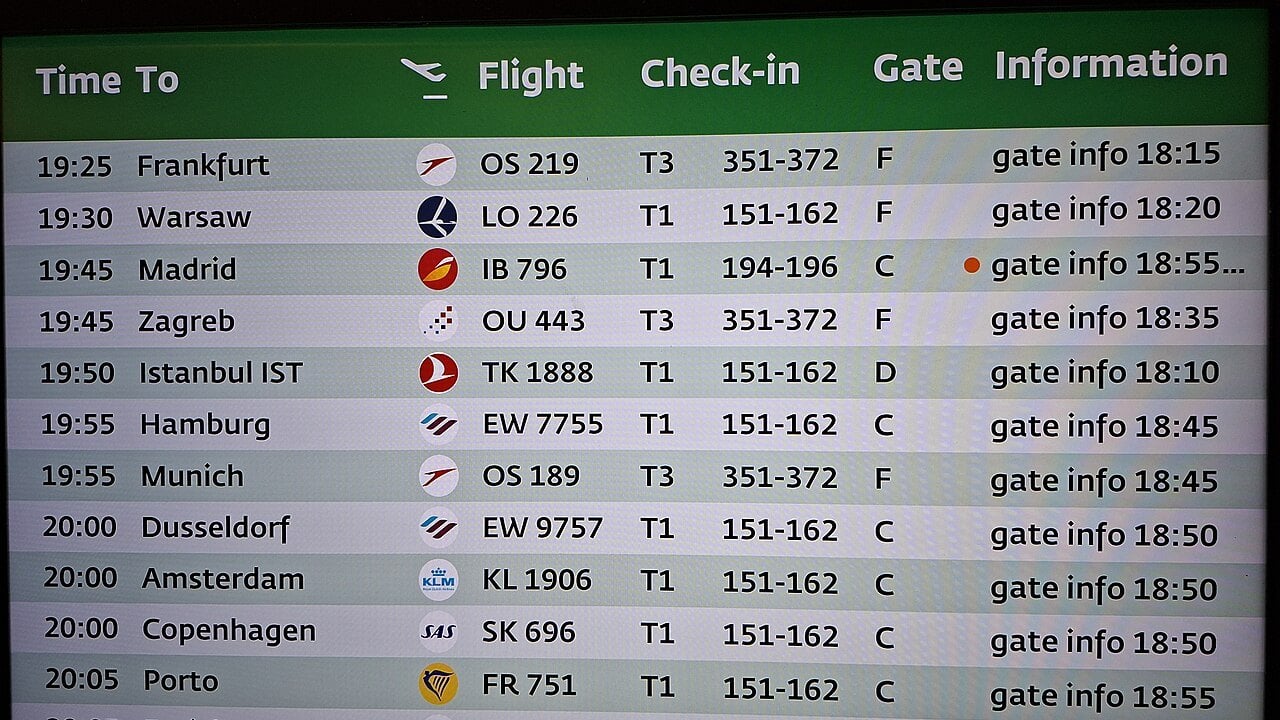
Look up at any departures board and you are reading a code. OS 219, LO 226, KL 1906, FR 751. To most passengers the letters and digits are just something to match against a boarding pass. To an airline’s network planners, every one of them was chosen, and some carry decades of history, superstition and, occasionally, grief.
There is no global rulebook that says what a flight number must mean. There are a handful of standards for the format, a lot of habits that airlines copy from one another, and one unwritten rule that almost every carrier follows: after a disaster, the number quietly disappears.
Informazioni rapide
- Format: Two-character IATA airline designator plus a number of up to four digits
- On the radio: ICAO call sign, e.g. “Speedbird” for British Airways; may differ from the ticketed number
- Low numbers: Usually flagship or long-haul routes, e.g. BA1, UA1, QF1
- Direction: Odd/even conventions vary by airline; Lufthansa even outbound, British Airways odd outbound
- Codeshares: One aircraft can carry several flight numbers from partner airlines
- Pensionamento: A custom, not a regulation; decided case by case
- Retired examples: AA11, AA77, UA93, UA175, MH370, MH371, AA5342
- Exception: American still flies a flight 800 after absorbing TWA, which had retired TWA 800
Two parts: who and which
A flight number has two halves. The first is the airline designator, a two-character code assigned by IATA, the airlines’ trade association: BA for British Airways, LH for Lufthansa, KL for KLM. IATA says carriers holding a designator use it for reservations, schedules, timetables, ticketing, cargo documents and other commercial purposes. The second half is the number itself, of up to four digits.
Air traffic control usually hears something slightly different. On the radio, a flight uses its call sign, built from the airline’s three-letter ICAO designator and its own telephony name, so BA 117 becomes “Speedbird 117”. And the call sign does not always match the ticket. To stop two similar-sounding flights sharing a frequency, airlines in busy airspace mix numeric and alphanumeric call signs, and a controller may temporarily change a call sign to avoid confusion.
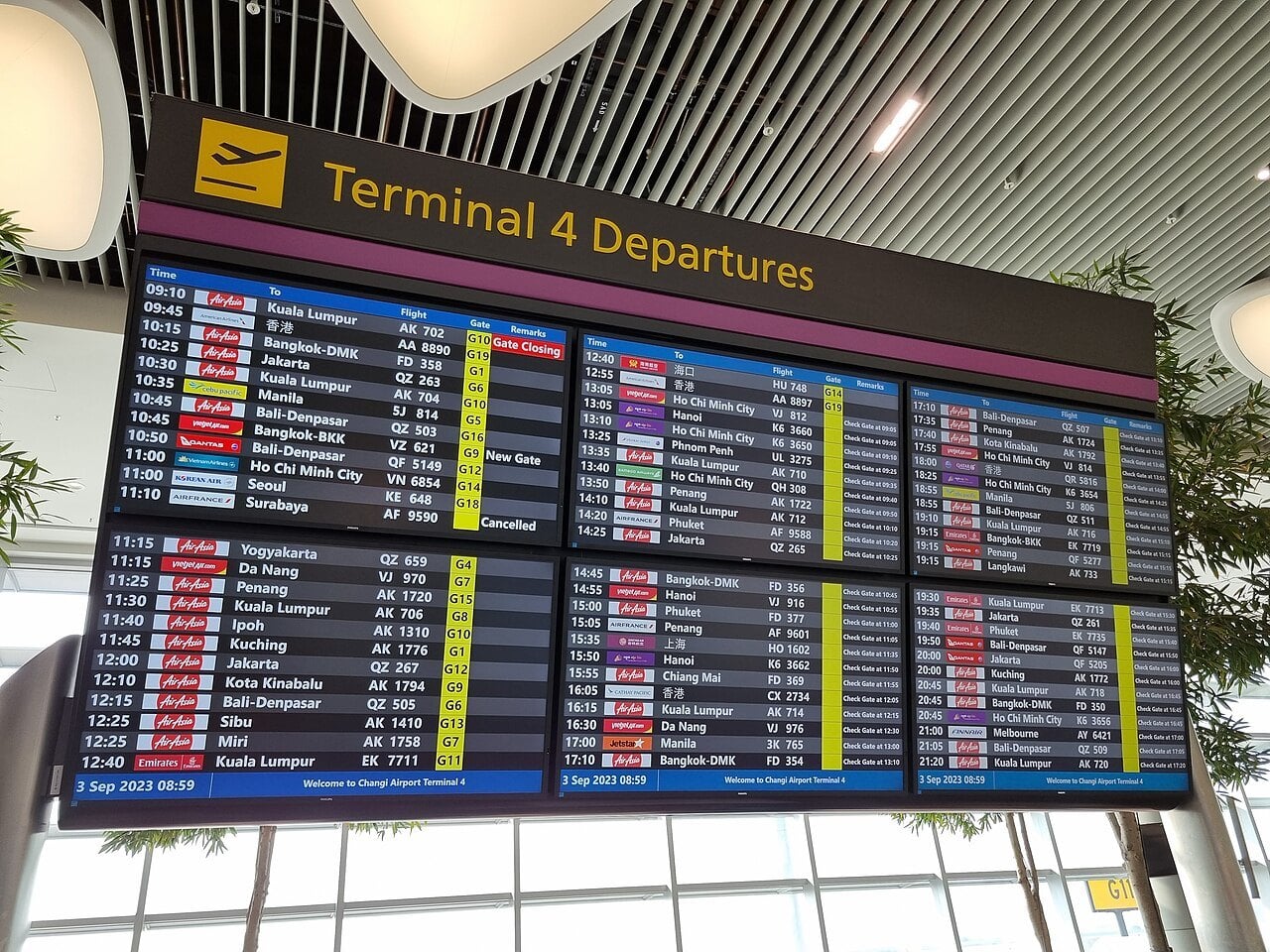
That is also why the same aircraft can wear several numbers at once. Under a codeshare, partner airlines sell seats on one physical flight under their own designators. One departure can appear on a board three or four times, but only the operating carrier’s number goes into the flight plan.
How codeshare agreements let several airlines sell seats on one flight under their own flight numbers.
Low numbers, flagship routes
Single and double-digit numbers carry prestige. In a 2019 survey of how US airlines choose their numbers, The Points Guy noted that flight 1 is often a flight of distinction: British Airways’ BA1 from London to New York, once a Concorde service, and United’s UA1 from San Francisco to Singapore. Qantas’s QF1 to London is so famous that the airline is moving the number to its planned non-stop Project Sunrise service.
Beyond that, the big carriers organise numbers in blocks. American told the publication that flights 1 to 2949 were assigned to its mainline fleet and 2950 to 6099 to regional partners. United kept flights 1 to 200 mostly for international routes inherited from Continental. Lufthansa divided the world by number: LH400 to LH499 for North America, the 500s for South America, the 600s for the Middle East and Central Asia, the 700s for Asia-Pacific.
Odd, even, east, west
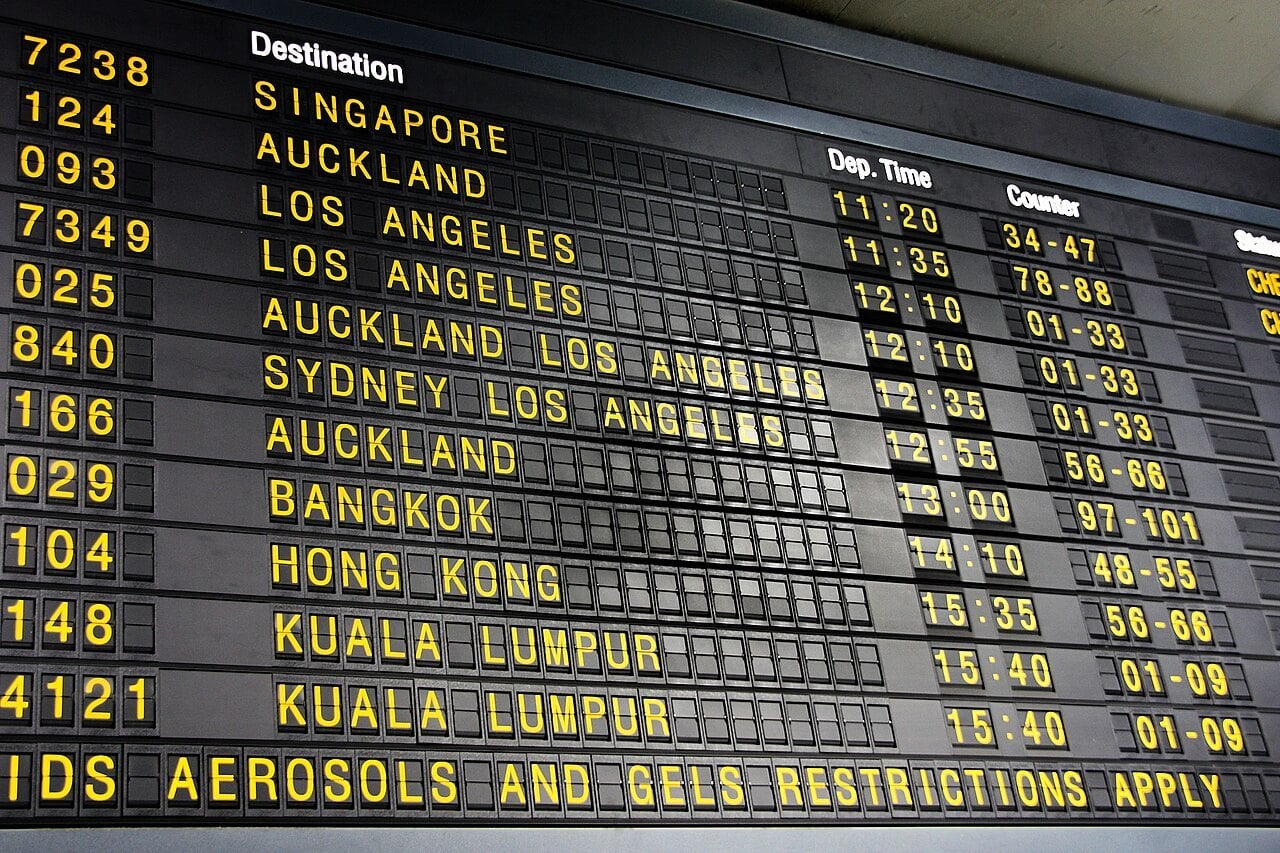
The most quoted rule is that a number’s direction is in its last digit. Where possible, airlines give a route and its return adjacent numbers, such as Delta’s DL6 from Tokyo Haneda to Los Angeles and DL7 back, as The Points Guy found in 2019. Many then use odd and even to show which way the flight is going.
But it is a habit, not a law, and airlines apply it in opposite ways. Lufthansa uses even numbers for flights leaving Germany and odd numbers for the way home. British Airways does the reverse, with odd numbers outbound, beginning with BA1. Mergers have scrambled many of the old patterns, especially on domestic networks where planners care less which number a route receives.
Culture plays a part too. Most airlines steer clear of 666, although Finnair once flew a flight 666 to Helsinki as a marketing stunt. United deliberately uses eights on its routes to China.
Today much of the work is automated. American uses a tool it calls the Flight Number Optimization Model to suggest numbers, while locking prestige international numbers so they can only be given to the routes they belong to. The aim is consistency: a number that stays on the same route for years is easier for passengers, crews and computers alike.
Simple Flying on how airlines order and organise their flight numbers.
Why some numbers are never used again
Then there is the part everyone wants to know. After a fatal accident, airlines almost always stop using the flight number involved. Malaysia Airlines retired MH370 and its return number MH371 in March 2014, renaming the Kuala Lumpur to Beijing service MH318, as a mark of respect for the passengers and crew. Delta no longer flies a Flight 191, nor does Korean Air a Flight 007.
The four numbers used in the 11 September 2001 attacks, American 11 and 77 and United 93 and 175, were retired permanently. In 2011, United’s computer accidentally put UA93 and UA175 back into its system for future sales, and the airline’s flight attendants’ union demanded they be removed. United apologised the same day.
Most recently, American confirmed in January 2025 that Flight 5342, the regional jet lost in the midair collision over Washington DC, would never be used again; the Wichita service took a new number, AA5677.
A custom, not a rule
Nothing in aviation regulation requires any of this. As Slate’s Brian Palmer found in 2013, no airline would explain its policy, and the decisions appear to be made case by case, guided partly by how well the public remembers the number. Fatalities are not even a requirement: US Airways dropped 1549 after the Hudson River ditching in which everyone survived.
And the custom has exceptions. Days after Asiana Flight 214 crashed at San Francisco in July 2013, Asiana was still using the number; it later renumbered the route to 212 and the return to 211. TWA retired Flight 800 after the 1996 explosion off New York, but American, which acquired TWA in 2001, was still using a flight 800 of its own in early 2025.
So a flight number is a small piece of airline identity: an address, a direction, sometimes a lucky charm, and now and then a memorial. The next time you board a flight with a low number or a curiously round one, the chances are somebody in network planning chose it on purpose.
Sources: IATA, SKYbrary, The Points Guy (2019), NPR (2011, 2014), Slate (2013, via Bangor Daily News), People (2025)
0 Comments