
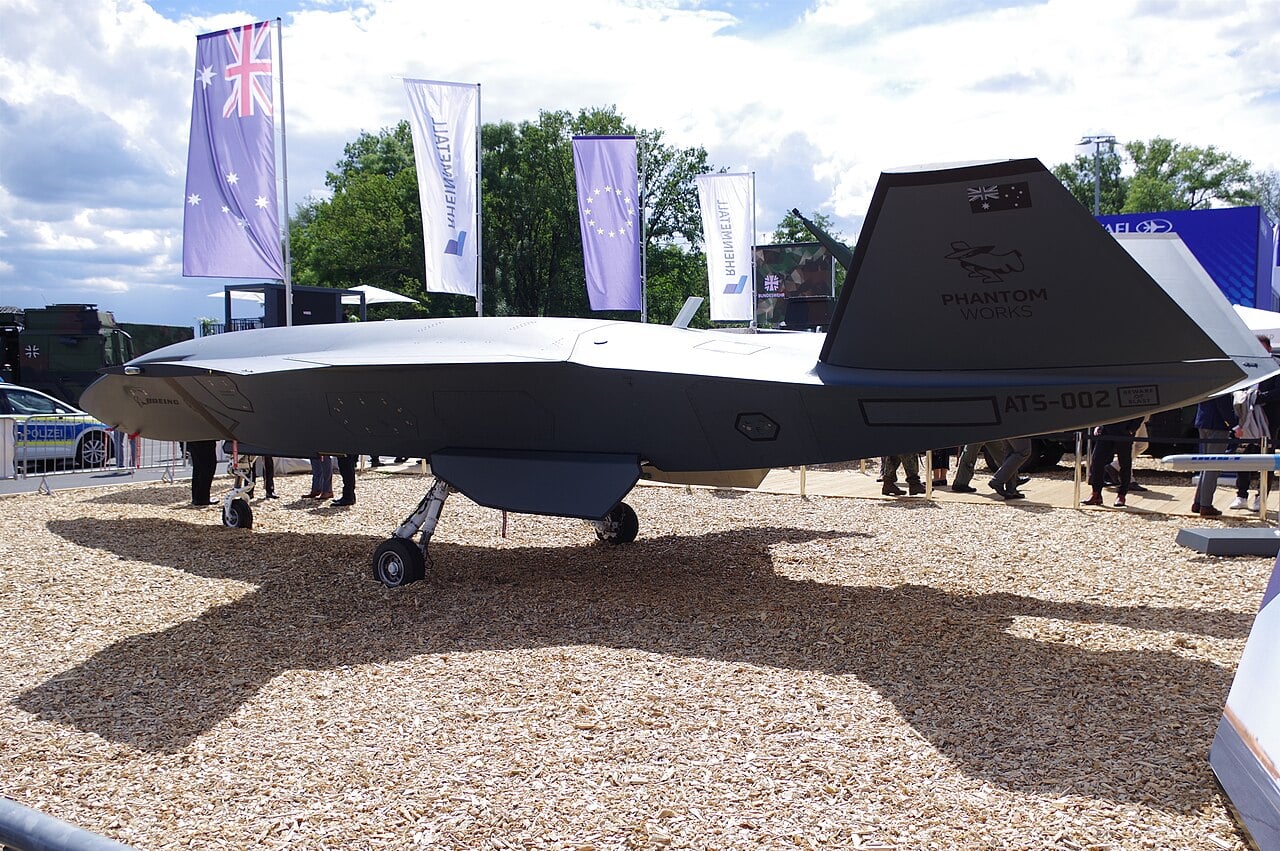
Seven months ago it was the front-runner. In March, Rheinmetall and Boeing signed up to bring the MQ-28 Ghost Bat to Germany; in June, it was shown at ILA Berlin with a bigger wing and new German partners. This week Berlin quietly took it off the table.
The German Ministry of Defence has formally told Boeing it will not directly procure the MQ-28, a Boeing spokesperson confirmed to Breaking Defense on 16 October. The decision was first reported by Politico. Boeing referred all questions about the reasons to the ministry. The ministry, in turn, said nothing about reasons at all.
What is left is a competition without a favourite, and a deadline that is slipping. Germany wanted a collaborative combat aircraft (CCA) flying beside its Eurofighter Typhoon by 2029. According to Politico, that capability now arrives in the early 2030s.
Informazioni rapide
- Quello che è successo: Germany's Ministry of Defence informed Boeing it will not directly procure the MQ-28 Ghost Bat
- Confirmed: 16 October 2026, by a Boeing spokesperson to Breaking Defense; first reported by Politico
- Ministry position: No comment on procurement projects, citing procurement law and the need to address such matters in parliament first
- Old target: A German CCA in service by 2029
- New outlook: Early 2030s, with aircraft tests from 2027 (Politico)
- Likely rivals: Helsing CA-1 Europa, Airbus/Kratos U740 Valkyrie, General Atomics Gambit family
What Berlin said, and what it did not
The ministry's statement is a model of German administrative precision: it confirms nothing and explains why it confirms nothing. Boeing, for its part, said only that it "stands ready to support" its German customer on next steps.
Read the wording carefully. Boeing's account is that Germany will not be directly procuring the Ghost Bat. That closes the fast lane, a straight buy of a mature Australian design, but it does not on its own exclude Boeing from a later competition. Breaking Defense reports that the tests starting in 2027 will give Boeing and its rivals the chance to fight for the eventual CCA contract.
The pitch that was supposed to win
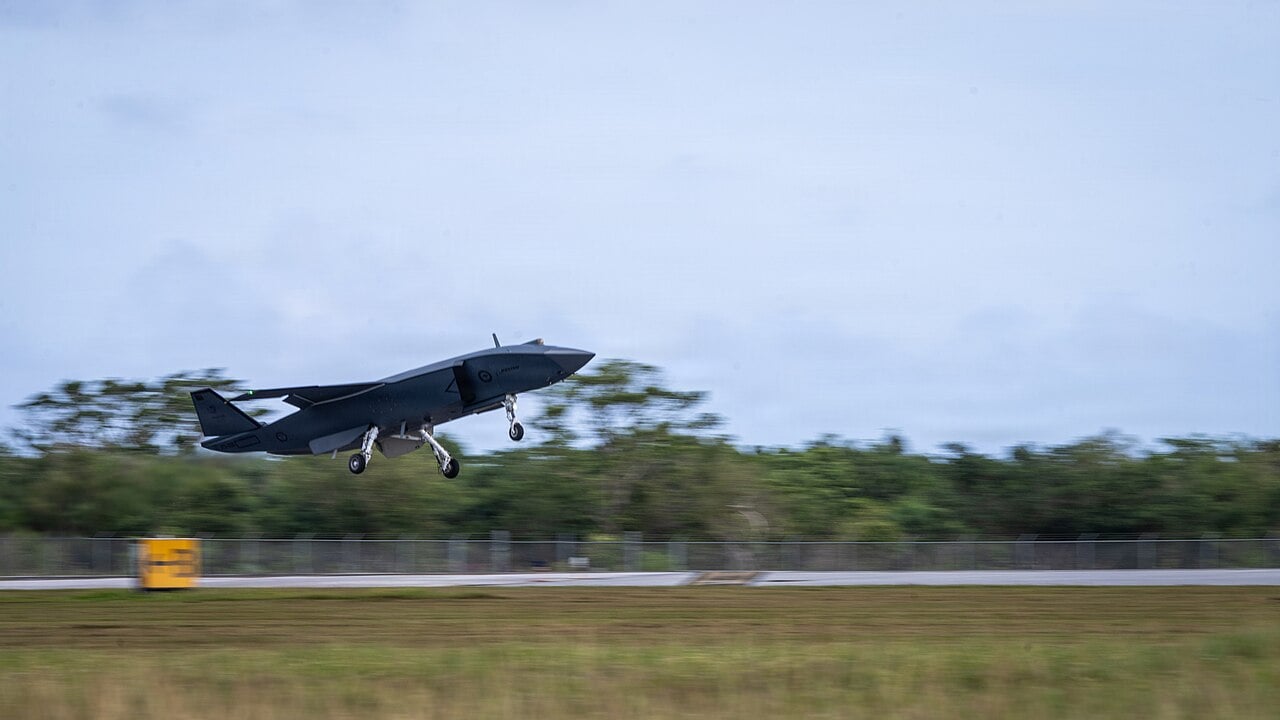
The Ghost Bat's argument in Germany was simple: it exists. Developed by Boeing Defence Australia for the Aeronautica militare reale australiana, it first flew at Woomera on 27 February 2021. On 8 December 2025 an MQ-28A fired an AIM-120 AMRAAM and destroyed a target drone while working as a wingman to an E-7 Wedgetail e un F/A-18F Super Hornet. Australia then ordered six more Block 2 aircraft and a Block 3 prototype.
Germany came calling in spring. On 27 March 2026, Defence Minister Boris Pistorius said in Australia that the Ghost Bat was "under consideration", and four days later Rheinmetall announced it would act as system manager for a German MQ-28, responsible for integration, national adaptation and support.
At ILA Berlin on 10 June, Boeing unveiled a 25 per cent larger wing, maximum take-off weight up from about 4,500 kg (10,000 lb) to about 5,400 kg (12,000 lb), and an internal bay for two AMRAAMs or four Small Diameter Bombs. Diehl Defence and Rohde & Schwarz joined the German team. The promise was explicit.
Rheinmetall chief executive Armin Papperger said at the time that final contract talks with Berlin would need to begin in 2027 to meet that date. The timetable now runs the other way: testing in 2027, capability in the early 2030s.
Defence Australia footage of the MQ-28A Ghost Bat's first air-to-air missile launch, the AIM-120 shot of December 2025.
Who is left in the race
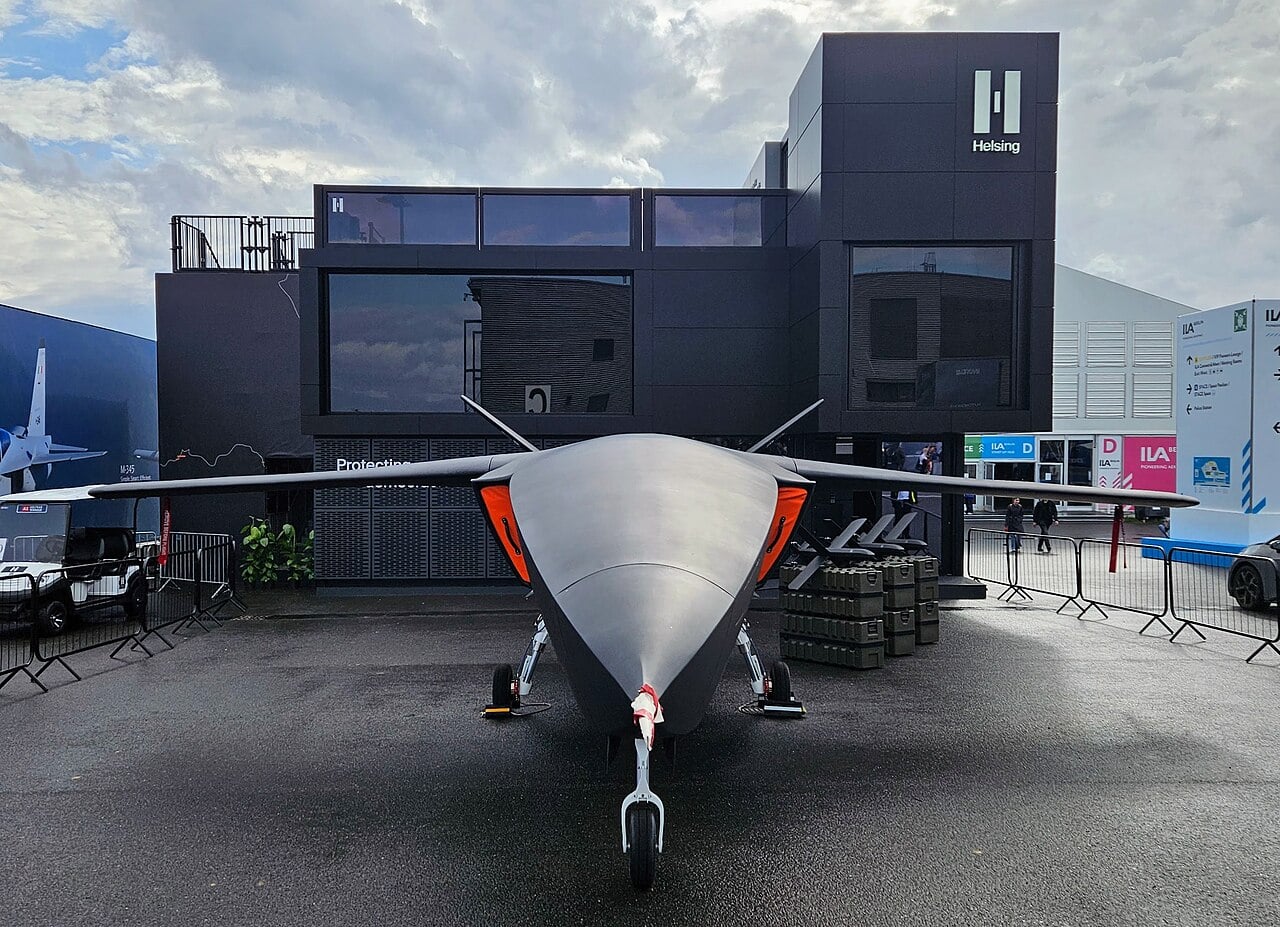
Three contenders stand out. The home team is Helsing, the German AI defence company, with its CA-1 Europa, which the firm says will be ready for operations by 2029. A full-size mock-up stood outside Helsing's chalet at ILA in June.
Airbus and Kratos offer the U740 Valkyrie, an XQ-58A airframe with Airbus's MARS mission system. Its first flight in Europe was announced on 12 October, and Airbus said the milestone confirms the team is on track for a combat-ready CCA by 2029. As Afterburner reported, the European mission system was not yet integrated for that flight. General Atomics Aeronautical Systems could also offer an aircraft from its Gambit family; a company spokesperson told Breaking Defense in June that it had "spoken to Germany many, many times".
Behind all of it sits the Luftwaffe's real problem. The Tornado is retiring, F-35A are on order, and the Franco-German FCAS fighter is not expected before the mid-2030s. A drone wingman was meant to bridge that gap.
Perché è importante
Germany would have been the first European country to field a CCA. That claim is now open to anyone, and the 2027 test campaign has become the real selection event. For Boeing, the setback lands just as it courts Japan and builds a European supplier base with Leonardo and Hensoldt.
Berlin has not said why it changed course. But the field it is left with leans European: a German start-up, a European prime with an American airframe, and an American firm with its Gambit family. Whether any of them can quickly match what the Ghost Bat already has, years of flight testing and a live missile shot, is the question the 2027 trials will answer.
Sources: Breaking Defense, Politico (via Breaking Defense), UA.News, Aerohaber, The War Zone, AeroTime, Defence Connect, The Next Web, Wikipedia (Boeing MQ-28 Ghost Bat)


0 Comments