
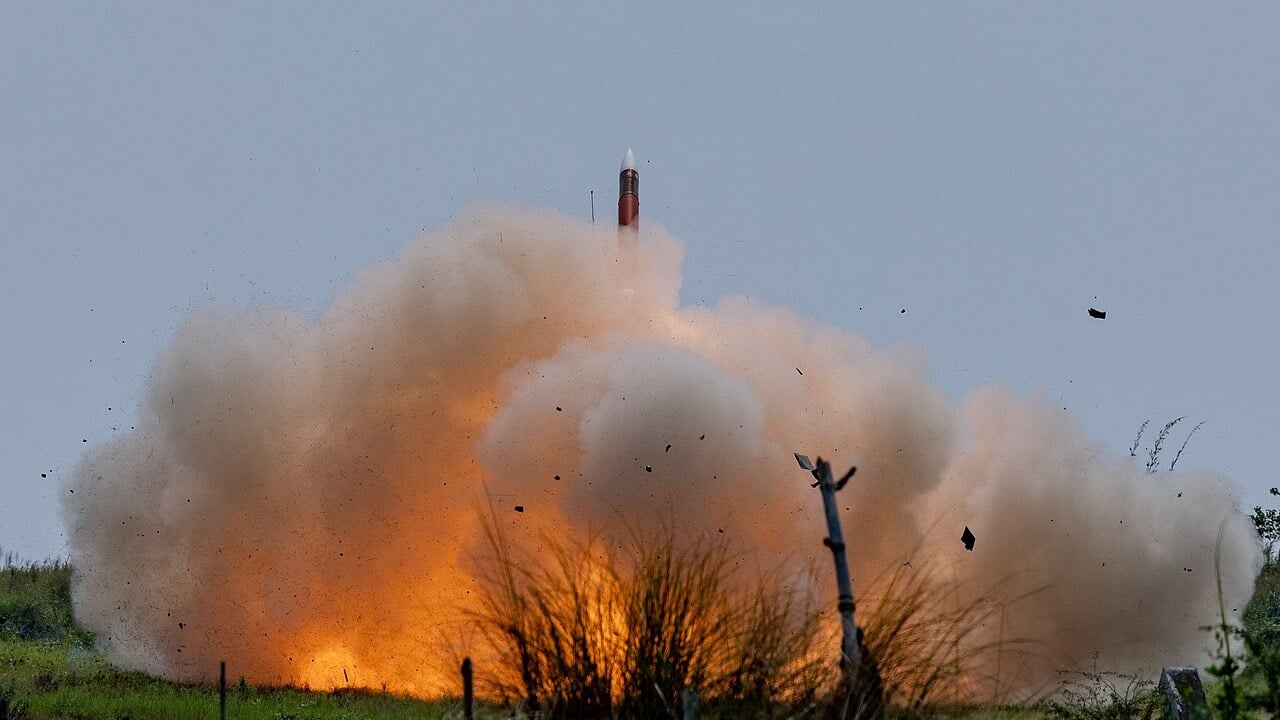
On the morning of 1 May 1960, Francis Gary Powers was nearly four hours into a flight across the Soviet Union, cruising far above the reach of Soviet fighters, when he heard a dull thump. The aircraft lurched forward, there was a bright orange flash, and the right wing began to droop. The U-2 had been found, tracked and hit by something that never left the ground.
The weapon was a Soviet S-75, better known in the West as the SA-2 Guideline, and it changed air warfare for good. Altitude, the old protection of the reconnaissance pilot and the strategic bomber, no longer guaranteed safety. For the next six decades, the surface-to-air missile, or SAM, would decide how and where air forces could fly.
The secret of a SAM is that it is not really a missile. It is a system: eyes, a brain, a launcher and a missile, all of which have to work together in the few minutes, or seconds, between first contact and impact.
Informazioni rapide
- Che cos'è: A missile system launched from the ground or a ship to destroy aircraft or missiles
- Main parts: Search radar, fire-control (tracking) radar, launcher, missile, plus IFF
- First operational: US Nike Ajax, activated in March 1954
- Most produced: Soviet S-75 Dvina (SA-2 Guideline), first deployed 1957
- Guidance families: Command (SA-2), semi-active radar homing (Hawk, SA-6), track-via-missile (Patriot), active radar (PAC-3), infrared homing (Stinger)
- Testata: Usually blast-fragmentation with a proximity fuze; PAC-3 uses hit-to-kill
- Famous kills: Powers’ U-2, 1 May 1960; Anderson’s U-2 over Cuba, 27 October 1962
The kill chain: from search to launch
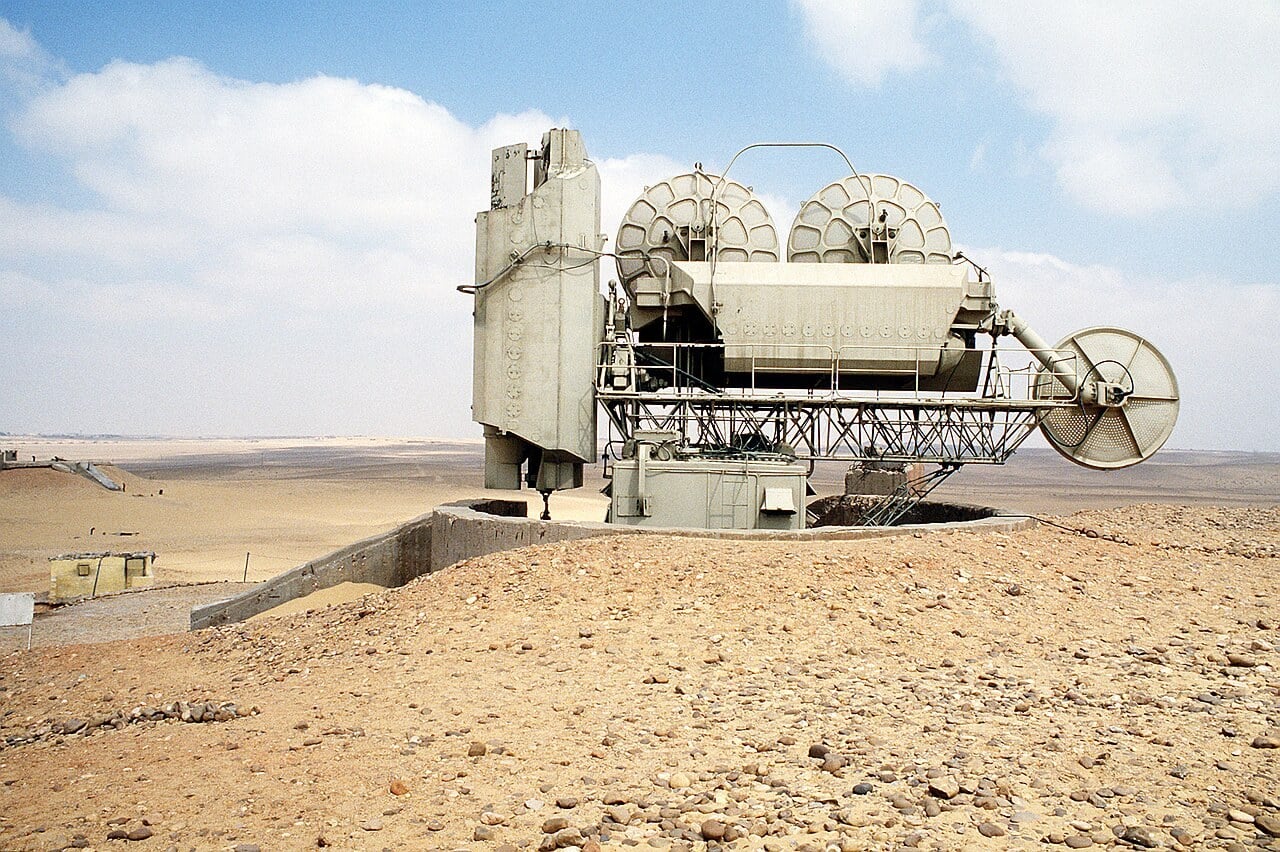
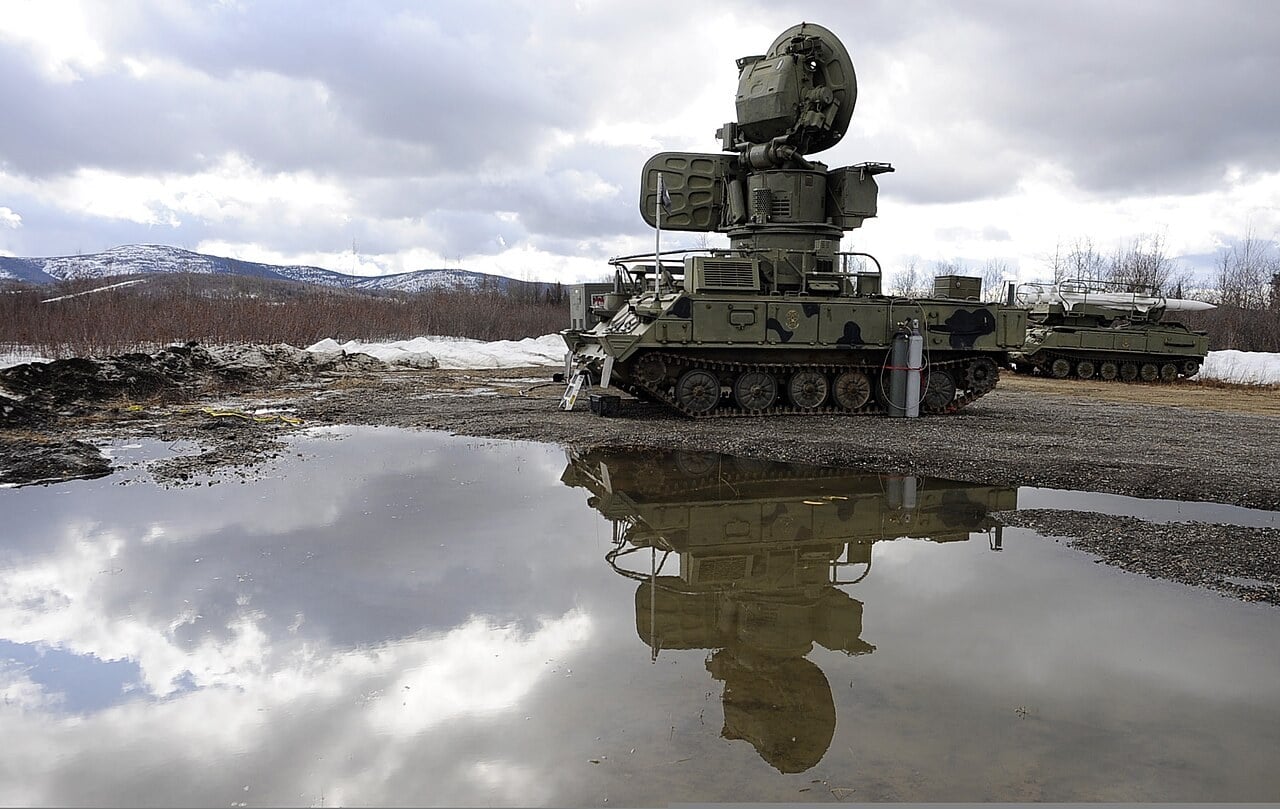
It starts with a search radar. On a classic SA-2 site, an early-warning radar the West called Spoon Rest swept the sky for anything coming. Its job was not precision but awareness: to spot an aircraft early and hand it over to the radar that would actually run the engagement. Modern systems also query the contact with IFF to check that it is not a friendly aircraft.
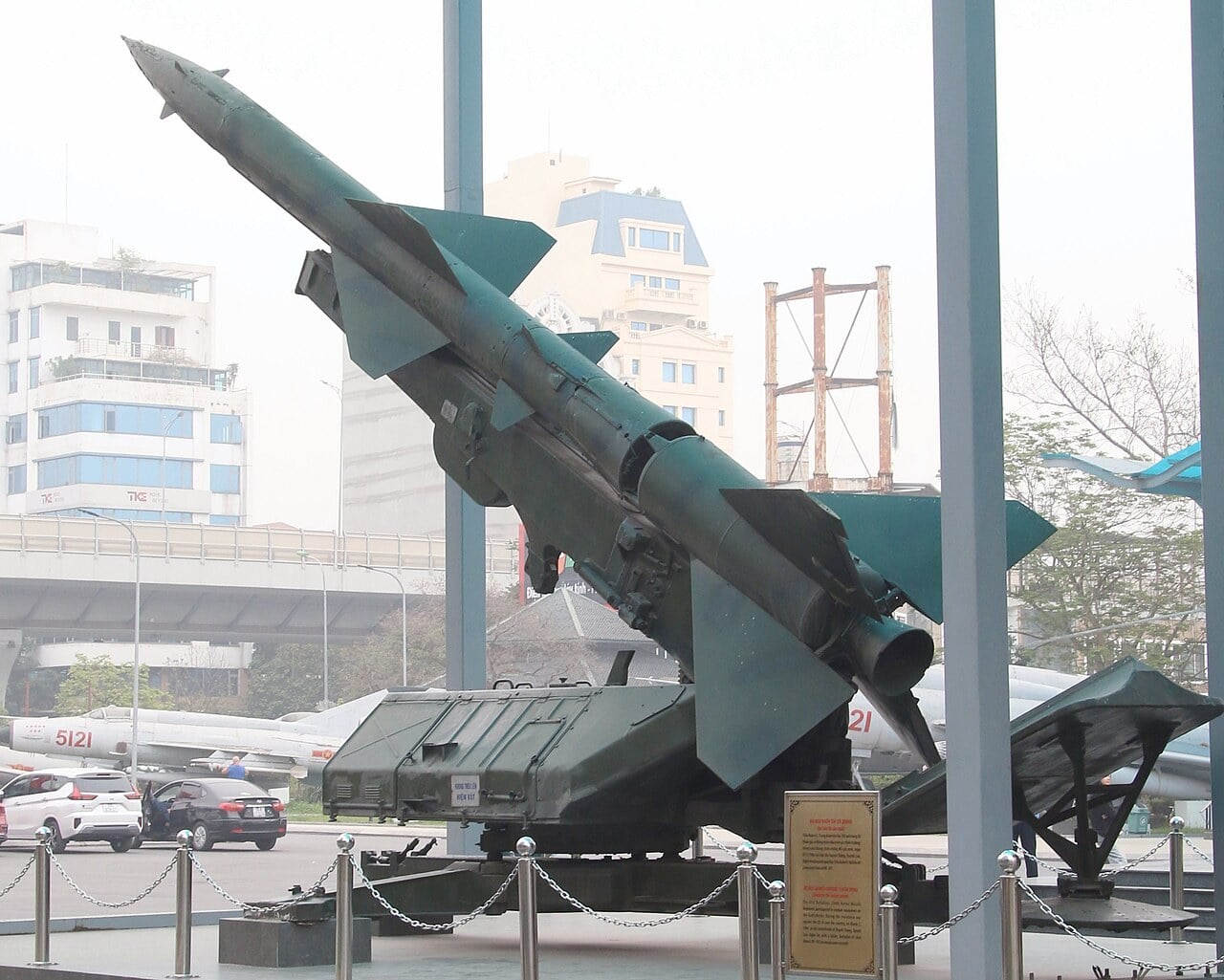
That second radar is the fire-control, or tracking, radar. On the SA-2 it was the Fan Song, which could follow up to four targets and guide up to three missiles against one of them. A typical North Vietnamese SA-2 site had six missiles on launchers around it, plus control and support vans. The launchers are the muscle; the tracking radar and its computers are the brain.
Then comes the shot. The SA-2’s solid-fuel booster burned for about six seconds and fell away, and the missile did not steer during that phase. Only once the second stage was running did guidance take over for the rest of the flight to the target.
Five ways to steer a missile
The heart of any SAM is how it is guided, and the history of air defence can be told through five families. The oldest is command guidance, used by the SA-2. The ground radar tracks both the target and the missile, a computer works out where the two will meet, and steering commands are sent to the missile by radio. The missile itself is fairly simple; the intelligence stays on the ground.
Through the 1960s, semi-active radar homing became common. Here the ground radar “illuminates” the target, and a receiver in the missile’s nose homes on the reflected energy. The American MIM-23 Hawk, in US Army service from 1959, and the Soviet 2K12 Kub, the SA-6, both used continuous-wave illuminators this way. The catch is that the radar must keep shining on the target until impact, which keeps the site exposed. It is the same principle that guided air-to-air missiles like the Sparrow, explained in our piece on radar-guided missiles.
Binkov’s Battlegrounds walks through how an SA-2 battery fitted together, from its radars to its missiles.
The Patriot introduced a hybrid called track-via-missile. The ground radar illuminates the target, but the missile’s own receiver picks up the reflections and relays what it sees back down to the ground. Computers in the engagement control station combine that view with the radar’s and send steering commands back up. The missile’s close-up perspective improves accuracy while the heavy processing stays on the ground.
Newer interceptors go a step further with active radar homing. The PAC-3 missile carries its own Ka-band radar seeker, so in the final phase it can drop the link to the ground and find the target by itself. It is accurate enough to destroy its target by direct impact, a method known as hit-to-kill.
The Wall Street Journal explains how a Patriot battery detects, tracks and engages incoming targets.
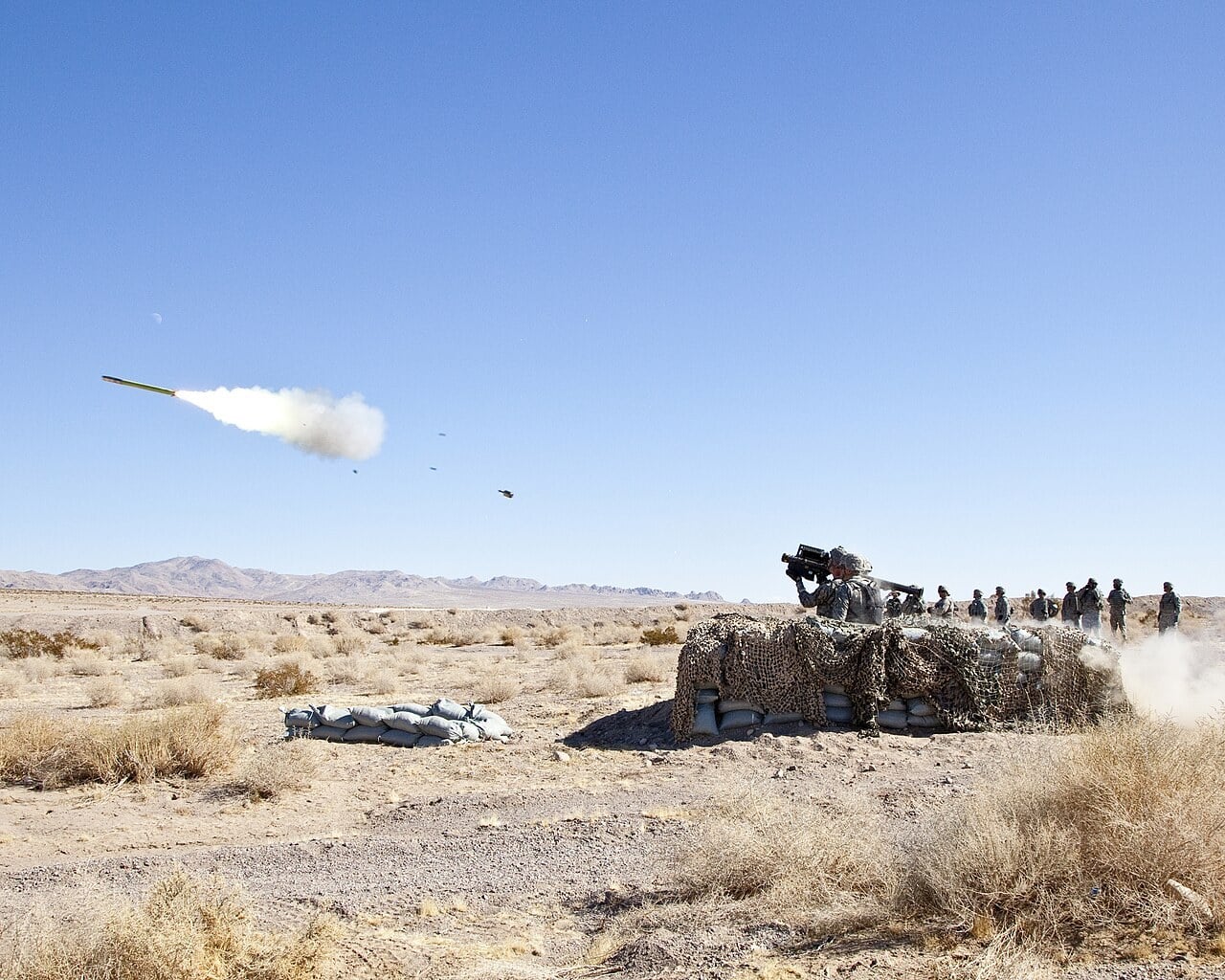
The fifth family needs no radar at all. Shoulder-launched MANPADS such as the FIM-92 Stinger use infrared homing, locking on to the heat of an aircraft. They are fire-and-forget: once launched, the missile guides itself, and the target receives no radar warning. How those seekers work, and how flares try to fool them, is the subject of our explainer on heat-seeking missiles.
Close is good enough
A SAM does not usually need to hit its target. Most carry a blast-fragmentation warhead set off by a proximity fuze, which senses when the missile is passing close to the aircraft and detonates, spraying fragments into it. The SA-2 combined proximity, contact and command fusing. The idea traces back to the proximity fuze of the Second World War, which first made anti-aircraft shells lethal without a direct hit.
Powers learned exactly what that means. When he was later shown the wreckage of his U-2 by his Soviet interrogators, he concluded that the aircraft had not taken a direct hit but had been disabled by a near-miss.
How SAMs reshaped the air war
Powers was not the SA-2’s first victim. That was a Taiwanese RB-57D, a high-altitude version of the B-57 Canberra, shot down near Beijing in October 1959. In October 1962, another SA-2 shot down Major Rudolf Anderson’s U-2 over Cuba at the height of the missile crisis. By the early 1960s, flying high and fast over defended territory had become close to suicidal, and air forces turned to flying low, below the radars’ line of sight.
North Vietnam began receiving SA-2s soon after Operation Rolling Thunder began in 1965. On 24 July 1965, an SA-2 shot down a US Air Force F-4C Phantom, the first of 110 USAF aircraft the National Museum of the US Air Force lists as lost to SAMs in Southeast Asia. The response was a whole new trade: Wild Weasel crews in two-seat F-105s hunted the radar sites, and fighters were fitted with radar warning receivers.
The 1973 Yom Kippur War showed what the next generation could do. Egyptian and Syrian SA-6 batteries were mobile, tracked and used a continuous-wave guidance radar that the Israeli Air Force’s radar warning receivers did not pick up. Together with older SAMs and mobile anti-aircraft guns, they took a heavy toll on A-4 Skyhawks and Phantoms, and the Israeli air-defence suppression operations planned for both fronts, Tagar and Dugman, were aborted or failed at high cost. We told that story in Operation Tagar and Dugman 5.
The duel that never ends
Every SAM generation has bred a countermeasure, and every countermeasure a new SAM. Warning receivers tell pilots when a fire-control radar has them. Jammers and chaff confuse the radars, and towed and expendable decoys such as the ALE-50 and BriteCloud give a radar-guided missile something more attractive to chase, as our piece on towed decoys explains. Even the SA-6 lost its edge once captured examples allowed effective countermeasures to be developed.
US Army footage of a Stinger live-fire exercise during Super Garuda Shield.
The basic recipe, though, has hardly changed since the Germans tried and failed to get the Henschel Hs 117 Schmetterling into service before the end of the Second World War. Find the aircraft. Track it. Steer something faster towards it and burst it close enough. Since one missile ended Powers’ flight in 1960, no pilot over defended ground has been able to forget that sequence.
Sources: Wikipedia (Surface-to-air missile; S-75 Dvina; 2K12 Kub; MIM-23 Hawk; MIM-104 Patriot), National Museum of the US Air Force, CIA, CSIS Missile Threat, Designation-Systems.net, American Heritage, Air & Space/Smithsonian, Michigan War Studies Review
0 Comments