
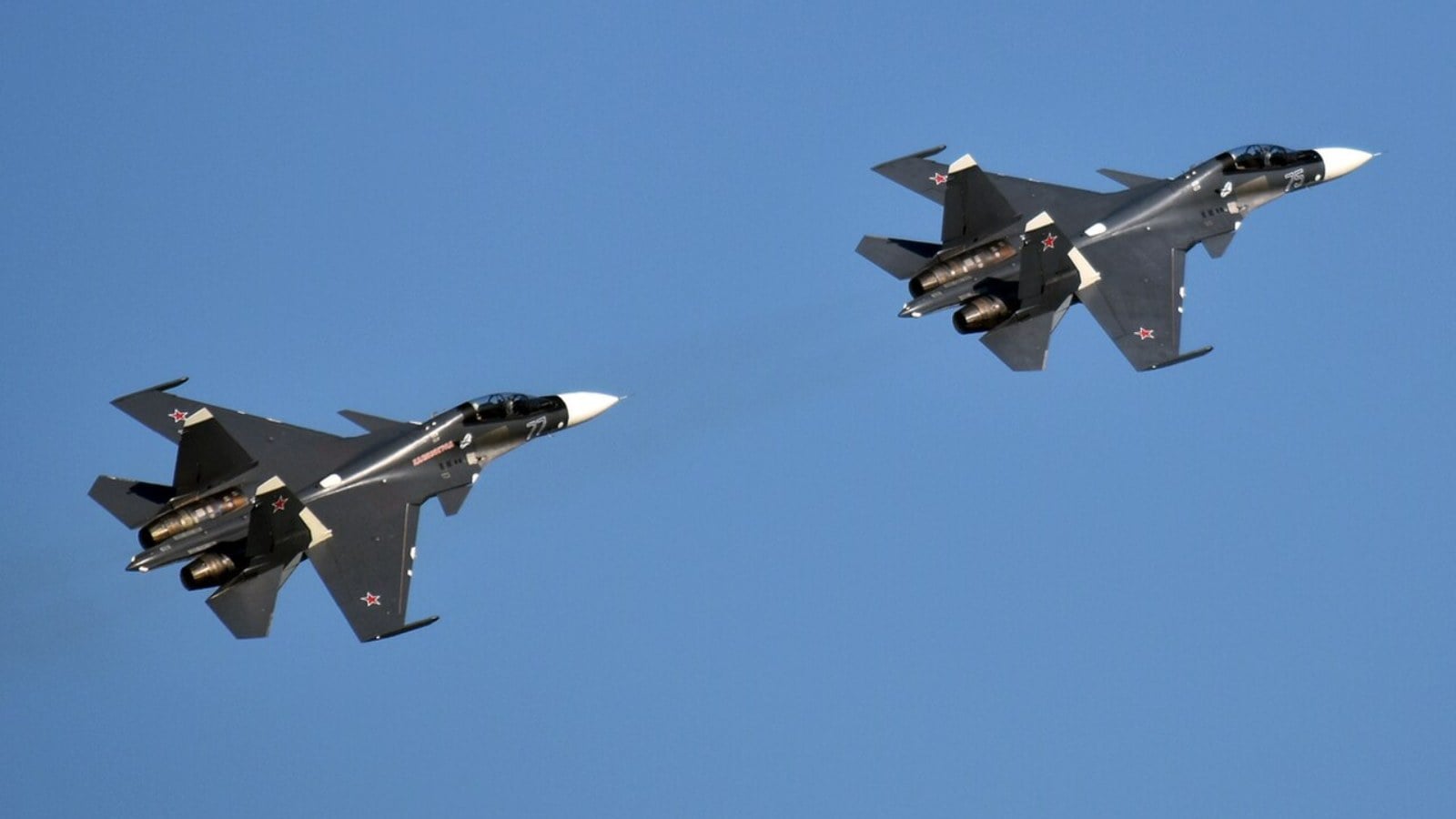
A two-seat Flanker down in a field, two pilots on the end of parachutes, and an empty patch of countryside in Russia’s Baltic exclave. On 21 October 2026, a Russian Su-30 crashed during a scheduled training flight in the Kaliningrad region. Both crew members ejected.
The Russian Ministry of Defence confirmed the Su-30 crash the same afternoon. The jet was unarmed, it came down in an uninhabited area, and a ground search-and-rescue team recovered the crew. The ministry said the pilots’ lives were not in danger. It did not give a cause.
What the ministry did not say is almost as interesting as what it did: no sub-variant, no unit, no base. Russian media have filled some of those gaps, but not all of their claims can yet be confirmed.
Informazioni rapide
Data: 21 October 2026
Aeromobili: Sukhoi Su-30 (Russian media: Su-30SM; MoD did not specify)
Posizione: Kaliningrad region, uninhabited area; reportedly Chernyakhovsk district
Missione: Scheduled training flight, no ammunition aboard
Equipaggio: Two, both ejected and recovered by ground search and rescue
Infortuni: MoD: no threat to life; Russian media: both hospitalised
Causa: Not disclosed
What Moscow confirmed
The Defence Ministry statement, carried by Interfax, TASS and RIA Novosti, was short. A Su-30 crashed during a planned training flight in the Kaliningrad region, the crew ejected and were evacuated by a ground search-and-rescue team, the aircraft carried no weapons and it fell away from populated areas.
Interfax timed its first report at 15:20 Moscow time. No ground casualties were reported, and as of 22 October the ministry had not said what went wrong or which unit the jet belonged to.
The wording follows the ministry’s standard formula for training losses: planned flight, no weapons aboard, uninhabited area. The August 2023 Su-30 crash in the same region was announced in almost identical terms. The difference this time is the ending. Then, both crew were killed; now, both came down under parachutes and are alive, whatever the extent of their injuries.
Su-30SM, and where it probably came from
Russian outlets including REN TV, Mash and Izvestia, citing unnamed sources, identified the aircraft as a Su-30SM and placed the crash site in the Chernyakhovsk district, between the villages of Timofeyevka and Zelyony Bor. The same reports said both pilots were injured and taken to a military hospital. The ministry has confirmed neither the variant nor the hospital stay.
The location points in an obvious direction. Chernyakhovsk, about 90 km (56 miles) east of Kaliningrad city, is home to the Baltic Fleet’s 4th Guards Naval Attack Aviation Regiment, which flies the Su-30SM and the newer Su-30SM2 alongside the Su-24M. That makes a naval aviation jet the most likely candidate, but until Moscow names the unit, it remains an inference rather than a fact.
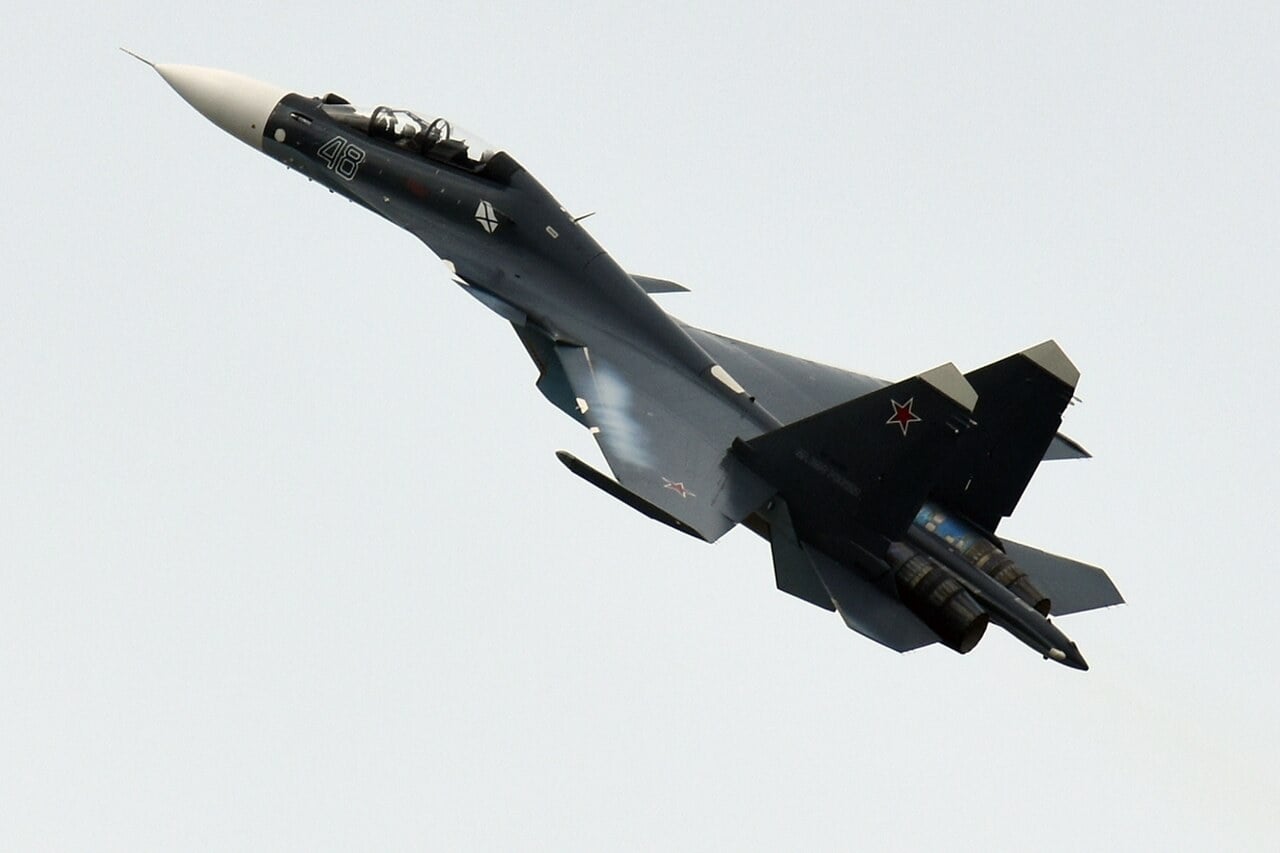
The Su-30SM is the Russian-service cousin of India’s Su-30MKI, built by Irkut: a two-seat multirole Flanker with canards and thrust-vectoring AL-31FP engines, first delivered in 2012 and known to NATO as Flanker-H. The Su-30SM2 swaps in the AL-41F-1S engine of the Su-35 and the Irbis-E radar. Russia’s naval aviation has used both to replace ageing Su-27s in the Baltic.
Second Kaliningrad Flanker loss in three years
This is not the first Su-30 to go down in the exclave. On 12 August 2023, a Su-30 crashed on a training flight in the Kaliningrad region and both crew were killed. The Western Military District said at the time that a technical malfunction was the preliminary cause.
It also continues a bad year for Russian military aviation away from the front. On 3 April 2026 a Su-30 crashed on a training flight in occupied Crimea, with both crew ejecting. On 29 September a Tu-95 strategic bomber crashed during training in the Amur region; Russian reports said six crew members died.
Training losses of this kind are rarely explained in public. Russian crash investigations stay inside the military, and findings, when they emerge at all, tend to arrive months later and in one sentence.
Why the Baltic Flankers matter to NATO
Kaliningrad is a Russian island on land: bordered by Poland and Lithuania, both NATO members, with no direct land link to the rest of Russia. It hosts the headquarters of the Baltic Fleet, and its fighters are some of the Russian aircraft NATO pilots see most often.
Flights between mainland Russia and the exclave cross international airspace over the Baltic Sea, and Russian military aircraft on those routes are routinely shadowed by NATO Baltic Air Policing fighters and by Finnish, Swedish and Polish jets. Baltic Fleet Su-30SMs have regularly turned up in the photographs those intercepts produce.
Losing one airframe will not change that picture. But for a fleet air arm with a limited number of modern Flankers, every hull counts. The next question is the one Moscow seldom answers: why it fell.
Sources: Russian Ministry of Defence via Interfax, TASS, RIA Novosti, Fontanka, Meduza, The Kyiv Independent, Kyiv Post, AeroTime, Defense Mirror, UNITED24 Media, RBC-Ukraine
0 Comments