
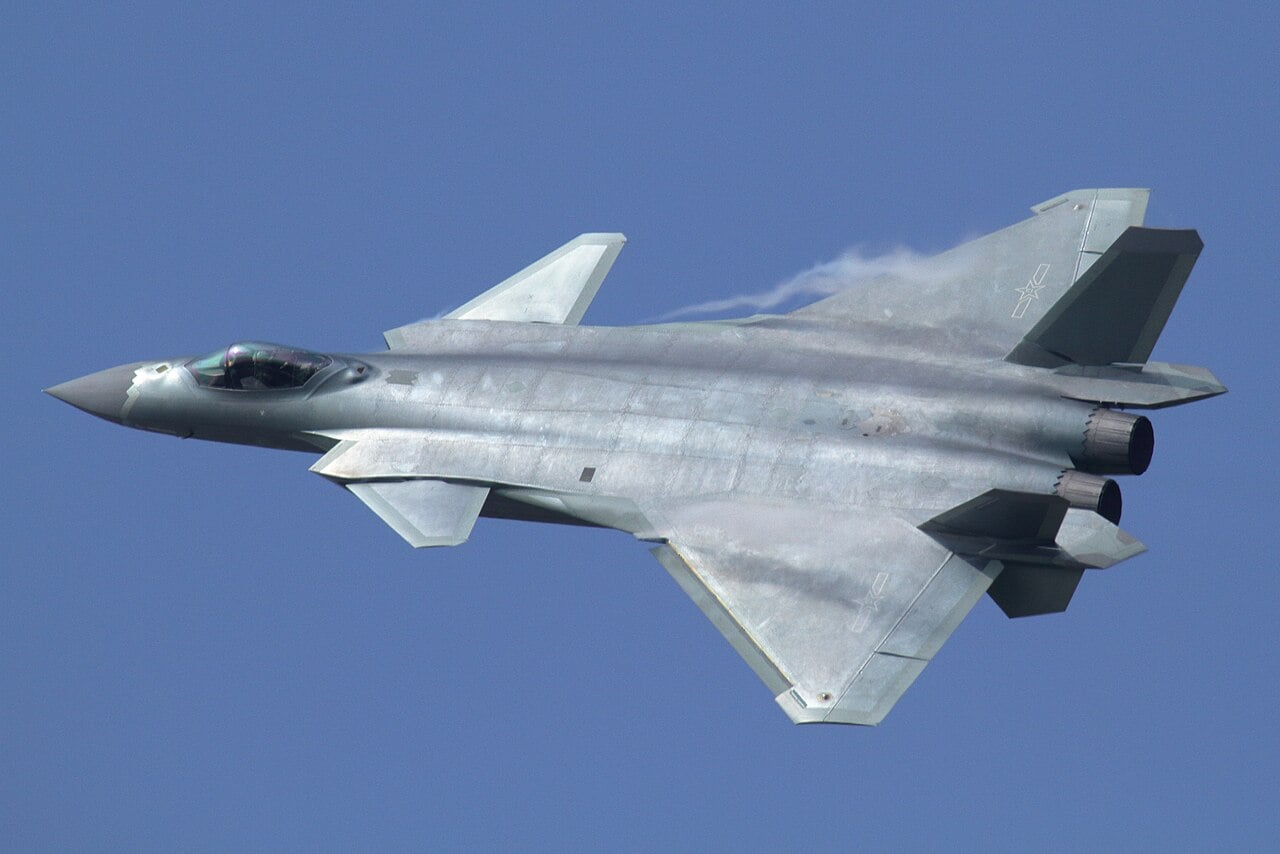
It is the evening of 11 November 2026, the 77th anniversary of the founding of the People’s Liberation Army Air Force, and CCTV’s news service is running its birthday feature. Over shots of stealth fighters taxiing in formation, the report announces a promotion. The air force’s traditional “Three Swordsmen”, the J-20, J-16 and J-10C, have become a new “Four Swordsmen”, with two stealth fighters in the group. The newcomer is the Shenyang J-35A.
The phrase, “四剑客” in Chinese, sounds like a line from a martial arts film, and that is the point. Four blades, the report says, now combine heavy and medium, stealthy and conventional, as the core of the air force’s “new-quality combat power”. A commentator on the programme went further and promised that the swordsmen would keep multiplying.
Behind the branding sits a real shift. China is now one of only two countries flying two different stealth fighter types. But a nickname is not a combat record, and the four swordsmen have very different stories to tell.
Quick Facts
- Lineup: J-20, J-16, J-10C and J-35A
- Named by: CCTV News, 11 November 2026, the PLAAF’s 77th anniversary
- Previous label: “Three Swordsmen”: J-20, J-16, J-10C
- Stealth types: Two: the heavy J-20 and the medium J-35A
- J-35A public debut: Airshow China, Zhuhai, 12 November 2024
- First national parade: Victory Day parade, Beijing, 3 September 2025
- Combat record: Only the J-10C family (Pakistan’s J-10CE), May 2025; contested
The parade that set the stage
The newest swordsman first showed itself to a mass audience fourteen months earlier. On 3 September 2025, at the parade in Beijing marking 80 years since the end of the war against Japan, the J-35A flew over Tiananmen Square in the air echelons. CGTN reported that the PLA Air Force had put on “its largest display of new aircraft”, with the J-20, the two-seat J-20S, the upgraded J-20A, the J-16D electronic warfare jet and the J-35A all in the sky.
It is worth being precise about dates, because they get blurred online. The parade was the J-35A’s first national parade, not its entry into service. The aircraft had already been shown in public at Airshow China in Zhuhai on 12 November 2024, carrying air force markings, and a model went to the Paris Air Show in June 2025. CCTV’s anniversary report says the jet has been inducted into the air force, but neither it nor any other official source we found gives a formal service-entry date.
The J-20: the heavy blade
The Chengdu J-20 is the senior swordsman. It first flew in January 2011 and made its public flypast at Zhuhai in November 2016. On 9 February 2018 the air force announced that it had entered combat units, and its spokesman made the stakes clear.
Nobody outside China publishes an official count, so the numbers come from analysts. The IISS Military Balance put at least 150 J-20s in the frontline fleet in early 2023. Janes counted about 195 by mid-2024. A late-2025 RUSI study estimated around 300 in service across at least 13 regiments, with production running at roughly 120 a year, and the analyst Andreas Rupprecht estimated about 500 delivered by mid-2026. Even the lowest of those figures is close to the 187 production F-22s the United States built before closing the line, and the higher ones far exceed it.
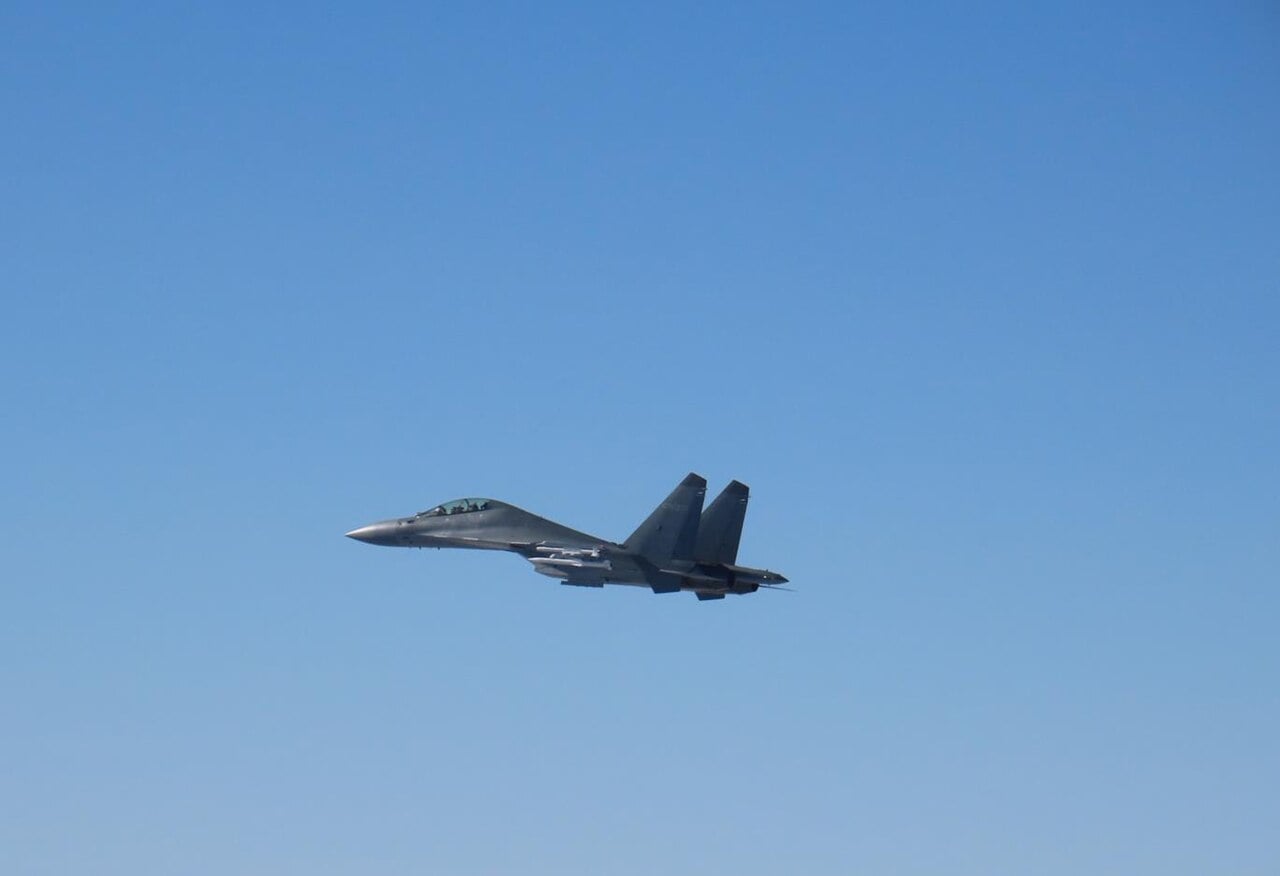
The J-16 and J-10C: the workhorses
The two non-stealth swordsmen do much of the daily work. The Shenyang J-16 is a two-seat heavy multirole fighter from the Chinese branch of the Sukhoi Su-27 family, built for long-range strike and carrying large weapon loads. By late 2022, Defense News counted more than 240 delivered. In 2021 the air force unveiled the J-16D, an electronic warfare version that Zhang Xuefeng describes as an indispensable escort for stealth fighters.
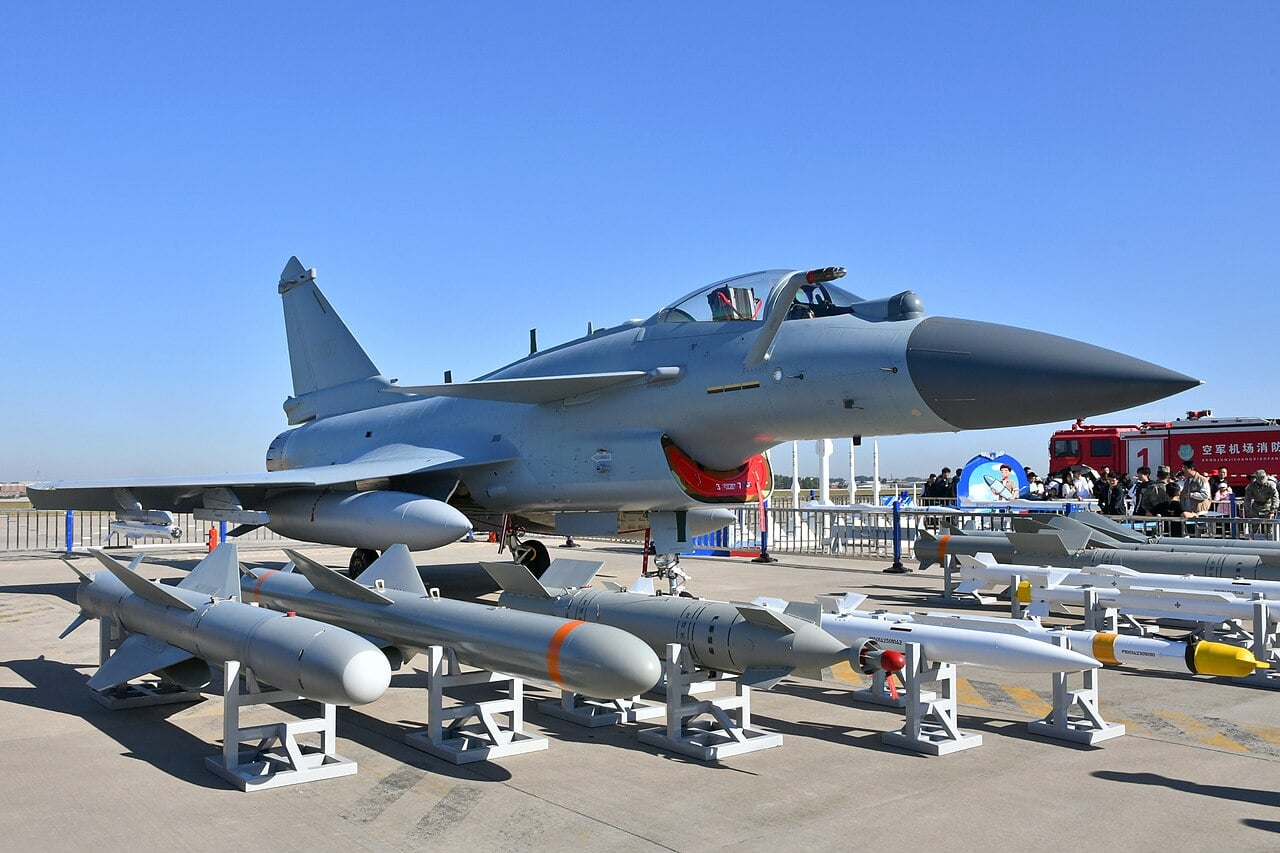
The Chengdu J-10C is the light end of the group, a single-engine delta-canard fighter with an AESA radar. The J-10 family first flew in 1998, and Xinhua reported on 16 April 2018 that the J-10C had begun combat duty. CCTV assigns it close- to medium-range air combat and precision strike. In the same report, Zhang praised both jets for their low lifetime operating costs and simpler maintenance, which is a polite way of saying they are the affordable half of the fleet.
The J-35A: the newest sword
The J-35A traces its roots to the Shenyang FC-31, the company-funded stealth demonstrator that first flew in 2012. The air force version is a twin-engine, single-seat medium stealth fighter with internal weapons bays, a new AESA radar, an electro-optical sensor under the nose and high-speed data links to the J-20 and to drones. A naval sister, the J-35, is being prepared for China’s aircraft carriers.
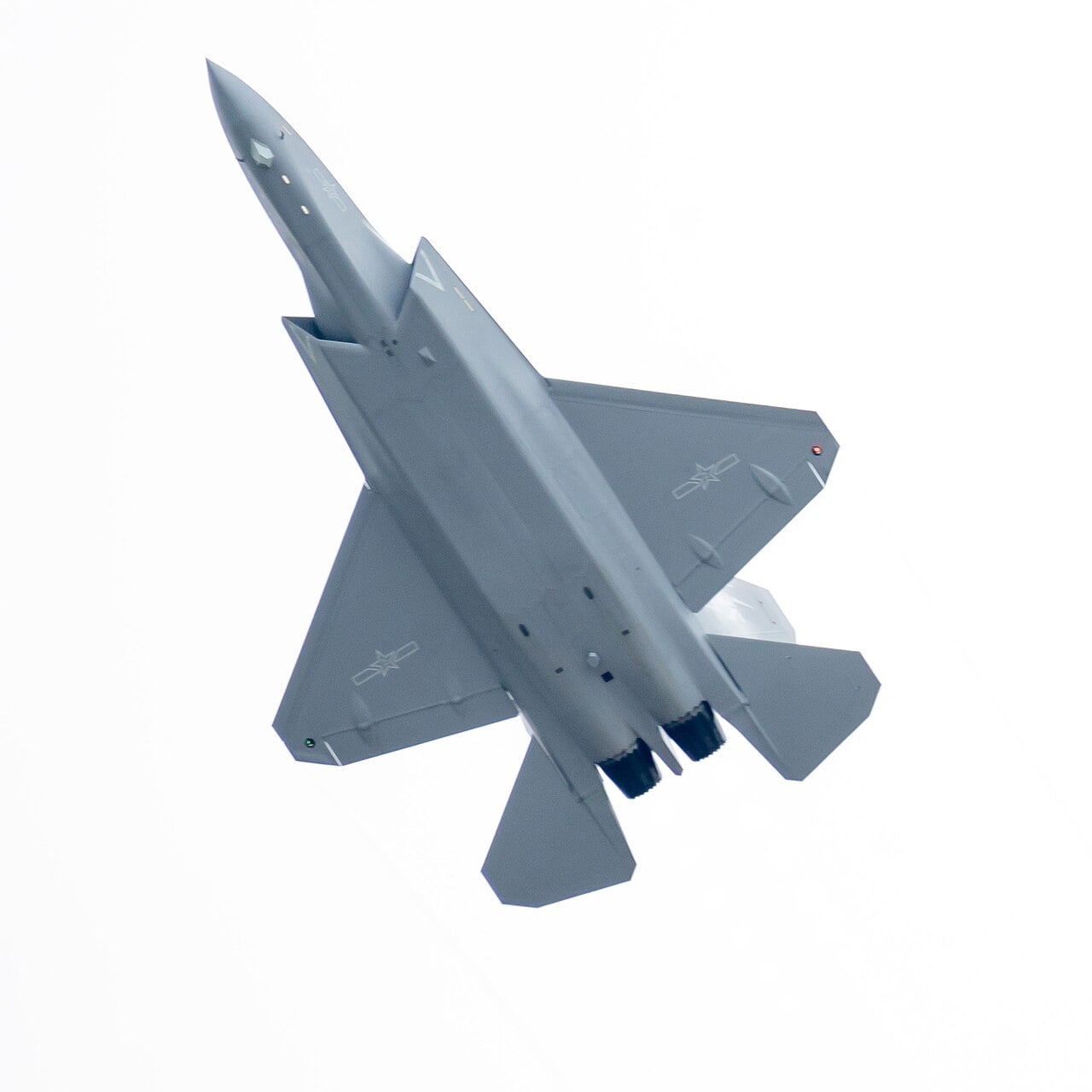
Its logic is cost. CCTV’s commentator says a medium stealth fighter is cheaper to buy and to run than a heavy one, so the air force can field many more stealth jets. The chief designer, Wang Yongqing, has said the series is expected to go into large-scale production and act as a “point guard” in networked operations. How many J-35As are flying today has not been disclosed.
The Wall Street Journal on the J-35A’s public debut at Airshow China in Zhuhai, November 2024. Video: WSJ News.
Proven or claimed? The May 2025 air battle
Neither Chinese stealth fighter has fought. The PLA has not been in a war since 1979, and no J-20 or J-35A has fired a shot in anger. The only member of the four with any combat claim is the J-10C, and even that comes through a customer: the Pakistan Air Force, which flies the export J-10CE.
In the early hours of 7 May 2025, after Indian strikes on targets in Pakistan, dozens of Indian and Pakistani fighters met in one of the largest air battles of the missile age. Pakistan claimed it shot down five Indian aircraft, including three Dassault Rafales, and denied losing any jets of its own. On 8 May, Reuters quoted two US officials who said a Pakistani J-10 had shot down at least two Indian aircraft and that at least one of them was a Rafale. One official spoke of “high confidence” that the J-10 had fired the air-to-air missiles.
India took three weeks to admit any loss. At the Shangri-La Dialogue in Singapore on 31 May, India’s Chief of Defence Staff conceded that aircraft had been lost, without saying how many.
General Anil Chauhan’s acknowledgement of aircraft losses, recorded on the sidelines of the Shangri-La Dialogue in Singapore, May 2025. Video: Bloomberg News.
In July 2025 the chief of the French Air and Space Force, General Jérôme Bellanger, said he had seen evidence of three Indian aircraft losses: one Rafale, one Russian-made Sukhoi and one Mirage 2000, according to the Associated Press. India’s air chief later claimed Indian forces had destroyed several Pakistani aircraft, which Pakistan denied. The honest summary is that at least one Rafale was lost, that US officials credited a J-10 with at least two kills, and that the full numbers on both sides are still disputed.
Even the proven part says as much about the system as about the jet. Analysts have stressed the role of Pakistan’s airborne early warning aircraft, data links and the long-range PL-15 missile. A J-10C in Pakistani hands, flown by Pakistani pilots, is not the same thing as a PLA Air Force swordsman in a war over the Pacific.
How the swordsmen compare with the West
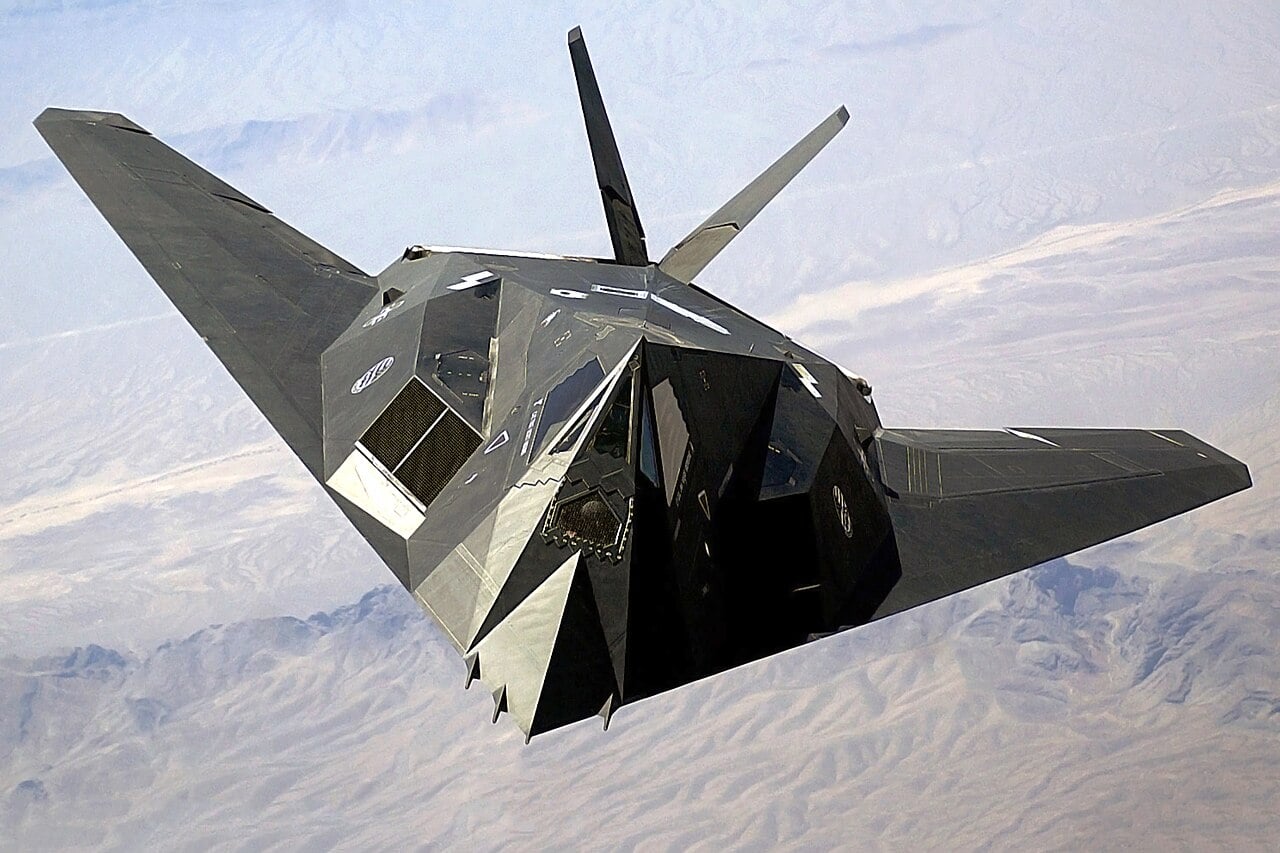
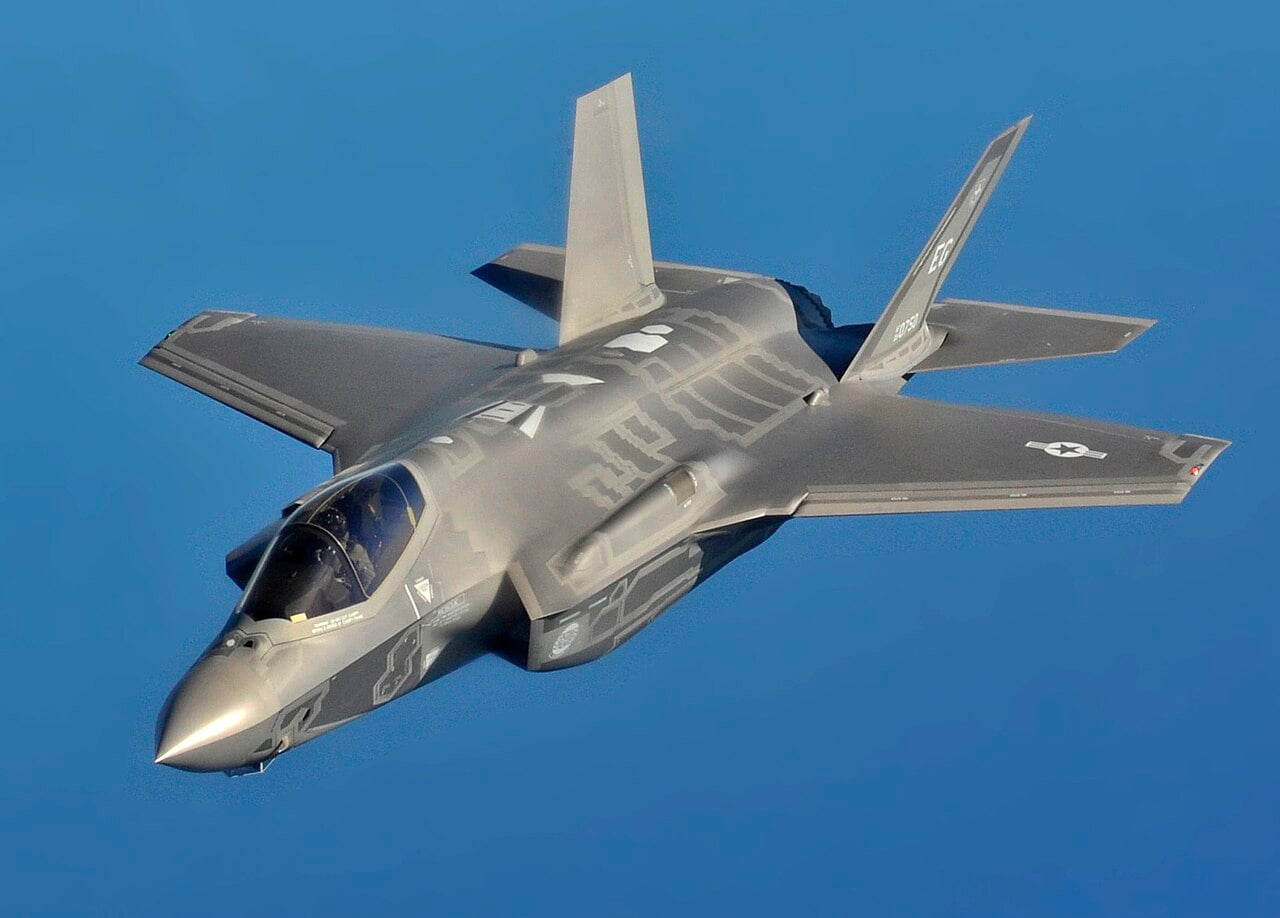
The contrast in combat experience is stark. The United States has flown stealth aircraft in combat since 20 December 1989, when F-117 Nighthawks dropped bombs near the Rio Hato barracks during the invasion of Panama. The F-117 went on to the 1991 Gulf War, the F-22 Raptor flew its first combat strikes over Syria in 2014, and Israel used the F-35 in combat from 2018.
Numbers matter too. Lockheed Martin delivered its 1,000th F-35 in July 2024, and in January 2026 it reported a record 191 deliveries in 2025, bringing the fleet to almost 1,300 aircraft flying with 12 nations. China’s stealth fleet is smaller but growing fast: RUSI projected that by 2030 the PLA Air Force could operate around 1,000 J-20s of all versions alongside some 900 J-16s.
The Pentagon’s December 2025 report on China’s military does not try to settle who would win. It focuses instead on the pace of change, from the two sixth-generation demonstrators China began testing in December 2024 to new airborne early warning aircraft. The Four Swordsmen are the fighters China has now. What comes after them is already flying.
Why the name matters
Chinese state media have long packaged hardware in catchy groups, and the J-20, J-16 and J-10C were the “Three Swordsmen” before the J-35A joined them. The labels turn complex procurement into something a television audience can remember.
They also send a message abroad. “Four Swordsmen” frames the PLA Air Force as a matched team rather than a collection of types, with a heavy and a medium stealth fighter backed by cheaper fourth-generation jets: the same high-low mix the US Air Force built with the F-15 and F-16. The difference is that the American mix was tested in war after war. China’s swordsmen have been drawn and polished on parade, and so far only one of them, in someone else’s hands, has been used in anger.
Sources: CCTV News, “空天一体、攻防兼备 人民空军迈向世界一流” (11 November 2026, republished by Guangming Online and Science and Technology Daily); Beijing Daily, report on the J-35A and the “Four Swordsmen” (12 November 2026); Global Times, J-35A marks two years since its debut (12 November 2026); CGTN, Chinese Air Force displays latest fighter jets at V-Day parade (5 September 2025); Xinhua / China Daily, J-20 stealth jet put into air force combat service (9 February 2018); Xinhua / China Daily, J-10C begins combat duty (16 April 2018); The War Zone, How many J-20 stealth fighters does China actually have? (15 July 2026), citing IISS Military Balance 2023, Janes and RUSI; Aviation Week, China signals induction of J-35A fighter (6 November 2024); Reuters, Pakistan’s Chinese-made jet brought down two Indian fighter aircraft, US officials say (8 May 2025); Al Jazeera, India general admits jet losses in clash with Pakistan (1 June 2025); Associated Press via Al Jazeera (6 July 2025); Air & Space Forces Magazine, Lockheed quietly delivered 1,000th F-35 in July (19 September 2024); Lockheed Martin, F-35 breaks delivery record, continues combat success in 2025 (7 January 2026); US Department of War, Military and Security Developments Involving the People’s Republic of China 2025 (23 December 2025); National Museum of the US Air Force, Lockheed F-117A Nighthawk fact sheet.


0 Comments