
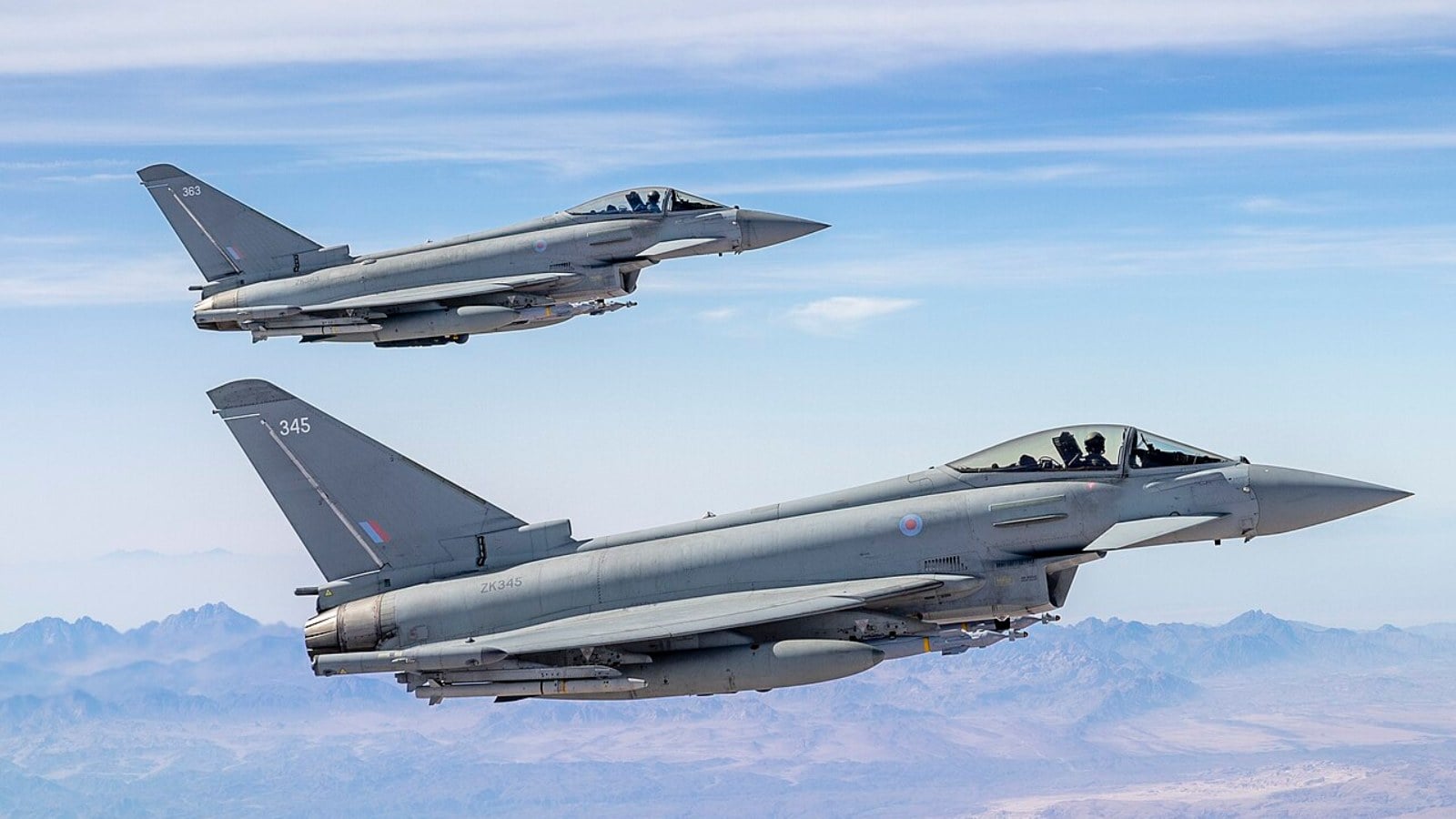
For four weeks the RAF’s contribution to Saudi Arabia’s war in the air was a single grey tanker, quietly passing fuel to Saudi fighters on their patrols. On 20 October 2026, Britain sent the fighters themselves.
The UK Ministry of Defence announced that RAF Typhoons will fly defensive counter-air missions over the kingdom, helping to protect Saudi cities and critical national infrastructure from Houthi drones and missiles. It comes ten days after the deadliest strike yet on a Saudi airport, and it turns a support role into a frontline one.
The RAF Typhoon deployment is explicitly defensive. London’s statement is blunt on that point: the jets “will not conduct offensive strikes against the Houthis.”
Quick Facts
Announced: 20 October 2026, UK Ministry of Defence
Aircraft: RAF Typhoon FGR4 — number and base not disclosed
Mission: Defensive counter-air over Saudi cities and infrastructure; no offensive strikes
Also deploying: RAF A400M Atlas transport and UK military advisers
Approved by: Defence Secretary Wes Streeting
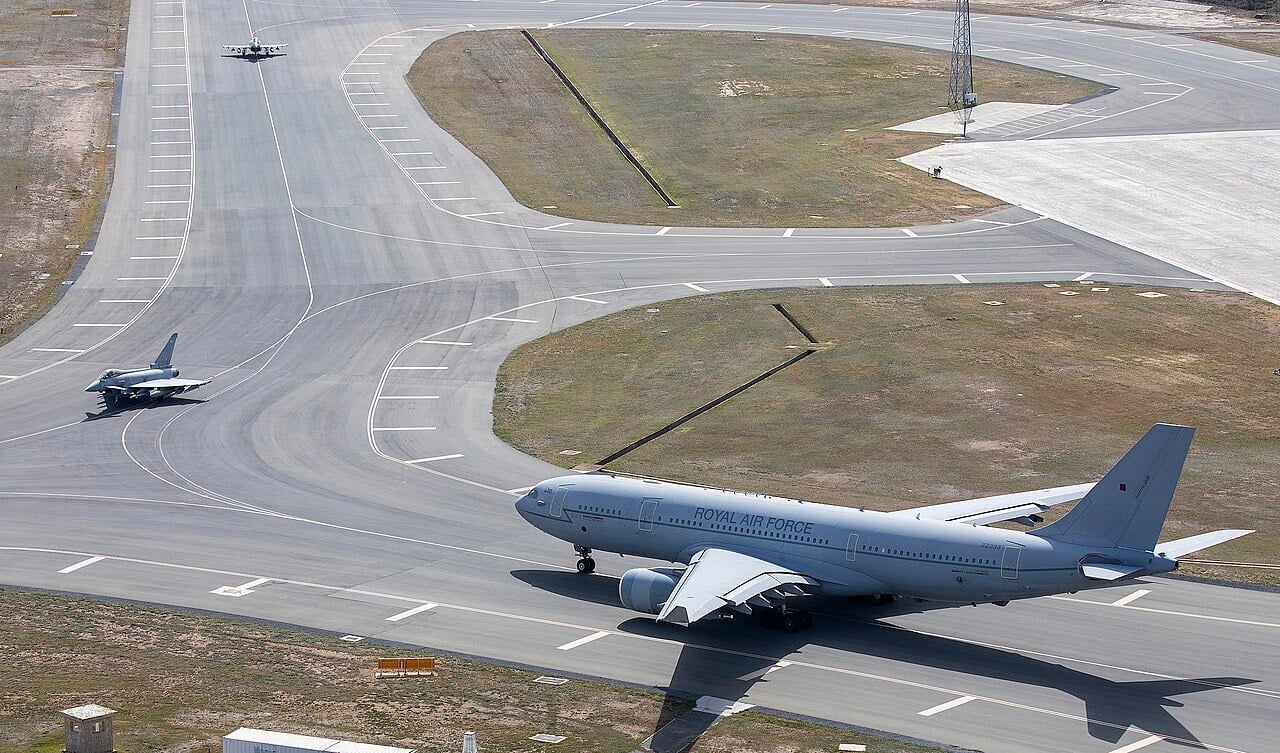
Earlier UK step: RAF Voyager tanker, announced 22 September 2026
What London announced
The MoD’s operational update lists three new elements. The Typhoons fly defensive counter-air sorties. An A400M Atlas moves defence materiel around Saudi Arabia. And UK military advisers sit alongside Saudi staff officers.
The same statement extends Britain’s air-to-air refuelling support for Saudi air operations, including missions “to degrade Houthi military targets in Yemen.” British jets will not drop bombs, but British fuel will keep Saudi strike aircraft airborne. That is a fine line, and critics of the UK’s long arms relationship with Riyadh will notice it.
What the MoD did not say matters too. Neither the number of jets nor their base has been disclosed, and several outlets, including The National and ADS Advance, reported the same gap. Defence watchers on social media have offered estimates; until the MoD confirms, Afterburner will not repeat them as fact.
From one tanker to a fighter force
The escalation has been quick. On 22 September, following a request from the Saudi government, the UK agreed to provide an RAF Voyager air-to-air refuelling aircraft to support Saudi defensive activity. That announcement contained no fighters.
Britain was already in the kingdom on the ground. In late March, during the wider war with Iran, the MoD deployed its Sky Sabre medium-range air defence system to Saudi Arabia, alongside counter-drone kit sent to other Gulf partners. RAF Typhoons have also been operating from Qatar since at least March.
The RAF Typhoon deployment stacks a crewed interceptor layer on top of that ground-based shield. Fighters can meet a slow one-way attack drone far from its target, where a missile battery only gets one look at it.
Why Saudi airspace needs help
Houthi attacks on the kingdom have surged since early October, after the Saudi-backed Yemeni government launched its “Dawn of Yemen” offensive. Airports have taken the worst of it. Saudi authorities said a strike on Riyadh’s King Khalid International Airport on 10 October killed at least 12 people and injured more than 300, according to The National and Al Jazeera.
Saudi-led coalition aircraft have hit back across Yemen, including a strike on an oil facility in Sanaa on 13 October that the coalition says the Houthis used to store missiles and drones. The Houthis answered the same day with a strike on an Aramco building in Dhahran.
The Royal Saudi Air Force is no stranger to the Typhoon. It flies the type in numbers, and in mid-October the Houthis claimed one of its jets was hit by a missile over Saada. With the threat this persistent, even a well-equipped air force runs short of hours, crews and airframes. That is the gap the RAF is stepping into.
BBC News reports on the UK decision to send RAF jets to defend Saudi Arabia.
Echoes of 1990
The last time British fighters stood guard over Saudi Arabia, they were Tornado F3s, rushed to Dhahran in August 1990 after Iraq invaded Kuwait. That deployment grew into Operation Granby, Britain’s contribution to the 1991 Gulf War.
This time, London insists, the RAF Typhoon deployment is about shields, not spears: the jets will only shoot at what is shooting at Saudi cities. The MoD frames the case in pocketbook terms as much as strategic ones, warning that escalating violence in the Gulf drives up the cost of living at home and disrupts energy supplies.
For the crews, the work will be long, unglamorous and relentless: holding orbits over the desert, waiting for a radar contact that may be nothing more than a slow, cheap drone. The goal is that nobody waiting for a flight at a Saudi airport ever has to hear the sirens again. If the Typhoons do their job, nobody will notice them at all.
Sources: UK Ministry of Defence (gov.uk), The National, Al Jazeera, ADS Advance, The Aviationist, Gulf News, BBC News, Wikipedia
0 Comments