

In October 2026 Houthi missiles are again falling on Saudi Arabia. On 10 October a ballistic missile hit terminals 3 and 4 at Riyadh’s King Khalid International Airport, killing at least 13 people. Saudi investigators say drones went in first to clear a path for cruise and ballistic missiles. Two days later missiles were intercepted over Riyadh and over Khamis Mushait, home of the Royal Saudi Air Force’s F-15s, and on 13 October the coalition struck fuel and oil sites in Sanaa, Ras Isa and Hodeidah.
It is the same pattern Yemen has seen for more than a decade. The Houthis, formally Ansar Allah, have been bombed by Saudi Arabia, the United States, the United Kingdom and Israel. They still hold Sanaa and most of Yemen’s population, and this year they have pushed south along the Red Sea coast. Here are seven reasons why, drawn from the UN’s Panel of Experts on Yemen, the International Institute for Strategic Studies, Chatham House and the analysts who follow the movement most closely.
Quick Facts
- Saudi-led air campaign: 25,054 air raids between March 2015 and the April 2022 truce (Yemen Data Project)
- US and UK strikes: Operation Poseidon Archer from 11–12 January 2024, including B-2 strikes on underground depots in October 2024
- Operation Rough Rider: US campaign, 15 March to 6 May 2025: more than 1,000 targets struck
- US losses in 2025: Seven MQ-9 Reapers and two F/A-18 Super Hornets lost from USS Harry S. Truman
- Israeli strikes: Hodeidah port from July 2024; Sanaa airport disabled May 2025; Houthi prime minister killed August 2025
- 2026 escalation: Fighting with Saudi Arabia since July; Riyadh airport hit repeatedly in September and October
1. They Build Much of Their Own Arsenal
The Houthis no longer depend on whole weapons arriving by sea. They assemble drones and missiles in Yemen from imported parts, which are smaller and easier to smuggle. The UN Panel of Experts called the outside support the group receives “unprecedented” and found seized components with markings “similar to those produced outside Yemen, especially in the Islamic Republic of Iran”. A dhow stopped on 11 January 2024 was carrying parts for Ghadir-type cruise missiles. Commercial parts come from elsewhere too: at the UN Security Council in July 2026 the United States said more than 70 percent of seized dual-use items had come from China.
That makes bombing factories a temporary fix. Destroy a workshop and the next shipment of engines, guidance boards and fuel can rebuild it somewhere else.

2. Their Most Valuable Assets Are Underground
In 2024 the IISS used satellite imagery to document new and larger underground military facilities, including sites in Saada and at Jabal Attan near Sanaa. Its missile analyst Fabian Hinz described the Houthis as “making a substantial investment on underground facilities”. In October 2024 the United States sent B-2 stealth bombers to hit five hardened underground weapons depots, a sign of how hard such targets are for ordinary strike aircraft. Launchers are mobile and can be hidden in tunnels or among buildings. Chatham House expected that under renewed pressure the Houthis would “again make use of Yemen’s mountainous terrain to go underground and hide”.
3. Every Attack Costs the Defender More
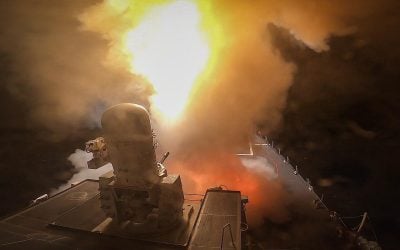
The Houthis fight with cheap weapons against expensive defences. A one-way attack drone can cost around a thousandth of the naval interceptor sent to shoot it down. In the Red Sea the US Navy fired hundreds of Standard Missiles from late 2023, and in 2026 the strain has shifted to Patriot batteries in Saudi Arabia, reinforced by a Greek Patriot unit at Yanbu, French air defences and an RAF Voyager tanker. The Riyadh attack showed the method: a wave of drones to saturate the defences, then missiles behind them.

4. They Fight on Home Ground
The movement’s heartland is Saada province and the northern highlands, steep mountain country close to the Saudi border. The fighters are drawn from tribes that have fought there for generations, and the Saudi-led war, the blockade and the famine that followed it produced a nationalist backlash the Houthis have exploited. Their support is strong in the north, though they are far from popular across all of Yemen.

5. A Centralised, Closed Organisation
Decisions are taken by a small leadership around Abdul-Malik al-Houthi and carried out quickly. Opposition is suppressed. The organisation is also hard to see into, which matters for any campaign that depends on targeting intelligence. The group funds itself at home: the UN Panel found that fuel customs duties alone brought in about 994 billion Yemeni rials between April 2022 and June 2024, and that a committee had been set up to raise customs, taxes and telecom charges.
6. Their Enemies Are Divided
The forces lined up against the Houthis have rarely pulled in one direction. The internationally recognised government is weak; Saudi Arabia and the United Arab Emirates backed different factions; and the UAE-supported Southern Transitional Council wanted an independent south. Those rifts broke open in December 2025, when STC forces seized Hadramawt and Mahra and Saudi Arabia struck Mukalla. The UAE completed its withdrawal in January 2026. Washington, too, has been reluctant to commit: in September 2026 President Trump called off planned US strikes despite a Saudi request, and the United States has limited itself to intelligence and planning support.
7. War Holds the Movement Together
For the Houthi leadership, conflict is not only a cost. Standing up to Saudi Arabia, Israel and the United States gives the movement legitimacy and a reason to mobilise. The UN Panel reported a recruitment drive built on the war in Gaza; Yemeni officials claimed the number of fighters had grown from about 30,000 in 2015 to 350,000, a figure the Panel could not verify. Political scientist Elham Manea of the University of Zurich told Swiss broadcaster SRF that, at home, the attacks are “about mobilisation”. In quiet periods, the weakness of Houthi administration becomes harder to hide.
What Air Power Has and Has Not Done
The strikes have not been useless. Coalition, American and Israeli raids have destroyed drone and missile stocks, damaged ports and fuel infrastructure, killed senior figures and, in May 2025, pushed the Houthis into an Oman-brokered deal to stop attacking US ships. But none of the campaigns delivered the decisive result their planners hoped for. Operation Rough Rider struck more than 1,000 targets in seven weeks and cost the US Navy two Super Hornets and the Air Force seven Reapers; within a year the Houthis were hitting Riyadh airport and advancing on the coast.
The lesson analysts draw is that air power can degrade the Houthis but cannot defeat them alone. That would take a credible ground force, a united opposition and a political settlement, three things Yemen has lacked since 2015.
Sources: UN Panel of Experts on Yemen, final report S/2024/731; IISS, “Yemen’s Houthis are going underground” (April 2024); Chatham House (March 2025); Yemen Data Project; US Central Command; Air & Space Forces Magazine; NBC News; The War Zone; Associated Press; Reuters; BBC; Al Jazeera; CNN; ACLED; Stimson Center; Sana’a Center for Strategic Studies; SRF; Wilson Center.


0 Comments