
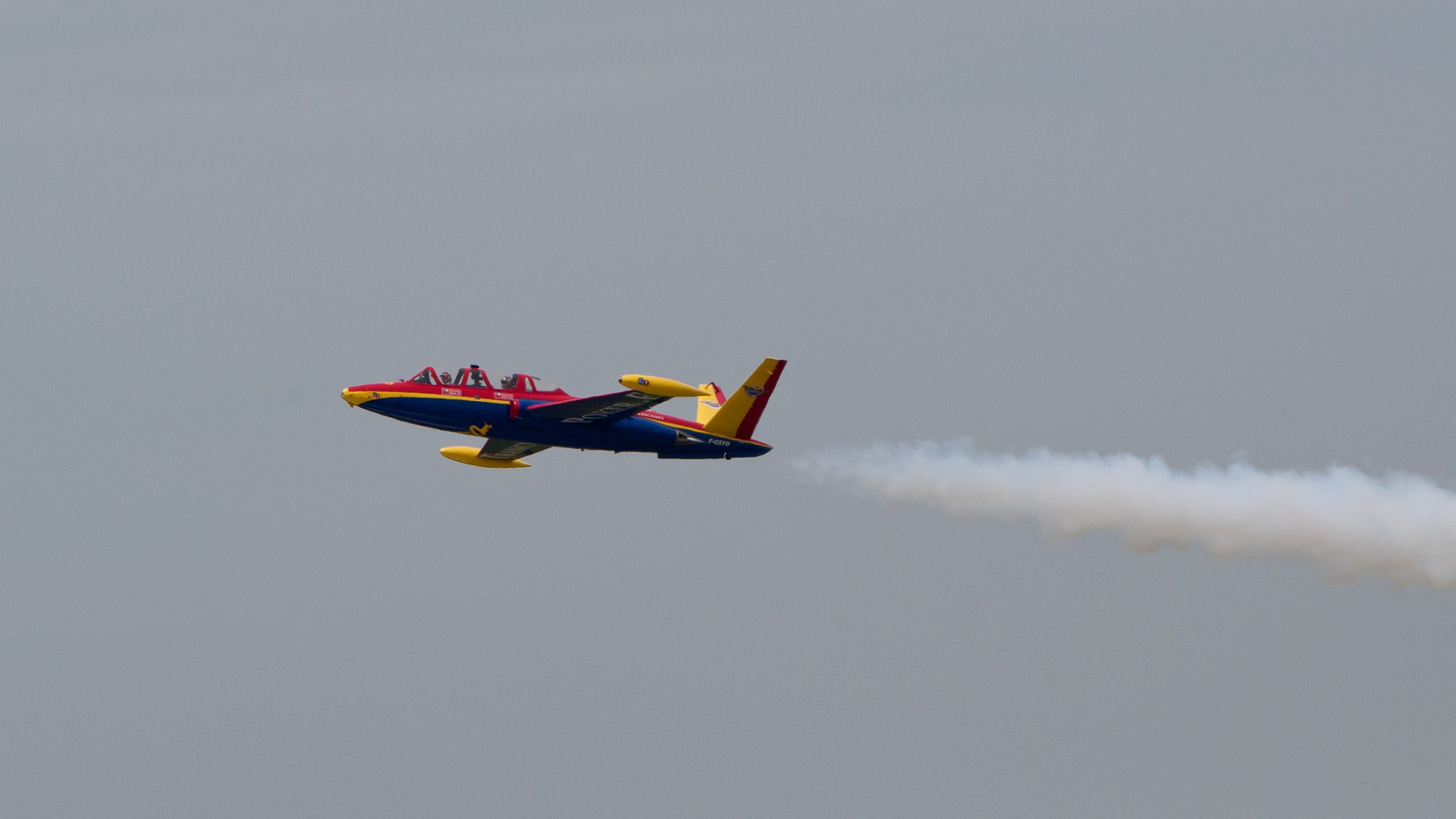
Fouga CM.170
“Magister”
The butterfly-tailed little French twinjet that taught the world to fly jets — one of the first purpose-built jet trainers, licence-made on three continents, and a giant-killer over Sinai in 1967.
The little jet that taught a generation
In the early 1950s every air force in the West faced the same problem: their pilots learned to fly on piston trainers, then jumped into jets that behaved nothing like them. The French firm Établissements Fouga — a glider maker — had an answer. Its designers Pierre Mauboussin and Robert Castello took the slender wing and distinctive butterfly (V) tail of a Fouga sailplane, bolted on two tiny Turbomeca turbojets, and created a jet gentle enough for a first solo yet fast enough to feel like the real thing.
The prototype first flew on 23 July 1952, and the type entered French service in 1956 as the CM.170 Magister. It was among the very first aircraft designed from the outset as a jet trainer rather than a converted fighter, and the idea caught on fast. The Magister was built under licence in West Germany, Finland and Israel, and exported to dozens of air forces — roughly nine hundred were made in all.
But the Magister was never only a schoolhouse aeroplane. With two machine guns in the nose and hardpoints for bombs and rockets, it doubled as a cheap light-attack machine — and in 1967 Israeli Fougas went to war in earnest, hammering armour in the Sinai and on the West Bank. From aerobatic star with the Patrouille de France to giant-killer over the desert, the friendly little trainer had a surprising second life.
01How a glider firm invented one of the first purpose-built jet trainers
Fouga made sailplanes, and it showed. The Magister’s long, efficient wing and its trademark V-tail were lifted almost directly from the company’s CM.8 glider experiments. The original CM.130 concept was judged underpowered, so Fouga enlarged it into the CM.170 and fitted a pair of the new Turbomeca Marboré turbojets — each barely the size of a beer keg, each giving only around 400 kg of thrust.
The result was a machine marketed as offering “twin-engine safety with single-engine handling.” It was docile, economical and forgiving — ideal for turning ab-initio pilots into jet aviators — yet genuinely aerobatic. That combination made it one of the defining trainers of the jet age and a template that later aircraft such as the Cessna T-37 and Aero L-29 would follow.
What makes the Magister special
The butterfly V-tail
The Magister’s signature is its V-tail — two angled surfaces that do the work of a conventional fin and tailplane combined. Inherited from Fouga’s glider heritage, it saved weight and drag and gave the little jet its unmistakable silhouette. A small ventral keel under the rear fuselage tamed the yaw-roll coupling the layout can cause, making it docile enough for a student’s first jet solo.
Two tiny Turbomeca turbojets
Power came from a pair of Turbomeca Marboré turbojets — small, cheap, reliable centrifugal-flow engines giving only about 4 kN (400 kg) of thrust each in the early Marboré II. Two small engines meant an engine failure was rarely fatal, and their modest thirst kept flying-hour costs low. Later CM.170-2 Super Magisters swapped in the more powerful Marboré VI.
Trainer by day, attacker by need
Two 7.5 mm or 7.62 mm machine guns sat in the nose, and two underwing hardpoints could carry light bombs, unguided rockets or even SS.11 wire-guided anti-tank missiles. That armament turned a gentle trainer into a usable light-attack aircraft — the reason cash-strapped air forces from Central Africa to Central America pressed it into combat.
02Why the V-tail worked — and why the Magister needed a keel
A V-tail (or “butterfly” tail) merges the vertical and horizontal stabilisers into two diagonal surfaces, each acting as both rudder and elevator through mixed “ruddervator” controls. In theory it means less wetted area and less drag. In practice it can produce an unwanted coupling — apply rudder and the aircraft also tends to roll. Fouga answered this with a small keel-strake beneath the tail that damped the effect, so the Magister stayed honest and predictable even in the hands of a first-solo student. It is one of the few V-tailed aircraft ever built in large numbers.
03The Marboré: the pocket-sized turbojet that powered a generation
The Turbomeca Marboré was a triumph of doing a lot with a little. A simple single-stage centrifugal turbojet, it was small enough to sit two abreast in the Magister’s slim fuselage, and it was cheap to build and maintain. The same basic engine powered the Cessna T-37’s French cousins, target drones and other light jets. In the Magister the twin-Marboré installation gave modest performance — a top speed around 715 km/h — but outstanding safety and economy, exactly what a trainer needs. Finnish crews nicknamed the aircraft “Kukkopilli” (ocarina) for the whistle of its engines.
Full specifications
Airframe & Performance
- طاقم
- 2 (instructor + student, tandem)
- طول
- ~10.06 m
- طول الجناحين
- ~12.15 m (over tip tanks)
- ارتفاع
- ~2.80 m
- الوزن الفارغ
- ~2,150 kg
- Max takeoff weight
- ~3,200 kg
- Max speed
- ~715 km/h at altitude
- سقف الخدمة
- ~11,000 m (36,000 ft)
- يتراوح
- ~925–1,200 km (with tip tanks)
Propulsion, Armament & Production
- Engines
- 2 × Turbomeca Marboré II turbojet
- Thrust (each)
- ~3.9 kN (~400 kg); Marboré VI ~5.1 kN
- Guns
- 2 × 7.5/7.62 mm MG (~200 rpg)
- External load
- Light bombs, rockets or SS.11 missiles
- First flight
- 23 July 1952
- In service
- 1956
- Built
- ~900 (sources vary, ~880–930)
- Warbird value
- Roughly €100k–300k today (estimate)
04What a Fouga Magister costs — then and now
The Magister was a state-and-export product of the 1950s–60s, sold air-force to air-force, so there is no clean open-market unit price on record. What does exist is a lively modern warbird market: airworthy Magisters change hands for very roughly €100,000–300,000 depending on condition and hours, which makes it one of the more affordable ex-military jets to own. Operating costs are modest by jet-warbird standards — the twin Marborés are frugal — but any figure you see should be read as an order-of-magnitude estimate, not a quoted price.
From glider firm to global classroom
The idea takes shape
Fouga, a glider maker, begins work on a light jet trainer, drawing on the wing and V-tail of its CM.8 sailplane experiments.
First flight
The CM.170 prototype flies on 23 July, its twin Marboré turbojets and butterfly tail marking it out from every other trainer of the day.
Enters service
The Magister joins the French Armée de l’Air as a standard basic jet trainer; licence production begins in West Germany, Finland and Israel.
The lone Fouga of Katanga
During the Congo Crisis a single Katangese Magister, flown by a European mercenary pilot, harasses UN forces at the Siege of Jadotville.
War over Sinai
Israeli Fougas of No. 147 Squadron fly close-air-support strikes in the Six-Day War, attacking armour on the Sinai and West Bank fronts — and taking heavy losses.
Star of the Patrouille de France
The French national aerobatic team flies the Magister for over a decade, cementing its image as a nimble, crowd-pleasing display jet.
The trainers retire
Finland retires its fleet by 1988; Ireland flies its last Magisters until 1999. One by one the schoolhouse Fougas are replaced by Hawks and Alpha Jets.
Belgium’s last duty flights
Belgium becomes the final air force to operate the Magister in a service role. Today the type lives on as a much-loved civilian warbird.
Twelve stories of the Fouga Magister
A sailplane with jets
The Magister’s wing and butterfly tail came almost straight from a Fouga glider.
Read the full story
23 July 1952
The prototype took the air with two tiny Marboré engines and a tail like no other.
Read the full story
The tail that named it
The V-tail is so rare in production aircraft that the Magister became its most famous example.
Read the full story
Twin-engine safety, single-engine feel
Two small engines made the Magister forgiving for a pilot’s very first jet solo.
Read the full story
Made on three continents
Germany, Finland and Israel all built the French trainer under licence.
Read the full story
The lone Fouga of Katanga
A single Magister flown by a mercenary briefly ruled the skies over secessionist Katanga.
Read the full story
Magisters go to war
Israeli Fougas flew close-air-support strikes over Sinai and the West Bank — and paid a price.
Read the full story
Patrouille de France
For over a decade the French national team dazzled crowds in the Magister.
Read the full story
The Hammarskjöld question
A Katangese Fouga has long featured in theories about a 1961 UN air disaster.
Read the full story
A poor nation’s strike jet
From El Salvador to Morocco, the cheap Magister flew real combat missions.
Read the full story
Kukkopilli — the ocarina
Finnish pilots named the Magister after the whistling flute-like sound of its engines.
Read the full story
A warbird favourite
Affordable and docile, the Magister is one of the most popular ex-military jets to own.
Read the full story
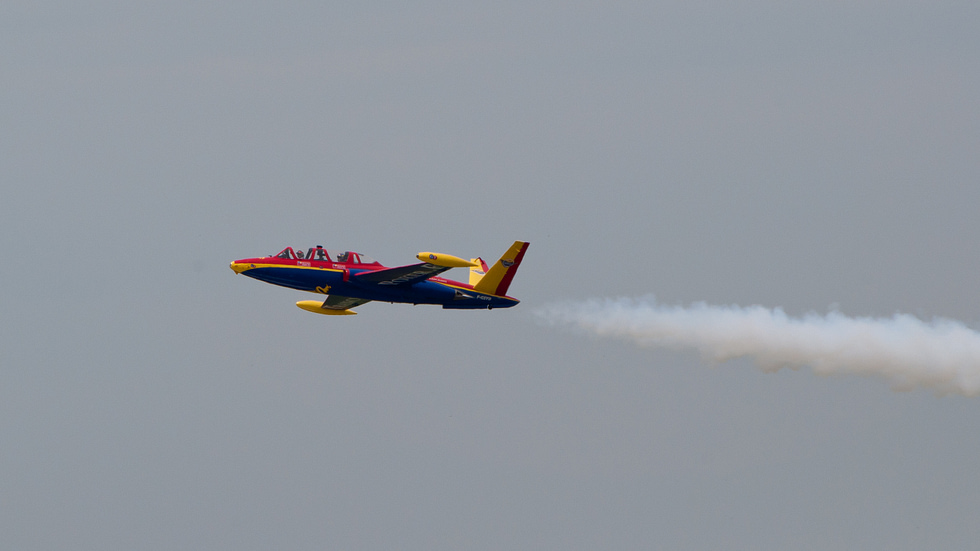
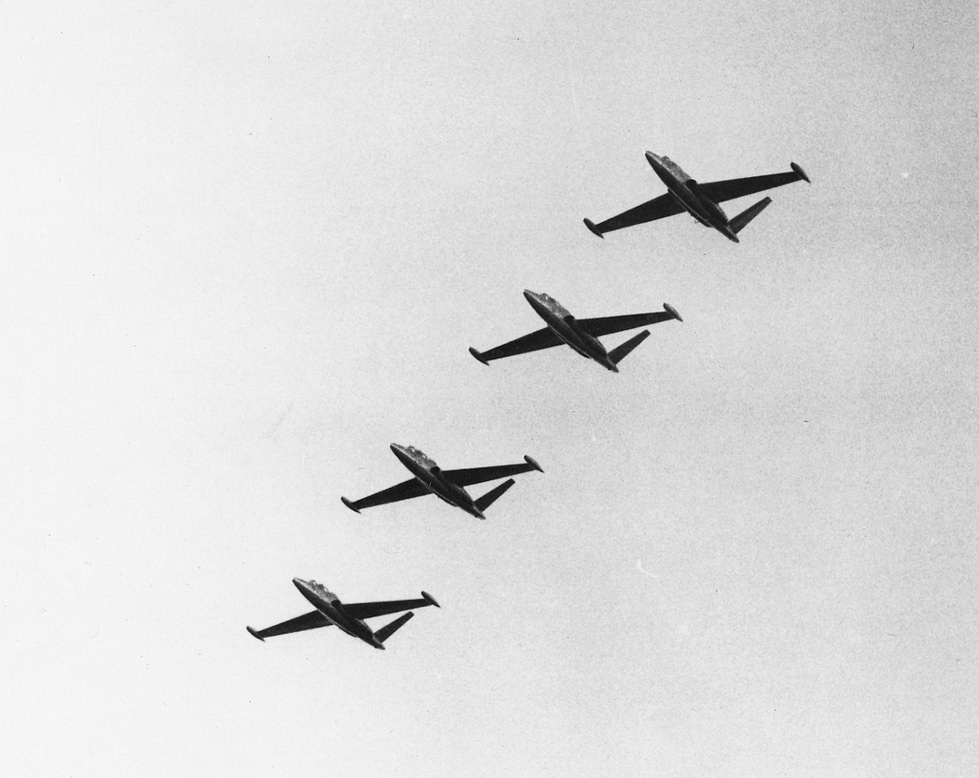
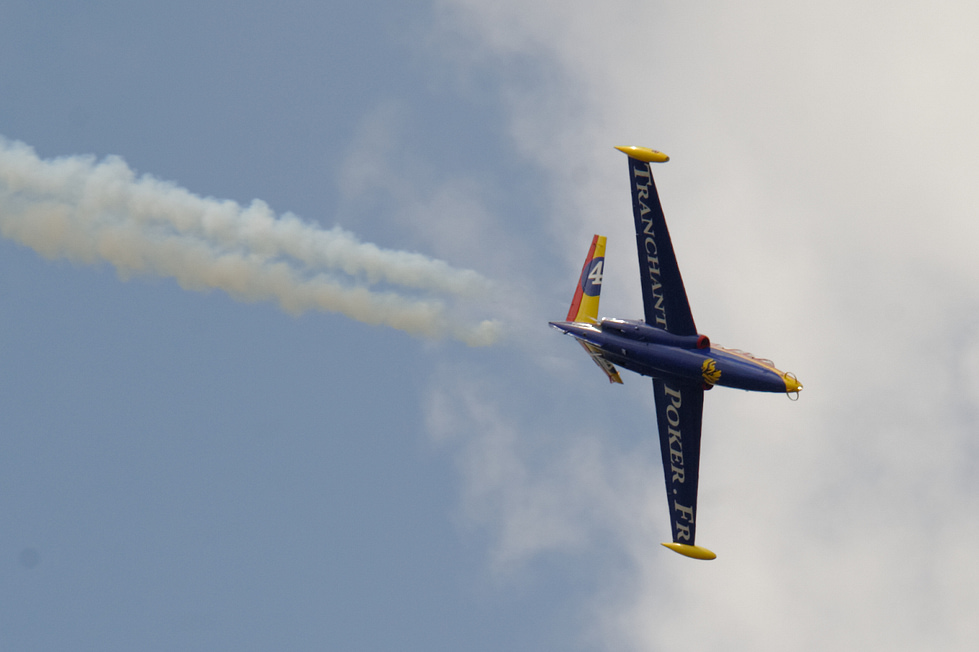
The Magister in pictures
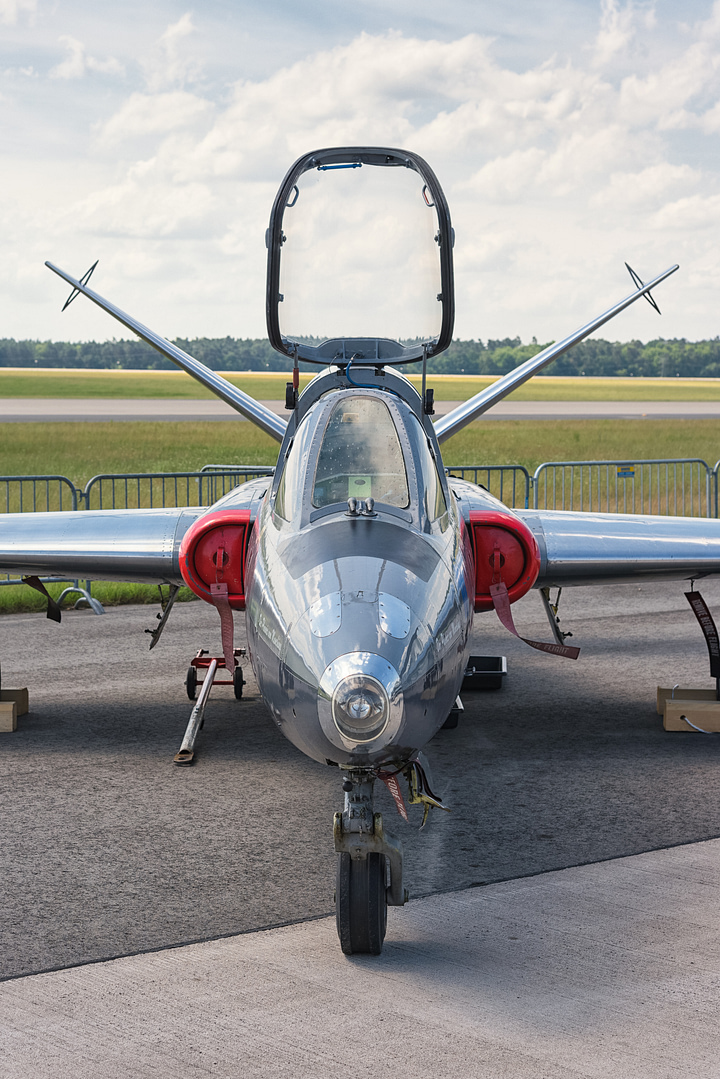
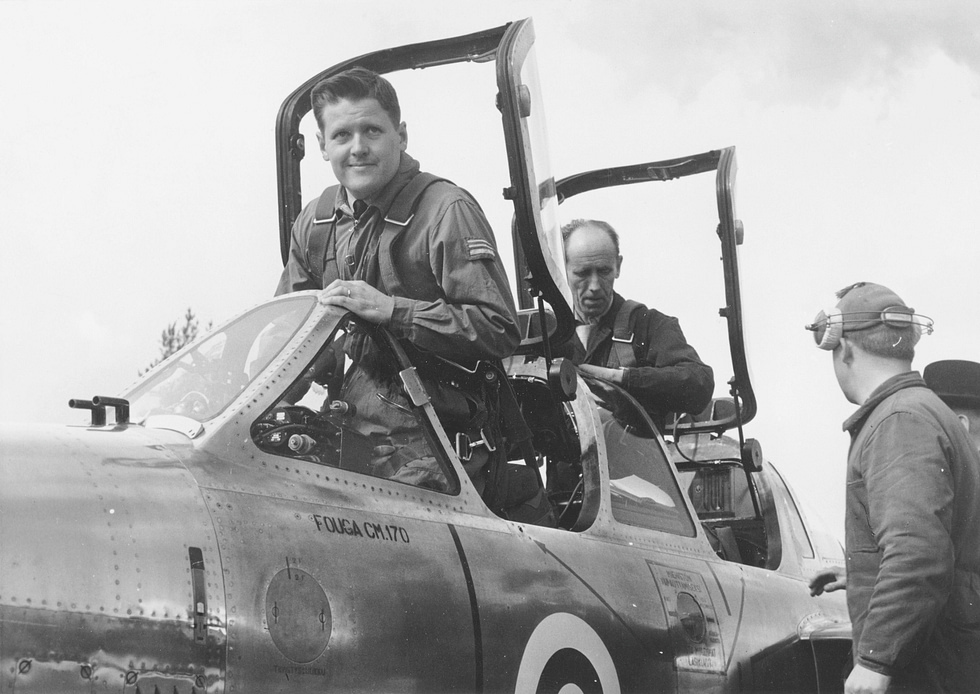
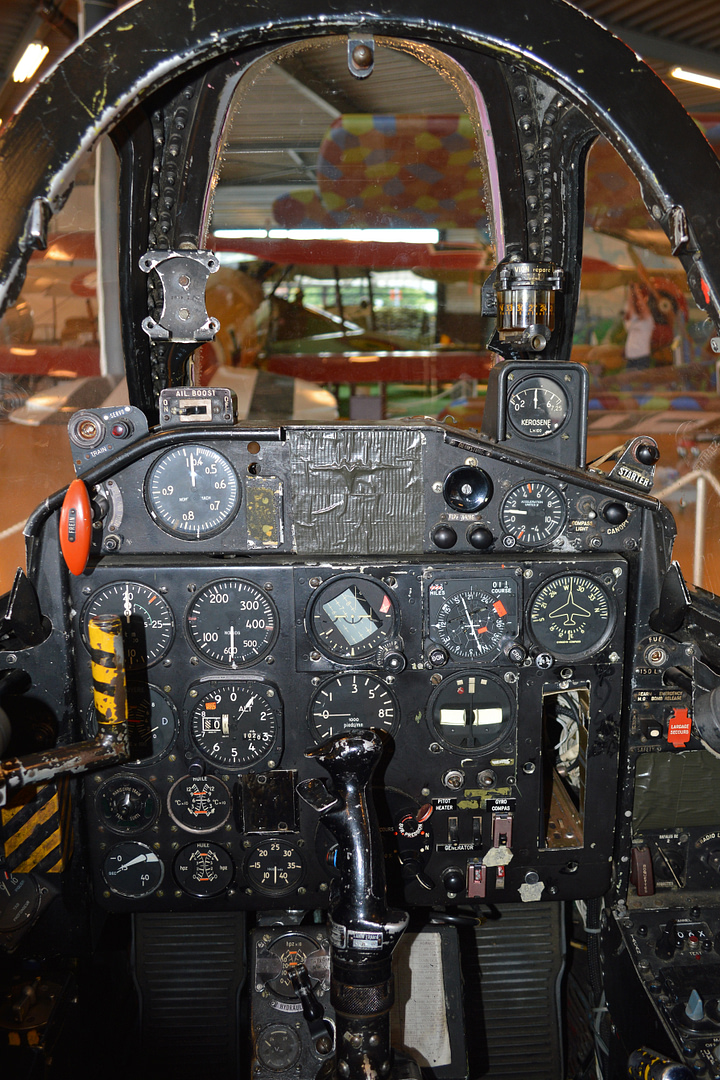
The Magister in motion
A dedicated Fouga Magister video is coming soon to this page. In the meantime, explore the gallery above and the twelve stories for the full picture of the butterfly-tailed trainer — from its 1952 first flight to its second life as a warbird.
The Fouga Magister in motion
Wings Over the Rockies Air & Space Museum — one of the most-watched Fouga Magister films on YouTube.
Where the Magister flew
The trainer that went to war
The Magister was built to teach, not to fight — but with guns in the nose and bombs under the wings it became a light-attack aircraft for air forces that had nothing else. Its most intense day of combat came in June 1967, when Israeli Fougas struck armour in the Six-Day War; it also saw action over the Congo, the Western Sahara and El Salvador. Slow and lightly built, it was always vulnerable to ground fire, and casualties could be heavy.
Compare the combat record of every military aircraft. Figures as of July 2026.
Everything people ask about the Fouga Magister
Can I fly in a Fouga Magister?
Why does the Fouga Magister have a V-tail?
How fast is the Fouga Magister?
Did the Fouga Magister see combat?
How many Fouga Magisters were built?
Which aerobatic teams flew the Magister?
Is the Fouga Magister still flying?
What replaced the Fouga Magister?
You can’t fly the Fouga Magister.
These, you can.
Some legends only live in museums — others are fuelled and waiting. MiGFlug has put civilians in real military jet cockpits since 2004.
 Fly the L-39 AlbatrosThe world’s most-flown jet trainer — aerobatics included
 Fly the F-104 Starfighter“The missile with a man in it”
 Fly the MiG-21The Cold War’s most-produced jet
 حلّق بطائرة تي-33 شوتينغ ستارAmerica’s first jet trainer
 Fly the DH VampireA piece of early jet history
 Fly the S.211Agile Italian jet trainer
 Fly the MB-326The classic Aermacchi jet
 Fly the MiG-15The Soviet legend of the Korean War
Continue the tour
Every fact, checked
- Military Factory — Fouga CM.170 MagisterSpecifications, variants, production figures and operator list.
- GlobalMilitary.net — CM.170 MagisterOperator roster and training-aircraft history.
- Pima Air & Space MuseumDevelopment background and the V-tail glider heritage.
- Palm Springs Air Museum — Warbird WednesdayDesign, engines and warbird-era context.
- Valiant Air Command Warbird MuseumReference on preserved airframes and operations.
- Minijets — Fouga en AfriqueAfrican operators, Katanga and light-attack use.
- FAI records databaseReference for period performance classifications.
- National Museum of the US Air ForceGeneral reference for jet-trainer development of the era.