
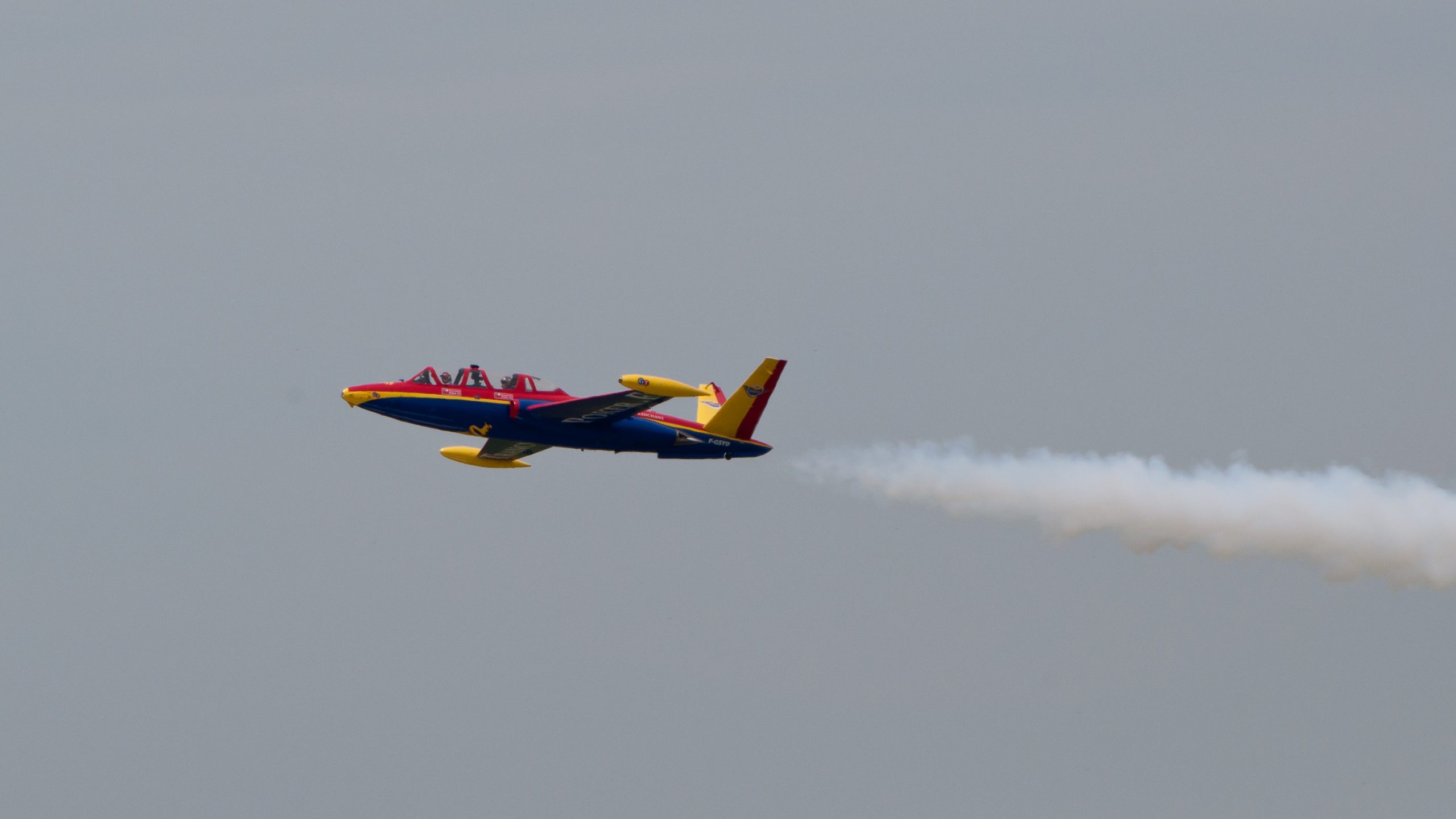
Fouga CM.170
“Magister”
The butterfly-tailed little French twinjet that taught the world to fly jets — one of the first purpose-built jet trainers, licence-made on three continents, and a giant-killer over Sinai in 1967.
The little jet that taught a generation
In the early 1950s every air force in the West faced the same problem: their pilots learned to fly on piston trainers, then jumped into jets that behaved nothing like them. The French firm Établissements Fouga — a glider maker — had an answer. Its designers Pierre Mauboussin and Robert Castello took the slender wing and distinctive butterfly (V) tail of a Fouga sailplane, bolted on two tiny Turbomeca turbojets, and created a jet gentle enough for a first solo yet fast enough to feel like the real thing.
The prototype first flew on 23 July 1952, and the type entered French service in 1956 as the CM.170 Magister. It was among the very first aircraft designed from the outset as a jet trainer rather than a converted fighter, and the idea caught on fast. The Magister was built under licence in West Germany, Finland and Israel, and exported to dozens of air forces — roughly nine hundred were made in all.
But the Magister was never only a schoolhouse aeroplane. With two machine guns in the nose and hardpoints for bombs and rockets, it doubled as a cheap light-attack machine — and in 1967 Israeli Fougas went to war in earnest, hammering armour in the Sinai and on the West Bank. From aerobatic star with the Patrouille de France to giant-killer over the desert, the friendly little trainer had a surprising second life.
01How a glider firm invented one of the first purpose-built jet trainers
Fouga made sailplanes, and it showed. The Magister’s long, efficient wing and its trademark V-tail were lifted almost directly from the company’s CM.8 glider experiments. The original CM.130 concept was judged underpowered, so Fouga enlarged it into the CM.170 and fitted a pair of the new Turbomeca Marboré turbojets — each barely the size of a beer keg, each giving only around 400 kg of thrust.
The result was a machine marketed as offering “twin-engine safety with single-engine handling.” It was docile, economical and forgiving — ideal for turning ab-initio pilots into jet aviators — yet genuinely aerobatic. That combination made it one of the defining trainers of the jet age and a template that later aircraft such as the Cessna T-37 and Aero L-29 would follow.
What makes the Magister special
The butterfly V-tail
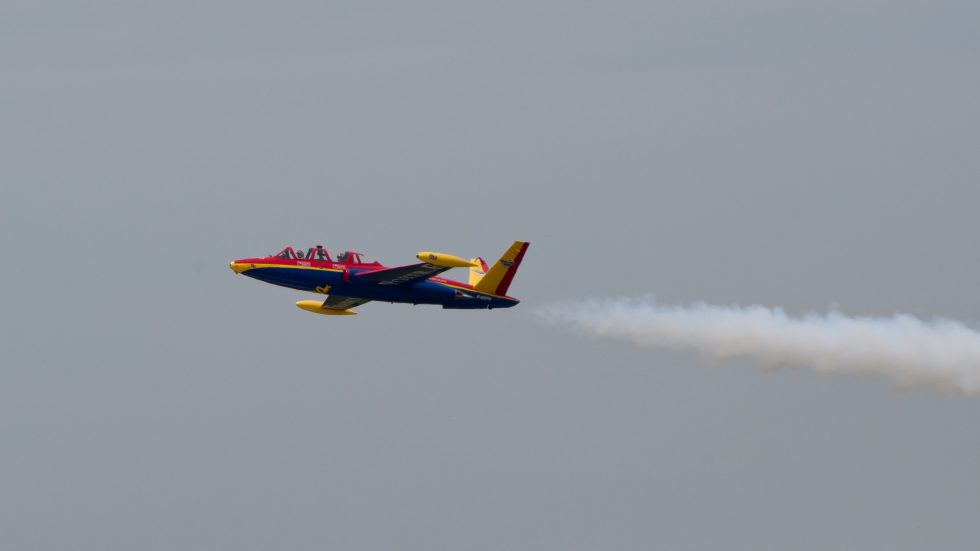
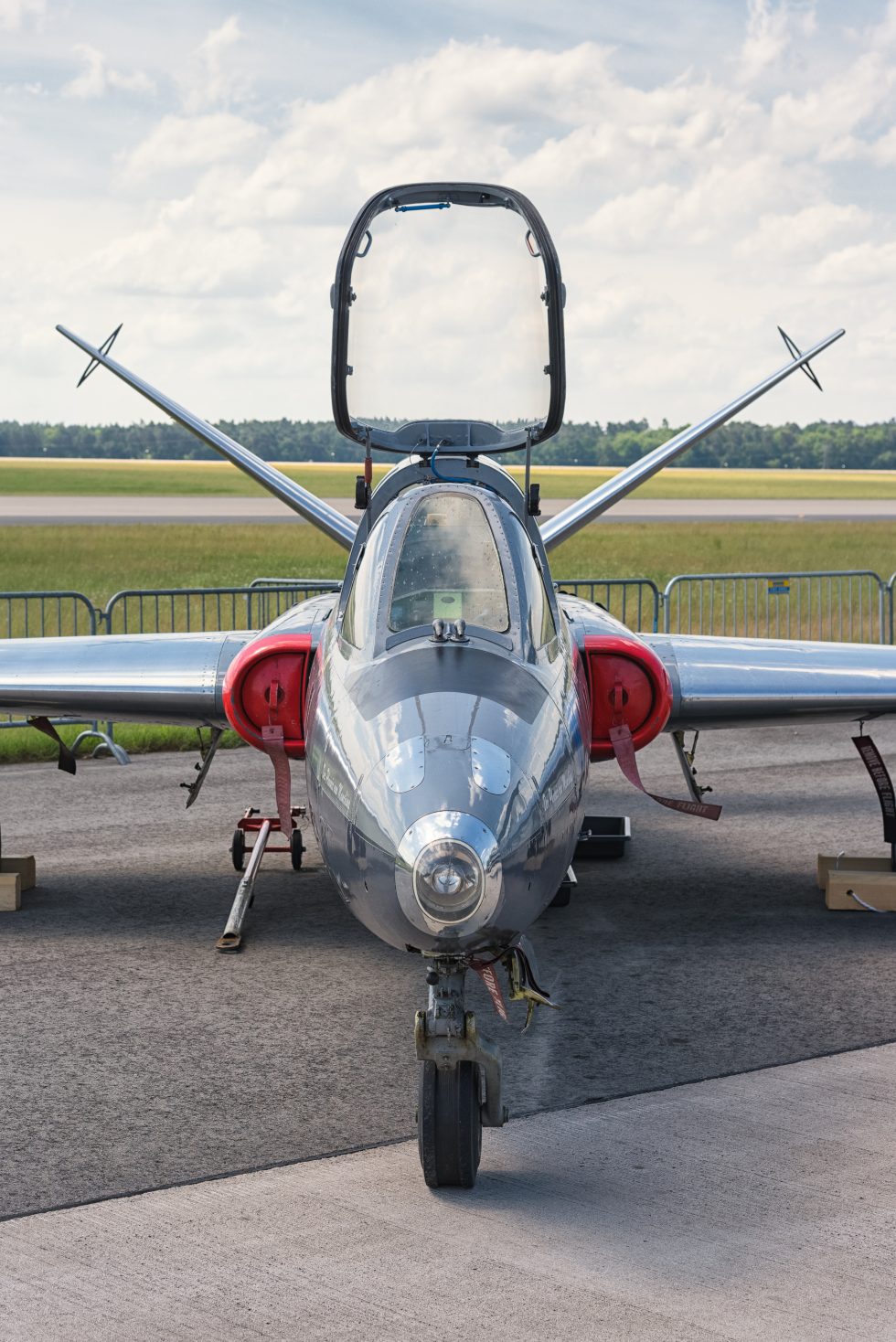
The Magister’s signature is its V-tail — two angled surfaces that do the work of a conventional fin and tailplane combined. Inherited from Fouga’s glider heritage, it saved weight and drag and gave the little jet its unmistakable silhouette. A small ventral keel under the rear fuselage tamed the yaw-roll coupling the layout can cause, making it docile enough for a student’s first jet solo.
Two tiny Turbomeca turbojets
Power came from a pair of Turbomeca Marboré turbojets — small, cheap, reliable centrifugal-flow engines giving only about 4 kN (400 kg) of thrust each in the early Marboré II. Two small engines meant an engine failure was rarely fatal, and their modest thirst kept flying-hour costs low. Later CM.170-2 Super Magisters swapped in the more powerful Marboré VI.
Trainer by day, attacker by need
Two 7.5 mm or 7.62 mm machine guns sat in the nose, and two underwing hardpoints could carry light bombs, unguided rockets or even SS.11 wire-guided anti-tank missiles. That armament turned a gentle trainer into a usable light-attack aircraft — the reason cash-strapped air forces from Central Africa to Central America pressed it into combat.
02Why the V-tail worked — and why the Magister needed a keel
A V-tail (or “butterfly” tail) merges the vertical and horizontal stabilisers into two diagonal surfaces, each acting as both rudder and elevator through mixed “ruddervator” controls. In theory it means less wetted area and less drag. In practice it can produce an unwanted coupling — apply rudder and the aircraft also tends to roll. Fouga answered this with a small keel-strake beneath the tail that damped the effect, so the Magister stayed honest and predictable even in the hands of a first-solo student. It is one of the few V-tailed aircraft ever built in large numbers.
03The Marboré: the pocket-sized turbojet that powered a generation
The Turbomeca Marboré was a triumph of doing a lot with a little. A simple single-stage centrifugal turbojet, it was small enough to sit two abreast in the Magister’s slim fuselage, and it was cheap to build and maintain. The same basic engine powered the Cessna T-37’s French cousins, target drones and other light jets. In the Magister the twin-Marboré installation gave modest performance — a top speed around 715 km/h — but outstanding safety and economy, exactly what a trainer needs. Finnish crews nicknamed the aircraft “Kukkopilli” (ocarina) for the whistle of its engines.
Full specifications
Baseline note: the figures below describe the CM.170-1 Magister as built in France from 1956 — two Turbomeca Marboré IIA turbojets of 400 kgf apiece, tip tanks as standard equipment, and no ejection seats. It is the right baseline because it is the aeroplane NATO’s Air Training Advisory Group chose in 1954 after comparing twenty-four candidate trainers, the aeroplane Belgium, West Germany, Finland and Israel first bought and then built, and the aeroplane that went to war over Sinai, the West Bank and Katanga. Deltas for the CM.170-2 with Marboré VI engines, the navalised CM.175 Zéphyr, the Israeli IAI Tzukit rebuild and the licence-built German, Finnish and Israeli aircraft are in grey. Three cautions before the numbers. First, production. No two authorities agree: the standard English reference gives 868 in its data panel (576 French, 194 German, 62 Finnish, 36 Israeli) and 898 in its own variants list (761 CM.170-1 plus 137 CM.170-2); the warbird literature says 918; French and Israeli accounts say 929. The Israeli licence figure alone appears as 36, 50 and 80 in three respectable places. "Roughly 900" is the only total that can be stated without a footnote. Second, the engine of the CM.170-2. English-language prose repeatedly calls it the Marboré IV; the same article’s variants list, the French account, the Hebrew account and Turbomeca’s own family designations all say Marboré VI of 480 kgf. The VI is correct, and French sources supply the detail the others omit: it came in at production aircraft number 405. Third, the type changed under one designation. Powered aileron servos arrived at aircraft number 165 because high-speed roll control was heavy; the bigger engine arrived at 405; ejection seats never arrived at all. A "Magister specification" is therefore always a snapshot of one block of one production run.
Dimensions & weights
- Crew
- 2 in tandem — pupil in front, instructor behind. The rear seat is the whole reason the aeroplane looks the way it does: sitting low and well aft, an instructor can see nothing over the pupil’s head, so Fouga bulged the front screen and fitted a binocular periscope above the rear canopy. It is the Magister’s second-most recognisable feature after the tail
- Length
- 10.06 m (33 ft 0 in). Unchanged across every mark including the Zéphyr and the Tzukit. For scale, a Lockheed T-33 is 11.51 m and a BAC Jet Provost T.3 is 9.72 m; the Magister sits between the two, and weighs less than half what the T-33 does
- Wingspan
- 12.15 m (39 ft 10 in) measured over the wingtip tanks, which are permanent fixtures rather than stores. French sources give 12.12 m for the same aeroplane, a rounding difference rather than a design one. The wing is straight, trapezoidal and thoroughly conventional — Fouga spent its originality entirely at the back end
- Height
- 2.80 m (9 ft 2 in). Low enough that the canopy, which hinges upwards and rearwards, is reached from a single step, and low enough that ground crew could change an engine without staging. Both Marborés could be swapped in 45 minutes
- Wing area
- 17.30 m² (186.2 sq ft), aerofoil NACA 64 series. Fitted with stall strips, wing fences and airbrakes above and below the surface — a training wing, designed to warn before it stops flying rather than to squeeze out the last knot
- Aspect ratio
- 7.42 — very high for a jet, and closer to a glider than to a fighter. That is not an accident. Fouga was a sailplane builder, the Magister’s ancestry runs straight back through the CM.8 jet-glider testbeds, and the type’s famous ability to be flown a long way on very little thrust is a direct inheritance
- Tail geometry
- V-tail, 110° included angle — the signature. Two surfaces doing the work of three, carried clear of the jet efflux, mounted on a fuselage too slim for a conventional fin root. A ventral keel runs under the rear fuselage to kill the adverse roll the butterfly tail produces when rudder is applied, and the keel carries a small fourth wheel that catches over-rotation on landing
- Empty weight
- 2,150 kg (4,740 lb). A T-33 is empty at 3,794 kg. The Magister is a genuinely small aeroplane, and its whole economic argument — that a country could train jet pilots from first solo to advanced without ever buying a piston trainer — rests on that number
- Loaded weight
- 2,850 kg (6,283 lb) without tip tanks, which is the configuration most performance figures describe. Quoting it as "the" loaded weight is misleading, because tip tanks were standard and the aeroplane was rarely flown without them
- Maximum take-off weight
- 3,200 kg (7,055 lb). Armed, tanked and with two crew there is very little margin left, and Israeli pilots flying close support in June 1967 were operating at the top of the envelope in June heat over the Negev and the Jordan valley
- Internal fuel
- 730 litres (193 US gal, 161 imp gal) in two flexible fuselage cells of 225 and 475 litres feeding both engines from a common system, plus an 11-litre accumulator that keeps the engines fed for 30 seconds of inverted flight at maximum power. That last tank is a deliberate aerobatic-training provision, and it is why so many display teams chose the type
- External fuel
- 2 × 125 litres (33 US gal, 27.5 imp gal each) in the fixed tip tanks, for 980 litres total; larger 230-litre tips were available. The tips are not jettisonable stores, they are structure, and they carry the endplate benefit as well as the fuel
- Wing loading
- 165 kg/m² (33.8 lb/sq ft) at loaded weight — about a third of a contemporary day fighter. This is the number that explains the Magister’s honesty in the circuit, its willingness to fly off grass, and equally its complete inability to survive over a defended battlefield, which Israel discovered in three days of June 1967
Performance
- Maximum speed
- 715 km/h (444 mph, 386 kn) at 9,150 m (30,000 ft). Tzukit figures published in Israel give 705 km/h at the same height despite the bigger engine, which is one of several reasons the circulating Tzukit data should be treated with suspicion
- Never-exceed speed
- 860 km/h (534 mph, 464 kn), Mach 0.82. French sources quote a working limit of Mach 0.7. The Magister is not a fast aeroplane and was never meant to be; what it does is behave like a fast aeroplane at speeds a student can survive
- Rate of climb
- 17 m/s (3,345 ft/min) at sea level, clean of tip tanks. Less than the Vampire and the Meteor a graduate would go on to, comfortably more than the piston trainers it replaced, and the deliberate point of the design: the step from Magister to front-line jet was meant to be small
- Service ceiling
- 11,000 m (36,090 ft). The cockpit is pressurised and air-conditioned, which in a basic trainer of 1954 was close to luxury and was one of the things NATO’s evaluators noticed
- Range, clean
- 925 km (575 miles, 500 nm) on internal fuel. The same figure is published for the carrier-capable Zéphyr, which carried the same fuel
- Range, with tip tanks
- 1,200 km (745 miles, 648 nm). The tips buy about 275 km, and that margin is what made the Magister usable as a liaison and staff hack — a role it filled in France and Belgium long after it had stopped teaching anybody to fly
- Endurance
- 2 hr 40 min with tip tanks. A long time for a small jet of the 1950s, and the reason a training sortie could contain a full aerobatic sequence, a navigation leg and a circuit detail without a refuelling stop
- Combat radius
- ~100 km with two machine guns, rocket pods and reserves — derived rather than published, and consistent with Israeli practice in 1967, when 147 Squadron flew from Hatzerim against Rafah and Khan Yunis and then had to be moved north to Ramat David to reach the Syrian front at all. The Magister’s reach as an attack aeroplane was the length of an artillery duel
- Take-off distance to 15 m
- 930 m (3,050 ft). The Messier tricycle undercarriage was cleared for grass and rough strips, and Finland, Ireland and several African operators used that. It is one of the reasons a small air force could run the type without building anything
- Thrust-to-weight ratio
- 0.28 at loaded weight on Marboré IIs, rising to about 0.34 on the Marboré VI. Neither number is impressive; both are enough, because the airframe is clean and the wing is efficient
- Inverted flight
- 30 sec at maximum power — the limit set by the 11-litre inverted-flight accumulator. Published as a certified figure rather than an estimate, and a rare case of a specification that tells you exactly what the designers expected students to do with the aeroplane
Propulsion & systems
- Engines
- 2 × Turbomeca Marboré IIA turbojets — the engine and the airframe grew up together. Joseph Szydlowski’s Turbomeca and Pierre Mauboussin’s Fouga had been collaborating since 1948, when the CM.8 glider was flown on a 100 kgf Piméné. The Magister exists because the Marboré existed; the original CM.130 design, on two Palas, was rejected by the Armée de l’air as simply too feeble
- Rated thrust
- 3.92 kN (880 lbf, 400 kgf) each at 22,600 rpm, sea level. Maximum continuous is 705 lbf. CM.170-2 and Tzukit: Marboré VI at 4.7 kN (1,058 lbf, 480 kgf), a 20 per cent gain for a fuel-flow penalty of about a tenth. CM.173 Super Magister: Marboré Super VI at 5.1 kN (1,143 lbf)
- Engine architecture
- Single-stage centrifugal compressor, annular chamber, single-stage axial turbine — pressure ratio 4:1, specific fuel consumption 1.08 lb/lbf/hr. Crude by any later standard, but small, cheap, robust and buildable in quantity. Licence-built in Spain by ENMASA as the Marboré M21 and in the United States by Teledyne CAE as the J69, where it went on to power the Ryan Firebee target drone and the Cessna T-37
- Engine size and weight
- 1,064 mm long, 567 mm diameter, 133 kg (41.9 in, 22.3 in, 293 lb) dry. Two of them together weigh less than a quarter of the aeroplane empty, and both can be changed in three quarters of an hour
- Engine installation
- Buried in the wing roots, exhausting either side of the rear fuselage — the decision that produced the tail. With the thrust lines that close to the centreline, an engine failure produces almost no asymmetry, so Fouga could advertise "twin-engine safety with single-engined flying characteristics", which for a trainer is a genuinely valuable claim. Relighting a flamed-out Marboré was quick and undramatic
- Flight controls
- Manual, with aileron servo units from aircraft No. 165 — roll control at the top end was heavy enough that Fouga began studying power assistance in 1955 and fitted it in production from the 165th airframe. Airbrakes above and below the wing; the ruddervators are conventional cable-and-rod. Flight International in 1954 called the controls light, well harmonised and firm in feel, and the aeroplane so stable it could be trimmed and flown hands-off indefinitely
- Cockpit
- Pressurised and air-conditioned, tandem, periscope for the rear seat — blind-flying panel ahead of each pilot, engine instruments to the left with flap indicator, flap switch and emergency selectors below them, radio panel on the right bench and armament controls outboard of that. Avionics were VHF, a Lear radio compass and intercom, laid out to NATO accessibility standards, which mattered commercially: the Magister was designed from the start for export
- Escape
- No ejection seats — the single worst thing about the aeroplane, and the criticism the French literature itself puts first. The fuselage was too slim to take seats of the period. The Luftwaffe built a prototype installation in 1964 and abandoned it when it decided to train its pilots in the United States instead; only the one-off CM.173 and the still-born Fouga 90 ever had them. Israel lost six pilots with six aircraft in 1967 in an aeroplane from which a hit crew could not get out
- Undercarriage
- Messier retractable tricycle, cleared for grass — landing light in the nose cone, retractable taxi light on the nosewheel leg, and a fourth wheel in the ventral keel to catch a mishandled flare. The Zéphyr strengthened the whole assembly and added catapult attachments and an arrester hook
- Unit cost
- ~FF 950,000 in 1963 (roughly US$195,000 at the rates of the day). At that price a small air force could buy a dozen jets for the cost of one contemporary fighter, which is precisely how Cameroon, Gabon, Senegal, Togo, Rwanda and Lebanon came to own jets at all — most of them second-hand from Germany or France
- Production and service span
- First flight 23 July 1952, last French delivery January 1970 — the prototype flew from Mont-de-Marsan in the hands of Léon Bourriau; French series production ran 1956 to 1969 with the last airframe leaving the factory on 2 March 1969; Finnish licence production ran to 1967. The Armée de l’air operated 397 aircraft and retired the last in 1996, forty years after the first entered service
04What a Fouga Magister costs — then and now
The Magister was a state-and-export product of the 1950s–60s, sold air-force to air-force, so there is no clean open-market unit price on record. What does exist is a lively modern warbird market: airworthy Magisters change hands for very roughly €100,000–300,000 depending on condition and hours, which makes it one of the more affordable ex-military jets to own. Operating costs are modest by jet-warbird standards — the twin Marborés are frugal — but any figure you see should be read as an order-of-magnitude estimate, not a quoted price.
Armament & payload
The Magister carried two rifle-calibre machine guns and 140 kg of stores, and four air forces sent it against tanks anyway
The Magister’s armament is the armament of a training aeroplane that was sold with a war-fighting option box ticked, and it never became anything more. Two 7.5 mm MAC 52 machine guns in the nose with 200 rounds each, one hardpoint under each wing, and a total external load of 140 kg (310 lb) — two 50 kg bombs, or eight to ten unguided rockets, or a pair of Nord SS.11 wire-guided anti-tank missiles. That is the whole of it. There is no radar, no ranging, no gyro-computing sight worth the name, no ability to carry a stores load that would trouble a jeep. What the aeroplane brought to the battlefield was not firepower but availability: every air force that trained on it already owned dozens, the pilots were instructors and reservists who were already current, and it could fly from a grass strip a few minutes behind the line. Gun calibre, ammunition and pylon fits varied by operator — France went to 7.62 mm NATO, Israel fitted 0.30-in Brownings, Katanga bolted on locally made bombs, and the Zéphyr usually flew with the guns removed altogether.
The Israeli case is the one that matters, and it is the reason the Magister has a combat reputation at all. In 1964 the Israeli flight school at Hatzerim quietly organised its instructors and reservists into a war-mobilisation squadron. When the plan for June 1967 emerged, it became clear that the ground assault on the Egyptian positions at Rafah would open on the first morning at exactly the hour every capable Israeli combat aircraft was committed to Operation Focus against Arab airfields. The air force commander asked for the ground attack to be delayed; the army refused; and so 44 or 45 armed Magisters of the re-formed 147 Squadron — two Brownings, rocket pods, light bombs — became the entire close air support available to the Israeli army on the opening day of the war. Their first sortie was not an attack at all but a deception: routine-looking four-ships taking off into the morning while the strike force ran silent towards Egypt.
What followed was effective and very expensive. Over roughly 400 operational sorties flown by 42 pilots and one navigator, the Magisters hit Rafah, Khan Yunis and the Gaza border positions on the first day, were switched to the Jordanian front on the second when the Egyptian battle moved out of their reach, worked Jordanian and Iraqi armour on the Jerusalem to Jericho axis and in north-western Samaria, and flew a final abortive detachment to Ramat David for the Golan. Israeli accounts credit them with more than 50 tanks and more than 70 other armoured vehicles, and with helping to blunt the Jordanian armoured thrust towards Jerusalem. Four pilots were killed on the first day alone. Because so many aircraft were hit by small-arms fire on day one, the squadron was ordered to attack from higher altitude on day two, and on day five the squadron commander was shot down on the very first Syrian-front sortie and the mission was abandoned. The loss figure is the one point where the sources part company: Israeli air force histories say six aircraft and six pilots, Shlomo Aloni’s account and the French literature say seven aircraft. Either way it is the highest proportional loss rate of any Israeli squadron in the war. Two pilots, squadron commander Arie Ben-Or and Captain Yaakov Morgan, received decorations later converted to the Medal of Courage. The squadron was disbanded when the war ended and the Magister was never sent to war by Israel again.
Gun
- 2 × 7.5 mm MAC 52 (AA-52) machine guns in the nose, 200 rounds per gun, with link and case collection
- Rechambered to 7.62 mm NATO in French service once France adopted the standard; several export operators followed
- Israeli aircraft carried 2 × 0.30-in Browning; Salvadoran aircraft 2 × 7.62 mm
- Mounted on a tubular frame in the nose cone alongside the landing light — accessible, but the installation was fitted to a fraction of the fleet and many trainers flew with the bay empty and ballasted
- Rifle calibre against armour is an aiming problem, not a penetration one: the Israeli claims against Jordanian Pattons rest on rockets, not on the guns
Air-to-air
- None, ever, in any mark. No radar, no ranging set, no missile rail, no gunsight capable of an air-to-air solution beyond a fixed reticle
- The two machine guns are theoretically usable against another aeroplane and were never used that way in any recorded engagement
- No Magister is credited with an air-to-air victory anywhere
- The reverse was not true: Magisters were shot at by everything, and the type’s absence of ejection seats made every hit potentially fatal
Air-to-surface guided
- 2 × Nord Aviation SS.11 (AS.11 in the air-launched form) wire-guided anti-tank missiles, one per pylon
- Manual command to line of sight: the pilot flew the missile onto the target with a thumb controller while holding the aircraft steady, which in a two-seat trainer with no autopilot meant a long, straight, slow run-in over a defended target
- Cleared for the type and demonstrated; there is no well-attested operational firing by any Magister operator
- This is the only guided weapon the aeroplane ever carried. No laser designation, no television guidance, no anti-radiation or stand-off capability at any point in forty years of service
Bombs
- 2 × 50 kg (110 lb) general-purpose bombs, one per hardpoint — the standard French fit and the maximum the 140 kg (310 lb) stores allowance permits alongside anything else
- Practice bomb carriers for weapons training, which is what most Magisters that carried anything actually carried
- Israeli 147 Squadron aircraft carried light bombs alongside rockets in June 1967; Salvadoran aircraft flew bombing sorties through the 1980s civil war
- Katanga’s single armed Magister flew with two locally manufactured light bombs, and with them destroyed two DC-4s and a DC-3 on the ground and bombed Irish United Nations troops at Jadotville in September 1961
Rockets
- Matra Type 116 pods with 68 mm SNEB unguided rockets — the standard French air-to-ground fit and the weapon in most surviving Magister gun-camera film
- Earlier French T 10 and T 900 rockets; four 25 kg rockets per wing in the original 1956 specification
- Israeli accounts describe 80 mm air-to-ground rockets on the 1967 aircraft; these, not the guns, did the work against Jordanian and Iraqi armour
- The Zéphyr carried one six-round pod under each wing purely for naval weapons training
- Irish Air Corps Magisters flew with machine guns and rockets as the Light Strike Squadron — the entire offensive air capability of the Irish state from 1975 to 1999
Pods & other stores
- Two hardpoints only, one under each wing, 140 kg (310 lb) total. Everything above competes for the same two stations
- Fixed wingtip tanks of 125 or 230 litres — structure rather than stores, not jettisonable, and the reason the pylons were never traded away for fuel
- No gun pod, no reconnaissance pod, no electronic countermeasures, no targeting system, no chaff or flare dispenser was ever fitted to a service Magister
- The Israeli Tzukit rebuild of the 1980s added a fault-simulation system operated from the instructor’s cockpit — the nearest thing to a mission system the type ever received, and it was a teaching aid, not a weapon
Three typical loadouts
- Advanced training with weapons, France 1960s
- 2 × 7.5 mm nose guns with 200 rounds each, one Matra 116 rocket pod under each wing with practice SNEB rounds, full internal fuel and tip tanks. Endurance about 2 hr 30 min. This is the loadout the aeroplane was designed around: gunnery and rocketry folded into the same syllabus as aerobatics and navigation, so that a student reached his first single-seat fighter having already fired something.
- Close air support, Sinai and the West Bank, 5–10 June 1967
- 2 × 0.30-in Browning machine guns, rocket pods under both wings, light bombs on some sorties, tip tanks. Flown at low level on the first day against Rafah and Khan Yunis and then, after heavy small-arms damage, from higher altitude against Jordanian and Iraqi armour. Roughly 400 sorties by 42 pilots; six or seven aircraft and six pilots lost.
- Counter-insurgency and anti-UN strike, Katanga, September 1961
- 2 machine guns and two locally made light bombs on a single aeroplane, flown by Belgian mercenaries out of Kolwezi and Luano. It attacked Irish UN troops at Jadotville on 13 and 14 September, destroyed three transport aircraft on the ground, and for several weeks was effectively the only combat aircraft in Katanga — a demonstration of what one armed trainer can do against a force with no air cover at all.
Sourcing caveat: no operator has released Magister loading tables, and the stores described here are reconstructed from the 1954 Flight International assessment, Jane’s entries of 1955 to 1966, and national squadron narratives. Israeli sortie and loss totals come from Israeli Air Force heritage material and from Shlomo Aloni’s Air Enthusiast study, which disagree by one airframe; the tank and vehicle claims are Israeli claims and have never been independently audited. Katangese details rest on Flight International’s April 1961 report and on Christopher Othen’s history of the secession. One popular French claim — that Israeli Magisters were fitted with ejection seats shortly before the Six-Day War — should be treated as wrong: Israeli accounts cite the absence of ejection seats as one of the specific reasons operational use of the type was ended after the war.
Variants
Fouga built the world’s first purpose-designed jet trainer to reach mass production, and settled its strangest argument with a prototype that could wear either tail
The butterfly tail is the first thing anybody says about the Magister and the last thing most accounts explain. Fouga was a small subcontractor that built sailplanes, and its jet work began in 1949 by hanging a 100 kgf Turbomeca Piméné on a glider airframe. The V-tail came from that lineage — from the CM.8 series of jet-glider testbeds — and it was kept for four reasons that all point the same way. Two surfaces are lighter and produce less wetted area and less interference drag than three, which matters enormously on an aeroplane with 800 kgf of thrust in total. The tail sits clear of the jet efflux, which on a design with the engines buried in the wing roots and exhausting either side of the rear fuselage is not a convenience but a requirement. The slim rear fuselage offered nowhere sensible to root a fin of adequate area. And in an aeroplane with no ejection seats, a crew abandoning it over the side had a clear path aft instead of a tailplane at head height — a point the Israeli literature makes explicitly and the French literature does not.
It cost something, and Fouga knew it. The butterfly tail couples pitch and yaw: apply rudder and the aeroplane rolls the wrong way, because the ruddervators generate a side force above the centre of gravity. Fouga’s fix was a ventral keel under the rear fuselage, added on the third prototype in February 1953 and carried by every production Magister, which restores directional behaviour and doubles as a spin-recovery aid and a bumper wheel for heavy landings. There was also a political cost. After the fatal crash of the CM.71 and the loss of the first Magister prototype on 3 November 1952, which killed the pilot Georges Lequien and the flight test engineer Jean Chatain, the French press openly questioned whether the butterfly tail was safe at all. Fouga answered it in the most direct way available: prototype 02, first flown on 6 July 1953, was built so that it could fly with either a conventional cruciform tail or the V, and the comparison was run. The conventional tail was found aerodynamically inferior at the higher end of the speed range. The V stayed, and no subsequent Fouga design abandoned it.
The rest of the story is a small company being right at the right moment. The Armée de l’air ordered prototypes in December 1950, chose the type over Morane-Saulnier’s MS.755 Fleuret in October 1953, and in 1954 NATO’s Air Training Advisory Group compared twenty-four trainers and named the Magister the aircraft best suited to carry a pupil from the beginning of training to the end of it. That endorsement is what turned a French order into a world type. Trials at Mont-de-Marsan in 1955 showed that students taught ab initio on the Magister reached solo on a single-seat fighter in 170 flying hours against 220 by the old mixed piston-then-jet route, and that an air force could therefore stop maintaining two training fleets. Production was split across Morane-Saulnier at Ossun, Fouga at Aire-sur-l’Adour and Latécoère at Toulouse, with final assembly at Toulouse-Blagnac, and export orders were deliberately given priority over French ones so that foreign customers could buy straight off the line.
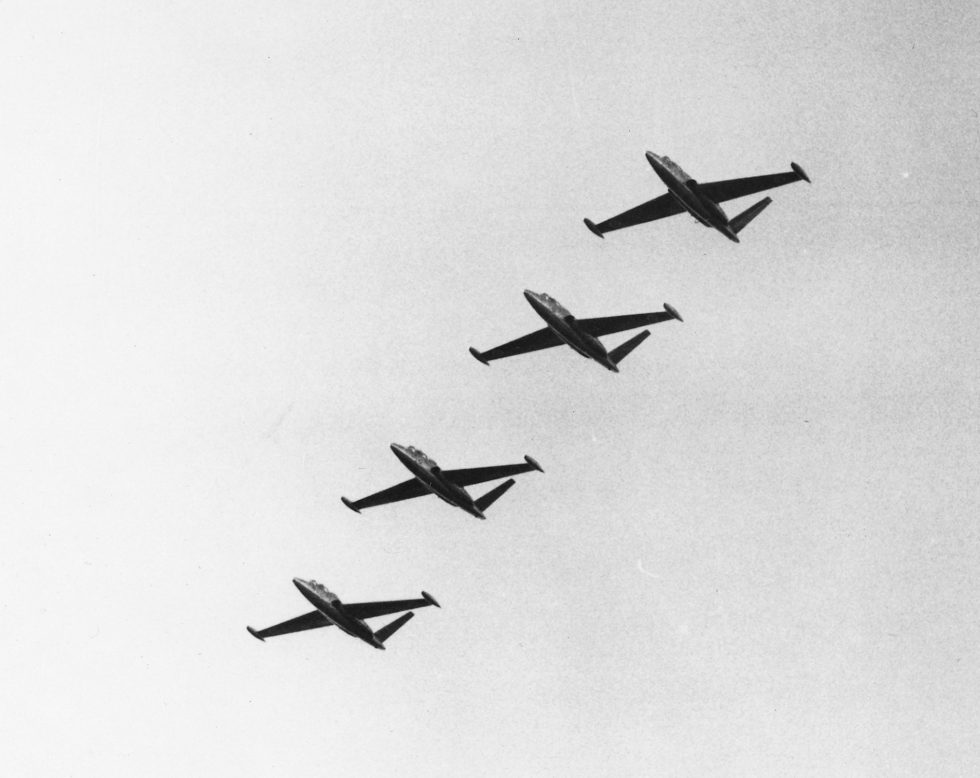
And then a basic trainer with two machine guns went to more wars than most fighters. Belgian Magisters flew attack sorties from Kamina during the Congo crisis in the summer of 1960. Katanga ordered nine, received three by way of a CIA front company, armed one, and used it against United Nations peacekeepers with an effect out of all proportion to its size — and a Katangese Magister is still the leading candidate in the sixty-year argument over whether Dag Hammarskjöld’s DC-6 was shot down near Ndola on 18 September 1961. Israel sent 44 of them against Egyptian and Jordanian armour in 1967. Morocco used them against Algeria in the 1963 Sand War and against the Polisario in the Western Sahara until losses forced them out of combat in the 1980s. El Salvador flew nine ex-Israeli and three French aircraft through the civil war of the 1980s alongside its Ouragans and A-37Bs, losing none to enemy fire but finishing the war with only five serviceable. El Salvador is also the subject of a persistent error: the Magister took no part in the 1969 Football War with Honduras. The Salvadoran air force bought its first jets of any kind in 1974, five years afterwards; the 1969 air war was fought with P-51 Mustangs, F4U Corsairs, T-28s and converted C-47s, and is remembered precisely because it was the last time piston-engined fighters fought each other. Cambodia armed its four. What was left of Katanga’s aircraft was absorbed into the Congolese air force when the secession collapsed in January 1963. Meanwhile the same aeroplane spent sixteen years as the mount of the Patrouille de France, from 1964 to 1980, flew for the Belgian Red Devils, the Irish Silver Swallows, the Brazilian Esquadrilha da Fumaça and the Israeli air force display team, and taught the pilots of more than twenty air forces to fly. Very few aircraft have led two lives that far apart.
- CM.130.R (1949–1950, none built)
- The design that was rejected. A tandem two-seat jet trainer on two 100 kgf Turbomeca Palas, offered to the Armée de l’air as a replacement for the piston Morane-Saulnier MS.475 Vanneau and turned down as hopelessly underpowered. Fouga enlarged the airframe around the coming 400 kgf Marboré and kept the glider-derived butterfly tail. Everything that made the Magister a success followed from that one rejection.
- CM.170.R prototypes and pre-production (1952–1955, 3 prototypes plus 10)
- Prototype 01 flew at Mont-de-Marsan on 23 July 1952 with Léon Bourriau, unpressurised, unarmed and without tip tanks, and was lost with both crew on 3 November 1952. Prototype 03 added the ventral keel. Prototype 02, the important one, could be flown with either a conventional cruciform tail or the V, and carried the first periscope in February 1954. Ten pre-production aircraft followed and were complete by October 1955. Production aircraft were, unusually for the period, almost identical to the prototypes.
- CM.170-1 Magister (1956–1962, about 761 including licence production)
- The definitive first mark, with Marboré IIA engines. Two 7.5 mm guns, two pylons, pressurised cockpit, no ejection seats. Powered aileron servos from aircraft No. 165. This is the aeroplane in almost every published specification and the aeroplane that fought in Katanga and Sinai. Also designated CM.170R in early French and Belgian service.
- CM.170-2 Magister (1960–1967, 137 or 544 depending on whose count you take)
- Marboré VI engines of 480 kgf and revised radio, introduced at production aircraft No. 405. The count is a genuine mess: English sources say 137 built as new, French sources say 544 aircraft carried the standard once re-engining is included, and the two are probably counting different things. Brazil designated its aircraft T-24. French production ended in 1962; Finnish licence production continued to 1967.
- CM.170M Esquif and CM.175 Zéphyr (1956–1994, 2 prototypes plus 30)
- The navalised Magister for the Aéronavale. Arrester hook, catapult attachments, strengthened structure and undercarriage, nose light, and — because it had no ejection seats — sliding canopies that could be locked open for launch and recovery. First flight 31 July 1956 as the CM.170M Esquif; deck trials from HMS Eagle and HMS Bulwark in August 1957 and March 1958; first production aircraft 30 May 1959; into service October 1959 with 59S, the deck-landing school at Hyères, which flew fourteen at a time and rotated the rest through storage to even out the hours. It formed its own display team, the Patrouille de Voltige d’Hyères, in 1962, and served until 1994 — the longest career of any Magister variant anywhere.
- Flugzeug-Union Süd licence production, West Germany (1958–1961, 250 in all)
- The first and largest export customer. Sixty-two aircraft came from Fouga, twenty-two were assembled in Germany from French-supplied parts, and the remaining 166 were built outright by Flugzeug-Union Süd, the Heinkel and Messerschmitt consortium — the first military aircraft the two firms built after the war. The Luftwaffe took the bulk and the Bundesmarine about fifteen. Germany retired them early and sold them on, which is how Algeria, Bangladesh, Lebanon, Gabon and Togo came to operate Magisters at all.
- Valmet licence production, Finland (1958–1967, 18 bought plus 62 built)
- Eighteen French-built aircraft as FM-1 to FM-18 and sixty-two Valmet-built as FM-21 to FM-82. Finland assigned them a wartime secondary attack role because the 1947 peace treaty capped the number of aircraft it could class as bombers. They served as the Finnish Air Force’s jet trainer from 1958 until 1988, when the BAe Hawk replaced them; twenty-one were lost in accidents, six of them fatal. Finnish crews called the type Kukkopilli, the ocarina, after the Marboré’s whistle.
- IAI licence production, Israel (1959–1964, 50 built)
- The deal Israel actually wanted was the licence, not the aeroplane: Bedek Aviation, soon to become Israel Aircraft Industries, was looking for a way to stop being a repair shop and start being a manufacturer, and Al Schwimmer negotiated accordingly in 1957. The first Israeli-assembled aircraft was handed over on 6 July 1960 in a ceremony at which David Ben-Gurion named the type Snunit, swallow. The first twelve came from French kits; from the thirteenth the parts were made in Israel, some redesigned in aluminium and glass fibre. Production stopped in 1964 because surplus ex-Luftwaffe airframes had become cheaper than building new ones; Israel bought about 65 from Germany and 25 from France instead, and around 125 Magisters passed through its flying school.
- IAI Tzukit and the AMIT Fouga (1980–2010, about 80 rebuilt)
- Not a variant so much as a second life. Structural fatigue appeared at the end of the 1970s; Israel costed replacement against rebuilding and chose rebuilding. IAI made over 250 modifications — Marboré VI engines, automatic engine start, cockpits reworked to resemble the American aircraft students would graduate to, new seats, and a fault-simulation system the instructor could trigger from the back. First flight September 1980, first delivery 1983, last delivered November 1986; the programme won IAI the Kaplan Prize. An export version, the AMIT, was offered and attracted no orders.
- CM.171 Makalu, CM.173 Super Magister, Potez CM.191 and Fouga 90 (1957–1978, one or two of each)
- The developments that went nowhere. The CM.171 Makalu was an enlarged airframe on two 1,100 kgf Turbomeca Gabizos, and its only prototype was lost on 20 March 1957. The CM.173 Super Magister, also called the Potez 94, had Marboré Super VI engines and, at last, ejection seats; the single prototype survives in the reserve collection of the Musée de l’Air. The Potez CM.191 was a four-seat Magister, two prototypes. The Fouga 90 of 1978 was the serious attempt at a successor — Turbomeca Astafan turbofans of 690 kgf, a raised rear seat under a reshaped canopy, ejection seats, modern avionics — and it flew on 20 August 1978 into a market that had already chosen the Alpha Jet. No orders.
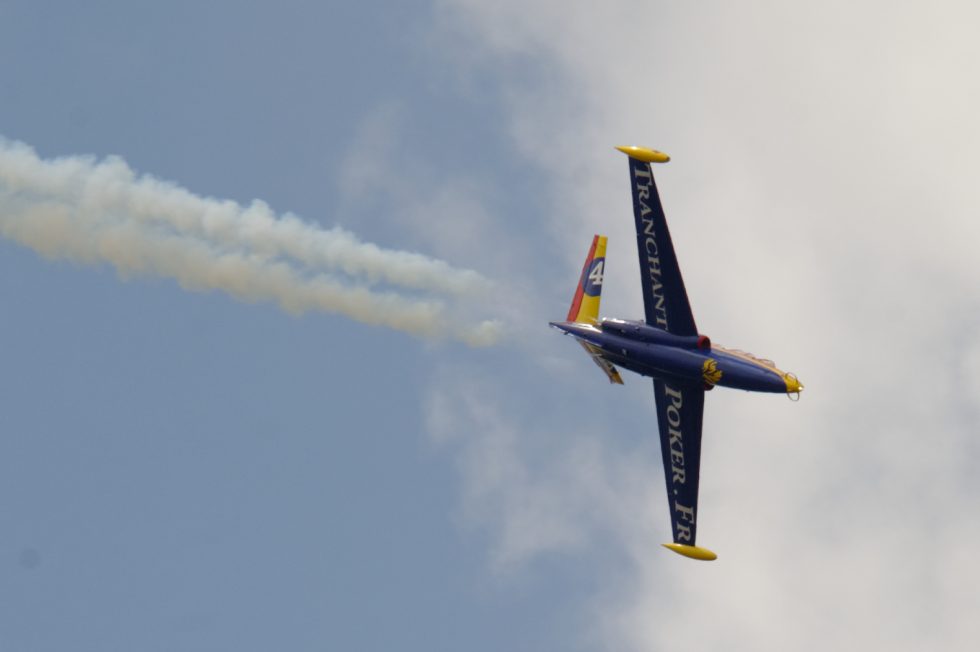
Closing note on retirement and survivors. The Magister is retired as a military type everywhere, and the last dates are worth stating precisely because they are so often got wrong. France retired its last Magisters in 1996 after forty years and 397 aircraft; the Aéronavale gave up the Zéphyr in 1994; Finland finished in 1988; Ireland withdrew its six — four bought second-hand from Austria and two that had been seized in transit to Katanga in 1961 and never reached it — by 1999, leaving the state with no jet aircraft at all. Belgium held on longest, keeping a handful as continuation-training hacks for senior officers until the last flights in 2007, with formal withdrawal not recorded until January 2017. Israel retired the Tzukit at a ceremony at Hatzerim on 22 June 2010, exactly fifty years after Ben-Gurion named the first one, the Beechcraft T-6A Texan II having arrived there on 9 July 2009; the frequently repeated claim that the Tzukit soldiered on to about 2018 is wrong. As for survivors, there is no worldwide census and the honest answer is a range. Every survivor is an original airframe: no Magister reproduction has ever been built, and there would be no point in building one. Scores sit in museums and on plinths across the twenty-odd countries that flew the type — the Israeli Air Force Museum at Hatzerim, the Finnish Air Force Museum, the Irish Air Corps Museum at Baldonnel, the Musée de l’Air, Belgian and German collections — and the Katangese connection means one of the most historically loaded Magisters of all is simply a wreck-file entry. The civil fleet is the surprise. Warbird Alley counted over 50 Magisters on civil registers in the United States, New Zealand and Britain with at least 40 airworthy; the American register alone listed 84 in September 2012, making the Magister the third most numerous ex-military jet type in United States civil hands. Two engines, docile handling, tiny fuel burn by jet-warbird standards and a large stock of Marboré spares from the J69 programme make it the cheapest realistic way for a private owner to fly a jet. France, which built it, restricts civil registration of the type, so the Magister is commonest as a civil aeroplane everywhere except at home — though the Patrouille Tranchant at Rennes has flown a five-ship civil display team on them.
From glider firm to global classroom
The idea takes shape
Fouga, a glider maker, begins work on a light jet trainer, drawing on the wing and V-tail of its CM.8 sailplane experiments.
First flight
The CM.170 prototype flies on 23 July, its twin Marboré turbojets and butterfly tail marking it out from every other trainer of the day.
Enters service
The Magister joins the French Armée de l’Air as a standard basic jet trainer; licence production begins in West Germany, Finland and Israel.
The lone Fouga of Katanga
During the Congo Crisis a single Katangese Magister, flown by a European mercenary pilot, harasses UN forces at the Siege of Jadotville.
War over Sinai
Israeli Fougas of No. 147 Squadron fly close-air-support strikes in the Six-Day War, attacking armour on the Sinai and West Bank fronts — and taking heavy losses.
Star of the Patrouille de France
The French national aerobatic team flies the Magister for over a decade, cementing its image as a nimble, crowd-pleasing display jet.
The trainers retire
Finland retires its fleet by 1988; Ireland flies its last Magisters until 1999. One by one the schoolhouse Fougas are replaced by Hawks and Alpha Jets.
Belgium’s last duty flights
Belgium becomes the final air force to operate the Magister in a service role. Today the type lives on as a much-loved civilian warbird.
Twelve stories of the Fouga Magister
A sailplane with jets
The Magister’s wing and butterfly tail came almost straight from a Fouga glider.
Read the full story
23 July 1952
The prototype took the air with two tiny Marboré engines and a tail like no other.
Read the full story
The tail that named it
The V-tail is so rare in production aircraft that the Magister became its most famous example.
Read the full story
Twin-engine safety, single-engine feel
Two small engines made the Magister forgiving for a pilot’s very first jet solo.
Read the full story
Made on three continents
Germany, Finland and Israel all built the French trainer under licence.
Read the full story
The lone Fouga of Katanga
A single Magister flown by a mercenary briefly ruled the skies over secessionist Katanga.
Read the full story
Magisters go to war
Israeli Fougas flew close-air-support strikes over Sinai and the West Bank — and paid a price.
Read the full story
Patrouille de France
For over a decade the French national team dazzled crowds in the Magister.
Read the full story
The Hammarskjöld question
A Katangese Fouga has long featured in theories about a 1961 UN air disaster.
Read the full story
A poor nation’s strike jet
From El Salvador to Morocco, the cheap Magister flew real combat missions.
Read the full story
Kukkopilli — the ocarina
Finnish pilots named the Magister after the whistling flute-like sound of its engines.
Read the full story
A warbird favourite
Affordable and docile, the Magister is one of the most popular ex-military jets to own.
Read the full story
The Magister in pictures
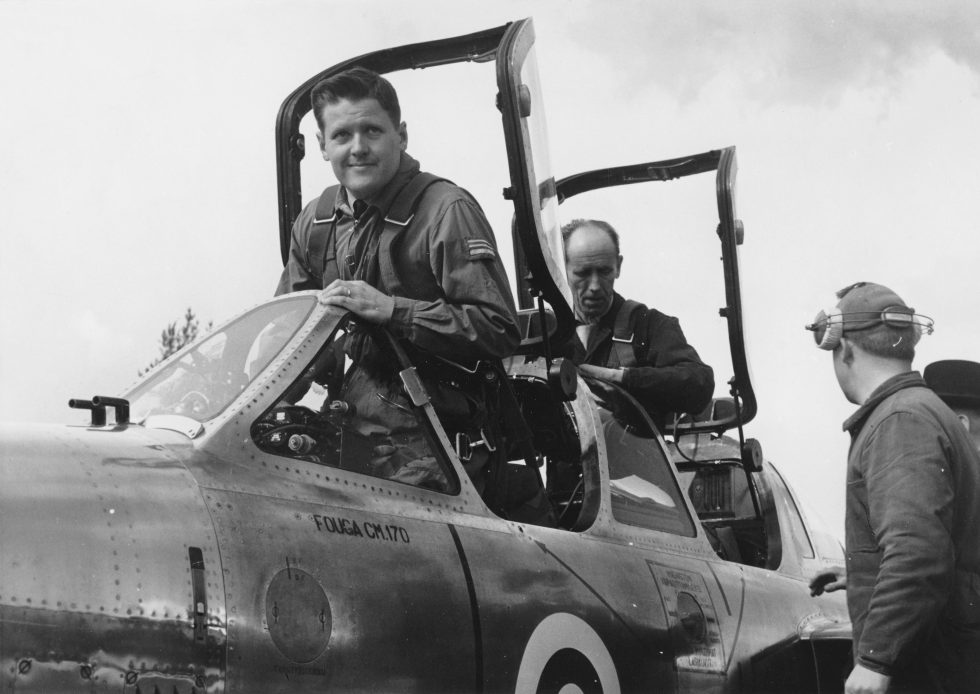
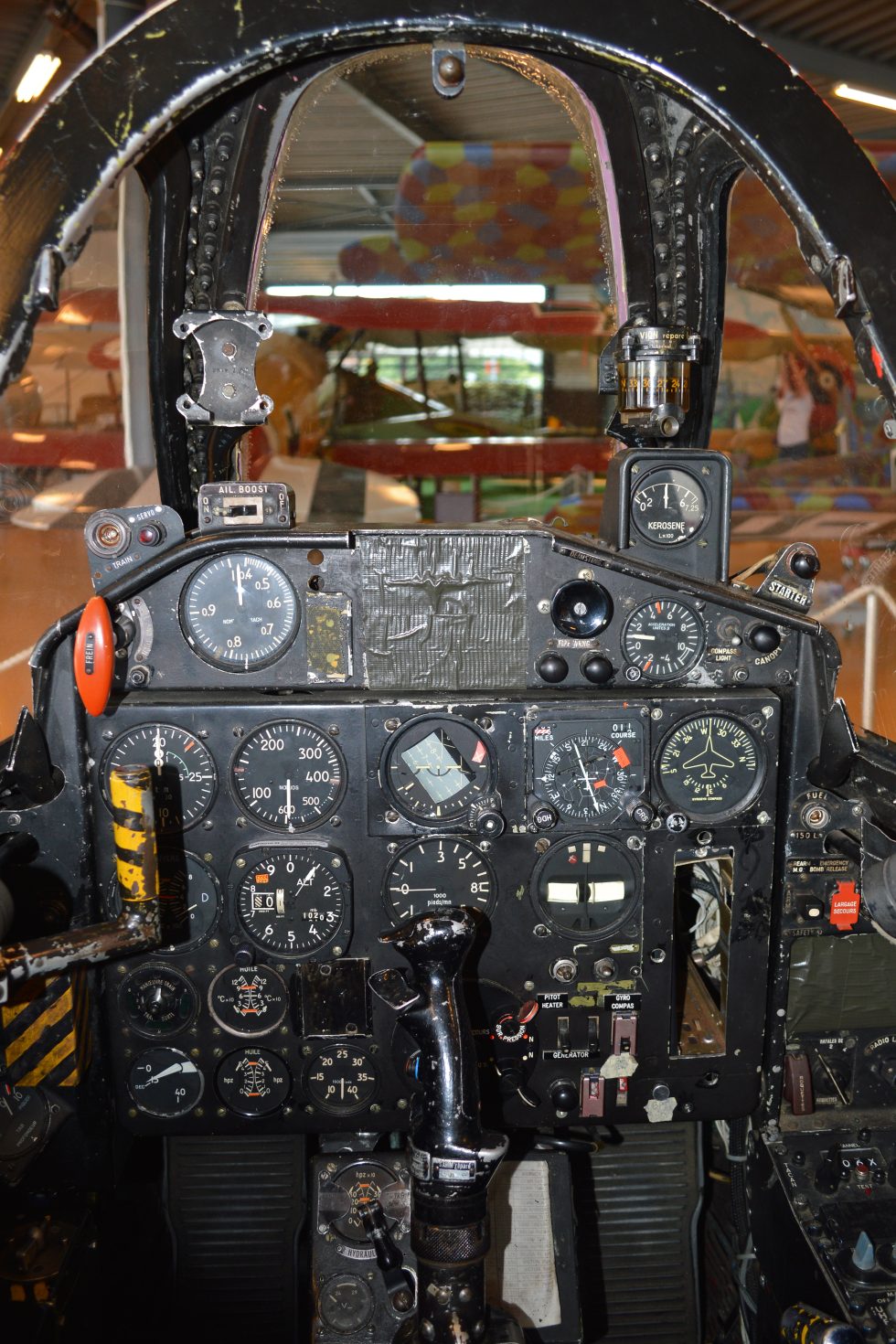
The Magister in motion
A dedicated Fouga Magister video is coming soon to this page. In the meantime, explore the gallery above and the twelve stories for the full picture of the butterfly-tailed trainer — from its 1952 first flight to its second life as a warbird.
The Fouga Magister in motion
Wings Over the Rockies Air & Space Museum — one of the most-watched Fouga Magister films on YouTube.
Where the Magister flew
The trainer that went to war
The Magister was built to teach, not to fight — but with guns in the nose and bombs under the wings it became a light-attack aircraft for air forces that had nothing else. Its most intense day of combat came in June 1967, when Israeli Fougas struck armour in the Six-Day War; it also saw action over the Congo, the Western Sahara and El Salvador. Slow and lightly built, it was always vulnerable to ground fire, and casualties could be heavy.
Compare the combat record of every military aircraft. Figures as of July 2026.
Everything people ask about the Fouga Magister
Can I fly in a Fouga Magister?
Why does the Fouga Magister have a V-tail?
How fast is the Fouga Magister?
Did the Fouga Magister see combat?
How many Fouga Magisters were built?
Which aerobatic teams flew the Magister?
Is the Fouga Magister still flying?
What replaced the Fouga Magister?
You can’t fly the Fouga Magister.
These, you can.
Some legends only live in museums — others are fuelled and waiting. MiGFlug has put civilians in real military jet cockpits since 2004.
 Fly the L-39 AlbatrosThe world’s most-flown jet trainer — aerobatics included
 Fly the F-104 Starfighter“The missile with a man in it”
 Fly the MiG-21The Cold War’s most-produced jet
 Fly the T-33 Shooting StarAmerica’s first jet trainer
 Fly the DH VampireA piece of early jet history
 Fly the S.211Agile Italian jet trainer
 Fly the MB-326The classic Aermacchi jet
 Fly the MiG-15The Soviet legend of the Korean War
Continue the tour
Every fact, checked
- Military Factory — Fouga CM.170 MagisterSpecifications, variants, production figures and operator list.
- GlobalMilitary.net — CM.170 MagisterOperator roster and training-aircraft history.
- Pima Air & Space MuseumDevelopment background and the V-tail glider heritage.
- Palm Springs Air Museum — Warbird WednesdayDesign, engines and warbird-era context.
- Valiant Air Command Warbird MuseumReference on preserved airframes and operations.
- Minijets — Fouga en AfriqueAfrican operators, Katanga and light-attack use.
- FAI records databaseReference for period performance classifications.
- National Museum of the US Air ForceGeneral reference for jet-trainer development of the era.