

Douglas A-20 Havoc
Fast, tough and famously easy to fly, the Douglas A-20 — the RAF’s “Boston” and “Havoc” — was a light attack bomber built in the thousands, flown from New Guinea to Normandy, and operated in greater numbers by the Soviet Union than by anyone else.
Douglas A-20 Havoc by the numbers
The essential figures on the Douglas A-20 Havoc
The story
The Douglas A-20 Havoc: the light bomber everyone flew, and the Soviets flew most
The aircraft the Americans called the Havoc, the British called the Boston, and the Soviets simply flew in greater numbers than anyone began life as a private venture. In the mid-1930s a young Douglas engineer named Ed Heinemann — working under Donald Douglas and alongside Jack Northrop — led the design of a fast, twin-engine attack bomber known as the Model 7B. It first flew on 26 October 1938. It was clean, powerful and, for its size, extraordinarily quick.
Its first customer was not the U.S. Army but France. A French purchasing commission, watching Germany rearm, ordered a modified export version designated the DB-7 — Douglas Bomber 7. That aircraft, with a deeper fuselage and Pratt & Whitney R-1830 Twin Wasp engines, first flew on 17 August 1939. French crews were still converting onto it when their country fell in June 1940. The undelivered aircraft were diverted to Britain, and there the type acquired the two names it would carry for the rest of the war.
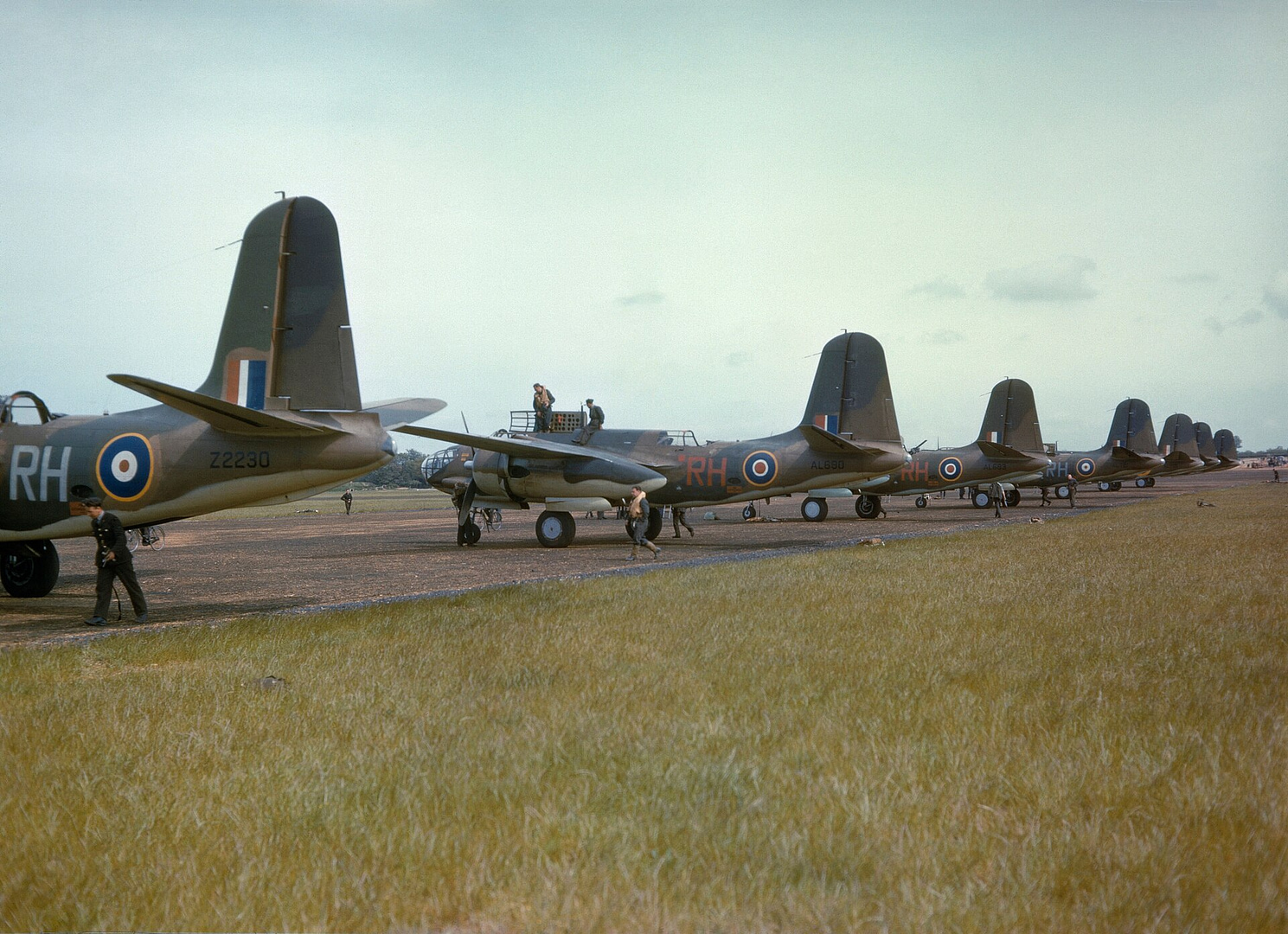
The Royal Air Force split the aircraft by role. As a day bomber it was the Boston; as a radar- and searchlight-equipped night fighter and intruder it became the Havoc. The United States Army Air Forces, adopting it as the A-20, took the name Havoc for everything. To confuse matters further, the Royal Australian Air Force called all of its aircraft Bostons. One airframe, three or four names — a running theme this page tries to keep straight.
What almost every crew agreed on was how it flew. The A-20 was fast, structurally strong and, unusually for a twin of its era, genuinely pleasant and forgiving to handle. Pilots converting from single-engine types found it honest and predictable, and it could be thrown around with a confidence that heavier bombers never allowed. That combination of speed, toughness and easy handling made it a natural for the mission it became famous for: coming in fast and low.
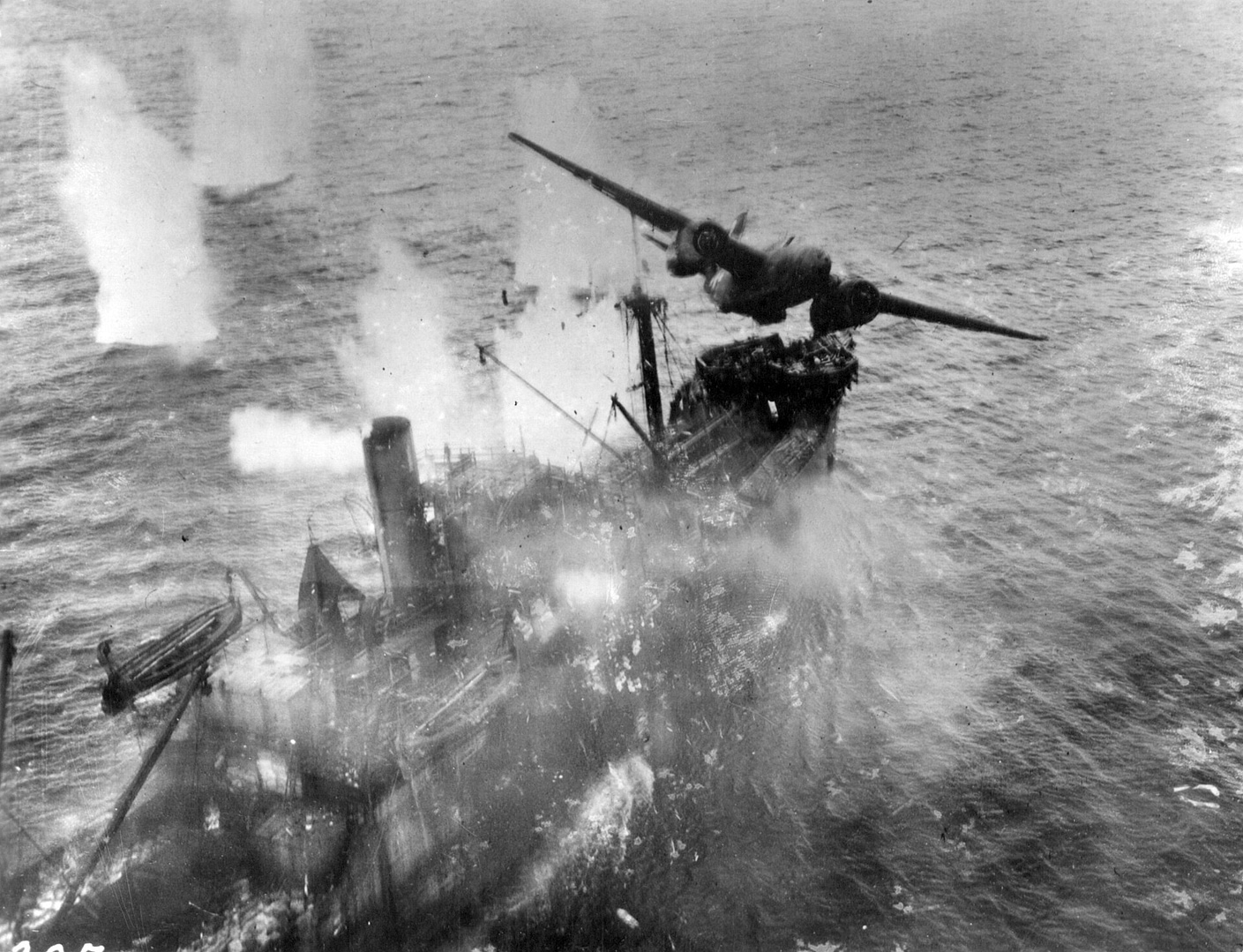
In the South-West Pacific, American units turned the A-20 into a low-level “commerce destroyer.” With batteries of forward-firing machine guns bolted into a solid nose and parachute-retarded fragmentation bombs in the bay, A-20s of the 3rd and 312th Bomb Groups swept Japanese airfields and shipping at masthead height. Over the Mediterranean and North-West Europe the Boston and Havoc did the same essential work — fast, low-to-medium-altitude tactical bombing, and by night, intruder raids over occupied territory.
And then there is the fact that surprises people most. The largest single operator of the Douglas A-20 was not the United States or Britain but the Soviet Union. Under Lend-Lease, roughly 3,414 Havocs were shipped to the USSR, and some 2,771 served with Soviet units — more than a third of every A-20 built. Soviet crews flew them as level bombers, night intruders and even torpedo aircraft along the whole length of the Eastern Front. For a nominally American aeroplane, the Havoc did an astonishing amount of its fighting under red stars.
Around 7,478 were built before production ended in 1944, giving way to the faster Douglas A-26 Invader. The A-20 was scrapped quickly after the war, and today only a handful survive — a modest legacy for one of the most widely used, and most widely renamed, aircraft of the whole conflict.
01Why the Douglas A-20 has so many names: Havoc, Boston, DB-7 and Turbinlite+
The confusion is real, and it is worth untangling once. The manufacturer’s designation was DB-7 (Douglas Bomber 7), the export label under which France and then Britain first bought it. The U.S. Army Air Forces designation was A-20, and the Americans called every version the Havoc.
The British, who received the largest early batches, split the name by job. Day-bomber versions were the Boston (Boston I through V). The versions converted into night fighters and night intruders — often with a solid nose full of guns, radar, or the Turbinlite searchlight — were the Havoc. So in RAF service the same basic aircraft could be a Boston or a Havoc depending on what it was doing that night.
Add the Royal Australian Air Force, which called all of its aircraft Bostons regardless of role, and the U.S. Navy’s handful of BD utility aircraft, and you have one of the most name-tangled aeroplanes of the war. On this page “A-20 Havoc” is used as the umbrella term, with Boston and Havoc noted where the distinction matters.
02The Douglas A-20 and the Soviet Union: the largest operator of all+
It is the single most surprising fact about the aircraft: the biggest user of the American A-20 was the Soviet Union. Under Lend-Lease, about 3,414 Havocs were delivered to the USSR, and roughly 2,771 saw service with Soviet units — more than a third of all A-20s built, and more than either the USAAF or the RAF operated.
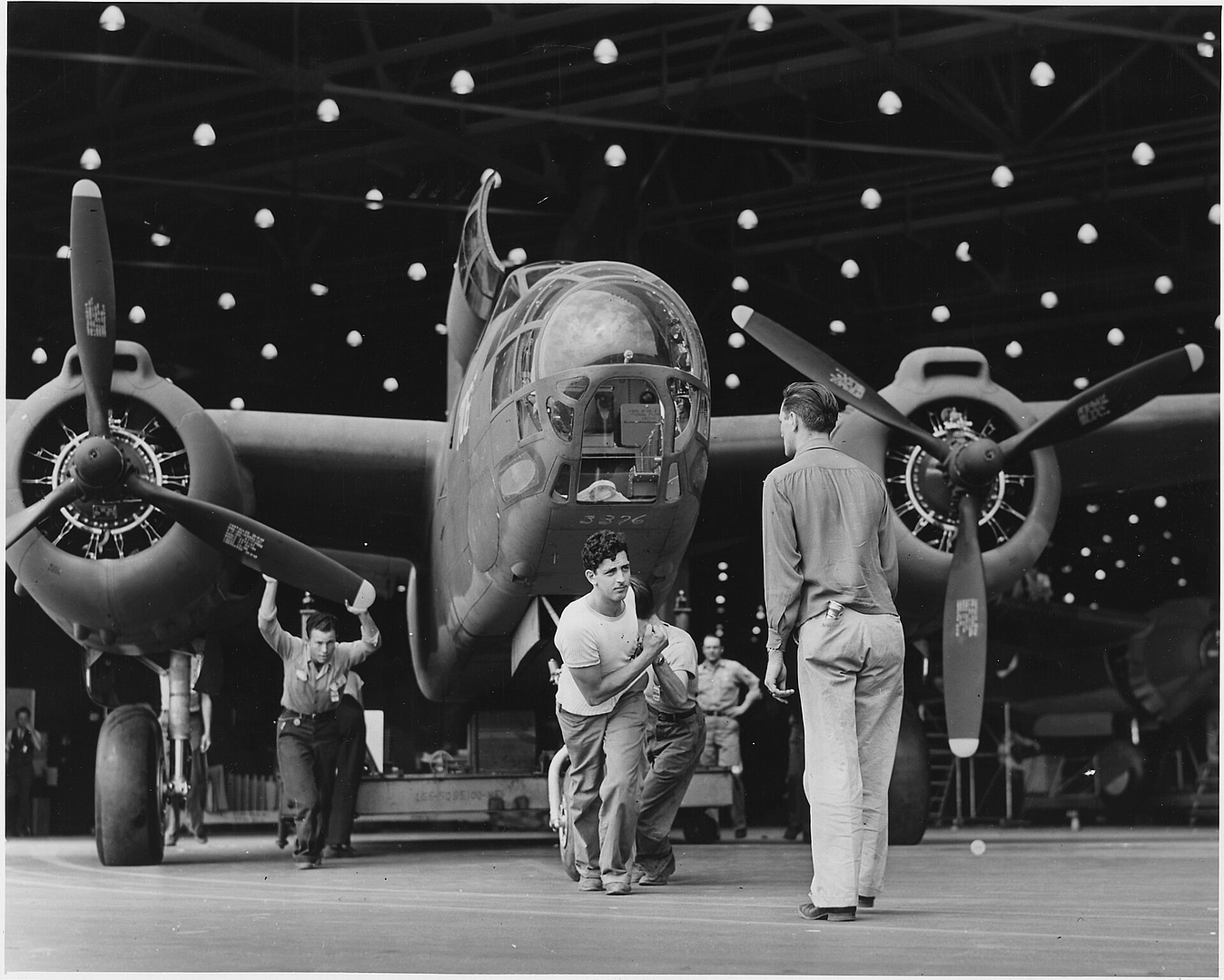
Soviet crews valued the Havoc for exactly the qualities Western pilots did: speed, toughness and easy handling, plus a roomy fuselage and reliable radial engines. The VVS used them as day and night bombers, as night intruders, and — distinctively — as torpedo bombers and mine-layers with the naval air arms over the Baltic and Black Seas. Some were re-engined and re-armed locally to suit Soviet needs.
This Soviet chapter is often skipped in Western accounts, but it is central to the aircraft’s story. If you want to understand where most Havocs actually fought, the answer is the Eastern Front. The operations map further down this page shows the USSR as the standout operator for exactly this reason.
Design & engineering
How the Douglas A-20 Havoc was built to be fast and friendly
Ed Heinemann’s design balanced two things most attack bombers struggled to reconcile: real speed, and handling gentle enough that ordinary squadron pilots could master it quickly.
A clean airframe built for speed
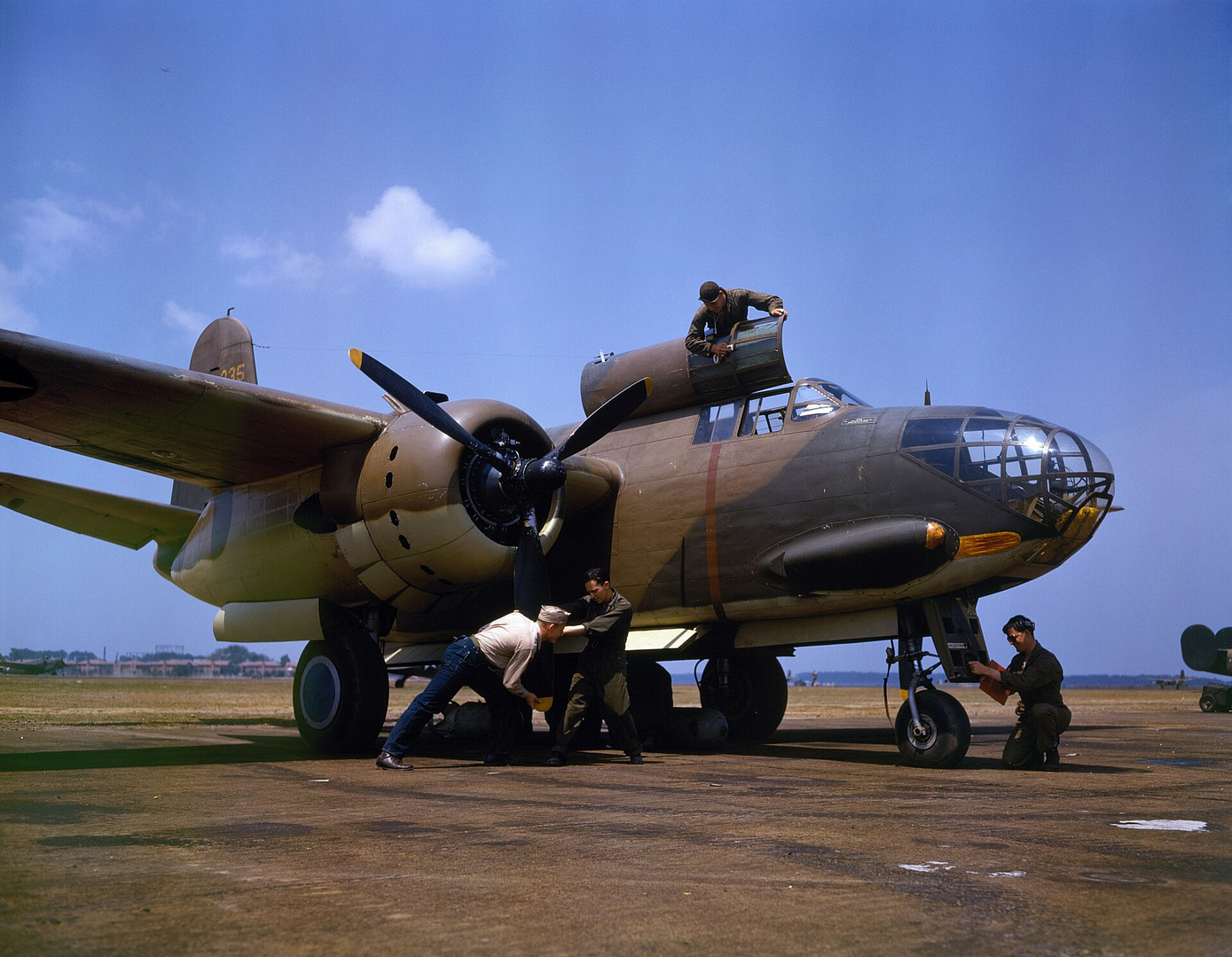
The A-20 paired a slim, high-set wing with a narrow fuselage and two big radials, giving a top speed around 317 mph (510 km/h) — fast for a light bomber and quicker than many contemporaries. The tricycle undercarriage, still a novelty in the late 1930s, made it easy to take off, land and see over the nose.
Wright R-2600 Twin Cyclone power
Most production A-20s, including the definitive A-20G, used two Wright R-2600 Twin Cyclone fourteen-cylinder radials of about 1,600 hp each. Early DB-7 and Havoc I aircraft flew behind Pratt & Whitney R-1830 Twin Wasps. Note: the A-20 did not use the R-2800 Double Wasp of the B-26 or P-47 — a common mix-up.
Modular noses for many missions
The A-20 was designed so its nose could be swapped for the mission: a glazed bombardier nose for level bombing, or a solid nose packed with forward-firing .50-calibre guns for low-level strafing. Add radar and a searchlight and the same airframe became a night fighter. Few aircraft adapted so readily.
03The Douglas A-20’s engines explained: Twin Cyclone, not Double Wasp+
Because so many American twins of the era used Pratt & Whitney’s R-2800 Double Wasp, the A-20 is often mis-described as an R-2800 aircraft. It was not. The main production Havocs were powered by the Wright R-2600 Twin Cyclone, a fourteen-cylinder twin-row radial of around 1,600 horsepower — the same engine family that powered the B-25 Mitchell and the TBF Avenger.
The very earliest aircraft — the French DB-7 and the RAF Havoc I — used the smaller Pratt & Whitney R-1830 Twin Wasp of roughly 1,000–1,100 hp. The switch to the more powerful Wright R-2600 with the DB-7A / Havoc II and the A-20 proper is what gave the type its characteristic speed.
Getting the engine right matters for identification and for accuracy: any source that lists an R-2800 for the A-20 has confused it with the Martin B-26 Marauder, which really did use the Double Wasp.
04Inside the Douglas A-20: the crew of three and how they worked+
A typical A-20 carried a crew of three: a pilot, a bombardier or nose gunner in front, and a gunner aft covering the upper and lower rear positions. On the low-level strafer versions the “bombardier” position gave way to a solid gun nose, and the front-seat crewman’s job shifted from aiming bombs to little more than riding along, because the pilot fired the fixed guns.
The narrow fuselage meant the crew could not move between stations in flight — each man was effectively sealed into his own compartment. That was a real drawback if someone was wounded, but it kept the aircraft slim and fast. Soviet aircraft sometimes carried an extra crewman, and night-fighter Havocs added a radar operator.
The pilot’s view over the tricycle nose and the aircraft’s docile handling made the A-20 one of the easier twin-engine combat types to convert onto — a quiet but important advantage when thousands of new crews had to be trained fast.
Full specifications
Douglas A-20G Havoc specifications
Figures below are for the late-war A-20G, the most-produced version, drawn from the National Museum of the U.S. Air Force and standard references. Early DB-7 and Boston aircraft were lighter and used different engines; where a value varies between sources, that is noted.
| طاقم | 3 (pilot, bombardier/nose gunner, gunner) |
|---|---|
| طول | 47 ft 11 in (14.63 m) |
| طول الجناحين | 61 ft 4 in (18.69 m) |
| ارتفاع | 17 ft 7 in (5.36 m) sources vary 17–18 ft |
| منطقة الجناح | ~464 sq ft (43.1 m²) |
| الوزن الفارغ | ~16,030 lb (7,270 kg) approx |
| Loaded weight | ~24,000–26,580 lb (10,900–12,060 kg) by source |
| First flight | 26 October 1938 (Model 7B); 17 August 1939 (DB-7) |
| Number built | ~7,478 total (Douglas 7,098; Boeing 380) some cite ~7,385 |
| Engines | 2× Wright R-2600 Twin Cyclone radials, ~1,600 hp each (early: 2× P&W R-1830 Twin Wasp) |
|---|---|
| أقصى سرعة | ~317 mph (510 km/h); up to ~325 mph (523 km/h) at altitude |
| Cruising speed | ~230 mph (370 km/h) |
| يتراوح | ~945–1,025 miles (1,520–1,650 km) varies with load |
| سقف الخدمة | ~23,700–25,000 ft (7,200–7,600 m) |
| Bomb load | Up to ~4,000 lb (1,815 kg); ~2,000 lb typical |
| Armament (A-20G) | Up to 9× .50-cal machine guns (six in a solid nose, twin dorsal turret, one ventral) |
| Wing loading | Moderate — a key reason for the type’s easy handling |
05The Douglas A-20 variants: from DB-7 and Boston to A-20G and A-20J+
The family began with the French DB-7 and the closely related DB-7A/DB-7B, known in RAF service as the Boston I–III (bombers) and Havoc I–II (night fighters and intruders). Early Havocs included radar-equipped night fighters and the searchlight-carrying Turbinlite conversions.
The U.S. Army versions ran A-20, A-20A, A-20B و A-20C, leading to the definitive A-20G — the most-built version, with a solid gun nose and heavier armament, optimised for low-level attack. The A-20H was a more powerful G; the A-20J و A-20K restored a frameless glazed nose for lead bombers guiding formations (the RAF called these Boston IV and V).
Dedicated night fighters were designated P-70 in USAAF service, and a small number of utility aircraft served the U.S. Navy as the BD. It is a large, sometimes bewildering family — but the through-line is a single, adaptable airframe stretched across bombing, strafing, night-fighting and intruder work.
06The Douglas A-20’s cost: what a wartime Havoc was worth+
Wartime unit costs for the A-20 are not recorded consistently across sources, and figures that do appear roll airframe, engines and government-furnished equipment together in ways that resist comparison with modern list prices. A figure in the region of $100,000 per aircraft is sometimes cited for the mid-war period; treat it as a rough approximation rather than an audited price.
A meaningful modern “cost per flight hour” does not exist for the A-20, because effectively none is operated today. The last airworthy example in the world — a privately owned A-20G in the United States — suffered an engine failure and crash-landed at an air show in February 2025, leaving no flying Havoc anywhere. With no airworthy aircraft, there is no ownership or charter market to price.
Cost & ownership data
What the Douglas A-20 Havoc cost — then and now
A standard cost snapshot for the comparison tool. Wartime prices are approximate and hedged; present-day operating figures do not exist because no A-20 is airworthy.
| Unit cost (wartime) | Not reliably recorded; sometimes cited near ~$100,000 flagged estimate |
|---|---|
| Cost per flight hour (today) | Not applicable — no airworthy example exists (last flyer crash-landed Feb 2025) |
| Approx. value in today’s money | Roughly $1.7–2 million equivalent per airframe very rough, inflation only |
| Production | ~7,478 built 1939–1944; ended when the A-26 Invader took over |
| Operating status | Retired; museum survivors only, none currently in flying condition |
Wartime unit costs for the A-20 are inconsistently documented and are presented here only as a hedged approximation, not an audited figure. The most reliable statement is the qualitative one: the Havoc was a relatively cheap, mass-produced light bomber, which is part of why so many were built and shipped abroad.
How it compares
The Douglas A-20 Havoc against its contemporaries
A rough side-by-side with other light and medium attack bombers of the era. Figures are representative and vary by variant.
| الطائرات | Top speed | Bomb load | طاقم | ملحوظات |
|---|---|---|---|---|
| Douglas A-20 Havoc | ~317 mph (510 km/h) | ~4,000 lb | 3 | Fast, easy to fly; USSR the largest operator |
| North American B-25 Mitchell | ~275 mph (443 km/h) | ~3,000–4,000 lb | ~5–6 | Larger medium bomber; same R-2600 engine |
| Douglas A-26 Invader | ~355 mph (571 km/h) | ~6,000 lb | 3 | The A-20’s faster successor from 1944 |
| Bristol Blenheim IV | ~266 mph (428 km/h) | ~1,000 lb | 3 | Earlier British light bomber the Boston replaced |
| Petlyakov Pe-2 | ~360 mph (580 km/h) | ~2,200 lb | 3 | The Soviet light bomber the A-20 served alongside |
Comparative figures are indicative only, drawn from museum and reference sources; each type spanned many variants with different engines and equipment.
Family tree
The Douglas A-20 marks at a glance
The French original
The first production version, ordered by France in 1939 with P&W R-1830 engines. Diverted to Britain after the fall of France in 1940.
RAF day bomber
The British name for the bomber versions. The Boston III was the classic mid-war day-bomber; Boston IV and V had glazed lead-bomber noses.
RAF night fighter/intruder
Night-fighter and intruder conversions, including radar-equipped aircraft and the searchlight-carrying Turbinlite Havoc.
Early US versions
The first USAAF Havocs, progressively better armed and armoured, used in training and early combat.
The definitive Havoc
The most-produced version, with a solid gun nose and heavy armament for low-level attack. The version most survivors represent.
Glazed-nose leaders
Frameless glazed-nose versions built to lead formations of gun-nosed Gs to the target. RAF Boston IV and V.
US night fighter
A-20s converted to radar-equipped night fighters. Scored few kills and were soon replaced by the P-61 Black Widow.
Eastern Front workhorse
Lend-Lease Havocs, often re-armed locally, used by the VVS as bombers, night intruders and naval torpedo aircraft.
Timeline
The Douglas A-20 Havoc: a wartime timeline
Stories & eyewitnesses
Douglas A-20 Havoc stories: names, missions and myths
Heinemann’s Model 7
The A-20 began not as an Army requirement but as a Douglas private design, led by Ed Heinemann.
اقرأ المزيد
The Model 7 was built on spec, a bet that a fast, clean attack bomber would find buyers. First flown in October 1938, it was quick enough to attract France, then Britain, then the U.S. Army — a private gamble that paid off in thousands of orders.
The customer that never got to use it
France ordered the DB-7 before anyone else — and fell before it could fly them in anger.
اقرأ المزيد
French crews were still working up on the type when the Wehrmacht broke through in 1940. Undelivered DB-7s were redirected to Britain, where they became Bostons and Havocs. It is why an American aircraft entered large-scale combat first in British, not U.S., markings.
Boston by day, Havoc by night
The RAF gave the same aircraft two identities depending on its job.
اقرأ المزيد
As a day bomber it was the Boston; fitted with radar or a searchlight for night work it was the Havoc. The distinction has confused readers ever since — but to the crews it was simply the difference between the daylight and the dark.
The flying searchlight
Some Havocs carried a huge searchlight in the nose to hunt bombers at night.
اقرأ المزيد
The Turbinlite Havoc had a 2.7-million-candlepower searchlight where the guns should be. It would illuminate an enemy bomber for an accompanying Hurricane to shoot down. In practice it rarely worked, and the squadrons were disbanded in early 1943 — an honest failure worth remembering.
The commerce destroyers
In the Pacific, A-20s became masthead-height strafers and skip-bombers.
اقرأ المزيد
American units bolted extra guns into a solid nose and dropped parachute-retarded fragmentation bombs from treetop height. A-20s of the 3rd and 312th Bomb Groups devastated Japanese airfields and shipping in New Guinea — the role the aircraft is most famous for.
The Soviet Havoc
More A-20s flew for the USSR than for anyone else.
اقرأ المزيد
About 3,414 were shipped east under Lend-Lease. Soviet crews flew them as bombers, night intruders and even torpedo aircraft over the Baltic and Black Seas. For a nominally American aeroplane, the Havoc did much of its fighting on the Eastern Front.
Field-modified firepower
Legendary engineer Paul “Pappy” Gunn helped turn the A-20 into a strafer.
اقرأ المزيد
In the South-West Pacific, Gunn and others packed forward-firing .50-calibre guns into the noses of A-20s (and B-25s), creating devastating low-level gunships. It was a field modification that changed how the whole theatre fought.
The pilots’ aircraft
Crews consistently praised the A-20 as one of the nicest twins to handle.
اقرأ المزيد
Fast but forgiving, with a tricycle undercarriage and good visibility, the Havoc was easy to convert onto and hard to get into trouble. In an era of demanding twins, that friendliness saved lives and sped up training.
Three men, three compartments
The narrow fuselage meant the crew could not reach one another in flight.
اقرأ المزيد
Pilot, nose crewman and rear gunner each sat sealed in their own space. It kept the aircraft slim and fast, but if a man was hit, no one could help him. It was the price of the Havoc’s speed.
The night fighter that wasn’t
The USAAF turned A-20s into radar night fighters — with little success.
اقرأ المزيد
Around sixty became P-70s, but they scored only a couple of kills in the Pacific and were soon replaced by the purpose-built P-61 Black Widow. The A-20 was a fine bomber, but never a natural interceptor.
Smoke and bombs over Normandy
Bostons and Havocs supported the invasion in June 1944.
اقرأ المزيد
They bombed coastal defences, laid smoke screens to shield the landings, and prowled behind the beaches as night intruders. It was classic tactical air work — unspectacular, essential, and exactly what the Havoc was built for.
Desert and Italian skies
Boston squadrons fought the length of the Mediterranean.
اقرأ المزيد
RAF, South African and Free French Bostons attacked shipping, airfields and bridges from the Western Desert to Italy. Kept tight and fast, they were a persistent, hard-to-catch presence over the southern front.
Returning to the fight
French crews flew Bostons back over their own occupied country.
اقرأ المزيد
Rebuilt Free French bomber groups took the Boston into action in North Africa, over Italy and in the liberation of France — the same type their nation had first ordered in 1939, now flying home.
The RAAF Bostons
Australia flew Bostons in the South-West Pacific and calls them Bostons to this day.
اقرأ المزيد
No. 22 Squadron RAAF flew Bostons on low-level strikes in New Guinea; one of its pilots, Bill Newton, was posthumously awarded the Victoria Cross. Two Australian survivors are preserved at Amberley and Point Cook.
Overtaken by the Invader
The A-20 gave way to a faster Douglas design in 1944.
اقرأ المزيد
The A-26 Invader could carry more, faster, with the same crew, and it ended A-20 production. After the war the Havocs were scrapped by the thousand, which is why so few survive today.
The end of an era
Until 2025 one A-20 still flew; now none do.
اقرأ المزيد
The world’s last airworthy Havoc, a privately owned A-20G in the United States, suffered an engine failure and crash-landed at a Texas air show in February 2025. The pilot survived; the flying Havoc, for now, did not.
Photo gallery
Douglas A-20 Havoc in photographs
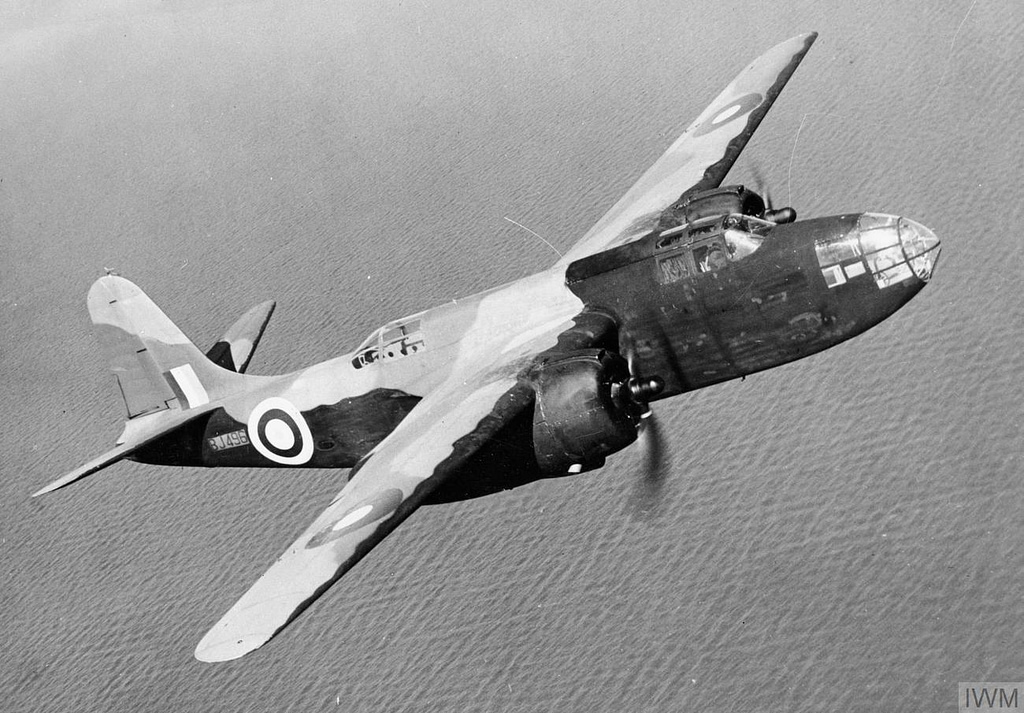
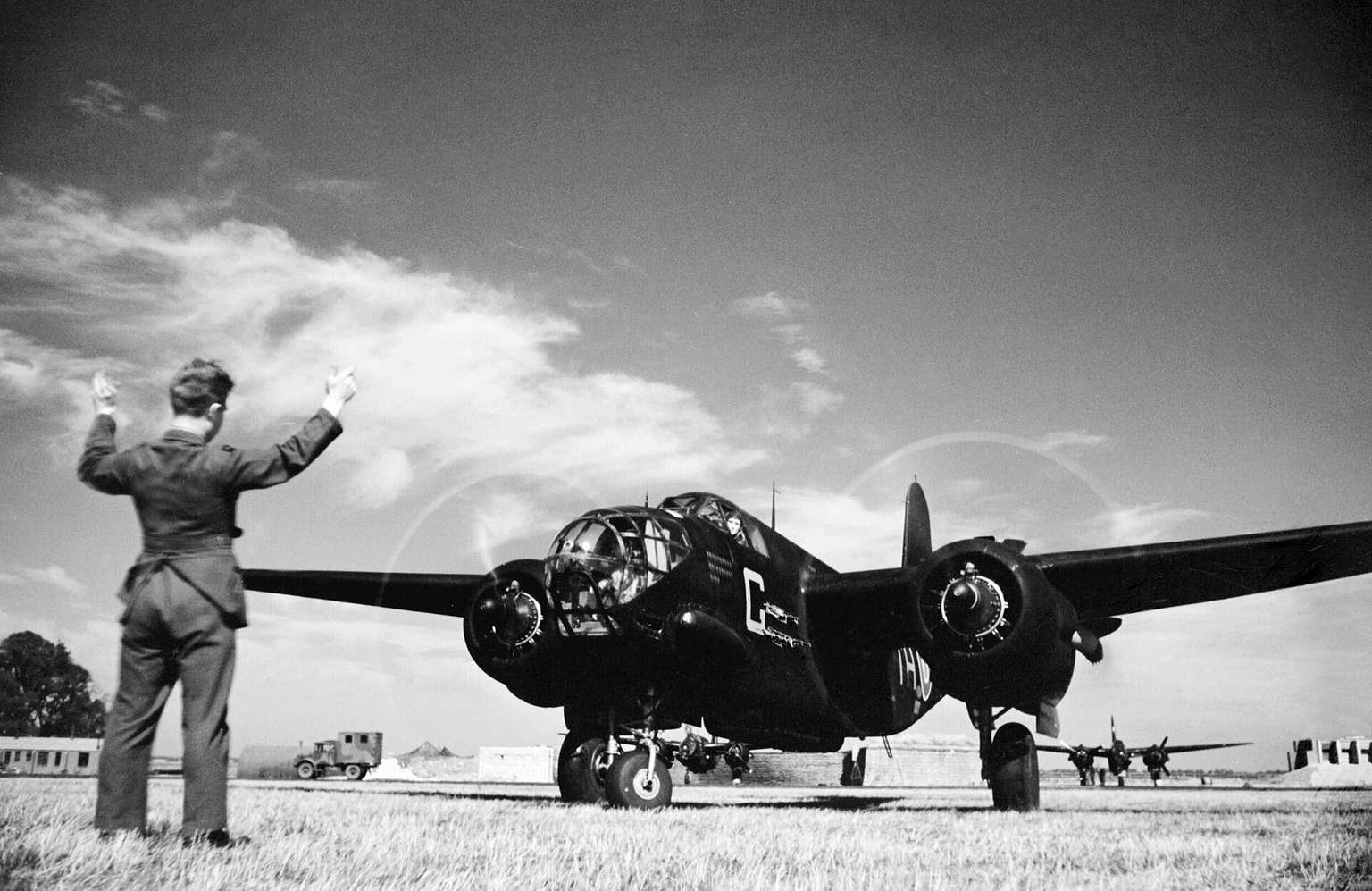
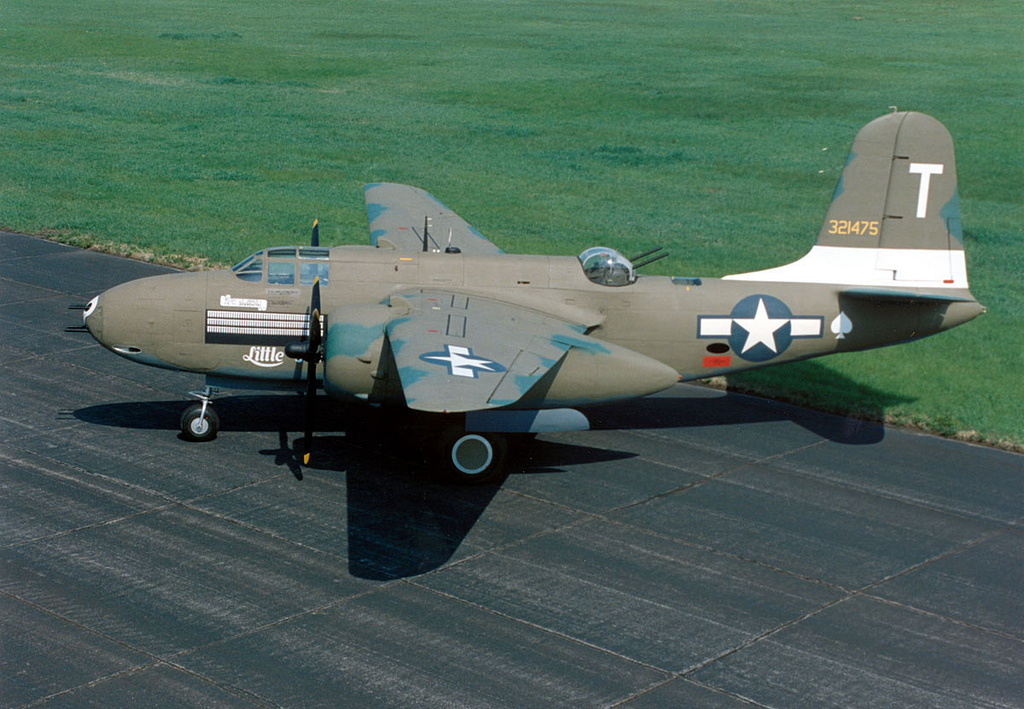
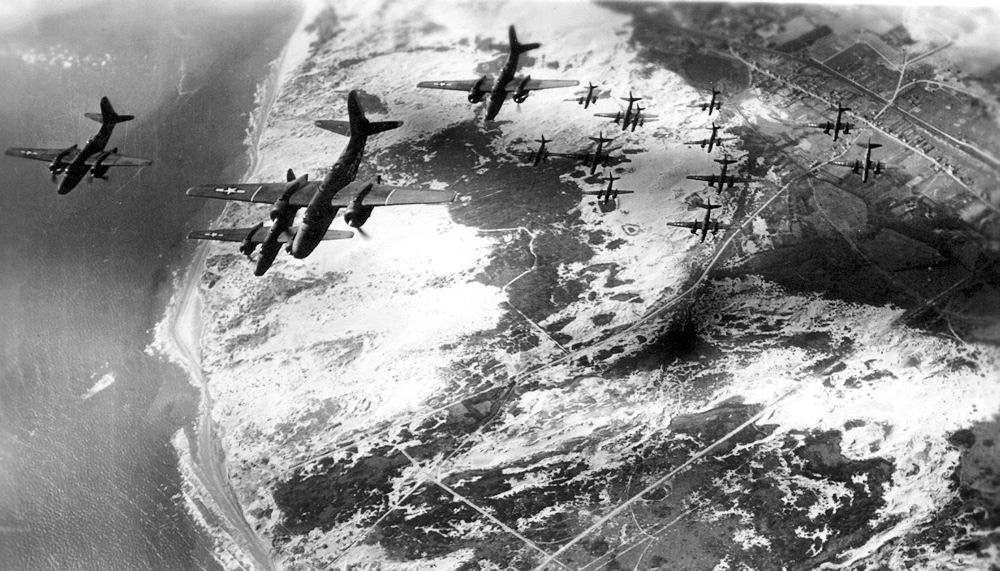
All images are in the public domain (U.S. Army Air Forces / U.S. Air Force / U.S. Office of War Information / Royal Air Force) sourced via Wikimedia Commons. Credits appear in each caption.
Watch
The Douglas A-20 Havoc on film: inside the last one that flew
Rather than a modern re-cut, we chose a walkaround of the actual aircraft that was, until 2025, the only airworthy A-20 in the world.
“A20 Havoc Aircraft Tour” by AVweb, an established aviation-media outlet (roughly 108,000 views at the time of writing). The video tours the world’s only flying Douglas A-20 Havoc — the privately owned A-20G that later crash-landed at a Texas air show in February 2025, leaving no airworthy Havoc anywhere. A rare look inside a genuine, running example rather than a static museum aircraft.
Operations map
Where the Douglas A-20 Havoc flew and fought
The A-20 was an American aircraft that fought on almost every front — and its single largest operator was the Soviet Union. Toggle the categories to explore its primary operator, its combat theatres, its Allied and Lend-Lease users, and where the last airframes survive.
Combat theatres
Where the Douglas A-20 Havoc went to war
Few aircraft fought across so many fronts in so many uniforms. The A-20’s war divides roughly into four theatres, each with its own character: the low-level Pacific, the Mediterranean and Italy, North-West Europe, and — largest of all — the Eastern Front.
In the South-West Pacific from 1942, American A-20s became the archetypal low-level strike aircraft. Gun-nosed strafers of the 3rd and 312th Bomb Groups swept Japanese airfields, barges and shipping at masthead height, dropping parachute-retarded fragmentation bombs and firing batteries of forward .50-calibre guns. It was dangerous, spectacular work, and it defined the aircraft’s reputation.
Over the Mediterranean and Italy, RAF, South African and Free French Boston squadrons flew a more conventional tactical-bombing war — hitting bridges, airfields, ports and troop concentrations from the Western Desert up the length of the Italian peninsula. In North-West Europe, Ninth Air Force A-20s and RAF Bostons and Havocs attacked communications and defences before and after D-Day, while Havoc and Boston intruders roamed occupied France and the Low Countries by night.
But the largest share of Havoc combat happened in the east. Soviet VVS A-20s fought from 1942 to 1945 across the whole Eastern Front, from the Baltic to the Black Sea, as level bombers, night intruders and naval torpedo aircraft. More Havocs served there than in any Western air force — the single most important, and least remembered, chapter of the aircraft’s combat story.
07The Douglas A-20 in the Pacific: low-level strafing and skip-bombing+
The Pacific is where the A-20 became a legend. The theatre’s vast distances and dispersed Japanese targets rewarded fast, low-flying aircraft that could strike hard without warning. American engineers — most famously Paul “Pappy” Gunn — field-modified A-20s with solid noses packed with forward-firing .50-calibre machine guns, turning a light bomber into a devastating strafer.
Attacking at masthead height, A-20s of the 3rd and 312th Bomb Groups strafed airfields and shipping and dropped parachute-retarded “parafrag” bombs that let the aircraft escape the blast. The technique was brutally effective against parked aircraft and merchant vessels, and it made the low-level A-20 one of the most feared Allied aircraft in the South-West Pacific.
It was also costly: at treetop height there was no margin for error and heavy anti-aircraft fire took a steady toll. But the results — airfields wrecked, convoys shattered — confirmed the A-20 as a superb tactical strike aircraft when flown low and fast.
08The Douglas A-20 on the Eastern Front: the Soviet Union’s American bomber+
The largest concentration of A-20 combat anywhere was on the Eastern Front. From 1942, Lend-Lease Havocs reached the Soviet Union in large numbers, and the VVS committed them across every major operation from Stalingrad to Berlin.
Soviet crews used the Havoc with great flexibility: as a conventional day bomber, as a night intruder against German airfields and columns, and — in a role Western air forces rarely used it for — as a torpedo bomber and mine-layer with the Baltic and Black Sea fleet air arms. Soviet armourers frequently re-worked the aircraft’s guns and equipment to local standards.
That the biggest user of an American attack bomber was the Soviet Union is one of the quiet truths of the air war. It reflects both the scale of Lend-Lease and the genuine quality of the aircraft: the VVS could have rejected it, and instead flew it in their thousands.
09The Douglas A-20 over Europe and the Mediterranean: Bostons and Havocs at war+
In the west the aircraft fought under British, Commonwealth, French and American colours. RAF Bostons began cross-Channel daylight raids as early as 1941, and by 1943–44 Ninth Air Force A-20s were a major part of the tactical bombing force preparing the ground for the invasion of Europe.
In the Mediterranean, RAF, South African and Free French Boston squadrons attacked shipping, bridges and airfields from the Western Desert to Italy. On D-Day itself, Bostons and Havocs bombed coastal batteries and laid smoke screens to shield the landing beaches, while intruder Havocs harassed German movement inland by night.
It was unglamorous, relentless tactical work — the daily grind of interdiction and close support that wins campaigns without making headlines. The A-20 was very good at it.
The Havoc in numbers
The Douglas A-20 Havoc’s war record at a glance
Questions & answers
Douglas A-20 Havoc: your questions answered
Can I fly in a Douglas A-20 Havoc?
No. There is no airworthy Douglas A-20 Havoc anywhere in the world today, so there is no way to book a flight in one. Until recently a single privately owned A-20G in the United States still flew at air shows, but it suffered an engine failure and crash-landed in February 2025; the pilot survived, but no Havoc is currently in flying condition. The A-20 now survives only as museum aircraft and restoration projects.
If you want to fly in a genuine military aircraft, MiGFlug arranges flights in real fighter jets and warbirds — from the L-39 Albatros to a MiG-29 at the edge of space. See migflug.com/flights-prices. MiGFlug does not offer A-20 flights.
Why does the A-20 have so many names — Havoc, Boston and DB-7?
They are the same basic aircraft under different designations. DB-7 (Douglas Bomber 7) was the manufacturer’s export name, first used by France and Britain. A-20 was the U.S. Army designation, and the Americans called every version the Havoc. The British split the name by role: day bombers were the Boston, while night fighters and intruders were the Havoc. The Royal Australian Air Force called all of its aircraft Bostons.
Which country operated the most A-20 Havocs?
The Soviet Union. Under Lend-Lease about 3,414 A-20s were delivered to the USSR and roughly 2,771 served with Soviet units — more than a third of all Havocs built and more than either the United States Army Air Forces or the RAF. Soviet crews flew them as bombers, night intruders and torpedo aircraft on the Eastern Front.
What engines did the A-20 Havoc use?
Most production A-20s, including the definitive A-20G, used two Wright R-2600 Twin Cyclone fourteen-cylinder radial engines of about 1,600 hp each. The earliest aircraft — the French DB-7 and RAF Havoc I — used the smaller Pratt & Whitney R-1830 Twin Wasp. The A-20 did not use the Pratt & Whitney R-2800 Double Wasp, which powered the Martin B-26 Marauder and is a frequent source of confusion.
How fast was the A-20 Havoc and how far could it fly?
The late-war A-20G had a top speed of about 317 mph (510 km/h), and up to roughly 325 mph (523 km/h) at altitude, with a cruising speed near 230 mph (370 km/h). Range was about 945 to 1,025 miles (1,520–1,650 km) depending on load, and the service ceiling was around 23,700 to 25,000 ft. It was fast and agile for a light bomber, and unusually easy to fly.
What was the Turbinlite Havoc?
The Turbinlite was an experimental RAF night-fighting system: a Havoc fitted with a 2.7-million-candlepower searchlight in the nose (in place of guns) and airborne radar. It was meant to find and illuminate enemy bombers at night so an accompanying Hawker Hurricane could shoot them down. In practice the arrangement rarely worked, and the Turbinlite squadrons — 31 aircraft were converted — were disbanded in early 1943. It is remembered as an honest but largely unsuccessful experiment.
How many A-20 Havocs were built?
About 7,478 in total — roughly 7,098 by Douglas and 380 by Boeing — between 1939 and 1944. Some references give a slightly lower figure of around 7,385. Production ended when the faster Douglas A-26 Invader took over.
Is the A-20 Havoc the same as the A-26 Invader?
No, though they are related and often confused. The A-20 Havoc is the wartime light attack bomber on this page. The Douglas A-26 Invader is a later, faster and heavier attack bomber that entered service in 1944 and ended A-20 production. To add to the confusion, the A-26 was itself redesignated B-26 in 1948 — but neither is the same as the WWII Martin B-26 Marauder.
How many A-20 Havocs survive, and where can I see one?
Only a small number survive worldwide, all as static exhibits or restoration projects. Examples on public display include “Little Joe” at the National Museum of the U.S. Air Force in Dayton, Ohio; an A-20G at the Pima Air & Space Museum in Arizona; aircraft at RAAF Amberley and the RAAF Museum, Point Cook, in Australia; an A-20K at the Museu Aeroespacial in Rio de Janeiro; and an A-20G at the Central Air Force Museum at Monino, near Moscow. None are currently airworthy.
What roles did the A-20 Havoc perform?
It was remarkably versatile. Its main jobs were low-level strafing and bombing (most famously in the Pacific), conventional light and medium tactical bombing, night intrusion over occupied territory, and radar night fighting (the RAF Havoc and the USAAF P-70). It also served as a smoke-layer, a reconnaissance aircraft and, with Soviet naval units, as a torpedo bomber.
Units, tactics & night operations
The Douglas A-20 Havoc in service: strafers, intruders and night fighters
10The gun-nose strafers: how the A-20 became a low-level killer+
The single most important tactical development in the A-20’s career was the solid gun nose. Standard bombers aimed their loads from altitude through a bombardier; in the Pacific, engineers replaced the glazed nose with a battery of fixed forward-firing .50-calibre machine guns, so the pilot could strafe as he attacked.
Combined with parachute-retarded fragmentation bombs — which fell slowly enough for the aircraft to clear the blast — the gun-nosed A-20 could sweep an airfield or a convoy in a single devastating low pass. Douglas eventually built the arrangement in as standard on the A-20G, the most-produced version.
It turned a competent light bomber into one of the outstanding low-level attack aircraft of the war, and it is the role most people picture when they think of the Havoc.
11The RAF Havoc night fighters and intruders+
Britain used the Havoc name specifically for the night-fighting and intruder versions. Early Havoc I and II night fighters carried airborne interception radar and a nose full of guns to hunt German bombers over England during the Blitz.
Intruder Havocs and Bostons took the fight the other way — roaming over occupied France and the Low Countries at night to catch enemy aircraft near their own airfields and to attack trains, transport and airfields. It was dangerous, lonely work that tied down German defences far from the front.
The night-fighter Havoc was never as successful as purpose-built types that followed, but the intruder role suited the aircraft’s speed and endurance well, and Boston and Havoc intruders remained active over Europe for much of the war.
12The Turbinlite experiment: a searchlight in the nose+
The most unusual Havoc variant was the Turbinlite. In place of nose guns it carried a 2.7-million-candlepower searchlight and airborne radar. The idea was for the Turbinlite Havoc to find an enemy bomber on radar, illuminate it with the searchlight, and let an accompanying Hawker Hurricane make the kill.
It was ingenious on paper and clumsy in practice. Coordinating a radar-equipped searchlight aircraft with a separate fighter in the dark proved extremely difficult, and results were poor. Thirty-one aircraft were converted, and the Turbinlite flights were formed into squadrons before being disbanded in early 1943.
We include it honestly because it matters: not every wartime idea worked, and the Turbinlite is a good reminder that the Havoc’s real strengths lay in attack and intrusion, not in this particular experiment.
13The P-70: the A-20 as an American night fighter+
The United States tried its own night-fighter conversion, the P-70. Around sixty A-20s were fitted with radar and a ventral gun tray and sent to the Pacific to counter Japanese night raiders.
The P-70 was a stopgap. It lacked the altitude performance to catch high-flying intruders, and it scored only a couple of confirmed kills before being replaced by the purpose-designed Northrop P-61 Black Widow. All P-70s were retired by the end of the war.
Like the Turbinlite, the P-70 shows the limits of adapting a light bomber into an interceptor — and by contrast underlines how good the A-20 was in the roles that suited it.
14Douglas A-20 vs North American B-25 Mitchell: two R-2600 attackers+
The A-20 and the B-25 Mitchell shared the same Wright R-2600 engine and often the same low-level tactics, so comparisons are natural. The B-25 was larger, carried more, and had greater range; the A-20 was smaller, a touch faster, and widely regarded as the nicer aircraft to fly.
In the Pacific both were turned into heavily gunned strafers, and both did superb low-level work. Where the Mitchell’s size and range made it the more strategically useful medium bomber, the Havoc’s agility and easy handling made it a favourite for fast, close-in tactical strikes.
They were complementary rather than rivals — and, tellingly, the Soviet Union operated large numbers of both under Lend-Lease.
Flying the Havoc
What it was actually like to fly the Douglas A-20 Havoc
If the Martin B-26 Marauder was the twin that frightened its crews, the A-20 was the one they praised. Pilots consistently described the Havoc as fast but forgiving — a genuinely pleasant aircraft that did what it was told and rarely bit.
Several things made it friendly. The tricycle undercarriage gave a level, easy attitude on the ground and good forward visibility. The moderate wing loading kept stall speeds sensible and handling honest. And the aircraft was strong, so it stood up to the punishment of low-level work and rough forward airfields.
The one real drawback was the narrow fuselage: the three crewmen sat in separate compartments and could not reach one another in flight. For a wounded man that could be fatal. But as a flying machine, the A-20 earned a reputation as one of the easiest and most likeable twin-engine combat aircraft of the war — a quiet reason so many air forces were happy to take it.
15The A-20’s flying qualities: fast, strong and forgiving+
The Havoc’s defining quality in the air was balance. It was quick — over 500 km/h — yet its moderate wing loading and tricycle gear made it approachable for pilots converting from single-engine types. It could be flown low and hard with confidence.
Its structural strength suited the battering of masthead attacks, and its handling stayed honest even on one engine, an important safety margin that some contemporaries lacked. Crews trusted it, and trust translated into effectiveness.
16Ground crews and the Wright R-2600: keeping the Havoc flying+
The A-20’s two Wright R-2600 Twin Cyclones were powerful and generally reliable, but like all big radials they demanded constant care, especially in the dust of Pacific and desert strips. Ground crews changed cylinders, patched flak damage and kept aircraft serviceable in punishing conditions.
The type’s reputation for availability — being ready to fly when needed — owed as much to that unglamorous flight-line work as to the design itself. It is part of why so many air forces, from the USAAF to the VVS, could keep large A-20 fleets in action.
Myth vs fact
The Douglas A-20 Havoc: setting the record straight
“It was mainly an American aircraft”
Fact: the single largest operator was the Soviet Union, which received about 3,414 A-20s under Lend-Lease — more than the USAAF or the RAF.
“The A-20 used the R-2800 Double Wasp”
Fact: most A-20s used the Wright R-2600 Twin Cyclone; only the earliest used the P&W R-1830. The R-2800 powered the B-26 Marauder, not the Havoc.
“Boston and Havoc were different aircraft”
Fact: they were the same basic type. The RAF called the bombers Bostons and the night fighters/intruders Havocs; the USAAF called them all Havocs.
Origins
How a Californian private venture became a French, British and Soviet bomber
The A-20’s international career was baked in from the start. When Ed Heinemann’s team at Douglas’s El Segundo plant drew up the Model 7 in the mid-1930s, the U.S. Army had no urgent requirement for such an aircraft. Douglas built it as a private venture, gambling that a fast attack bomber would find customers — and the first customer to sign was France.
The French purchasing commission, alarmed by German rearmament, ordered the export DB-7 in 1939 and had aircraft in service or transit when their country collapsed in June 1940. Those undelivered machines were diverted to Britain, which was desperate for modern light bombers and night fighters. Almost overnight, an American aircraft became a mainstay of RAF Bomber and Fighter Command squadrons under two new names.
Then came Lend-Lease, and with it the Soviet connection that would make the USSR the type’s largest user. By the time the U.S. Army Air Forces committed the A-20 to combat in 1942, the aircraft was already a veteran in three other air forces. Few aeroplanes have had so genuinely global a beginning.
17The French DB-7: the customer who ordered it first+
France was the launch customer for the production Havoc. The French DB-7, powered by Pratt & Whitney R-1830 Twin Wasps, was ordered in quantity in 1939 as France scrambled to modernise its air force. A number reached French units, and some flew briefly against the German invasion in 1940.
When France fell, the balance of the French order — and follow-on contracts — were taken over by Britain. This is why the aircraft entered large-scale combat in RAF rather than USAAF markings, and why so much early Havoc and Boston history is British and Commonwealth rather than American.
The French link closed a circle later in the war, when rebuilt Free French squadrons flew Bostons in the Mediterranean and over their own liberated country.
18The Boston replaces the Blenheim: a leap in British light bombing+
For the RAF, the Boston was a significant step up from the Bristol Blenheim it largely replaced in the day-bomber role. It was faster, carried a useful bomb load, and was better able to defend itself and survive over heavily defended targets.
Boston squadrons of No. 2 Group carried out fast, low-level and medium-altitude daylight raids over occupied Europe from 1941, attacking power stations, docks, airfields and industrial targets. The type’s speed and handling made it well suited to the tip-and-run tactics these missions demanded.
The upgrade mattered: the Boston gave the RAF a modern, capable light bomber at a moment when its earlier types were dangerously outclassed.
19Boeing and Douglas: who actually built the A-20+
The great majority of A-20s — about 7,098 — were built by Douglas, largely at Santa Monica and Long Beach in California. A further 380 were built by Boeing, bringing the commonly cited total to around 7,478 (some references give roughly 7,385).
This scale of production, spread across more than one manufacturer, is part of why the aircraft could be supplied so generously to Allied air forces. A cheap, quick-to-build light bomber that several factories could turn out in quantity was exactly what Lend-Lease needed.
It also explains the aircraft’s ubiquity: with thousands built, the Havoc could equip American, British, Commonwealth, French and — above all — Soviet units simultaneously.
The Eastern Front in depth
The Soviet Douglas A-20: bombers, intruders and torpedo aircraft
Because it is so often overlooked in Western histories, the Soviet chapter deserves a closer look. The USSR did not merely accept the A-20 as a stopgap; the VVS integrated it deeply into front-line operations and used it in ways Western air forces rarely did.
Soviet Havocs served as day and night bombers across every major front. They flew as night intruders against German airfields and supply columns, exploiting the aircraft’s speed and endurance. And the Soviet naval air arms turned them into torpedo bombers and mine-layers over the Baltic and Black Seas — a maritime strike role the Americans and British almost never used the type for.
Soviet crews and armourers frequently modified their aircraft, changing armament and equipment to suit local conditions and doctrine. The result was a genuinely Soviet Havoc, flown in greater numbers and across more roles than in any other air force. When the map on this page highlights the USSR, this is the reason.
20Why the USSR received so many A-20s+
The scale of Soviet deliveries — about 3,414 aircraft — reflected both supply and suitability. Lend-Lease was pouring American equipment into the USSR, and the A-20 was cheap, available in quantity, and well matched to the Soviet style of tactical air war: close support of ground forces, interdiction, and night harassment.
The Havoc’s toughness and easy handling suited the demanding conditions of the Eastern Front, and its radial engines were relatively straightforward to maintain in the field. Soviet units valued it enough to keep it in front-line service for the rest of the war.
The upshot is one of the war’s more striking statistics: the biggest operator of an American light bomber was the Soviet Union — a fact that says as much about the aircraft’s quality as about the politics of Lend-Lease.
21Soviet torpedo Bostons: the A-20 at sea+
One of the most distinctive Soviet uses of the Havoc was as a naval strike aircraft. Baltic and Black Sea fleet air units flew A-20s as torpedo bombers and mine-layers against German and Axis shipping.
It was not a role the aircraft had been designed for, echoing the improvised torpedo work other twins were sometimes pressed into. But the Havoc’s speed and load-carrying made it a capable maritime attacker in Soviet hands, and it operated in this role with some success.
This naval dimension is almost entirely absent from Western histories of the type, which tend to focus on the Pacific strafers and the European Bostons — another reason the Soviet story is worth telling in full.
22How Soviet A-20s differed from American ones+
Soviet Havocs were often not left as delivered. Front-line units and repair depots altered armament, added crew positions, and adapted equipment to Soviet standards and tactics. Defensive gun arrangements in particular were frequently reworked.
These modifications reflected a broader pattern: Lend-Lease aircraft were absorbed into a very different air force with its own doctrine, and were changed to fit it. The Soviet A-20 was, in a real sense, its own variant family, distinct from the USAAF versions.
It is a reminder that an aircraft’s story does not end at the factory gate — how it was used, and by whom, is just as much a part of what it was.
Identification & legacy
Telling the Havoc apart — and why it faded from memory
23How to tell a Douglas A-20 from a Douglas A-26 in a photo+
Because both are Douglas attack bombers with similar names, the A-20 Havoc and A-26 Invader are often confused. A few cues help. The A-20 is the earlier, slimmer aircraft, with a high-set wing, a narrow fuselage and, on the strafer versions, a stepped cockpit and solid gun nose. It is usually pictured in 1941–45 settings.
The A-26 Invader is later, larger and cleaner, with a low-set wing, a broad fuselage and a more modern look; it appears in late-war and post-war photographs, and — after 1948 — under the designation B-26. If the caption mentions Korea or Vietnam, you are looking at the Invader, not the Havoc.
And neither should be confused with the Martin B-26 Marauder, a different manufacturer’s aircraft that used the R-2800 engine and shared only the post-war designation with the Invader.
24Bill Newton VC and the Boston in Australian service+
Australian Boston operations produced one of the type’s most famous stories. Flight Lieutenant William “Bill” Newton of No. 22 Squadron RAAF flew repeated low-level Boston attacks against Japanese targets in New Guinea in 1943.
Shot down and captured after pressing home his attacks with great determination, Newton was executed by his captors. He was posthumously awarded the Victoria Cross — the only one awarded to an Australian airman in the South-West Pacific — and remains a symbol of the courage demanded by low-level Boston operations.
The RAAF continues to call all of its aircraft Bostons, and preserves examples at Amberley and Point Cook, keeping the Australian side of the story alive.
25Why the A-20 Havoc is less remembered than it deserves+
For an aircraft built in such numbers and used so widely, the A-20 has a surprisingly modest public profile. Several things explain it. It was a tactical light bomber rather than a glamorous fighter or a war-winning heavy, so it attracted less post-war attention than the B-17 or the Spitfire.
Its confusing tangle of names — Havoc, Boston, DB-7 — scattered its story across different national histories. Its largest operator, the Soviet Union, sat behind the Iron Curtain for decades, so that vital chapter went largely untold in the West. And it was scrapped quickly after 1945, leaving few survivors to keep it in the public eye.
This page tries to correct that a little: the Havoc was one of the most useful, most widely flown and most genuinely international aircraft of the whole war, and it deserves to be remembered as such.
Survivors
Where to see a Douglas A-20 Havoc today
Dayton & Tucson
“Little Joe” is displayed at the National Museum of the U.S. Air Force in Dayton, Ohio, and an A-20G is preserved at the Pima Air & Space Museum in Arizona.
Amberley & Point Cook
The RAAF preserves Bostons at its Amberley Heritage Centre in Queensland and at the RAAF Museum, Point Cook, in Victoria.
Monino
An A-20G survives at the Central Air Force Museum at Monino, near Moscow — a rare reminder of the type’s largest operator.
Rio de Janeiro
An A-20K is displayed at the Museu Aeroespacial at Campo dos Afonsos, Rio de Janeiro.
None, since 2025
The world’s last flying A-20 crash-landed at a Texas air show in February 2025; no Havoc is currently airworthy.
Crash-site finds
The survivor count has grown slowly as wrecks are recovered from the Pacific and Eastern Europe for restoration.
You can’t fly a Douglas A-20 Havoc — but these cockpits are open
No A-20 is airworthy today. But MiGFlug puts you in the cockpit of genuine military jets — from the L-39 Albatros to a MiG-29 at the edge of space. Real aircraft, real fighter pilots, real afterburner.
Fighter Jet Flights
Take the controls of a real ex-military jet with an experienced fighter pilot.
إل-39 ألباتروس
The classic jet trainer — aerobatics and low-level fun, in several countries.
ميغ-29 فولكروم
Ride a genuine air-superiority fighter toward the edge of space.
Related aircraft
Explore more of the museum
 North American B-25 MitchellThe A-20’s larger cousin on the same Wright R-2600 engine — the medium bomber that raided Tokyo and fought in every theatre.
 Douglas A-26 InvaderThe faster, heavier Douglas attack bomber that succeeded the A-20 in 1944 — and later inherited the “B-26” designation.
 Martin B-26 MarauderThe fast medium bomber often confused with the A-26 — and the aircraft that really did use the R-2800 Double Wasp.
Sources & further reading
Where this Douglas A-20 Havoc profile comes from
Where figures are contested — total built, unit cost, exact speed and range, numbers delivered to the USSR — this page states the most authoritative value and notes the variation rather than asserting a single disputed number. The A-20 used the Wright R-2600 Twin Cyclone in its main versions, not the R-2800 Double Wasp of the B-26 Marauder.