
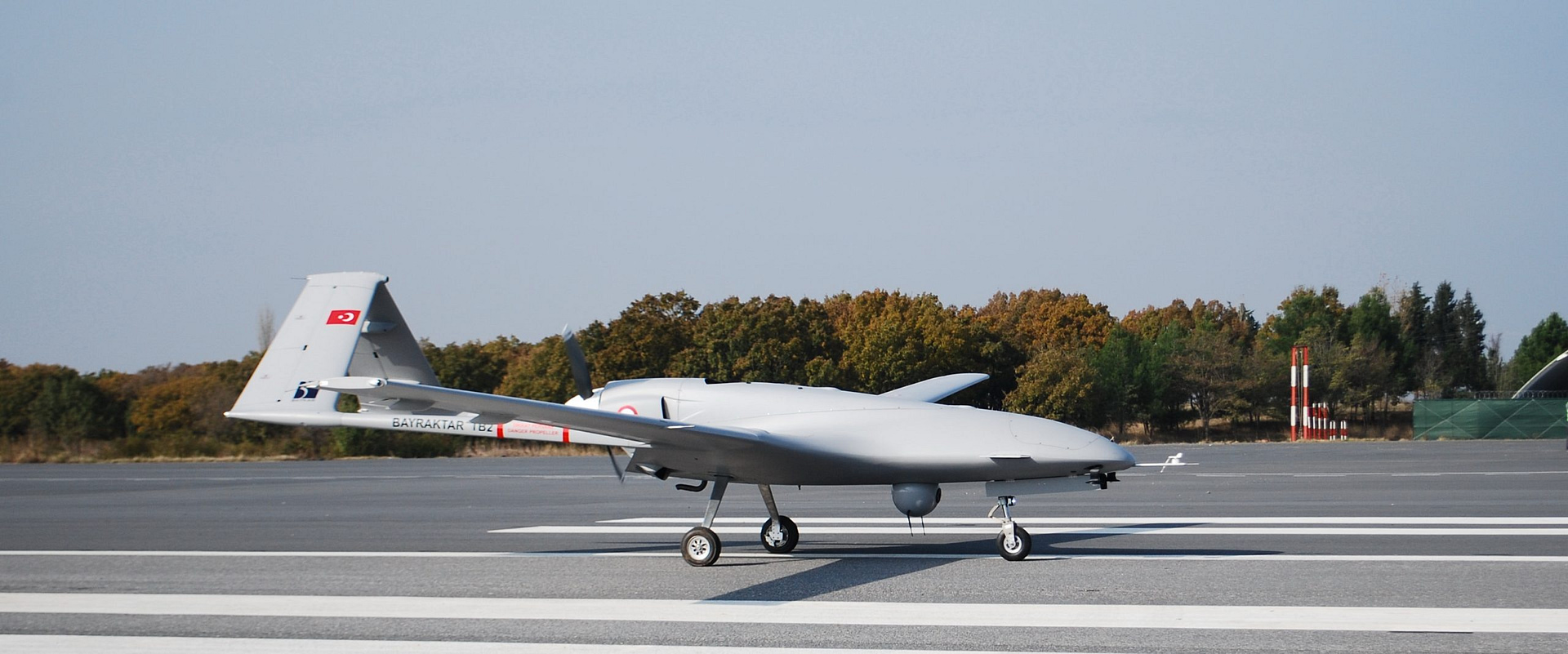
Baykar Bayraktar TB2
“The drone that rewrote the rules”
Turkey’s medium-altitude, long-endurance armed drone: a twin-boom, pusher-propeller unmanned combat air vehicle flown remotely from a ground control station, carrying up to four laser-guided smart munitions. Cheap, patient and lethal, the TB2 became the most famous combat drone of the 2020s — blooded over Syria and Libya, decisive in the 2020 Nagorno-Karabakh war, and a cultural phenomenon in Ukraine.
The Bayraktar TB2: how a Turkish family firm built the drone that changed war
ال Bayraktar TB2 is the product of Baykar, a privately held Turkish company that grew out of a small automotive-parts business into the country’s leading drone maker. Its unmanned systems were driven forward by Selçuk Bayraktar, an MIT-trained engineer who became Baykar’s chief technology officer and led the development of Turkey’s first indigenous armed drone after imports of foreign UAVs proved politically unreliable.
The TB2 is a medium-altitude, long-endurance (MALE) aircraft of deceptively modest performance: a single Rotax 912 piston engine driving a pusher propeller, a slender high-aspect-ratio wing, and a distinctive twin tail-boom layout with an inverted-V tail. It first flew in 2014 and entered Turkish service the same year, with an armed version following that could carry small laser-guided smart munitions.
What made the TB2 revolutionary was not raw capability but economics and availability. Where a Reaper cost tens of millions, a TB2 cost a fraction, and Turkey was willing to export it widely. It flies low and slow — but against opponents without dense, layered air defences it can loiter for the better part of a day, find targets, and destroy tanks, artillery and air-defence vehicles for a tiny price. That combination reshaped conflicts in Syria, Libya, Nagorno-Karabakh and Ukraine.
01Why the Bayraktar TB2 exists: Turkey’s drive for a home-built armed drone
Through the 2000s Turkey wanted armed drones for its long campaign against the PKK, but export restrictions on American and Israeli systems left it dependent on suppliers who could withhold spares or approval. Baykar, led technically by Selçuk Bayraktar, set out to build an indigenous alternative — first the unarmed Bayraktar TB (mini and tactical) systems, then the larger, weaponised TB2.
By pairing a proven light-aircraft engine and off-the-shelf components with Turkish avionics and, crucially, Turkish-made Roketsan smart munitions, Baykar created a fully sovereign strike system that Turkey could use and sell as it saw fit.
02The Bayraktar name: the family and engineer behind the TB2
“Bayraktar” is the surname of the founding family; in Turkish it means “standard-bearer”. The company was founded by Özdemir Bayraktar, and the drone programme was led by his son Selçuk Bayraktar as chief technology officer. The TB2 designation simply marks it as the second, larger tactical Bayraktar UAV.
How the Bayraktar TB2 works: airframe, ground control station and smart munitions
A twin-boom, pusher-prop endurance airframe
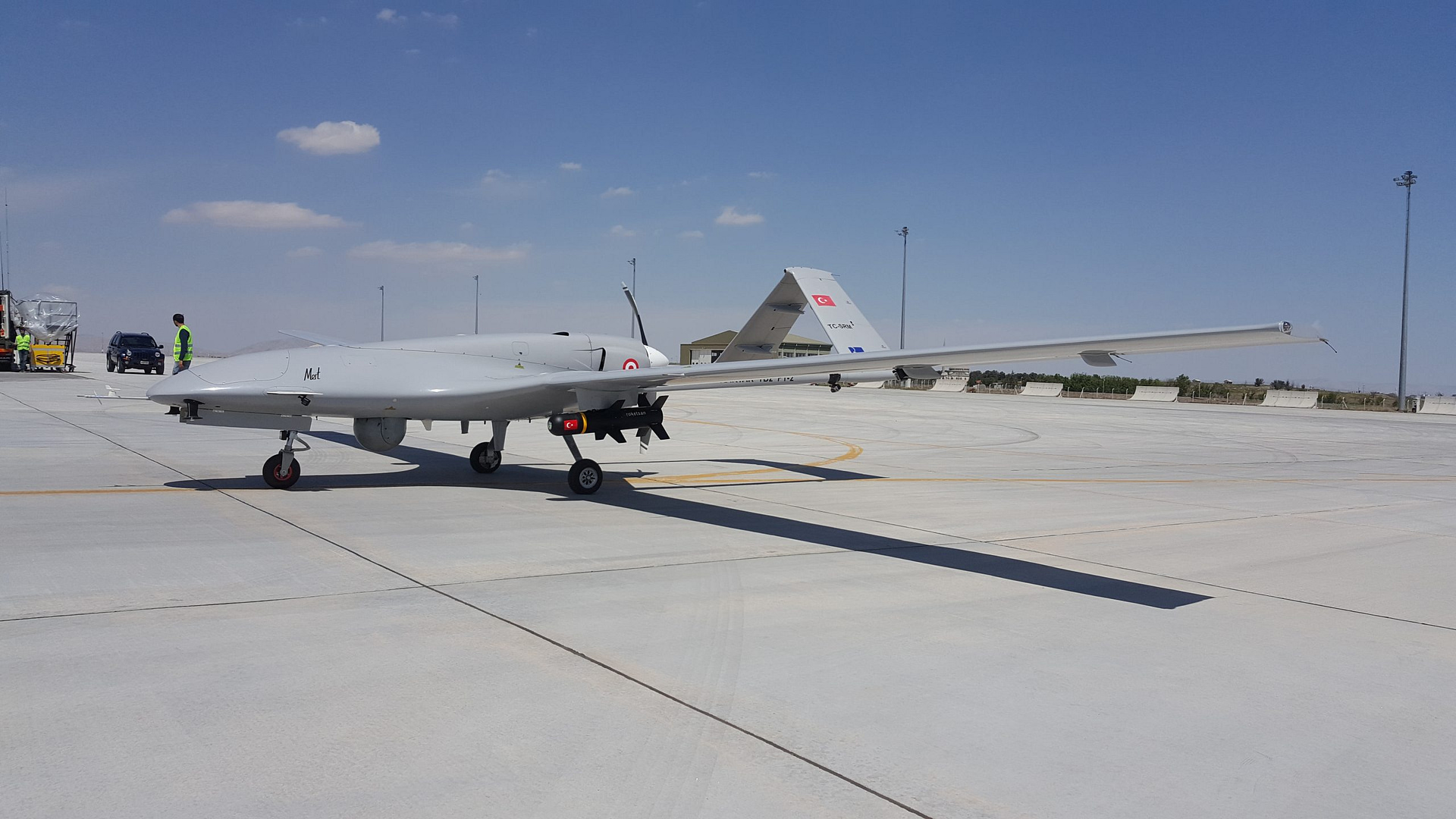
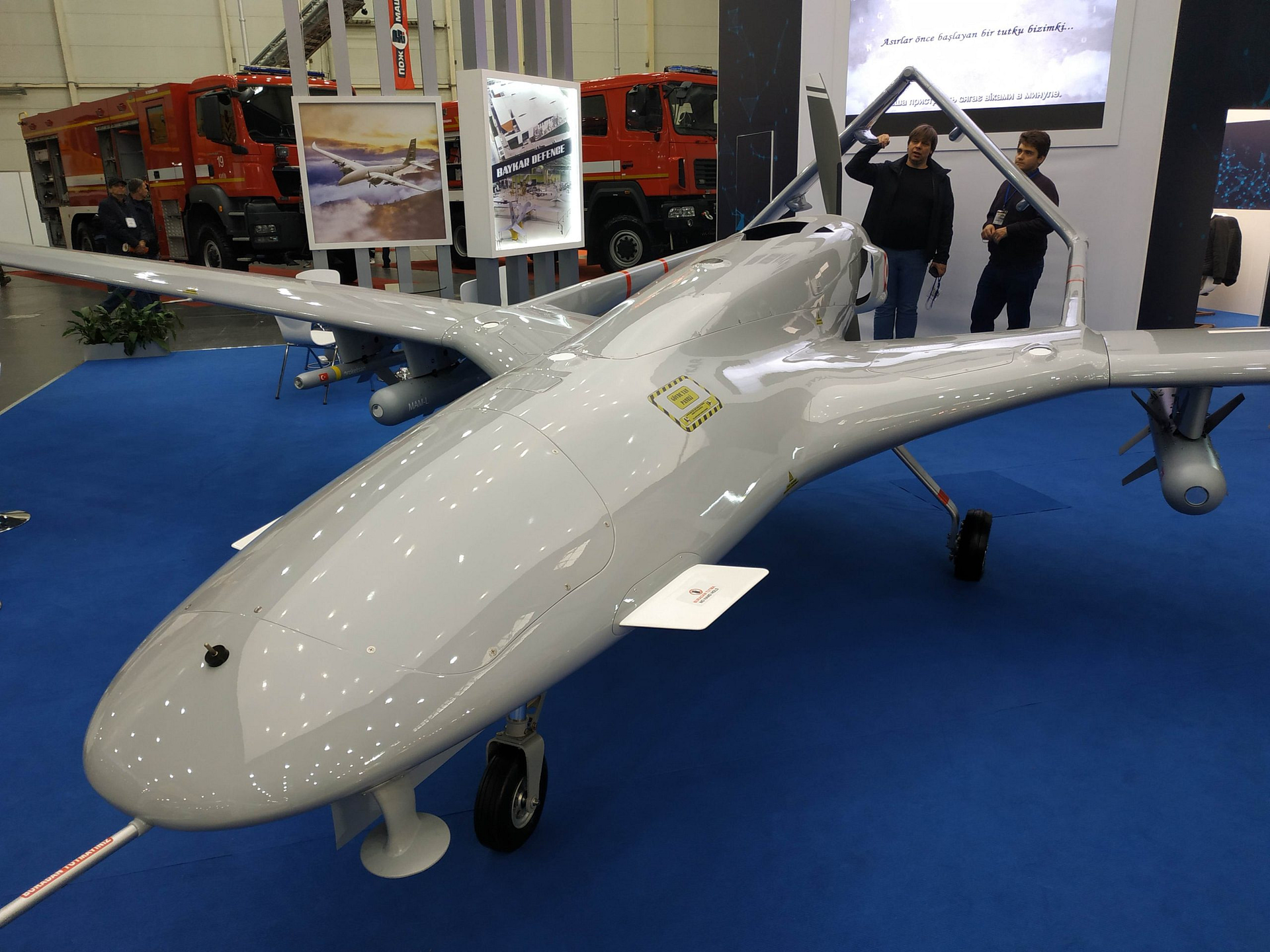
The TB2 uses a slender high-aspect-ratio wing for efficient loitering, a single rear-mounted pusher propeller, and two tail booms joined by an inverted-V tail. Built largely of carbon-fibre and Kevlar composites, it is light, quiet and fuel-efficient — able to stay airborne for around a full day at a time.
No cockpit: a ground control station and a datalink
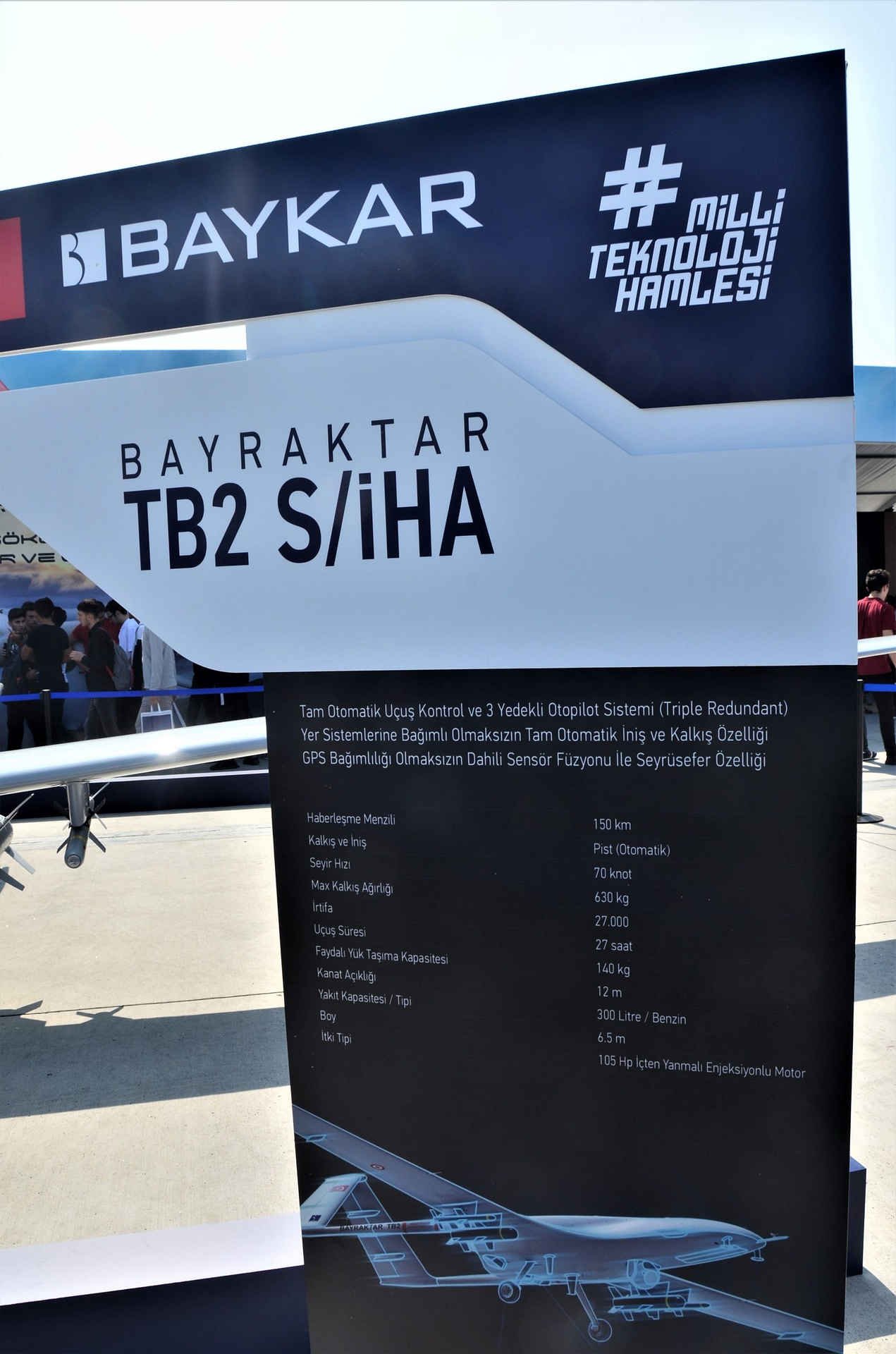
Nobody rides in a TB2. It is flown from a mobile ground control station by a two-person crew — a pilot and a payload operator — over a line-of-sight datalink (on the order of 150 km) or, in later configurations, via satellite communications for much longer reach. Its electro-optical/infrared turret with a laser designator lets it find, track and mark targets day or night.
Up to four laser-guided smart munitions
The TB2 carries up to four Roketsan smart micro-munitions — typically the MAM-L and lighter MAM-C, later joined by the MAM-T — laser-guided glide bombs sized for a small drone. The aircraft lases its own target, giving it a self-contained find-fix-strike capability against tanks, artillery and air-defence systems.
03The Bayraktar TB2’s weapons: Roketsan MAM-L and MAM-C smart munitions
The TB2’s punch comes from Turkey’s Roketsan family of MAM (Smart Micro Munition) weapons. The MAM-L weighs around 22 kg and the lighter MAM-C around 6.5 kg — small enough that a light drone can carry four, yet accurate enough to kill armoured vehicles with laser guidance. Variants add different warheads and, in the MAM-T, longer range.
Because the drone carries its own laser designator, it does not need a separate spotter: it can loiter, identify a target, and guide its own weapon onto it — the capability that made the TB2 so effective against ground forces.
04The Bayraktar TB2 engine question: the Rotax 912 and Turkey’s domestic replacements
Early and standard TB2s are powered by the Austrian Rotax 912, a proven ~100-horsepower light-aircraft engine. Reliance on an imported engine became a strategic vulnerability when export controls were threatened, so Baykar and Turkish industry moved to develop domestic engines — including designs in the same class — to make the aircraft fully sovereign.
The larger Bayraktar Akıncı and jet-powered Bayraktar Kızılelma that followed the TB2 use more powerful, increasingly indigenous powerplants, reflecting the same push toward self-sufficiency.
05Who builds the Bayraktar TB2: Baykar and the wider drone family
The TB2 is designed and built by Baykar in Turkey, with production scaled up dramatically as export orders grew. It sits within a family of Baykar systems that now includes the heavier, twin-engine Akıncı, the naval TB3 (designed to fly from Turkey’s amphibious ship TCG Anadolu) and the unmanned fighter Kızılelma.
Baykar has also opened or announced production and assembly abroad, including a plant in Ukraine, tying the TB2 into the industrial base of some of its export customers.
Bayraktar TB2 specifications: dimensions, performance and cost
Baseline note: the figures below describe the standard Bayraktar TB2 as published by Baykar — the line-of-sight, piston-engined production aircraft that has been exported to more than thirty countries. The TB2S (first flight 4 December 2020) adds a satellite communications terminal in a dorsal fairing, which lifts the aircraft out of the 300 km datalink limit that otherwise defines it. The TB2T-AI (unveiled February 2025) is a turboprop-powered rework with winglets, added stabilisers and onboard artificial-intelligence processing, quoted at 300 km/h and 30,000 ft. The larger TB3 and jet-powered Kizilelma are successors, not variants, and are treated in the variants table below. Deltas are in grey. Baykar publishes less data than a conventional manufacturer would, and several commonly repeated figures — empty weight, unit price, production totals — have never been officially confirmed.
Dimensions & weights
- طاقم
- None aboard. Three in the ground control station — pilot, payload operator and mission commander
- طول الجناحين
- 12.00 m (39 ft 4 in) — a very high aspect ratio for the weight, and the reason for the endurance
- طول
- 6.50 m (21 ft 4 in)
- Configuration
- Blended wing-body with an inverted-V tail on twin booms and a pusher propeller between them — conventional, cheap to build and entirely un-stealthy
- أقصى وزن للإقلاع
- 700 kg (1,543 lb)
- Total payload
- 150 kg (331 lb), sensor turret included — roughly a tenth of what an MQ-9 Reaper lifts
- Practical weapon load
- ~88 kg (194 lb) as four MAM-L at 22 kg each; the sensor turret alone accounts for 45–52 kg of the payload budget
- نقاط تثبيت
- Four, two under each wing
- Structure
- Carbon-fibre composite monocoque with machined aluminium fittings at the joints; wings, tail booms and V-tails detach for transport
- Landing gear
- Fixed tricycle — no retraction mechanism, no weight or complexity spent on it
- Fuel
- 300 L (79 US gal, 66 imp gal) of petrol in bladder tanks, balanced between cells by solenoid valves
- What a "system" means
- Six air vehicles, two ground control stations, three ground data terminals, two remote video terminals and support equipment. Export contracts are counted in systems, which is why published aircraft numbers so often come in multiples of six
Performance
- أقصى سرعة
- 222 km/h (138 mph, 120 kt)
- Cruise and loiter speed
- 130 km/h (81 mph, 70 kt) — slower than a light aircraft on a cross-country
- Endurance
- More than 20 h on Baykar’s figures; ~24 h is routinely reported in service and the type has flown demonstration sorties beyond that
- Operational altitude
- 5,500 m (18,000 ft) — the working height, and well inside the envelope of any competent medium-range surface-to-air system
- سقف الخدمة
- 7,600 m (25,000 ft)
- Datalink range
- Line of sight, up to ~300 km (186 mi); the TB2S removes this limit with satellite communications
- Effective radius
- Set by the datalink, not the fuel. A baseline TB2 can stay airborne far longer than it can stay in contact, which shapes how it is based and flown
- Weapon standoff
- 8 km (5 mi) with MAM-C, 15 km (9 mi) with MAM-L, 30 km (19 mi) or more with MAM-T
- Take-off and landing
- Fully automatic — taxi, take-off, cruise, landing and parking — from a semi-prepared strip. Operators need technicians, not trained pilots, which is a large part of the export appeal
- Survivability
- Effectively none against a functioning integrated air defence. Slow, propeller-driven, un-stealthy, unmanoeuvrable and carrying no self-defence suite. It works where the air defences do not, and stops working where they do
- Typical sortie
- 12–18 h of surveillance with two to four munitions aboard, the weapons treated as an opportunity rather than the point of the flight
Propulsion & systems
- محرك
- 1 × Rotax 912 iS four-cylinder horizontally opposed petrol engine, 75 kW (100 hp) — a certified light-aircraft engine bought off the shelf, and one of the clearest signals of what this design is about
- Domestic engines
- Baykar TM100 and, from 2024, the BM100 — developed after Austrian and Canadian supply was cut, so that exports no longer depend on a Western licence
- Propeller
- Two-blade variable-pitch pusher, mounted between the tail booms
- Flight control
- Triple-redundant avionics and flight-control computers with sensor fusion, fully autonomous through the whole flight envelope; the operator commands the mission rather than flying the aeroplane
- Sensor turret
- L3Harris WESCAM MX-15D electro-optical / infrared / laser-designator turret, 45 kg — the original and by a distance the best. Alternatives are the Aselsan CATS (61 kg, and heavy enough to hurt export sales), the Aselsan ASELFLIR-500 (~52 kg, now the standard) and the Hensoldt ARGOS-II
- Export-control history
- Canada suspended MX-15D exports in October 2020 after turret wreckage was recovered from a downed TB2 in Nagorno-Karabakh, and cancelled the permits outright on 12 April 2021. Britain licensed the EDO MBM Hornet bomb rack to Turkey repeatedly between 2014 and 2020. Both cases show a wider truth about the aircraft: its early lethality was assembled substantially out of Western components, and the sanctions that followed pushed Turkey to build its own
- Electronic-warfare pods
- Aselsan ANTIDOT family — 2-U/S electronic support for locating hostile radars, 2-U mini-jammers, and the 3-U pod aimed at hostile drone datalinks and satellite navigation
- Ground control station
- NATO-specification shelter with cross-redundant command and control, redundant air conditioning and nuclear, biological and chemical filtration; dual screens per operator, all hardware racked
- First flight
- August 2014
- Service entry
- 2014 with the Turkish Land Forces; first armed test firing of a Roketsan munition demonstrated on 18 December 2015
- Unit cost
- ~US$5–5.5 million per aircraft — the figure European crowdfunding campaigns worked to in 2022, which Baykar has repeated on its own website without ever confirming a list price. Roughly a sixth of an MQ-9 Reaper
- Number built
- Not published. Baykar has stated exports to more than thirty countries, and press reporting puts cumulative deliveries in the high hundreds — no audited total exists, and country-by-country delivery figures are frequently confused with orders
06Bayraktar TB2 variants and family: from the TB2 to the Akıncı, TB3 and Kızılelma
Bayraktar TB2 — the baseline armed MALE drone described here.
TB2S — a version fitted with satellite communications for beyond-line-of-sight control.
Bayraktar TB3 — a folding-wing naval derivative designed to operate from Turkey’s short-deck amphibious ship TCG Anadolu.
Bayraktar Akıncı و Kızılelma — larger, more capable Baykar systems (a twin-turboprop heavy UCAV and a jet-powered unmanned fighter) that build on the TB2’s success.
07The Bayraktar TB2’s operating costs: why a cheap drone changed the maths of war
Exact prices are commercially sensitive and vary by contract, but a single TB2 airframe is frequently reported at roughly USD 1–2 million, with a complete system — typically several aircraft plus a ground control station and support — running into the tens of millions. Even the high estimates are a fraction of a manned strike aircraft or a large Western drone such as the MQ-9 Reaper.
A published cost per flight hour is not officially released, but the TB2’s small piston engine and simple airframe make it dramatically cheaper to operate than a jet. That affordability — being cheap enough to risk and to buy in numbers — is central to why the TB2 reshaped several conflicts. Treat all cost figures as estimates.
Armament & payload
A 150 kg payload, four small laser-guided bombs and a very good camera — and that turned out to be enough
The TB2 carries almost nothing. Four hardpoints, 150 kg of total payload with the sensor turret already eating a third of it, and a practical weapon load of four 22 kg guided munitions. There is no gun, no air-to-air capability, no anti-radiation missile and no heavy precision weapon. Against a modern strike aircraft the comparison is absurd.
What matters is what the four small bombs are aimed at. Roketsan’s MAM family is precise enough to hit an individual vehicle, a gun pit or a radar cabin, and the WESCAM turret is good enough to identify one from 18,000 ft. A towed howitzer, a parked air-defence vehicle or a soft-skinned lorry does not require a 500 kg bomb; it requires the ability to find it, watch it long enough to be sure, and put twenty-two kilogrammes exactly on it. The TB2 did that for a fraction of the cost and none of the political conditions attached to an American or Israeli system. That is the whole innovation, and it is a procurement innovation rather than an engineering one. Stores clearances differ substantially by customer: several of the newer Turkish munitions listed below are cleared on Turkish aircraft only, and export packages typically ship with MAM-L and MAM-C alone.
Smart micro-munitions
- Roketsan MAM-L — 22 kg, 160 mm, semi-active laser, range 15 km. Tandem shaped-charge, blast-fragmentation and thermobaric warheads. Derived from the L-UMTAS missile with the rocket motor removed. The signature TB2 weapon and the one recovered in Karabakh, Tigray and Ukraine.
- Roketsan MAM-C — 6.5 kg, 70 mm, laser-guided, range 8 km, derived from the Cirit rocket. Small enough to use in built-up areas and to carry four of alongside other stores.
- Roketsan MAM-T — 94 kg, 230 mm, laser or GPS/INS guidance, 30 km or more from a drone. Too heavy for a useful TB2 load in practice; it belongs to the Akinci and TB3 generation.
- TUBITAK-SAGE alternatives: the KAYI-30 miniature laser-guided bomb (15 km, CEP under 3 m) and the BOZOK, both tested on the TB2 from the earliest armed trials.
Guided missiles
- Roketsan L-UMTAS (Mizrak-U) — 37.5 kg semi-active laser anti-tank missile, 1.8 m long, 160 mm, range 500 m to 8 km. Tandem HEAT, blast-fragmentation or thermobaric warhead. The only genuine anti-armour weapon in the TB2’s inventory.
- UMTAS-GM-1 — the extended-range development, quoted at up to 32 km from an aircraft, with a lighter launcher.
- Roketsan Cirit — 70 mm laser-guided rocket, ~15 kg, 8 km. Cheap enough to use on a technical or a mortar team.
- Baykar Kemankes 1 — a small turbojet cruise missile intended to give the TB2 a standoff strike option it has never previously had.
Sensors
- L3Harris WESCAM MX-15D — 45 kg gyro-stabilised turret with day television, mid-wave infrared, laser designator, rangefinder and pointer. Canadian, and the component that made the aircraft lethal rather than merely present.
- Aselsan ASELFLIR-500 — the Turkish successor after the Canadian export ban: ~52 kg, 4096 × 2880 daylight sensor, high-definition mid-wave and short-wave infrared channels, laser designator. Since exported to more than twenty countries in its own right.
- Aselsan CATS — the first domestic substitute, 61 kg. Heavy enough that customers complained, and superseded.
- Hensoldt ARGOS-II — the German-Swiss alternative offered as a third option.
Electronic-warfare pods
- Aselsan ANTIDOT 2-U/S — electronic support pod that detects, identifies and geolocates hostile radar emissions, drawing only 300 W so a tactical drone can power it.
- ANTIDOT 2-U in low, mid and high band — miniature jamming pods.
- ANTIDOT 3-U — aimed specifically at hostile drone command links and satellite navigation, turning the TB2 into a counter-drone platform.
- Carrying any of these costs the aircraft most of its weapon load. The payload budget forces a choice between shooting and jamming.
What it does not carry
- No gun of any kind, and no provision for one.
- No air-to-air missile. A TB2 that meets a fighter, a helicopter or another drone is a target and nothing else.
- No anti-radiation missile. Its celebrated work against air-defence systems was done with laser-guided bombs against vehicles that were parked, unalerted, or out of ammunition.
- No self-protection: no radar warning receiver in the usual sense, no chaff, no flares, no infrared jammer. Losses in Libya, Karabakh and Ukraine were routine and were treated as the cost of doing business.
The system, not the aircraft
- Four hardpoints, 150 kg of payload, and a ground segment worth more than the airframes: two NATO-standard shelters, three ground data terminals and two remote video terminals per system.
- Remote video terminals let a ground commander watch the same feed as the operator, which is what turned the TB2 into a targeting service for artillery rather than only a strike aircraft.
- Fully autonomous flight means the expensive, scarce resource is the sensor operator, not a pilot — the single biggest reason a medium power can field these in numbers.
- The publicity was itself a weapon. Azerbaijan and Ukraine both released strike video deliberately and at volume, and the psychological effect on the target and the political effect at home were real, whatever the strictly military accounting.
Three typical loadouts
- Armour and artillery hunt (Karabakh, 2020)
- Four MAM-L with tandem or blast-fragmentation warheads, MX-15D turret, 12–18 h on station at 18,000 ft over ground with no working medium-range air defence. Targets found by loitering, identified by camera, struck one at a time, and filmed.
- Persistent surveillance and artillery direction
- Two MAM-L retained for targets of opportunity, the rest of the payload budget spent on endurance, feed passed live to a remote video terminal at a brigade command post. This became the TB2’s main Ukrainian role from mid-2022, flown well back from the line.
- Maritime strike
- Two L-UMTAS and two MAM-L against small craft and uncrewed surface vessels in the Black Sea — the mission the type returned to in 2023 and again in 2025, once Ukrainian strikes had thinned Russian air defences in Crimea enough to let it fly there at all.
Sourcing caveat: Baykar and Roketsan publish marketing figures rather than release-to-service data, and several stores listed as TB2-compatible have only been shown in ground displays or single test releases. Munition ranges are maximum kinematic figures against a cooperative target and should not be read as tactical standoff. Combat-loss counts throughout come from open-source visual confirmation, chiefly Oryx, and are floors rather than totals.
Variants
Baykar built almost no variants of the TB2 and instead built bigger aircraft around what it learnt
The TB2 has been remarkably static. Twelve years of production have produced one significant subvariant and one recent rework, because the design was never intended to grow — the airframe is close to its structural and payload limits, and the company’s answer to every requirement for more has been a new and larger aircraft rather than a modified TB2.
That is a defensible strategy and it has worked commercially, but it also means the TB2 of 2026 is fundamentally the aircraft of 2014, with a better turret and a Turkish engine. The successors listed below are separate designs, not marks, and are included because the TB2’s story does not make sense without them.
- Bayraktar TB1 (2011, predecessor)
- Baykar’s first tactical UAV, delivered unarmed to the Turkish Army. It taught the company autonomous flight control and got it inside the procurement door.
- Bayraktar TB2 (2014–, several hundred)
- The baseline: line-of-sight datalink, Rotax or TM100 piston engine, four hardpoints. Everything exported before roughly 2021 is this aircraft.
- Bayraktar TB2S (first flight 4 December 2020)
- Satellite communications in a dorsal fairing with a nose antenna, breaking the ~300 km line-of-sight limit and making the datalink much harder to jam. The only change to the aircraft that alters what it can be used for.
- Bayraktar TB2T-AI (unveiled February 2025)
- Turboprop engine, winglets and added horizontal stabilisers on the inverted-V tail, three onboard artificial-intelligence computers, higher take-off weight. Quoted at 300 km/h and 30,000 ft, climbing to altitude in 25 minutes. A meaningful jump, and arguably the first real re-engineering the design has had.
- Bayraktar Akinci (2019–, in service)
- Not a TB2 variant: a much larger twin-turboprop high-altitude aircraft of around 5,500 kg with a 1,350 kg payload, radar, and the ability to carry cruise missiles and standoff bombs. This is where Turkey put the requirement the TB2 could never meet.
- Bayraktar TB3 (first flight 27 October 2023; in service September 2025)
- A TB2 derivative with folding wings, retractable gear and a strengthened structure for carrier work. On 19 November 2024 it took off from and landed on TCG Anadolu — the first fixed-wing uncrewed aircraft of its class to operate from a landing helicopter dock. Indonesia ordered 60 in February 2025.
- Bayraktar Kizilelma (first flight 14 December 2022)
- A jet-powered, low-observable uncrewed combat aircraft intended to fly from the same ship and to fight rather than loiter. As different from the TB2 as it is possible for one company’s products to be, and the clearest statement of where Baykar thinks the market is going.
- Astore Levante (2024–)
- A TB3 rebuilt with European systems by LBA Systems, the Baykar–Leonardo joint venture, for customers who need a European supply chain and European certification.
- Ukrainian production (announced 2022, plant under construction from 2024)
- A joint venture to build TB2s in Ukraine was announced before the 2022 invasion and ground was broken on a plant near Kyiv in 2024. It has yet to deliver an aircraft, and the war has moved the Ukrainian requirement decisively towards much smaller and much cheaper drones.
- Local integrations
- Several operators — Poland, Ukraine and Qatar among them — have fitted or trialled national communications, identification and munitions fits. None amount to a distinct mark, and Baykar does not designate them.
Closing caveat: Baykar publishes selectively and confirms almost nothing about production or configuration on a per-customer basis. Several of the dates above rest on company social-media announcements, which are the primary source for a surprising amount of what is known about this aircraft. Where a figure could not be corroborated outside company channels it is described as such.
The Bayraktar TB2: a timeline from first flight to global fame
First flight and service entry
The Bayraktar TB2 makes its first flight and enters Turkish service; an armed version follows.
Combat debut against the PKK
Armed TB2s begin operations in Turkey’s counter-PKK campaign, carrying Roketsan MAM smart munitions.
Into Syria and Libya
Turkey deploys TB2s in Syria and in Libya, where they support the UN-recognised government against the LNA.
Spring Shield and Karabakh
In Syria’s Idlib (Operation Spring Shield) and then the Nagorno-Karabakh war, TB2s destroy large numbers of armoured vehicles and air-defence systems.
A symbol of victory
Azerbaijan’s TB2s become a symbol of victory over Armenian forces; footage of drone strikes is shown publicly.
The war in Ukraine
In Ukraine, TB2s strike Russian columns in the opening weeks and become a cultural phenomenon, including a namesake song.
A global export success
Baykar announces a production plant in Ukraine; TB2 exports expand across Africa, the Gulf and Central Asia.
~30+ operators and counting
The TB2 is operated by around 30 or more countries and continues in production alongside Baykar’s larger Akıncı, TB3 and Kızılelma.
The Bayraktar TB2 in action: the campaigns that made it famous
Baykar and Selçuk Bayraktar: the drone’s beginnings
How a Turkish family firm built a sovereign armed drone.
Read the full account
No cockpit, no crew aboard: how a TB2 is flown
The TB2 is operated from a container on the ground.
Read the full account
Idlib, 2020: Operation Spring Shield
Turkish drones savaged a mechanised force in the open.
Read the full account
Libya, 2019–2020: the drone war
TB2s helped turn back an offensive on Tripoli.
Read the full account
Nagorno-Karabakh, 2020: a decisive weapon
TB2 strikes broke Armenian armour and air defence.
Read the full account
Ukraine, 2022: fame and a folk song
The TB2 became a wartime cultural icon.
Read the full account
MAM-L and MAM-C: the small bombs that do the work
Roketsan’s smart munitions give the TB2 its bite.
Read the full account
Cheap enough to change the maths
The TB2’s real weapon is its price.
Read the full account
Where the TB2 struggles: modern air defence
Against a prepared enemy, the slow drone is vulnerable.
Read the full account
The drone the world lines up to buy
Around 30 or more countries operate the TB2.
Read the full account
After the TB2: Akıncı, TB3 and Kızılelma
The TB2 opened the door to a whole drone family.
Read the full account
Why you can’t fly in a TB2
A UCAV has no room for a human at all.
Read the full account
Bayraktar TB2 photos: the armed drone up close
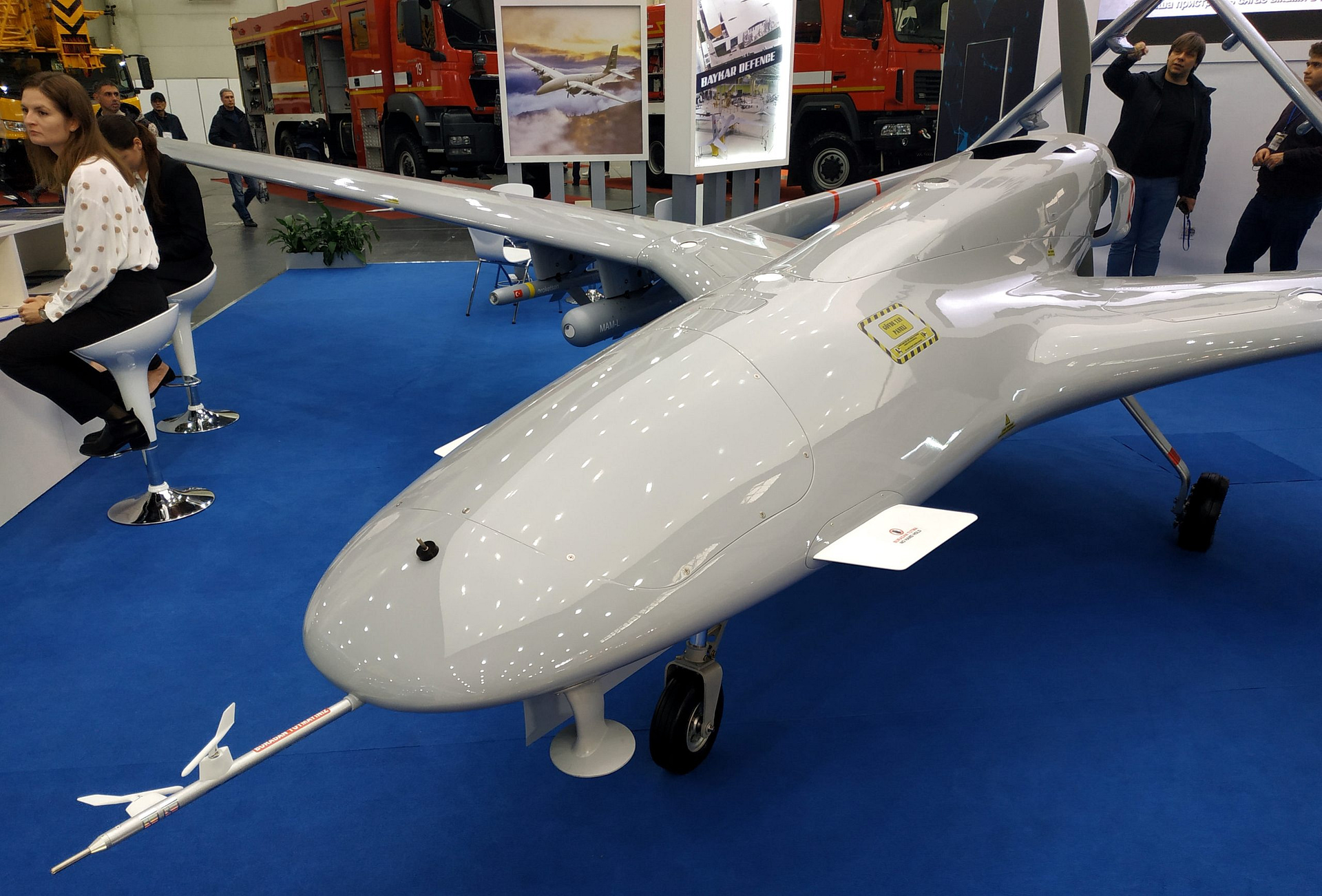
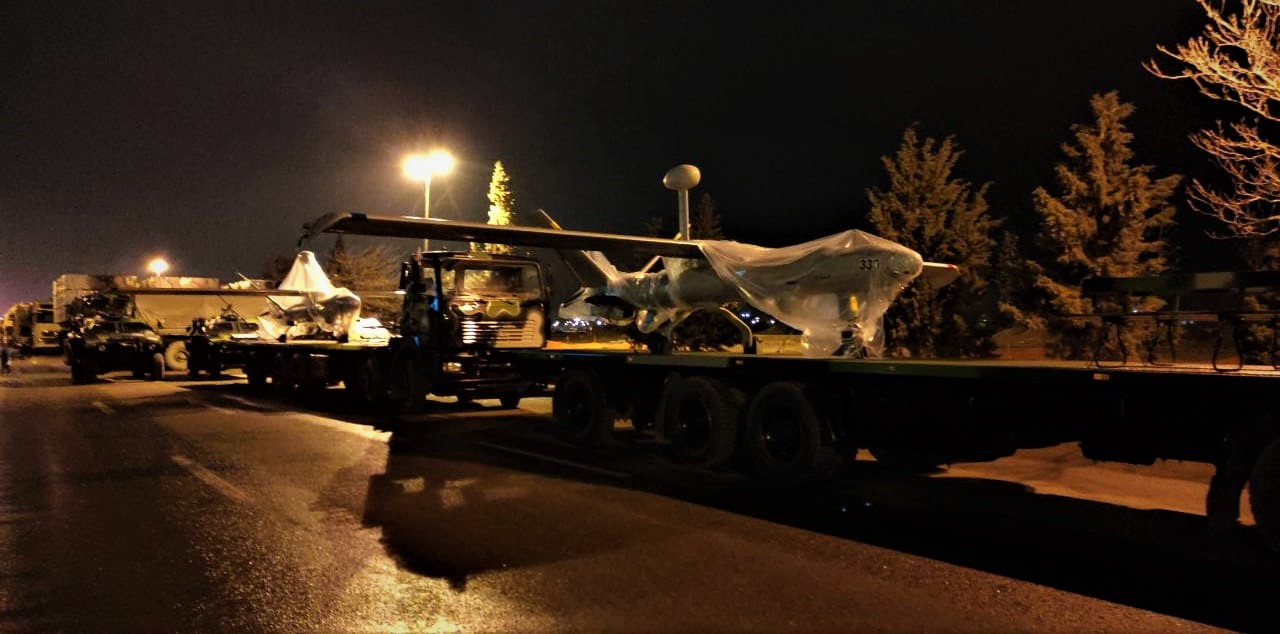
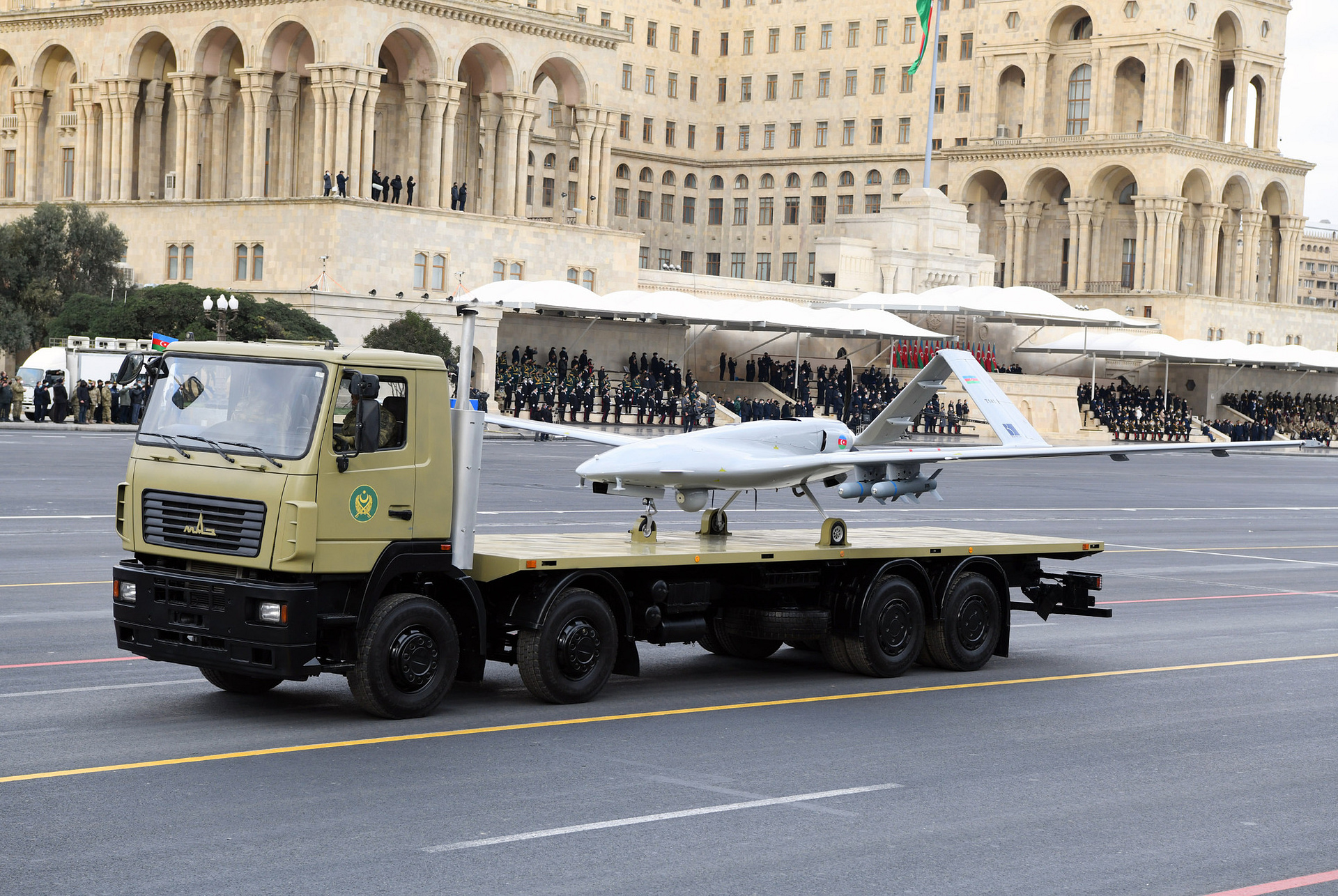
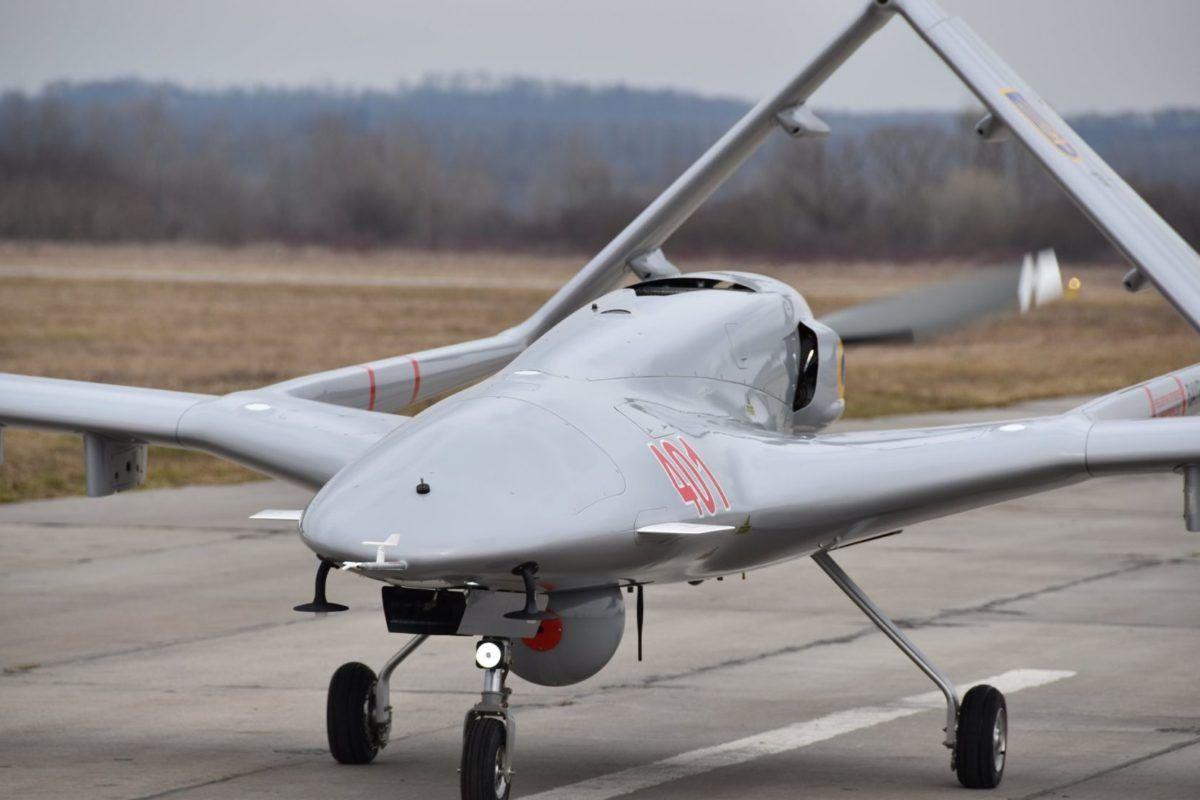
The Bayraktar TB2 on screen: how the armed drone actually works
AiTelly · “How a Military Drone Works | Bayraktar TB2 UAV” (1.2M+ views) — an animated technical breakdown of how the TB2’s airframe, ground control station, camera turret and laser-guided munitions work together.
Where the Bayraktar TB2 flies: origin, combat use and export operators
Operators today
Turkey flies most of them, and everyone else buys them six at a time
The TB2 is exported in "systems" of six aircraft, which is why almost every confirmed foreign fleet is a multiple of six. The chart below counts delivered aircraft where deliveries are confirmed, and says so where a figure is an order that has not fully arrived. A great many reported operators — Azerbaijan most conspicuously, along with Libya, Ethiopia, Kyrgyzstan, Somalia, Niger, Mali, Burkina Faso, Nigeria, Djibouti, Pakistan, Turkmenistan, the United Arab Emirates and Kosovo — have never published a number, and are omitted here rather than guessed at. Baykar has said the type has been exported to more than thirty countries, some of which it declines to name.
These are estimates, and the distinction between ordered and delivered matters more for this aircraft than for most. Turkey’s figure aggregates the Land Forces (over 200), Navy, Gendarmerie, Coast Guard and police, and is the least precise number here. Poland’s 24 — four systems, US$270 million, contracted May 2021 — were fully delivered by 16 May 2024 and are the best-documented export on the list. Romania’s 18, contracted April 2023 for US$321 million, are still arriving. Ukraine’s total is the roughest: 12 bought in 2019, six more for the Navy in 2021, and an unpublished number delivered, donated or crowdfunded during the war, against at least 26 losses visually confirmed by Oryx as of February 2025. Sources: manufacturer and government announcements, IISS The Military Balance and FlightGlobal World Air Forces; operators whose numbers could not be corroborated are named in the text above rather than charted.
The Bayraktar TB2 in combat: Syria, Libya, Karabakh and Ukraine
The TB2 is one of the most combat-active drones of its era. It saw its first strikes in Turkey’s counter-PKK campaign, then reshaped fighting in Syria’s Idlib (Operation Spring Shield, 2020), the Libyan civil war, and above all the 2020 Nagorno-Karabakh war, before becoming a symbol of resistance in Ukraine in 2022. Its successes came largely against forces lacking dense, layered air defences; against a prepared enemy the slow, low-flying drone is vulnerable. Specific claim figures are contested and should be treated as estimates.
Compare the Explore the combat record of every military aircraft. Data as of July 2026.
Bayraktar TB2: frequently asked questions
Can you fly a Bayraktar TB2?
What is the Bayraktar TB2?
Who makes the Bayraktar TB2?
What weapons does the Bayraktar TB2 carry?
How long can a Bayraktar TB2 stay in the air?
Why did the Bayraktar TB2 become so famous?
Is the Bayraktar TB2 actually effective against a strong military?
How much does a Bayraktar TB2 cost?
Which countries operate the Bayraktar TB2?
You can’t fly the Bayraktar TB2.
These, you can.
Some legends only live in museums — others are fuelled and waiting. MiGFlug has put civilians in real military jet cockpits since 2004.
 Fly the L-39 AlbatrosThe world’s most-flown jet trainer — aerobatics included
 Fly the F-104 Starfighter“The missile with a man in it”
 Fly the MiG-21The Cold War’s most-produced jet
 حلّق بطائرة تي-33 شوتينغ ستارAmerica’s first jet trainer
 Fly the DH VampireA piece of early jet history
 Fly the S.211Agile Italian jet trainer
 Fly the MB-326The classic Aermacchi jet
 Fly the MiG-15The Soviet legend of the Korean War
More from the Military Aircraft Encyclopedia
Bayraktar TB2: sources & further reading
- BaykarBaykar — official Bayraktar TB2 manufacturer page with specifications and configuration.
- Army TechnologyArmy Technology — detailed TB2 airframe, powerplant, sensors and munitions data.
- RoketsanRoketsan — manufacturer of the MAM-L / MAM-C smart munitions the TB2 carries.
- RUSIRUSI — analysis of drone warfare, the TB2 and lessons from Nagorno-Karabakh and Ukraine.
- IISS Military BalanceIISS Military Balance — operator and inventory data for the Bayraktar TB2.
- Defense NewsDefense News — reporting on TB2 exports, orders and combat use.
- Al JazeeraAl Jazeera — coverage of the TB2 in Libya, Karabakh and Ukraine.
- MiGFlug AfterburnerMiGFlug Afterburner — the magazine behind this encyclopedia, on military aviation and jet flights.
Hero and gallery photography: U.S. Air Force / NASA, public domain. Combat statistics as of July 2026. Spotted an error? Every page in the Aircraft Museum is fact-checked before publication — write to us and we’ll correct it.