

Gloster Gladiator
The RAF’s last biplane fighter — an open-framed throwback that went to war in 1940 and, over Malta and Norway, became a legend.
At a Glance
Gloster Gladiator: key facts
القصة
The Gloster Gladiator: the RAF’s last biplane fighter
In the mid-1930s the Royal Air Force was still, in the main, a force of open-cockpit biplanes: fabric-covered, wire-braced fighters that traced their bloodline straight back to the First World War. The Gloster Gladiator was the last and best of that line — and by the time it went to war it was already a survivor from another age, thrown into a sky that belonged to the monoplane.
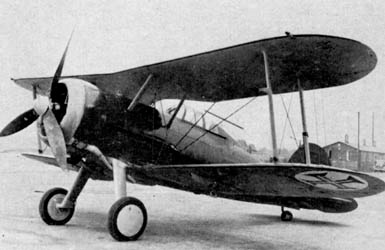
The Gladiator grew out of Gloster’s earlier Gauntlet, itself a fast open-cockpit biplane. Designer Henry Folland refined the concept into the private-venture SS.37, which first flew on 12 September 1934. It offered the RAF a package no earlier British biplane had managed all at once: an enclosed, sliding cockpit canopy, a powerful Bristol Mercury radial engine, and — crucially — four machine guns instead of the traditional two.
That armament mattered. For nearly two decades RAF fighters had gone into action with a pair of rifle-calibre guns, a standard set in 1918. The Gladiator doubled it to four .303-inch guns, two in the fuselage and one under each lower wing. Against fabric-covered opponents it was a genuine advance, and it made the Gladiator one of the hardest-hitting biplane fighters ever built.
The RAF ordered it, and the first Gladiators reached No. 72 Squadron early in 1937. For a brief moment it was a thoroughly modern fighter. But aviation was moving at a bewildering pace. The same Air Ministry that bought the Gladiator was already ordering the monoplane Hawker Hurricane and Supermarine Spitfire, and by 1937 the Messerschmitt Bf 109 was in service in Germany. The biplane fighter’s day was ending even as the Gladiator entered its prime.
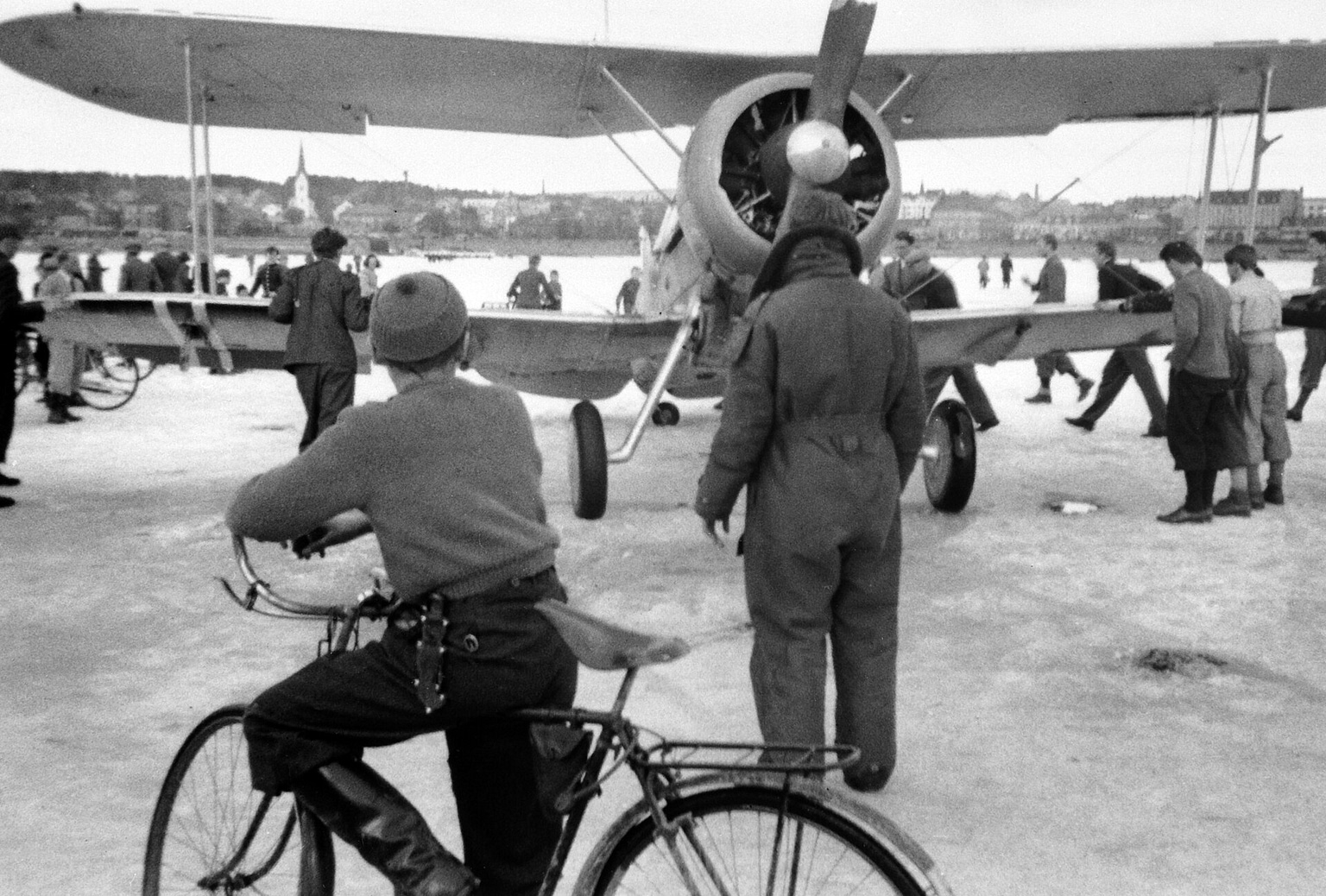
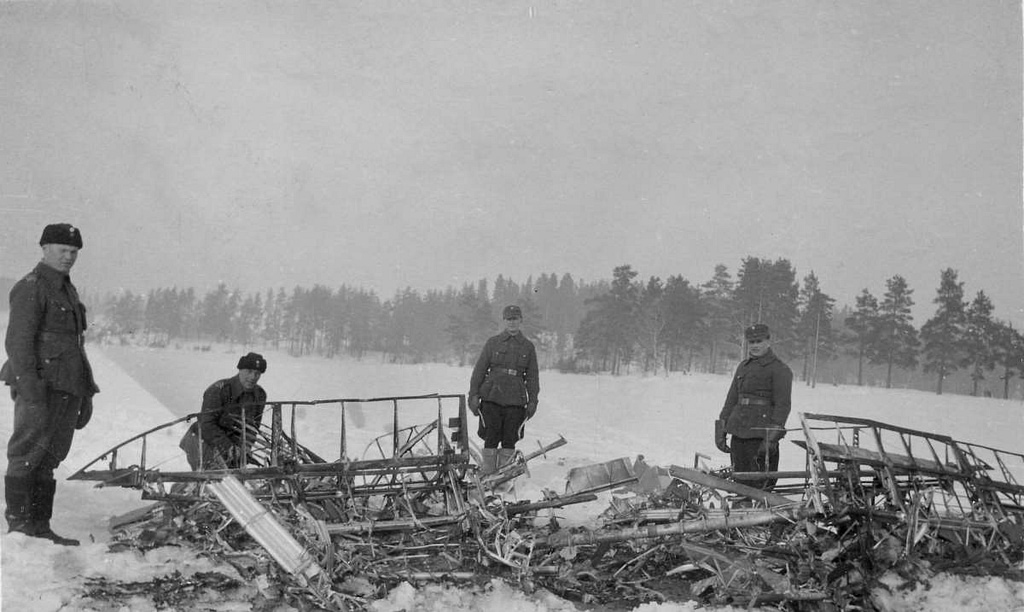
It hardly mattered to the men who flew it. When the war spread in 1940, the Gladiator was still on the strength of squadrons far from Britain — and it fought. Over Norway, RAF Gladiators of No. 263 Squadron operated from the frozen surface of Lake Lesjaskog, taking off between bomb craters until the ice and the Luftwaffe wore them down. It was one of the most desperate improvised air campaigns of the war.
Then came Malta. In June 1940 a handful of naval Sea Gladiators, assembled from packing crates on the island, flew in the first defence of Malta against the Italian air force. The story of “Faith, Hope and Charity” — three lone biplanes holding off an empire — became one of the most famous legends of the war. The reality, as ever, was more complicated, but the courage was entirely real.
The Gladiator fought almost everywhere Britain and its friends did in 1940 and 1941: over France and Belgium, in the mountains of Greece against the Italian invasion, across the Western Desert, and through the long East African campaign that drove Italy out of Ethiopia and Eritrea. Wherever modern fighters were scarce, the old biplane held the line.
It was also one of the most widely exported fighters of its generation. Gladiators served with the air forces of Sweden, Finland, Norway, Belgium, Greece, China, Iraq, Portugal, Latvia, Lithuania, Ireland, Egypt and South Africa. In the snows of the Winter War, Finnish Gladiators and Swedish volunteers fought the Soviet Air Force; over southern China they met the Japanese; over the desert they duelled the Italian Fiat CR.42, the last biplane fighter on the other side.
By 1941 the Hurricane and Spitfire had taken over, and the Gladiator was withdrawn from front-line fighting to meteorological, communications and second-line duties. But it had done something remarkable: it had carried the RAF, and half a dozen other air forces, across the gulf between the biplane era and the monoplane war — and in Norway and over Malta it had written itself into legend. That is why, at Old Warden in England, one Gladiator still flies today.
01The Gloster Gladiator’s origins: how Gloster’s biplanes reached their peak+
The Gladiator was the end of a family line. Gloster had built a series of successful open-cockpit biplane fighters through the 1920s and early 1930s, culminating in the Gauntlet — a fast, agile fighter that equipped much of the RAF’s fighter force in the mid-1930s. The Gladiator was, in essence, a Gauntlet perfected.
Henry Folland’s private-venture SS.37 added the refinements that defined the type: a sliding cockpit canopy, cantilever main undercarriage legs with spats, and provision for four guns rather than two. First flown on 12 September 1934, it was evaluated by the RAF, ordered into production, and named Gladiator in service.
It is one of aviation’s recurring ironies that a design should reach its finest expression just as its whole category was rendered obsolete. The Gladiator was the best biplane fighter the RAF ever had — and the last, because the monoplane had already won the argument.
02Why the Gloster Gladiator was obsolescent almost as soon as it entered service+
The Gladiator entered RAF service in 1937 with a top speed of around 250 mph. That was respectable for a biplane, but the new monoplane fighters were already far quicker: the Hurricane and Spitfire exceeded 300 mph and the Messerschmitt Bf 109 was in the same class. A biplane’s bracing wires and second wing created drag that no amount of engine power could overcome.
What the Gladiator retained was agility. Its light wing loading made it superbly manoeuvrable, and in a close, turning dogfight against another biplane — the Italian Fiat CR.42, for instance — it was formidable. Against fast monoplanes that could dive, shoot and climb away, however, that turning ability counted for far less.
So the Gladiator went to war as a fighter that could still win against its own generation but was dangerously exposed against the next one. Where it met other biplanes and slower types, as in East Africa and over Malta’s early raids, it did well. Where it met modern monoplanes in numbers, it suffered.
Design & Engineering
How the Gloster Gladiator was built to fight
The Gladiator married a traditional fabric-and-metal biplane airframe to three genuinely modern touches: an enclosed cockpit, a reliable radial engine, and four guns. It was the most advanced biplane fighter the RAF ever fielded.
An enclosed cockpit and four guns
The Gladiator was the first RAF fighter with a fully enclosed, sliding cockpit canopy — a real advance for pilots used to open cockpits and freezing slipstream. It also carried four .303-inch machine guns instead of the traditional two, doubling the firepower of earlier biplane fighters.
The Bristol Mercury radial
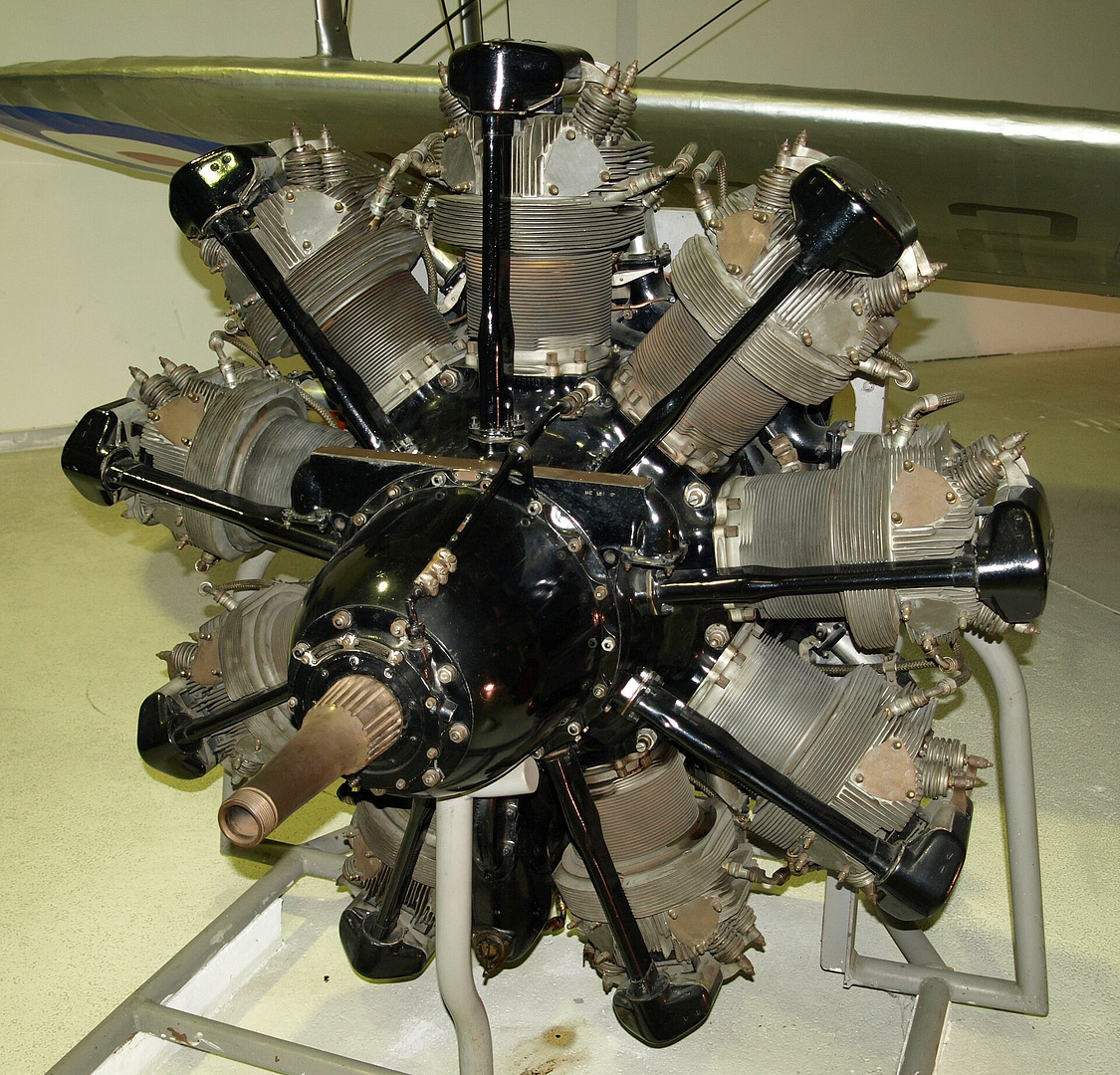
Power came from a single Bristol Mercury air-cooled radial of roughly 830 horsepower, driving a two- or three-blade propeller. The same reliable Mercury family powered the Bristol Blenheim; it gave the Gladiator a good rate of climb and dependable service in climates from the Arctic to the desert.
The last of the biplane fighters
Fabric-covered over a metal frame, wire-braced and fixed-undercarriage, the Gladiator was traditional where it mattered least and modern where it mattered most. Light and strong, it was superbly agile — the qualities that let it survive in skies otherwise dominated by monoplanes.
03The Gloster Sea Gladiator: the Gladiator goes to sea+
The Fleet Air Arm needed a stopgap fighter for its aircraft carriers, and the Gladiator was adapted into the Sea Gladiator. The naval version added an arrestor hook for deck landings, catapult spools, and a stowage for an inflatable dinghy in a fairing beneath the fuselage — the small “belly” that distinguishes many Sea Gladiator photographs.
Sea Gladiators served aboard carriers such as HMS Glorious, Eagle and Courageous, and it was a batch of crated Sea Gladiators on Malta that flew in the island’s first defence in 1940. The type was always an interim design — the Fleet Air Arm knew monoplanes were coming — but it gave the Royal Navy a modern-enough fighter at a moment when it had almost nothing else.
Full Specifications
Gloster Gladiator Mk II — specifications
Figures are for the Gladiator Mk II with the Bristol Mercury IX; sources vary by a few mph and a few hundred feet, and values are given as approximate.
| طاقم | 1 (pilot) |
|---|---|
| طول | 8.36 m (27 ft 5 in) |
| طول الجناحين | 9.83 m (32 ft 3 in) |
| ارتفاع | 3.53 m (11 ft 7 in) |
| منطقة الجناح | ~30.0 m² (323 sq ft) |
| الوزن الفارغ | ~1,460 kg (3,220 lb) |
| Loaded weight | ~2,085 kg (4,595 lb) |
| Powerplant | 1 × Bristol Mercury IX radial |
| Power | ~830 hp (619 kW) |
| أقصى سرعة | ~257 mph / 414 km/h at ~14,500 ft |
|---|---|
| Cruising speed | ~210 mph / 338 km/h |
| يتراوح | ~440 mi / 708 km |
| سقف الخدمة | ~32,800 ft / 10,000 m |
| معدل الصعود | ~2,300 ft/min (11.7 m/s) |
| التسليح | 4 × .303 in (7.7 mm) machine guns |
| Naval version | Sea Gladiator (hook, catapult, dinghy) |
| Unit cost | Not reliably recorded (wartime figures scarce) |
| Cost per flight hour | Not reliably recorded — a modern airworthy Gladiator is estimated to cost several thousand pounds per hour to operate (warbird estimate) |
04The Gloster Gladiator’s variants: Mk I, Mk II and Sea Gladiator+
The main marks were the Mk I, with a two-blade fixed-pitch propeller and Mercury IX engine, and the improved Mk II, which introduced a three-blade propeller, electric starter and other detail changes. The Sea Gladiator was the navalised version for the Fleet Air Arm, with an arrestor hook, catapult points and a dinghy fairing.
Exports carried their own designations — Sweden, for example, flew its Gladiators as the J 8. Total production is usually given as around 747 aircraft, including roughly 480 Mk I, some 270 Mk II, and a batch of Sea Gladiators, though the exact split varies between sources depending on how exports and conversions are counted.
05The Gloster Gladiator’s operating costs: what a biplane fighter cost+
Reliable unit and running costs for the Gladiator in the 1930s and 1940s are not well recorded in the public sources, and any single figure should be treated with caution. It was a relatively cheap fighter by the standards of the day — a fabric-and-metal biplane with a single radial engine — far less costly than the all-metal monoplanes that replaced it.
The one meaningful modern benchmark is what it costs to keep the last airworthy example flying. Operating a vintage warbird of this type — with a hand-built radial engine, fabric covering and irreplaceable parts — is commonly estimated at several thousand pounds per flying hour once maintenance, insurance and engineering are included. That figure is an estimate for a preserved aircraft, not a wartime cost.
For a visitor the practical point is simple: you cannot buy a seat in a Gladiator at any price, because it is a single-seat fighter and the survivors are irreplaceable. What you can do is watch one fly — and, if you want to actually fly in a piece of military-aviation history, book a flight in a genuine military jet instead.
Reference Data
Gloster Gladiator: structure, engine and production
Background reference data spanning the Gladiator’s design, service and the world’s surviving airframes.
| Manufacturer | Gloster Aircraft Company |
|---|---|
| Country of origin | المملكة المتحدة |
| Chief designer | Henry Folland |
| Prototype (SS.37) first flight | 12 September 1934 |
| RAF service entry | February 1937 (No. 72 Squadron) |
| Primary operator | Royal Air Force (Fighter Command and overseas) |
| Construction | Metal frame, fabric-covered biplane |
| Cockpit | Enclosed sliding canopy (an RAF first) |
| Undercarriage | Fixed, spatted mainwheels; tailwheel |
| Propeller | 2-blade (Mk I) or 3-blade (Mk II) |
| Engine family | Bristol Mercury air-cooled radial |
| Number built | ~747 (figures vary) |
| Export operators | 13+ countries |
| Naval variant | Gloster Sea Gladiator |
| Main successors | Hawker Hurricane, Supermarine Spitfire |
| Airworthy survivors | One (Shuttleworth Collection, G-AMRK) |
Powerplant & Heritage
Engines, names and the Gladiator’s place in history
06The Bristol Mercury: the engine behind the Gloster Gladiator+
The Gladiator was built around the Bristol Mercury, a nine-cylinder air-cooled radial that was one of the most important British aero engines of the 1930s. In the Gladiator it produced roughly 830 horsepower, giving the light biplane a healthy rate of climb and a top speed a little over 250 mph.
The Mercury was famously reliable and was produced in huge numbers, which made it ideal for an aircraft expected to operate far from major workshops — from the frozen lakes of Norway to the deserts of North and East Africa. The same engine family powered the Bristol Blenheim bomber, simplifying supply for the RAF.
Air-cooled and rugged, the Mercury shrugged off conditions that would have crippled a liquid-cooled engine with a vulnerable radiator. It was a major reason the Gladiator kept flying in places and climates where more sophisticated fighters could not easily be maintained.
07Where the Gloster Gladiator’s name and lineage come from+
Like many RAF fighters of its era, the Gladiator took a suitably martial name — evoking the arena combat of the ancient world, appropriate for a single-seat fighter designed for the close, wheeling dogfights of the biplane age.
Its lineage ran directly back through the Gloster Gauntlet and the company’s earlier biplane fighters, the last flowering of a design philosophy that stretched to the First World War. In that sense the Gladiator was both an ending and a bridge: the final RAF biplane fighter, flying alongside the first monoplanes that would define the coming war.
That position — the last of the old, fighting beside the first of the new — gives the Gladiator a special place in aviation history. It is remembered not for being the best fighter of the war, which it plainly was not, but for being the brave, obsolescent biplane that fought on regardless.
Variants
Every major Gloster Gladiator version
From the private-venture prototype to the navalised Sea Gladiator and the many export models, the Gladiator family was small but widely spread.
| Variant | محرك | Role | ملحوظات |
|---|---|---|---|
| SS.37 | Bristol Mercury | Prototype | Private-venture prototype, first flown 12 September 1934 |
| Gladiator Mk I | Bristol Mercury IX | Fighter | First production version; two-blade propeller; RAF service from 1937 |
| Gladiator Mk II | Bristol Mercury VIIIA/IX | Fighter | Three-blade propeller, electric starter and detail improvements |
| Sea Gladiator | Bristol Mercury VIIIA | Naval fighter | Fleet Air Arm version with arrestor hook, catapult points and dinghy |
| Sea Gladiator (Interim) | Bristol Mercury | Naval fighter | Early navalised conversions without full equipment |
| J 8 / J 8A | Bristol Mercury | Fighter | Swedish designation for its Gladiators; J 8A had detail changes |
| Export Gladiators | Bristol Mercury | Fighter | Supplied to Belgium, China, Egypt, Finland, Greece, Iraq, Ireland, Latvia, Lithuania, Norway, Portugal and South Africa |
Notable Operations
The Gloster Gladiator in action
Norway, April–June 1940
No. 263 Squadron’s Gladiators fought over Norway, at one point flying from the frozen surface of Lake Lesjaskog. The improvised base was bombed and the ice cracked, but the pilots kept flying until losses forced a withdrawal.
The defence of Malta, 1940
From June 1940, a few crated Sea Gladiators of the Hal Far Fighter Flight flew Malta’s first air defence against the Italian air force — the origin of the celebrated “Faith, Hope and Charity” legend.
Greece, 1940–41
RAF and Greek Gladiators fought the Italian invasion of Greece over rugged mountain terrain, one of the type’s most intense and successful campaigns against Italian biplanes and monoplanes alike.
East Africa, 1940–41
Across Sudan, Kenya, Ethiopia, Eritrea and Somaliland, Gladiators supported the campaign that destroyed Italian East Africa, often as the most modern fighter available.
The Western Desert, 1940–41
Over Egypt and Libya the Gladiator duelled the Italian Fiat CR.42 — biplane against biplane — before Hurricanes took over the desert air war.
The Winter War, 1939–40
Finnish Gladiators and Swedish volunteers of Flight Regiment F 19 fought the Soviet Air Force over the frozen north, scoring victories in bitter cold.
France and Belgium, 1940
Belgian Gladiators met the Luftwaffe in May 1940 and were quickly overwhelmed, while RAF Gladiators covered the retreat and the Channel.
China, from 1938
Chinese Gladiators fought Japanese aircraft over southern China, including in the defence of Canton — a little-known chapter of the type’s global service.
In Context
The Gloster Gladiator among its contemporaries
In 1937 the Gladiator was a good fighter; by 1940 it was outclassed by the monoplanes on both sides. Set beside its rivals, the gap is clear — except against the one aircraft in its own class, the Fiat CR.42.
| الطائرات | Configuration | Top speed | التسليح | First flight |
|---|---|---|---|---|
| Gloster Gladiator | Biplane | ~257 mph | 4 × .303 in | 1934 |
| Fiat CR.42 Falco | Biplane | ~274 mph | 2 × 12.7 mm | 1938 |
| Hawker Hurricane Mk I | Monoplane | ~324 mph | 8 × .303 in | 1935 |
| Supermarine Spitfire Mk I | Monoplane | ~362 mph | 8 × .303 in | 1936 |
| Messerschmitt Bf 109E | Monoplane | ~354 mph | Cannon + MG | 1935 |
| Polikarpov I-153 | Biplane | ~275 mph | 4 × 7.62 mm | 1938 |
Figures are approximate and vary by sub-variant and source; they are intended for broad comparison only.
Timeline
The Gloster Gladiator: a service record
Stories & Eyewitnesses
The Gloster Gladiator in sixteen stories
The RAF’s final biplane fighter
The Gladiator closed a chapter that had opened in the First World War.
اقرأ المزيد
When the Gladiator entered service in 1937 it was the last in an unbroken line of RAF biplane fighters stretching back two decades. Within a year the monoplane Hurricane and Spitfire were arriving, and the biplane fighter’s reign was over.
That the Gladiator went to war at all in 1940 says as much about how fast aviation was moving as about the aircraft itself — a good design overtaken by revolution.
Fighting from a frozen lake
No. 263 Squadron flew from the ice of Lake Lesjaskog in 1940.
اقرأ المزيد
In April 1940 Gladiators of No. 263 Squadron were shipped to Norway and operated from the frozen surface of Lake Lesjaskog. Ground crews worked in appalling cold to keep the aircraft flying between German air raids.
The improvised base was bombed heavily and the ice began to break up; within days most of the Gladiators were destroyed or unserviceable. A second deployment fought on until the Norwegian campaign collapsed.
The Sea Gladiators of Malta
Crated naval fighters became the island’s first defenders.
اقرأ المزيد
In June 1940 a batch of Sea Gladiators, stored in crates at Kalafrana as spares for Fleet Air Arm carriers, was assembled to give Malta a fighter defence. Flown by a scratch unit, they met Italian raids over the island.
Six aircraft were eventually made serviceable, though only a handful could fly at any one time. Their stand became the seed of one of the war’s most enduring legends.
The truth behind the legend
The famous three-fighter story is a celebrated legend, not literal history.
اقرأ المزيد
Popular history says three Gladiators — “Faith”, “Hope” and “Charity” — alone defended Malta against the Italian air force. It is a stirring tale, and it has become part of Malta’s national story.
The reality is more nuanced. Six Sea Gladiators were assembled from crates and three could fly at once; the names were applied later, reportedly by a Maltese newspaper, and Hurricanes began reinforcing the island by late June 1940. The courage was real; the neat “just three” version is romanticised.
Victory over the Italians
Over Greece the Gladiator fought one of its best campaigns.
اقرأ المزيد
When Italy invaded Greece in October 1940, RAF and Greek Gladiators were among the defenders. Over rugged mountains they fought Italian bombers and fighters, including the Fiat CR.42, often with success.
Greek Gladiator pilots became national heroes. The campaign showed the type at its best — agile, well-armed, and fighting an enemy still partly equipped with biplanes of its own.
Biplane against biplane
In the Western Desert the Gladiator met its Italian equivalent.
اقرأ المزيد
Over Egypt and Libya in 1940 the Gladiator faced the Fiat CR.42 Falco — the last biplane fighters of two air forces, wheeling and turning above the desert in combats that could have belonged to an earlier war.
It was one of the last times biplane fighters fought each other in large numbers. Soon Hurricanes arrived and the desert air war moved decisively into the monoplane age.
Gladiators over the snow
Finnish and Swedish pilots fought the Soviets in 1939–40.
اقرأ المزيد
During the Winter War, Finland flew Gladiators against the Soviet Air Force, and a Swedish volunteer unit, Flight Regiment F 19, brought its own Gladiators to fight in Finnish Lapland.
Operating from frozen lakes and rough strips in extreme cold, the Gladiators scored victories against Soviet aircraft — a striking episode of the type’s far-flung career.
Against Japan over Canton
Chinese Gladiators fought the Japanese from 1938.
اقرأ المزيد
China bought Gladiators and used them against Japanese aircraft over southern China, including in the defence of Canton in 1938. Chinese pilots claimed victories in fierce, low-level fighting.
It is one of the least-known parts of the Gladiator’s story, but it underlines how widely the little British biplane was exported and how many fronts it fought on.
Overwhelmed in May 1940
Belgian Gladiators met the Luftwaffe and were swiftly lost.
اقرأ المزيد
The Belgian air arm operated Gladiators when Germany attacked in the west in May 1940. Outnumbered and outclassed by modern German fighters, most were destroyed within the first days of the campaign.
Their brief, doomed stand was part of the wider collapse of the Low Countries, but Belgian pilots fought their obsolescent fighters bravely against impossible odds.
The J 8
Sweden flew the Gladiator as the J 8 and sent volunteers to Finland.
اقرأ المزيد
Sweden operated the Gladiator under the designation J 8 and J 8A. When the Soviet Union attacked Finland, Swedish volunteers formed Flight Regiment F 19 and took their Gladiators north to fight.
A preserved Swedish Gladiator survives today, a reminder of the type’s Scandinavian service and of the volunteers who flew it in someone else’s war.
A small revolution for pilots
The Gladiator was the first RAF fighter with a canopy.
اقرأ المزيد
For all its traditional biplane layout, the Gladiator introduced one genuinely modern comfort: an enclosed, sliding cockpit canopy. RAF pilots used to open cockpits and freezing slipstream found it a real improvement.
It was a sign of things to come. The enclosed cockpit, four guns and radial engine were all pointers toward the monoplane fighters that would soon make the Gladiator obsolete.
Double the firepower
The Gladiator carried four guns where earlier biplanes had two.
اقرأ المزيد
For nearly twenty years RAF fighters had gone to war with two machine guns, a standard fixed in 1918. The Gladiator doubled it to four .303-inch guns — two in the fuselage and one beneath each lower wing.
Against the fabric-covered aircraft of its own generation this was a serious advance. Against armoured monoplanes it was less decisive, but it still made the Gladiator the hardest-hitting biplane fighter the RAF ever used.
A fighter for the carriers
The navalised Gladiator gave the Fleet Air Arm a stopgap fighter.
اقرأ المزيد
The Fleet Air Arm needed a modern-enough carrier fighter and turned the Gladiator into the Sea Gladiator, adding an arrestor hook, catapult points and a stowed dinghy in a fairing under the fuselage.
Sea Gladiators served aboard British carriers and, famously, in the defence of Malta. They were always an interim type, but they bridged the gap until monoplane naval fighters arrived.
The last one flying
One airworthy Gladiator still displays in England.
اقرأ المزيد
Today a single airworthy Gladiator — G-AMRK, an aircraft built in 1937 as L8032 — flies with the Shuttleworth Collection at Old Warden. It usually wears the markings of a 1930s RAF fighter.
It is one of the very few flying biplane fighters of its era anywhere in the world, and seeing it fly is a rare privilege — though it is a display aircraft, not a bookable passenger ride.
Gladiators in museums
Static survivors are scattered across Europe.
اقرأ المزيد
Beyond the flying aircraft, static Gladiators and Sea Gladiators are preserved in Britain, Malta, Norway, Finland, Sweden, Belgium and Portugal — a spread that mirrors the type’s wide wartime service.
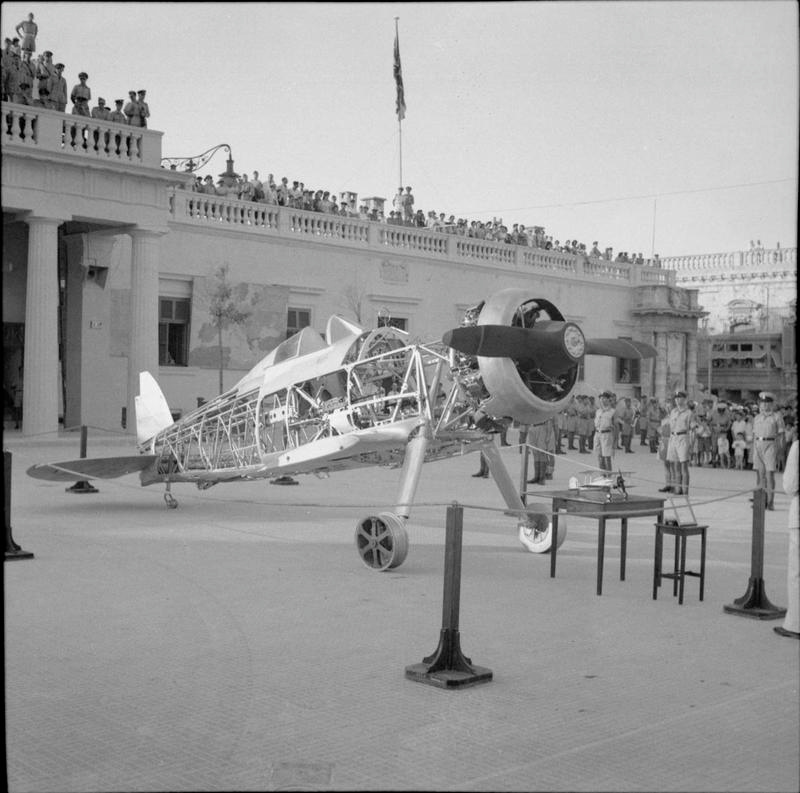
The most famous is the fuselage of Sea Gladiator N5520 “Faith”, preserved in Malta as a relic of the island’s 1940 defence and one of the war’s most cherished aircraft.
An honoured obsolescence
The Gladiator is remembered for fighting on regardless.
اقرأ المزيد
The Gladiator was never the best fighter of the Second World War — it was outdated before the shooting started. Yet it is remembered with more affection than many superior aircraft, because of where and how it fought.
Norway, Malta, Greece, the desert: wherever modern fighters were scarce, the old biplane held the line. That is why the last RAF biplane fighter still has such a hold on the imagination.
The Gladiator in Depth
The Gloster Gladiator, campaign by campaign
Ten closer looks at how the Gladiator actually fought — and why it mattered.
08The Gloster Gladiator in Norway: the battle from the ice+
The Norwegian campaign of 1940 produced one of the most extraordinary episodes of the Gladiator’s career. No. 263 Squadron was shipped to Norway and, lacking any proper airfield, operated from the frozen surface of Lake Lesjaskog, its aircraft taking off and landing on the ice.
Ground crews fought the cold as much as the enemy: engines froze, guns jammed, and German bombers pounded the exposed lake. Within a couple of days most of the Gladiators had been destroyed on the ice or in the air. A second deployment operated from a land strip and fought hard before the whole Allied position in Norway collapsed.
It was a hopeless campaign, but the Norway Gladiators became a symbol of improvised courage — obsolescent biplanes flown from a frozen lake against a modern air force.
09The Gloster Gladiator and the defence of Malta: legend and reality+
The defence of Malta in June 1940 is the Gladiator’s most famous story. When Italy entered the war, Malta had almost no fighter defence — but a batch of Sea Gladiators, crated at Kalafrana as spares for Fleet Air Arm carriers, was assembled to meet the Italian raids.
The popular version says three biplanes named “Faith”, “Hope” and “Charity” held off the Italian air force alone. The reality is that around six Sea Gladiators were made serviceable, of which perhaps three could fly at once, and that Hurricanes began arriving to reinforce the island by late June 1940. The famous names were applied later, reportedly by a Maltese newspaper.
None of this diminishes the achievement. A tiny force of obsolescent naval biplanes, flown by a handful of pilots, gave Malta a fighter defence when it had almost nothing else. The legend simplifies the facts, but the courage behind it was entirely real.
10The Gloster Gladiator over Greece: the type’s finest campaign+
When Italy invaded Greece in October 1940, the Gladiator found one of its best fights. RAF squadrons and the Royal Hellenic Air Force flew Gladiators over the mountains against Italian bombers and fighters, and in the swirling, low-speed combats of that front the agile biplane was in its element.
Greek Gladiator pilots became national heroes, and RAF units claimed a string of victories. The enemy was often flying biplanes and early monoplanes of its own, so the Gladiator was not hopelessly outmatched as it was against the Luftwaffe.
The campaign ended badly when Germany intervened in 1941, but for a few months over Greece the Gladiator fought and won as the modern fighter it had briefly been.
11The Gloster Gladiator in East Africa: the forgotten campaign+
The East African campaign of 1940–41 saw the Gladiator serve as the most modern fighter available across a vast theatre. Operating from Sudan, Kenya and beyond, RAF and South African Gladiators supported the offensive that destroyed Italian East Africa and liberated Ethiopia and Eritrea.
One Gladiator pilot in the region, Flying Officer John “Eagle” Ambrose and others of his kind, built up scores against Italian aircraft in conditions of extreme heat, dust and long distances. The air-cooled Mercury engine proved its worth where liquid-cooled types would have struggled.
It was an unglamorous, far-off campaign, but the Gladiator was central to it — a reminder that the type’s war was fought as much in Africa as over Britain and the Mediterranean.
12The Gloster Gladiator versus the Fiat CR.42: the last biplane duels+
Over the Western Desert, and earlier over Greece, the Gladiator met the Italian Fiat CR.42 Falco — the two air forces’ last biplane fighters, pitched against each other in combats that could have come from an earlier war.
The two aircraft were closely matched: the CR.42 was a little faster and beautifully agile, the Gladiator carried heavier gun armament with its four .303s. Outcomes depended largely on numbers, tactics and pilot skill rather than any decisive technical edge.
These were among the last times biplane fighters duelled each other in quantity. Within a year both had been eclipsed by monoplanes, and the age of the fighter biplane closed for good.
13The Gloster Gladiator’s armament: four guns instead of two+
The Gladiator’s four .303-inch machine guns were a genuine step forward. Two were mounted in the fuselage, synchronised to fire through the propeller, and one was carried under each lower wing. Earlier RAF biplane fighters had made do with just two guns.
Four rifle-calibre guns gave a useful weight of fire against the fabric-and-metal aircraft of the late 1930s. Against the armoured, self-sealing monoplanes that appeared during the war, however, the same battery was much less effective — one reason the eight-gun Hurricane and Spitfire were such an advance.
The Sea Gladiator could be fitted with the same four-gun battery. It was the heaviest armament any RAF biplane fighter carried, and it made the Gladiator a dangerous opponent within its own generation.
14How fast was the Gloster Gladiator, really?+
The Gladiator Mk II had a top speed of roughly 257 mph (414 km/h) at altitude. In 1937 that was competitive for a fighter; by 1940 it was slow, with modern monoplanes exceeding 320 mph and climbing and diving far better.
Speed, though, was not the Gladiator’s strength — agility was. Its light wing loading gave it a tight turning circle that few monoplanes could match, and in a close dogfight against another biplane it was formidable. The problem was that fast monoplanes could simply refuse the turning fight, diving in to attack and climbing away.
The Gladiator is a classic example of an aircraft whose one great quality — manoeuvrability — was made largely irrelevant by a change in how air combat was fought. It could still win against its own kind; against the next generation it was dangerously exposed.
15The Gloster Sea Gladiator: the Fleet Air Arm’s stopgap+
The Sea Gladiator was the Royal Navy’s answer to an urgent need for a carrier fighter. It added an arrestor hook, catapult spools and a stowed dinghy to the basic Gladiator, and served aboard carriers such as HMS Glorious, Eagle and Courageous.
It was never intended as a long-term solution — the Fleet Air Arm knew monoplanes were coming — but it gave the Navy a modern-enough fighter at a critical moment. And it was Sea Gladiators, drawn from crated spares, that flew Malta’s first defence in 1940.
The surviving fuselage of Sea Gladiator N5520 “Faith”, preserved in Malta, is the most tangible link to that episode — a battered naval biplane that became a national relic.
16The Gloster Gladiator abroad: a global export success+
The Gladiator was one of the most widely exported fighters of its day. Beyond the RAF and Fleet Air Arm, it served with Sweden, Finland, Norway, Belgium, Greece, China, Iraq, Portugal, Latvia, Lithuania, Ireland, Egypt and South Africa.
That spread meant Gladiators fought on both sides of some conflicts’ margins: Finnish and Swedish Gladiators against the Soviets, Chinese Gladiators against Japan, Greek and British Gladiators against Italy. Few 1930s fighters saw such geographically scattered combat.
It is also why surviving Gladiators are found across Europe today — the legacy of a fighter that was sold widely and flown hard in a dozen different air forces.
17The Gloster Gladiator’s decline: eclipsed by the monoplane+
By 1941 the Gladiator’s front-line career was effectively over. The Hurricane and Spitfire had taken over home defence and the Mediterranean; in the desert and over Malta, monoplanes replaced the biplanes as fast as they could be delivered.
The Gladiator was not so much defeated as overtaken. It slipped into second-line roles — meteorological flights, communications, target-towing and training — where its docile handling and reliability were assets rather than liabilities.
Its withdrawal was inevitable and orderly, the natural retirement of a design that had been obsolescent from the day it entered service. But by then it had already earned its place in history over Norway, Malta and Greece.
More on the Gladiator
The Gloster Gladiator: design, rivals and legacy
18Why the Gloster Gladiator was already obsolete when war came+
The Gladiator’s tragedy was timing. It was designed in the early 1930s, when the biplane fighter still made sense, and it entered service in 1937 — the very year the monoplane fighter came of age with the Bf 109, Hurricane and Spitfire.
A biplane’s two wings and bracing wires create drag that caps its speed no matter how much power is added. The monoplane broke that ceiling, and once it did, the biplane fighter had no future. The Gladiator was the finest example of a design philosophy that had just been made redundant.
That it fought so well regardless — in Norway, over Malta, in Greece and Africa — is a testament to its pilots and to the qualities it did have: agility, reliability and heavier-than-usual firepower.
19The Gloster Gladiator versus the Hawker Hurricane+
The Hurricane replaced the Gladiator in RAF service, and the contrast between them shows just how fast fighter design moved. The Hurricane was around 70 mph faster, carried eight guns instead of four, and was an all-metal monoplane where the Gladiator was a fabric biplane.
Yet the two overlapped in service, and in the Mediterranean and desert Hurricanes and Gladiators sometimes flew alongside each other in 1940. The Gladiator held the line until enough Hurricanes arrived, then handed over the fight.
The relationship was less rivalry than succession: the Gladiator was the last of the old order, the Hurricane the workhorse of the new. Together they carried the RAF from the biplane era into the Battle of Britain.
20The Gloster Gladiator versus the Fiat CR.42 Falco+
The CR.42 was the Gladiator’s exact counterpart on the Italian side — a late-1930s biplane fighter that stubbornly outlived the arrival of the monoplane. The two met over Greece and the desert in some of the last biplane-versus-biplane combats in history.
The Falco was marginally faster and superbly agile; the Gladiator carried heavier machine-gun armament. Neither had a decisive edge, and combats were usually settled by numbers and tactics. Both aircraft were, by 1940, fighting a war that had already moved beyond them.
That both nations still fielded biplane fighters in 1940 shows how recently the monoplane revolution had happened — and how quickly it swept the older type aside.
21The Gloster Gladiator’s influence and place in the Gloster story+
The Gladiator was the last biplane Gloster built, and the last biplane fighter the RAF operated. But Gloster’s story did not end there: the same company went on to build Britain’s first operational jet fighter, the Gloster Meteor, only a few years later.
That leap — from fabric biplane to jet fighter in under a decade — captures the astonishing pace of 1930s and 1940s aviation. The Gladiator sits right at the hinge of it, the final expression of one era from a company about to help usher in the next.
So the Gladiator’s significance is partly symbolic: it marks the exact end of the biplane fighter, a lineage that ran from the First World War to the eve of the jet age.
22How many Gloster Gladiators were built?+
Production of the Gladiator is usually given as around 747 aircraft, a total that includes roughly 480 Mk I, about 270 Mk II, and a batch of Sea Gladiators — but the exact figures vary between sources depending on how exports and conversions are counted.
Of these, well over 200 were exported to more than a dozen countries, making the Gladiator one of the most widely sold fighters of its generation. The rest served with the RAF and the Fleet Air Arm at home and across the world.
Whatever the precise total, the Gladiator was built in modest numbers compared with the monoplanes that followed — the Hurricane and Spitfire ran to many thousands each. It was the last of a smaller, older kind of fighter.
Equipment & Operations
The Gloster Gladiator: cockpit, guns and survivors
23Inside the Gloster Gladiator: the pilot’s office+
The Gladiator gave its single pilot something new for an RAF fighter: an enclosed cockpit with a sliding canopy, sheltering him from the freezing slipstream that open-cockpit pilots had endured for a generation. Behind a simple instrument panel he had a control column, rudder pedals and gun controls.
It was still a fighter of its time — no armour to speak of, no self-sealing tanks, and a fixed undercarriage. But the canopy, the reflector gunsight fitted to later aircraft and the four-gun armament made it a noticeably more modern place to fight than the biplanes that came before.
Pilots generally liked the Gladiator. It was docile, agile and honest to fly — qualities that made it forgiving in the improvised, desperate conditions of Norway, Malta and the desert.
24The Gloster Gladiator’s guns and gunsight+
The Gladiator’s four .303-inch machine guns were arranged with two in the fuselage, synchronised to fire through the propeller arc, and one under each lower wing outside it. Later aircraft used Browning guns; earlier ones a mix of Vickers and Lewis weapons.
Aiming was through a simple reflector or ring-and-bead sight. Four rifle-calibre guns delivered a useful punch against 1930s aircraft, though the short firing time and light calibre were limitations that the eight-gun monoplanes soon exposed.
Still, no earlier RAF biplane fighter had carried as many guns. Within its own generation the Gladiator was a hard hitter, and its firepower was one of the reasons it remained competitive against Italian biplanes into 1940 and 1941.
25The Gloster Gladiator in second-line service+
Once the Hurricane and Spitfire had taken over front-line fighting, the Gladiator found a long afterlife in second-line roles. It flew meteorological sorties, gathering weather data at altitude; it carried messages and passengers on communications flights; and it served as a hack and trainer.
These were unglamorous duties, but they kept the type in RAF service until near the end of the war, long after it had ceased to be a viable fighter. Its reliability and easy handling made it well suited to them.
It is a common fate for obsolescent aircraft — retired from combat, they soldier on in the quiet, essential jobs that keep an air force running. The Gladiator did so with the same dependability it had shown in battle.
26Flying and preserving the surviving Gloster Gladiators+
Only one airworthy Gladiator survives — G-AMRK, built in 1937 as L8032 and now flown by the Shuttleworth Collection at Old Warden. Keeping a fabric-covered biplane with a hand-built radial engine in the air is a formidable and expensive undertaking.
Static Gladiators and Sea Gladiators are preserved in Britain, Malta, Norway, Finland, Sweden, Belgium and Portugal, including the celebrated fuselage of “Faith” on Malta. Between them they preserve almost the whole span of the type’s service.
Seeing the Shuttleworth aircraft fly is a rare privilege — one of very few flying pre-war biplane fighters anywhere in the world. It is a display aircraft, though, not a passenger ride: you can watch it fly, but you cannot book a seat in it.
Photo Gallery
The Gloster Gladiator in photographs
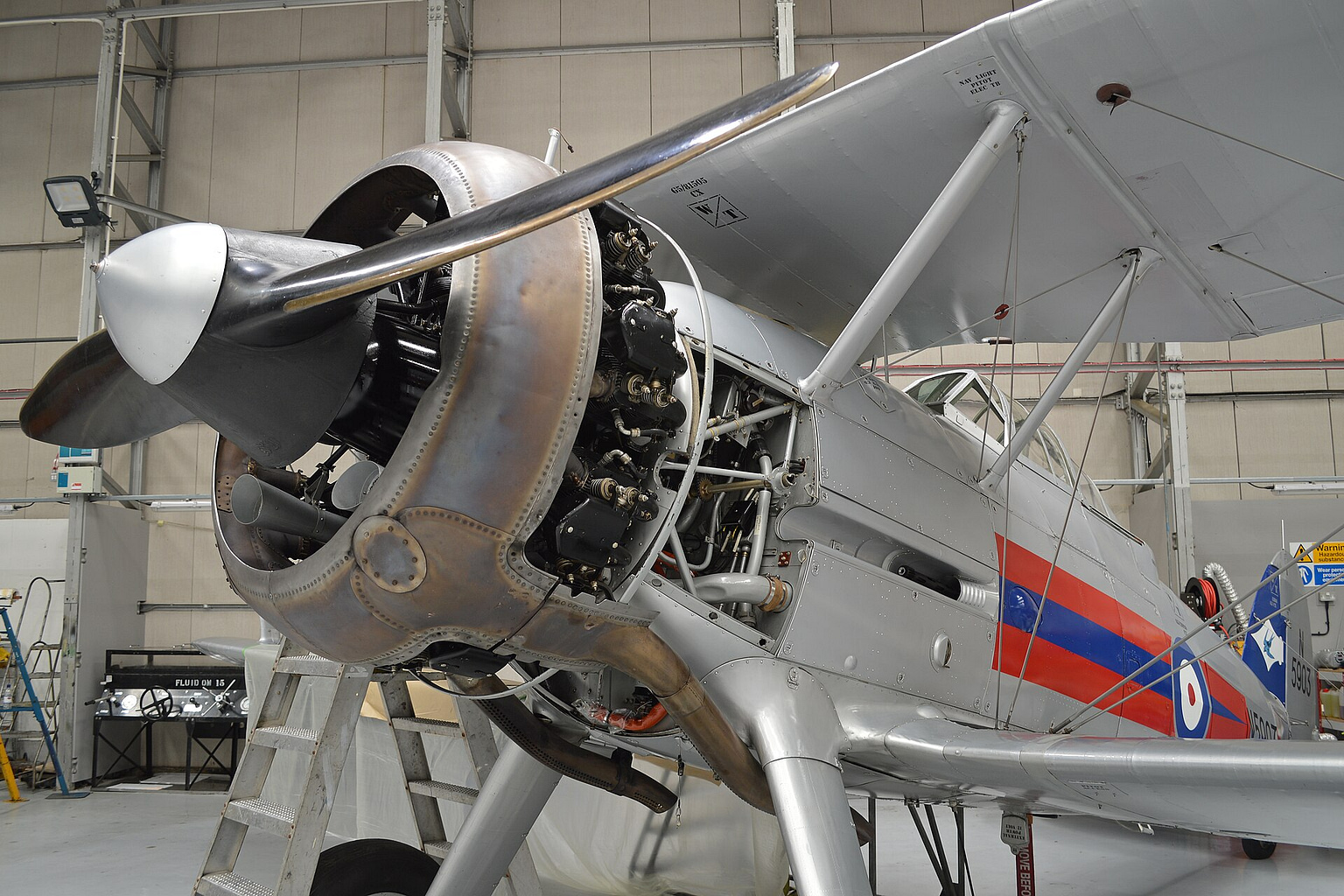
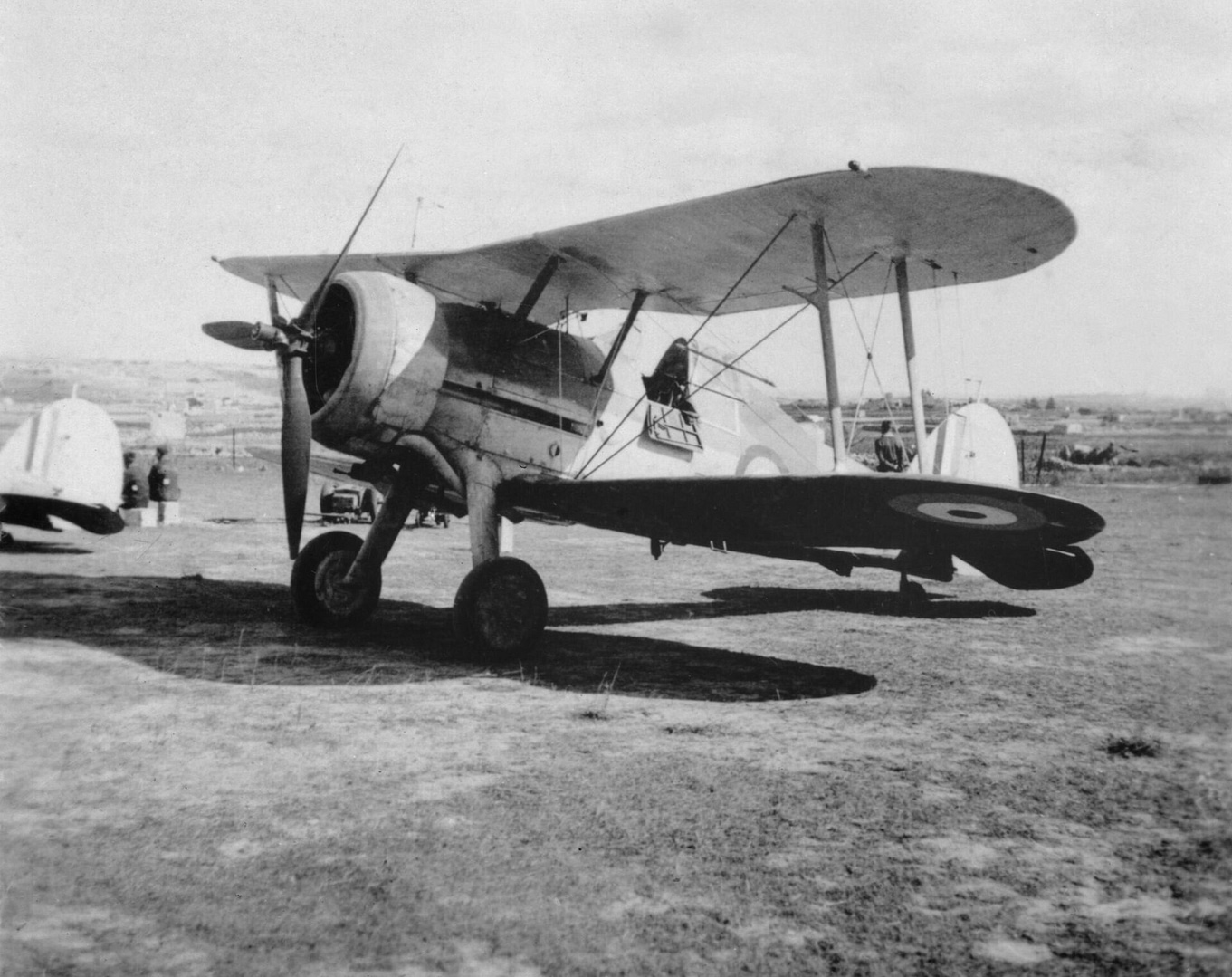
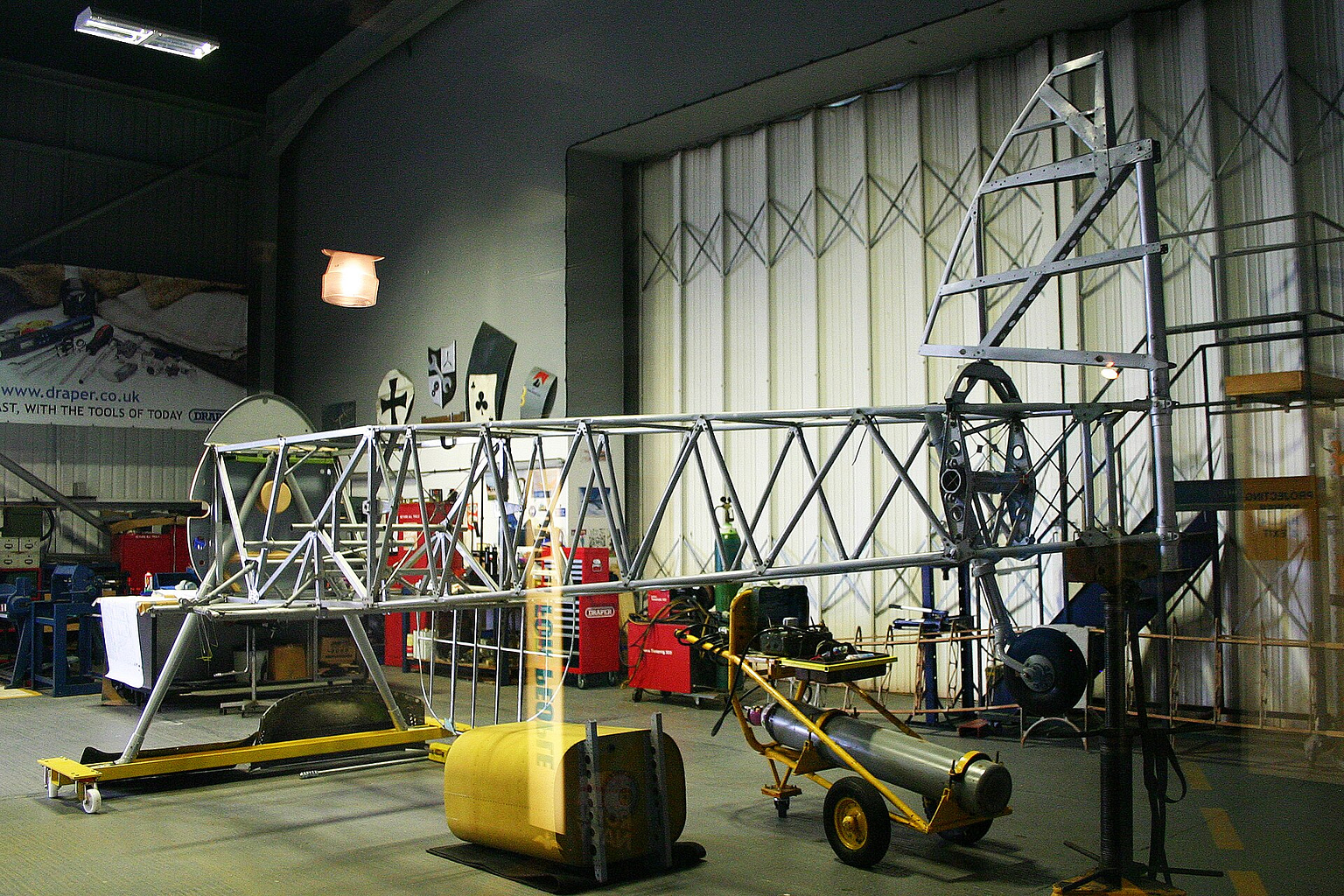
All images sourced from Wikimedia Commons and credited individually above; licences are noted in each caption.
On Film
The Gloster Gladiator on film
A concise, well-sourced history of the Gladiator and its most famous campaigns, from an established aviation-history channel.
“Gladiator — The Forgotten Battle of Britain Fighter” by Mark Felton Productions, an established military-history channel (over 500,000 views).
Operations Map
Where the Gloster Gladiator served
The Gladiator was a truly global fighter: flown by the RAF, exported to more than a dozen air forces, and fought over Europe, the Mediterranean, Africa and China. Toggle the categories to explore its operators, combat theatres and surviving airframes.
By the Numbers
The Gloster Gladiator by the numbers
A short summary of the last RAF biplane fighter’s scale and service.
Where to See One
Surviving Gloster Gladiators on display
One Gladiator still flies, and static survivors are preserved across Europe — including the most famous relic of all, on Malta.
Old Warden, England
The Shuttleworth Collection. The world’s only airworthy Gladiator, G-AMRK, flies here at Old Warden airshows.
Built in 1937 as L8032, the aircraft usually wears the markings of a 1930s RAF fighter. It displays at Shuttleworth’s flying events but is not available for passenger flights — it is a single-seat fighter and an irreplaceable survivor.
Valletta, Malta
National War Museum, Fort St Elmo. The fuselage of Sea Gladiator N5520 “Faith” is preserved as a relic of the 1940 defence.
It is the sole survivor of the Malta Sea Gladiators and one of the most cherished aircraft relics of the war — the tangible core of the “Faith, Hope and Charity” story.
Scandinavia & Europe
Norway, Finland, Sweden, Belgium & Portugal. Static Gladiators are preserved in several national aviation museums.
These airframes reflect the type’s wide export service — from the Winter War in the north to neutral Portugal in the south — and keep almost the whole span of the Gladiator’s career on public display.
Between them these aircraft — one flying, the rest preserved — represent the full sweep of the Gladiator’s service, from the RAF to a dozen export air forces.
Legacy
Remembering the Gloster Gladiator
It is easy to file the Gladiator away as an also-ran — a biplane that was obsolete before it fired a shot in anger, swept aside by the monoplanes that won the war. And by the cold measures of speed and firepower, that is true.
But aircraft are remembered for more than their statistics. The Gladiator is remembered for the frozen lake in Norway, for the crated Sea Gladiators that rose to defend Malta, for the Greek pilots who became heroes over their own mountains, and for the Finnish and Swedish airmen who fought the Soviets in the snow. It fought, and fought well, in places where nothing better was available.
That is why the last RAF biplane fighter still draws crowds when it flies at Old Warden, and why the battered fuselage of “Faith” is a national treasure on Malta. The Gladiator was the end of one age of air fighting — and it went out not quietly, but in a blaze of desperate, honourable courage.
Questions & Answers
Gloster Gladiator: your questions answered
Can I fly in a Gloster Gladiator?
No — not as a paying passenger. The Gladiator is a single-seat fighter, and no company, including MiGFlug, offers passenger flights in one. The world’s only airworthy example, G-AMRK, is flown by the Shuttleworth Collection at Old Warden airshows, so you can watch a Gladiator fly — but it is a display aircraft, not a bookable ride.
If you want to actually fly in a piece of military-aviation history, though, you can. MiGFlug offers flights in genuine military jets, from the L-39 Albatros to the MiG-29 Fulcrum — see migflug.com/flights-prices/ for what is bookable today.
Is the story of Faith, Hope and Charity true?
It is a celebrated legend that simplifies real events. The popular version — that just three Gladiators defended Malta alone in 1940 — is romanticised. In reality about six Sea Gladiators were assembled from crated spares at Kalafrana, of which perhaps three could fly at any one time, and Hurricanes began reinforcing Malta by late June 1940.
The names “Faith”, “Hope” and “Charity” were applied later, reportedly by a Maltese newspaper. The neat three-fighter tale is partly myth — but the courage of the pilots who defended Malta with obsolescent biplanes was entirely real.
How fast was the Gloster Gladiator?
The Gladiator Mk II had a top speed of about 257 mph (414 km/h) at altitude. That was competitive for a fighter in 1937 but slow by 1940, when monoplane fighters such as the Hurricane, Spitfire and Bf 109 all exceeded 320 mph and could out-climb and out-dive it. The Gladiator’s strength was agility, not speed.
What armament did the Gloster Gladiator carry?
The Gladiator carried four .303-inch (7.7 mm) machine guns — two in the fuselage, synchronised to fire through the propeller, and one under each lower wing. This was double the two-gun armament of earlier RAF biplane fighters and made the Gladiator the hardest-hitting British biplane fighter, though it was still outgunned by the eight-gun Hurricane and Spitfire.
What was the Gloster Sea Gladiator?
The Sea Gladiator was the naval version, adapted for the Fleet Air Arm with an arrestor hook for carrier landings, catapult points, and a stowed inflatable dinghy in a fairing under the fuselage. Sea Gladiators served aboard British aircraft carriers and, most famously, flew the first fighter defence of Malta in 1940.
Are there any Gloster Gladiators left today?
Yes. One airworthy Gladiator, G-AMRK, flies with the Shuttleworth Collection in England — the only flying example in the world. Static Gladiators and Sea Gladiators are preserved in the United Kingdom, Malta, Norway, Finland, Sweden, Belgium and Portugal, including the surviving fuselage of the Malta Gladiator “Faith” (N5520).
How many Gloster Gladiators were built?
Around 747 Gladiators were built, including roughly 480 Mk I, some 270 Mk II and a batch of Sea Gladiators, though totals vary between sources. More than 200 were exported to over a dozen countries, making the Gladiator one of the most widely sold fighters of its generation.
You can’t fly the Gloster Gladiator. These, you can.
The Gladiator is a museum piece and a memorial — you can watch the Shuttleworth aircraft fly, but you can’t buy a seat in a single-seat biplane fighter. What you can do is fly in a genuine military jet with MiGFlug.
Fighter Jet Flights
Take the controls of a real ex-military jet with an experienced pilot.
Related Aircraft
More from the Aircraft Museum

Sources & Further Reading
Where this page’s facts come from
Figures for speed, range, weights, production and operators are drawn from the museum and reference sources above; where sources differ, values are given as approximate and marked as estimates. The Malta “Faith, Hope and Charity” story is presented as a celebrated legend with the historical nuance noted in the text. Images are from Wikimedia Commons and credited individually in the gallery.