
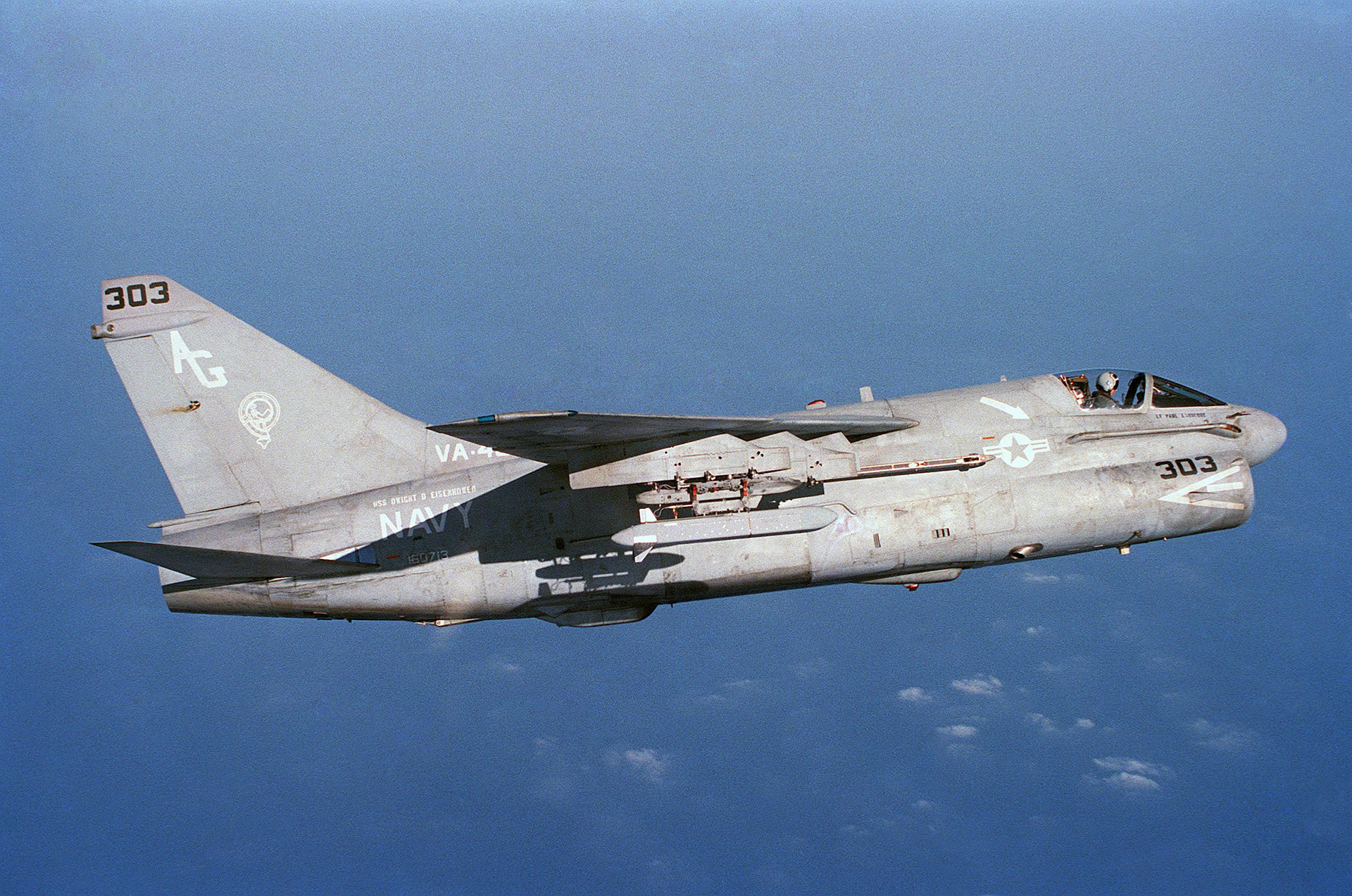
Vought A-7 Corsair II
“SLUF”
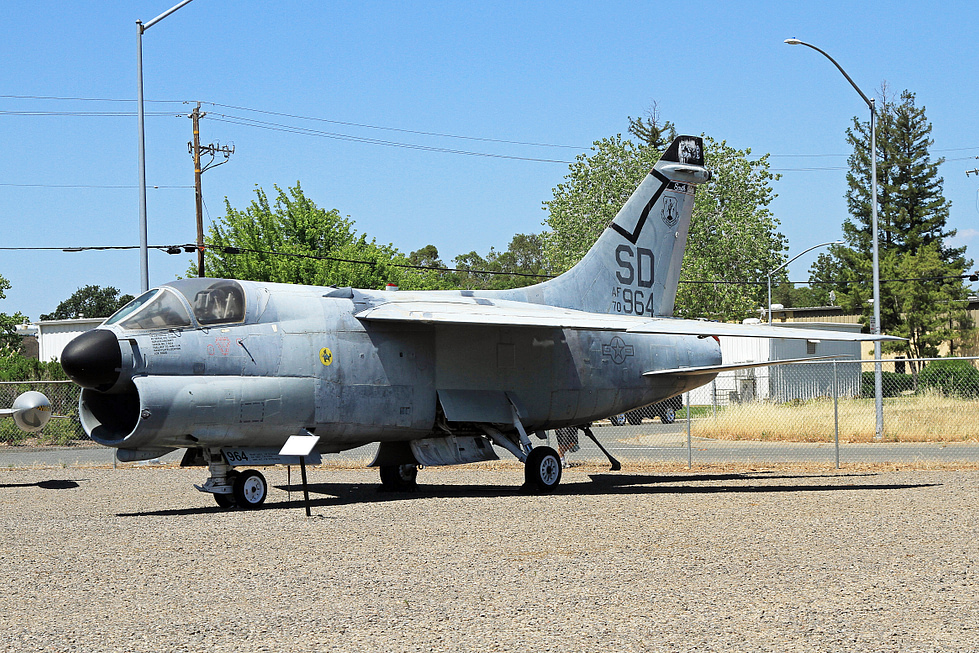
A stubby, subsonic light-attack jet cut down from the supersonic F-8 Crusader — the “Short Little Ugly Fellow” that traded speed for a huge bomb load, marathon range and the most accurate bombing system of its generation.
Built to hit the target, not break the sound barrier
In the early 1960s the U.S. Navy wanted something unfashionable: not a faster fighter, but a cheaper, harder-hitting bomb truck to replace the small A-4 Skyhawk. Its 1963 VAL (light attack) requirement asked for range and payload rather than supersonic dash, and it asked for it quickly and affordably. Ling-Temco-Vought (LTV / Vought) won by doing something clever — it took its own supersonic F-8 Crusader fighter, shortened the fuselage, deleted the afterburner, broadened the wing and rebuilt the whole aircraft around fuel and ordnance. The result first flew on 27 September 1965 and reached the fleet in 1967.
The trade was deliberate. Where the Crusader chased Mach 1.8, the A-7 topped out just below the speed of sound — and in exchange it could carry up to about 15,000 lb (6,800 kg) of bombs on eight hardpoints and loiter for hours on a single, fuel-sipping non-afterburning turbofan. Crews took one look at the short, blunt shape and named it the “SLUF” — Short Little Ugly Fellow (the polite version). The nickname stuck, and so did their affection for it.
What made the A-7 genuinely revolutionary was hidden inside. The definitive A-7D (Air Force) و A-7E (Navy) carried an integrated digital navigation/attack computer, inertial navigation, a projected moving-map display and one of the first production head-up displays (HUD). Together they computed a continuously updated bomb-impact point, giving the SLUF bombing accuracy that pilots reckoned two to three times better than contemporaries — precision strike a full generation before it became routine.
It went to war almost immediately — over Vietnam from December 1967 with the Navy, and from 1972 with the Air Force — and then kept going: the 1986 raid on Libya, Grenada in 1983, and finally Operation Desert Storm in 1991, its last U.S. combat. Long after America retired it, the SLUF soldiered on abroad. Greece flew the world’s very last Corsair IIs until 17 October 2014.
01The A-7 Corsair II’s origins: how Vought turned a supersonic fighter into the Navy’s best bomber
The A-7 shares its DNA with the Vought F-8 Crusader, but it is not simply a Crusader with bombs. To meet the Navy’s VAL specification, Vought kept the F-8’s rugged carrier structure and general layout while shortening the fuselage, fitting a broader, thicker wing for low-speed lift and heavy loads, enlarging the internal fuel, and removing the afterburner entirely. The famous variable-incidence wing of the Crusader was retained in spirit but the airframe was optimised for stability at bombing speeds rather than agility.
Because so much was carried over from a proven design, Vought delivered a flying prototype barely 18 months after contract award — fast and cheap by any standard. That pragmatism defined the whole programme: the A-7 was never the most glamorous jet on the carrier deck, but it was reliable, easy to maintain, endlessly upgradable, and it hit what it aimed at.
What makes it special
A digital brain and a HUD, years ahead
The A-7D/E paired an IBM digital nav/attack computer with inertial navigation, Doppler radar, a projected moving map and an early head-up display. It continuously computed the bomb-impact point and drew it on the HUD, so a pilot flew the target rather than guessing. Veterans describe accuracy two to three times better than other jets of the day — precision bombing before the phrase existed.
Bomb truck range on one thrifty turbofan
A single non-afterburning Allison TF41 turbofan — a U.S. licence-built Rolls-Royce Spey — gave the SLUF excellent fuel economy. That meant three-hour-plus missions, long loiter over the battlefield and a large ordnance load on one engine. One preserved A-7D flew a documented nine-hour rescue-support sortie over Southeast Asia in 1972.
Crusader-tough, carrier-hardened
Built on F-8 Crusader heritage, the A-7 was a stout, dependable carrier aircraft — strong landing gear, a robust structure and, in fleet service, excellent up-time. Its digital architecture also let the Navy and Air Force keep upgrading avionics and weapons across a service life stretching more than 25 years in U.S. hands and nearly 50 worldwide.
02The A-7 Corsair II’s nav/attack system: why the “A-7 mafia” loved it
Pilots who flew the A-7D/E often called its bombing system the finest of its era, and spoke of themselves as an “A-7 mafia” loyal to the type. The reason was the integrated nav/attack suite: an onboard digital computer fused inertial and Doppler navigation with radar ranging and projected it all through the HUD as a single, continuously updated aiming solution. Where other attack pilots relied on fixed sight settings and practised dive angles, the SLUF pilot could roll in from varied geometry and still put iron on target. One former Navy aviator likened the moving-map display to “Google Maps before there was Google Maps.”
03The A-7 Corsair II’s engine: a British Spey at the heart of an American attack jet
The A-7A and A-7B used the Pratt & Whitney TF30, but the definitive A-7D and A-7E switched to the Allison TF41 — an American licence-built version of the British Rolls-Royce Spey turbofan. It was an unusual pedigree for a frontline U.S. combat aircraft, and it paid off: the non-afterburning turbofan delivered roughly 14,250–15,000 lbf of thrust with excellent specific fuel consumption, the quality that gave the SLUF its trademark range and loiter. Thrust figures vary between museum and reference sources, so treat the exact number as approximate.
Full specifications
Airframe & Performance (A-7E)
- طاقم
- 1 (two-seat TA-7 trainers seat 2)
- طول
- 14.06 m (46 ft 1½ in)
- طول الجناحين
- 11.80 m (38 ft 9 in)
- ارتفاع
- 4.90 m (16 ft 1 in)
- الوزن الفارغ
- ~8,680 kg (~19,100 lb)
- Max takeoff weight
- ~19,050 kg (up to ~22,000 kg loaded)
- Max speed
- ~1,120 km/h at sea level · subsonic (~Mach 0.9)
- سقف الخدمة
- ~12,800 m (~42,000 ft)
- نطاق القتال
- ~1,000 km with a useful bomb load
Propulsion, Armament & Cost
- محرك
- 1 × Allison TF41-A-2 (non-afterburning turbofan)
- Thrust
- ~15,000 lbf (~66 kN); sources cite 14,250–15,000 lbf
- Gun
- 1 × 20 mm M61A1 Vulcan rotary cannon
- Ordnance
- Up to ~6,800 kg (15,000 lb) on 8 hardpoints; AIM-9 capable
- Avionics
- Digital nav/attack computer, INS, Doppler, HUD
- First flight
- 27 September 1965
- Built
- 1,569 (all variants, 1965–1984)
- Unit cost
- ~US$2.6–2.9 million (late 1960s, approximate)
- Cost per flight hour
- No reliable public figure
04The A-7 Corsair II’s operating costs: what the SLUF actually cost to fly
The A-7 was procured as an affordable attack aircraft, and a late-1960s flyaway price is commonly cited around US$2.6–2.9 million — but that figure is approximate and varies by variant, year and how support costs are counted, so treat it as an order-of-magnitude guide rather than a hard number. No credible cost-per-flight-hour figure for the type appears in authoritative public sources, so we do not quote one. What is well documented is the operating philosophy: a single efficient turbofan and simple, robust systems made the SLUF relatively cheap to fly and maintain compared with twin-engine strike aircraft of its era.
From Vietnam bomb truck to the last Corsair aloft
The VAL requirement
The U.S. Navy issues its light-attack (VAL) specification for a cheap, high-payload A-4 replacement; Vought/LTV wins with an F-8-derived design and is awarded the contract in early 1964.
First flight
The prototype A-7A flies on 27 September 1965, barely 18 months after contract award.
Combat debut
Squadron VA-147 deploys aboard USS Ranger; the A-7 flies its first Vietnam combat missions in December 1967.
The Air Force joins
The A-7D first flies (April) with the new Allison TF41 turbofan and the definitive digital nav/attack system.
Peak Vietnam use
The A-7E enters combat with the Navy (1970); during Operation Linebacker (1972) the type flies a large share of Navy strike sorties, and USAF A-7Ds fight from Thailand.
El Dorado Canyon
A-7Es from USS America fire Shrike anti-radiation missiles to suppress Libyan air defences in the 14–15 April raid.
Desert Storm swan song
VA-46 and VA-72 fly the A-7E’s last U.S. combat from USS John F. Kennedy — hundreds of missions, no A-7 lost. The squadrons stand down that June.
The last Corsair II
The Hellenic Air Force retires the world’s final A-7s on 17 October 2014, ending nearly 50 years of Corsair II service.
From the cockpit: twelve SLUF stories
Short, Little, Ugly — and beloved
Crews named the stubby jet the “SLUF” — the irreverence hid real affection.
Read the full story
Crusader’s little brother
The A-7 was cut down from Vought’s own supersonic F-8 Crusader fighter.
Read the full story
Google Maps before Google
The A-7’s digital nav/attack computer and HUD were a generation ahead.
Read the full story
Two to three times better
SLUF crews could bomb far more accurately than their contemporaries.
Read the full story
A British Spey goes to war
The SLUF’s heart was a licence-built Rolls-Royce Spey.
Read the full story
The nine-hour mission
One A-7D flew a marathon rescue-support sortie over Southeast Asia.
Read the full story
Linebacker workhorse
During 1972 the Navy A-7 flew a huge share of the strike load.
Read the full story
First shots over the Gulf of Sidra
A-7Es opened the El Dorado Canyon raid by blinding Libyan radars.
Read the full story
A hard lesson at Fort Frederick
Navy air strikes during Urgent Fury caused a tragic friendly-fire loss.
Read the full story
No losses in the desert
In Desert Storm the A-7 flew its finale without a single combat loss.
Read the full story
The last launch
The final A-7 combat carrier launch closed a 25-year U.S. career.
Read the full story
The last pirates of Araxos
Greece flew the world’s final Corsair IIs until 2014.
Read the full story
The A-7 Corsair II in pictures
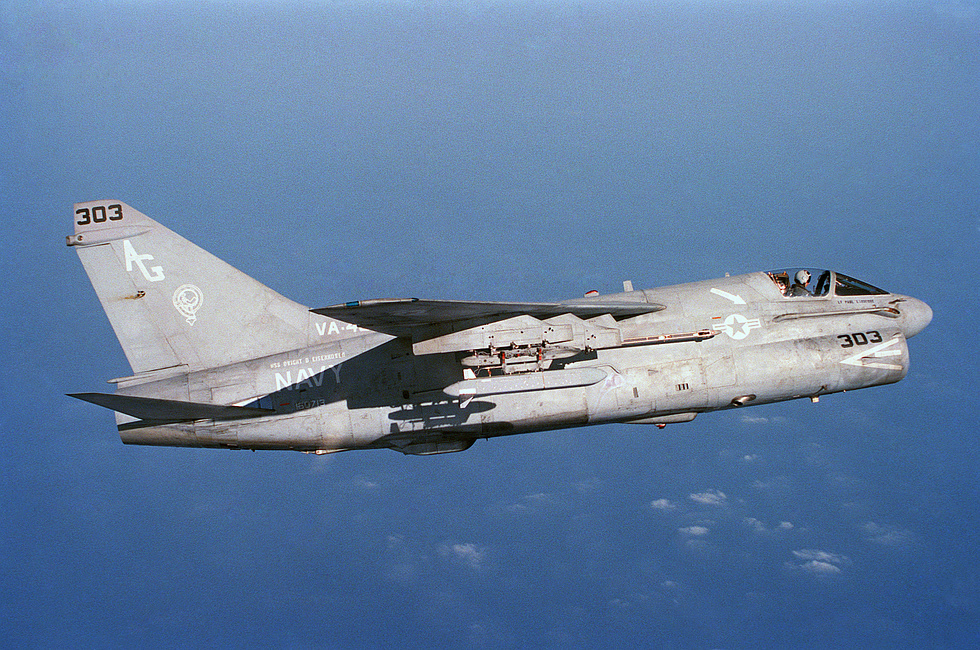
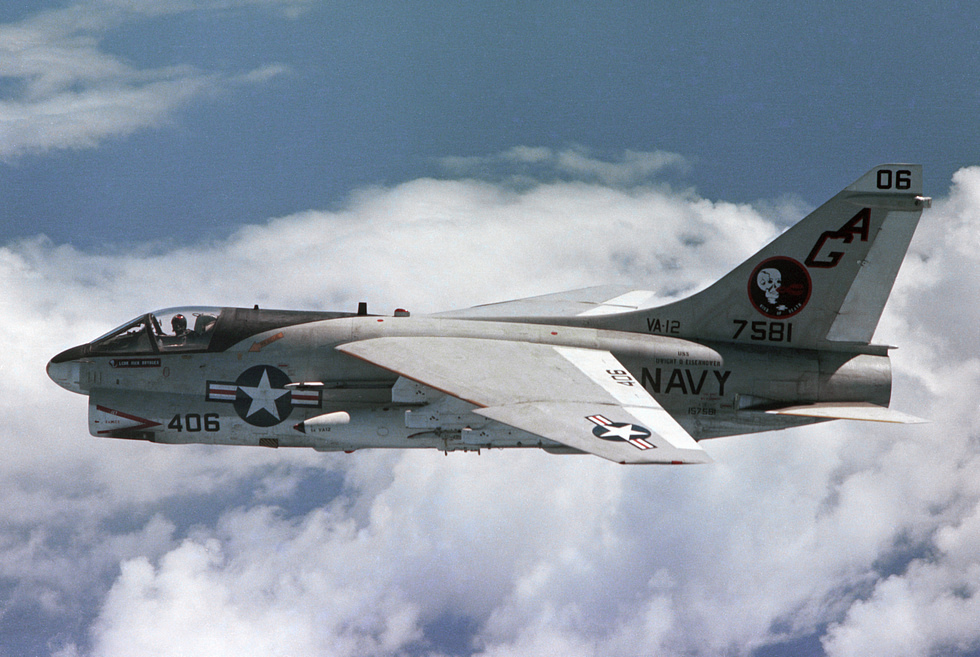
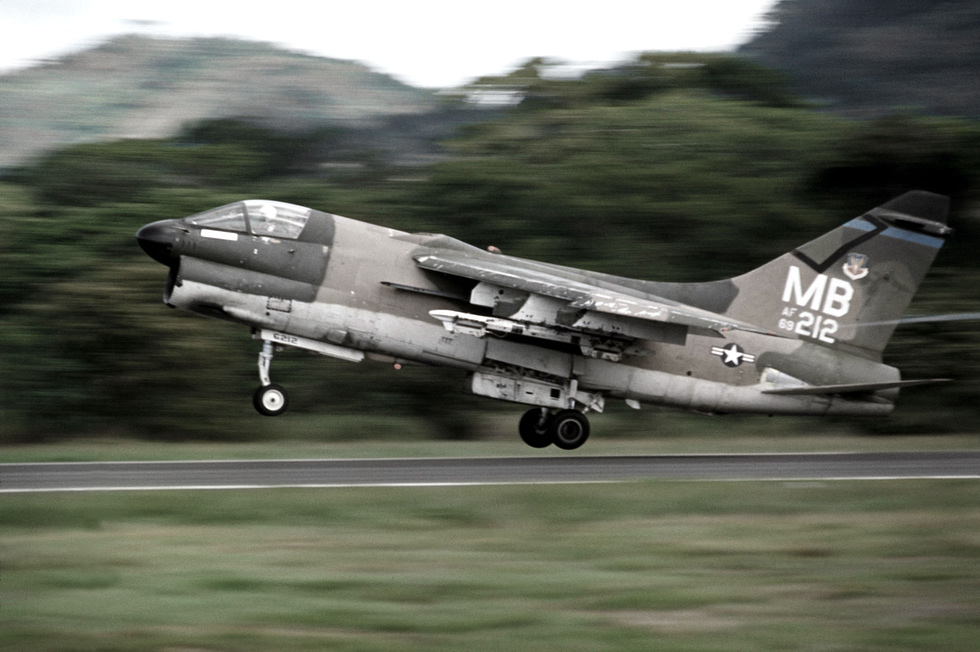
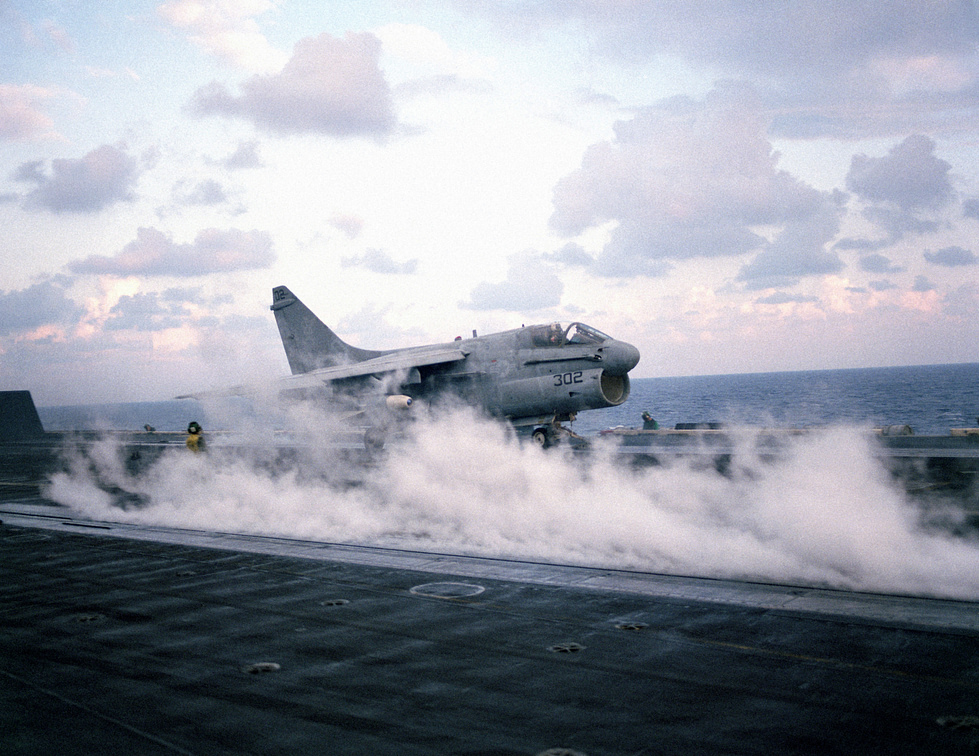
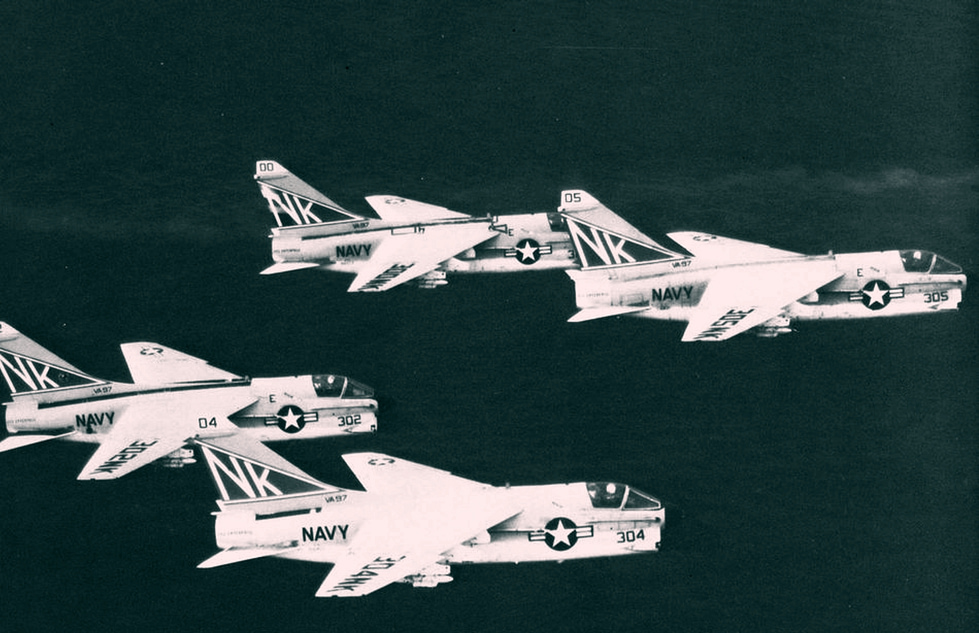
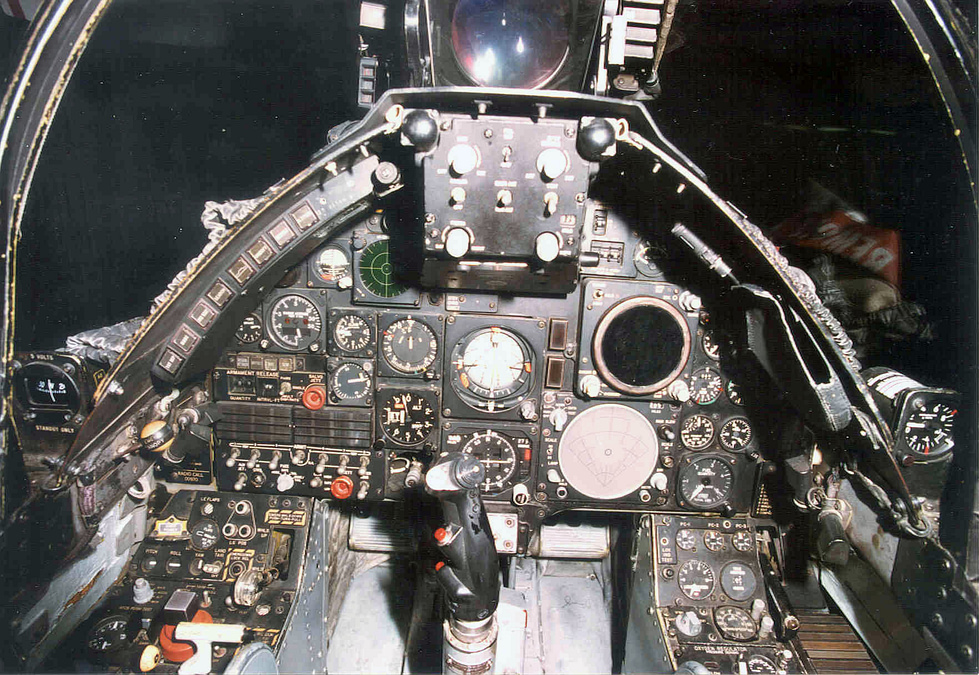
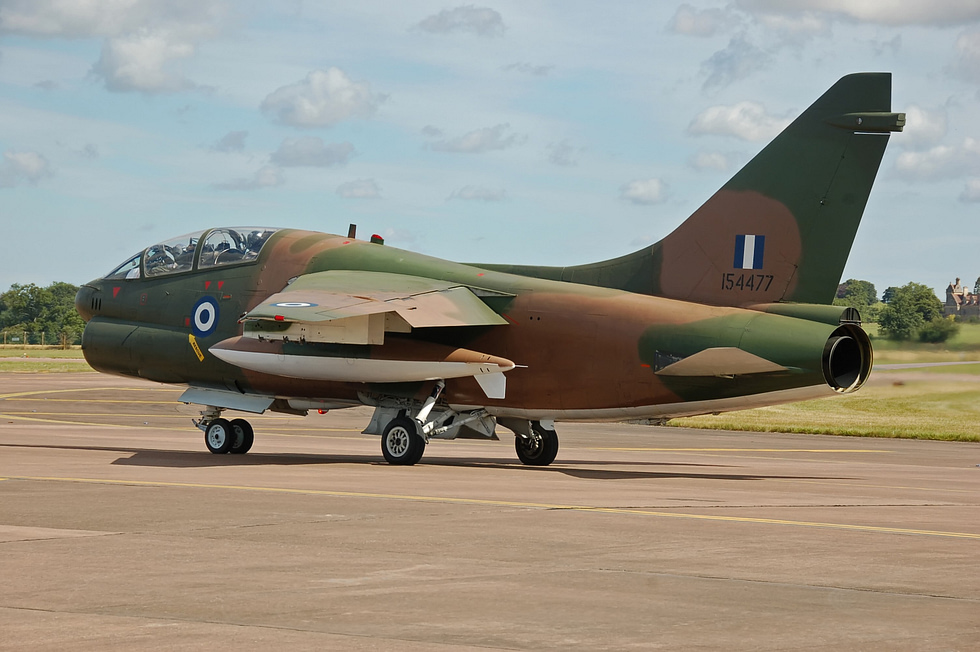
The A-7 Corsair II in motion
A hand-picked A-7 Corsair II documentary is coming soon to this exhibit. In the meantime, explore the photo gallery above and the full combat record and operations map below.
Where the A-7 Corsair II served
The score that defines it
The A-7 was an attack jet, not a dogfighter — its record is written in bombs on target, not air-to-air kills. Across Vietnam, Libya, Grenada, Panama and the Gulf, the SLUF earned a reputation for accuracy and reliability, and it closed its U.S. combat career in Desert Storm without a single aircraft shot down.
Compare the combat record of every military aircraft. Figures as of July 2026.
Everything people ask about the A-7 Corsair II
Can I fly in an A-7 Corsair II?
Why is the A-7 called the “SLUF”?
Was the A-7 developed from the F-8 Crusader?
Was the A-7 supersonic?
What engine did the A-7 use?
What made the A-7’s bombing so accurate?
Where did the A-7 see combat?
Who was the last operator of the A-7?
How many A-7s were built?
You can’t fly the A-7.
These, you can.
Some legends only live in museums — others are fuelled and waiting. MiGFlug has put civilians in real military jet cockpits since 2004.
 Fly the L-39 AlbatrosThe world’s most-flown jet trainer — aerobatics included
 Fly the F-104 Starfighter“The missile with a man in it”
 Fly the MiG-21The Cold War’s most-produced jet
 حلّق بطائرة تي-33 شوتينغ ستارAmerica’s first jet trainer
 Fly the DH VampireA piece of early jet history
 Fly the S.211Agile Italian jet trainer
 Fly the MB-326The classic Aermacchi jet
 Fly the MiG-15The Soviet legend of the Korean War
Continue the tour
Every fact, checked
- National Naval Aviation Museum — A-7E Corsair IIOfficial U.S. Navy specifications, production numbers and service history.
- National Museum of the U.S. Air Force — LTV A-7DA-7D fact sheet: first flight, TF41 engine, Korat operations and specs.
- HistoryNet — The Corsair’s Last HurrahVA-46 and VA-72 in Desert Storm, the final launch and zero losses.
- The Aviation Geek Club — the “A-7 mafia”Pilot interview on the SLUF nickname, nav/attack system and bombing accuracy.
- U.S. Naval Institute Proceedings — El Dorado CanyonA-7E defence-suppression from USS America in the 1986 Libya raid.
- Vintage Aviation News — Greece retires the A-7The Hellenic Air Force retirement on 17 October 2014 as the world’s last operator.
- GlobalSecurity.org — A-7 variantsFirst flight date, TF30 vs Spey-derived TF41, and variant lineage.
- 19FortyFive — the Short Little Ugly FellowService overview across Vietnam, Grenada and Desert Storm.