
Yakovlev Yak-23
The last of Yakovlev’s light, straight-wing “pod-and-boom” jet fighters — nimble, simple and a superb climber for its day, yet overtaken almost at birth by the swept-wing MiG-15, and remembered most for the exports and defection that carried it far beyond the Soviet Union.
القصة
The Yakovlev Yak-23: the last of the light straight-wing jets
The Yakovlev Yak-23 is a fighter caught at a hinge of history. It was one of the best of the Soviet Union’s first generation of jet fighters — light, simple, superbly agile and a wonderful climber — and yet it was obsolescent almost before it entered service, overtaken by the swept-wing revolution that the MiG-15 embodied. Its front-line career in Soviet hands was brief, but the little Yak went on to a long and varied life with the air forces of the Eastern Bloc, and it earned a permanent footnote in Cold War history when one example was spirited to the West and secretly test-flown by the United States.
The Yak-23 was the final member of a distinctive family. In the years right after the Second World War, the Yakovlev design bureau produced a series of straight-wing jet fighters built to a “pod-and-boom” layout — beginning with the Yak-15, essentially a wartime piston Yak-3 fighter re-engined with a jet, and continuing through the improved Yak-17. The Yak-23, which first flew in 1947, was the culmination of this line: a purpose-designed light jet fighter that took the lessons of its predecessors and refined them into a genuinely capable little aircraft.
Yakovlev came to jets from a position of strength. During the war, Alexander Yakovlev’s bureau had produced the light, agile piston fighters — the Yak-1, Yak-3 and Yak-9 — that were among the Soviet Union’s finest, and that same philosophy of lightness and agility carried straight over into its jets. The Yak-15 had literally been a Yak-3 with a jet grafted into its nose; the Yak-23, though a fresh design, kept the bureau’s enduring belief that a fighter should be small, light and a joy to handle. It was, in a real sense, piston-era wisdom translated into the jet age.
“A superb little climber, obsolete almost at birth — the last light straight-wing Yak, overtaken by the swept wing.”— the Yak-23’s place in history, in a sentence
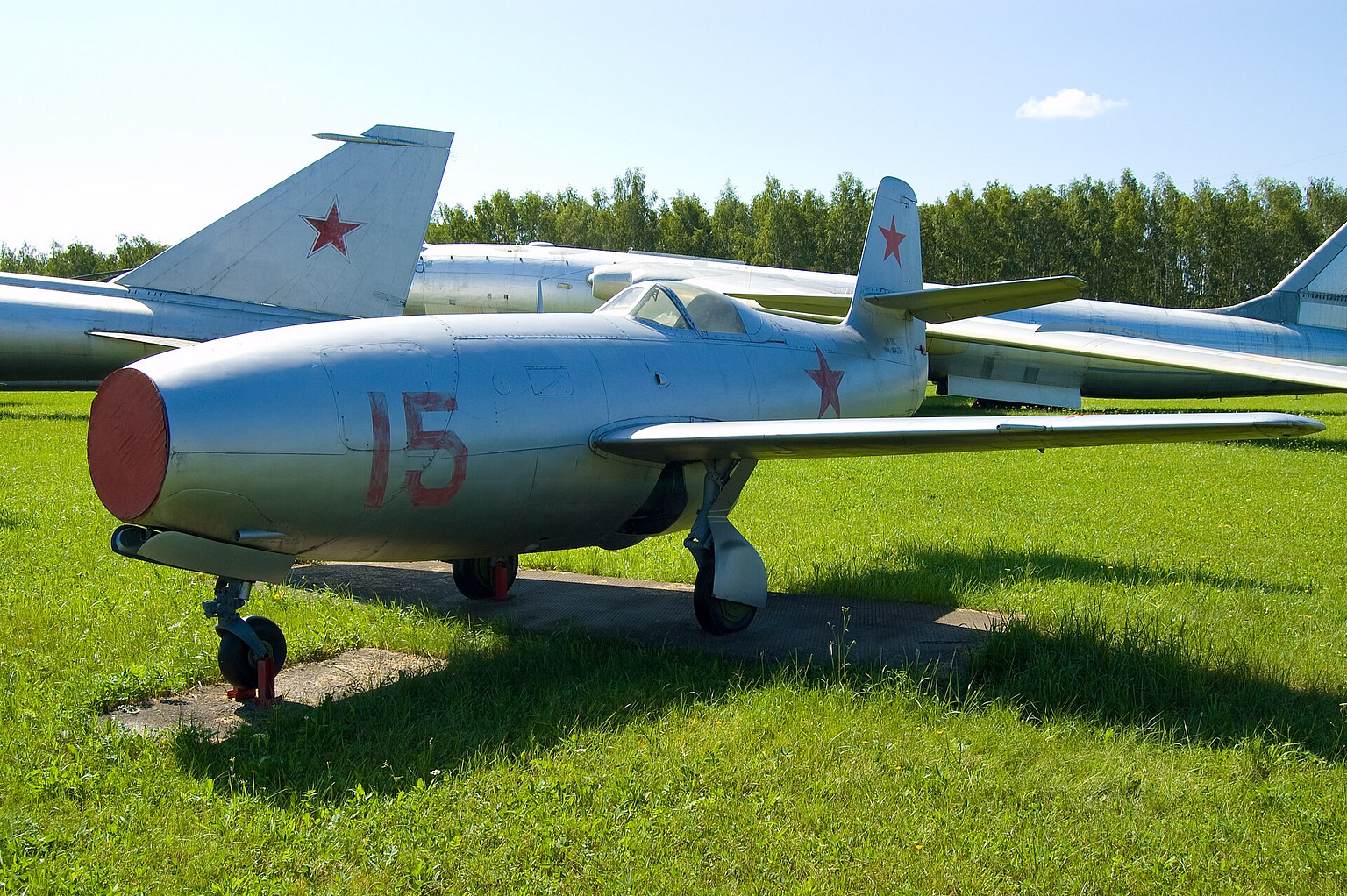
Power came from a single Klimov RD-500 turbojet — a Soviet copy of the British Rolls-Royce Derwent, one of a batch of advanced jet engines that Britain, in a decision it would come to regret, had sold to the Soviet Union in 1946. Fed by a simple nose intake, the engine sat in a stubby fuselage pod, with the tail carried up and back on a slender boom clear of the jet exhaust. The wing was straight and unswept, the landing gear a modern tricycle arrangement, and the armament two 23mm cannon in the nose. It was a clean, compact, no-nonsense fighter.
What the Yak-23 did superbly well was climb. Light in weight and blessed with a good thrust-to-weight ratio for its day, it leapt off the runway and went uphill with an eagerness that delighted its pilots. It was nimble, honest and easy to fly, rugged and simple to maintain — exactly the qualities a hard-pressed air force valued in the early jet age. In a close-in, low-to-medium-altitude dogfight it could be a genuinely dangerous opponent, and pilots who flew it remembered it with real affection.
But the Yak-23 had the misfortune to appear at the very moment the jet fighter was being transformed. The straight wing that made it simple and docile also capped its speed and its high-altitude performance, and while it was entering service the Mikoyan-Gurevich MiG-15 was arriving too — a swept-wing fighter powered by a copy of the even more powerful Rolls-Royce Nene, faster, higher-flying and altogether more modern. Against the MiG-15 the straight-winged Yak was simply outclassed. The swept wing had changed the rules, and the Yak-23, for all its charm, belonged to the era that was ending.
There is a poignant what-if in the timing. Had the Yak-23 appeared just two or three years earlier, before the swept wing was understood, it would have ranked among the very best fighters in the world, the equal of anything the West could field. Instead it arrived at the precise moment the ground shifted beneath it. The tragedy, such as it was, lay entirely in the calendar: the aircraft was excellent, but excellence in a category the world was abandoning counted for very little.
The consequence was a short Soviet front-line life. The Soviet Air Force quickly concentrated on the MiG-15, and Yak-23 production ended around 1950 after some three hundred and ten aircraft had been built. Rather than soldier on in Soviet service, many of the Yaks were passed on to the air forces of the Soviet Union’s new Eastern European allies, where they found a longer and more useful career.
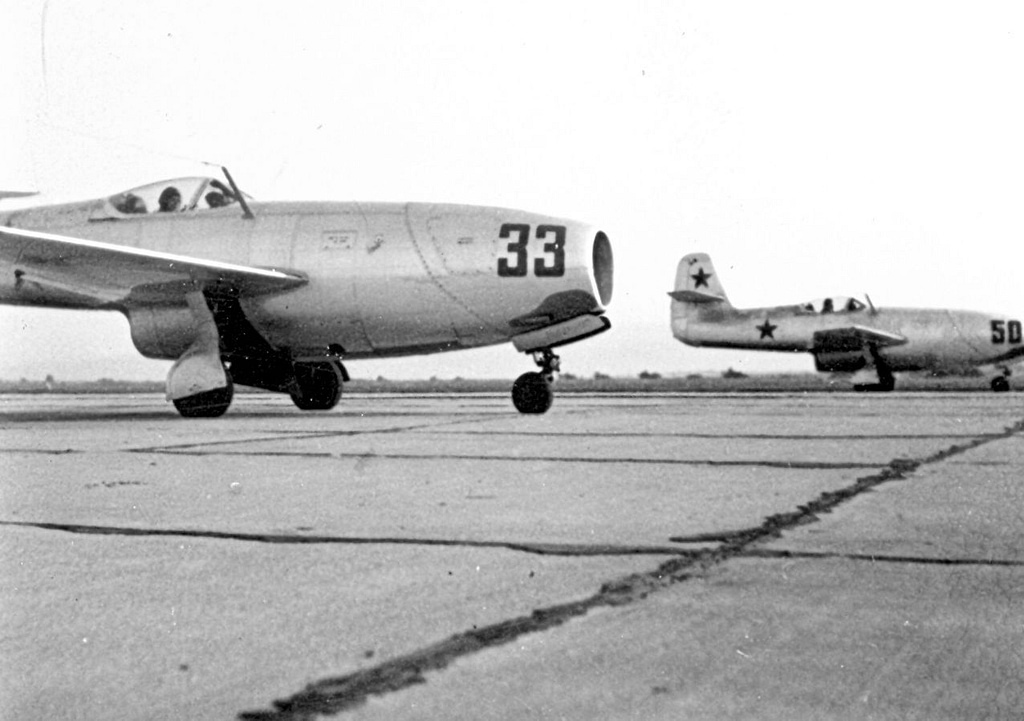
It was as an export fighter that the Yak-23 really spread its wings. It served with the air forces of Poland, Romania, Bulgaria and Albania, giving these young Warsaw Pact air arms a modern-looking jet fighter to build their jet experience around. In Czechoslovakia the aircraft was even put into licence production, built domestically under the designation S-101. For several years in the early 1950s the little Yak was a common sight over Eastern Europe, a first jet mount for a generation of communist-bloc pilots as their air forces made the leap into the jet age.
For the pilots and mechanics of Poland, Romania, Bulgaria, Albania and Czechoslovakia, the Yak-23 was often their first real jet, and in that role its forgiving nature was priceless. Learning to fly and to maintain a jet was a formidable leap for air forces built on piston aircraft, and a docile, rugged, straightforward machine like the Yak-23 was exactly the right teacher. Many airmen who would go on to fly MiG-15s, MiG-17s and beyond took their very first jet steps on the little Yak.
The Yak-23’s most famous moment, though, came through defection. In 1953 a Romanian pilot flew his Yak-23 across the border and landed in Yugoslavia, which by then had broken with the Soviet bloc. The aircraft was a windfall of intelligence, and it is widely reported that it was quietly handed over to the United States, which secretly evaluated it — repainting it in American markings and test-flying it to learn what it could about Soviet jet design — before it was returned. Details of the episode remain patchy and some accounts differ, so the story is best told with a measure of caution, but the essence is well attested: a Soviet-designed fighter that ended up, however briefly, flying in American hands.
The episode fits a wider Cold War pattern. Throughout the era, both sides went to great lengths to get their hands on the other’s aircraft — through defections, captures and clandestine loans — and to fly them in secret, probing their strengths and weaknesses at first hand. That a modest, already-obsolescent Yak-23 was judged worth the trouble is a measure of how hungry the West was, in the early 1950s, for any direct knowledge of Soviet aviation, at a time when the MiG-15 was giving Western pilots a nasty shock over Korea.
In the end the Yak-23 occupies an unusual place in the record: an aircraft that was, at one and the same time, among the best of its kind and already out of date. Measured against the straight-winged jets of the late 1940s it was a star; measured against the swept-wing fighters arriving alongside it, it was yesterday’s aeroplane. Few designs illustrate so neatly the breathtaking pace of change in those first jet years, when a fighter could travel from cutting-edge to obsolescent within the span of a single programme.
The Yak-23’s time in the front line was over by the mid-to-late 1950s, as the MiG-15 and its swept-wing successors took over everywhere. Some lingered in secondary and training roles for a while longer, but the type was thoroughly obsolete and was steadily retired. A number survive today in museums across the countries that flew it — in Russia, Poland, Romania and elsewhere — and at least one was restored to airworthy condition in the West, a rare chance to see a first-generation Soviet jet in the air. The Yak-23 is remembered as a fine little fighter that did nothing wrong except arrive at the wrong moment: the last, and arguably the best, of Yakovlev’s light straight-wing jets, overtaken by a revolution it could not follow.
01The pod-and-boom lineage: Yak-15, Yak-17, Yak-23+
The Yak-23 was the last and best of a distinctive family of Yakovlev jet fighters. The line began with the Yak-15 of 1946 — one of the Soviet Union’s first jets, created by taking the wartime piston-engined Yak-3 fighter and re-engining it with an early jet. It was crude but quick to field, and it gave Soviet pilots their first taste of jet flight.
The improved Yak-17 followed, and then the Yak-23, which first flew in 1947 as a purpose-designed light jet fighter rather than a piston conversion. All shared the “pod-and-boom” philosophy — engine in a short fuselage pod, tail on a boom — and all were straight-winged. The Yak-23 refined the concept to its peak, just as the concept itself was becoming obsolete.
02Design philosophy: light, simple, nimble+
The Yak-23 embodied a clear design philosophy: keep it light, keep it simple, and make it fly well. Where some early jets grew heavy and complex, the Yak was compact and minimal, with a small airframe wrapped tightly around a single engine, two cannon and a pilot. There was little excess.
This lightness paid off in agility and in ease of use. The aircraft was honest and forgiving to fly, quick to build, and simple to service in the field — important virtues for air forces rapidly expanding into the jet age with limited experience. The Yak-23 was, in a sense, the fighter equivalent of a well-made hand tool: uncomplicated, effective and pleasant to use.
03The Klimov RD-500: a Rolls-Royce Derwent copy+
The Yak-23 was powered by a single Klimov RD-500 turbojet — a Soviet reverse-engineered copy of the British Rolls-Royce Derwent. In 1946 the British government, in a move it would bitterly regret, sold a number of its latest jet engines, including the Derwent and the more powerful Nene, to the Soviet Union. Soviet engineers promptly copied them.
The RD-500 gave the Yak-23 the power that made its lively performance possible. It is one of the great ironies of early jet history that this Soviet fighter, and its swept-wing rival the MiG-15, both owed their engines to British generosity — the Yak to the Derwent-derived RD-500, the MiG to the Nene-derived RD-45. British engine technology, freely handed over, powered the first great generation of Soviet jets.
04The pod-and-boom layout explained+
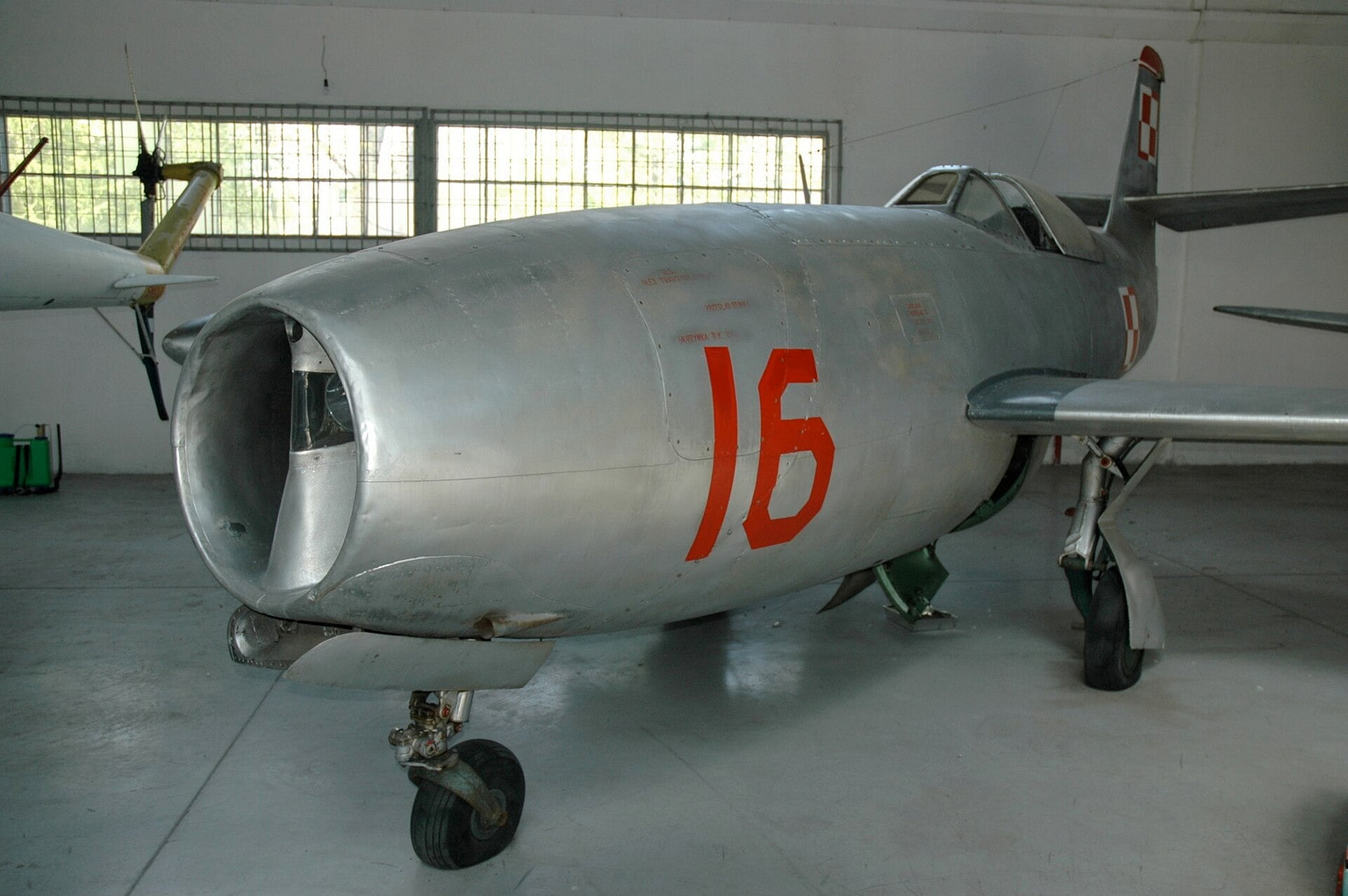
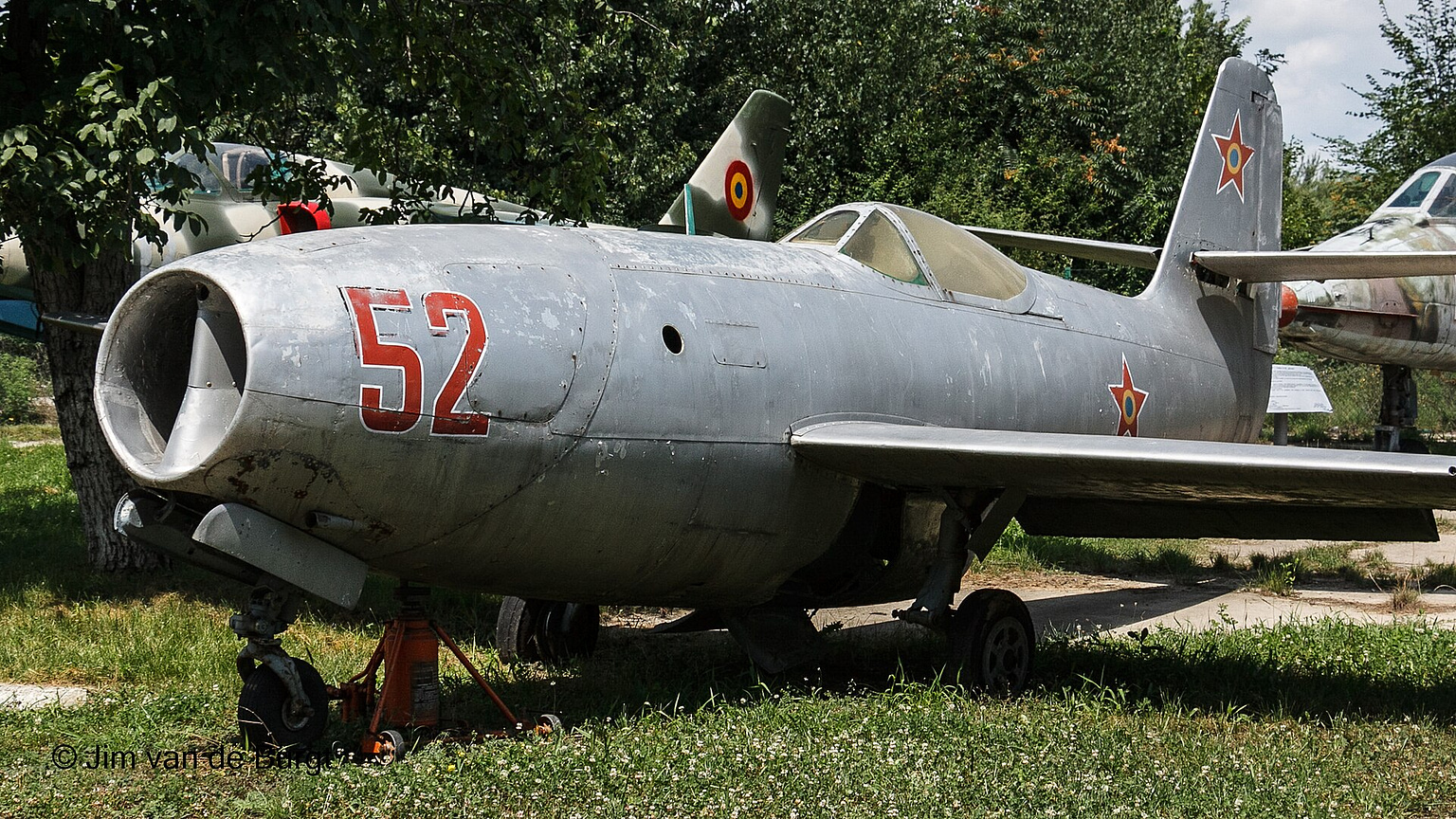
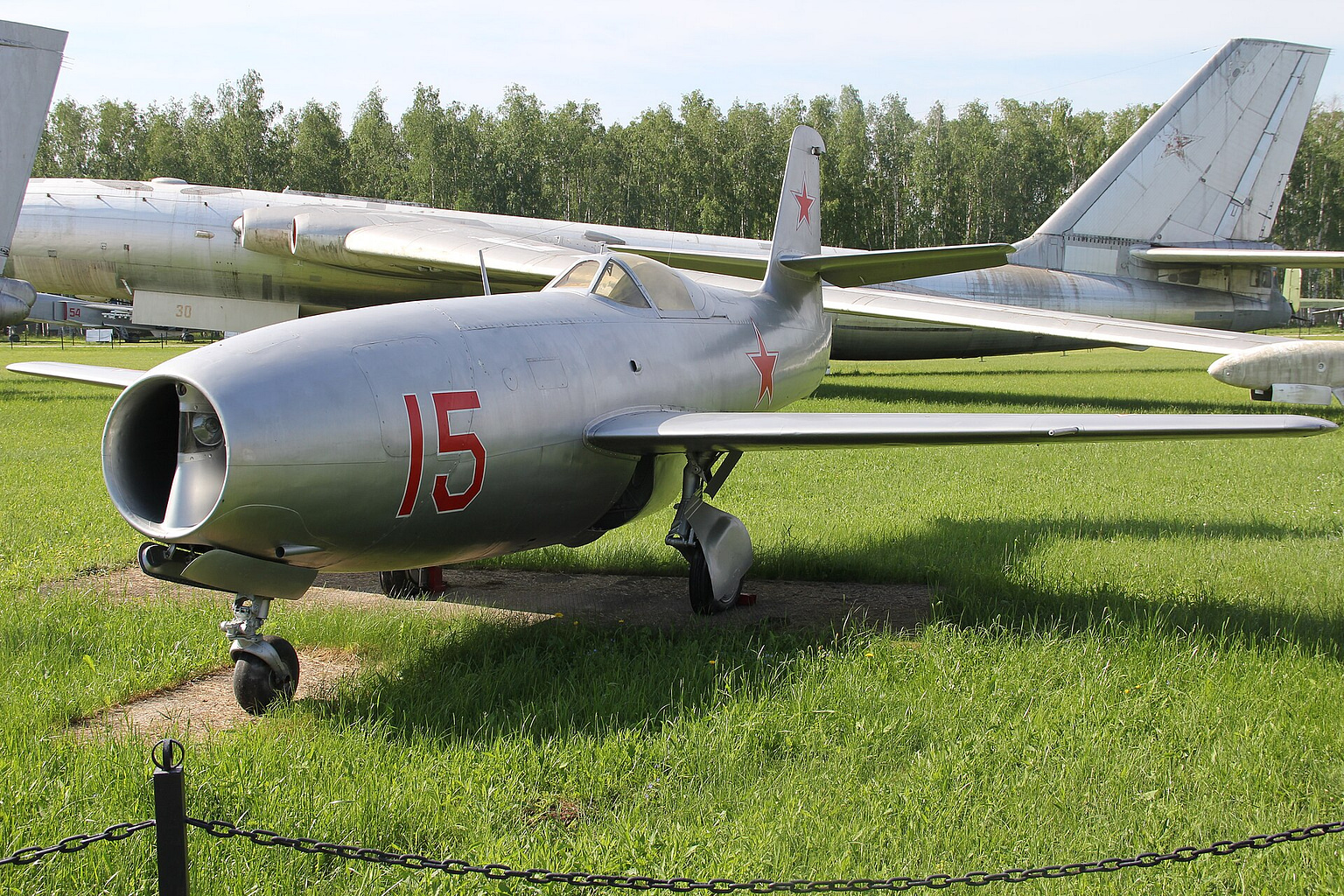
The Yak-23’s most distinctive feature was its “pod-and-boom” layout. The engine sat in a short, deep fuselage “pod”, fed by a plain circular intake in the nose, with the jet exhausting beneath the mid-fuselage. To keep the tail surfaces clear of that hot exhaust, they were carried up and rearward on a slender boom extending from the top of the fuselage.
This arrangement was a neat solution to an early-jet problem: how to place the tail of a single-engine jet without it sitting in the exhaust blast. It gave the Yak-23 an unmistakable, slightly humpbacked profile. Combined with the straight wing and tricycle undercarriage, the layout made for a compact, purposeful little aircraft that looked exactly like what it was — a transitional fighter from the dawn of the jet age.
05Two 23mm cannon: the armament+
The Yak-23 was armed with two 23mm cannon mounted in the nose, beneath the intake. This was a hard-hitting battery for a light fighter of the late 1940s — cannon of this calibre could do serious damage to enemy aircraft with a short burst, in keeping with Soviet preference for heavy cannon armament over batteries of lighter machine guns.
Grouping the guns in the nose, close to the aircraft’s centreline, gave good accuracy without the convergence problems of wing-mounted weapons. For its intended role — a nimble day fighter dogfighting at low to medium altitude — the twin-cannon armament was well judged, giving the small aircraft a genuine punch.
06First flight in 1947 and service entry+
The Yak-23 prototype first flew in the summer of 1947, and the aircraft entered Soviet service in the following couple of years. It arrived as a mature, well-sorted design — the product of Yakovlev’s accumulated experience with the earlier Yak-15 and Yak-17 — and it performed impressively in testing, particularly in climb and agility.
Its timing, however, was cruel. The very qualities that testing confirmed — that it was an excellent light straight-wing fighter — were being rendered secondary by the arrival of the swept wing. The Yak-23 entered service as a fine example of a category that was, at that exact moment, being superseded, which is why its Soviet career would prove so short.
07An excellent climber for its day+
If the Yak-23 had one standout quality, it was climb. Its light weight and good thrust-to-weight ratio gave it an outstanding rate of climb for the late 1940s, and this, combined with its agility, made it a delight to fly and a real threat in a close-in fight. Pilots consistently praised its liveliness and its willingness to go uphill.
This performance was the payoff of the light-and-simple philosophy. By keeping the aircraft small and the structure minimal, Yakovlev extracted lively performance from a modest engine. In the specific arena of low-to-medium-altitude dogfighting, the Yak-23 could hold its own against many contemporaries — it was the broader shift to high-speed, high-altitude combat that left it behind.
08Eclipsed by the swept-wing MiG-15+
The Yak-23’s fate was sealed by an aircraft that entered service almost alongside it: the Mikoyan-Gurevich MiG-15. Where the Yak had a straight wing and the Derwent-derived RD-500, the MiG-15 had a swept wing and the more powerful Nene-derived RD-45. The swept wing delayed the drag rise near the speed of sound, letting the MiG fly far faster and higher.
The result was no contest at the level of capability. The MiG-15 was a transonic, high-altitude fighter of a new generation; the Yak-23 was an excellent example of the generation before. The Soviet Air Force, sensibly, concentrated its resources on the MiG. The Yak-23 was not a bad aircraft — it was simply on the wrong side of the single most important advance in fighter design of the era.
09A short Soviet front-line life+
Because the MiG-15 so comprehensively outclassed it, the Yak-23 had a brief career in Soviet front-line service. Production ended around 1950 after roughly 310 aircraft, a modest total, and the Soviet Air Force did not keep the type in first-line units for long, preferring to standardise on the MiG.
This short home-service life is central to the Yak-23’s story. It never fought a major war in Soviet colours and never had the chance to build a combat reputation at home. Instead, its real working career unfolded abroad, in the hands of the Soviet Union’s allies, where a fighter that was second-best in Moscow was still a valuable modern asset.
10Warsaw Pact and allied exports+
The Yak-23 found its most useful role as an export fighter for the Soviet Union’s new allies. It served with the air forces of Poland, Romania, Bulgaria and Albania, equipping units and, just as importantly, giving these young air arms a modern jet on which to train a first generation of jet pilots and ground crews.
For countries taking their first steps into the jet age, the Yak-23’s virtues — simplicity, ruggedness, easy handling — were exactly right. It may have been outclassed by the MiG-15 as a combat aircraft, but as a stepping stone into jet operations for the emerging Warsaw Pact air forces it was genuinely valuable, and it served in Eastern Europe for several years.
11The Czechoslovak S-101 licence build+
Czechoslovakia, which had a strong aviation industry of its own, went a step beyond simply importing the Yak-23: it built the fighter under licence, under the domestic designation S-101. This gave the Czechoslovak Air Force a home-produced jet fighter and helped its industry gain experience in building modern jet aircraft.
The S-101 was part of a wider pattern of the Czechoslovak industry licence-producing Soviet designs in the early Cold War. Building the Yak-23 domestically, rather than just flying imported examples, was a meaningful industrial step — and it means that a share of the Yak-23s that flew in Eastern Europe were actually made in Czechoslovakia, not the Soviet Union.
12The Romanian defection and Western evaluation+
The Yak-23’s most storied moment came in 1953, when a Romanian pilot flew his aircraft across the border and landed in Yugoslavia. Yugoslavia, under Tito, had broken with Moscow, and the defecting fighter became a valuable intelligence prize for the West.
It is widely reported that the aircraft was quietly made available to the United States, which secretly evaluated it — repainting it in American markings and flight-testing it to study Soviet jet design at first hand — before returning it. As with many Cold War intelligence episodes, the surviving accounts are incomplete and some details are disputed, so the story is best related with due caution. What is clear is that, for a brief period, a Soviet-designed Yak-23 flew in American service, one of a handful of Soviet jets covertly assessed by the West in this way.
13Retirement and surviving Yak-23s+
By the mid-to-late 1950s the Yak-23 was thoroughly obsolete, and it was steadily withdrawn as MiG-15s and later swept-wing fighters took over across the Eastern Bloc. Some examples lingered in secondary and training roles, but the type’s active life was essentially over.
A number of Yak-23s survive today, preserved in museums in the countries that operated it — among them Russia, Poland and Romania — and at least one was restored to airworthy condition in the West, giving enthusiasts the rare chance to see and hear a first-generation Soviet jet fighter fly. These survivors preserve the memory of an aircraft that was, briefly, one of the best light jet fighters in the world.
Design & Engineering
How the Yak-23 was built: a light jet perfected
The Yak-23 took the pod-and-boom layout of its Yak-15 and Yak-17 predecessors and refined it into a light, simple, superbly agile fighter — the peak of the straight-wing Yak jets, just as the straight wing was becoming obsolete.
Pod-and-boom, straight wing
Engine in a short fuselage pod with a nose intake, tail carried on a boom clear of the exhaust, and an unswept wing — the classic early-Yak layout.
Derwent-copy power
A single Klimov RD-500 — a Soviet copy of the Rolls-Royce Derwent — gave the light airframe a lively performance and an excellent climb.
Light, simple, hard-hitting
A compact, minimal airframe, tricycle gear and two nose-mounted 23mm cannon — nimble, easy to fly and simple to maintain in the field.
تحديد
Yakovlev Yak-23 specifications: dimensions, performance and cost
| يكتب | Single-seat first-generation jet fighter |
| طاقم | 1 (pilot) |
| طول | ~8.1 m (26 ft 8 in) — approx. |
| طول الجناحين | ~8.7 m (28 ft 8 in) — approx. |
| ارتفاع | ~3.3 m (10 ft 10 in) — approx. |
| الوزن الفارغ | ~2,000 kg (~4,400 lb) — approx. |
| Loaded weight | ~3,380 kg (~7,450 lb) — approx. |
| محرك | 1 × Klimov RD-500 turbojet (Rolls-Royce Derwent copy), ~1,590 kgf |
| التسليح | 2 × 23mm cannon in the nose |
| Max speed | ~925 km/h (~575 mph) — approx. |
| يتراوح | ~1,200 km (~750 miles) — approx. |
| سقف الخدمة | ~14,800 m (~48,500 ft) — approx. |
| First flight | 1947 (prototype) |
| Introduced | ~1949 (Soviet Air Force) |
| Retired | mid-to-late 1950s (front line); later in secondary roles |
| Number built | ~310 (plus Czechoslovak S-101 licence production) |
| Main variants | Yak-23 fighter; Yak-23UTI two-seat trainer; S-101 (Czechoslovak licence) |
| Operators | Soviet Union; Czechoslovakia; Poland; Romania; Bulgaria; Albania |
| Unit cost | not reliably recorded (Soviet 1940s–50s procurement) |
| Cost per flight hour | not reliably recorded |
14The Yak-23’s variants and the two-seat trainer+
The Yak-23 family was small. The main version was the single-seat day fighter, and a two-seat conversion-training variant, the Yak-23UTI, was produced in small numbers to help pilots make the transition onto the type. On top of these came the Czechoslovak licence-built version, designated S-101, which was essentially the same aircraft manufactured domestically.
There was no sprawling range of sub-types as with longer-lived fighters — the Yak-23’s short front-line life left little time for extensive development. The variants that did exist trace a simple story: a fighter, a trainer to teach people to fly it, and a licence-built copy to equip an allied air force from its own factories.
15The Yakovlev Yak-23’s cost: what the records show+
There is no reliable, transparent public figure for the Yak-23’s unit cost, cost per flight hour or total programme cost. It was produced within the Soviet planned economy of the late 1940s, where aircraft were costed in ways that do not translate into meaningful market prices, and consistent lifetime cost data for so short-lived a type simply does not exist in a usable form.
Rather than repeat an invented number, we list the cost fields here as “not reliably recorded.” What can be said is that the aircraft was deliberately light and simple, which would have made it relatively cheap and quick to build — part of the point of the design — and that only around 310 were made before production gave way to the MiG-15.
16Yak-23 versus the swept-wing generation+
The Yak-23 marks the boundary between two generations of fighter. It was among the finest of the first generation — the light, straight-winged, subsonic jets that were really piston-era airframes adapted to jet power. The second generation, arriving at almost the same moment, was defined by the swept wing, which unlocked much higher speeds and altitudes.
Set against a swept-wing fighter like the MiG-15, the Yak-23 was outclassed in the measures that increasingly mattered: top speed, high-altitude performance and the ability to fight near the speed of sound. Set against its own generation — the straight-winged jets of the late 1940s — it was excellent. Which comparison you make determines whether the Yak-23 looks like a fine fighter or an obsolete one; in truth, it was both, depending on the date.
17Surviving Yak-23s and where to see them+
A number of Yak-23s are preserved today, spread across the countries that operated the type. Examples can be found in museums in Russia, Poland and Romania, among others, where the aircraft’s distinctive pod-and-boom shape makes it an easy one to pick out among the early jets.
Most remarkably, at least one Yak-23 was restored to airworthy condition in the West and flown at air shows — a rare opportunity to see a first-generation Soviet jet fighter actually fly. For an aircraft that was obsolete within a few years of entering service, the Yak-23 has left a surprisingly rich preserved legacy, a tribute to the affection it earned and to its place in early jet history.
Timeline
The Yakovlev Yak-23 through the years
Yakovlev flies the Yak-15, a piston Yak-3 re-engined with a jet — the start of the pod-and-boom line that leads to the Yak-23.
Britain sells Rolls-Royce Derwent and Nene jet engines to the Soviet Union; both are soon copied, powering the Yak-23 and the MiG-15.
The Yak-23 prototype flies for the first time — a purpose-built light jet fighter and the peak of the straight-wing Yak line.
The Yak-23 enters service with the Soviet Air Force, praised for its climb and agility.
The swept-wing MiG-15 outclasses the straight-winged Yak; Soviet production ends after about 310 aircraft.
Yak-23s are exported to Poland, Romania, Bulgaria and Albania, equipping and training the new Eastern Bloc jet air forces.
Czechoslovakia licence-builds the Yak-23 domestically as the S-101.
A Romanian pilot lands a Yak-23 in Yugoslavia; the aircraft is reportedly evaluated in secret by the United States before being returned.
The Yak-23 is withdrawn from front-line service as swept-wing fighters take over across the Eastern Bloc.
Survivors are preserved in museums in Russia, Poland, Romania and beyond, and at least one has flown again in the West.
Stories & Eyewitnesses
The Yakovlev Yak-23 in stories: the moments that defined it
The last light straight-wing Yak, a superb climber, eclipsed by the swept wing, exported across the Eastern Bloc and famously flown in secret by the West — the Yak-23’s history told through the moments that stuck.
The Lineage
Last of the Yak jets
The end of the Yak-15/17 pod-and-boom line.
The Yak-23 was the last and best of Yakovlev’s straight-wing pod-and-boom jets, following the Yak-15 and Yak-17.
A purpose-built light fighter, not a piston conversion like the first of the line.
Light & Simple
A well-made hand tool
Compact, minimal, easy to fly and maintain.
The Yak-23 was deliberately light and simple — a small airframe around one engine, two cannon and a pilot.
Honest, forgiving, quick to build and easy to service in the field.
British Engine
A Derwent in disguise
Powered by a copied Rolls-Royce engine.
The Klimov RD-500 was a Soviet copy of the Rolls-Royce Derwent, sold to the USSR by Britain in 1946 and promptly reverse-engineered.
Both the Yak-23 and the MiG-15 owed their engines to British technology.
Pod & Boom
The humpbacked profile
Engine in a pod, tail on a boom.
The engine sat in a short fuselage pod with a nose intake; the tail was carried on a boom to keep it clear of the exhaust.
It gave the Yak-23 its unmistakable, slightly humpbacked shape.
The Climb
Straight uphill
An outstanding climber for its day.
Light and with a good thrust-to-weight ratio, the Yak-23 leapt off the runway and climbed superbly.
Pilots loved its liveliness and its willingness to go uphill.
Hard Punch
Two 23mm cannon
Heavy armament for a light fighter.
Two nose-mounted 23mm cannon gave the little Yak real hitting power, grouped on the centreline for accuracy.
Well judged for a nimble low-to-medium-altitude day fighter.
Wrong Moment
Obsolete at birth
The swept wing changed the rules.
The Yak-23 arrived just as the swept wing transformed the fighter; its straight wing capped its speed and altitude.
An excellent aircraft of a category that was, at that exact moment, ending.
Outclassed
Beaten by the MiG-15
The swept-wing rival won out.
The MiG-15, with its swept wing and more powerful Nene-copy engine, was faster and higher-flying — a generation ahead.
The Soviet Air Force sensibly concentrated on the MiG.
Short at Home
Brief Soviet career
Production ended around 1950.
Only about 310 were built before the MiG-15 took over; the Yak-23 had a short front-line life in Soviet colours.
Its real working career would unfold abroad.
Eastern Bloc
An export fighter
Poland, Romania, Bulgaria, Albania.
The Yak-23 equipped the young Warsaw Pact air forces, giving them a modern jet on which to train a first generation of pilots.
Second-best in Moscow, but a valuable asset for its allies.
S-101
Built in Czechoslovakia
Licence-produced as the S-101.
Czechoslovakia built the Yak-23 under licence as the S-101, giving its air force a home-produced jet and its industry valuable experience.
Some Eastern Bloc Yak-23s were Czech-made, not Soviet.
Defection
Flown by the West
A Romanian Yak-23 evaluated in secret.
In 1953 a Romanian pilot landed a Yak-23 in Yugoslavia; it was reportedly evaluated in secret by the United States, in US markings, before being returned.
Details are patchy, so the story is best told with caution — but a Soviet jet did briefly fly in American hands.
Survivors
Preserved and flying
Museums, and one back in the air.
Yak-23s survive in museums in Russia, Poland, Romania and beyond, and at least one was restored to airworthy condition in the West.
A rare chance to see a first-generation Soviet jet fly.
Photo Gallery
The Yakovlev Yak-23 in photographs
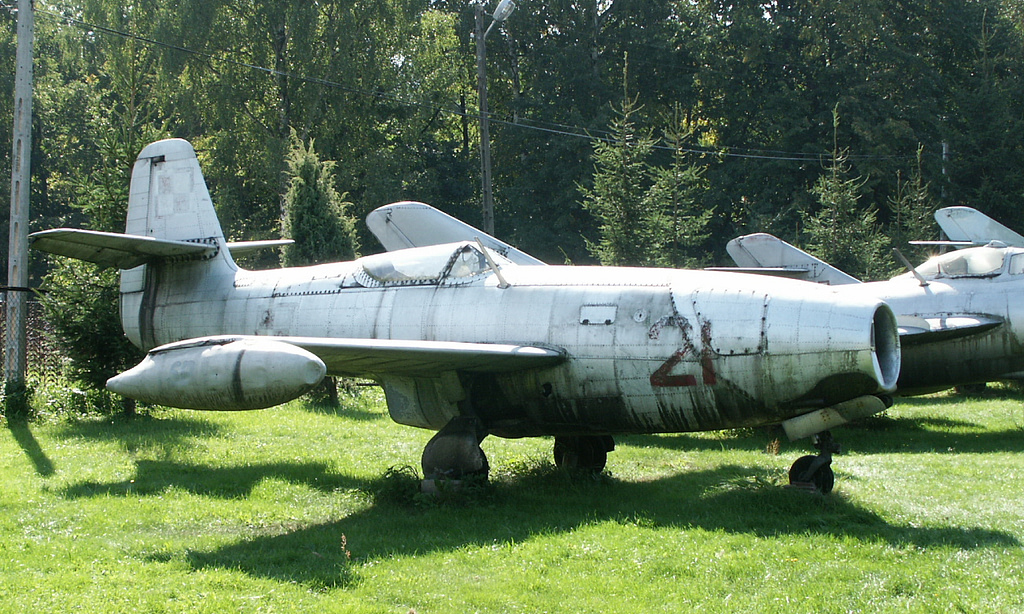
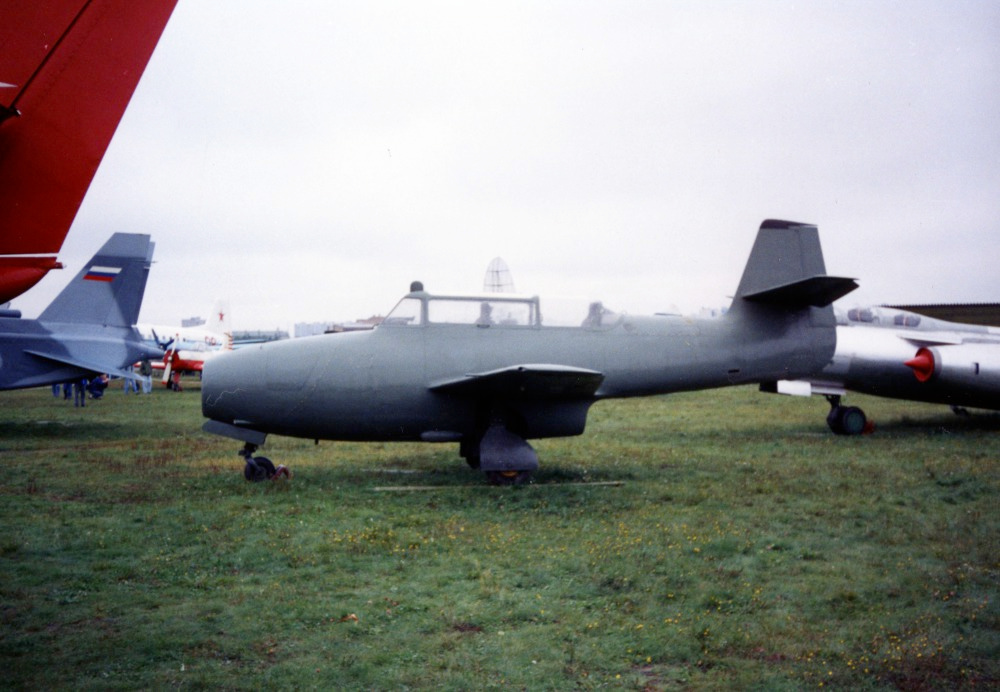
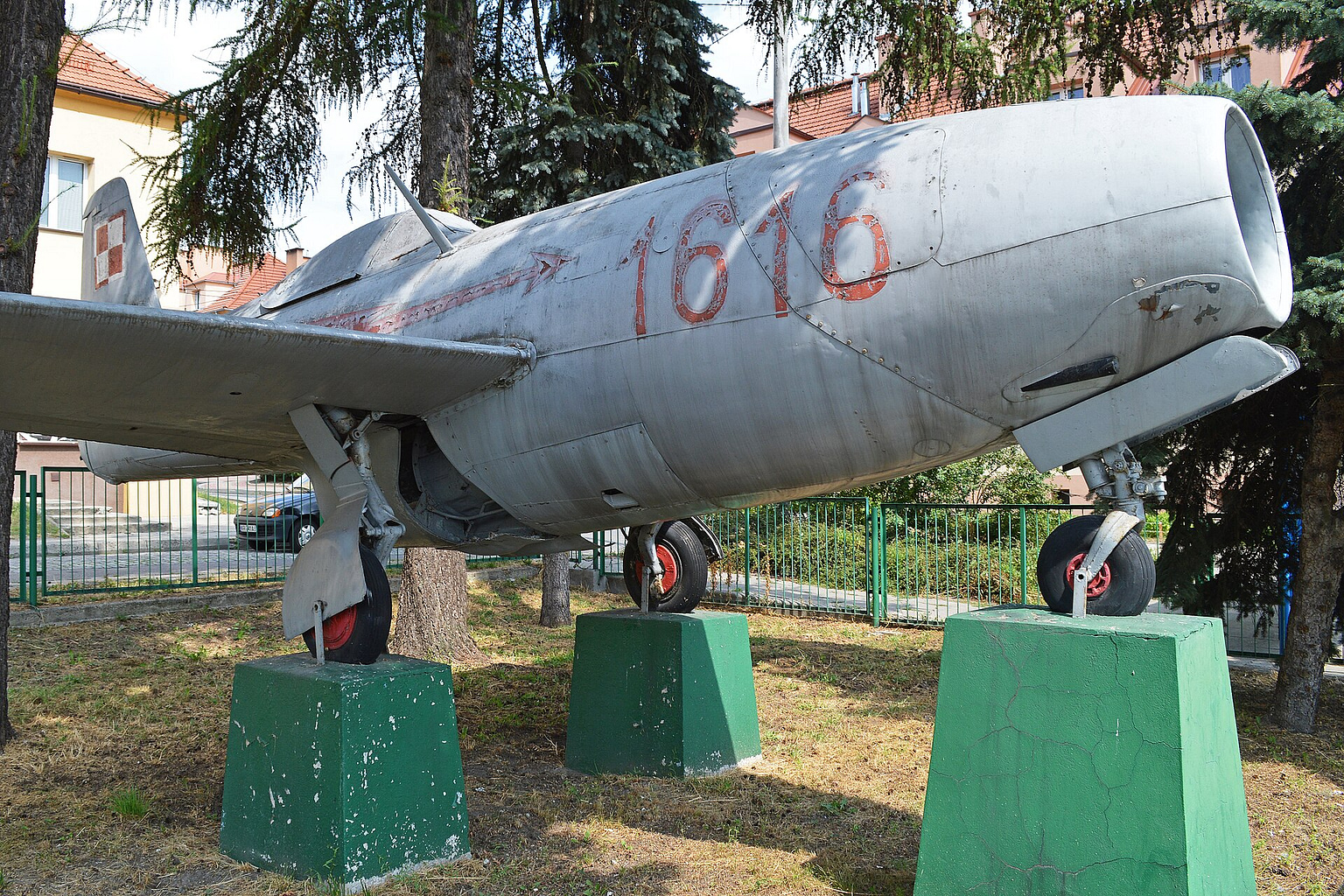
Museum and archival photographs of the Yak-23, each credited to its source and licence. Click any photo to enlarge.
On Film
The Yakovlev Yak-23 on video: the light Soviet jet
A look at the Yakovlev Yak-23 — its pod-and-boom design, its place in early Soviet jet development and the surviving aircraft that keep it alive.
“Comintern Fodder | Yakovlev Yak-23” by Plane Encyclopedia (approx. 17,000 views at time of writing; running time ~15 minutes) — a documentary history of the Yak-23, its design and its service.
Operations Overview
Where the Yakovlev Yak-23 flew: an operator map
Designed in the Soviet Union and flown mainly by its Eastern European allies. Because the Soviet Union and Czechoslovakia no longer exist as states, the origin role is shown on modern Russia and the licence build on the modern Czech Republic. Hover or tap a country for detail.
Categories: Design & Soviet Air Force (shown on Russia, for the USSR) · Operators & Licence Production (Czechoslovakia’s S-101 shown on the Czech Republic, plus Poland, Romania, Bulgaria, Albania) · Surviving Airframes (incl. one restored to fly in the USA). Successor states stand in for the USSR and Czechoslovakia.
Service Record
The Yak-23’s record: a fine fighter, out of time
The Yak-23’s significance lies in its qualities as a light jet, its export career across the Eastern Bloc and its brush with Western intelligence — a fine fighter that arrived just too late.
Questions & Answers
Yakovlev Yak-23: your questions answered
Can I fly in a Yakovlev Yak-23?
No — there is no bookable Yak-23 flight experience, and MiGFlug does not offer one. The type was retired in the 1950s, and the very few survivors are museum aircraft, with at most one airworthy example flown only by its expert operators. If what you actually want is the real thing — strapping into a genuine military jet and flying it — you very much can do that today in other types. MiGFlug arranges flights in real fighter jets, including Soviet-designed aircraft, around the world. Start here: migflug.com/flights-prices.
Why is the Yakovlev Yak-23 historically important?
The Yak-23 was one of the best of the Soviet Union’s first generation of jet fighters — the last and finest of Yakovlev’s light, straight-wing “pod-and-boom” jets. It is historically significant both as a high point of that early design philosophy and as a marker of its end: it was overtaken almost immediately by the swept-wing MiG-15. It went on to serve widely across the Warsaw Pact and was famously evaluated in secret by the West.
Why was the Yak-23 replaced so quickly?
Timing. The Yak-23 was an excellent straight-wing fighter, but it entered service at almost the same moment as the swept-wing MiG-15. The swept wing allowed far higher speeds and altitudes, making it a generation ahead. Rather than keep two fighters, the Soviet Air Force concentrated on the superior MiG-15, and Yak-23 production ended around 1950 after roughly 310 aircraft. It was a case of a good aircraft arriving at exactly the wrong moment.
What engine did the Yak-23 use?
A single Klimov RD-500 turbojet, which was a Soviet reverse-engineered copy of the British Rolls-Royce Derwent. Britain sold a number of its latest jet engines, including the Derwent and the more powerful Nene, to the Soviet Union in 1946, and Soviet engineers copied them. The Derwent-derived RD-500 powered the Yak-23, while the Nene-derived RD-45 powered its rival the MiG-15 — so both first-generation Soviet jets relied on British engine technology.
Who operated the Yak-23?
The Yak-23 served with the Soviet Air Force and, more extensively, with the air forces of its Eastern European allies — Poland, Romania, Bulgaria and Albania. Czechoslovakia built the fighter under licence as the S-101. Its Soviet front-line career was short, but as an export and licence-built type it gave several young Warsaw Pact air forces their entry into the jet age.
Is it true a Yak-23 was flown by the United States?
In essence, yes, though the details are hazy. In 1953 a Romanian pilot defected, landing his Yak-23 in Yugoslavia, which had broken with Moscow. It is widely reported that the aircraft was quietly made available to the United States, which secretly evaluated it — repainting it in American markings and flight-testing it — before returning it. As with many Cold War intelligence stories, some details are disputed and the full record is incomplete, so it is best told with due caution.
How is the Yak-23 related to the Yak-15 and Yak-17?
They form a single family. The Yak-15 (1946) was one of the first Soviet jets, made by re-engining the piston Yak-3 fighter; the Yak-17 was an improved development; and the Yak-23 was the final, purpose-designed member of the line. All shared the straight wing and the “pod-and-boom” layout, with the engine in a fuselage pod and the tail on a boom. The Yak-23 refined the concept to its peak, just as swept wings were making it obsolete.
Was the Yakovlev Yak-23 a good aircraft?
Judged within its own generation, yes — it was excellent: light, nimble, a superb climber, easy to fly and simple to maintain, and genuinely dangerous in a close-in dogfight. Its problem was never quality but timing, arriving just as the swept wing rendered straight-winged jets obsolete. As the last and best of the light straight-wing Yak fighters, and a useful export across the Eastern Bloc, the Yak-23 was a fine aircraft that simply ran out of era.
Fly For Real
You can’t fly the Yak-23 — but these, you can
No Yak-23 is a bookable ride today. The urge behind it — to strap into a real military aircraft and actually fly — is very much still bookable. MiGFlug puts you in genuine fighters and warbirds, including Soviet-designed jets, around the world.
Fighter Jet Flights
Take the controls of a real ex-military jet with an experienced pilot.
ميغ-29 فولكروم
Ride a genuine Soviet-designed air-superiority fighter to the edge of space.
إل-39 ألباتروس
The classic Eastern Bloc jet trainer — aerobatics and high-speed passes.
Warbird experiences
Fly in a genuine ex-military warbird from the early jet age.
All flights are operated by MiGFlug’s vetted partners with professional pilots. Browse every option and current pricing at migflug.com/flights-prices. MiGFlug does not operate Yakovlev Yak-23 flights — no bookable example exists.
Related Aircraft
If the Yakovlev Yak-23 interests you, explore these
Sources & Further Reading
Where this Yakovlev Yak-23 history comes from
Note on figures: dimensions, performance and production numbers for the Yak-23 vary between sources, and are hedged here as approximate. Cost fields are listed as not reliably recorded because meaningful Soviet-era procurement cost data is not available. The 1953 Romanian defection and the reported Western evaluation are recounted as they are commonly told but with due caution, as some details are disputed. The Soviet Union and Czechoslovakia no longer exist as states; on the map, the origin role is shown on modern Russia and the licence build on the modern Czech Republic. A number of Yak-23s survive in museums, and at least one has flown again.