
Yakovlev Yak-23
The last of Yakovlev’s light, straight-wing “pod-and-boom” jet fighters — nimble, simple and a superb climber for its day, yet overtaken almost at birth by the swept-wing MiG-15, and remembered most for the exports and defection that carried it far beyond the Soviet Union.
The Story
The Yakovlev Yak-23: the last of the light straight-wing jets
The Yakovlev Yak-23 is a fighter caught at a hinge of history. It was one of the best of the Soviet Union’s first generation of jet fighters — light, simple, superbly agile and a wonderful climber — and yet it was obsolescent almost before it entered service, overtaken by the swept-wing revolution that the MiG-15 embodied. Its front-line career in Soviet hands was brief, but the little Yak went on to a long and varied life with the air forces of the Eastern Bloc, and it earned a permanent footnote in Cold War history when one example was spirited to the West and secretly test-flown by the United States.
The Yak-23 was the final member of a distinctive family. In the years right after the Second World War, the Yakovlev design bureau produced a series of straight-wing jet fighters built to a “pod-and-boom” layout — beginning with the Yak-15, essentially a wartime piston Yak-3 fighter re-engined with a jet, and continuing through the improved Yak-17. The Yak-23, which first flew in 1947, was the culmination of this line: a purpose-designed light jet fighter that took the lessons of its predecessors and refined them into a genuinely capable little aircraft.
Yakovlev came to jets from a position of strength. During the war, Alexander Yakovlev’s bureau had produced the light, agile piston fighters — the Yak-1, Yak-3 and Yak-9 — that were among the Soviet Union’s finest, and that same philosophy of lightness and agility carried straight over into its jets. The Yak-15 had literally been a Yak-3 with a jet grafted into its nose; the Yak-23, though a fresh design, kept the bureau’s enduring belief that a fighter should be small, light and a joy to handle. It was, in a real sense, piston-era wisdom translated into the jet age.
“A superb little climber, obsolete almost at birth — the last light straight-wing Yak, overtaken by the swept wing.”— the Yak-23’s place in history, in a sentence
Power came from a single Klimov RD-500 turbojet — a Soviet copy of the British Rolls-Royce Derwent, one of a batch of advanced jet engines that Britain, in a decision it would come to regret, had sold to the Soviet Union in 1946. Fed by a simple nose intake, the engine sat in a stubby fuselage pod, with the tail carried up and back on a slender boom clear of the jet exhaust. The wing was straight and unswept, the landing gear a modern tricycle arrangement, and the armament two 23mm cannon in the nose. It was a clean, compact, no-nonsense fighter.
What the Yak-23 did superbly well was climb. Light in weight and blessed with a good thrust-to-weight ratio for its day, it leapt off the runway and went uphill with an eagerness that delighted its pilots. It was nimble, honest and easy to fly, rugged and simple to maintain — exactly the qualities a hard-pressed air force valued in the early jet age. In a close-in, low-to-medium-altitude dogfight it could be a genuinely dangerous opponent, and pilots who flew it remembered it with real affection.
But the Yak-23 had the misfortune to appear at the very moment the jet fighter was being transformed. The straight wing that made it simple and docile also capped its speed and its high-altitude performance, and while it was entering service the Mikoyan-Gurevich MiG-15 was arriving too — a swept-wing fighter powered by a copy of the even more powerful Rolls-Royce Nene, faster, higher-flying and altogether more modern. Against the MiG-15 the straight-winged Yak was simply outclassed. The swept wing had changed the rules, and the Yak-23, for all its charm, belonged to the era that was ending.
There is a poignant what-if in the timing. Had the Yak-23 appeared just two or three years earlier, before the swept wing was understood, it would have ranked among the very best fighters in the world, the equal of anything the West could field. Instead it arrived at the precise moment the ground shifted beneath it. The tragedy, such as it was, lay entirely in the calendar: the aircraft was excellent, but excellence in a category the world was abandoning counted for very little.
The consequence was a short Soviet front-line life. The Soviet Air Force quickly concentrated on the MiG-15, and Yak-23 production ended around 1950 after some three hundred and ten aircraft had been built. Rather than soldier on in Soviet service, many of the Yaks were passed on to the air forces of the Soviet Union’s new Eastern European allies, where they found a longer and more useful career.
It was as an export fighter that the Yak-23 really spread its wings. It served with the air forces of Poland, Romania, Bulgaria and Albania, giving these young Warsaw Pact air arms a modern-looking jet fighter to build their jet experience around. In Czechoslovakia the aircraft was even put into licence production, built domestically under the designation S-101. For several years in the early 1950s the little Yak was a common sight over Eastern Europe, a first jet mount for a generation of communist-bloc pilots as their air forces made the leap into the jet age.
For the pilots and mechanics of Poland, Romania, Bulgaria, Albania and Czechoslovakia, the Yak-23 was often their first real jet, and in that role its forgiving nature was priceless. Learning to fly and to maintain a jet was a formidable leap for air forces built on piston aircraft, and a docile, rugged, straightforward machine like the Yak-23 was exactly the right teacher. Many airmen who would go on to fly MiG-15s, MiG-17s and beyond took their very first jet steps on the little Yak.
The Yak-23’s most famous moment, though, came through defection. In 1953 a Romanian pilot flew his Yak-23 across the border and landed in Yugoslavia, which by then had broken with the Soviet bloc. The aircraft was a windfall of intelligence, and it is widely reported that it was quietly handed over to the United States, which secretly evaluated it — repainting it in American markings and test-flying it to learn what it could about Soviet jet design — before it was returned. Details of the episode remain patchy and some accounts differ, so the story is best told with a measure of caution, but the essence is well attested: a Soviet-designed fighter that ended up, however briefly, flying in American hands.
The episode fits a wider Cold War pattern. Throughout the era, both sides went to great lengths to get their hands on the other’s aircraft — through defections, captures and clandestine loans — and to fly them in secret, probing their strengths and weaknesses at first hand. That a modest, already-obsolescent Yak-23 was judged worth the trouble is a measure of how hungry the West was, in the early 1950s, for any direct knowledge of Soviet aviation, at a time when the MiG-15 was giving Western pilots a nasty shock over Korea.
In the end the Yak-23 occupies an unusual place in the record: an aircraft that was, at one and the same time, among the best of its kind and already out of date. Measured against the straight-winged jets of the late 1940s it was a star; measured against the swept-wing fighters arriving alongside it, it was yesterday’s aeroplane. Few designs illustrate so neatly the breathtaking pace of change in those first jet years, when a fighter could travel from cutting-edge to obsolescent within the span of a single programme.
The Yak-23’s time in the front line was over by the mid-to-late 1950s, as the MiG-15 and its swept-wing successors took over everywhere. Some lingered in secondary and training roles for a while longer, but the type was thoroughly obsolete and was steadily retired. A number survive today in museums across the countries that flew it — in Russia, Poland, Romania and elsewhere — and at least one was restored to airworthy condition in the West, a rare chance to see a first-generation Soviet jet in the air. The Yak-23 is remembered as a fine little fighter that did nothing wrong except arrive at the wrong moment: the last, and arguably the best, of Yakovlev’s light straight-wing jets, overtaken by a revolution it could not follow.
01The pod-and-boom lineage: Yak-15, Yak-17, Yak-23+
The Yak-23 was the last and best of a distinctive family of Yakovlev jet fighters. The line began with the Yak-15 of 1946 — one of the Soviet Union’s first jets, created by taking the wartime piston-engined Yak-3 fighter and re-engining it with an early jet. It was crude but quick to field, and it gave Soviet pilots their first taste of jet flight.
The improved Yak-17 followed, and then the Yak-23, which first flew in 1947 as a purpose-designed light jet fighter rather than a piston conversion. All shared the “pod-and-boom” philosophy — engine in a short fuselage pod, tail on a boom — and all were straight-winged. The Yak-23 refined the concept to its peak, just as the concept itself was becoming obsolete.
02Design philosophy: light, simple, nimble+
The Yak-23 embodied a clear design philosophy: keep it light, keep it simple, and make it fly well. Where some early jets grew heavy and complex, the Yak was compact and minimal, with a small airframe wrapped tightly around a single engine, two cannon and a pilot. There was little excess.
This lightness paid off in agility and in ease of use. The aircraft was honest and forgiving to fly, quick to build, and simple to service in the field — important virtues for air forces rapidly expanding into the jet age with limited experience. The Yak-23 was, in a sense, the fighter equivalent of a well-made hand tool: uncomplicated, effective and pleasant to use.
03The Klimov RD-500: a Rolls-Royce Derwent copy+
The Yak-23 was powered by a single Klimov RD-500 turbojet — a Soviet reverse-engineered copy of the British Rolls-Royce Derwent. In 1946 the British government, in a move it would bitterly regret, sold a number of its latest jet engines, including the Derwent and the more powerful Nene, to the Soviet Union. Soviet engineers promptly copied them.
The RD-500 gave the Yak-23 the power that made its lively performance possible. It is one of the great ironies of early jet history that this Soviet fighter, and its swept-wing rival the MiG-15, both owed their engines to British generosity — the Yak to the Derwent-derived RD-500, the MiG to the Nene-derived RD-45. British engine technology, freely handed over, powered the first great generation of Soviet jets.
04The pod-and-boom layout explained+
The Yak-23’s most distinctive feature was its “pod-and-boom” layout. The engine sat in a short, deep fuselage “pod”, fed by a plain circular intake in the nose, with the jet exhausting beneath the mid-fuselage. To keep the tail surfaces clear of that hot exhaust, they were carried up and rearward on a slender boom extending from the top of the fuselage.
This arrangement was a neat solution to an early-jet problem: how to place the tail of a single-engine jet without it sitting in the exhaust blast. It gave the Yak-23 an unmistakable, slightly humpbacked profile. Combined with the straight wing and tricycle undercarriage, the layout made for a compact, purposeful little aircraft that looked exactly like what it was — a transitional fighter from the dawn of the jet age.
05Two 23mm cannon: the armament+
The Yak-23 was armed with two 23mm cannon mounted in the nose, beneath the intake. This was a hard-hitting battery for a light fighter of the late 1940s — cannon of this calibre could do serious damage to enemy aircraft with a short burst, in keeping with Soviet preference for heavy cannon armament over batteries of lighter machine guns.
Grouping the guns in the nose, close to the aircraft’s centreline, gave good accuracy without the convergence problems of wing-mounted weapons. For its intended role — a nimble day fighter dogfighting at low to medium altitude — the twin-cannon armament was well judged, giving the small aircraft a genuine punch.
06First flight in 1947 and service entry+
The Yak-23 prototype first flew in the summer of 1947, and the aircraft entered Soviet service in the following couple of years. It arrived as a mature, well-sorted design — the product of Yakovlev’s accumulated experience with the earlier Yak-15 and Yak-17 — and it performed impressively in testing, particularly in climb and agility.
Its timing, however, was cruel. The very qualities that testing confirmed — that it was an excellent light straight-wing fighter — were being rendered secondary by the arrival of the swept wing. The Yak-23 entered service as a fine example of a category that was, at that exact moment, being superseded, which is why its Soviet career would prove so short.
07An excellent climber for its day+
If the Yak-23 had one standout quality, it was climb. Its light weight and good thrust-to-weight ratio gave it an outstanding rate of climb for the late 1940s, and this, combined with its agility, made it a delight to fly and a real threat in a close-in fight. Pilots consistently praised its liveliness and its willingness to go uphill.
This performance was the payoff of the light-and-simple philosophy. By keeping the aircraft small and the structure minimal, Yakovlev extracted lively performance from a modest engine. In the specific arena of low-to-medium-altitude dogfighting, the Yak-23 could hold its own against many contemporaries — it was the broader shift to high-speed, high-altitude combat that left it behind.
08Eclipsed by the swept-wing MiG-15+
The Yak-23’s fate was sealed by an aircraft that entered service almost alongside it: the Mikoyan-Gurevich MiG-15. Where the Yak had a straight wing and the Derwent-derived RD-500, the MiG-15 had a swept wing and the more powerful Nene-derived RD-45. The swept wing delayed the drag rise near the speed of sound, letting the MiG fly far faster and higher.
The result was no contest at the level of capability. The MiG-15 was a transonic, high-altitude fighter of a new generation; the Yak-23 was an excellent example of the generation before. The Soviet Air Force, sensibly, concentrated its resources on the MiG. The Yak-23 was not a bad aircraft — it was simply on the wrong side of the single most important advance in fighter design of the era.
09A short Soviet front-line life+
Because the MiG-15 so comprehensively outclassed it, the Yak-23 had a brief career in Soviet front-line service. Production ended around 1950 after roughly 310 aircraft, a modest total, and the Soviet Air Force did not keep the type in first-line units for long, preferring to standardise on the MiG.
This short home-service life is central to the Yak-23’s story. It never fought a major war in Soviet colours and never had the chance to build a combat reputation at home. Instead, its real working career unfolded abroad, in the hands of the Soviet Union’s allies, where a fighter that was second-best in Moscow was still a valuable modern asset.
10Warsaw Pact and allied exports+
The Yak-23 found its most useful role as an export fighter for the Soviet Union’s new allies. It served with the air forces of Poland, Romania, Bulgaria and Albania, equipping units and, just as importantly, giving these young air arms a modern jet on which to train a first generation of jet pilots and ground crews.
For countries taking their first steps into the jet age, the Yak-23’s virtues — simplicity, ruggedness, easy handling — were exactly right. It may have been outclassed by the MiG-15 as a combat aircraft, but as a stepping stone into jet operations for the emerging Warsaw Pact air forces it was genuinely valuable, and it served in Eastern Europe for several years.
11The Czechoslovak S-101 licence build+
Czechoslovakia, which had a strong aviation industry of its own, went a step beyond simply importing the Yak-23: it built the fighter under licence, under the domestic designation S-101. This gave the Czechoslovak Air Force a home-produced jet fighter and helped its industry gain experience in building modern jet aircraft.
The S-101 was part of a wider pattern of the Czechoslovak industry licence-producing Soviet designs in the early Cold War. Building the Yak-23 domestically, rather than just flying imported examples, was a meaningful industrial step — and it means that a share of the Yak-23s that flew in Eastern Europe were actually made in Czechoslovakia, not the Soviet Union.
12The Romanian defection and Western evaluation+
The Yak-23’s most storied moment came in 1953, when a Romanian pilot flew his aircraft across the border and landed in Yugoslavia. Yugoslavia, under Tito, had broken with Moscow, and the defecting fighter became a valuable intelligence prize for the West.
It is widely reported that the aircraft was quietly made available to the United States, which secretly evaluated it — repainting it in American markings and flight-testing it to study Soviet jet design at first hand — before returning it. As with many Cold War intelligence episodes, the surviving accounts are incomplete and some details are disputed, so the story is best related with due caution. What is clear is that, for a brief period, a Soviet-designed Yak-23 flew in American service, one of a handful of Soviet jets covertly assessed by the West in this way.
13Retirement and surviving Yak-23s+
By the mid-to-late 1950s the Yak-23 was thoroughly obsolete, and it was steadily withdrawn as MiG-15s and later swept-wing fighters took over across the Eastern Bloc. Some examples lingered in secondary and training roles, but the type’s active life was essentially over.
A number of Yak-23s survive today, preserved in museums in the countries that operated it — among them Russia, Poland and Romania — and at least one was restored to airworthy condition in the West, giving enthusiasts the rare chance to see and hear a first-generation Soviet jet fighter fly. These survivors preserve the memory of an aircraft that was, briefly, one of the best light jet fighters in the world.
Design & Engineering
How the Yak-23 was built: a light jet perfected
The Yak-23 took the pod-and-boom layout of its Yak-15 and Yak-17 predecessors and refined it into a light, simple, superbly agile fighter — the peak of the straight-wing Yak jets, just as the straight wing was becoming obsolete.
Pod-and-boom, straight wing
Engine in a short fuselage pod with a nose intake, tail carried on a boom clear of the exhaust, and an unswept wing — the classic early-Yak layout.
Derwent-copy power
A single Klimov RD-500 — a Soviet copy of the Rolls-Royce Derwent — gave the light airframe a lively performance and an excellent climb.
Light, simple, hard-hitting
A compact, minimal airframe, tricycle gear and two nose-mounted 23mm cannon — nimble, easy to fly and simple to maintain in the field.
Specifications
Yakovlev Yak-23 specifications: dimensions, performance and cost
Baseline: the production Yak-23 of 1949–51, built at Factory No. 31 in Tbilisi around the Klimov RD-500. Deltas for the three Derwent-engined prototypes of 1947, the Yak-23UTI trainer and the Romanian Yak-23DC conversions are in grey. Three warnings before the figures. First, the metric dimensions are firm but the imperial column reprinted across most English-language references is wrong by about a foot in every row: 8.13 m is 26 ft 8 in, not 27 ft 8 in, and 3.31 m is 10 ft 10 in, not 11 ft 10 in. Every conversion below is calculated from the metric figure, not copied. Second, the RD-500 is very widely called a licence-built Rolls-Royce Derwent, including in the brief for this page. It was not. Britain sold complete Derwent V and Nene engines to the Soviet Union in 1946–47 and granted no manufacturing licence whatever; Klimov reverse-engineered them, and the resulting engine is a copy, not a licence build. Third, the single most-quoted weight, 3,384 kg, is a maximum take-off weight with wingtip tanks fitted. Hanging thrust-to-weight and wing loading on it flatters nobody and understates an aeroplane that did its real work clean.
Dimensions & weights
- Crew
- 1 the Yak-23UTI trainer seated two in tandem, with the instructor in front of the pupil rather than behind — an unusual arrangement, and one reason only three were built
- Wingspan
- 8.73 m (28 ft 8 in) measured without the wingtip drop tanks, which added a little to span and rather more to roll inertia
- Length
- 8.13 m (26 ft 8 in) airwar.ru gives 8.12 m. Shorter than a Spitfire, and one of the smallest jet fighters ever put into series production
- Height
- 3.31 m (10 ft 10 in) on the tricycle undercarriage, tail boom level. The pod-and-boom layout kept the fin high and clear of the jet efflux
- Wing area
- 13.5 m² (145 sq ft) Russian sources including airwar.ru give 13.7 m² (147 sq ft). The difference is about 1.5 per cent and does not change any conclusion drawn from it
- Empty weight
- 1,980 kg (4,365 lb) airwar.ru gives 1,902 kg (4,193 lb), probably a lighter early-production or prototype standard. Either way this is a fighter that weighed less empty than a loaded Yak-3
- Take-off weight, clean
- about 2,840 kg (6,260 lb) — derived here from empty weight plus 910 litres of internal fuel, 180 rounds of 23 mm and a pilot, because no published clean take-off weight for the type could be traced. It is the weight at which the aircraft actually scrambled
- Maximum take-off weight
- 3,384 kg (7,460 lb) with two 195-litre wingtip tanks. Reprinted almost everywhere simply as "gross weight", which is how the type acquired a reputation for being more heavily loaded than it was
- Wing loading
- 251 kg/m² (51.3 lb/sq ft) at maximum take-off weight; about 210 kg/m² (43.1 lb/sq ft) clean. Clean, that is lighter loading than a MiG-15bis carried, on a wing with no sweep to lose lift to — the arithmetic behind every account of how well this aeroplane turned
- Thrust-to-weight ratio
- 0.47 at maximum take-off weight; about 0.56 clean. In 1949 that was extraordinary. The MiG-15 of the same year sat near 0.44 clean, and no Western fighter in squadron service came close until the F-86F
- Fuel load
- 910 litres internal (200 imp gal, 240 US gal), roughly 728 kg (1,605 lb) of kerosene in five unprotected fuselage tanks, plus two 195-litre (43 imp gal, 52 US gal) wingtip drop tanks
- Layout and structure
- all-metal semi-monocoque pod-and-boom: nose intake, the engine buried in a short forward pod, the jet pipe exhausting under the wing trailing edge, and the tail carried on a slim boom running above the efflux. Inherited directly from the Yak-15 and Yak-17 it wasted length and added wetted area, but it made the engine bay accessible and let Yakovlev build a jet fighter that a piston-era factory could actually produce
- Wing
- mid-mounted, two-spar, laminar-flow section, unswept, 3°30′ dihedral, with slotted flaps inboard and ailerons outboard essentially the Yak-19 wing carried over. It is the single feature that dated the aircraft: everything else could have been improved, and a straight wing could not
- Undercarriage
- tricycle, main legs retracting inwards between the wing spars, nose leg retracting forwards and lying flush behind closed doors the brief for this page refers to a "bicycle" undercarriage abandoned by the Yak-23. There was none. The Yak-15 had a tailwheel, the Yak-17 introduced a tricycle gear with a semi-exposed nose leg, and the Yak-23 simply tidied it up. Yakovlev bicycle gear with wingtip outriggers belongs to the Yak-50 of 1949 and the swept twin-jet Yak-25 of 1952
- Cockpit
- unpressurised, unheated and unventilated, under a teardrop canopy set over the wing trailing edge and directly above the jet pipe. Protection was a bulletproof windscreen and armour behind the seat back sources differ on whether production aircraft had an ejection seat; English references describe an armoured ejection seat back, and the point is not settled here
Performance
- Maximum speed, sea level
- 925 km/h (575 mph, 500 kt) about Mach 0.76 at sea level. The best-attested single figure for the type and the one every source agrees on
- Maximum speed at altitude
- 910 km/h (565 mph) at 5,000 m (16,400 ft) — roughly Mach 0.79 in the colder air up there. That is the straight wing talking: the aircraft was faster in absolute terms low down, and closer to its compressibility limit high up
- Against the specification
- the Council of Ministers directive of 11 March 1947 demanded 950 km/h at sea level and 1,000 km/h at 5,000 m (590 and 620 mph). The Yak-23 missed both, by 25 and 90 km/h. It met the climb and range requirements comfortably, and it was accepted anyway, because in 1947 nothing else on that specification was flying at all
- Rate of climb, sea level
- 47 m/s (9,250 ft/min) initial. This is the number that made the type's reputation and it is not a misprint: a 2.8-tonne aeroplane on 3,500 lbf of thrust climbs like very little else of its decade
- Time to 5,000 m
- about 2 min 18 s (to 16,400 ft), following Russian sources. The altitude those sources are timing to is not stated explicitly, and 5,000 m is inferred here because that is the height the 1947 specification named — where it asked for 3.5 minutes
- Service ceiling
- 14,800 m (48,600 ft) airwar.ru also carries 13,450 m (44,100 ft) in the same table, so the type's own literature disagrees with itself. Either figure was academic: with no pressurisation and no cockpit heating, the pilot ran out of usable altitude long before the aeroplane did
- Climb records
- 3,000 m in 119 s and 6,000 m in 197 s, both set on 21 September 1957 by Andrzej Abłamowicz in the Polish civil-marked SP-GLK (9,840 ft and 19,700 ft). These are FAI class records timed from brake release, which is why the implied averages of 25.2 and 30.5 m/s sit well below the initial climb rate above — the take-off run and acceleration are inside the clock
- Range, internal fuel
- 785 km (488 mi) airwar.ru. This, not the headline 1,200 km, is what a clean Yak-23 could actually do
- Maximum range
- 1,475 km (917 mi) with wingtip tanks. The 1,200 km (750 mi) figure quoted almost universally is the specification requirement, restated as a performance figure — a common fate for Soviet types
- Radius of action
- ~250 km (155 mi) on internal fuel with a combat allowance, derived rather than published. The Yak-23 was a point-defence interceptor and its fuel state says so
- Take-off and landing
- short, and deliberately so. The thrust-to-weight, the unswept wing and the slotted flaps let it work from the grass and pierced-plank strips that Warsaw Pact fighter regiments still lived on in 1950 published take-off and landing runs vary too widely between sources to be quoted with confidence, so none is given here
- Handling
- state trials called it highly manoeuvrable with good acceleration, take-off and climb; the same report objected to heavy aileron and rudder forces and to the absence of pressurisation, heating and ventilation the control forces were partly addressed before series production. The cockpit environment never was
Propulsion & systems
- Engine
- one Klimov RD-500 centrifugal-flow turbojet the three prototypes flew on imported Rolls-Royce Derwent V engines, which is why prototype figures are sometimes marginally better than production ones
- Rated thrust
- 15.6 kN (3,500 lbf) as usually quoted for the installation the RD-500 itself is rated at 15.9 kN (3,570 lbf) on its own datasheet; installation losses account for the difference
- Engine origin
- an unlicensed Soviet copy of the Rolls-Royce Derwent V sold to the USSR in 1947. Klimov reverse-engineered it and re-drew it for Soviet processes and materials this, and the Nene copied as the RD-45 and VK-1, is the single largest technology transfer in early jet history, and it was a commercial sale, not espionage
- Engine architecture
- single-stage centrifugal compressor, nine combustion chambers, single-stage turbine; 2.11 m long (6 ft 11 in) and 1.09 m in diameter (3 ft 7 in), 581 kg dry (1,280 lb) — a fat, short, simple engine, which is precisely why the fuselage around it is fat and short
- Engine life and quality
- the Soviet KhN 80T substitute for the British turbine alloy lacked creep resistance and let the blades stretch in service. Up to 40 per cent of early engines needed individual hand adjustment, and the demonstrated 100-hour acceptance life was never matched in the field the aircraft's serviceability record belongs to the engine, not the airframe
- Engine production
- Factory No. 500 built 97 RD-500s in 1948 and 462 in 1949; Factory No. 16 added 300 in 1949. Unit labour fell from 20,000 man-hours in 1947 to 4,734 by March 1949 the RD-500 was dropped around 1950 in favour of the far better Klimov VK-1, which is one reason the Yak-23 line closed when it did
- Installation
- plain nose intake, short straight duct, engine mounted in the forward fuselage with the jet pipe passing under the cockpit floor and exhausting beneath the wing trailing edge the duct is about as short as a jet fighter duct can be, which cost the type almost nothing in pressure recovery — the one aerodynamic advantage of the pod-and-boom arrangement
- Fuel system
- five fuselage tanks totalling 910 litres, none self-sealing, plus two 195-litre jettisonable wingtip tanks unprotected tanks wrapped around a running turbojet, in a fighter with no ejection seat that anyone can confirm. This was a 1947 design and it shows
- Flight controls
- fully manual and unboosted throughout, with conventional cable and pushrod runs acceptable at 500 km/h and increasingly not at 900. The heavy aileron and rudder forces the state trials complained about are a direct consequence, and no powered assistance was ever fitted
- Cockpit systems and protection
- no pressurisation, no cabin heating or ventilation, bulletproof windscreen, armour behind the seat back the omission of pressurisation was the deliberate price of lightness. It also meant that a fighter with a nominal 14,800 m ceiling was, in practice, a low- and medium-altitude aeroplane
- Sighting and avionics
- an optical gyro gunsight, a command radio and an identification set; no radar, no radar warning, no all-weather or night capability of any kind exact equipment fits are poorly documented in the English-language literature and appear to have varied between Soviet and export aircraft, so no specific type numbers are asserted here
14The Yak-23’s variants and the two-seat trainer+
The Yak-23 family was small. The main version was the single-seat day fighter, and a two-seat conversion-training variant, the Yak-23UTI, was produced in small numbers to help pilots make the transition onto the type. On top of these came the Czechoslovak licence-built version, designated S-101, which was essentially the same aircraft manufactured domestically.
There was no sprawling range of sub-types as with longer-lived fighters — the Yak-23’s short front-line life left little time for extensive development. The variants that did exist trace a simple story: a fighter, a trainer to teach people to fly it, and a licence-built copy to equip an allied air force from its own factories.
15The Yakovlev Yak-23’s cost: what the records show+
There is no reliable, transparent public figure for the Yak-23’s unit cost, cost per flight hour or total programme cost. It was produced within the Soviet planned economy of the late 1940s, where aircraft were costed in ways that do not translate into meaningful market prices, and consistent lifetime cost data for so short-lived a type simply does not exist in a usable form.
Rather than repeat an invented number, we list the cost fields here as “not reliably recorded.” What can be said is that the aircraft was deliberately light and simple, which would have made it relatively cheap and quick to build — part of the point of the design — and that only around 310 were made before production gave way to the MiG-15.
16Yak-23 versus the swept-wing generation+
The Yak-23 marks the boundary between two generations of fighter. It was among the finest of the first generation — the light, straight-winged, subsonic jets that were really piston-era airframes adapted to jet power. The second generation, arriving at almost the same moment, was defined by the swept wing, which unlocked much higher speeds and altitudes.
Set against a swept-wing fighter like the MiG-15, the Yak-23 was outclassed in the measures that increasingly mattered: top speed, high-altitude performance and the ability to fight near the speed of sound. Set against its own generation — the straight-winged jets of the late 1940s — it was excellent. Which comparison you make determines whether the Yak-23 looks like a fine fighter or an obsolete one; in truth, it was both, depending on the date.
17Surviving Yak-23s and where to see them+
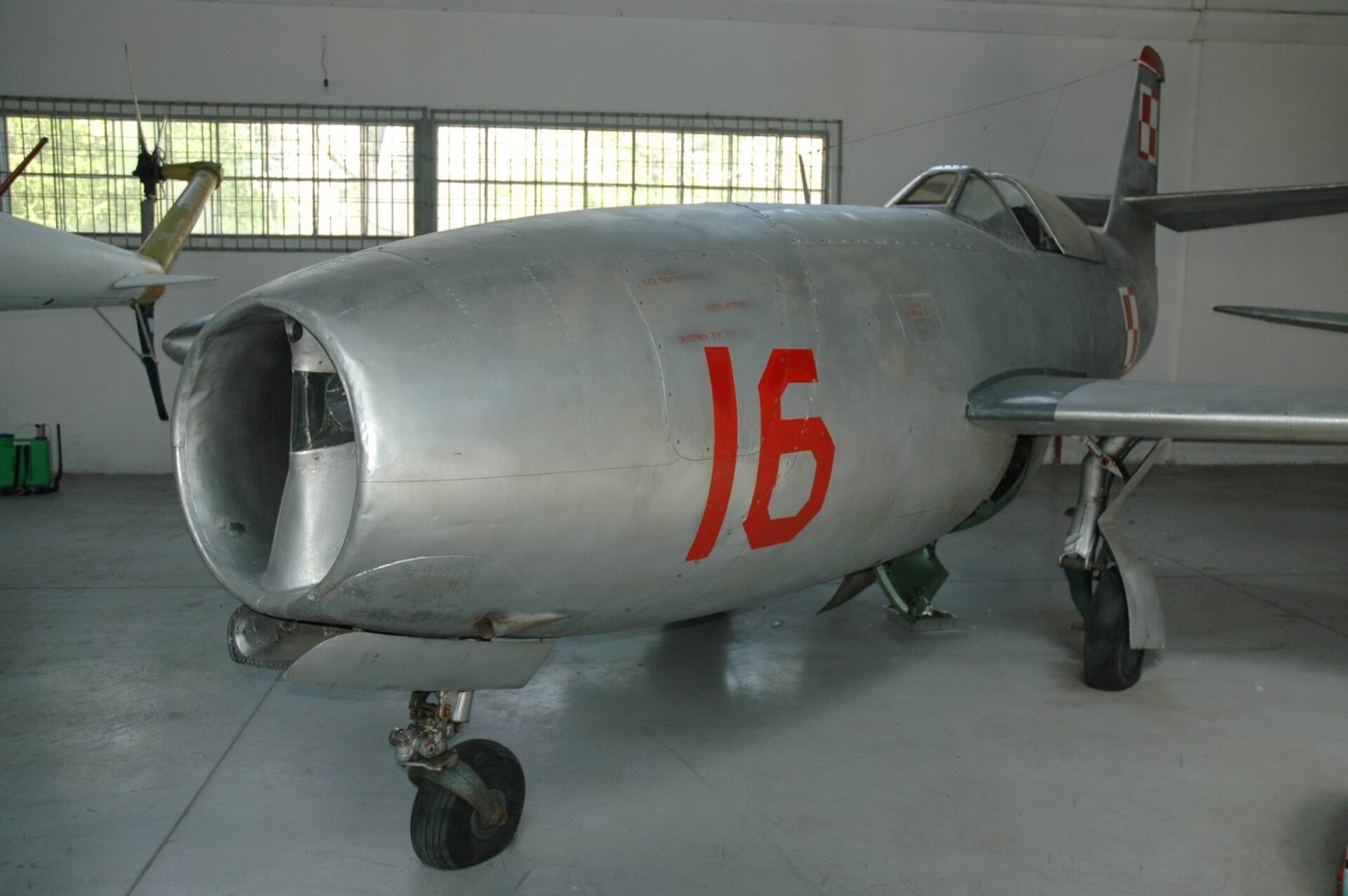
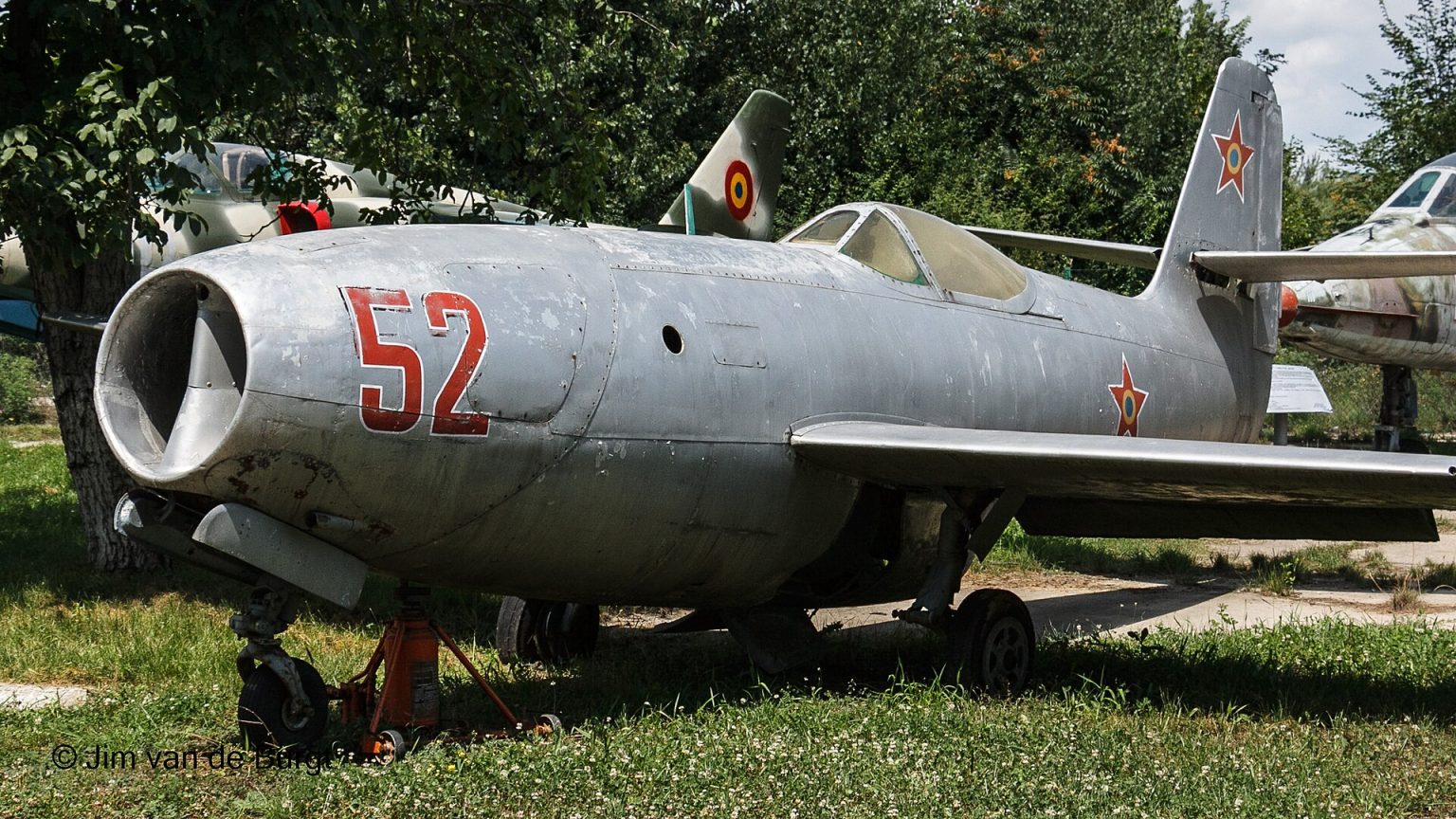
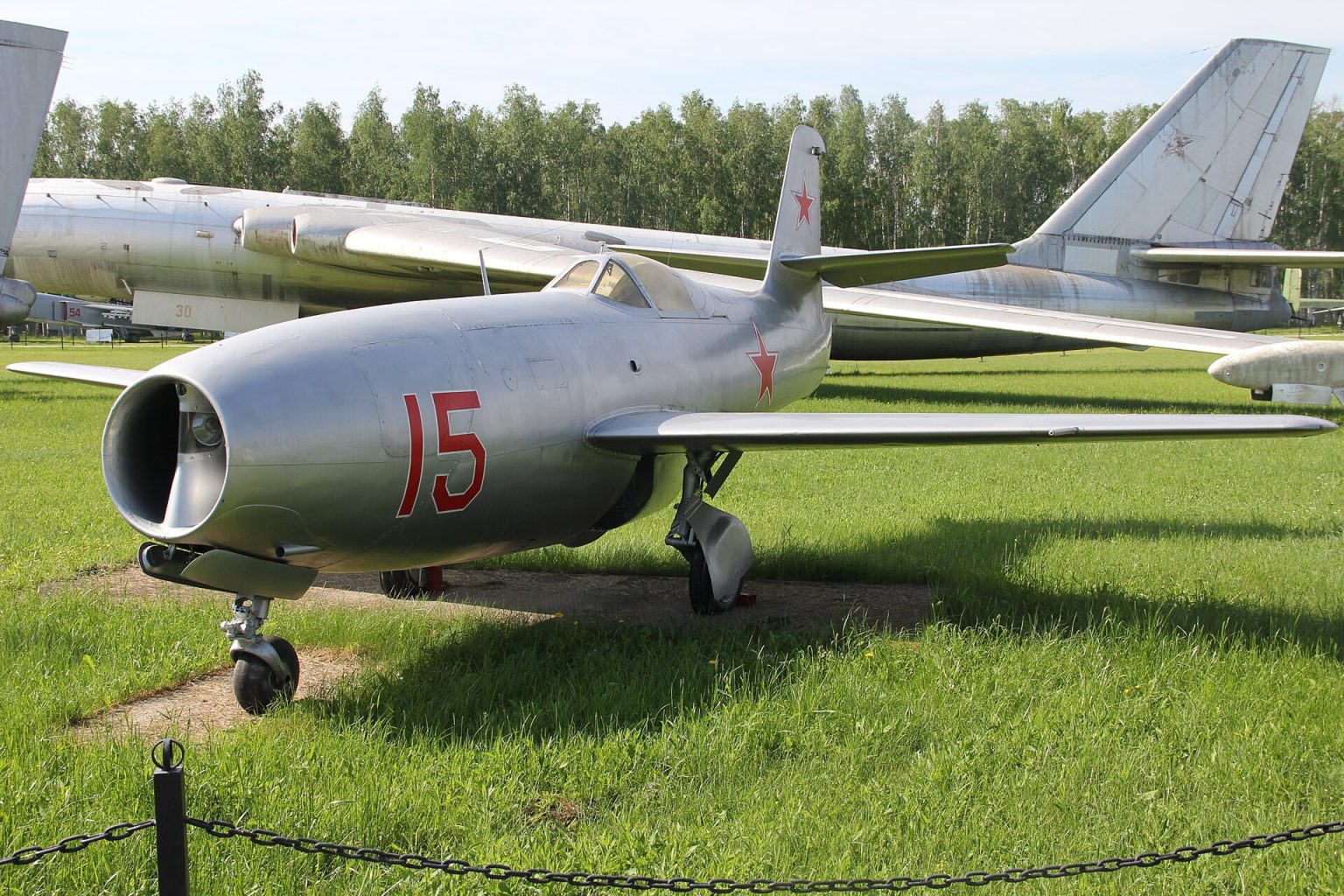
A number of Yak-23s are preserved today, spread across the countries that operated the type. Examples can be found in museums in Russia, Poland and Romania, among others, where the aircraft’s distinctive pod-and-boom shape makes it an easy one to pick out among the early jets.
Most remarkably, at least one Yak-23 was restored to airworthy condition in the West and flown at air shows — a rare opportunity to see a first-generation Soviet jet fighter actually fly. For an aircraft that was obsolete within a few years of entering service, the Yak-23 has left a surprisingly rich preserved legacy, a tribute to the affection it earned and to its place in early jet history.
Armament & payload
The Yak-23 carried two cannon and two fuel tanks, and that is the entire list
Yakovlev built the Yak-23 as a point-defence interceptor meant to defend the airfield it took off from, and armed it exactly to that brief: two 23 mm cannon low in the nose, ninety rounds each, no bomb racks, no rocket rails, no guided weapons and no provision to add any. That is a lighter battery than the MiG-15's one 37 mm and two 23 mm guns, and roughly six seconds of firing time per gun before the pilot is a passenger. What it had instead was an aiming platform: a 2.8-tonne aeroplane with a thrust-to-weight ratio of 0.56 and an unswept wing, which accelerated and turned better than anything else the Soviet Air Force could put up in 1949. The two wingtip drop tanks were the only external stores the type ever carried in service, anywhere, in eleven years of operation across six air forces. Early production aircraft are described in several sources as carrying the slower-firing Nudelman-Suranov NS-23 rather than the NR-23, and the fit may have changed during the Tbilisi run; the distinction is almost never recorded against individual airframes, and no serial cut-off could be traced.
Gun
- Two 23 mm Nudelman-Rikhter NR-23 cannon, mounted low in the nose on either side of the intake duct and firing under the engine, with 90 rounds per gun — 180 rounds total
- NR-23: single-barrel, short-recoil operated, 43 kg (95 lb), nominal cyclic rate 850 rounds/min. USAF testing of a captured example measured 650 rounds/min, which puts real firing time at about eight seconds per gun rather than six
- The same gun armed the MiG-15, the MiG-17 and the tail turret of the Il-28, so ammunition, tooling and armourers were common across every Warsaw Pact air force that flew the Yak-23
- Earlier and prototype aircraft are recorded with the NS-23, at about 550 rounds/min — the same 23 × 115 mm round through a slower mechanism. The NR-23 was a better than 50 per cent improvement in rate of fire for the same weight and calibre
- No dispersion or convergence data for the Yak-23 installation could be traced. Both guns sit within about half a metre of the centreline, so convergence mattered far less than it did on a wing-gunned fighter
Air-to-air
- None beyond the guns. No Soviet air-to-air guided weapon existed at any point in the Yak-23's operational life
- The first, the beam-riding K-5 — NATO AA-1 Alkali — reached service in 1957, by which time only Bulgaria and Romania still had Yak-23s on strength, and neither aircraft nor pilot had the radar to guide one
- Interception was visual, by day, under close ground control: the regiment scrambled on a radar plot, climbed on the aircraft's one genuinely world-class quality, and shot with iron in the nose
- Against a straight-and-level bomber that was adequate. Against anything that manoeuvred, the pilot had 180 rounds and a very good turn rate, and needed both
Air-to-surface guided
- None, and none proposed. The Soviet Union had no tactical air-to-surface guided weapon in service in this period at all, let alone one a single-seat day fighter could employ
- This card is retained because the format asks for it, and the honest answer is a blank one: no Yak-23 variant, prototype, export batch or conversion ever carried a guided weapon of any kind
- Ground attack, where Warsaw Pact operators asked for it, meant a strafing pass with the two nose guns and nothing else
- Attack work in these air forces belonged to the Il-10 and later the MiG-15bis. The Yak-23 was never in that queue
Bombs
- No bomb racks are recorded on production Yak-23s in Soviet or export service
- The only external fittings on the aircraft were the wingtip attachments, and those were plumbed for fuel. There is no attested bomb clearance for them
- Some secondary compilations list a light bomb load for the type. None that could be checked traces the claim to a Soviet document or a manual, and it is not repeated here
- The omission was a design decision rather than an oversight. Yakovlev was selling lightness, and every kilogram of pylon and release gear worked against the one number the aircraft was winning on
Rockets
- None. No rocket rails, launchers or pods were fitted to any Yak-23
- Unguided rocket armament reached Soviet fighters in quantity with the ARS-57 and the UB-16 pod in the later 1950s, after the type had left front-line service everywhere except Romania
- Export operators did not improvise them either, and had nowhere to hang them: the wing carried no hardpoints between root and tip
- By contrast, the parallel Yak-25 of 1947 was flown with a heavier three-cannon battery, which is a reminder that Yakovlev knew the Yak-23 was lightly armed and chose it anyway
Pods & other stores
- Two 195-litre drop tanks (43 imp gal, 52 US gal each) mounted on the wingtips — the only external stores the type ever carried
- Wingtip mounting was the fashionable answer of 1947 and it had a real aerodynamic argument behind it: a tank on the tip acts as a crude endplate and trims a little induced drag
- It also put mass at the greatest possible distance from the roll axis, on an aircraft whose ailerons were already heavy. Fitted, the tanks roughly doubled radius of action; jettisoned, they left the best-climbing fighter on the airfield
- No gun pods, no camera or reconnaissance pods, no countermeasures. Nothing else was ever cleared, in any air force, on any mark
Three typical loadouts
- Point-defence scramble
- Clean. 180 rounds of 23 mm, 910 litres internal, no tanks. About 2,840 kg, wing loading near 210 kg/m², thrust-to-weight 0.56 — 5,000 m in something close to two and a quarter minutes. This is the aeroplane the Yak-23 was designed to be, and the only configuration in which its numbers make sense.
- Standing patrol or border alert
- Full ammunition plus two 195-litre wingtip tanks. 3,384 kg at take-off, wing loading 251 kg/m², thrust-to-weight 0.47, radius roughly doubled. This is the configuration Romanian pilots were flying on the frontier in 1952, and the one Major Dumitru Balaur was in when he made the Romanian Air Force's first recorded interception — of a Soviet Il-28 that had strayed into Romanian airspace near Ianca on 28 October 1952.
- Ferry or redeployment
- Two tanks, ammunition reduced or removed, no combat allowance: about 1,475 km. Deliveries from the Soviet Union to Poland, Czechoslovakia, Romania and Bulgaria in 1949–51 were flown in stages on roughly this configuration, which is most of what the tip tanks were actually for.
Sourcing: gun data from the NR-23 and NS-23 literature and the USAF firing trials of a captured weapon; ammunition loads of 90 rounds per gun from the English-language Yak-23 references, which agree with each other and with nothing else in the field. The absence of bombs and rockets is an argument from silence in the primary literature, and is stated as such. Weights, wing loadings and thrust-to-weight figures in the loadouts above are calculated from the specification block, not quoted.
Variants
The Yak-23 had one production mark, because the aircraft was obsolete before the first one was delivered
The lineage runs in a straight line and it is worth setting out, because it explains the shape. The Yak-15 of 1946 was a Yak-3 piston fighter with the tail cut off and a copied Junkers Jumo 004 dropped into the nose — a tailwheel jet, 280 built, and the fastest route from nothing to a flying jet fighter that anyone found. The Yak-17 of 1948 was the same aeroplane with a tricycle undercarriage the state trials had demanded, still on the weak and unreliable RD-10. The Yak-19 of January 1947 broke the pattern: a proper straight-through fuselage, the first Soviet aircraft with an afterburner, and the first past 900 km/h — but it rolled badly and the afterburner would not behave, and Yakovlev cancelled it rather than fix it once British engines arrived. The Yak-23 then went back to pod-and-boom, on the excellent Derwent-derived RD-500. That is the whole family: a tailwheel, then a nosewheel, then a nosewheel that retracted flush. There was never a bicycle undercarriage anywhere in it. Yakovlev bicycle gear with wingtip outriggers arrived later, on the Yak-50 interceptor of 1949 and the swept twin-jet Yak-25 of 1952.
Yakovlev hedged. Ordered on 11 March 1947 to produce a single-seat straight-wing fighter on the British engines, he built two: the Yak-25, which met the ministry specification, and the lighter, smaller, unrequested Yak-23, which did not. Running an unsanctioned second design on state resources was not a small risk in 1947. It was also the right call, in the narrow sense that the Yak-23 was the one that got built — and irrelevant in the wide sense, because Mikoyan had by then flown a swept wing. The MiG-15 was faster, higher-flying, pressurised, better armed and could be developed; the Yak-23 was none of those and could not. Soviet production ran from October 1949 to January 1951 and something between 310 and 319 aircraft were completed depending on whether the three prototypes are counted. Two regiments of the Soviet Air Force re-equipped and then handed them straight on. Nearly the whole run went abroad.
In late 1953 a Romanian pilot, Mihail Diaconu, flew his Yak-23 to Yugoslavia. Belgrade — outside the Soviet bloc since 1948 and cultivating Washington — quietly lent the aircraft to American intelligence. It was dismantled, shipped to Wright Field in Ohio, reassembled in US markings and flown, in the early morning only, by the Air Force test establishment. When Sabre pilots caught sight of it on the runway they were told it was a Bell X-5, which has a broadly similar silhouette and was conveniently secret in its own right. When the evaluation finished the aircraft was taken apart again, repainted in its Romanian scheme and returned to Yugoslavia. The exercise is often listed among the Cold War's intelligence coups. In truth the Americans had already flown a MiG-15 — No Kum-sok delivered one in September 1953 — and the Yak-23 told them mainly what Soviet workmanship and Soviet cockpit design looked like from the inside. That was worth having. The aeroplane itself was no longer news.
- Yak-23 prototypes (1947, 3 aircraft)
- Powered by imported Rolls-Royce Derwent V engines. First flight is given as 8 July 1947 by the English-language references, 17 June by aviastar and 11 June by airwar.ru, all with Lieutenant Colonel Mikhail Ivanov flying — the same pilot who had taken the Yak-19 up in January. The aircraft appeared in the Tushino flypast on 3 August 1947 while still on manufacturer's trials. Bureau testing finished on 24 September and the second machine went for state acceptance on 22 October.
- Yak-23, series production (October 1949 – January 1951, about 313)
- Built at Factory No. 31 in Tbilisi with the RD-500. The only production mark, and unchanged in any significant respect from first aircraft to last: no pressurised cockpit, no powered controls, no heavier gun, no swept wing. In a period when the MiG-15 went through three engines and two major structural revisions in the same span of months, that stasis is the whole story.
- Yak-23UTI (first flight spring 1949, 3 built)
- Two-seat tandem trainer on a lengthened fuselage with reduced armament, and with the instructor seated ahead of the pupil rather than behind — an arrangement almost unique among conversion trainers and not an obviously good one. It was never put into production; the MiG-15UTI did the job for the whole bloc instead.
- Yak-23DC (Romania, 1956, 4 conversions)
- Romania solved the trainer problem itself. ASAM Pipera, near Bucharest, converted four single-seat Yak-23s into two-seaters in 1956; two were subsequently passed to the Bulgarian Air Force. That a Warsaw Pact member with no aircraft industry to speak of in 1956 did its own two-seat conversion says something about how long Romania intended to keep the type — it flew them until about 1960, longer than anyone.
- S-101 (Czechoslovakia, from 1949–50)
- The Czechoslovak service designation for imported Yak-23s, fitting the national sequence in which S-102 was the licence-built MiG-15 and CS-102 the MiG-15UTI. Numbers are disputed: the English-language references give 20 aircraft delivered in 1949, aviastar gives 12 in 1950. Czechoslovakia acquired a licence for the Yak-23 and never used it, choosing to tool up for the MiG-15 instead — the clearest single verdict any operator passed on the type.
- Polish service and the civil aircraft (1950–56 military; SP-GLK and SP-GLL to 1961)
- Poland took roughly 95 to 100 aircraft from late 1950 and, like Czechoslovakia, held a licence it never exercised in favour of the MiG-15. Two airframes passed to the Instytut Lotnictwa on civil marks for research flying. On 21 September 1957 Andrzej Abłamowicz took SP-GLK to two FAI records in its weight class — 3,000 m in 119 seconds and 6,000 m in 197 seconds. The aircraft that set them was seven years old and had been militarily obsolete for most of that time, which is a fair summary of the whole design.
- Romanian and Bulgarian service (1951 – about 1960)
- The two longest users and the two whose delivery figures are least agreed. Romania is credited with 62 aircraft from 1951 by the English-language references and 12 by aviastar; Bulgaria with over 100 by the former and 12 by the latter. Both retired the type around 1958–60, Romania last. Neither figure set can be reconciled with a total production run of about 313 aircraft and a Polish allocation near 100 without one of them being badly wrong.
- Other operators (Albania from 1951; North Korea, small numbers)
- Albania is recorded as receiving its first aircraft in 1951. Small numbers are credited to the Korean People's Army Air Force during the Korean War, where the type would have been badly outmatched by the F-86 and was in any case overshadowed by the MiG-15 in Chinese and Soviet hands. Neither operator is well documented.
- Yak-25 (1947, prototypes only — not the later Yak-25 interceptor)
- The sibling, and the reason the Yak-23 exists. Built to the actual ministry specification on the same Derwent V, with three NR-23 cannon at 75 rounds each and 982 km/h at sea level — faster and better armed than the Yak-23 on the same engine. It was killed by severe tail buffet from an unsuitable laminar-flow tail section above 500 km/h, and by the La-15 and MiG-15 being better. The designation was reused in 1952 for an entirely different swept-wing twin-jet all-weather fighter, which is a persistent source of confusion.
Survivors: every surviving Yak-23 is an original airframe. The type is too obscure to have attracted replica builders, so none of the usual reproduction-versus-original arithmetic applies here — but no reliable global count exists either, and one is not invented here. A Yak-23 is held by the Polish Aviation Museum in Kraków, alongside that museum's Yak-17UTI, and is the best-documented example in public hands. Further original airframes are recorded in Romanian, Bulgarian and Russian collections and at least one reached the United States; a small number of Romanian airframes are reported to have been exported to Western owners after 1990, with at least one restored to flying condition. Those last claims could not be corroborated against a primary source within the research available for this page, and are flagged rather than asserted. One correction to the brief for this page: Hungary is named there as an operator, and no Hungarian Yak-23 service could be corroborated in any source consulted. The attested operators are the Soviet Union, Poland, Czechoslovakia, Romania, Bulgaria, Albania and North Korea. Hungary went from piston-engined Yaks to the MiG-15 without, on this evidence, passing through the Yak-23 at all.
Timeline
The Yakovlev Yak-23 through the years
Yakovlev flies the Yak-15, a piston Yak-3 re-engined with a jet — the start of the pod-and-boom line that leads to the Yak-23.
Britain sells Rolls-Royce Derwent and Nene jet engines to the Soviet Union; both are soon copied, powering the Yak-23 and the MiG-15.
The Yak-23 prototype flies for the first time — a purpose-built light jet fighter and the peak of the straight-wing Yak line.
The Yak-23 enters service with the Soviet Air Force, praised for its climb and agility.
The swept-wing MiG-15 outclasses the straight-winged Yak; Soviet production ends after about 310 aircraft.
Yak-23s are exported to Poland, Romania, Bulgaria and Albania, equipping and training the new Eastern Bloc jet air forces.
Czechoslovakia licence-builds the Yak-23 domestically as the S-101.
A Romanian pilot lands a Yak-23 in Yugoslavia; the aircraft is reportedly evaluated in secret by the United States before being returned.
The Yak-23 is withdrawn from front-line service as swept-wing fighters take over across the Eastern Bloc.
Survivors are preserved in museums in Russia, Poland, Romania and beyond, and at least one has flown again in the West.
Stories & Eyewitnesses
The Yakovlev Yak-23 in stories: the moments that defined it
The last light straight-wing Yak, a superb climber, eclipsed by the swept wing, exported across the Eastern Bloc and famously flown in secret by the West — the Yak-23’s history told through the moments that stuck.
The LineageLast of the Yak jets
The end of the Yak-15/17 pod-and-boom line.
The Yak-23 was the last and best of Yakovlev’s straight-wing pod-and-boom jets, following the Yak-15 and Yak-17.
A purpose-built light fighter, not a piston conversion like the first of the line.
Light & SimpleA well-made hand tool
Compact, minimal, easy to fly and maintain.
The Yak-23 was deliberately light and simple — a small airframe around one engine, two cannon and a pilot.
Honest, forgiving, quick to build and easy to service in the field.
British EngineA Derwent in disguise
Powered by a copied Rolls-Royce engine.
The Klimov RD-500 was a Soviet copy of the Rolls-Royce Derwent, sold to the USSR by Britain in 1946 and promptly reverse-engineered.
Both the Yak-23 and the MiG-15 owed their engines to British technology.
Pod & BoomThe humpbacked profile
Engine in a pod, tail on a boom.
The engine sat in a short fuselage pod with a nose intake; the tail was carried on a boom to keep it clear of the exhaust.
It gave the Yak-23 its unmistakable, slightly humpbacked shape.
The ClimbStraight uphill
An outstanding climber for its day.
Light and with a good thrust-to-weight ratio, the Yak-23 leapt off the runway and climbed superbly.
Pilots loved its liveliness and its willingness to go uphill.
Hard PunchTwo 23mm cannon
Heavy armament for a light fighter.
Two nose-mounted 23mm cannon gave the little Yak real hitting power, grouped on the centreline for accuracy.
Well judged for a nimble low-to-medium-altitude day fighter.
Wrong MomentObsolete at birth
The swept wing changed the rules.
The Yak-23 arrived just as the swept wing transformed the fighter; its straight wing capped its speed and altitude.
An excellent aircraft of a category that was, at that exact moment, ending.
OutclassedBeaten by the MiG-15
The swept-wing rival won out.
The MiG-15, with its swept wing and more powerful Nene-copy engine, was faster and higher-flying — a generation ahead.
The Soviet Air Force sensibly concentrated on the MiG.
Short at HomeBrief Soviet career
Production ended around 1950.
Only about 310 were built before the MiG-15 took over; the Yak-23 had a short front-line life in Soviet colours.
Its real working career would unfold abroad.
Eastern BlocAn export fighter
Poland, Romania, Bulgaria, Albania.
The Yak-23 equipped the young Warsaw Pact air forces, giving them a modern jet on which to train a first generation of pilots.
Second-best in Moscow, but a valuable asset for its allies.
S-101Built in Czechoslovakia
Licence-produced as the S-101.
Czechoslovakia built the Yak-23 under licence as the S-101, giving its air force a home-produced jet and its industry valuable experience.
Some Eastern Bloc Yak-23s were Czech-made, not Soviet.
DefectionFlown by the West
A Romanian Yak-23 evaluated in secret.
In 1953 a Romanian pilot landed a Yak-23 in Yugoslavia; it was reportedly evaluated in secret by the United States, in US markings, before being returned.
Details are patchy, so the story is best told with caution — but a Soviet jet did briefly fly in American hands.
SurvivorsPreserved and flying
Museums, and one back in the air.
Yak-23s survive in museums in Russia, Poland, Romania and beyond, and at least one was restored to airworthy condition in the West.
A rare chance to see a first-generation Soviet jet fly.
Photo Gallery
The Yakovlev Yak-23 in photographs
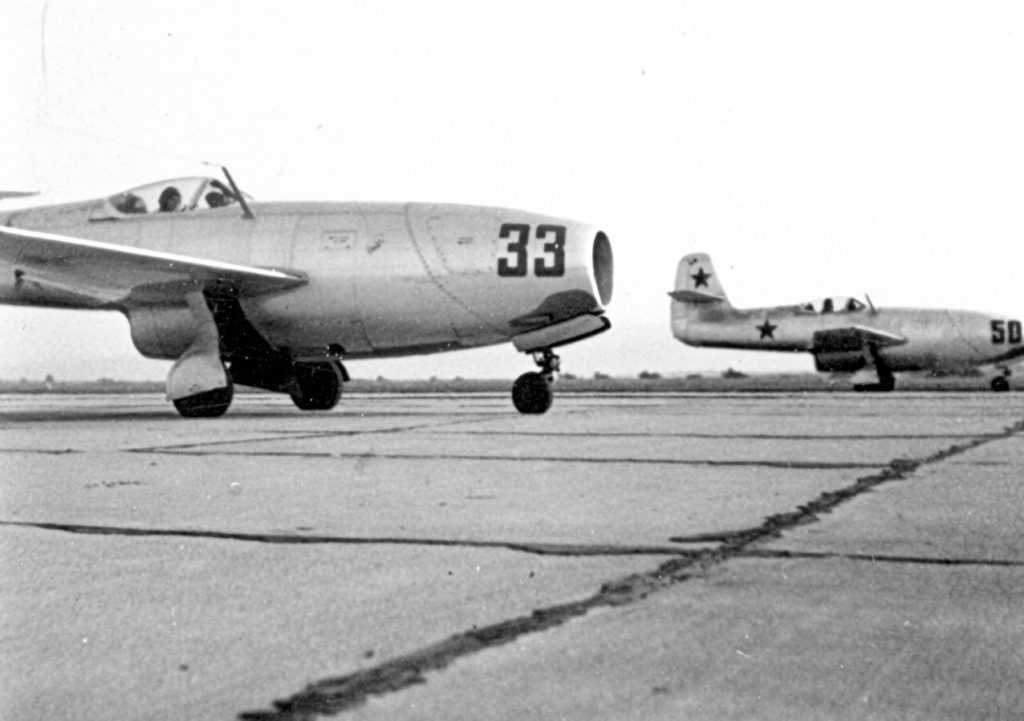
Museum and archival photographs of the Yak-23, each credited to its source and licence. Click any photo to enlarge.
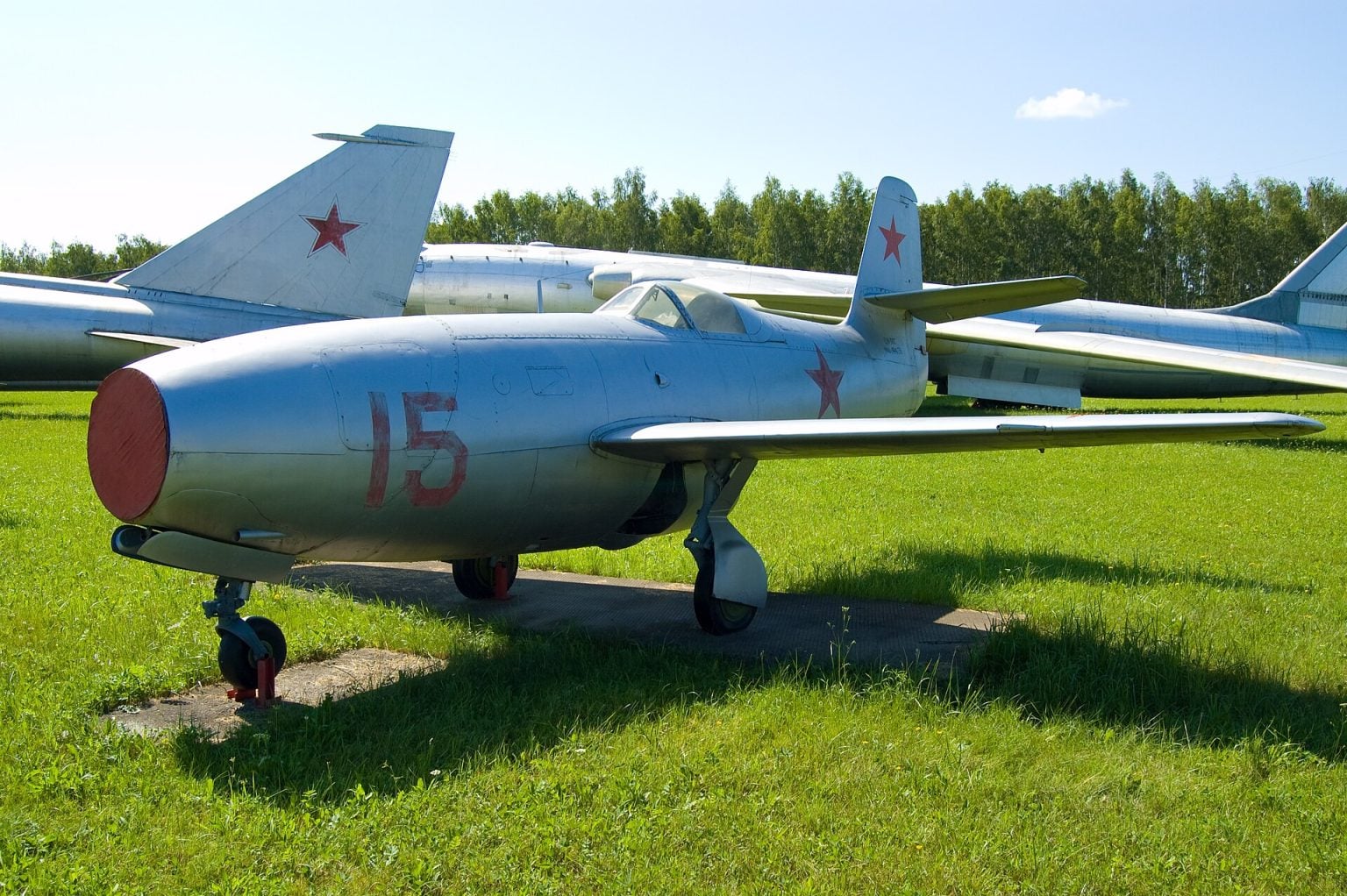
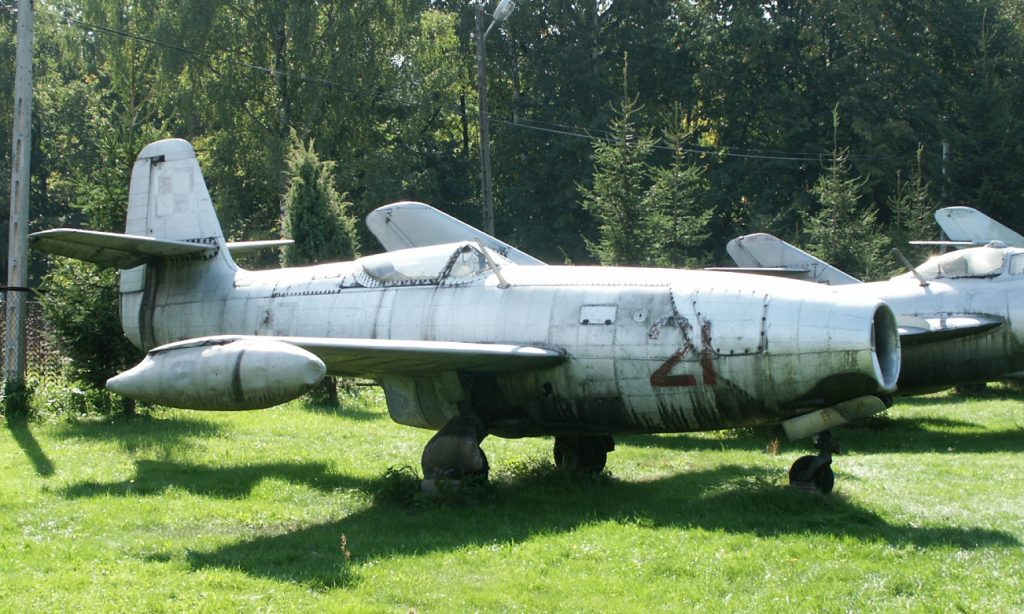
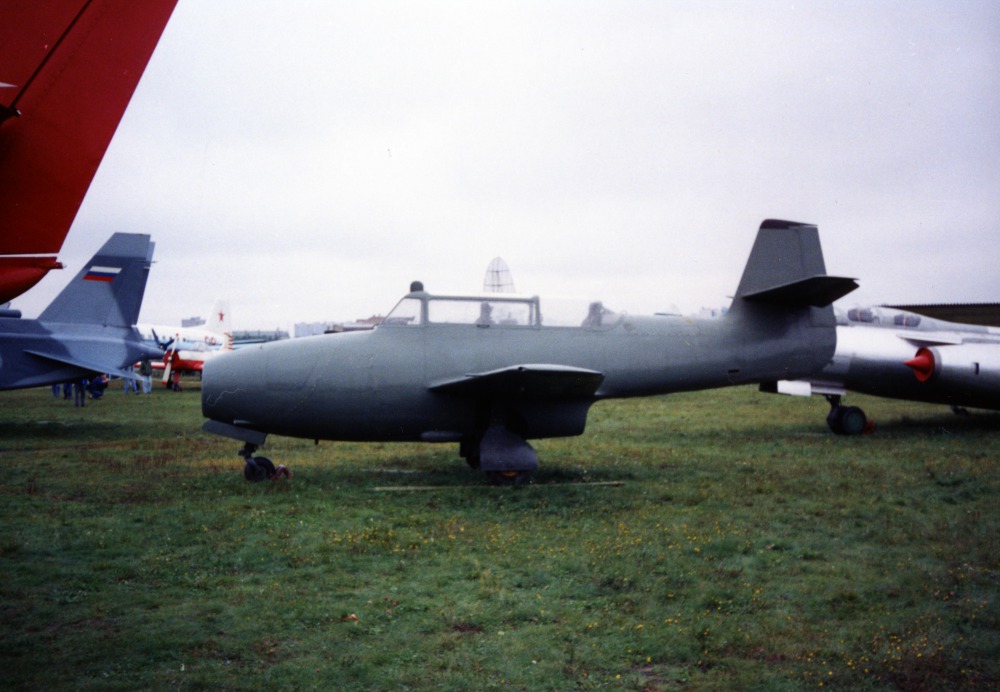
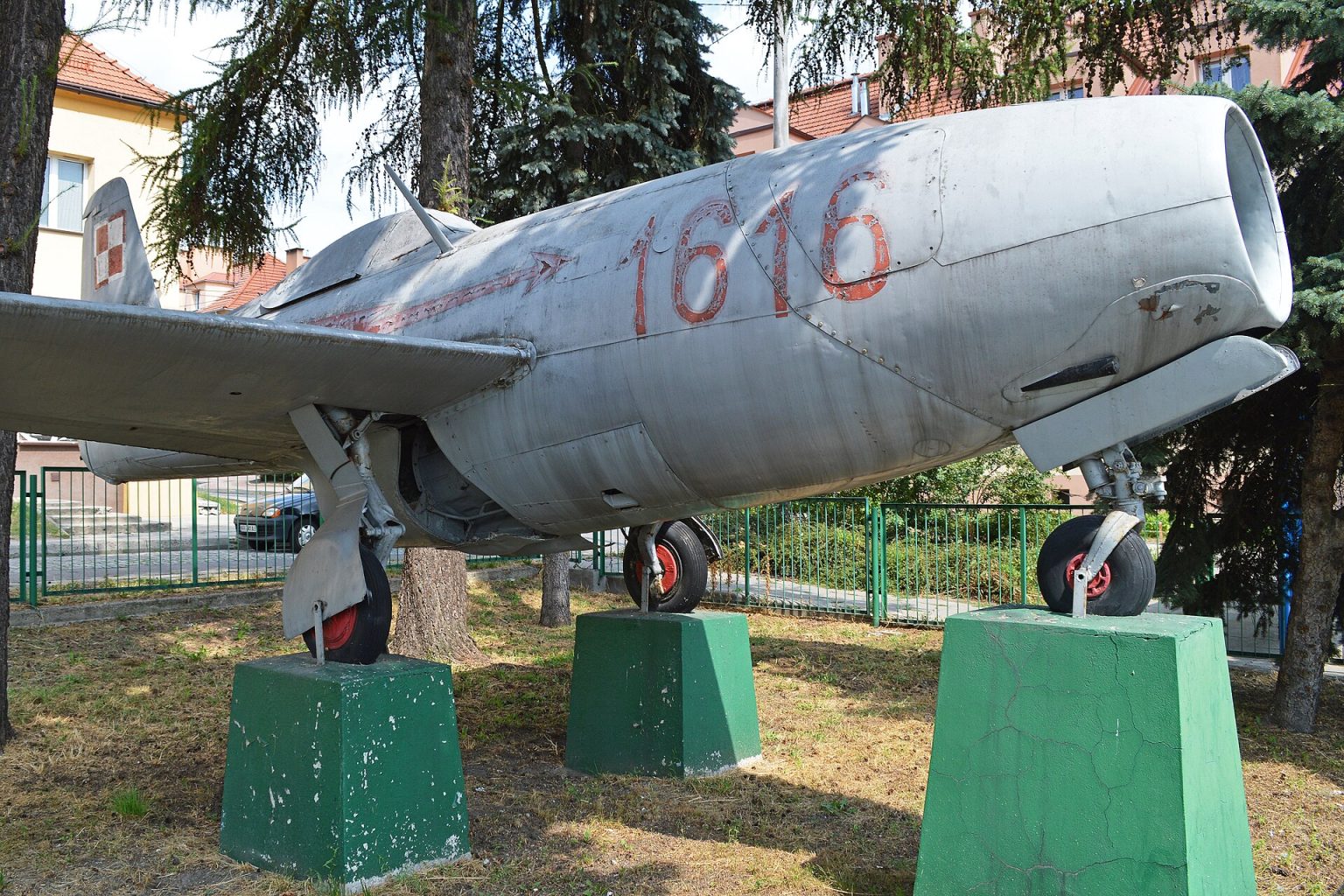
On Film
The Yakovlev Yak-23 on video: the light Soviet jet
A look at the Yakovlev Yak-23 — its pod-and-boom design, its place in early Soviet jet development and the surviving aircraft that keep it alive.
“Comintern Fodder | Yakovlev Yak-23” by Plane Encyclopedia (approx. 17,000 views at time of writing; running time ~15 minutes) — a documentary history of the Yak-23, its design and its service.
Operations Overview
Where the Yakovlev Yak-23 flew: an operator map
Designed in the Soviet Union and flown mainly by its Eastern European allies. Because the Soviet Union and Czechoslovakia no longer exist as states, the origin role is shown on modern Russia and the licence build on the modern Czech Republic. Hover or tap a country for detail.
Categories: Design & Soviet Air Force (shown on Russia, for the USSR) · Operators & Licence Production (Czechoslovakia’s S-101 shown on the Czech Republic, plus Poland, Romania, Bulgaria, Albania) · Surviving Airframes (incl. one restored to fly in the USA). Successor states stand in for the USSR and Czechoslovakia.
Service Record
The Yak-23’s record: a fine fighter, out of time
The Yak-23’s significance lies in its qualities as a light jet, its export career across the Eastern Bloc and its brush with Western intelligence — a fine fighter that arrived just too late.
Questions & Answers
Yakovlev Yak-23: your questions answered
Can I fly in a Yakovlev Yak-23?
No — there is no bookable Yak-23 flight experience, and MiGFlug does not offer one. The type was retired in the 1950s, and the very few survivors are museum aircraft, with at most one airworthy example flown only by its expert operators. If what you actually want is the real thing — strapping into a genuine military jet and flying it — you very much can do that today in other types. MiGFlug arranges flights in real fighter jets, including Soviet-designed aircraft, around the world. Start here: migflug.com/flights-prices.
Why is the Yakovlev Yak-23 historically important?
The Yak-23 was one of the best of the Soviet Union’s first generation of jet fighters — the last and finest of Yakovlev’s light, straight-wing “pod-and-boom” jets. It is historically significant both as a high point of that early design philosophy and as a marker of its end: it was overtaken almost immediately by the swept-wing MiG-15. It went on to serve widely across the Warsaw Pact and was famously evaluated in secret by the West.
Why was the Yak-23 replaced so quickly?
Timing. The Yak-23 was an excellent straight-wing fighter, but it entered service at almost the same moment as the swept-wing MiG-15. The swept wing allowed far higher speeds and altitudes, making it a generation ahead. Rather than keep two fighters, the Soviet Air Force concentrated on the superior MiG-15, and Yak-23 production ended around 1950 after roughly 310 aircraft. It was a case of a good aircraft arriving at exactly the wrong moment.
What engine did the Yak-23 use?
A single Klimov RD-500 turbojet, which was a Soviet reverse-engineered copy of the British Rolls-Royce Derwent. Britain sold a number of its latest jet engines, including the Derwent and the more powerful Nene, to the Soviet Union in 1946, and Soviet engineers copied them. The Derwent-derived RD-500 powered the Yak-23, while the Nene-derived RD-45 powered its rival the MiG-15 — so both first-generation Soviet jets relied on British engine technology.
Who operated the Yak-23?
The Yak-23 served with the Soviet Air Force and, more extensively, with the air forces of its Eastern European allies — Poland, Romania, Bulgaria and Albania. Czechoslovakia built the fighter under licence as the S-101. Its Soviet front-line career was short, but as an export and licence-built type it gave several young Warsaw Pact air forces their entry into the jet age.
Is it true a Yak-23 was flown by the United States?
In essence, yes, though the details are hazy. In 1953 a Romanian pilot defected, landing his Yak-23 in Yugoslavia, which had broken with Moscow. It is widely reported that the aircraft was quietly made available to the United States, which secretly evaluated it — repainting it in American markings and flight-testing it — before returning it. As with many Cold War intelligence stories, some details are disputed and the full record is incomplete, so it is best told with due caution.
How is the Yak-23 related to the Yak-15 and Yak-17?
They form a single family. The Yak-15 (1946) was one of the first Soviet jets, made by re-engining the piston Yak-3 fighter; the Yak-17 was an improved development; and the Yak-23 was the final, purpose-designed member of the line. All shared the straight wing and the “pod-and-boom” layout, with the engine in a fuselage pod and the tail on a boom. The Yak-23 refined the concept to its peak, just as swept wings were making it obsolete.
Was the Yakovlev Yak-23 a good aircraft?
Judged within its own generation, yes — it was excellent: light, nimble, a superb climber, easy to fly and simple to maintain, and genuinely dangerous in a close-in dogfight. Its problem was never quality but timing, arriving just as the swept wing rendered straight-winged jets obsolete. As the last and best of the light straight-wing Yak fighters, and a useful export across the Eastern Bloc, the Yak-23 was a fine aircraft that simply ran out of era.
Fly For Real
You can’t fly the Yak-23 — but these, you can
No Yak-23 is a bookable ride today. The urge behind it — to strap into a real military aircraft and actually fly — is very much still bookable. MiGFlug puts you in genuine fighters and warbirds, including Soviet-designed jets, around the world.
Fighter Jet Flights
Take the controls of a real ex-military jet with an experienced pilot.
MiG-29 Fulcrum
Ride a genuine Soviet-designed air-superiority fighter to the edge of space.
L-39 Albatros
The classic Eastern Bloc jet trainer — aerobatics and high-speed passes.
All flights are operated by MiGFlug’s vetted partners with professional pilots. Browse every option and current pricing at migflug.com/flights-prices. MiGFlug does not operate Yakovlev Yak-23 flights — no bookable example exists.
Related Aircraft
If the Yakovlev Yak-23 interests you, explore these
Sources & Further Reading
Where this Yakovlev Yak-23 history comes from
Note on figures: dimensions, performance and production numbers for the Yak-23 vary between sources, and are hedged here as approximate. Cost fields are listed as not reliably recorded because meaningful Soviet-era procurement cost data is not available. The 1953 Romanian defection and the reported Western evaluation are recounted as they are commonly told but with due caution, as some details are disputed. The Soviet Union and Czechoslovakia no longer exist as states; on the map, the origin role is shown on modern Russia and the licence build on the modern Czech Republic. A number of Yak-23s survive in museums, and at least one has flown again.