
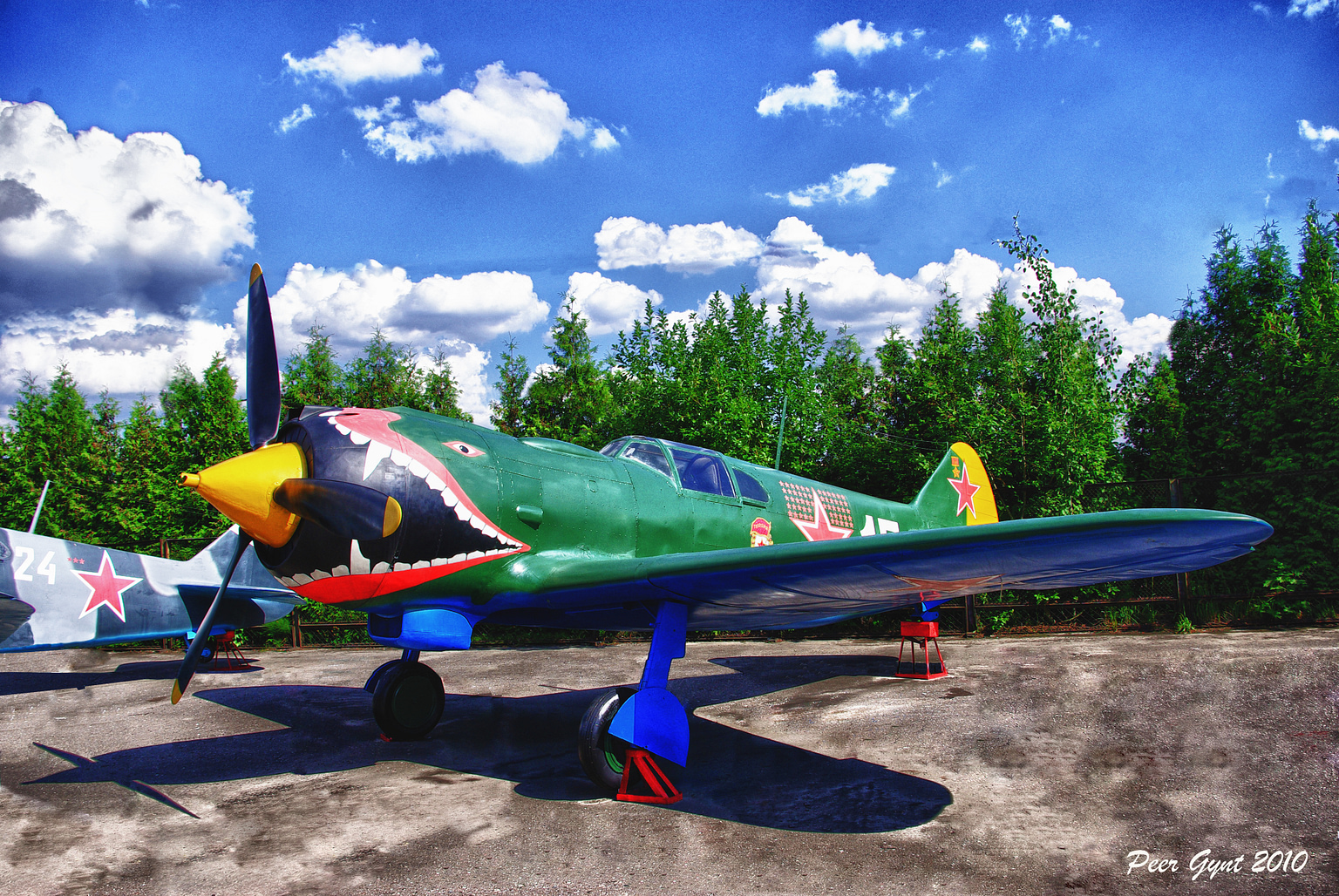
Lavochkin La-5
The wooden radial that clawed back the sky
A failing fighter re-engined in a hurry, built from glued wood while the USSR ran short of metal — and turned, at low altitude, into one of the deadliest dogfighters of the Eastern Front.
The Lavochkin La-5: the wooden fighter that clawed back the sky
In 1941 the Soviet Union’s newest fighter was a failure. The LaGG-3 was heavy, underpowered and so unloved that front-line pilots reworked its designers’ initials into a bitter joke — a “guaranteed varnished coffin.” Its design team, led by Semyon Lavochkin, was on the edge of losing its factory to rival bureaus. The fix they reached for was drastic: tear out the sleek but weak liquid-cooled inline engine and bolt on the fat, powerful Shvetsov M-82 radial instead.
It should not have worked — the M-82 was far wider than the slim LaGG fuselage — but with a redesigned cowling and careful ducting it did. Flown in early 1942 and rushed into production that May, the result was the La-5. It kept the LaGG’s cheap, non-strategic construction — a wooden airframe of resin-impregnated plywood, easy to build while the USSR was desperately short of aluminium — but now it had the power to fight. The type made its combat debut over Stalingrad in the autumn of 1942.
The definitive version, the fuel-injected La-5FN of 1943, produced around 1,850 hp and was a genuinely dangerous opponent below 3,000 metres — where most Eastern Front air combat happened. It was the mount of Ivan Kozhedub, the top-scoring Allied ace of the war, who claimed 62 victories (some accounts say 64) flying nothing but Lavochkins and was reportedly never shot down. Around 9,900 La-5s of all types were built before the refined all-metal La-7 took over the production lines.
01The Lavochkin La-5’s origins: how a radial engine rescued the doomed LaGG-3
By late 1941 the LaGG-3 was being cancelled in favour of Yakovlev fighters, and Lavochkin’s bureau faced extinction. The escape route had actually been explored by a colleague, Mikhail Gudkov, who had experimented with fitting the air-cooled M-82 radial to the LaGG airframe. Lavochkin’s team took the idea and made it work under enormous time pressure over the winter of 1941–42, grafting the broad radial onto the narrow wooden fuselage with a new cowling and cooling arrangement.
The gamble paid off spectacularly. The re-engined aircraft was faster, climbed better and, crucially, could absorb battle damage that would have downed a liquid-cooled fighter — a radial keeps running with cylinders shot away, where a single hit to a coolant line kills an inline engine. Stalin personally intervened to keep Lavochkin’s factory in business once the prototype’s results were known. The type was designated La-5 in the summer of 1942.
The Lavochkin La-5: what made it special
A radial transplant that saved a failing fighter
The La-5 was born by replacing the LaGG-3’s weak liquid-cooled inline with the fat Shvetsov M-82 14-cylinder radial. The engine was far wider than the fuselage, so engineers wrapped it in a redesigned cowling and cooling duct. The payoff was more power, better climb, and an air-cooled engine that could keep flying with cylinders shot away.
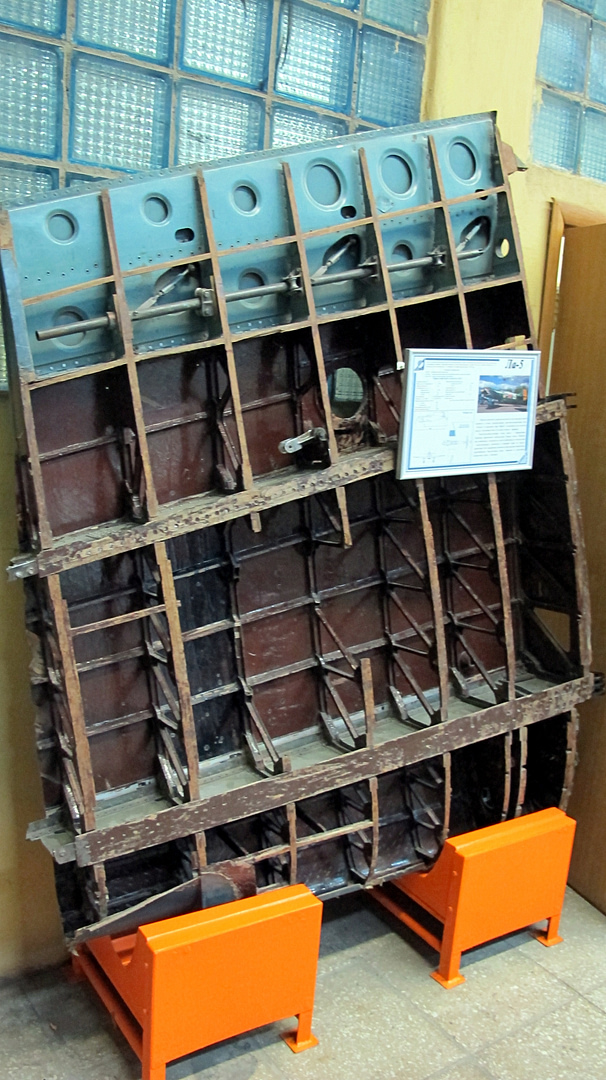
Built from wood, glue and ‘delta-drevesina’
With aluminium in desperately short supply, the La-5 was built largely of wood — plywood skins over a wooden frame, reinforced with resin-impregnated “delta” laminate. It was heavier and rougher than a metal fighter, but cheap, quick to build and used no strategic metals — ideal for wartime mass production. Later La-5FNs added some metal in the wing.
The La-5FN: direct injection and a low-altitude killer
The definitive La-5FN of 1943 used the ASh-82FN with direct fuel injection, giving roughly 1,850 hp. Below about 3,000 metres — where most Eastern Front fighting took place — it could out-turn and out-accelerate the Focke-Wulf Fw 190, a fact the Germans confirmed for themselves when they captured and tested one.
02The Lavochkin La-5’s construction: why the Soviets built a front-line fighter from wood
The La-5 inherited the LaGG-3’s wooden airframe, and that was a feature, not a compromise. The USSR’s aluminium supply was strained to breaking point, much of its metals industry overrun or relocated east. Wood — birch plywood, pine and a phenol-resin-impregnated laminate the Soviets called delta-drevesina (delta-wood) — was plentiful, needed no strategic alloys, and could be worked by a semi-skilled wartime workforce in dispersed factories.
The cost was weight and a rough surface finish that shaved a little off top speed, and early aircraft suffered quality problems as production was rushed. But the trade was overwhelmingly worth it: the USSR could build La-5s in enormous numbers exactly when it needed them most. Only with the later La-7 did metal wing spars replace the wooden structure, saving weight and improving performance.
03The Lavochkin La-5 versus the Fw 190: what the Germans learned at Rechlin
In August 1944 a largely intact La-5FN fell into German hands and was flown to the Rechlin test centre, where test pilot Hans-Werner Lerche evaluated it that autumn. His findings were revealing. The La-5FN was excellent at low altitude: below about 3,000 metres it accelerated hard and could out-turn the Fw 190, though the lighter Bf 109 could still out-turn the Lavochkin.
Its weaknesses were just as clear: top speed stayed below the German fighters at every altitude (Rechlin measured only about 520 km/h at sea level on their test aircraft), performance fell away higher up, and endurance was very short — roughly 40 minutes at full power. Lerche’s advice to Luftwaffe pilots was blunt: don’t get into a low, slow turning fight with an La-5 — use height and dive-and-zoom tactics instead.
The Lavochkin La-5: full specifications
Airframe & Performance
- 全体人员
- 1
- 长度
- 8.67 m
- 翼展
- 9.80 m
- 高度
- 2.54 m
- 空重
- ~2,605 kg
- Max takeoff weight
- ~3,400 kg
- Max speed
- ~648 km/h (La-5FN, ~6,000 m)
- Max speed (low level)
- ~580 km/h (early La-5)
- 设备天花板
- ~11,000 m
- 攀升速率
- ~1,000 m/min
- 范围
- ~765 km
Propulsion, Armament & Cost
- 引擎
- Shvetsov ASh-82FN 14-cyl radial
- Power
- ~1,850 hp (FN) · ~1,700 hp (early)
- 武器
- 2 × 20 mm ShVAK cannon
- Bomb load
- up to ~200 kg (some variants)
- First flight
- early 1942
- Built
- ~9,900 (La-5 family, 1942–1944)
- Unit cost
- No reliable figure (see note)
- Cost per flight hour
- No reliable public figure (period estimate)
04The Lavochkin La-5’s operating costs: why no reliable price exists
The La-5 was a Soviet state product, built and consumed inside a planned war economy and never sold on any open market, so a meaningful flyaway price in dollars simply does not exist. Wartime Soviet aircraft were costed internally in rubles, and those figures fell sharply as production scaled up — but no reliable, directly convertible La-5 unit cost or cost-per-flight-hour appears in open sources, and any precise number should be treated with suspicion.
What is clear is the design’s economic logic. Its wooden construction was deliberately cheap: it used no scarce aluminium, could be built in dispersed factories by a semi-skilled workforce, and let the USSR mass-produce a competitive fighter at a moment when metal and skilled labour were both critically short. The La-5’s real cost advantage was strategic, not a line on a price list.
The Lavochkin La-5: from failed fighter to Kozhedub’s mount
A fighter in trouble
The underpowered LaGG-3 is being phased out; Semyon Lavochkin’s design bureau faces losing its factory.
The radial fix flies
Lavochkin’s team grafts the fat Shvetsov M-82 radial onto the wooden LaGG airframe; the prototype flies in early 1942.
Into production
Production is approved in May and the type is named La-5, kept cheap and wooden to ease mass production.
Debut over Stalingrad
The La-5 enters combat over Stalingrad in the autumn, giving Soviet pilots a fighter that can finally match the Luftwaffe at low level.
The La-5FN and Kursk
The fuel-injected La-5FN (~1,850 hp) reaches the front and fights through the vast air battles over Kursk.
Kozhedub’s rise
Ivan Kozhedub, flying an La-5FN, scores eight kills in seven days — on his way to becoming the top Allied ace of the war.
Captured and dissected
A near-intact La-5FN is captured and evaluated at Rechlin, where the Germans confirm its dangerous low-altitude performance.
To Berlin — and a jet kill
La-5s and their La-7 successors fight over Germany; Kozhedub downs a Messerschmitt Me 262 jet in February 1945.
Superseded by the La-7
La-5 production ends in 1944 as the refined La-7 takes over; Czechoslovakia flies Lavochkin fighters into the post-war years.
From the cockpit: twelve La-5 stories
The fighter nobody wanted
Pilots reworked the LaGG-3’s initials into “guaranteed varnished coffin.”
Read the full story
A radial in a hurry
Engineers grafted a fat air-cooled radial onto a slim wooden fuselage over one winter.
Read the full story
A fighter made of wood
With aluminium scarce, the La-5 was built from plywood and resin-impregnated laminate.
Read the full story
Baptism over the Volga
The La-5 first fought over Stalingrad in the autumn of 1942.
Read the full story
Direct injection changes everything
The fuel-injected La-5FN of 1943 turned a good fighter into a dangerous one.
Read the full story
The great air battle
La-5s fought through the enormous air battles over the Kursk salient.
Read the full story
Kozhedub: 62 kills, never shot down
The Allies’ top-scoring ace flew nothing but Lavochkin fighters.
Read the full story
The farmer’s fighter
A collective farmer paid for one of Kozhedub’s La-5FNs.
Read the full story
The Germans take one apart
A captured La-5FN was flown and tested at the Luftwaffe’s Rechlin centre.
Read the full story
Where the La-5 ruled
Its strength was the low, slow turning fight the Germans were told to avoid.
Read the full story
A piston fighter downs a Me 262
Flying a Lavochkin, Kozhedub shot down one of the world’s first jet fighters.
Read the full story
From La-5 to La-7
The La-5 evolved directly into the war’s finest Soviet piston fighter.
Read the full story
The Lavochkin La-5 in pictures
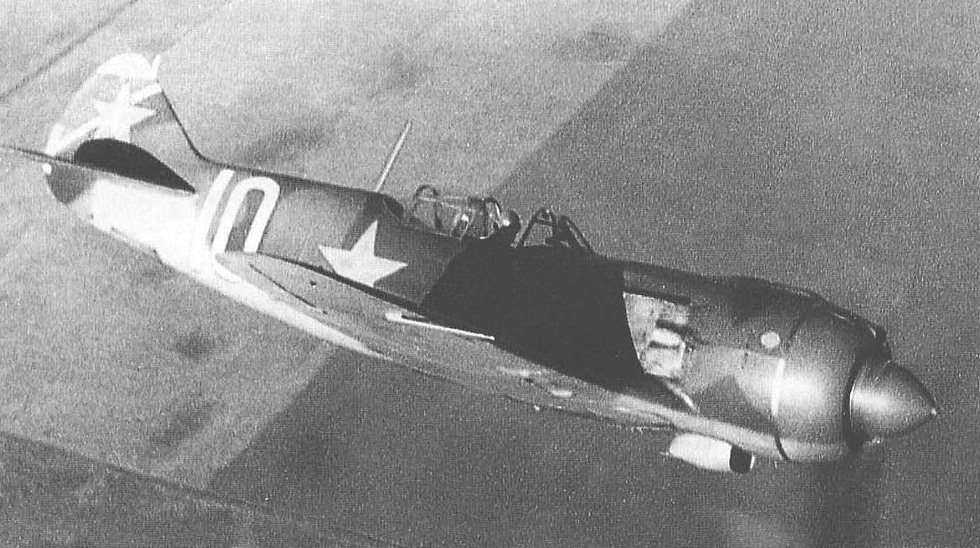
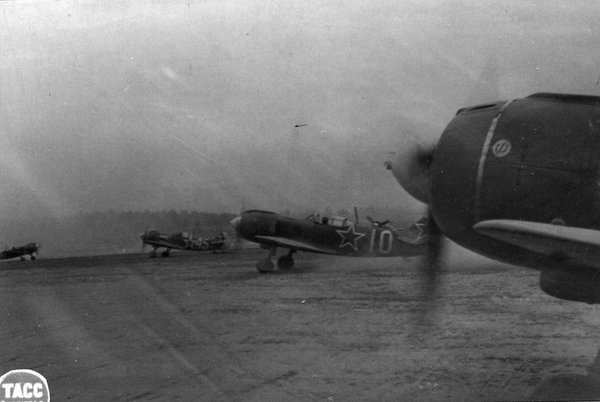
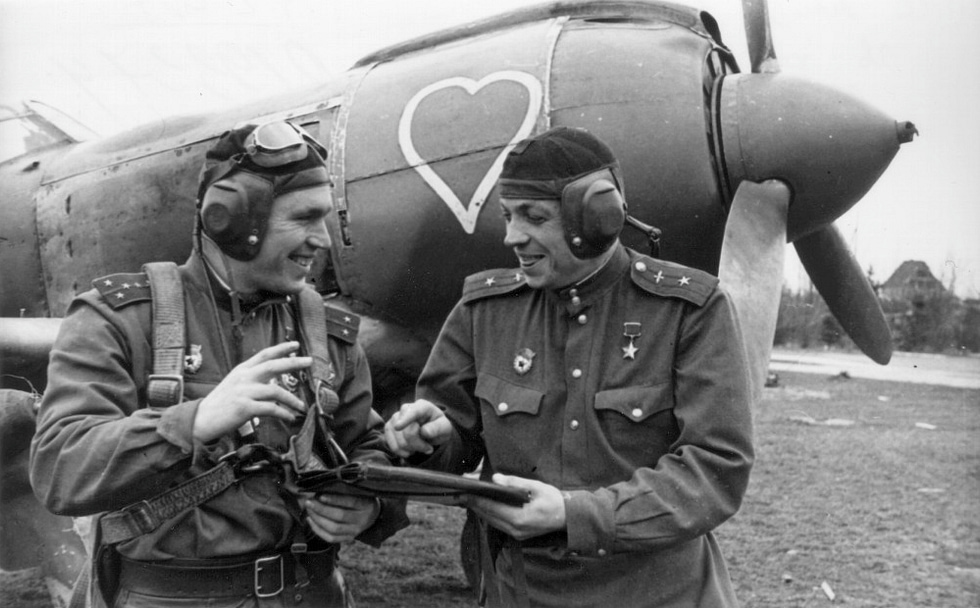
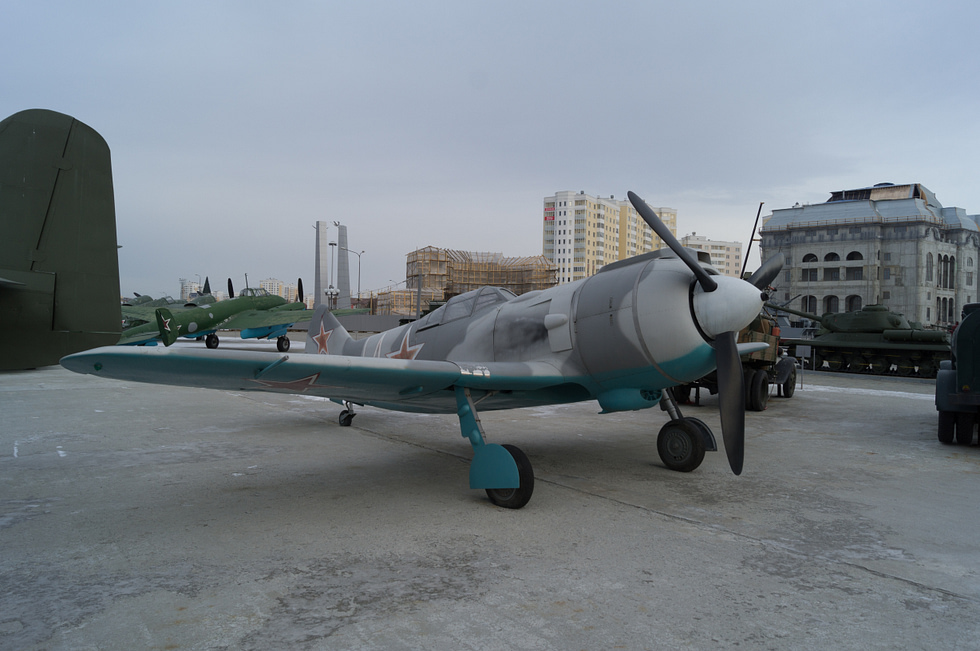
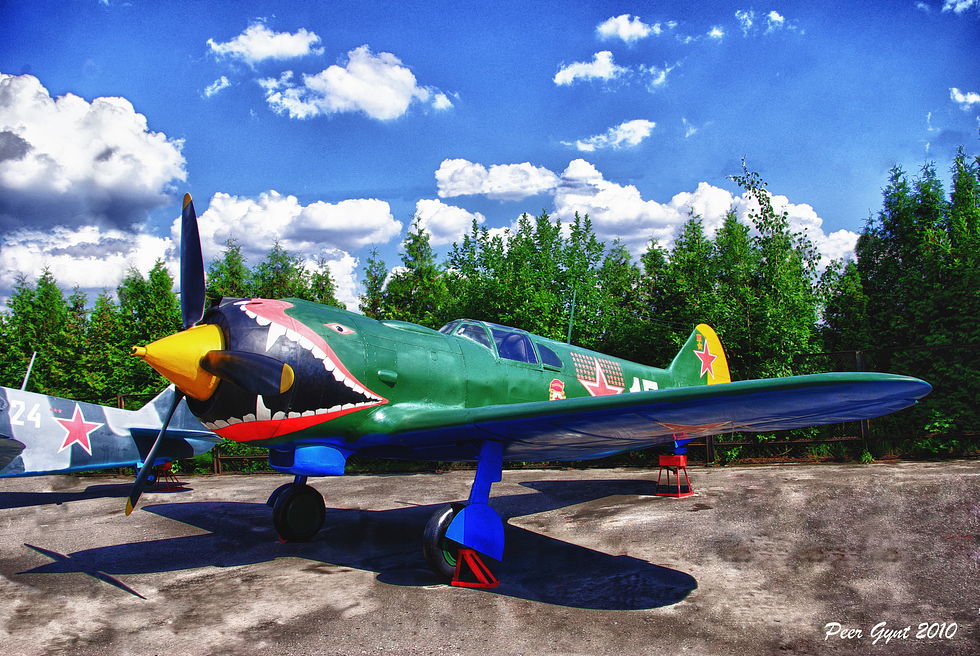
The Lavochkin La-5 in motion
AllthingsWW2: La-5 — The Soviet Game Changer. A concise, well-sourced history of how the La-5 grew out of the LaGG-3 and became a front-line fighter — around 279,000 views.
Where the Lavochkin La-5 flew
The Lavochkin La-5: the record that defines it
The La-5’s legacy is not a tidy kill tally but a shift in the balance of the Eastern Front air war. From its debut over Stalingrad through Kursk to Berlin, it gave Soviet pilots a fighter that could finally beat the Luftwaffe at low altitude — and it was the mount of the highest-scoring Allied ace of the entire war.
Compare the combat record of every military aircraft. Figures as of August 2026.
Everything people ask about the Lavochkin La-5
Can I fly in a Lavochkin La-5?
What was the Lavochkin La-5?
How fast was the La-5?
Was the La-5 really made of wood?
Who was the most famous La-5 pilot?
How many La-5s were built?
What is the difference between the La-5 and the La-7?
Are any La-5s left today?
You can’t fly the Lavochkin La-5.
These, you can.
Some legends only live in museums — others are fuelled and waiting. MiGFlug has put civilians in real military jet cockpits since 2004.
 Fly the L-39 AlbatrosThe world’s most-flown jet trainer — aerobatics included
 Fly the F-104 Starfighter“The missile with a man in it”
 Fly the MiG-21The Cold War’s most-produced jet
 驾驶T-33流星战斗机America’s first jet trainer
 Fly the DH VampireA piece of early jet history
 Fly the S.211Agile Italian jet trainer
 Fly the MB-326The classic Aermacchi jet
 Fly the MiG-15The Soviet legend of the Korean War
Continue the tour
Every fact, checked
- VVS Air War — Development of the La-5Detailed account of the LaGG-3 conversion, variants and production dates.
- Planes in Profile — captured La-5FN “White 21”The 1944 Rechlin evaluation and Hans-Werner Lerche’s test findings.
- HistoryNet — interview with Ivan KozhedubPrimary-source detail on Kozhedub’s Lavochkins, his first combat and the Me 262 kill.
- Military Factory — Lavochkin La-5Dimensions, weights and performance figures for the type.
- WW2 Weapons — Lavochkin La-5 / La-7Production breakdown, armament and combat-debut history.
- War History Online — development of the La-5Narrative of the type’s origins and wartime service.
- Military Machine — La-5FNSpecifications and combat record of the definitive La-5FN.