
Aermacchi MB-326
Macchi · Impala · Xavante
Ermanno Bazzocchi’s clean little Italian jet became one of the West’s best-selling trainers — docile enough for cadets, tough enough to go to war, and built under licence on three continents. Retired from front-line duty, it now flies as an affordable warbird — and MiGFlug will strap you into the front seat of one in Italy, its homeland.
The trainer that conquered three continents
The Aermacchi MB-326 was an Italian jet trainer and light-attack aircraft designed by Ermanno Bazzocchi, chief engineer at Aeronautica Macchi — the designation reads “Macchi–Bazzocchi 326.” Conceived as a private venture in the mid-1950s to give post-war Italy an indigenous jet trainer, it beat the heavier Fiat G.80/G.82 for the Italian order. The first prototype flew on 10 December 1957 at Milano-Malpensa, powered by a single British Rolls-Royce Viper turbojet, and the type entered Italian service in February 1962.
Few trainers ever earned their keep like the MB-326. Bazzocchi’s clean little Macchi did exactly what a trainer should — it was docile, cheap to run and forgiving — yet it was tough enough to grow teeth. That combination made it a global bestseller: over a dozen air forces bought it, and three nations on three continents built it under licence, from CAC in Australia na EMBRAER in Brazil na Atlas in South Africa.
In its hardest incarnation, the South African Impala, it went to war over Angola and Namibia, flying close air support at treetop height throughout the Border War. Its DNA lived on in the MB-339 that Italy’s Frecce Tricolori still fly today. Retired from front-line duty, the MB-326 now leads a second life as a lively, affordable warbird — and MiGFlug will put you in the front seat of one in Italy, its homeland.
01The MB-326’s numbers: how a cheap Italian trainer became a global bestseller
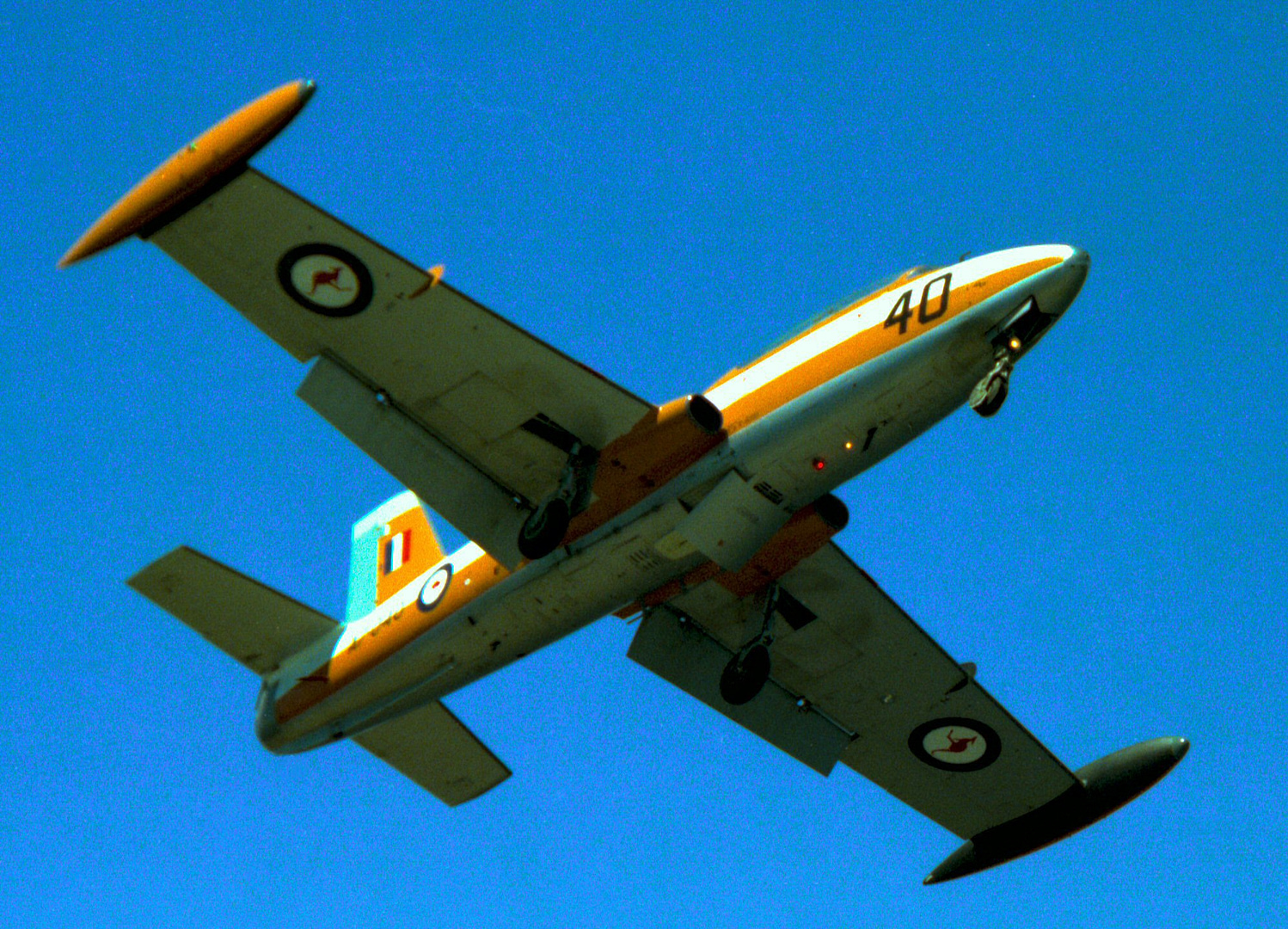
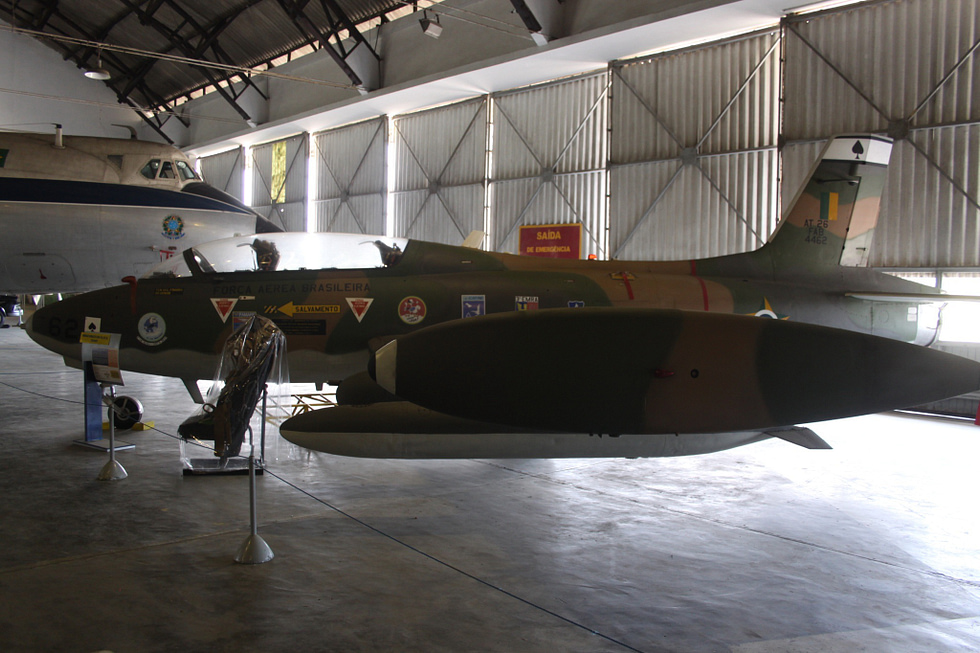
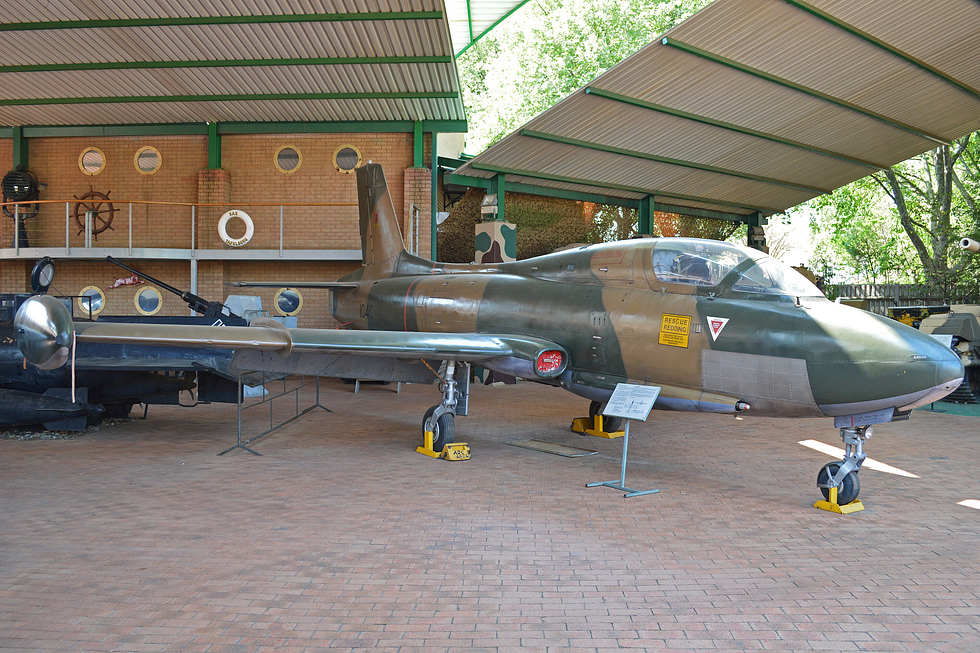
Roughly 761 MB-326s were built according to flugzeuginfo.net, though MiGFlug and other sources round to about 800 across all sub-variants. The decisive fact is that production was shared across the world: Italy’s Aermacchi, Commonwealth Aircraft Corporation in Australia (the CA-30 / MB-326H “Macchi”), Atlas Aircraft Corporation in South Africa (the Impala Mk I trainer and Mk II single-seat attack) and EMBRAER in Brazil (the EMB-326 / AT-26 Xavante) all turned out the type.
A single, robust Viper engine, benign handling and a strong airframe let small air forces buy one type that could both teach cadets and, when needed, drop bombs. That is exactly why it spread across Europe, Africa, South America, the Middle East and Australasia — and why so many operators kept it for decades.
Co dělá MB-326 výjimečným
Straight wing with tip tanks
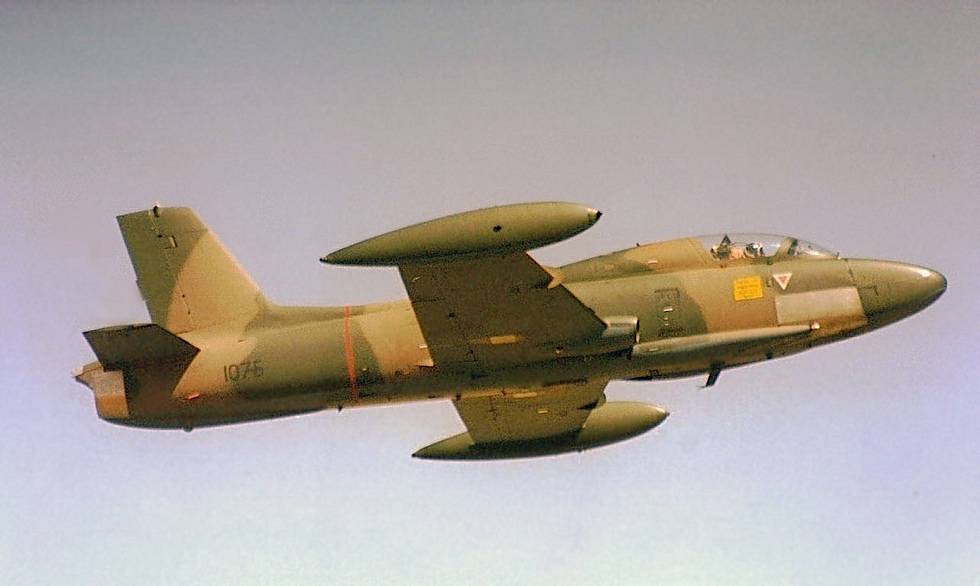
A simple, unswept wing gave the MB-326 benign low-speed handling ideal for ab-initio jet training, while permanent wingtip fuel tanks stretched range without cluttering the hardpoints. They also gave the Macchi its instantly recognisable silhouette — clean, honest and cheap to maintain, exactly what export customers wanted.
The Rolls-Royce Viper heart
A single, robust Rolls-Royce Viper turbojet made the MB-326 easy to maintain and rugged in austere conditions — a key reason so many smaller air forces chose it. Early trainers used the ~15 kN Viper 11; armed and MB-326K models carried the beefier Viper 20/632 at around 17.8 kN.
A strong, adaptable airframe
The structure was stout enough to be developed from a gentle trainer into a genuine attack platform: up to six underwing hardpoints for about 1,800 kg of bombs, rockets, gun pods and AS.12 missiles, culminating in the single-seat MB-326K with two built-in 30 mm DEFA cannon.
02The MB-326’s Viper: one simple engine, endless mileage
The Rolls-Royce (Armstrong Siddeley) Viper made the MB-326 what it was: simple, reliable and easy to feed. The same engine family powered gentle training sorties and low-level attack runs alike, from the ~15 kN Viper 11 in early trainers to the more powerful Viper 20/632 in armed and K models. For budget-minded air forces, a rugged single-engine trainer that could be kept flying from a rough strip was worth more than raw performance — and the Viper delivered exactly that.
03From trainer to predator: the single-seat MB-326K
Aermacchi turned the docile trainer into a dedicated attacker. The MB-326K deleted the second seat, added a strengthened airframe and a more powerful Viper, and built in two 30 mm DEFA cannon plus six hardpoints for roughly 1,800 kg of stores. It gave budget-minded air forces a genuine light-strike jet on a trainer’s running costs — the same philosophy that made the South African Atlas Impala Mk II such an effective bush-war aircraft.
Full MB-326 specifications
Airframe & Performance
- Posádka
- 2 (tandem) · 1 in MB-326K
- Délka
- ~10.7 m
- Rozpětí křídel
- ~10.85 m over tip tanks
- Výška
- ~3.72 m
- Max speed
- ~870 km/h · subsonic (806–890)
- Servisní strop
- ~12,500 m
- Rozsah
- ~1,800–1,850 km
- First flight
- 10 December 1957
Propulsion & Systems
- Motor
- 1 × Rolls-Royce Viper turbojet
- Tah
- ~15 kN (Viper 11) / ~17.8 kN (Viper 20/632)
- Cannon (K)
- 2 × 30 mm DEFA
- Závěsné body
- Up to 6 · ~1,800 kg stores
- Entered service
- February 1962 (Italy)
- Built
- ~761 (some sources ~800)
- Licence-built by
- CAC, Atlas, EMBRAER
- Unit cost
- No reliable public figure
04The MB-326’s cost: low price was the whole point
Low acquisition and operating cost was a core selling point of the MB-326 — it is precisely what let a dozen-plus air forces afford it and three nations build it under licence. But firm public dollar figures do not reliably exist: prices varied by variant, year, licence arrangement and buyer, and Italian, Australian, Brazilian and South African production all had different economics. Treat any specific unit-cost or cost-per-hour claim with caution. What is certain is the comparison — the Macchi was deliberately cheap to buy and cheap to run, which is exactly why it sold and soldiered on for so long.
Fifty years of the MB-326
Private venture begins
Ermanno Bazzocchi starts the MB-326 as an Aermacchi private-venture jet trainer for post-war Italy.
First flight
The prototype flies at Milano-Malpensa on Rolls-Royce Viper power, with test pilot Guido Carestiato.
Altitude record
An early MB-326 reportedly sets a notable altitude figure (~15,489 m) as production ramps up.
Enters Italian service
The MB-326 becomes the Italian Air Force’s standard jet trainer.
The CAC Macchi
Commonwealth Aircraft Corporation begins Australian licence production as the CA-30 / MB-326H “Macchi.”
Border War era opens
The conflict begins in which South African Atlas Impalas will later see heavy close-air-support use.
Brazil’s Xavante
EMBRAER secures the Brazilian licence and builds the EMB-326 / AT-26 Xavante, launching the company as a serious aircraft builder.
The single-seat K
The MB-326K light-attack variant, with strengthened airframe and two 30 mm cannon, enters production and service.
Retirement and second life
Withdrawn from front-line service (SAAF Impala retired ~2005); survivors pass into museums and the warbird circuit as the MB-339 carries the lineage on.
From the flight line: twelve MB-326 stories
The trainer that conquered the world
Sold to a dozen-plus air forces across five continents.
Read the full story
The CAC Macchi
Built Down Under, flown for decades.
Read the full story
The Atlas Impala
An Italian jet made African.
Read the full story
Impalas over the bush
Combat at treetop height over Angola and Namibia.
Read the full story
The EMBRAER Xavante
South America’s Macchi.
Read the full story
Xavantes in 1982
A trainer goes to war again.
Read the full story
The MB-326K predator
Single-seat and hard-hitting.
Read the full story
Grandfather of the Frecce jet
A common myth, corrected.
Read the full story
Second life on the airshow circuit
Still flying, still a crowd favourite.
Read the full story
The Viper heart
One engine, endless mileage.
Read the full story
Tip tanks and a straight wing
Simplicity that sells.
Read the full story
Fly the Macchi in Italy
Front seat, homeland skies.
Read the full story
The MB-326 in pictures
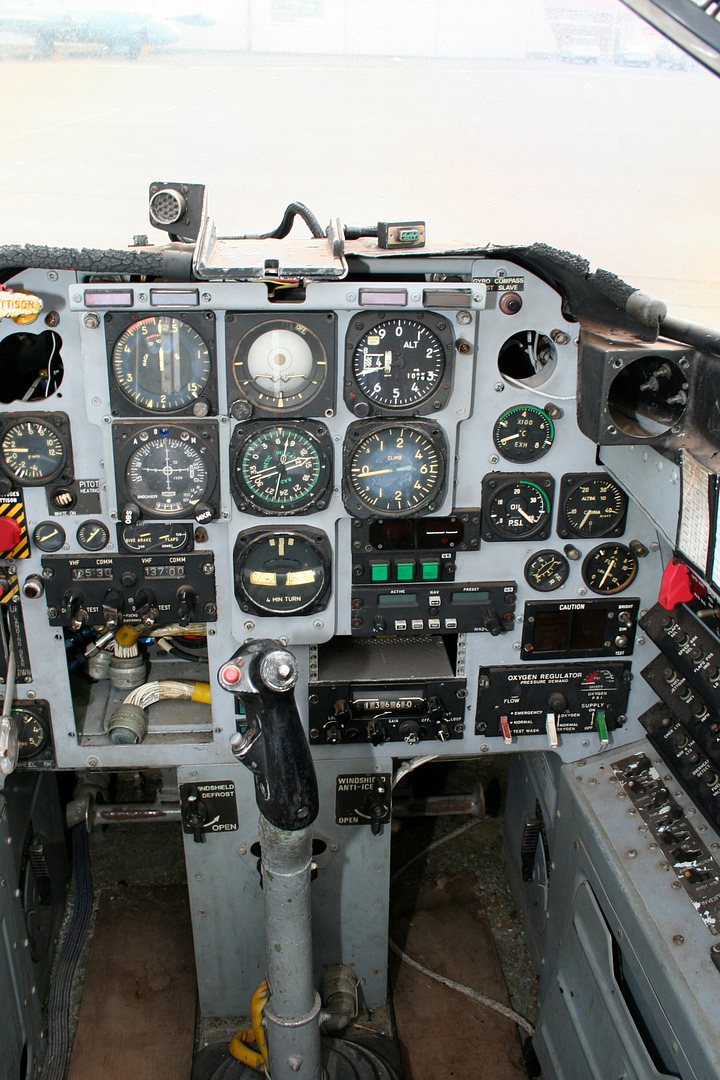
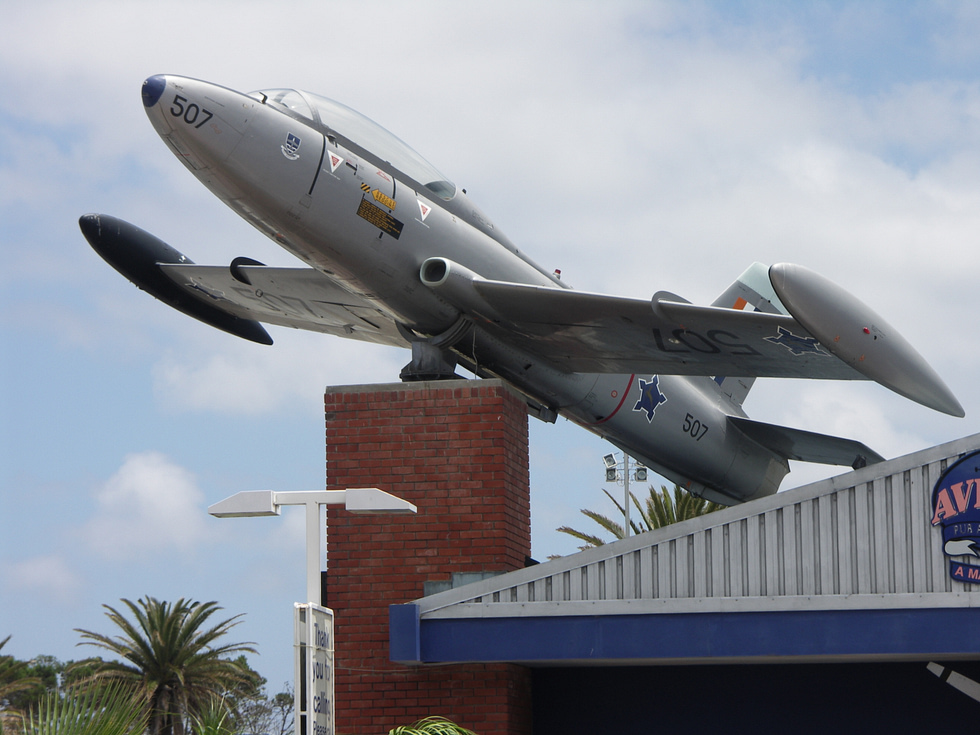
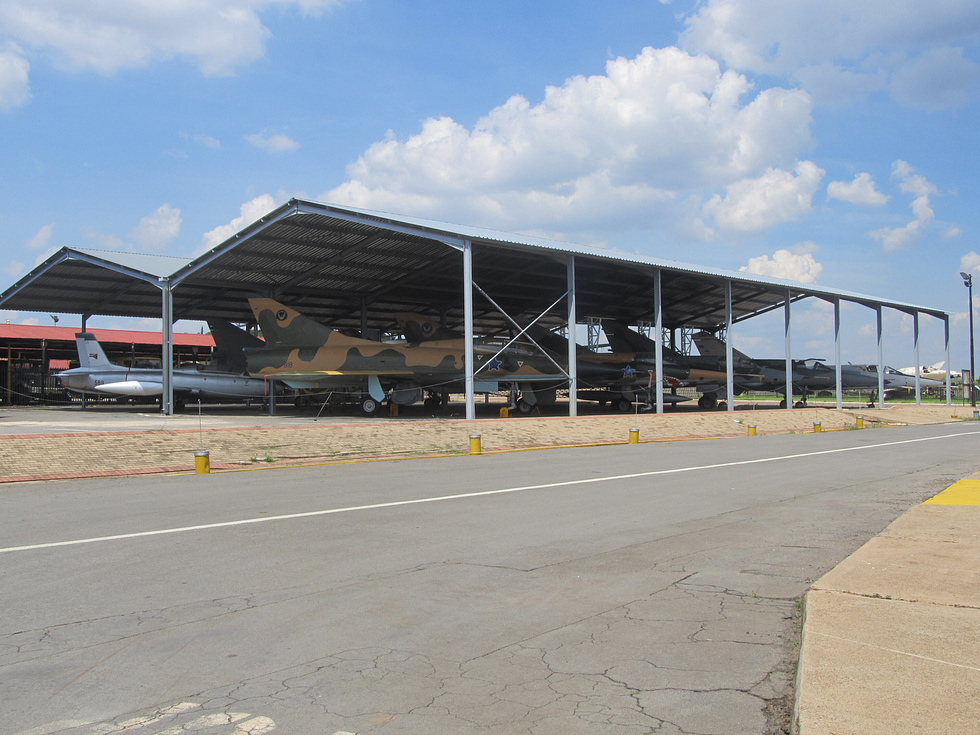
The MB-326 in motion
Flying MB-326 and Impala footage is on the way.
The MB-326 in motion
Weapon Detective — one of the most-watched MB-326 films on YouTube.
Where the MB-326 flew
The little trainer that went to war
The MB-326’s combat record belongs mostly to the South African Atlas Impala, which flew close air support, armed reconnaissance and reportedly helicopter-interception sorties throughout the Border War (c. 1966–1989) over Angola and Namibia. Argentine EMBRAER Xavantes were deployed during the 1982 Falklands/Malvinas period, and other operators used the type in regional conflicts. Treat specific sortie and kill claims cautiously — open sources are inconsistent.
Compare the combat record of every military aircraft. Figures as of July 2026.
Everything people ask about the MB-326
Can I fly in an MB-326?
Is the MB-326 fast?
Is it supersonic?
Is it still flyable?
Was it really licence-built abroad?
How many MB-326s were built?
What is the Impala’s relation to the MB-326?
What engine does it use?
Vy can actually fly the MB-326.
Pick your cockpit.
Some legends only live in museums — others are fuelled and waiting. MiGFlug has put civilians in real military jet cockpits since 2004.
 Fly the L-39 AlbatrosThe world’s most-flown jet trainer — aerobatics included
 Fly the F-104 Starfighter“The missile with a man in it”
 Fly the MiG-21The Cold War’s most-produced jet
 Leťte s T-33 Shooting StarAmerica’s first jet trainer
 Fly the DH VampireA piece of early jet history
 Fly the S.211Agile Italian jet trainer
 Fly the MB-326The classic Aermacchi jet
 Fly the MiG-15The Soviet legend of the Korean War
Continue the tour
Every fact, checked
- MiGFlug — MB-326 flight experienceThe booking page for civilian MB-326 flights from Reggio Emilia, Italy.
- flugzeuginfo.net — MB.326 technical dataSpecifications and the ~761-built production figure.
- MilitaryFactory — Aermacchi MB.326Development history, variants and operator overview.
- Vintage Aviation NewsFirst flight of the MB-326 and the licence-production story.
- globalmilitary.net — MB-326KAttack-variant specifications and 2026 operator status.
- Sea Power Centre (RAN)The CAC Aermacchi MB-326H “Macchi” in Australian service.
- Aviation Heritage Museum WAThe RAAF Macchi MB-326H — history and preservation.