
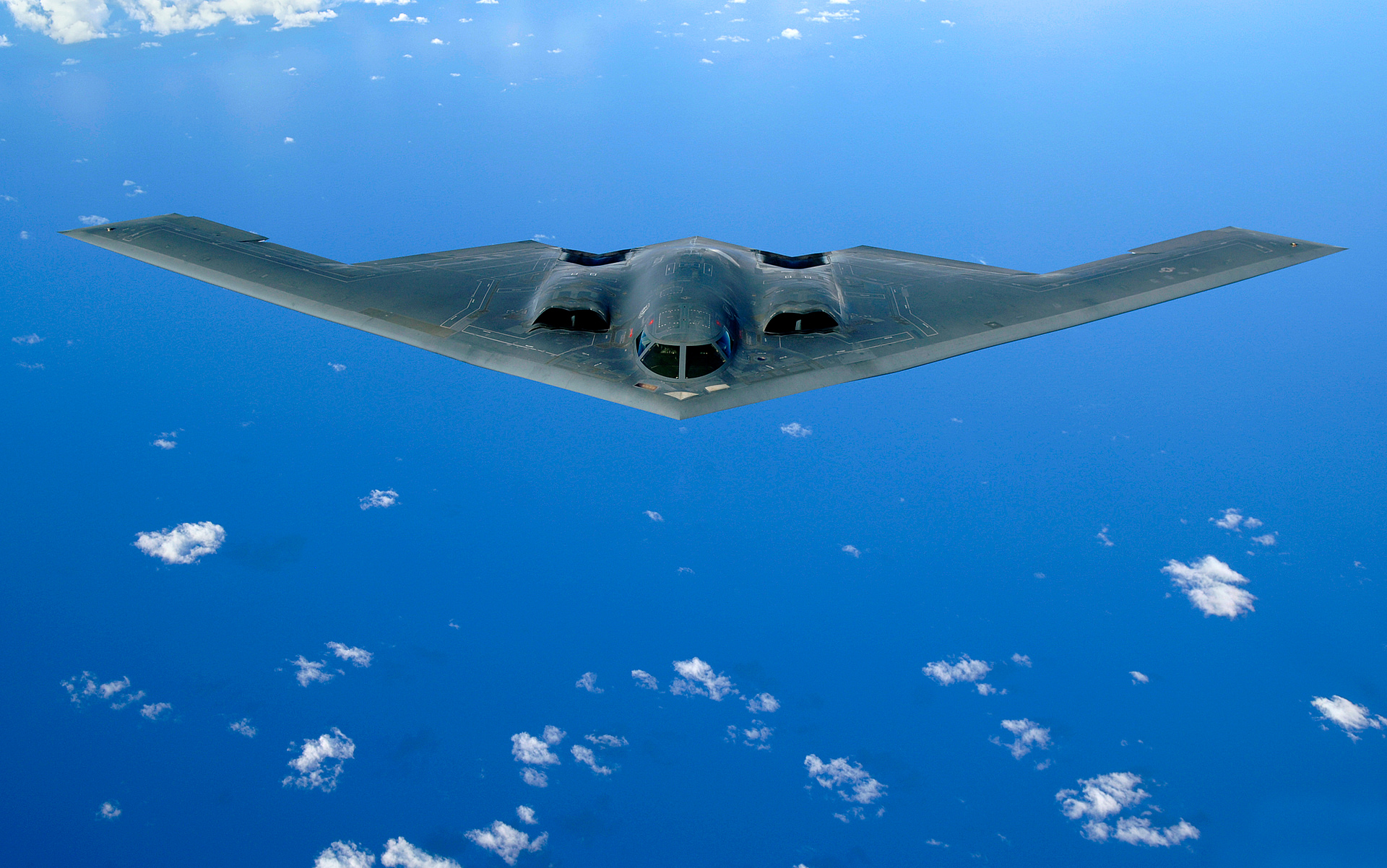
Northrop Grumman B-2
“Spirit”
The stealth flying wing that gave the United States a way to strike anywhere on Earth from the American heartland — the most expensive aircraft ever built, and for a quarter-century the only bomber that could slip through modern air defences unseen.
A bomber the radar cannot see
The B-2 Spirit began as an answer to a Cold-War problem: by the late 1970s Soviet air defences had grown so dense that even fast, high-flying bombers could no longer be sure of reaching their targets. The United States needed an aircraft that could get through not by outrunning the radar, but by being nearly invisible to it. In 1981 the US Air Force awarded Northrop the contract for the Advanced Technology Bomber (ATB) — a black programme so secret that its very shape was classified for years.
The shape, when it was finally rolled out in 1988, was startling: a smooth, tailless flying wing, all leading edges and blended curves, with no vertical surfaces for radar to bounce off. It was also a homecoming. Northrop’s founder Jack Northrop had championed the flying wing in the 1940s with the YB-35 and jet-powered YB-49, only to see the programme cancelled. Digital fly-by-wire finally tamed the configuration his generation could not, and the B-2 vindicated his vision decades later.
It first flew on 17 July 1989 and entered service in 1997 with the 509th Bomb Wing at Whiteman AFB, Missouri. Only 21 were ever built — the end of the Cold War gutted a planned fleet of 132 — and at a programme cost of roughly two billion dollars each, the Spirit remains the most expensive aircraft ever flown. Even so, for more than twenty-five years it has been the only aircraft on Earth able to carry heavy stealthy strikes deep into defended airspace.
01The B-2 Spirit and Jack Northrop’s fifty-year flying-wing dream
Jack Northrop believed the flying wing was the most aerodynamically efficient shape an aircraft could take: no fuselage, no tail, nothing but lift-generating wing. In the 1940s he built the piston YB-35 and the jet YB-49 to prove it, but the aircraft were unstable and hard to fly, and the programme was cancelled in 1949. The story goes that Northrop, by then frail and near the end of his life, was quietly shown a model of the still-classified B-2 in 1980 and understood at last that his idea would fly.
What changed between the YB-49 and the B-2 was electronics. A tailless flying wing is inherently unstable, constantly trying to wander in yaw. The B-2 is kept pointing straight by a quadruple-redundant digital fly-by-wire system making tiny corrections thousands of times a second, using split “deceleron” surfaces at the wingtips for both drag and steering. The shape Jack Northrop chose for efficiency turned out to be almost perfect for stealth as well — a happy accident that made the flying wing the ideal form for a bomber meant to vanish from radar.
What makes the B-2 special
A flying wing built to disappear
The B-2 has no tail and no flat vertical surfaces — nothing for radar to reflect straight back. Its blended, curved shaping, saw-tooth trailing edge and skin of radar-absorbent material scatter and soak up radar energy. Public estimates of its radar cross-section are famously vague, often likened to a small bird or a marble; the true figure stays classified, but the effect is a heavy bomber that defended radars struggle to detect until it is far too late.
Global reach from the American heartland
Four non-afterburning GE F118 turbofans, buried inside the wing with shielded intakes and exhausts, give the Spirit a range of about 6,000 nautical miles unrefuelled — and roughly 10,000 with a single aerial refuelling. Flying from Whiteman AFB in Missouri, a B-2 can reach targets on the far side of the planet and return, missions that routinely run past 30 hours in the air with rotating two-pilot crews.
A huge, flexible internal payload
Everything the B-2 carries rides inside two internal bays, keeping it stealthy. That payload — cited at more than 40,000 lb by Northrop Grumman and up to 60,000 lb by the Air Force — spans nuclear gravity bombs like the B61 and B83, scores of precision GBU bombs, and the 30,000-lb GBU-57 Massive Ordnance Penetrator, the deep bunker-buster no other aircraft can drop.
02The B-2 Spirit’s stealth: shaping, materials and a costly kind of magic
Stealth is not one trick but several working together. The B-2’s shape does most of the work — every edge on the aircraft is aligned to a handful of angles so that radar energy is scattered away in a few narrow directions rather than back at the transmitter. On top of that, the airframe is coated and built with radar-absorbent materials that convert radar energy to heat, and the engine intakes and exhausts are hidden on the upper surface to mask the hot, radar-bright turbines. The price is maintenance: the special coatings historically needed climate-controlled hangars and painstaking care after every flight, one reason the B-2 has always been costly to keep mission-ready. Exact radar-cross-section figures remain classified, and any single number you see quoted should be treated with caution.
03Why the B-2 needs four engines and a computer just to fly straight
A tailless flying wing has no fin to keep it tracking straight, so left to itself the B-2 would yaw and wallow. It stays controllable only because a quadruple-redundant fly-by-wire flight-control system constantly nudges its control surfaces — including split deceleron panels at each wingtip that open like clamshells to create drag on one side and swing the nose. Its four General Electric F118 turbofans have no afterburners; the B-2 is a subsonic aircraft that trades speed for stealth and efficiency, cruising high and quiet rather than dashing. That combination of computerised stability and clean, buried engines is what lets a shape Jack Northrop could never quite fly become a dependable long-range bomber.
Full B-2 Spirit specifications
Airframe & Performance
- Posádka
- 2 (pilot & mission commander)
- Délka
- 21.0 m (69 ft)
- Rozpětí křídel
- 52.4 m (172 ft)
- Výška
- 5.1 m (17 ft)
- Prázdná hmotnost
- ~72,600 kg (160,000 lb)
- Max takeoff weight
- ~152,600 kg (336,500 lb)
- Max speed
- High subsonic · ~Mach 0.95
- Servisní strop
- ~15,200 m (50,000 ft)
- Range (unrefuelled)
- ~11,100 km (6,000 nmi)
- Range (one refuelling)
- ~18,500 km (10,000 nmi)
Propulsion, Payload & Programme
- Engines
- 4 × GE F118-GE-100 turbofans
- Thrust (each)
- ~77 kN (17,300 lbf), no afterburner
- Payload
- ~18,000–27,000 kg (40,000–60,000 lb)
- Weapons
- B61/B83 nuclear, GBU JDAMs, GBU-57 MOP
- First flight
- 17 July 1989
- Entered service
- April 1997
- Built
- 21 (1988–2000)
- Unit cost
- ~$2 bn+ incl. R&D (see note)
04The B-2 Spirit’s cost: why the “most expensive aircraft ever” has no single price
The B-2 is routinely called the most expensive aircraft ever built, but its price depends entirely on how you count. The pure flyaway cost of one airframe has been cited at roughly $737 million in 1997 dollars, and the Air Force has quoted around $1.16 billion per aircraft in fiscal-1998 terms. But because the enormous research-and-development bill was spread across just 21 aircraft after the fleet was slashed from a planned 132, the total programme cost per aircraft climbs above $2 billion — the figure most often quoted in headlines. All of these are legitimate; they simply answer different questions. Treat any single dollar figure for the B-2 as one accounting choice among several.
From secret programme to global striker
The black programme begins
The US Air Force awards Northrop the contract for the Advanced Technology Bomber — a deep-secret stealth flying wing.
Rollout
The first B-2 is unveiled at Palmdale, California, revealing the tailless shape kept classified for years.
First flight
The Spirit makes its maiden flight on 17 July 1989, from Palmdale to Edwards AFB.
Enters service
The B-2 reaches initial operating capability with the 509th Bomb Wing at Whiteman AFB, Missouri.
Combat debut over Kosovo
B-2s fly non-stop from Missouri to strike targets in Serbia during Operation Allied Force.
Iraq, Afghanistan and Libya
The Spirit flies opening-night strikes in Iraq, ultra-long missions over Afghanistan, and airfield strikes in Libya.
The Guam crash
Spirit of Kansas crashes on takeoff at Andersen AFB after moisture corrupts its air-data sensors; both crew eject safely.
Bunker-busters over Iran
Seven B-2s drop the GBU-57 MOP for the first time in combat against Iranian nuclear sites, as the B-21 Raider prepares to replace the fleet.
From the ramp: twelve B-2 Spirit stories
The wing that came back
Jack Northrop’s cancelled 1940s flying wing was reborn as the B-2 fifty years later.
Read the full story
A shape hidden for years
The B-2’s planform was so secret that even its silhouette was classified until rollout.
Read the full story
Flying straight by computer
A tailless wing cannot fly straight on its own — the B-2 is stabilised thousands of times a second.
Read the full story
The marble on the radar
The B-2’s radar signature is famously described in terms of small birds and marbles.
Read the full story
Home is Missouri
Every operational B-2 flies from a single base in the American Midwest.
Read the full story
Thirty hours in two seats
B-2 crews routinely fly missions longer than a full day, with a cot behind the seats.
Read the full story
The combat debut
The B-2 first went to war flying non-stop from Missouri to Serbia and back.
Read the full story
The longest missions
After 9/11, B-2s flew some of the longest combat sorties in the history of air power.
Read the full story
Opening night
B-2s were part of the first-night strikes of the 2003 invasion of Iraq.
Read the full story
The one that was lost
The only B-2 ever destroyed crashed on takeoff after water fooled its sensors.
Read the full story
The bunker-busters
In June 2025 the B-2 dropped its heaviest bomb in combat for the first time.
Read the full story
The Raider takes over
The B-2 is beginning to retire in favour of its stealthy successor, the B-21.
Read the full story
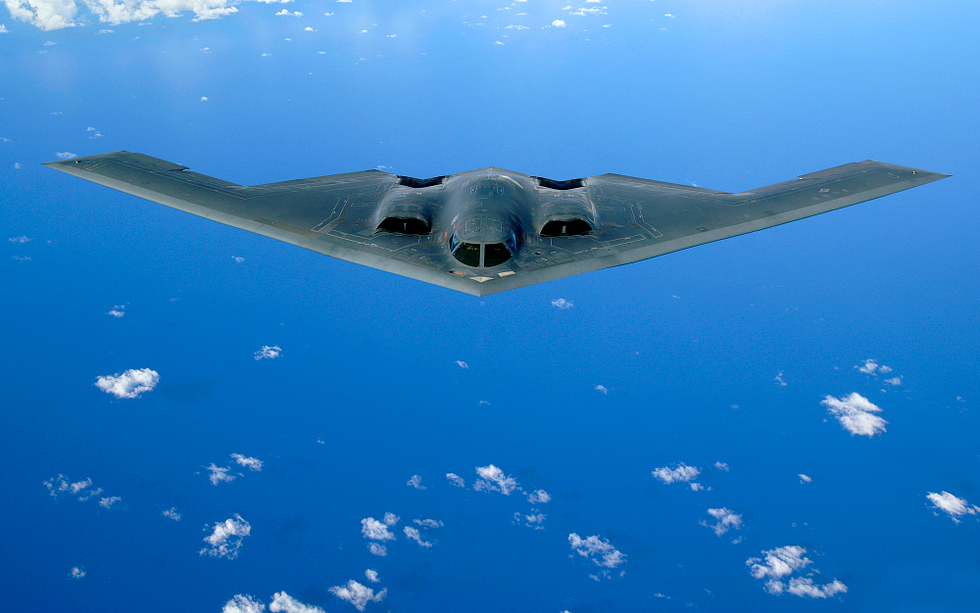
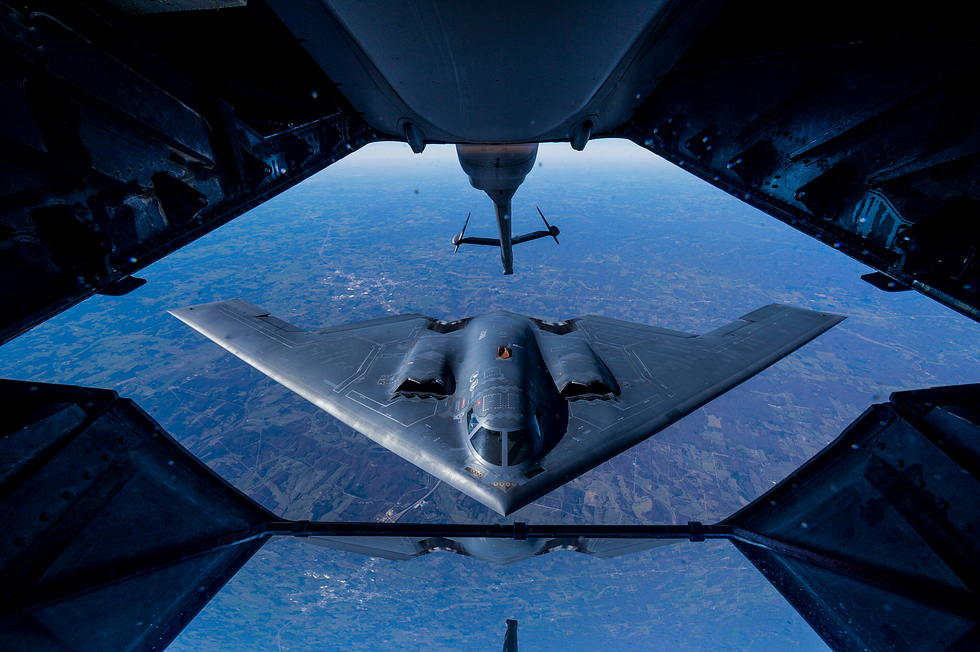
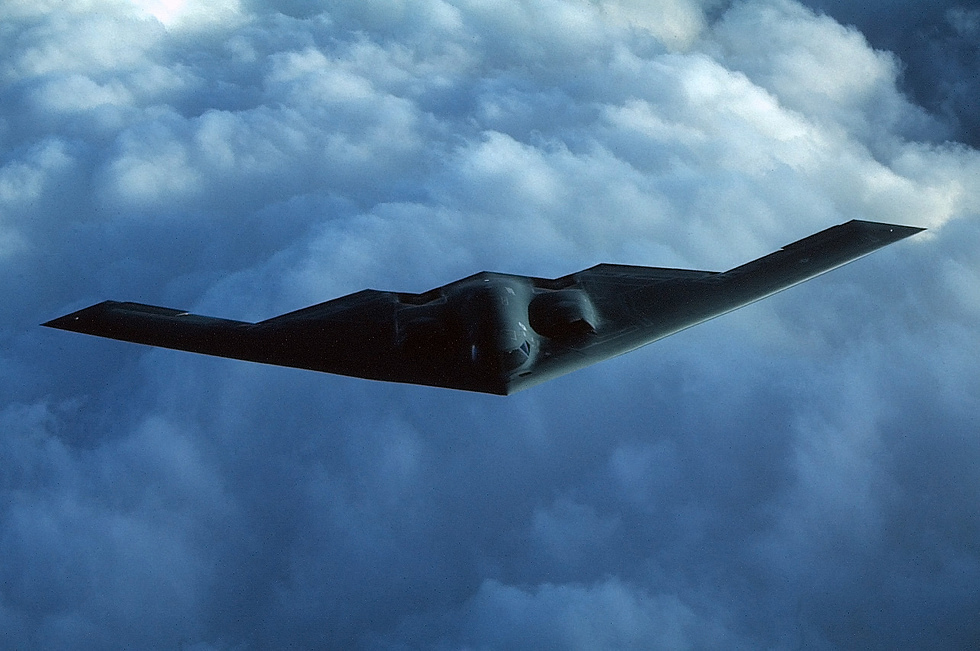
The B-2 Spirit in pictures
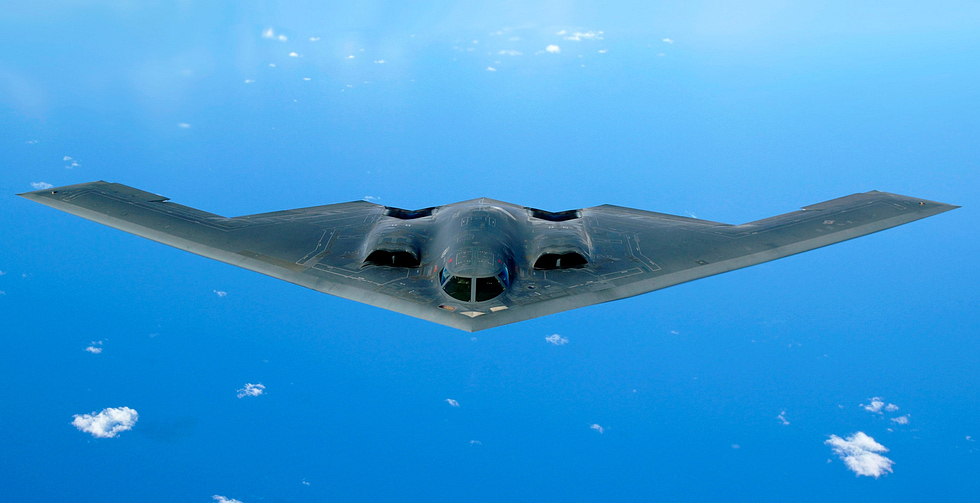
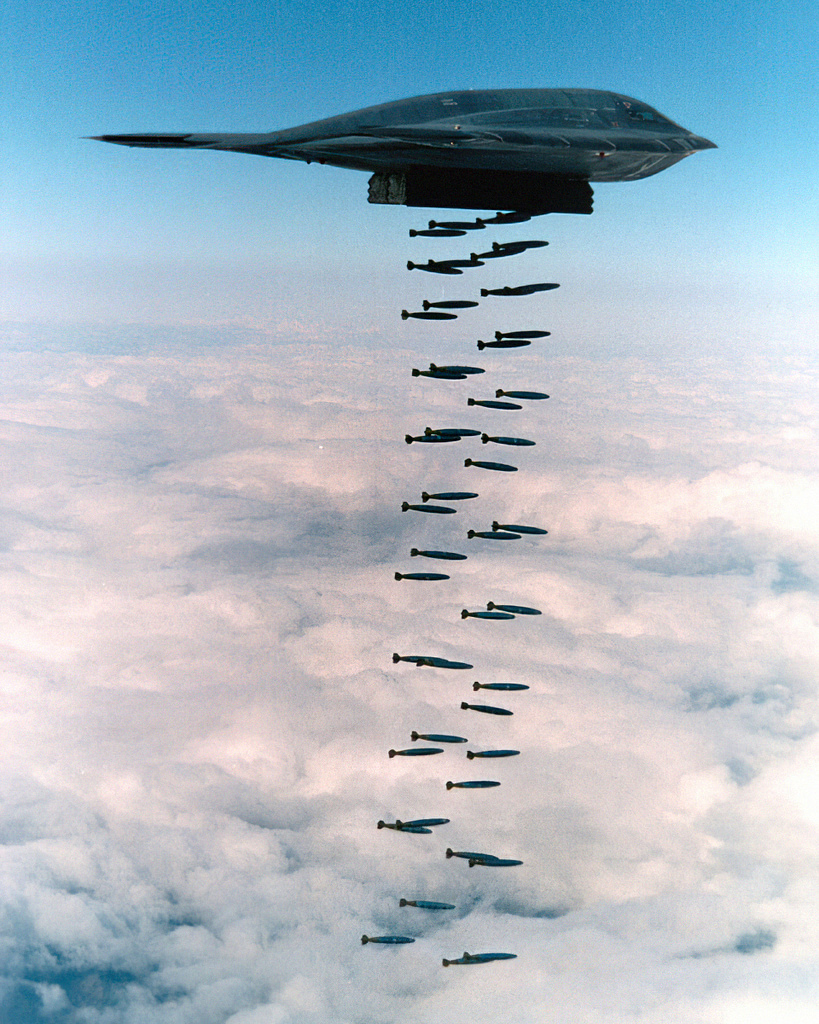
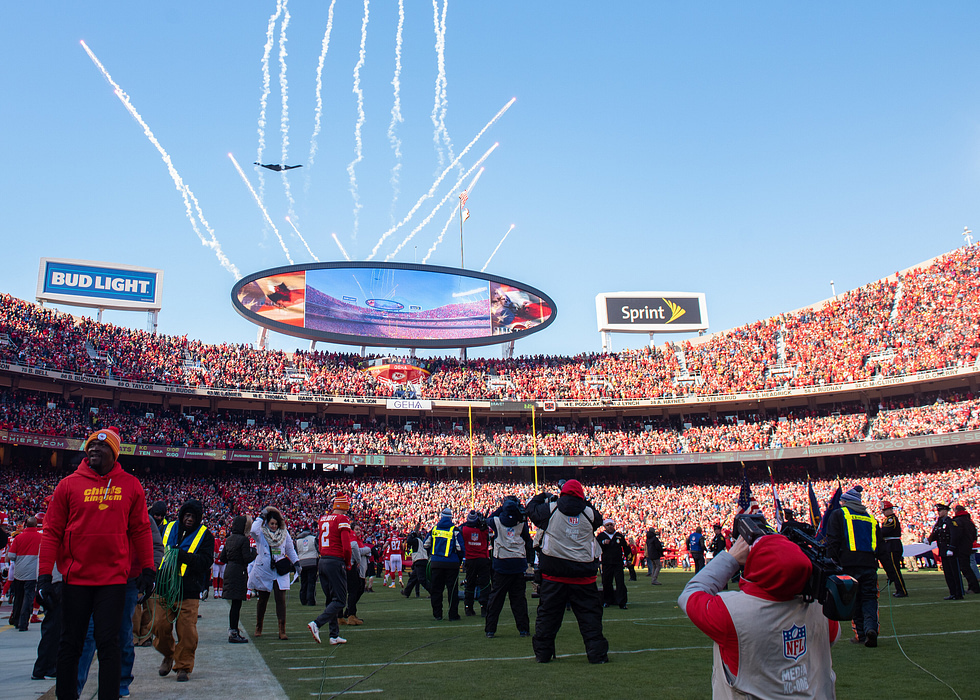
The B-2 Spirit in motion
A hand-picked B-2 Spirit video is coming soon. In the meantime, explore the gallery above and the twelve stories from three decades of stealth operations.
The B-2 Spirit in motion
Extreme Mysteries — one of the most-watched B-2 Spirit films on YouTube.
Where the B-2 Spirit flies
The score that defines the B-2
The B-2 has never fought another aircraft — it has no air-to-air record and no gun. Its score is written in the targets it has reached and the distances it has flown to hit them, striking heavily defended sites in five conflicts across a quarter-century without a single Spirit lost to enemy fire.
Compare the combat record of every military aircraft. Figures as of July 2026 and, for recent operations, provisional.
Everything people ask about the B-2 Spirit
Can I fly in a B-2?
How stealthy is the B-2 really?
How much does a B-2 cost?
How many B-2s were built?
What weapons can the B-2 carry?
Did the B-2 really bomb Iran in 2025?
How fast is the B-2?
What is replacing the B-2?
You can’t fly the B-2.
These, you can.
Some legends only live in museums — others are fuelled and waiting. MiGFlug has put civilians in real military jet cockpits since 2004.
 Fly the L-39 AlbatrosThe world’s most-flown jet trainer — aerobatics included
 Fly the F-104 Starfighter“The missile with a man in it”
 Fly the MiG-21The Cold War’s most-produced jet
 Leťte s T-33 Shooting StarAmerica’s first jet trainer
 Fly the DH VampireA piece of early jet history
 Fly the S.211Agile Italian jet trainer
 Fly the MB-326The classic Aermacchi jet
 Fly the MiG-15The Soviet legend of the Korean War
Continue the tour
Every fact, checked
- U.S. Air Force — B-2 Spirit fact sheetOfficial specifications, unit cost, service history and combat record.
- Northrop Grumman — B-2 Stealth BomberManufacturer technical details: dimensions, engines, range and payload.
- Encyclopaedia Britannica — B-2Development, ATB programme, flying-wing design and cost overview.
- Air & Space Forces MagazineOperation Midnight Hammer: the 2025 B-2 mission against Iran, in detail.
- The War Zone (TWZ)Independent reporting on the 2025 strike, decoy flights and damage caveats.
- The AviationistJack Northrop’s flying wings and their lineage to the B-2.
- National Museum of the U.S. Air ForceReference for the 2008 Guam loss and preserved-airframe history.
- The National InterestProgramme cost analysis and why the B-2 is called the most expensive aircraft ever.