
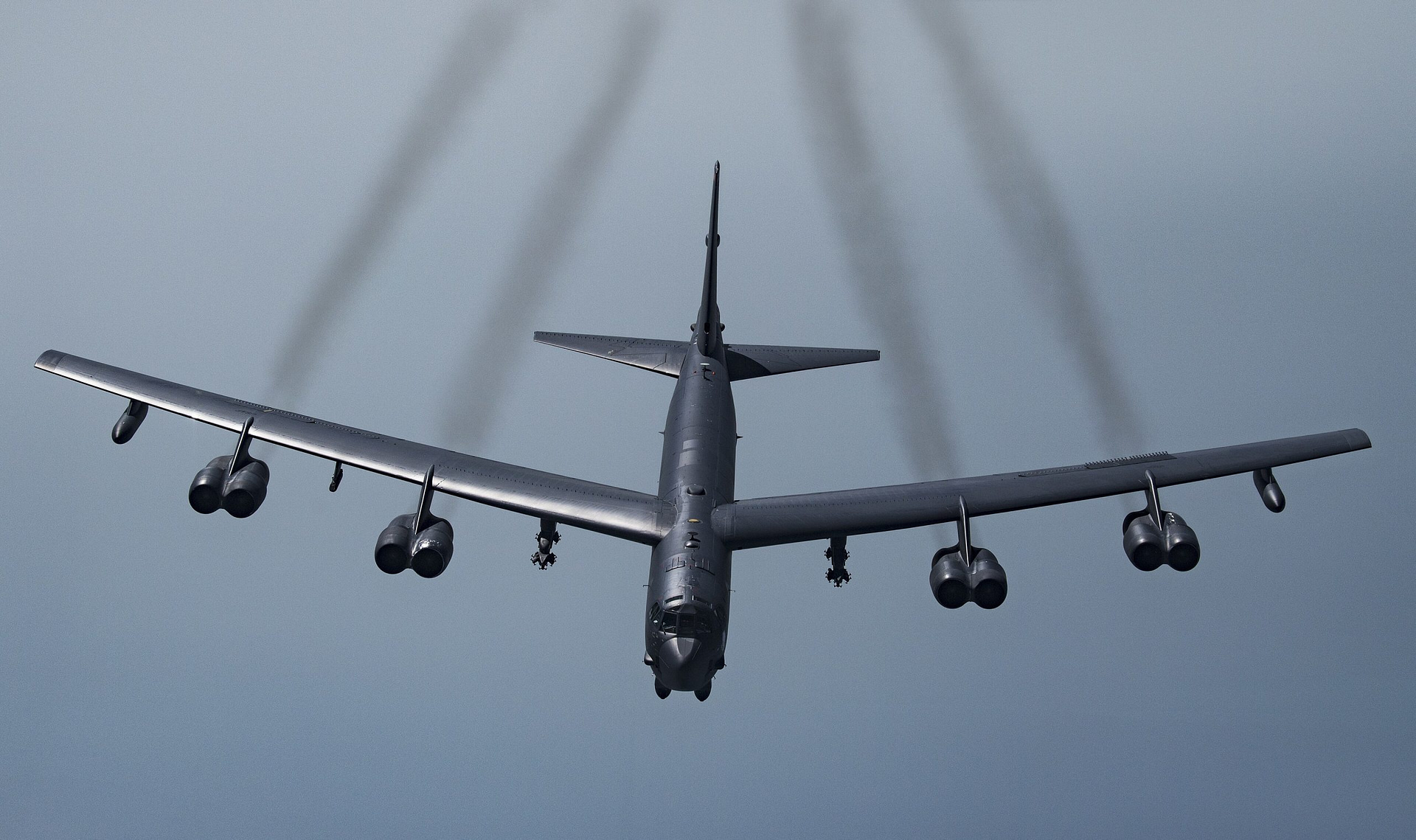
Boeing B-52
“Stratofortress”
The eight-engined nuclear bomber that first flew in 1952, went to war in Vietnam and the Gulf, and is now being re-engined to keep flying into the 2050s — a warplane on course to serve for a full century.
The bomber that outlived the Cold War — and its own replacements
In 1948 the U.S. Air Force wanted a jet bomber that could carry a nuclear weapon from American soil to any target on Earth. Boeing’s first answers were turboprops. Then, over a single weekend that October in a hotel room in Dayton, Ohio, a team led by engineer Ed Wells tore up the design and sketched an all-jet, swept-wing giant slung with eight engines. They wrote a 33-page proposal and carved a balsa-wood model from a local hobby shop. That improvised machine became the B-52.
The prototype YB-52 first flew on 15 April 1952; the type entered service with Strategic Air Command in 1955 as the airborne leg of America’s nuclear deterrent. Seven hundred and forty-four were built before production ended in 1962. It was supposed to be an interim design — a stopgap until something faster and more survivable arrived.
It never left. The supersonic B-58 retired in 1970. The Mach-3 XB-70 was cancelled. The swing-wing B-1 and the stealth B-2 both entered service decades later — and the B-52 outflew them all. Today around 76 B-52H bombers still serve, and the fleet is being re-engined with new Rolls-Royce F130s and re-radared as the B-52J, planned to fly into the 2050s. The airframes were all built by 1962; the crews flying them are younger than their aircraft.
01The B-52 Stratofortress’s weekend design: how a Dayton hotel room produced a 100-year bomber
In October 1948 a Boeing team was at Wright Field, Ohio, when a USAF officer rejected their turboprop bomber and told them to come back with an all-jet, swept-wing design. Over one weekend at the Hotel Van Cleve in Dayton, Ed Wells, George Schairer, Vaughn Blumenthal and colleagues reworked the entire concept, produced fresh three-view drawings and a written proposal, and built a hand-carved balsa-wood scale model bought from a nearby hobby shop. By Monday they had the aircraft that became the B-52.
Details vary in the telling — sources give the proposal as 33 or 35 pages, and disagree over who carved the model — but the essence is agreed: one of the longest-serving combat aircraft in history was sketched out over a single weekend. More than seventy years later, that same basic airframe is being upgraded to fly on for decades more.
What makes it special
Eight engines and intercontinental reach
Late-1940s jet engines were weak, so a bomber of nearly a quarter-million kilograms needed eight of them, mounted in four twin-engine pods. The payoff was enormous: roughly 14,000 km of unrefuelled range — unlimited with air-to-air refuelling — and about 31,500 kg (70,000 lb) of ordnance. One aircraft could strike any point on the globe from the continental United States.
From H-bomb to cruise-missile truck
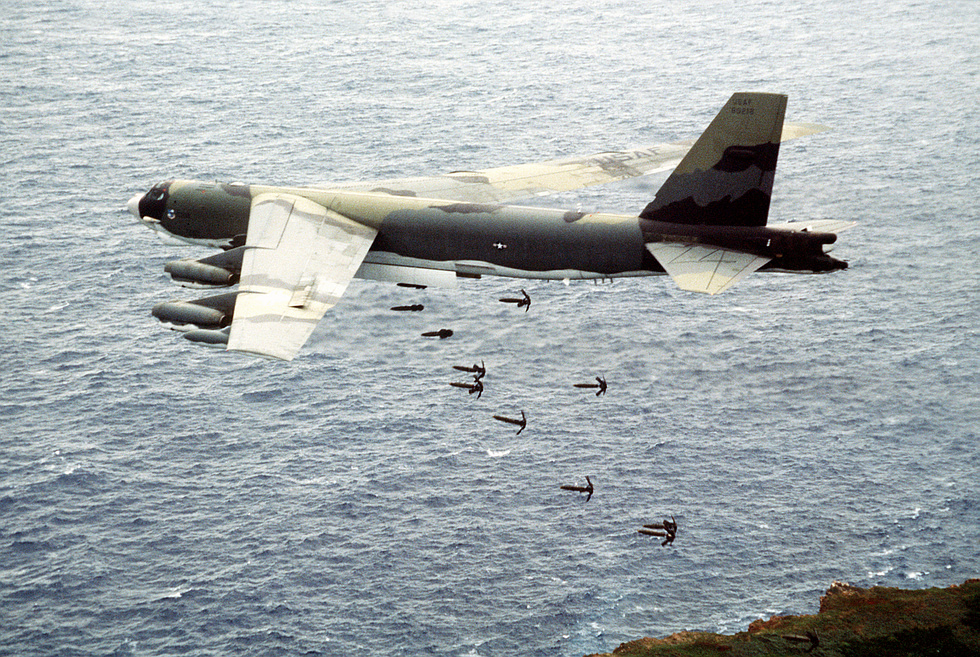
The B-52 was designed as a high-altitude nuclear bomber. When Soviet missiles made high altitude deadly, it was re-roled to low-level penetration; over Vietnam it became a conventional carpet-bomber; and today it is a standoff cruise-missile “truck”, launching weapons from beyond enemy air defences. Few aircraft have reinvented their mission so completely, so many times.
The airframe that refuses to age
A robust structure — with a fatigue life that can be extended by replacing the upper wing skins — combined with relentless modernisation is what lets a 1962 airframe credibly serve into the 2050s. New Rolls-Royce F130 engines, a new AESA radar and updated weapons keep the oldest airframes in the fleet militarily relevant.
02The B-52 Stratofortress’s re-engining: eight new Rolls-Royce F130s, not four
Under the Commercial Engine Replacement Program (CERP), all eight ageing Pratt & Whitney TF33 turbofans are being replaced with eight Rolls-Royce F130 engines — a military version of a business-jet engine, built in Indianapolis. Crucially it is an eight-for-eight swap: the Air Force studied re-engining with four larger engines and rejected it, because the redesign and engine-out control problems outweighed the benefits. The gains come from efficiency and reliability, not raw thrust. Combined with a new AESA radar (fielded as the AN/APQ-188, derived from fighter radars), the upgraded H-models are re-designated B-52J — upgraded aircraft, not new builds. CERP cleared its critical design review in 2026, though the wider modernisation has slipped, with initial operating capability now expected around the early 2030s.
03The B-52 Stratofortress’s tail guns: the only bomber to score air-to-air gun kills in the jet age
Early B-52s carried four .50-calibre machine guns in a tail turret; the B-52H swapped them for a single 20mm cannon. During Operation Linebacker II in December 1972, B-52 tail gunners were officially credited with shooting down two MiG-21s — SSgt Samuel Turner on 18 December and A1C Albert Moore on 24 December, both firing .50-cal guns from B-52Ds. The U.S. Air Force treats both as confirmed, though gunners claimed five kills and only two were credited, and Vietnamese records do not acknowledge those particular losses. Even hedged, they stand as the last — and only jet-age — air-to-air gun kills scored by a bomber’s own tail guns. All B-52 tail guns were removed by the mid-1990s.
Full specifications
Airframe & Performance
- Posádka
- 5 (commander, pilot, radar nav, nav, EWO)
- Délka
- 48.5 m (159 ft 4 in)
- Rozpětí křídel
- 56.4 m (185 ft)
- Výška
- 12.4 m (40 ft 8 in)
- Max takeoff weight
- ~220,000 kg (488,000 lb)
- Max speed
- Mach 0.84–0.86 · ~1,000 km/h
- Servisní strop
- ~15,150 m (50,000 ft)
- Range (unrefuelled)
- ~14,000 km · unlimited with tankers
- Payload
- ~31,500 kg (70,000 lb) mixed ordnance
Propulsion & Programme
- Engines
- 8 × Pratt & Whitney TF33-P-3/103
- Thrust (each)
- ~76 kN (17,000 lbf)
- Future engines
- 8 × Rolls-Royce F130 (B-52J)
- Radar (upgrade)
- AN/APQ-188 AESA
- First flight
- 15 April 1952 (YB-52)
- In service
- 1955 – present
- Built
- 744 (1952–1962)
- Unit cost
- $84 million (FY2012 official)
- Cost per flight hour
- ~$62,000–$70,000 (estimate)
04The B-52 Stratofortress’s running costs: cheap enough to outlast newer bombers
The U.S. Air Force lists a unit cost of $84 million in FY2012 dollars; the often-quoted 1962 flyaway figure of about $9.3 million (roughly $95–100 million today) is a widely-repeated legacy number rather than a first-tier source, so treat it as an estimate. What matters strategically is the operating cost: the B-52 flies for roughly $62,000–$70,000 per hour depending on year and accounting — far below the stealth B-2’s figure of around $170,000. That affordability, as much as any upgrade, is why a 1960s bomber keeps outlasting the exotic aircraft built to replace it.
From weekend sketch to the 100-year bomber
Designed over a weekend
A Boeing team redesigns the bomber as an all-jet, swept-wing giant in a Dayton hotel room, complete with a hand-carved balsa model.
First flight
The YB-52 prototype flies from Seattle on 15 April, piloted by Boeing’s Tex Johnston.
Enters service
The first operational B-52 joins the 93rd Bomb Wing at Castle AFB as the airborne leg of the nuclear deterrent.
The Goldsboro accident
A B-52G breaks apart over North Carolina and drops two hydrogen bombs; by one account a single switch stops a detonation.
Production ends
The last of 744 aircraft — a B-52H — is delivered. Every B-52 still flying today was built by this year.
Linebacker II
Over eleven days B-52s fly through walls of SA-2 missiles over Hanoi; 15 are lost and two tail gunners down MiG-21s.
The longest combat mission
Seven B-52s fly nonstop from Louisiana and back — over 35 hours — to open the Gulf War with cruise missiles.
The B-52J
New Rolls-Royce F130 engines and an AESA radar are set to keep the fleet flying into the 2050s — a ~100-year airframe.
From the flight line: twelve B-52 stories
What “BUFF” really means
Crews call the B-52 the BUFF. Officially it stands for “Big Ugly Fat Fellow.”
Read the full story
The bomber that shot down fighters
Two B-52 tail gunners downed MiG-21s in December 1972 — the only jet-age gun kills by a bomber.
Read the full story
One switch from catastrophe
A B-52 broke apart over North Carolina and dropped two 3.8-megaton hydrogen bombs on American soil.
Read the full story
The 100-year bomber
Built by 1962, the B-52 is being upgraded to fly into the 2050s — potentially a century-old warplane.
Read the full story
The weekend that built a legend
Six Boeing engineers sketched the entire B-52 over one weekend in a Dayton hotel room.
Read the full story
35 hours, 14,000 miles
On the first night of Desert Storm, seven B-52s flew nonstop from Louisiana to Iraq and home.
Read the full story
Arc Light and the Big Belly
Modified B-52Ds carried more than 100 bombs each in eight years of saturation raids.
Read the full story
Balls 8 and the X-15
One NB-52B flew as a NASA mothership for nearly fifty years, launching rocket planes.
Read the full story
The bomber that lost its tail
In 1964 turbulence tore almost the entire vertical fin off a B-52H — and the crew still landed.
Read the full story
Armed and airborne 24/7
For a decade, B-52s orbited around the clock with live hydrogen bombs aboard.
Read the full story
The Bomber Task Force
Today B-52s deploy around the world as a visible signal — showing up where it matters.
Read the full story
Younger than their crews
Every B-52 flying today was built by 1962 — decades before the airmen who fly them were born.
Read the full story
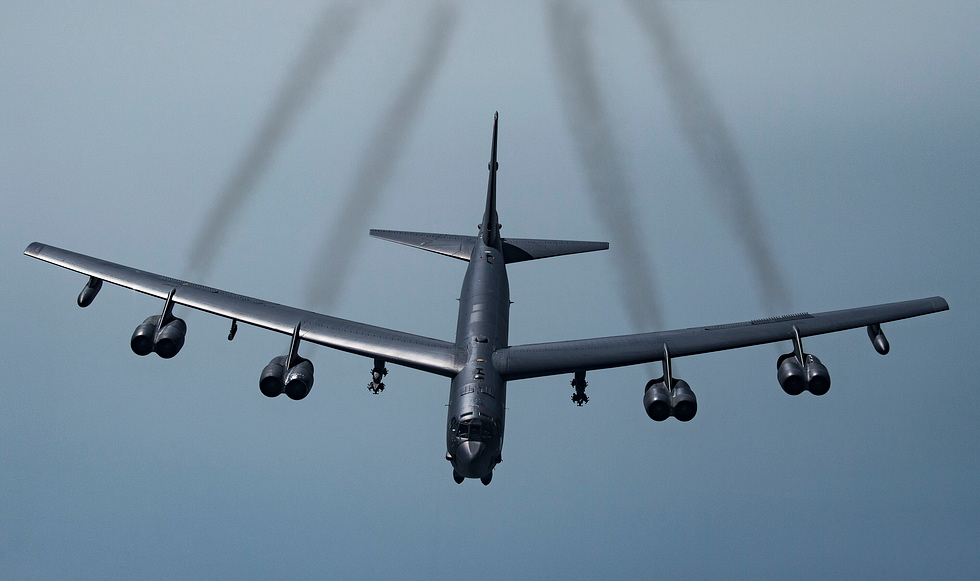
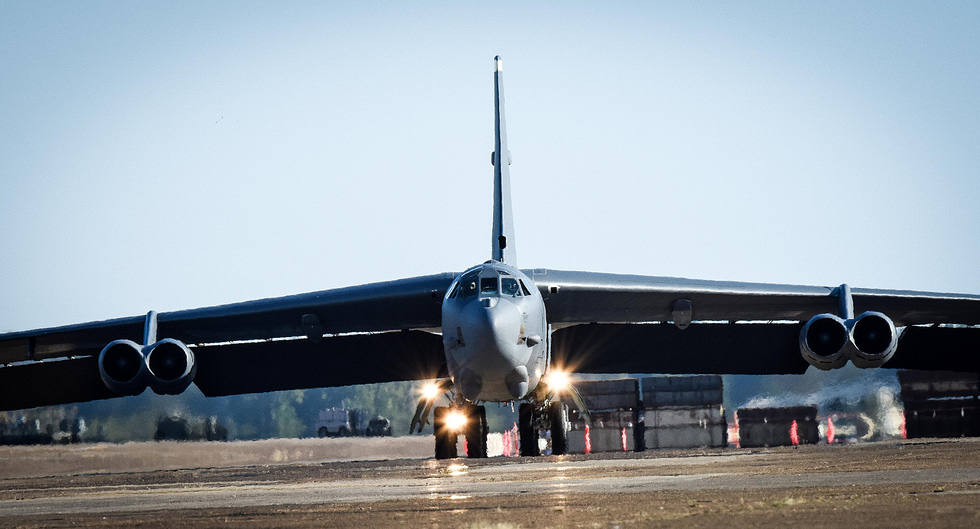
The Stratofortress in pictures
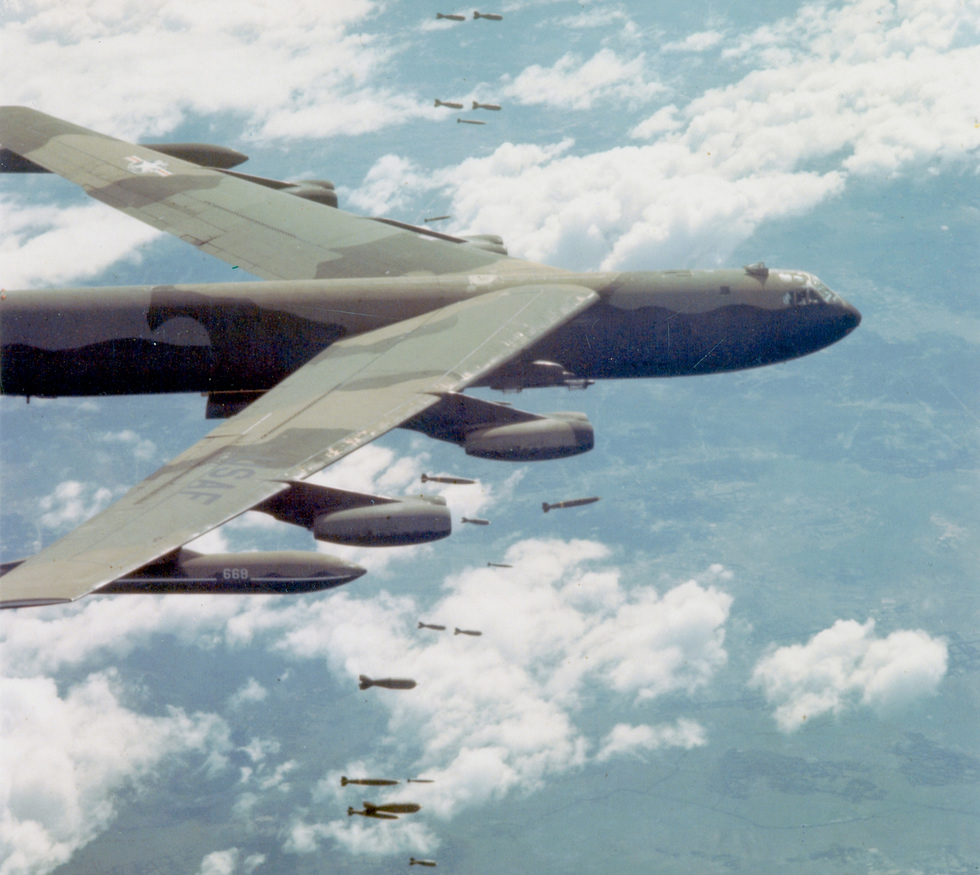
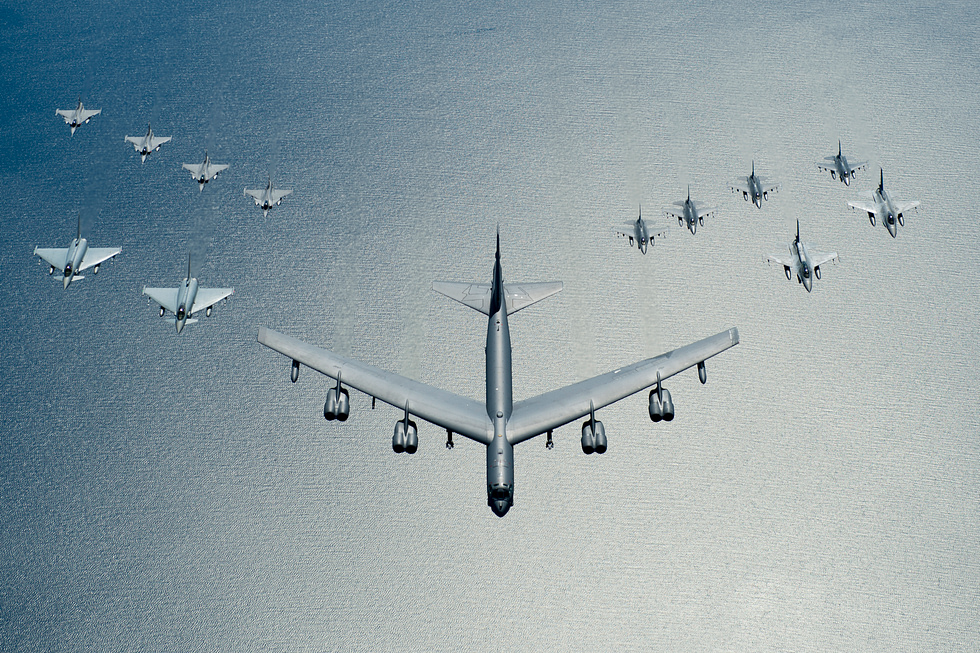
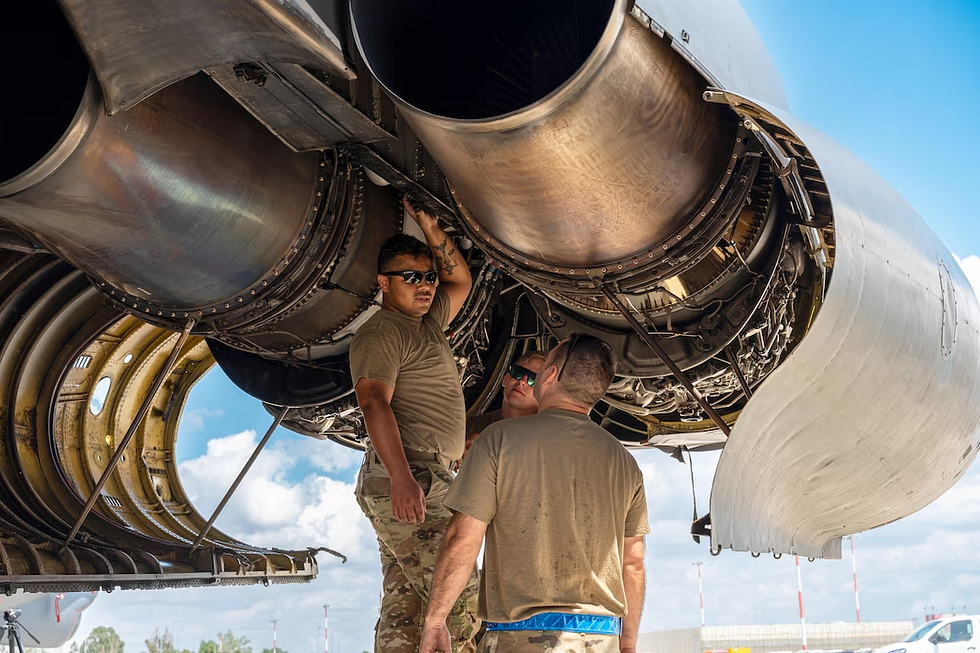
The Stratofortress in motion
A hand-picked video feature on the B-52 is coming soon. In the meantime, explore the gallery above and the twelve stories for the full picture of the world’s longest-serving strategic bomber.
The B-52 Stratofortress in motion
DroneScapes — one of the most-watched B-52 Stratofortress films on YouTube.
Where the B-52 flies
Seventy years of firepower
The B-52 has been in combat across six decades — from the saturation raids of Vietnam to standoff cruise-missile strikes today. Its record is measured less in dogfights than in tonnage, endurance and reach, though its tail gunners did score the only jet-age air-to-air gun kills ever credited to a bomber.
Compare the combat record of every military aircraft. Figures as of July 2026.
Everything people ask about the B-52
Can I fly in a B-52?
Why does the B-52 have eight engines?
Is the B-52 still in service?
How old is the B-52?
What does “BUFF” mean?
Did a B-52 ever shoot down an enemy aircraft?
Will the B-52 really fly for 100 years?
How many B-52s are left?
You can’t fly the B-52.
These, you can.
Some legends only live in museums — others are fuelled and waiting. MiGFlug has put civilians in real military jet cockpits since 2004.
 Fly the L-39 AlbatrosThe world’s most-flown jet trainer — aerobatics included
 Fly the F-104 Starfighter“The missile with a man in it”
 Fly the MiG-21The Cold War’s most-produced jet
 Leťte s T-33 Shooting StarAmerica’s first jet trainer
 Fly the DH VampireA piece of early jet history
 Fly the S.211Agile Italian jet trainer
 Fly the MB-326The classic Aermacchi jet
 Fly the MiG-15The Soviet legend of the Korean War
Continue the tour
Every fact, checked
- U.S. Air Force — B-52H Stratofortress fact sheetPrimary source for specifications, crew, range, payload and official unit cost.
- National Museum of the U.S. Air ForceTail-gunner MiG kills, Big Belly, Arc Light and Linebacker II loss figures.
- Air & Space Forces MagazineThe 1948 weekend design, service history and B-52J modernisation coverage.
- Defense NewsCERP F130 re-engining critical design review and modification schedule.
- The War ZoneThe B-52’s new AN/APQ-188 AESA radar and modernisation detail.
- The National Interest“Secret Squirrel” — the record-length 1991 Gulf War combat mission.
- Alex Wellerstein — Nuclear Secrecy blogThe 1961 Goldsboro Broken Arrow and the disputed “final switch” account.
- The AviationistThe 1964 flight in which a B-52H lost its vertical tail and landed safely.