
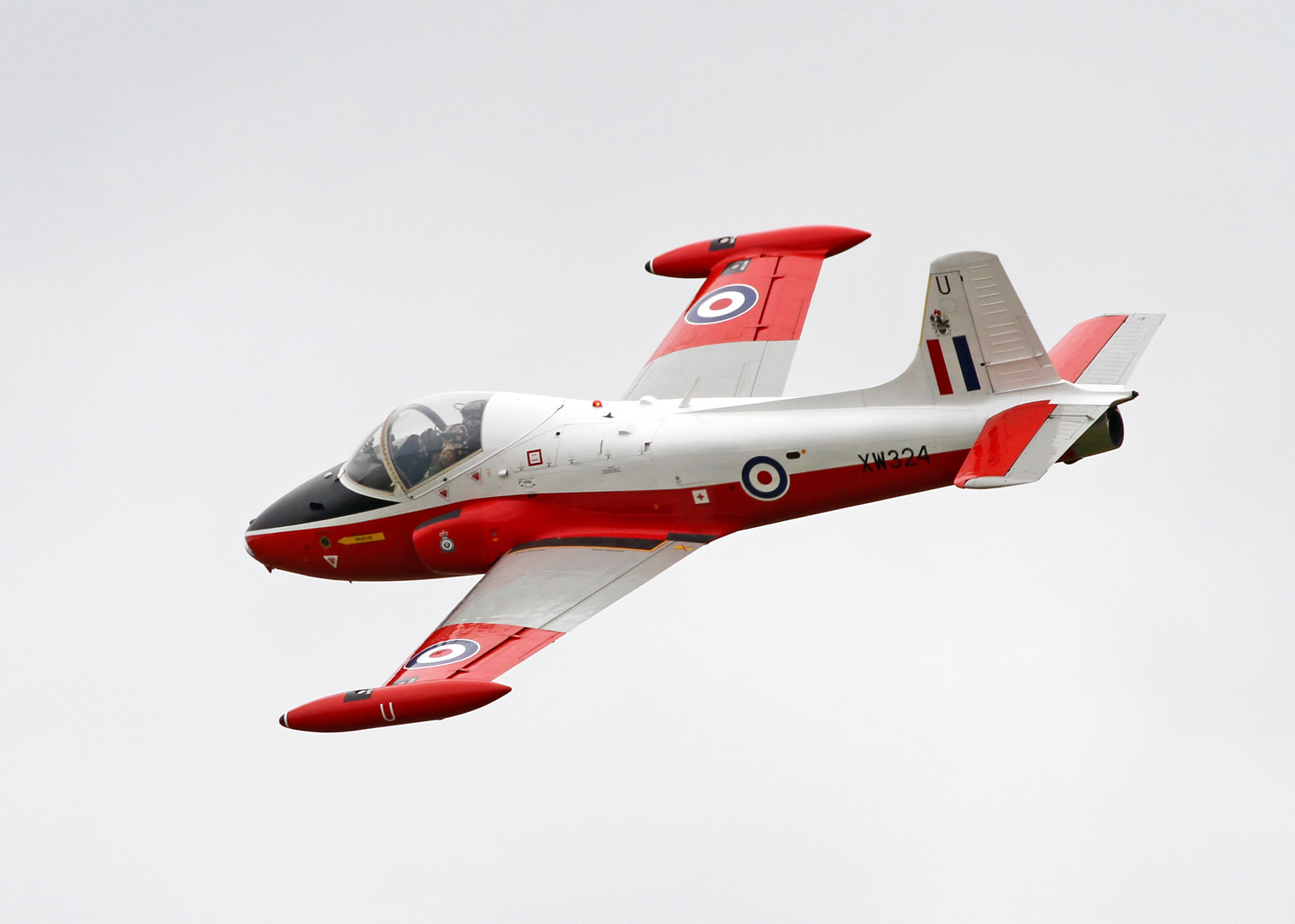
Provost BAC Jet
The RAF’s first jet a pilot ever flew
For almost four decades the side-by-side Jet Provost took Royal Air Force recruits from their very first flight through basic training — a friendly, forgiving jet that taught generations to fly and lives on today as a much-loved civilian warbird.
The jet that taught the RAF to fly
In the early 1950s the Royal Air Force still began every pilot’s career on piston-engined trainers before moving them onto jets. The jump was awkward and expensive. Hunting Percival’s answer was elegantly simple: take the company’s existing piston Percival Provost basic trainer, replace its Alvis Leonides radial with a small turbojet, and let recruits learn on a jet from their very first flight.
Ten/Ta/To Jet Provost prototype first flew from Luton on 26 June 1954. Early T.1 aircraft went to the RAF for evaluation in 1955, and with the definitive T.3 of 1959 the type became the service’s standard basic jet trainer. It is often described as the first jet trainer used to take a pupil all the way from first flight through basic training — so-called “all-through” jet training.
What made it work was its friendliness. Instructor and pupil sat side by side, not one behind the other, so the instructor could watch the student’s hands and eyes and share a single warning panel. The Viper turbojet was gentle and reliable; the aircraft was docile at the edges of its envelope. Later marks added ejection seats (from the T.3), more power, and finally a pressurised cabin in the T.5 of the late 1960s.
Through the British Aircraft Corporation merger of 1960 the aircraft became the Provost BAC Jet, and BAC turned the pressurised T.5 into the armed Strikemaster, a light-attack jet that saw real combat in Oman and elsewhere. Lightly armed export Jet Provosts — the T.51, T.52 and T.55 — were sold to Sri Lanka, Sudan, Iraq, Kuwait, Venezuela and South Yemen.
The RAF finally retired its Jet Provosts on 20 September 1993, replacing them with the turboprop Shorts Tucano after roughly 38 years of service. Thousands of RAF aircrew earned their first hours on “the JP.” Today it is one of the most affordable and popular vintage jets on the civilian warbird circuit, with around a dozen airworthy in the UK alone.
01The BAC Jet Provost’s all-through jet training: how the RAF put pupils straight onto jets
Before the Jet Provost, RAF pilots learned the basics on piston trainers such as the Percival Provost and only later converted to jets — a two-step process that cost time and money. The Jet Provost was designed so a raw recruit could climb into a jet on day one and be taken through the entire basic syllabus without ever touching a propeller. The side-by-side cockpit, forgiving handling and reliable Viper engine made this “all-through” jet training practical, and the RAF adopted it as standard with the T.3 from 1959. It is widely cited as the first jet trainer standardised for true ab-initio jet instruction, and the pattern it set — learn to fly on a jet from the start — shaped RAF training for the rest of the century.
What makes the Jet Provost special
A side-by-side cockpit
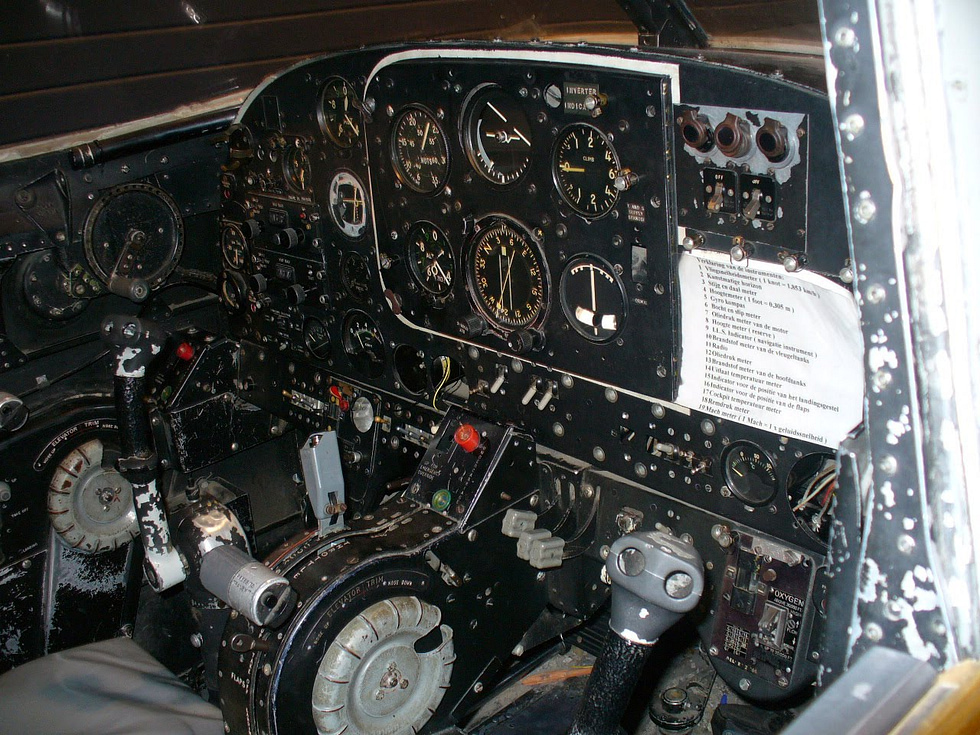
Unlike most jet trainers, which seat instructor and pupil in tandem, the Jet Provost put them shoulder to shoulder with fully duplicated controls and a shared central warning panel. The instructor could directly watch the student’s hands, eyes and reactions — a layout borrowed from the piston Provost and chosen deliberately to speed up early training.
A jet grown from a piston trainer
The Jet Provost was essentially a jet conversion of the piston Percival Provost, sharing much of its design DNA. Swapping the Alvis Leonides radial for a small Viper turbojet roughly doubled its speed to over 400 mph while keeping the gentle, predictable handling that made it ideal for pilots on their very first flights.
The pressurised T.5 — and the Strikemaster
The final RAF mark, the T.5, added a pressurised cabin so it could train pilots comfortably at higher altitude. BAC then strengthened and armed the T.5 to create the Strikemaster, a light-attack jet with wing pylons and an armoured cockpit that saw real combat — a fighting aircraft grown from a basic trainer.
02The BAC Jet Provost’s side-by-side cockpit: why instructor and pupil sat shoulder to shoulder
Most training jets — from the T-37 to the Hawk — seat the instructor behind the pupil. The Jet Provost inherited its side-by-side layout from the piston Percival Provost. With both crew abreast, the instructor could see exactly what the student was doing with the controls, follow their eyes onto the instruments, and demonstrate by touch on duplicated controls. A single central warning panel served both seats. For the very first phase of a pilot’s training — where communication and reassurance matter as much as raw skill — the arrangement was a genuine teaching advantage, even if it made for a wider, draggier fuselage than a slim tandem trainer.
03The BAC Jet Provost’s Viper engine: from Armstrong Siddeley to Rolls-Royce
Every Jet Provost was powered by a single Viper turbojet. The engine began life as the Armstrong Siddeley Viper; through the mergers that created Bristol Siddeley and then folded into Rolls-Royce in 1966, the same engine line became the Rolls-Royce Viper. Thrust grew across the marks from roughly 1,750 lbf in the earliest aircraft to about 2,500 lbf in the Viper Mk.202 of the pressurised T.5. It was simple, robust and cheap to run — exactly what a basic trainer needed — and the same engine family went on to power the armed Strikemaster and a range of other aircraft.
BAC Jet Provost T.5A specifications
Airframe & Performance
- Posádka
- 2 (instructor & pupil, side by side)
- Délka
- 10.36 m (34 ft 0 in)
- Rozpětí křídel
- 11.25 m with tip tanks (36 ft 11 in)
- Výška
- 3.10 m (10 ft 2 in)
- Max takeoff weight
- ~4,170 kg (9,200 lb)
- Max speed
- ~708 km/h (382 kn) at 25,000 ft
- Servisní strop
- ~11,200 m (36,750 ft)
- Rozsah
- ~1,400 km (780 nm) with tip tanks
- Cabin
- Pressurised (T.5 / T.5A)
Propulsion, Production & Cost
- Motor
- 1 × Rolls-Royce Viper Mk.202 turbojet
- Tah
- ~11.1 kN (2,500 lbf)
- Katapulzní sedadla
- Fitted from the T.3 (1959)
- First flight
- 26 June 1954 (prototype)
- RAF service
- 1955–1993
- Built
- ~730–740 (all marks, approximate)
- Unit cost
- No reliable public figure
- Cost per flight hour
- No reliable public figure
04The BAC Jet Provost’s operating costs: why no reliable price exists
The Jet Provost was a British service aircraft procured through government contracts rather than sold on an open dollar market, so a firm, well-attributed flyaway unit price for the type simply is not part of the reliable public record, and figures quoted online vary widely. No dependable public cost-per-flight-hour figure exists for it either. What can be said with confidence is that the Jet Provost was deliberately cheap and simple to operate — that was the whole point of a basic trainer — and that its low running costs are exactly why it remains one of the more affordable ex-military jets to own and fly on the civilian warbird circuit today. Any precise cost figure attached to a Jet Provost should be treated as an estimate.
Nearly four decades of RAF service
Prototype flies
The Jet Provost prototype, a jet development of the piston Percival Provost, first flies from Luton on 26 June 1954.
Into RAF hands
Early T.1 aircraft reach the RAF for evaluation, beginning trials of true all-through jet training.
The T.3 becomes standard
The definitive T.3 — with ejection seats and more power — enters service as the RAF’s standard basic jet trainer.
The BAC Jet Provost
Hunting is absorbed into the new British Aircraft Corporation, and the aircraft is rebranded the BAC Jet Provost.
Pressurised T.5 and the Strikemaster
The pressurised T.5 first flies; BAC develops it into the armed Strikemaster light-attack jet.
Export sales
Armed T.51/T.52/T.55 trainers are sold to Sri Lanka, Sudan, Iraq, Kuwait, Venezuela and South Yemen.
A future king’s wings
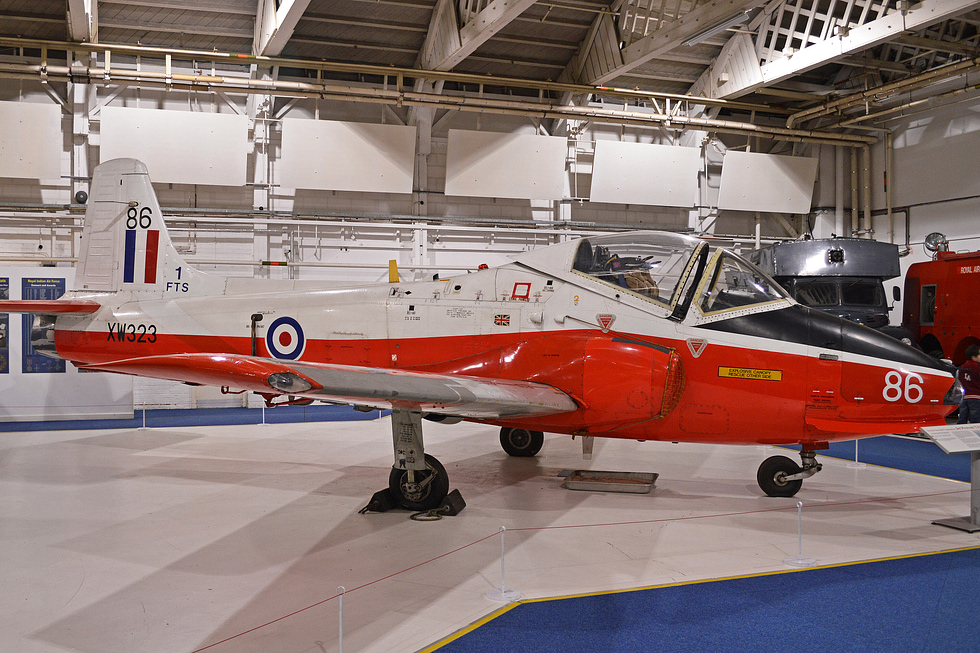
Prince Charles trains on Jet Provost T.5A XW323 and receives his RAF wings, flying about 92 hours on type.
Retired after ~38 years
The last RAF Jet Provosts are withdrawn on 20 September 1993, replaced by the turboprop Shorts Tucano.
A popular warbird
Around a dozen Jet Provosts remain airworthy in the UK, flying at airshows and offering a taste of RAF jet training history.
From the cockpit: twelve Jet Provost stories
“The JP”
To generations of RAF aircrew the Jet Provost was known simply as “the JP.”
Read the full story
From propeller to jet
The Jet Provost was literally a jet conversion of the piston Percival Provost trainer.
Read the full story
Sitting side by side
Instructor and pupil sat shoulder to shoulder, not one behind the other.
Read the full story
The all-through jet trainer
The JP let the RAF take a recruit from first flight through basic training entirely on jets.
Read the full story
A king’s first wings
The RAF Museum’s T.5A XW323 was used to train Prince Charles, now King Charles III.
Read the full story
The Red Pelicans
The RAF’s Central Flying School flew the JP as a formation aerobatic team.
Read the full story
Ejection seats arrive
The first Jet Provosts had no ejection seats; the T.3 introduced them from 1959.
Read the full story
The pressurised T.5
The final RAF mark added a pressurised cabin, keeping the JP relevant into the 1990s.
Read the full story
The Strikemaster
BAC turned the pressurised T.5 into an armed light-attack jet that saw real combat.
Read the full story
Guns for export
RAF Jet Provosts were pure trainers, but export models were lightly armed.
Read the full story
Thirty-eight years of service
The JP served the RAF from 1955 until the last examples retired in 1993.
Read the full story
Still flying today
The Jet Provost is now one of the most popular and affordable civilian warbirds.
Read the full story
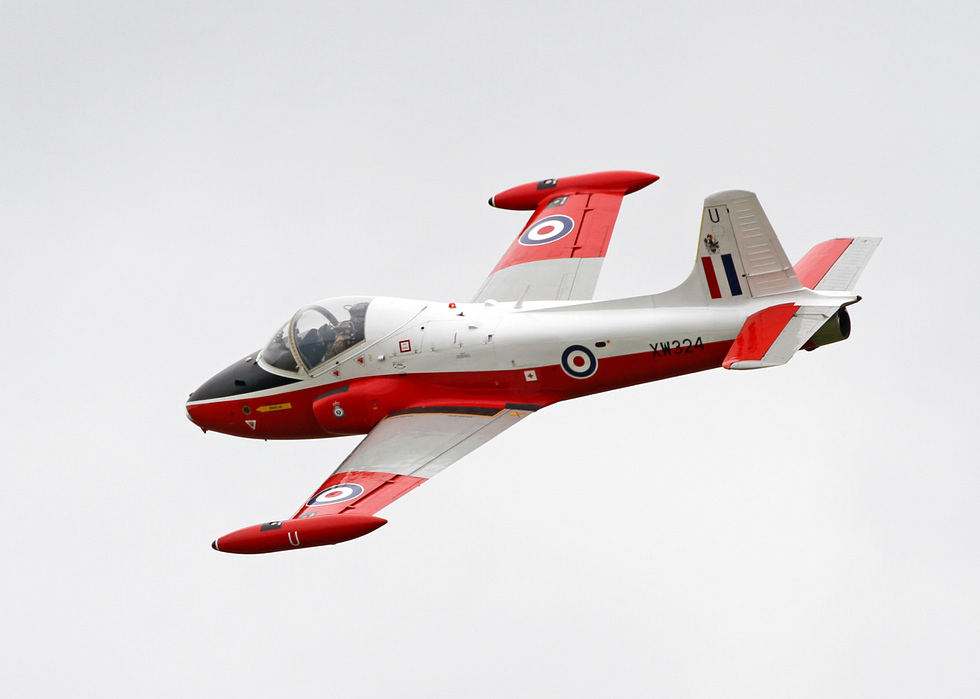
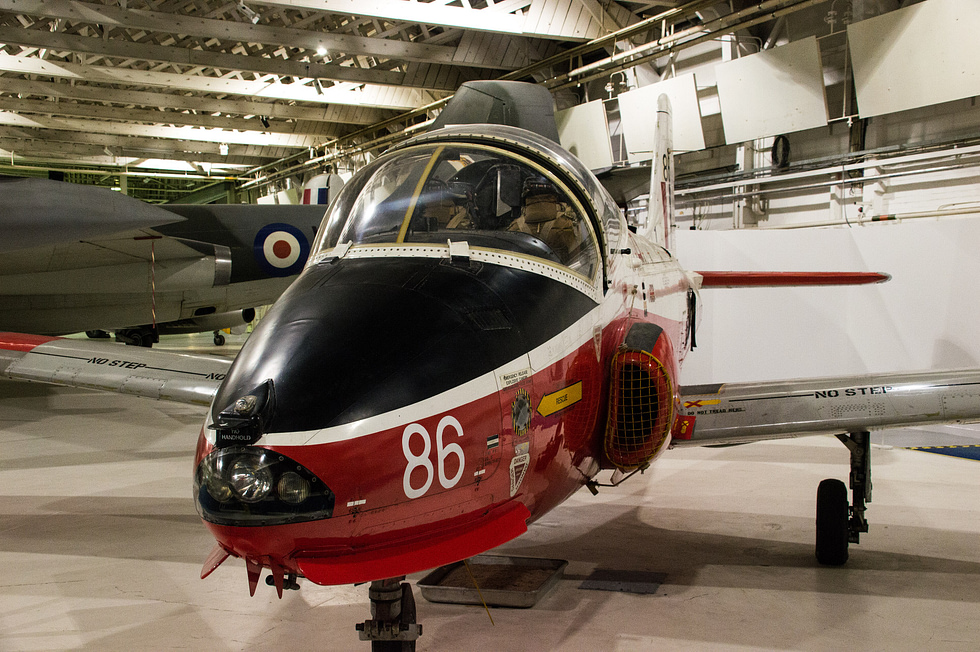
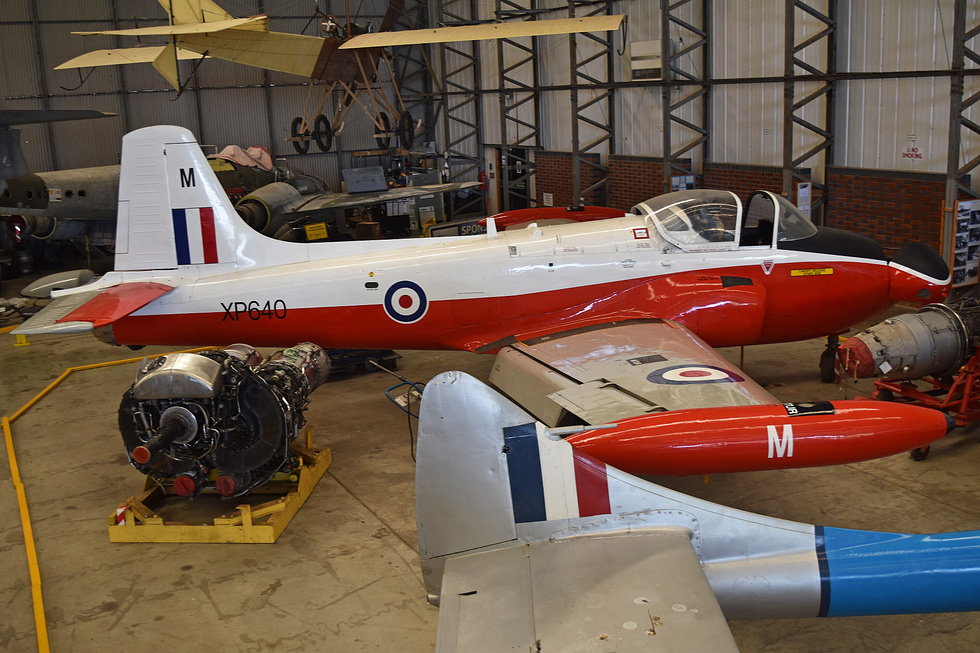
The Jet Provost in pictures
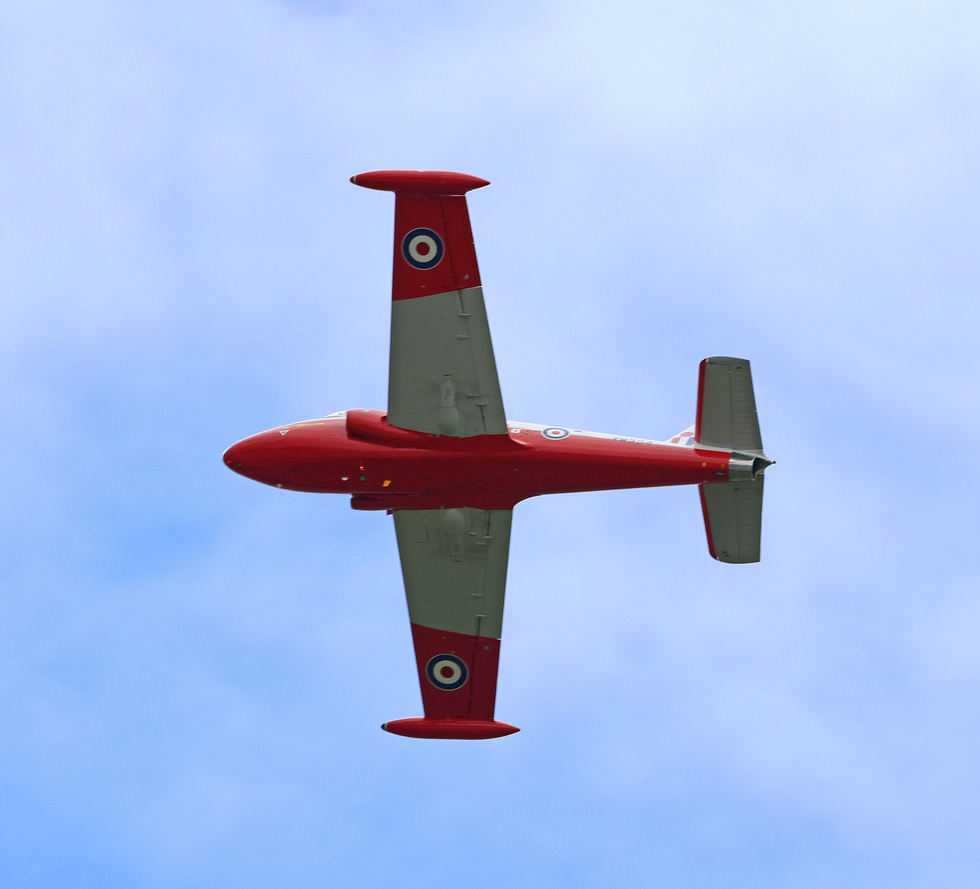
The Jet Provost in motion
Palm Springs Air Museum: BAC Jet Provost — Warbird Wednesday Episode #243. A museum walk-around and history of the type from an established aviation-museum channel.
Where the Jet Provost flew
A trainer first — and the armed cousins that fought
The Jet Provost was, above all, a trainer. In RAF hands it never fired a shot in anger; its job was to turn recruits into pilots, which it did for almost four decades. But lightly armed export versions carried guns and light ordnance, and BAC’s derived Strikemaster became a genuine combat aircraft — so the JP’s bloodline saw real fighting even if the trainer itself did not.
Compare the combat record of every military aircraft. Figures as of 2026.
Everything people ask about the BAC Jet Provost
Can I fly in a BAC Jet Provost?
What was the BAC Jet Provost used for?
How is the Jet Provost related to the Percival Provost?
Why did the Jet Provost have a side-by-side cockpit?
What is the difference between the Jet Provost and the Strikemaster?
How many Jet Provosts were built?
Is the Jet Provost still flying?
You can’t fly the BAC Jet Provost with us.
These, you can.
Some legends only live in museums — others are fuelled and waiting. MiGFlug has put civilians in real military jet cockpits since 2004.
 Fly the L-39 AlbatrosThe world’s most-flown jet trainer — aerobatics included
 Fly the F-104 Starfighter“The missile with a man in it”
 Fly the MiG-21The Cold War’s most-produced jet
 Leťte s T-33 Shooting StarAmerica’s first jet trainer
 Fly the DH VampireA piece of early jet history
 Fly the S.211Agile Italian jet trainer
 Fly the MB-326The classic Aermacchi jet
 Fly the MiG-15The Soviet legend of the Korean War
Continue the tour
Every fact, checked
- Royal Air Force MuseumCollection records for Jet Provost T.5A XW323, service history and 1993 retirement.
- Newark Air MuseumAircraft profiles and preserved Jet Provost airframes.
- Skytamer aircraft archiveDetailed variant data and T.5A / T.3A specifications.
- The Four Prop — Jet Provost briefingDevelopment history, the “JP” nickname and the piston-Provost lineage.
- AeroResourceThe Jet Provost Display Team and the civilian warbird scene.
- GlobalSecurity — BAC 167 StrikemasterThe armed derivative, its engine and its combat use in Oman.
- Palm Springs Air MuseumWarbird Wednesday walk-around and history of the type (video source).