
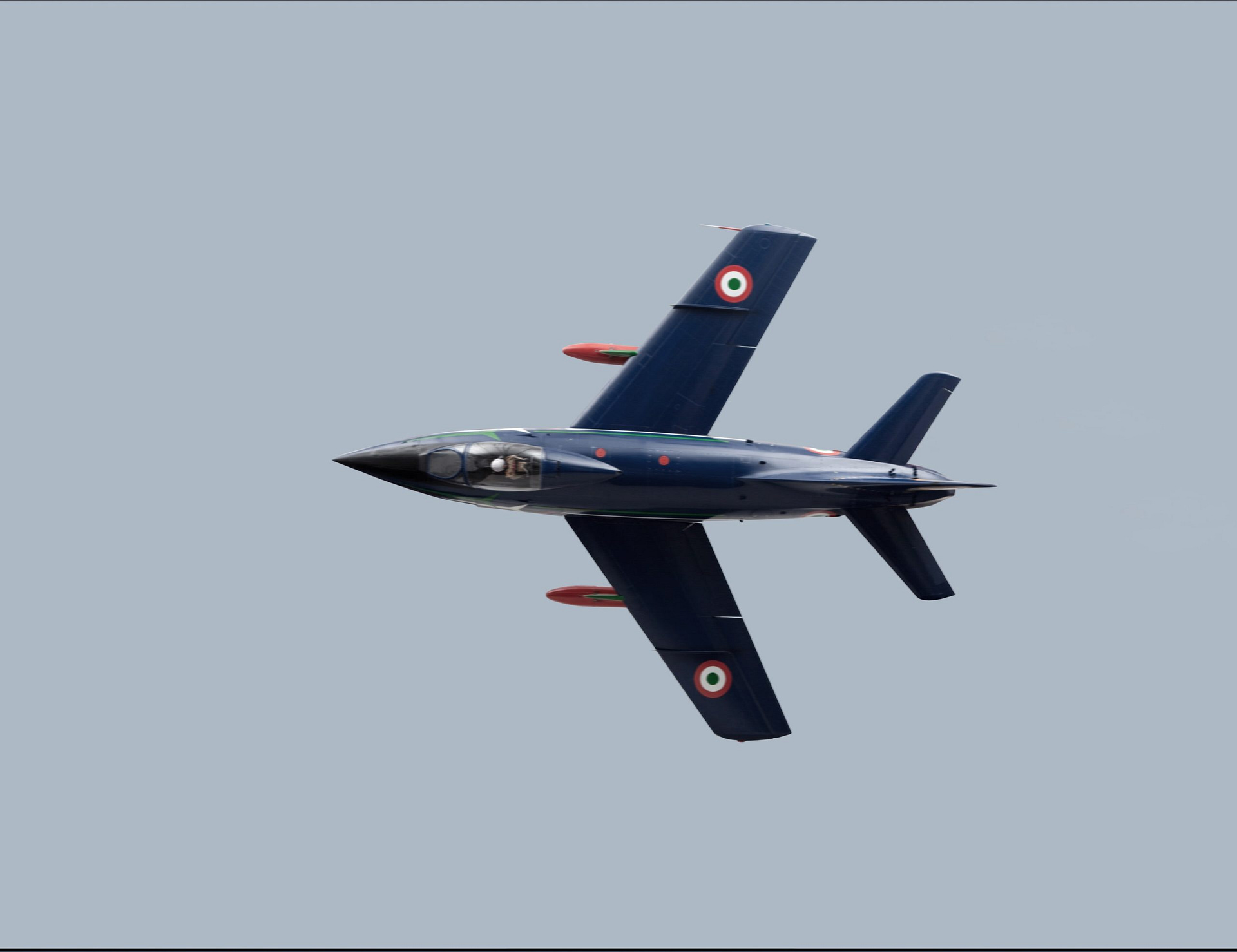
Fiat G.91
“Gina”
The little Italian jet that won NATO’s only common-fighter contest — a cheap, tough, rough-field strike fighter that flew for Italy and Germany, wrote smoke for the Frecce Tricolori, and saw its only real war in Portugal’s African colonies.
NATO’s common fighter that almost was
In the early 1950s NATO tried something it never really managed again: to make its air forces fly the same aircraft. Out of the 1952 Lisbon conference came NATO Basic Military Requirement 1 (NBMR-1) — a call for a cheap, lightweight strike fighter that could scramble from rough, semi-prepared forward strips and survive the loss of proper runways in the opening hours of a war. Twelve designs were entered; three were funded. Fiat’s answer, drawn by chief designer Giuseppe Gabrielli (the “G” in every Fiat “G.” type), looked like a scaled-down F-86 Sabre and was called the G.91.
It first flew on 9 August 1956 and was declared the competition winner in 1957, beating the French Breguet Taon and Dassault Étendard VI. Italy was so confident it had ordered the jet before the verdict was even announced. Nicknamed “Gina,” it entered Italian service in 1958 and was soon being licence-built in West Germany — the first jet combat aircraft produced in Germany after the Second World War.
The grand dream of one NATO fighter collapsed — only Italy, West Germany and Portugal ever flew the Gina in numbers. But the aircraft itself was a quiet success: a rugged, easy-to-maintain workhorse that grew into the twin-engine G.91Y, thrilled crowds for nearly two decades with the Frecce Tricolori, and fought its only war in the skies over Portuguese Africa.
01The Fiat G.91 and NBMR-1: NATO’s only common-fighter competition
NBMR-1 was issued in 1953–54 and asked for a near-Mach-0.9 strike fighter light enough to disperse to grass and damaged airfields, cheap enough to buy in quantity, and able to loiter over a battlefield up to roughly 175 miles away. Twelve companies submitted designs; three finalists were funded under a NATO cost-share (the United States paying half): the Fiat G.91, the Breguet Br.1001 Taon and the Dassault Étendard VI. The Folland Gnat was rated brilliant but too experimental.
Fly-offs at Brétigny-sur-Orge in 1957–58 went to the G.91. Yet the political dream fell apart: France backed its own designs, Britain its own, and most members bought nationally. The “standard NATO fighter” ended up flying with just Italy, West Germany and Portugal — a reminder of how hard true alliance standardisation really is.
What makes the Fiat G.91 special
Built to fly from a field, not a runway
NBMR-1 assumed NATO’s airfields would be cratered in the first hours of a war, so Gabrielli built the G.91 to operate from grass, dispersed strips and bomb-damaged surfaces. It got a rugged tricycle undercarriage with low-pressure tyres, simple and robust systems, and cockpit and fuel-tank armour for the ground-attack role. It was deliberately a cheap, tough, many-of-them aircraft — a philosophy the Harrier would later push to its extreme.
The Orpheus — Britain built it, America paid for it
Power came from a single British Bristol Orpheus 803 axial-flow turbojet of about 22 kN (5,000 lbf) thrust — a light, simple, single-spool engine whose development was funded by the United States as part of the NATO programme. Italian G.91s used Fiat-built Orpheus engines under licence. Its reliability and low weight were the whole basis of the rough-field, low-maintenance concept; the same engine family powered the Folland Gnat.
Camera and cannon — then twin engines
The R-series carried a three-camera reconnaissance nose alongside its guns and ordnance — one airframe that could photograph and strike in the same sortie. The later G.91Y pushed the idea further, swapping the lone Orpheus for two afterburning General Electric J85 turbojets: roughly 60% more take-off thrust, more fuel, longer range and the safety of a second engine.
02The Fiat G.91 restarted Germany’s jet industry
Barred from military aviation after 1945, West Germany re-entered combat-aircraft production by licence-building the G.91. Assembly was handled by the Flugzeug-Union Süd consortium of Dornier, Messerschmitt and Heinkel, and together with Fiat-supplied airframes the Luftwaffe fielded around 344 aircraft — mostly the cannon-armed R/3 and the T/3 trainer. These were the first jet warplanes built in Germany since the war, making the little Gina as much an industrial rebirth as a piece of procurement.
03The twin-engine G.91Y: they cut the engine in half and doubled it
By the mid-1960s the single-engine Gina was running out of growth, so Fiat replaced the lone Orpheus with two afterburning GE J85-GE-13A turbojets, each about 18 kN in reheat. First flown on 27 December 1966, the G.91Y was longer, heavier and carried about a third more internal fuel — giving markedly better range, a much higher climb rate and the survivability of a second engine. Only Italy bought it, operating roughly 65–75 into the 1990s. It was almost a new aircraft built on the old layout.
Full Fiat G.91 specifications
Airframe & Performance (G.91R)
- Posádka
- 1 (two-seat T trainer seats 2)
- Délka
- ~10.29 m
- Rozpětí křídel
- ~8.56 m
- Výška
- ~4.0 m
- Prázdná hmotnost
- ~3,100 kg
- Max takeoff weight
- ~5,500 kg
- Max speed
- ~1,075 km/h · Mach ~0.87
- Servisní strop
- ~13,000 m
- Rychlost stoupání
- ~1,800 m/min
- Rozsah
- ~320–640 km combat radius (varies)
Propulsion, Armament & Production
- Motor
- 1 × Bristol/Fiat Orpheus 803
- Tah
- ~22 kN (~5,000 lbf)
- Guns (R/1, R/4)
- 4 × 12.7 mm Browning
- Guns (R/3, German)
- 2 × 30 mm DEFA 552
- External load
- Bombs, rocket pods, drop tanks on 2–4 pylons
- First flight
- 9 August 1956
- Built
- ~750–770 (all versions)
- G.91Y engines
- 2 × GE J85-GE-13A afterburning
- Unit cost
- No reliable public figure
04The Fiat G.91’s cost: why no clean price exists
The G.91 was built under NATO cost-sharing and national defence budgets in the late 1950s and 1960s, never sold on an open dollar market, so a firm flyaway unit price simply is not part of the public record. Its whole design brief was to be cheap — a mass-produced, austere-field strike fighter deliberately kept simple to buy and maintain in quantity. No credible cost-per-flight-hour figure exists for the type in open sources either. Any precise dollar figure you see attached to a G.91 should be read as an estimate, not a sourced number.
From NATO contest to Cold-War workhorse
NBMR-1 issued
NATO calls for a lightweight, rough-field strike fighter — its first attempt at a common combat aircraft.
First flight
Gabrielli’s Fiat G.91 prototype flies for the first time on 9 August, piloted by Riccardo Bignamini.
Wins the contest
The G.91 beats the Breguet Taon and Dassault Étendard VI in the NATO fly-offs and enters Italian service.
Two-seat trainer
The transonic G.91T trainer first flies on 31 May, checking out pilots for the single-seat strike versions.
Frecce Tricolori
Italy’s national aerobatic team adopts a special unarmed G.91 PAN; German licence production ramps up.
Twin-engine Gina
The G.91Y first flies on 27 December; Portugal begins combat use of the G.91R/4 in Portuguese Guinea.
Passing the baton
West Germany retires the G.91; the Frecce Tricolori replace it with the Aermacchi MB-339.
Into history
Italy retires the last G.91 and G.91Y; Portugal withdraws its fleet in 1993 after some 75,000 hours.
From the flight line: twelve Fiat G.91 stories
The first common fighter
NBMR-1 was NATO’s attempt to make every air force fly the same cheap strike jet.
Read the full story
Confidence before the verdict
Italy ordered the G.91 into production before it had even won the contest.
Read the full story
The engine England built and America paid for
A British turbojet, funded by the US, licence-built in Turin.
Read the full story
Fighting from a field
The G.91 was engineered to survive the day the runways die.
Read the full story
The first German jets after the war
Licence-building the Gina restarted Germany’s combat-aircraft industry.
Read the full story
Gina writes smoke over Europe
For nearly two decades the Gina was the face of Italian aerobatics.
Read the full story
Portugal’s African war
The only G.91 to fire in anger did so over Portugal’s colonies.
Read the full story
Downed by a soldier’s shoulder
Over Guinea, guerrillas with Soviet Strela missiles shot down several Ginas.
Read the full story
The twin-engine Gina
They swapped the single engine for two — and nearly built a new aircraft.
Read the full story
The one that got away from the US Army
America nearly flew the Gina — until the Air Force said no.
Read the full story
The orders that never flew
Greece and Turkey’s Ginas vanished into other air forces.
Read the full story
Gina flies again
In 2023 a restored Frecce Tricolori Gina returned to the sky.
Read the full story
The Fiat G.91 in pictures
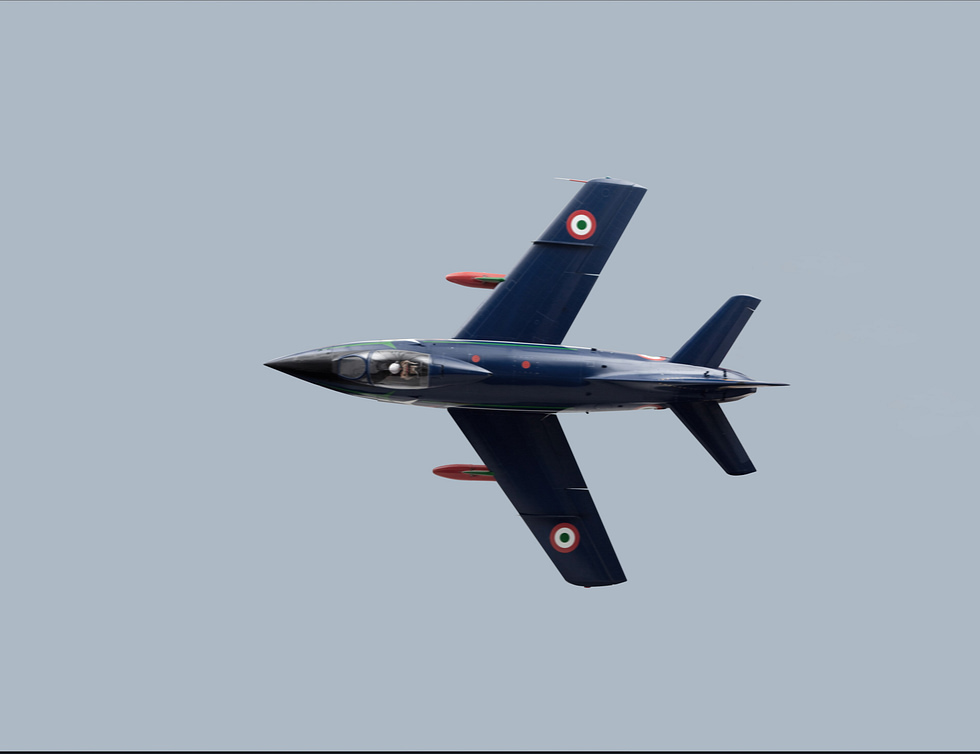
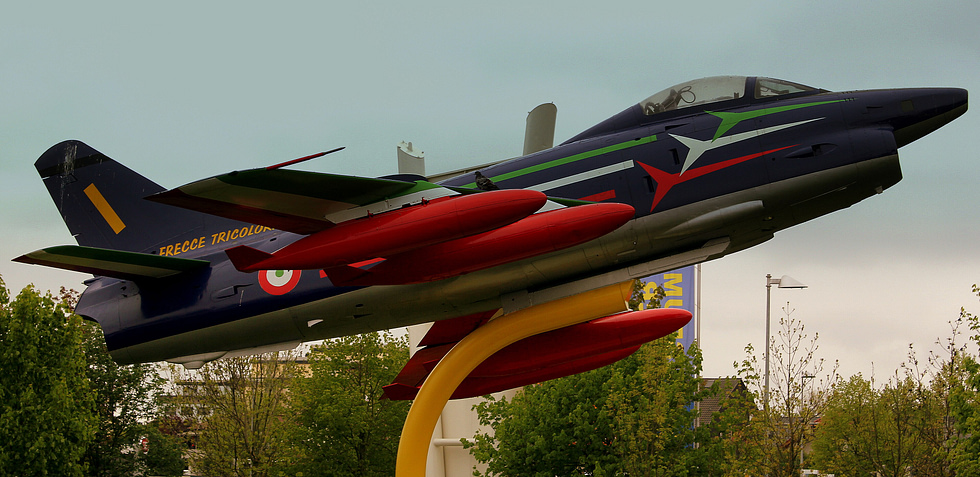
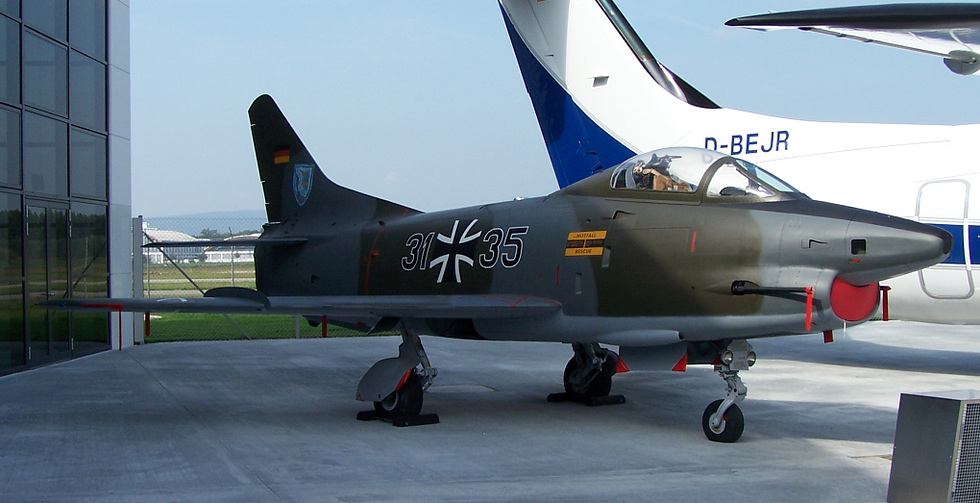
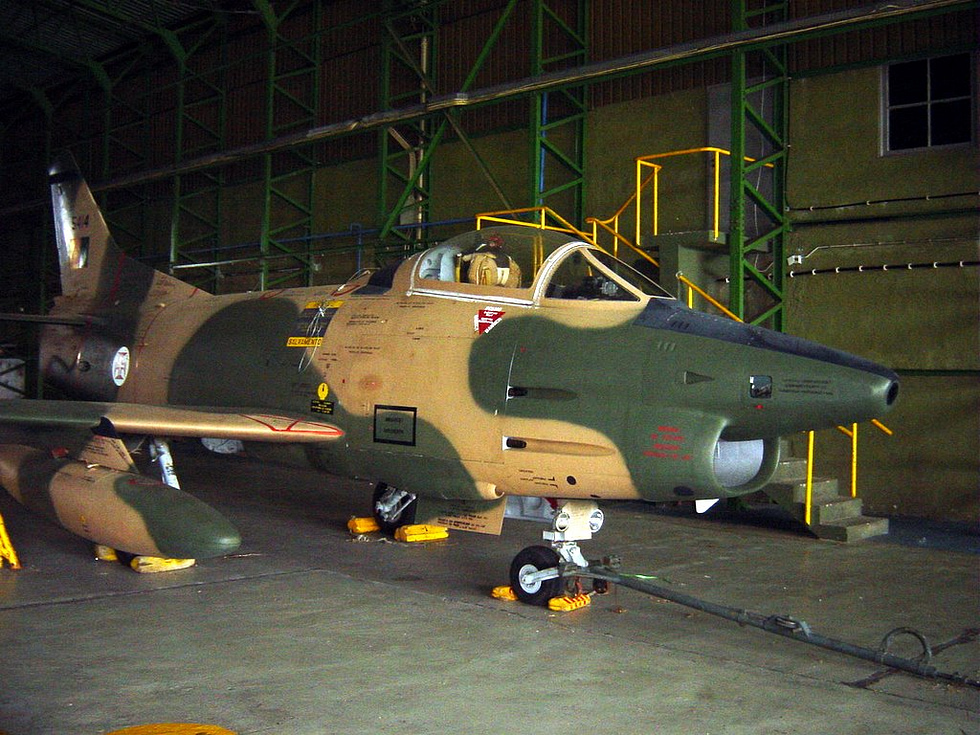
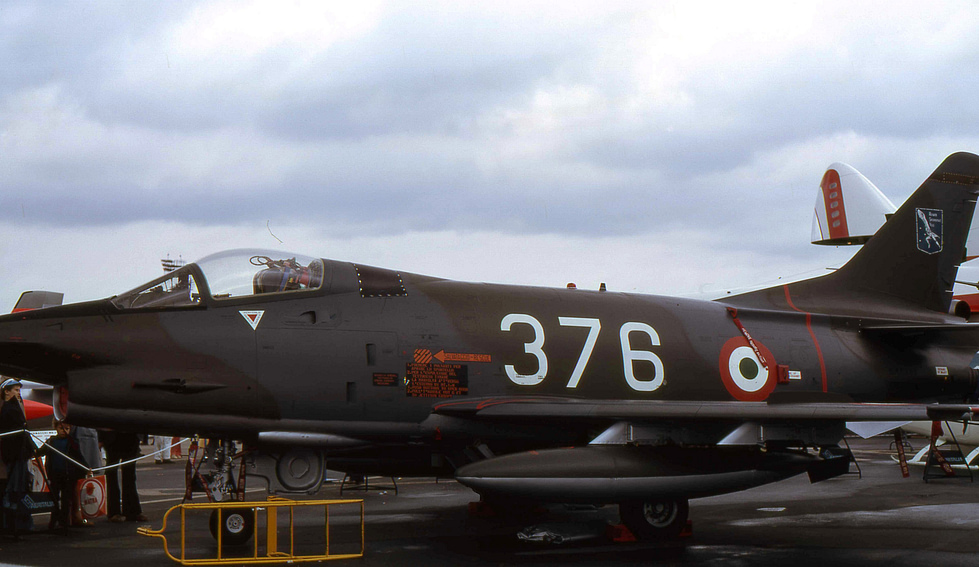
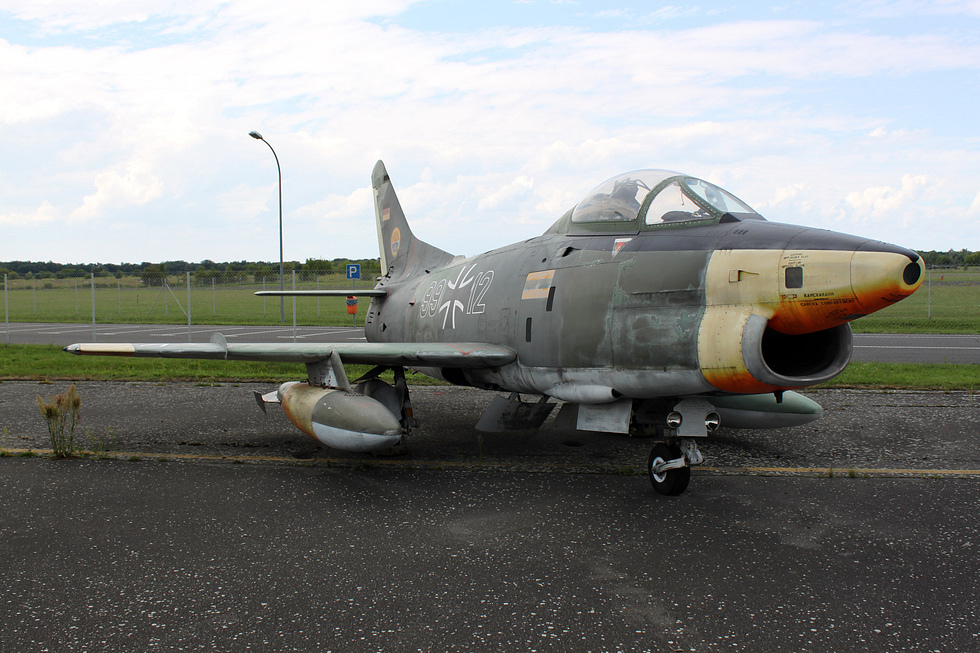
The Fiat G.91 in motion
A featured Fiat G.91 video is coming soon. In the meantime, explore the gallery above and the twelve stories for the full picture of NATO’s little strike fighter.
The G.91 in motion
Military Aviation History — one of the most-watched G.91 films on YouTube.
Where the Fiat G.91 flew
The war the Gina actually fought
Italy and West Germany kept the G.91 poised for a NATO war in Europe that never came — neither ever fired it in anger. The type’s only sustained combat was Portuguese: from 1966 the Portuguese Air Force flew the Gina in close-air-support and strike missions during the colonial wars in Guinea, Mozambique and Angola. It is a difficult chapter, recorded here as history — the little jet met heavy ground fire and, in Guinea, some of the first shoulder-launched anti-aircraft missiles ever used in combat.
Compare the combat record of every military aircraft. Figures as of July 2026.
Everything people ask about the Fiat G.91
Can I fly in a Fiat G.91?
What do the “G” and the name “Gina” mean?
Why was the G.91 built?
Who used the Fiat G.91 in combat?
What engine did it have?
How fast was the Fiat G.91?
Did the Frecce Tricolori fly the G.91?
Is any Fiat G.91 still flying?
You can’t fly the Fiat G.91.
These, you can.
Some legends only live in museums — others are fuelled and waiting. MiGFlug has put civilians in real military jet cockpits since 2004.
 Fly the L-39 AlbatrosThe world’s most-flown jet trainer — aerobatics included
 Fly the F-104 Starfighter“The missile with a man in it”
 Fly the MiG-21The Cold War’s most-produced jet
 Leťte s T-33 Shooting StarAmerica’s first jet trainer
 Fly the DH VampireA piece of early jet history
 Fly the S.211Agile Italian jet trainer
 Fly the MB-326The classic Aermacchi jet
 Fly the MiG-15The Soviet legend of the Korean War
Continue the tour
Every fact, checked
- GlobalSecurity.org — Fiat G.91NATO competition, engine, variants, production and operator breakdown.
- The Aviation Geek ClubPortuguese G.91 service in Angola — squadrons, serials and the 1974–75 withdrawal.
- Aces Flying High — Portuguese TigerPortuguese variants, combat losses, SA-7 shoot-downs and the 75,000-hour tally.
- Malta Aviation MuseumNBMR-1 background, competition finalists, variants and Frecce Tricolori history.
- flugzeuginfo.net — G.91 dataDimensioned specifications for the single-engine G.91R.
- MilitaryFactory — Fiat G.91Variant-by-variant armament and specifications (12.7 mm guns vs 30 mm cannon).
- AirVectors (Greg Goebel)Narrative development history and the G.91/AMX variant lineage.
- Vintage Aviation NewsThe sole airworthy G.91 (MM6305), restored 2022–23, and total-production figures.