
Mitsubishi G4M
“Betty”
The Imperial Japanese Navy’s long-range land-based bomber — fast and far-reaching, but so lightly built that Allied crews called it the “one-shot lighter.”
Range bought with fire
In 1937 the Imperial Japanese Navy issued a specification for a land-based bomber that could reach far out across the Pacific and strike ships and bases at extreme range. Mitsubishi’s answer, led by engineer Kiro Honjo, was the G4M — a clean, cigar-shaped twin the Navy insisted be built around just two engines. To hit the demanded range on two engines, Honjo’s team made a hard bargain: they left out armour plate and self-sealing fuel tanks, and turned the wings themselves into large unprotected fuel cells.
First flown on 23 October 1939 and in service by 1941, the result was genuinely fast and astonishingly long-legged — able to range farther than almost any Allied medium bomber of the early war. It announced itself spectacularly on 10 December 1941, when G4M and older G3M torpedo and level bombers of the IJN caught and sank the British capital ships HMS Prince of Wales a HMS Repulse off Malaya — the first capital ships sunk by air power alone while under way at sea.
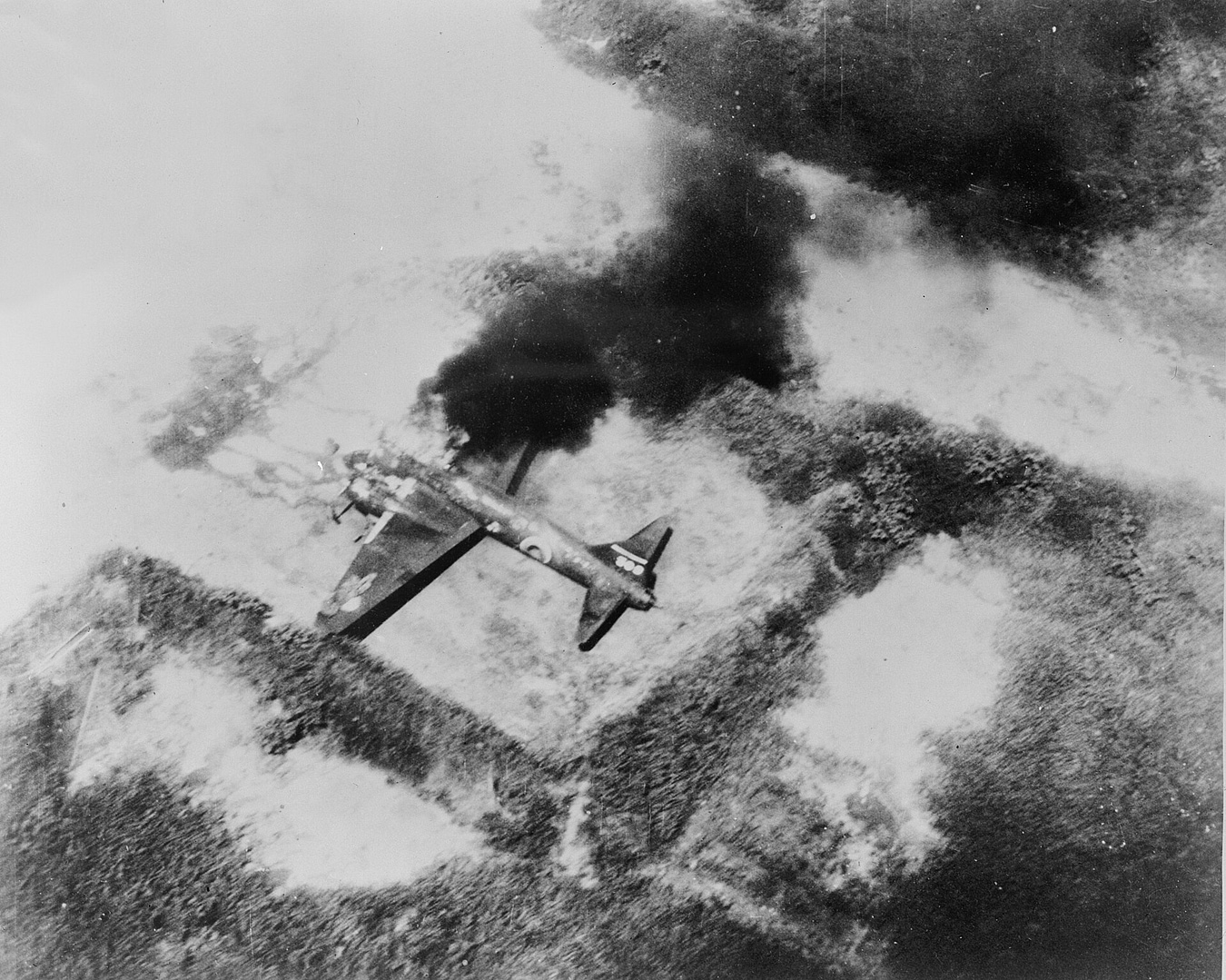
But the bargain had a price. With no protection and fuel packed through the wings, a single burst of tracer could turn the Betty into a torch. Allied fighter pilots came to call it the “one-shot lighter” or “flying Zippo”; Japanese crews knew its cigar shape as the Hamaki, and — by some accounts — wryly as the “Type 1 lighter.” Over well-defended targets whole formations were shot down in flames. The same airframe carried Admiral Isoroku Yamamoto to his death in 1943, later slung the Ohka suicide rocket beneath its belly, and finally, in August 1945, flew Japan’s surrender delegates painted white with green crosses. Around 2,435 were built; not one complete example survives airworthy today.
01The Mitsubishi G4M Betty’s fatal bargain: how range was paid for with fire
The Navy’s 1937 requirement asked for a land-based bomber with the range of a flying boat but the speed of a modern aircraft — and it capped the design at two engines. Kiro Honjo, who had studied advanced structures in Germany, knew what that combination demanded. Every kilogram spent on armour plate or rubber-lined self-sealing tanks was a kilogram of fuel not carried, so those items were deleted. The wing was built as an integral “wet” structure, its interior sealed and filled with fuel.
The trade delivered the range the Navy wanted, and in 1941–42 that reach let the Betty strike where no one expected it. Yet the very tanks that gave it range had no way to seal a puncture or smother a fire. From 1943 the Navy tried to claw back some protection — adding covers over the tanks on later G4M1s, and finally a properly armoured G4M3 in 1944 — but by then Allied fighters and radar-directed guns were everywhere, and only about sixty G4M3s were completed before the war ended.
What makes it special
Range delivered by deleting protection
To meet the Navy’s long-range demand on two engines, Mitsubishi left out armour and self-sealing fuel tanks and turned the wings into integral fuel cells. The Betty could out-range almost any Allied medium bomber — roughly 6,000 km at the extreme — but a single incendiary strike could set the unprotected tanks ablaze, earning it the “one-shot lighter” name.
A naval striker: torpedoes and level bombing
The G4M was first of all a torpedo bomber, able to carry one aerial torpedo of roughly 800 kg or a comparable load of bombs, flown by a crew of seven. Defensive fire came from several 7.7 mm machine guns and a 20 mm cannon in the tail — adequate in 1941, but never enough to cover an airframe with no armour behind it.
The Ohka carrier — and a white-and-green footnote
Late in the war the G4M2e was adapted to carry the Yokosuka MXY-7 Ohka, a piloted rocket bomb, slung under the fuselage; laden and slow, the mother ships suffered catastrophic losses. In a very different role, two G4Ms painted white with green crosses carried Japan’s surrender delegation in August 1945.
02The Mitsubishi G4M Betty’s engines and defence: Kasei radials and a tail cannon
Power came from two Mitsubishi Kasei (“Mars”) fourteen-cylinder radials of roughly 1,530 hp each, giving a top speed around 428 km/h. Defensively the early Betty relied on a scatter of 7.7 mm machine guns and a single 20 mm cannon in the tail. Allied pilots quickly learned that the guns could be endured and the fuel could not — the surest kill was a burst into the wing roots. Later marks added heavier tail armament and, eventually, tank protection, but the fundamental vulnerability was baked into the original bargain.
03The Mitsubishi G4M Betty and the Ohka: mother ship to the piloted rocket bomb
From 1944 the G4M2e was modified to carry the Ohka — a small, rocket- or jet-boosted piloted bomb designed to be released near an Allied ship and flown into it by its pilot. The Betty had to lug the heavy, draggy weapon most of the way to the target, becoming slower and even more vulnerable in the process. On the first mass sortie, on 21 March 1945, the entire formation of mother ships was intercepted and destroyed before any Ohka could be launched. It was a grim illustration of how far the Betty’s lack of protection had caught up with it by the war’s end.
Full specifications
Airframe & Performance
- Posádka
- 7
- Délka
- ~20.0 m
- Rozpětí křídel
- ~25.0 m
- Výška
- ~6.0 m
- Prázdná hmotnost
- ~6,800 kg
- Max takeoff weight
- ~9,500 kg (G4M1)
- Max speed
- ~428 km/h (266 mph)
- Maximum range
- ~5,000–6,000 km
- Servisní strop
- ~8,800 m
Propulsion & Systems
- Engines
- 2 × Mitsubishi Kasei radials
- Power (each)
- ~1,530 hp
- Warload
- 1 torpedo (~800 kg) or ~1,000 kg bombs
- Defensive armament
- 1 × 20 mm cannon + 7.7 mm MGs
- First flight
- 23 October 1939
- Service entry
- 1941
- Built
- ~2,435 (all variants)
- Operator
- Imperial Japanese Navy only
- Cost per flight hour
- No reliable public figure
04The Mitsubishi G4M Betty’s cost: why no reliable price exists
The G4M was a wartime Japanese state product, built by Mitsubishi for the Imperial Japanese Navy and never sold on an open market. No dependable flyaway unit price or cost-per-flight-hour figure survives in the public record, and wartime Japanese accounting was disrupted by the collapse of 1945. What is well documented is the scale of production — roughly 2,435 airframes across all variants — which made the Betty the Navy’s most numerous land-based bomber. Any precise dollar figure attached to a G4M today should be read as an estimate, not a sourced fact.
From long-range striker to surrender transport
The requirement
The Imperial Japanese Navy issues a specification for a long-range, land-based attack bomber; Mitsubishi assigns Kiro Honjo to the design.
First flight
The prototype flies on 23 October, showing the range the Navy wanted — and the lightly built, unprotected structure that made it possible.
Enters service
The G4M joins front-line units and goes to war across China and the Pacific as a torpedo and level bomber.
Prince of Wales and Repulse
On 10 December, IJN torpedo and level bombers sink the British capital ships off Malaya — the first sunk by air power alone while under way.
The flammability bill
Over Guadalcanal and the Solomons, unprotected Bettys are shot down in flames in large numbers, confirming the “one-shot lighter” reputation.
Operation Vengeance
US P-38 Lightnings intercept and shoot down the G4M carrying Admiral Isoroku Yamamoto over Bougainville on 18 April.
The Ohka carrier
The G4M2e carries the piloted Ohka rocket bomb; on the first mass mission (21 March 1945) the mother ships are wiped out before launching.
White wings, green crosses
Two G4Ms painted white with green crosses fly Japan’s surrender delegation to Ie Shima. Production ends at roughly 2,435 aircraft.
From the war: twelve Betty stories
The bomber built to reach the horizon
The Navy wanted a land bomber with the range of a flying boat — on two engines.
Read the full story
Wet wings and no armour
To buy range, Honjo left out armour plate and self-sealing tanks and filled the wings with fuel.
Read the full story
The day the battleships fell
G4M and G3M bombers sank HMS Prince of Wales and HMS Repulse off Malaya.
Read the full story
The one-shot lighter
Allied pilots learned that one burst into the wing could light the whole aircraft.
Read the full story
Hamaki, the cigar
Japanese crews knew the Betty by its shape — and, some say, by darker jokes.
Read the full story
The formations that burned
Over the Solomons in 1942, unescorted Betty raids were savaged by defending fighters.
Read the full story
The death of Yamamoto
A G4M carrying the architect of Pearl Harbor was shot down in a targeted ambush.
Read the full story
Mother ship to the Baka bomb
The G4M2e hauled the piloted Ohka rocket toward Allied ships — at terrible cost.
Read the full story
The armoured Betty, too late
Only around sixty properly protected G4M3s were finished before the war ended.
Read the full story
Range, and its price
The men who flew the Betty knew its reputation better than anyone.
Read the full story
White wings, green crosses
Disarmed, white-painted Bettys flew the surrender delegates to meet the Allies.
Read the full story
The Betty that no longer flies
Of some 2,435 built, not one complete example survives airworthy.
Read the full story
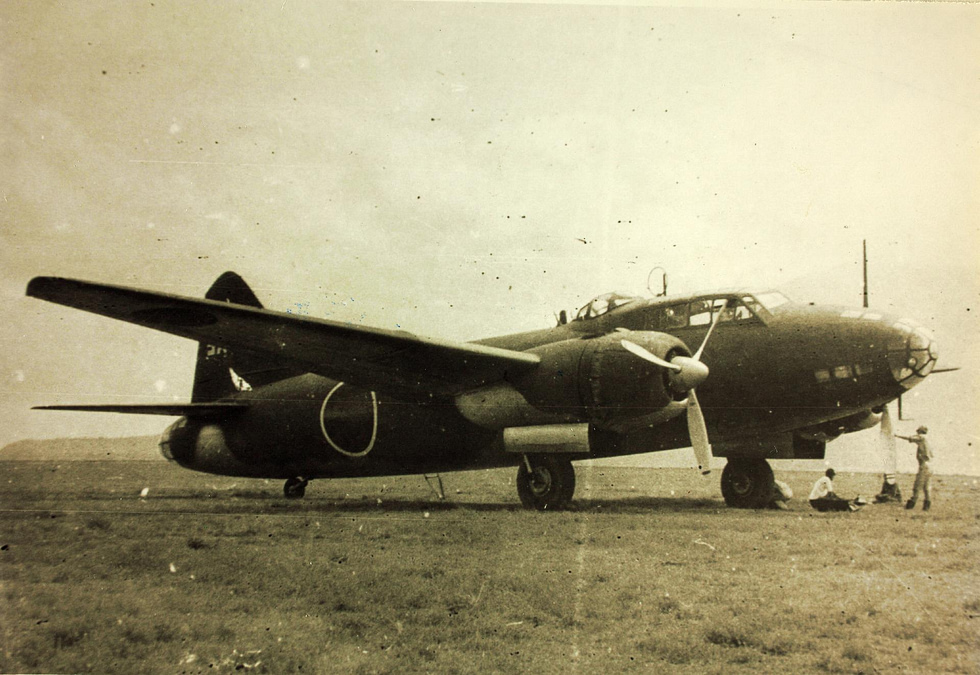
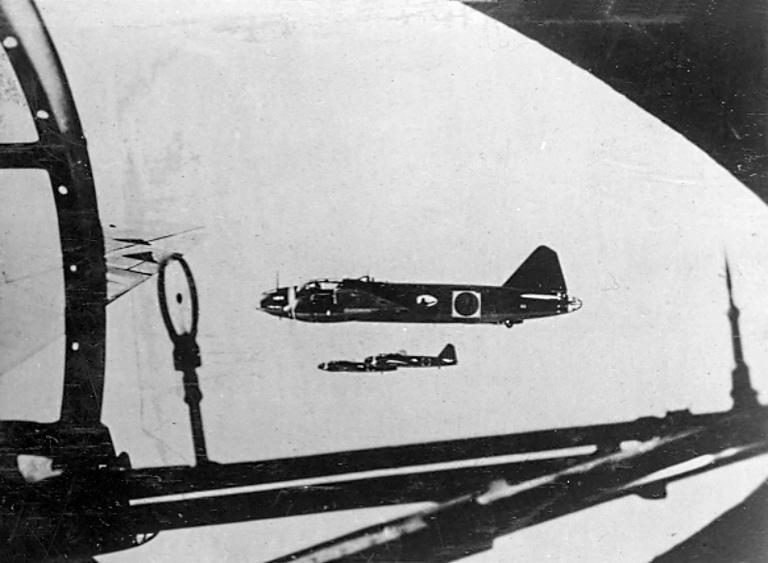
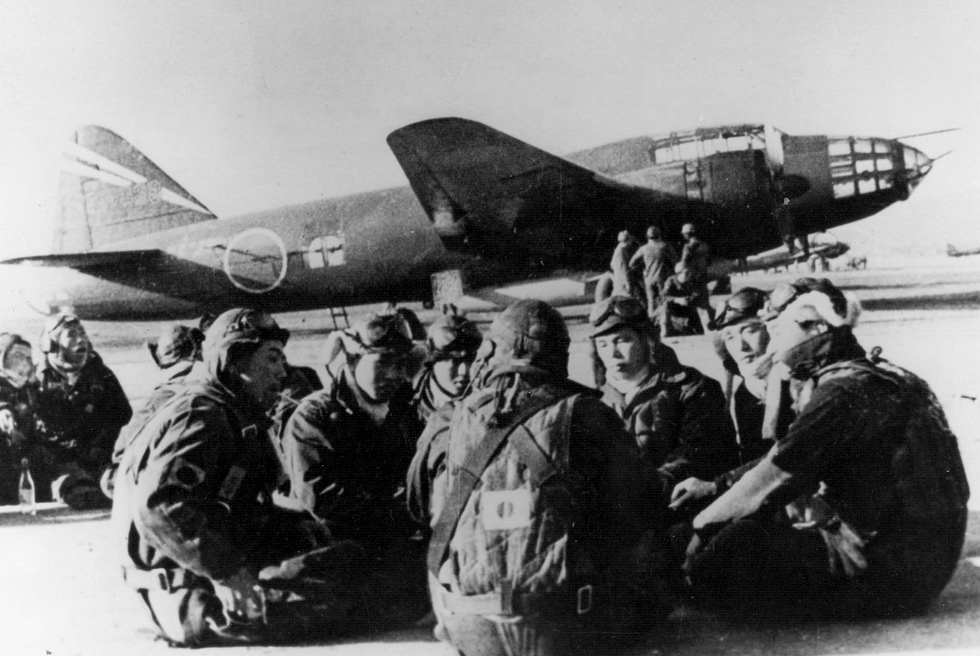
The Betty in pictures
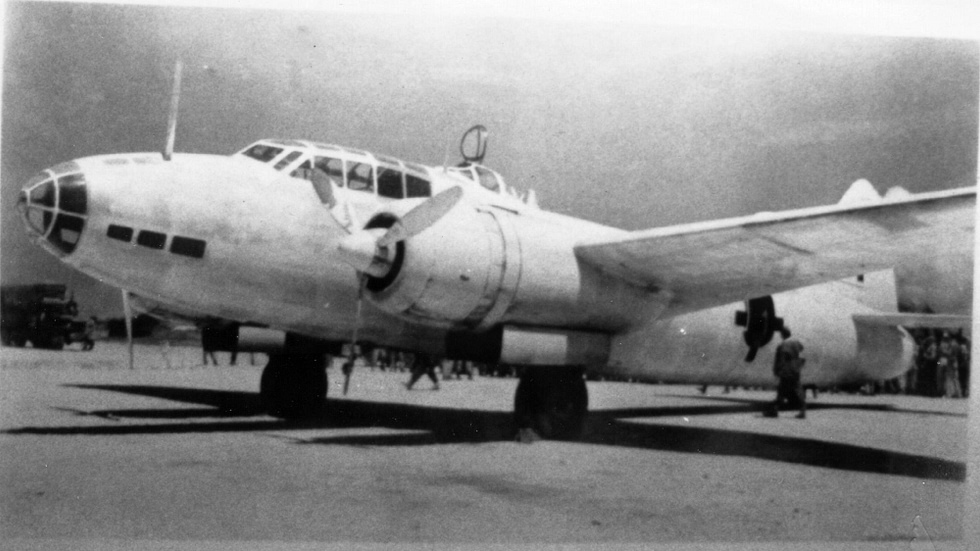
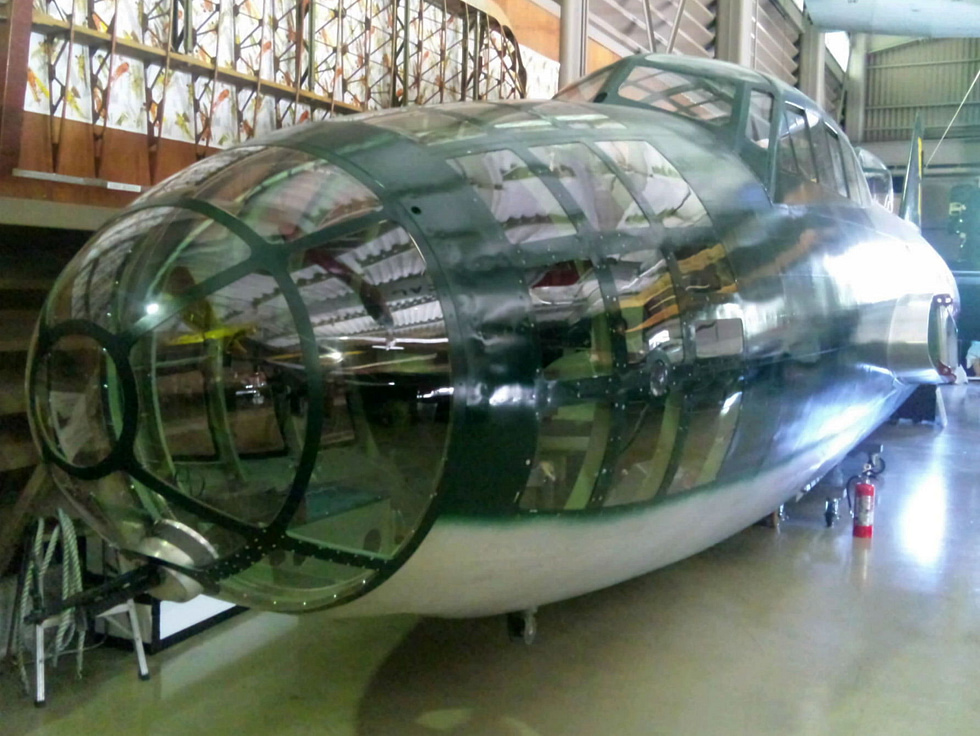
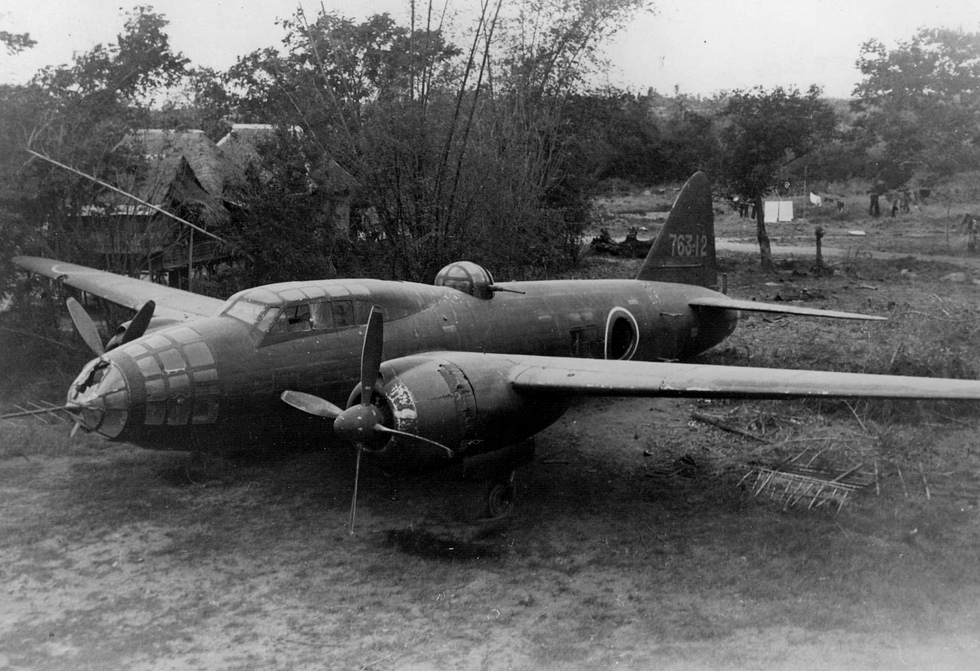
The Betty in motion
Video coming soon — we are sourcing a high-authority archival film of the G4M “Betty” for this exhibit.
Where the Betty flew
The score that defines it
The Betty’s combat record is a story of spectacular early success and a mounting bill for its lack of protection. Its greatest day came in the war’s first week; thereafter the same design that gave it reach made it fatally easy to burn. It served only with the Imperial Japanese Navy, from the opening of the Pacific war to the surrender.
Compare the combat record of every military aircraft. Figures as of July 2026.
Everything people ask about the G4M Betty
Can I fly in a G4M Betty?
Why was the G4M called the “one-shot lighter”?
Did the G4M really sink HMS Prince of Wales and HMS Repulse?
What happened to Admiral Yamamoto’s G4M?
What was the Ohka, and how did the Betty carry it?
How many G4Ms were built, and do any survive?
Did any country other than Japan use the G4M?
You can’t fly the Betty.
These, you can.
Some legends only live in museums — others are fuelled and waiting. MiGFlug has put civilians in real military jet cockpits since 2004.
 Fly the L-39 AlbatrosThe world’s most-flown jet trainer — aerobatics included
 Fly the F-104 Starfighter“The missile with a man in it”
 Fly the MiG-21The Cold War’s most-produced jet
 Leťte s T-33 Shooting StarAmerica’s first jet trainer
 Fly the DH VampireA piece of early jet history
 Fly the S.211Agile Italian jet trainer
 Fly the MB-326The classic Aermacchi jet
 Fly the MiG-15The Soviet legend of the Korean War
Continue the tour
Every fact, checked
- HistoryNet — Mitsubishi G4M: Why Betty BombedDesign bargain, Kiro Honjo, the flammability problem and crew nicknames.
- Smithsonian National Air and Space MuseumReference for the surviving G4M3 forward-fuselage section and variant data.
- The National WWII MuseumOperation Vengeance and the April 1943 shoot-down of Yamamoto’s G4M.
- Air & Space Forces MagazineThe P-38 interception that killed Admiral Yamamoto.
- Royal Air Force MuseumThe Yokosuka MXY-7 Ohka piloted rocket bomb carried by the G4M2e.
- Pacific WrecksThe white, green-crossed surrender-delegation Bettys (“Bataan”), 1945.
- History of WarSpecifications, range figures and variant history for the G4M.
- Naval History and Heritage CommandThe 10 December 1941 loss of HMS Prince of Wales and HMS Repulse.