
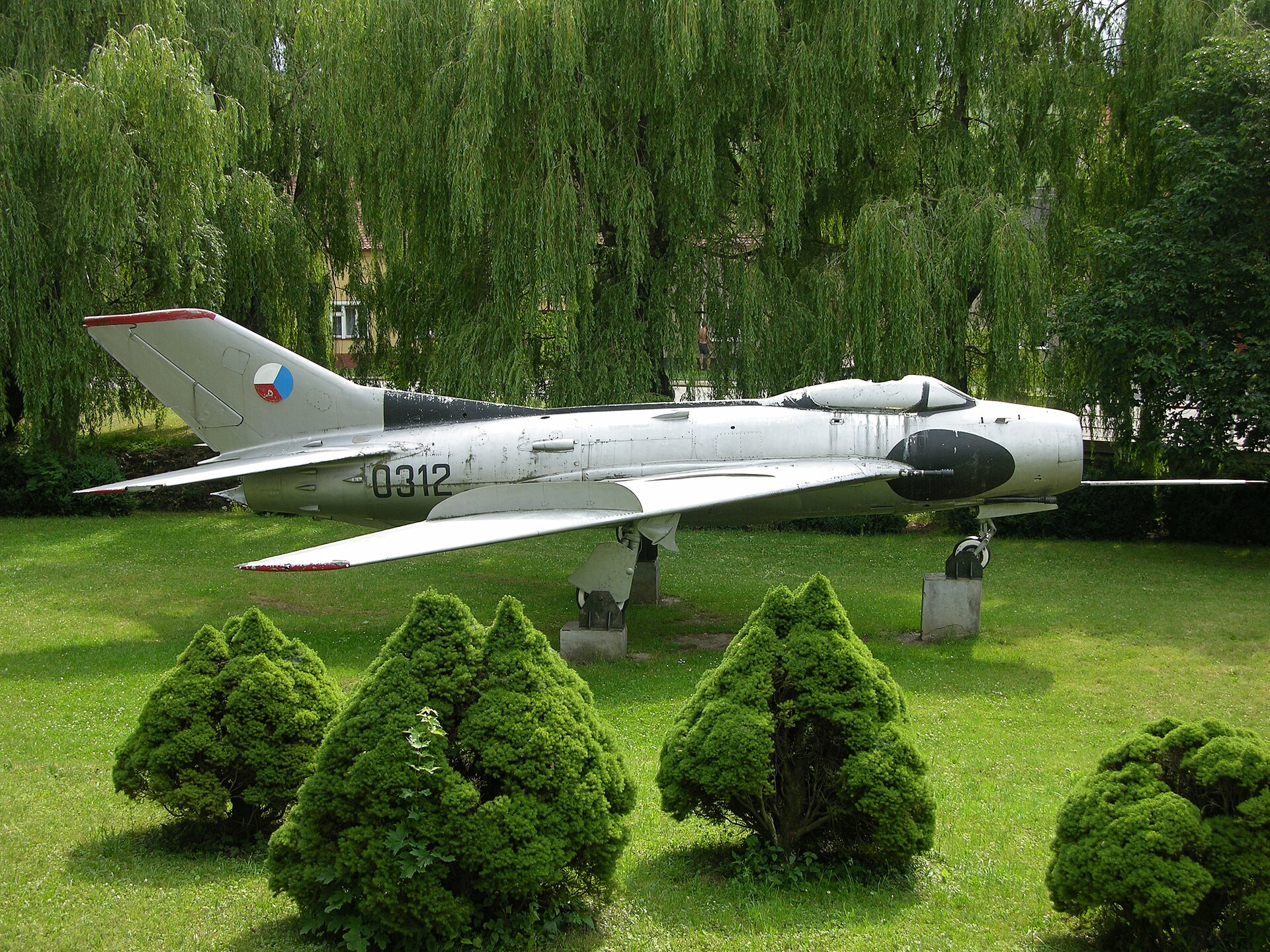
Mikoyan-Gurevich MiG-19
“Farmer”
The Soviet Union’s first mass-produced supersonic fighter — a twin-engined, hard-hitting day fighter that the USSR itself soon replaced, but which China built in the thousands as the Shenyang J-6 and flew for half a century.
The USSR’s first supersonic fighter
In the early 1950s the Mikoyan-Gurevich design bureau set out to give the Soviet air forces a fighter that could break the sound barrier in level flight — something no Soviet production aircraft had yet done. The result, developed from the swept-wing experimental SM-9, first flew in prototype form in September 1953 and entered service in 1955 as the MiG-19, known to NATO as “Farmer.” It was the first Soviet production fighter capable of supersonic speed in level flight, and one of the first genuinely supersonic fighters anywhere.
Unusually for a Soviet fighter of the day, the MiG-19 was twin-engined, powered by a pair of Tumansky RD-9B afterburning turbojets. That gave it strong acceleration and a rapid rate of climb, and its designers armed it heavily: three 30 mm NR-30 cannon, hard-hitting guns at a time when many Western designers were betting the future on air-to-air missiles alone. The definitive day-fighter version, the MiG-19S, appeared in 1956, alongside radar-equipped all-weather variants such as the MiG-19P and the missile-armed MiG-19PM.
In Soviet service the Farmer’s front-line career was surprisingly short. The far more capable MiG-21 arrived only a few years later, and the USSR began phasing the MiG-19 out of first-line units in the early 1960s. Its real legacy lies elsewhere: China took up a licence, and the Shenyang J-6 — and its export version, the F-6 — became the most-produced member of the family by far, built in the thousands and serving with air forces across Asia, the Middle East and Africa well into the 2010s.
01The MiG-19 Farmer and the Shenyang J-6: how to tell the Soviet and Chinese aircraft apart
Ten/Ta/To MiG-19 is the original Soviet aircraft, designed by Mikoyan-Gurevich and built in the USSR (with licence production also in Poland and Czechoslovakia). The Shenyang J-6 is China’s licensed copy of the MiG-19S, built by the Shenyang Aircraft Factory from the late 1950s; the version China exported was designated F-6. Mechanically the J-6/F-6 is very close to the Soviet MiG-19S — same twin-engine layout, same three-cannon armament — but China kept it in production for decades after Soviet lines had closed, refining and simplifying it and building far more than the USSR ever did. So when you read about a “MiG-19” in Pakistani, Vietnamese, Egyptian or Bangladeshi service, it is almost always really a Chinese-built J-6 or F-6. We use “MiG-19” for the Soviet aircraft and the family as a whole, and “J-6 / F-6” where the Chinese-built machine is specifically meant.
What makes it special
Twin turbojets and genuine supersonic speed
Where earlier Soviet fighters like the MiG-15 and MiG-17 had a single engine, the MiG-19 used two Tumansky RD-9B afterburning turbojets, roughly 32 kN dry and about 37 kN each in reheat. Combined with a highly swept wing, that gave it a top speed of around Mach 1.35 and an excellent rate of climb — enough to make it the first Soviet production fighter able to go supersonic in level flight.
Three 30 mm cannon — a heavy gun fighter
The MiG-19S carried three 30 mm NR-30 cannon (one in each wing root and one in the fuselage), firing shells far heavier than the 20 mm guns common on Western fighters. At a moment when some Western designers were moving toward missile-only armament, the Farmer stayed a hard-hitting gun fighter — a choice that paid off in the close-in dogfights its export descendants later fought.
The J-6: cheap, rugged and long-lived
The MiG-19’s most remarkable quality only emerged in Chinese hands. Built as the Shenyang J-6, the design proved simple, robust and inexpensive — easy to maintain and to fly from rough fields. China produced it in very large numbers and kept it in service for decades, and export F-6s soldiered on with several air forces into the 2010s, long after the Soviet original had been retired.
02The MiG-19 Farmer’s guns: why the Soviets kept a heavy cannon fighter
The MiG-19S was built around three 30 mm NR-30 cannon, a battery capable of destroying a bomber or fighter with a short burst. This ran against the trend of the late 1950s, when the United States and others increasingly believed guided missiles would make the gun obsolete — a belief that led to fighters such as early F-4 Phantoms carrying no internal cannon at all. Combat over Vietnam and the Middle East later showed that guns still mattered in a close turning fight, and the Chinese-built J-6 and F-6, with their three heavy cannon, were respected precisely because they could hit hard at short range. Exact effectiveness figures vary by account and should be read with caution, but the design philosophy — keep the guns — aged well.
03The Shenyang J-6 Farmer’s longevity: fifty years from a short-lived Soviet fighter
In Soviet service the MiG-19 was a brief interlude between the subsonic MiG-17 and the far more capable MiG-21, phased out of front-line units within roughly a decade. China took the opposite path. Having begun licence production in the late 1950s, the Shenyang Aircraft Factory turned out the J-6 in very large numbers — commonly cited figures run to several thousand aircraft — and kept refining and building it into the 1980s. Cheap, tough and easy to operate, the J-6 and its F-6 export version became a mainstay for many smaller air forces. China is generally reported to have retired the last of its own J-6 fighters from front-line use around 2010, with some export operators flying them a few years longer. Precise production totals and retirement dates vary between sources.
Full specifications (MiG-19S)
Airframe & Performance
- Posádka
- 1
- Délka
- ~12.5 m
- Rozpětí křídel
- ~9.0 m
- Výška
- ~3.9 m
- Max takeoff weight
- ~8,900 kg
- Max speed
- ~Mach 1.35 · ~1,450 km/h at altitude
- Servisní strop
- ~17,500 m
- Rozsah
- ~1,400 km with external tanks
- Wing sweep
- 55° leading edge
Propulsion & Systems
- Engines
- 2 × Tumansky RD-9B turbojets
- Thrust (each)
- ~36.8 kN with afterburner
- Vyzbrojení
- 3 × 30 mm NR-30 cannon
- Závěsné body
- Rockets, bombs; later air-to-air missiles
- First flight
- September 1953
- In service
- 1955
- Built
- ~2,000+ (USSR) plus several thousand as the Chinese J-6
- Unit cost
- No reliable public figure (see note)
- Cost per flight hour
- No reliable public figure
04The MiG-19 Farmer’s cost: why no reliable price exists
The MiG-19 was a Soviet state product and the J-6 a Chinese one; neither was sold on an open commercial market, so no firm flyaway unit price exists in the public record. The Chinese-built F-6 was widely regarded as an inexpensive fighter — one of its main attractions for smaller air forces — but concrete per-aircraft dollar figures from the period are scarce and inconsistent. No credible cost-per-flight-hour figure exists for the type in open sources. Any precise dollar figure attached to a MiG-19 or J-6 should be treated as an estimate.
From Soviet first to Chinese mainstay
First flight
The MiG-19 prototype, developed from the experimental SM-9, first flies in September 1953.
Enters service
The MiG-19 becomes the first Soviet production fighter able to go supersonic in level flight.
The definitive MiG-19S
The three-cannon MiG-19S day fighter appears, followed by radar-equipped and missile-armed variants.
Cold-War intercepts
Soviet MiG-19s down a US RB-47 over the Barents Sea; on the day of the U-2 shootdown a Soviet MiG-19 is lost to friendly fire.
Superseded by the MiG-21
The far more capable MiG-21 pushes the MiG-19 out of Soviet front-line units after only a few years.
The Shenyang J-6
China’s licence-built J-6 enters PLAAF service; it and the export F-6 will be built in the thousands.
War over the subcontinent
Pakistan Air Force Shenyang F-6s fly intensively in the Indo-Pakistani war, well regarded in the close-in fight.
The last Farmers retire
China retires its front-line J-6s around 2010; some export F-6 operators fly on a few years longer.
Twelve stories of the Farmer
Prolomení zvukové bariéry
The MiG-19 was the first Soviet production fighter able to go supersonic in level flight.
Read the full story
Why two engines
The MiG-19 broke with Soviet single-engine tradition to get the thrust it needed.
Read the full story
A three-cannon gun fighter
The MiG-19S carried three heavy 30 mm cannon at a time when the West was chasing missiles.
Read the full story
The Barents Sea shootdown
A Soviet MiG-19 downed a US RB-47 reconnaissance aircraft over the Barents Sea in July 1960.
Read the full story
Friendly fire on the U-2 day
On the day Gary Powers was shot down, the Soviets accidentally downed one of their own MiG-19s.
Read the full story
The Shenyang J-6
China turned the MiG-19 into its own mass-produced fighter, the J-6.
Read the full story
The J-6 goes to war
North Vietnam flew Chinese-built J-6s late in the air war over the North.
Read the full story
The F-6 in Pakistani hands
Pakistan’s Shenyang F-6s were highly regarded in the 1971 war.
Read the full story
A fighter for many air forces
Cheap and rugged, the F-6 spread to air forces across the Middle East and Africa.
Read the full story
From day fighter to all-weather
The Farmer family grew to include radar-equipped and missile-armed versions.
Read the full story
The two-seat JJ-6
China built a tandem two-seat trainer to convert pilots onto the fast, demanding Farmer.
Read the full story
A short Soviet life, a long second one
The MiG-19’s story is really two stories — a brief Soviet career and a long Chinese one.
Read the full story
The Farmer in pictures
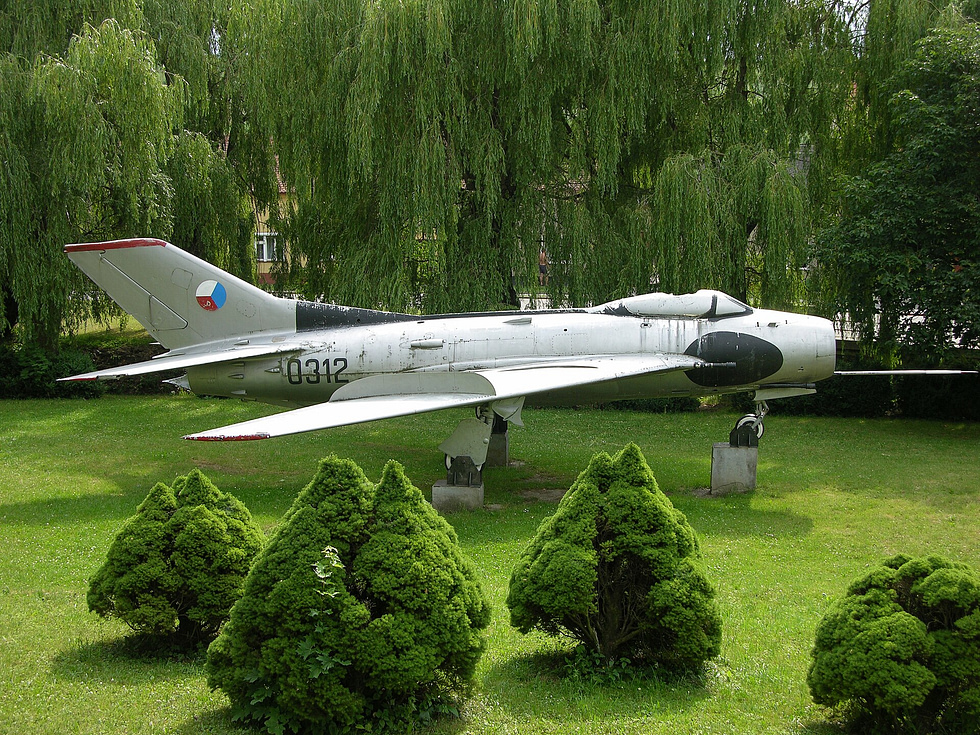

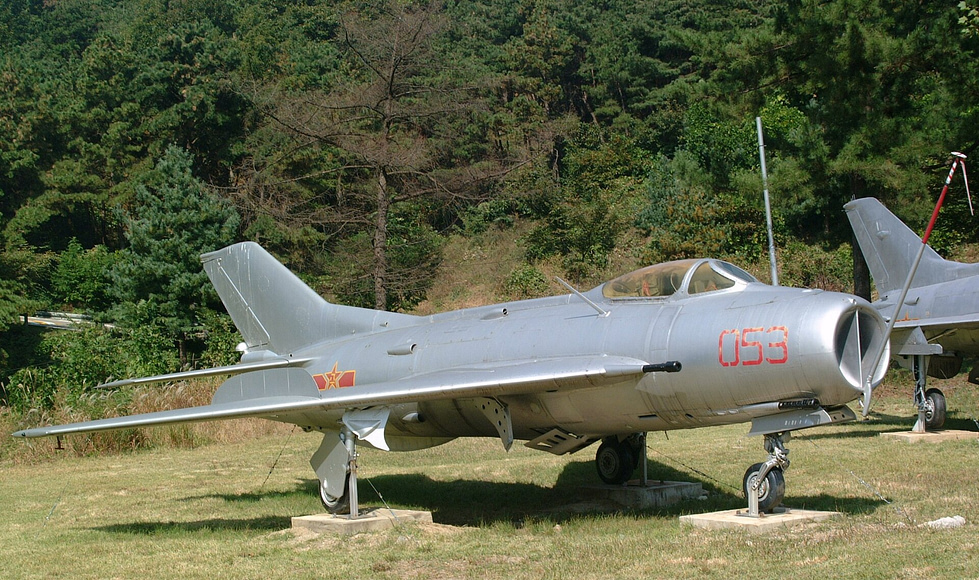
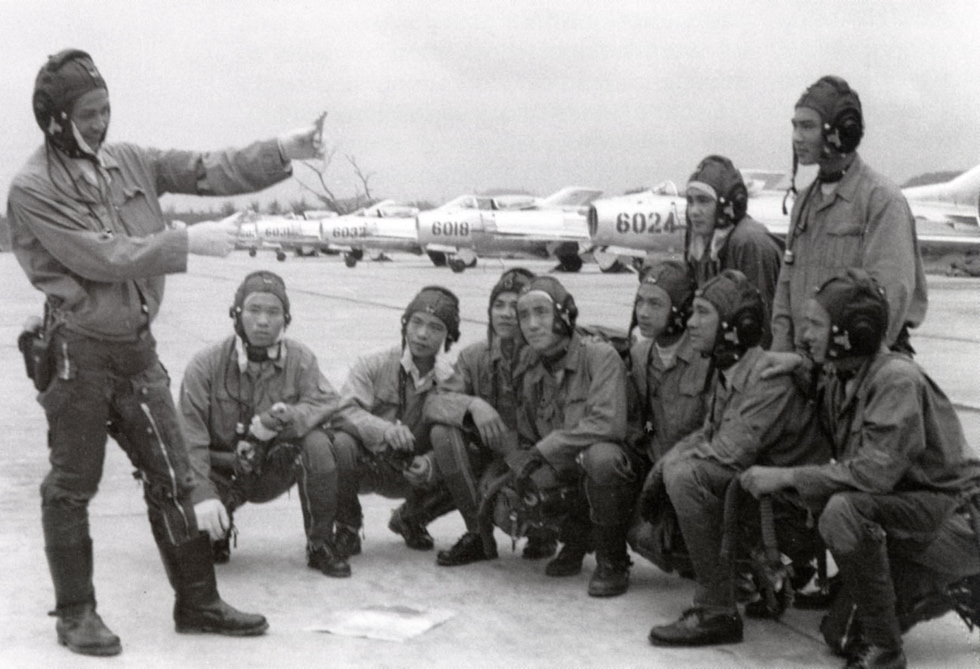
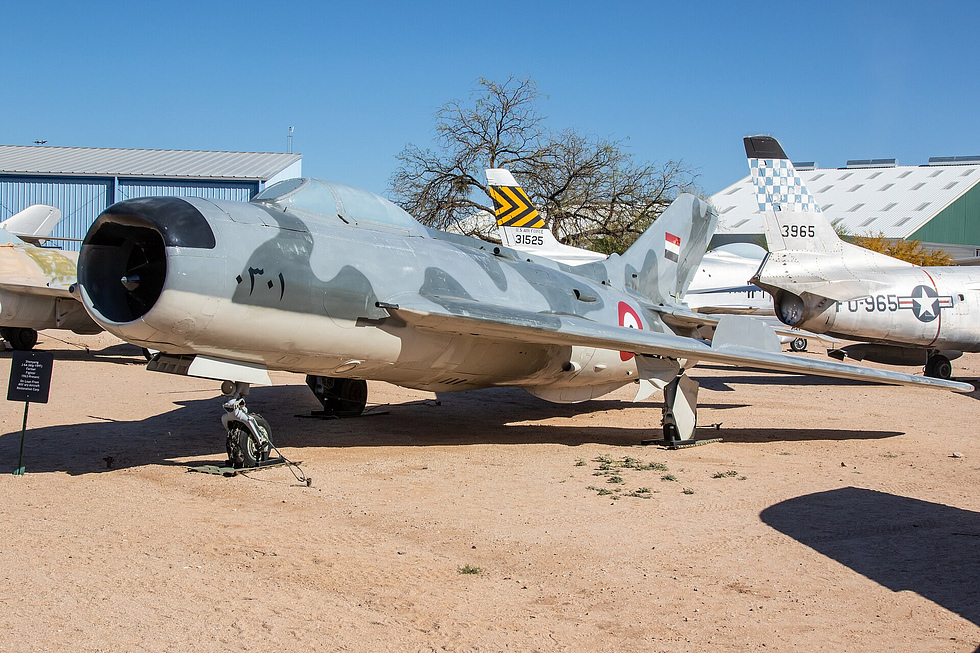
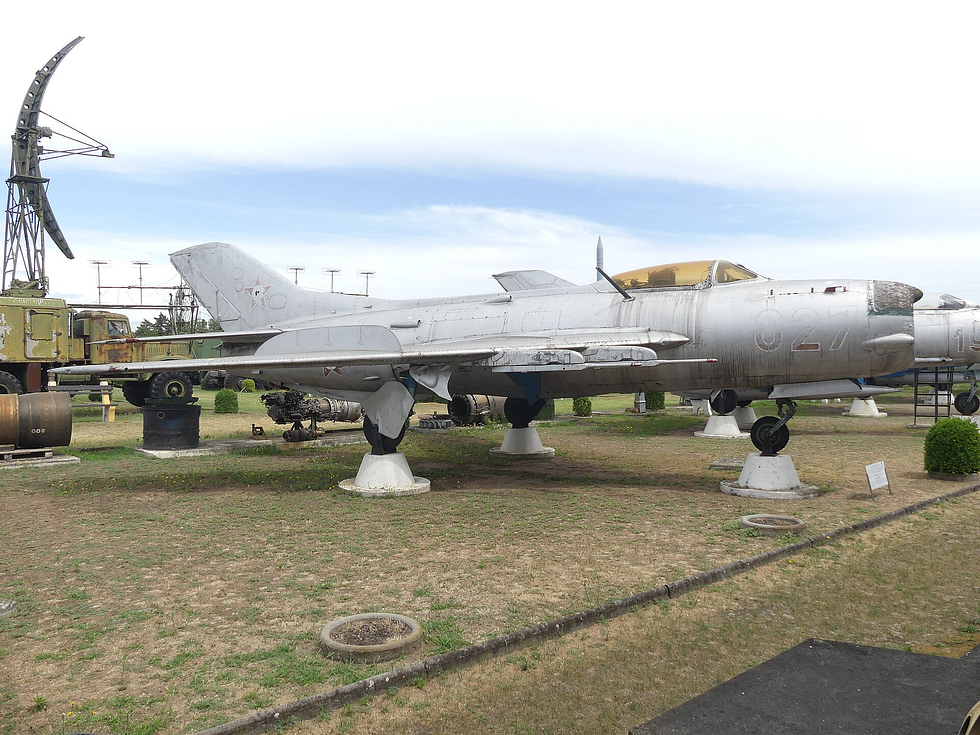
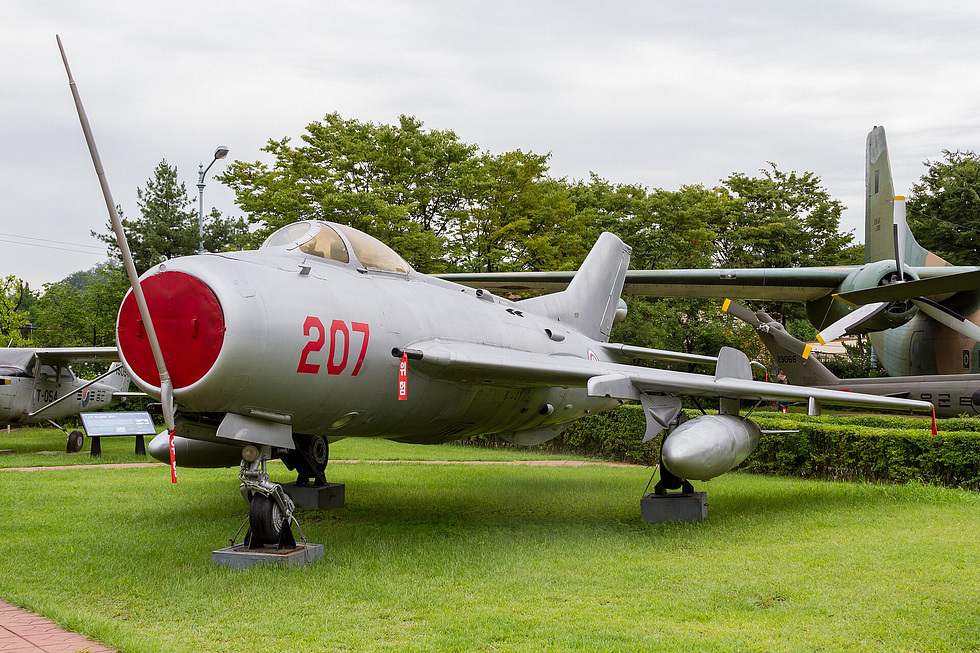
The MiG-19 in motion
A verified, high-authority video feature for the MiG-19 is still being selected — video coming soon. In the meantime, the photo gallery above and the stories carousel cover the aircraft in depth.
Where the Farmer flew
The record that defines it
The MiG-19 itself saw only limited front-line combat in Soviet hands, but as the Chinese J-6 and F-6 the design fought in Vietnam, over the subcontinent, and across the Middle East and Africa. Its combat reputation rests on close-in dogfighting with three heavy cannon. Kill-and-loss figures for these conflicts vary widely between sources and are presented here neutrally.
Compare the combat record of every military aircraft. Figures as of July 2026.
Everything people ask about the MiG-19
Can I fly in a MiG-19?
What is the difference between the MiG-19 and the Shenyang J-6?
Was the MiG-19 the first Soviet supersonic fighter?
How many MiG-19s and J-6s were built?
Did the MiG-19 see combat?
How good was the Pakistani F-6?
Why did the Soviet Union retire the MiG-19 so quickly?
Is the MiG-19 still in service?
You can’t fly the MiG-19.
These, you can.
Some legends only live in museums — others are fuelled and waiting. MiGFlug has put civilians in real military jet cockpits since 2004.
 Fly the L-39 AlbatrosThe world’s most-flown jet trainer — aerobatics included
 Fly the F-104 Starfighter“The missile with a man in it”
 Fly the MiG-21The Cold War’s most-produced jet
 Leťte s T-33 Shooting StarAmerica’s first jet trainer
 Fly the DH VampireA piece of early jet history
 Fly the S.211Agile Italian jet trainer
 Fly the MB-326The classic Aermacchi jet
 Fly the MiG-15The Soviet legend of the Korean War
Continue the tour
Every fact, checked
- National Museum of the US Air Force — MiG-19SDimensions, engines, armament and the “first Soviet supersonic-in-level-flight” note.
- Airforce Technology — Shenyang J-6 / F-6Production numbers, export operators, engines and the 2010 retirement.
- GlobalSecurity.org — MiG-19 operationsCold-War intercepts, the 1960 RB-47 shootdown and combat history.
- Weapons and Warfare — Shenyang F-6 in Pakistani serviceThe F-6 in the 1971 war: sorties, victories, losses and pilot assessments.
- Military Factory — MiG-19 FarmerCross-checked specification and variant data.
- The Aviation Geek ClubFirst-person Pakistani F-6 combat accounts from the subcontinent.
- The National InterestOverview of the MiG-19 as the Soviet Union’s short-lived first supersonic fighter.
- Pickled Wings — The Forgotten MiGDevelopment, variants and the type’s long second life in Chinese hands.