
The nimble Nieuport that France turned down — and that the United States flew into its first air battles, carrying Rickenbacker, Campbell and Quentin Roosevelt aloft, with one dangerous flaw sewn into its upper wing.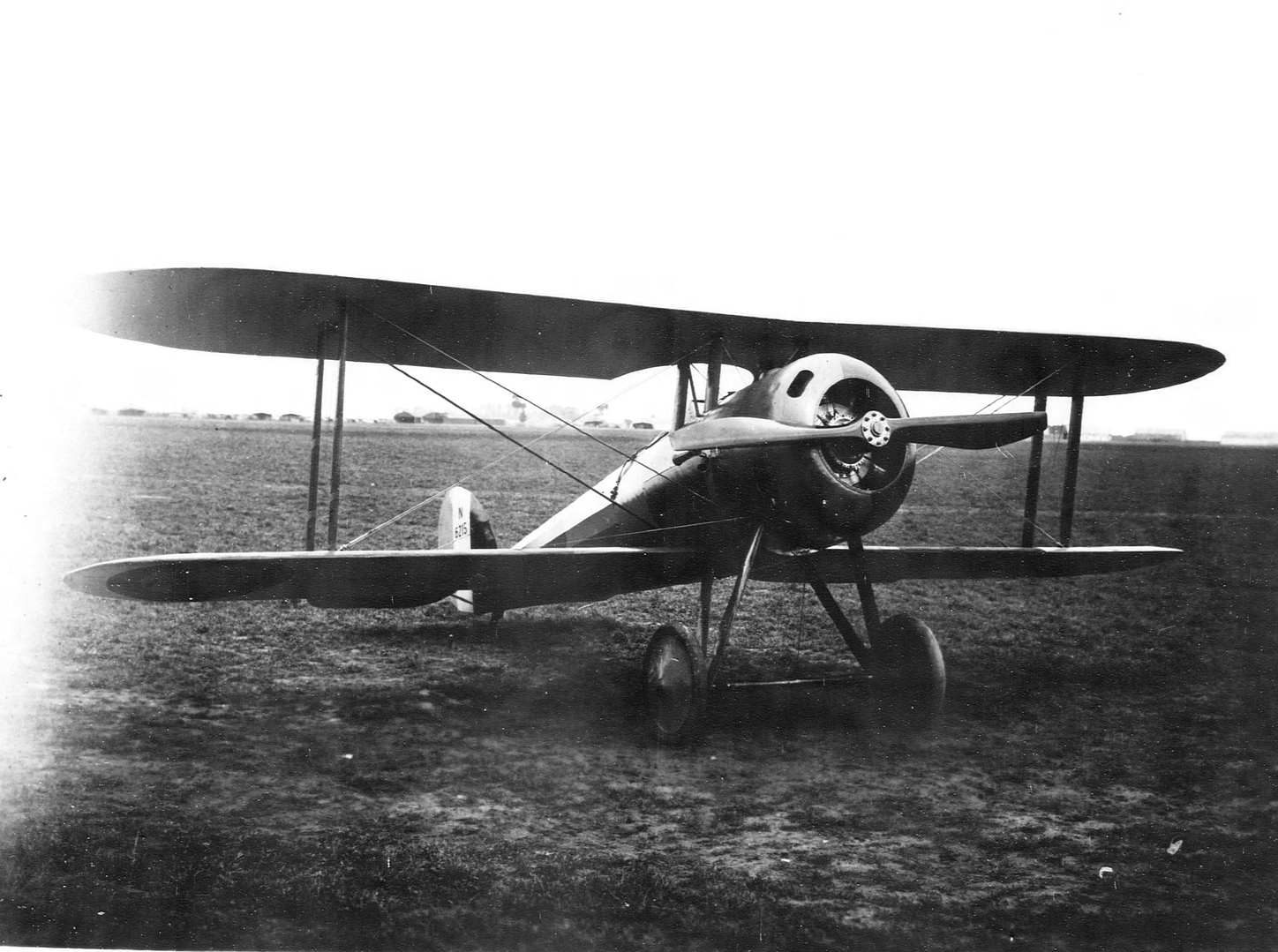
Nieuport 28
“The French fighter America took to war”
The Nieuport 28: the French fighter America took to war
In the spring of 1918 the United States had declared war on Germany a year earlier but still had almost no fighters of its own. American pilots trained in France and flew French machines, and the fighter that carried them into their first real air battles was one the French themselves no longer wanted: the Nieuport 28.
The Nieuport company had built a legend on light, agile sesquiplane scouts — the Nieuport 11, 17 and their successors — whose narrow lower wing gave superb visibility and turn at the cost of strength. The Nieuport 28, first flown in 1917, broke with that formula. It kept the delicacy but gave the lower wing real chord and area, hung a powerful 160 hp Gnome Monosoupape 9N rotary in the nose and, for the first time on a production Nieuport, mounted two synchronised Vickers guns. It was faster, better armed and cleaner than anything Nieuport had built before.
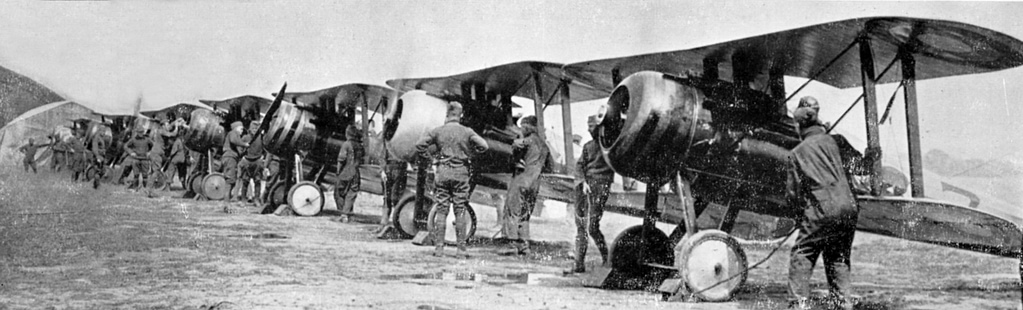
And the French Air Service turned it down. By 1918 their standard fighter was the sturdier, faster-diving SPAD S.XIII, and the Nieuport 28 offered no advantage France needed. But the Americans, waiting for SPADs that production could not yet deliver, took what was available — and so the rejected Nieuport became the first fighter to see operational combat in the hands of American-flagged squadrons, equipping the 27th, 94th, 95th and 147th Aero Squadrons.
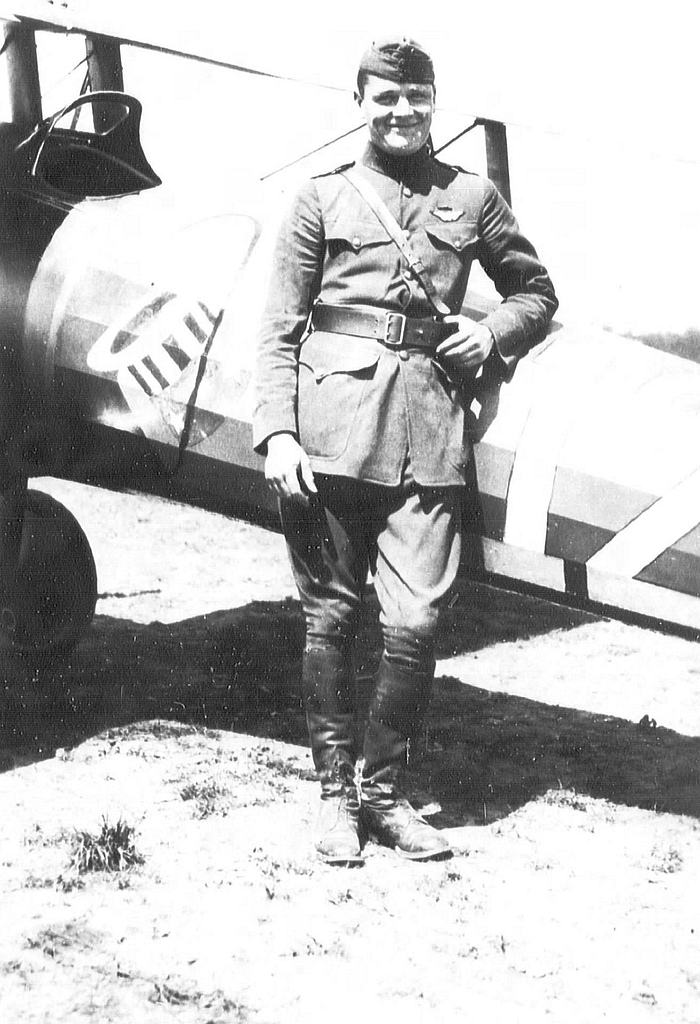
It gave America its first aces and its first heroes — Eddie Rickenbacker, Douglas Campbell, Raoul Lufbery — and, in July 1918, its most public loss when Quentin Roosevelt, a president’s son, was killed flying one. It also had a habit that could kill a pilot in a dive. This is the story of both.
01The Nieuport 28 and the SPAD shortage: how a cast-off became America’s first fighter
When the American Expeditionary Forces reached France they had pilots but no modern fighters. The obvious choice, the SPAD S.XIII, was in such demand that French factories could not spare enough of them. The Nieuport 28, already in production and surplus to French needs, filled the gap.
The result was an accident of supply that made history: the type the French had passed over became the mount on which the United States Air Service learned to fight in the air. By late summer 1918, as SPAD deliveries caught up, the Americans re-equipped with the S.XIII — but the Nieuport 28 had already carried them through their bloodiest first months.
02The Nieuport 28’s pilots: Rickenbacker, Campbell, Lufbery and Quentin Roosevelt
The 94th “Hat in the Ring” and 95th Aero Squadrons flew the type first. Eddie Rickenbacker scored his opening victories in it before becoming America’s 26-kill ace of aces; Douglas Campbell became the first American-trained ace on it; and Alan Winslow shared the squadron’s celebrated first double victory over the airfield at Gengoult on 14 April 1918.
Not every story ended well. Raoul Lufbery, the veteran Lafayette Escadrille ace, died in May 1918, and Quentin Roosevelt was shot down and killed in a Nieuport 28 over France on 14 July 1918 — a loss that made headlines around the world.
What makes the Nieuport 28 special
A fuller lower wing, not a sesquiplane
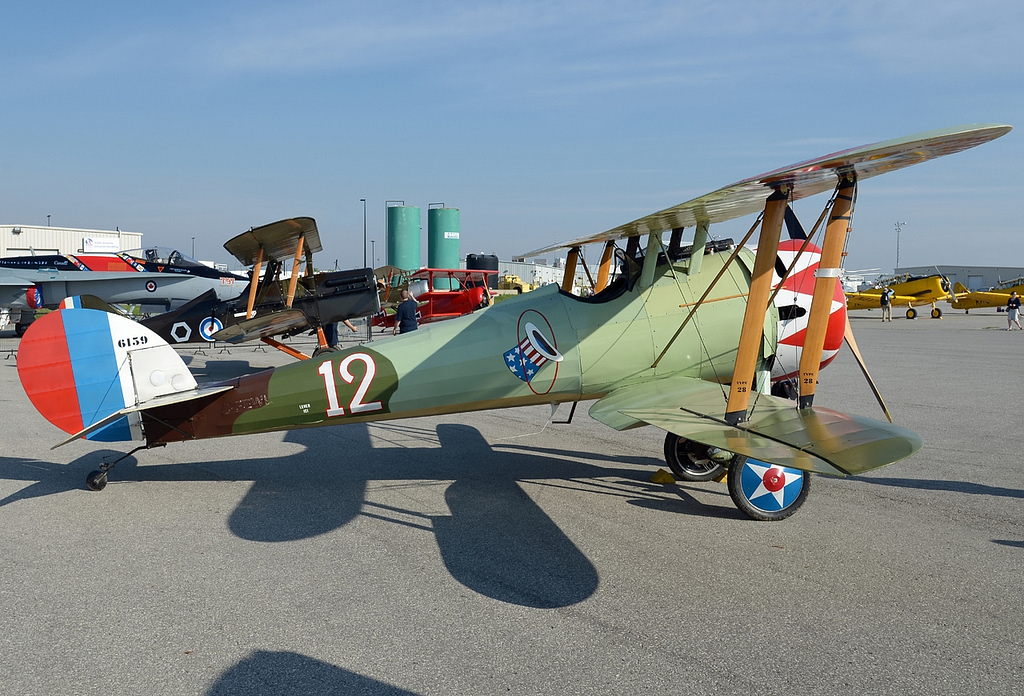
Earlier Nieuports used a narrow single-spar lower wing that flexed and, in hard manoeuvres, could fail. The Nieuport 28 gave the lower wing genuine chord and a second spar, moving away from the classic sesquiplane. It was a cleaner, stronger, more modern two-bay biplane — even if its upper wing still hid a weakness.
160 hp Gnome Monosoupape and two Vickers
Ten/Ta/To Gnome Monosoupape 9N rotary gave around 160 hp — a big step up from the ~110 hp of the Nieuport 17 — pushing the aircraft to roughly 196 km/h. For the first time on a production Nieuport the pilot had two synchronised Vickers guns firing through the propeller, doubling the firepower of the single-gun scouts before it.
The flaw in the upper wing
In sustained high-speed dives the fabric could peel from the upper wing’s leading edge, sometimes tearing the plywood covering with it. It was a genuine, dangerous defect that killed and frightened pilots, and it — as much as the SPAD’s arrival — sealed the type’s replacement in U.S. service by late 1918.
03The Nieuport 28’s airframe: how it differed from the Nieuport 17
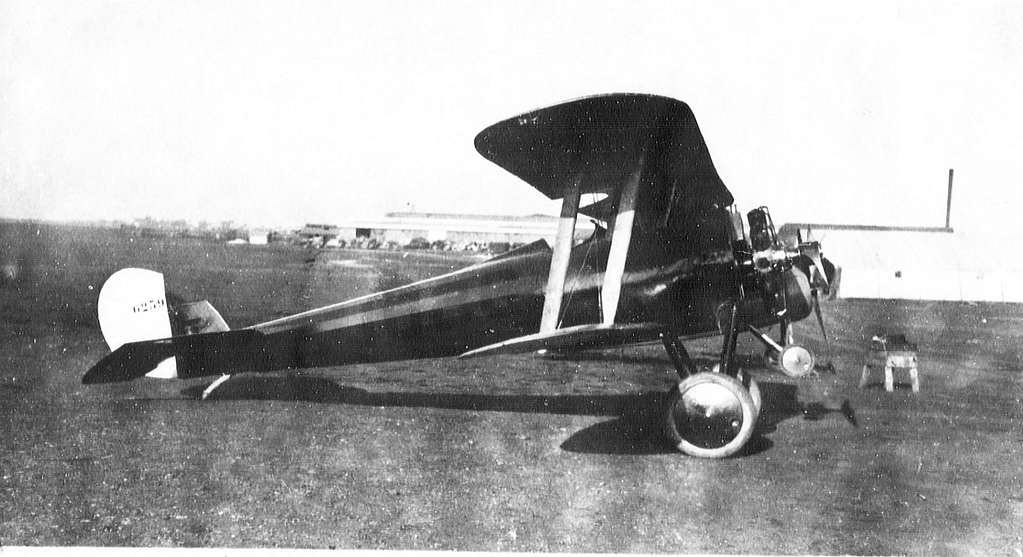
Where the Nieuport 17 was a small, single-gun sesquiplane of about 110 hp, the Nieuport 28 was larger, heavier and far more powerful. Its two-spar lower wing and raked, rounded wingtips gave it a distinctly different silhouette, and its twin guns and 160 hp rotary put it in a different class of fighter altogether.
It was, in effect, Nieuport’s attempt to keep pace with the SPAD — lighter and more agile than the S.XIII, but never as strong.
04The Nieuport 28’s rotary engine: the Gnome Monosoupape 9N
Ten/Ta/To Monosoupape (“single valve”) rotary spun its whole cylinder block with the propeller, throwing castor-oil mist over the pilot and controlling power partly by blipping the ignition. It was powerful for its weight but thirsty and temperamental, giving the Nieuport 28 its lively performance and its short, roughly 90-minute endurance.
Figures for output vary around ~160 hp; treat exact numbers as period estimates.
05The Nieuport 28’s wing failures: what actually happened in a dive
Reports describe the leading-edge fabric of the upper wing stripping back under the airloads of a prolonged dive, occasionally taking structure with it. Rickenbacker himself survived such an event and landed with wing fabric gone. Riggers introduced field fixes and stronger attachment, and the problem eased — but confidence never fully recovered, and the sturdier SPAD S.XIII soon took over.
Numbers of aircraft or pilots lost specifically to the fault are not reliably recorded; contemporary accounts agree it was real and feared.
Nieuport 28 specifications
Figures are for the standard Nieuport 28 C.1 on the Gnome Monosoupape 9N; sources vary and several values are hedged. Production and cost figures for a 1917–18 aircraft are approximate.
Airframe & Performance
- Posádka
- 1 — pilot
- Délka
- ~6.20 m (20 ft 4 in)
- Rozpětí křídel
- ~8.00 m (26 ft 3 in)
- Výška
- ~2.5 m (8 ft 2 in)
- Plocha křídla
- ~19.97 m² (215 sq ft)
- Empty / loaded weight
- ~532 kg / ~737 kg
- Max speed
- ~196 km/h (122 mph) at 2,000 m; some sources ~198 km/h
- Servisní strop
- ~5,200 m (~17,000 ft)
- Endurance
- ~1 hour 30 minutes
Propulsion, Armament & Production
- Motor
- 1 × Gnome Monosoupape 9N rotary, ~160 hp
- Engine type
- 9-cylinder air-cooled rotary
- Vyzbrojení
- 2 × synchronised .303 in (7.7 mm) Vickers machine guns
- First flight / service
- 1917; U.S. combat service from spring 1918
- Operators
- U.S. Army Air Service & U.S. Navy; post-war Switzerland & Argentina
- Built
- ~300 (figures vary; ~297 to the U.S. Army + 12 to the U.S. Navy)
- Unit cost
- Not reliably recorded (WWI procurement)
- Cost per flight hour
- Not reliably recorded (WWI); modern airworthy operation is a specialist, unpublished figure
06The Nieuport 28’s cost: why the numbers aren’t reliably recorded
The Nieuport 28 was bought in the chaos of 1917–18 wartime procurement, when aircraft were ordered in batches at prices that were rarely published and are not consistently preserved. The United States acquired roughly 300 of them — about 297 for the Army Air Service and 12 for the Navy — but a clean per-unit dollar figure is not part of the reliable record.
Running one today is equally unofficial: a single airworthy original and a few replicas exist, maintained by specialist warbird operators whose hourly costs are private. Any figure you see quoted should be treated as an estimate.
07The Nieuport 28 family and variants: C.1 and the naval aircraft
The main production type was the single-seat Nieuport 28 C.1 fighter. After the war the U.S. Navy used a small number for pioneering shipboard flying-off trials, launching them from platforms built over the gun turrets of battleships — an early step toward carrier aviation.
Note: the Nieuport 28 is a different, later aircraft than the earlier Nieuport 17 sesquiplane scout; the two are often confused but share little beyond the maker’s name.
The Nieuport 28 through the war
First flight
Nieuport flies the new Model 28, a cleaner, two-gun, 160 hp development that abandons the narrow sesquiplane lower wing of earlier scouts.
France says no
The French Air Service, committed to the sturdier SPAD S.XIII, declines the Nieuport 28 for its own front-line squadrons.
America adopts it
Short of SPADs, the U.S. Air Service equips its first pursuit squadrons — the 27th, 94th, 95th and 147th — with available Nieuport 28s.
First victories
Lieutenants Alan Winslow and Douglas Campbell down two German aircraft over their own airfield at Gengoult — the first victories in American hands.
First U.S.-trained ace
Douglas Campbell becomes the first American-trained pilot to reach five victories, all on the Nieuport 28; Raoul Lufbery is killed the same month.
The wing problem bites
Upper-wing fabric shedding in dives frightens and kills pilots; Eddie Rickenbacker survives one such failure and scores his first kills on the type.
Quentin Roosevelt falls
Quentin Roosevelt, son of the former president, is shot down and killed flying a Nieuport 28 over France — the war’s most public American air loss.
Replaced, then retired
U.S. squadrons re-equip with the SPAD S.XIII; post-war survivors serve with the U.S. Navy for deck trials and with Switzerland and Argentina.
The Nieuport 28 in the words of those who flew it
Two kills before breakfast
Winslow and Campbell downed two German aircraft over their own field within minutes.
Read the full account
Rickenbacker starts here
America’s top ace opened his account in a Nieuport 28 with the 94th.
Read the full account
Douglas Campbell
Five victories, all flown on the Nieuport 28.
Read the full account
Quentin Roosevelt
Theodore Roosevelt’s youngest son was killed flying the type in July 1918.
Read the full account
Raoul Lufbery
The old hand of the Lafayette Escadrille died in May 1918.
Read the full account
Fabric off the wing
In a hard dive the upper wing could shed its leading-edge fabric.
Read the full account
Agile by design
Pilots praised the Nieuport 28’s manoeuvrability against German scouts.
Read the full account
The 94th Aero Squadron
The most famous American squadron of the war flew the Nieuport 28 first.
Read the full account
Enter the SPAD S.XIII
By late 1918 the tougher SPAD had taken over.
Read the full account
U.S. Navy deck trials
After the war, Nieuport 28s flew off platforms on battleship turrets.
Read the full account
Switzerland and Argentina
A handful served on quietly into the 1920s and beyond.
Read the full account
The 2023 airworthy original
The sole airworthy original Nieuport 28 returned to flight in Massachusetts.
Read the full account
The Nieuport 28 in pictures
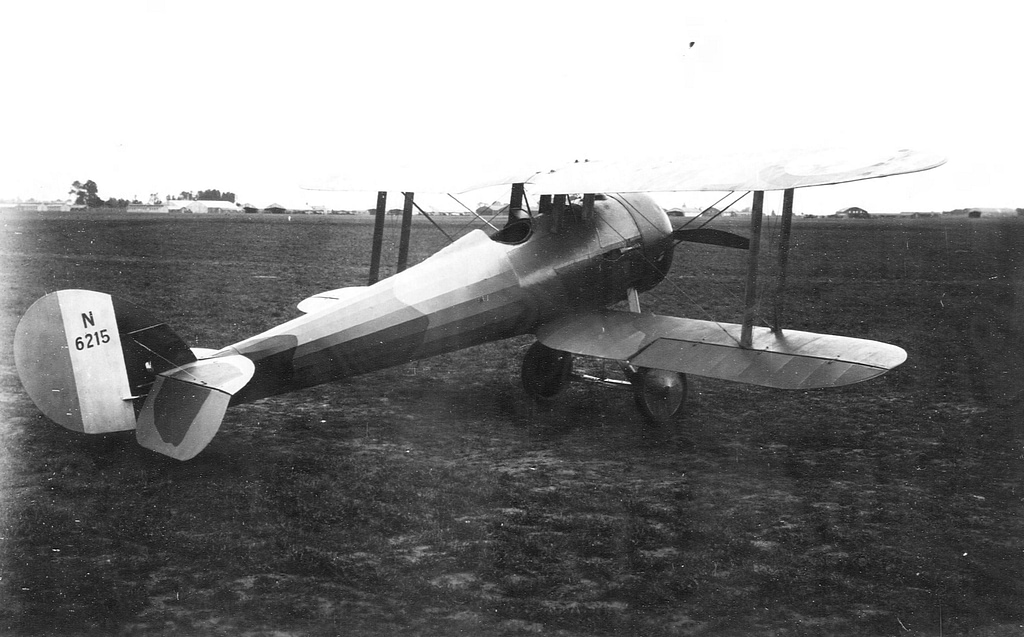
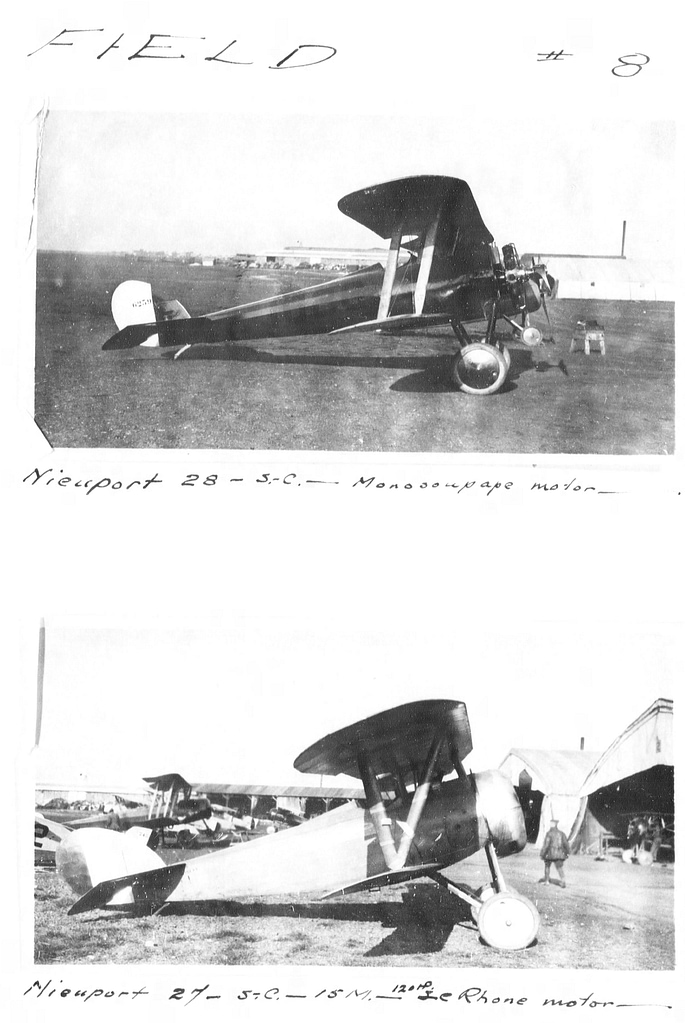
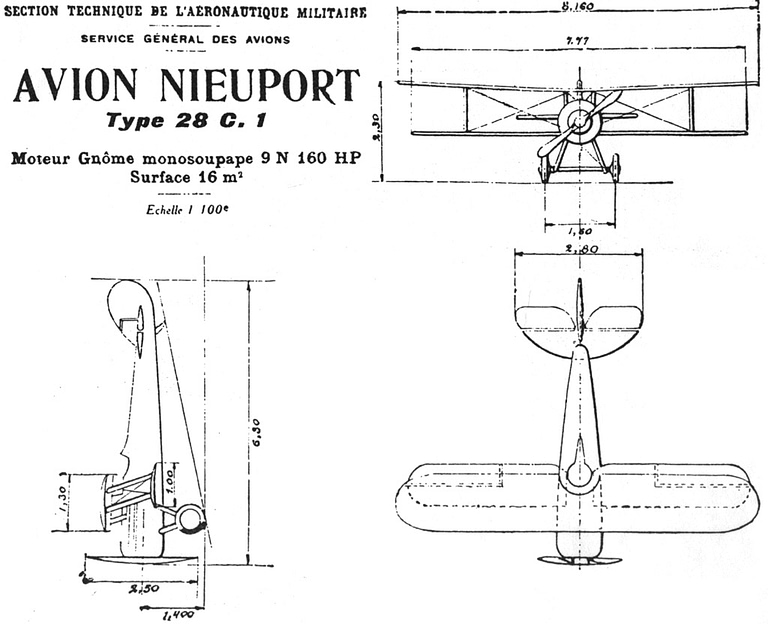
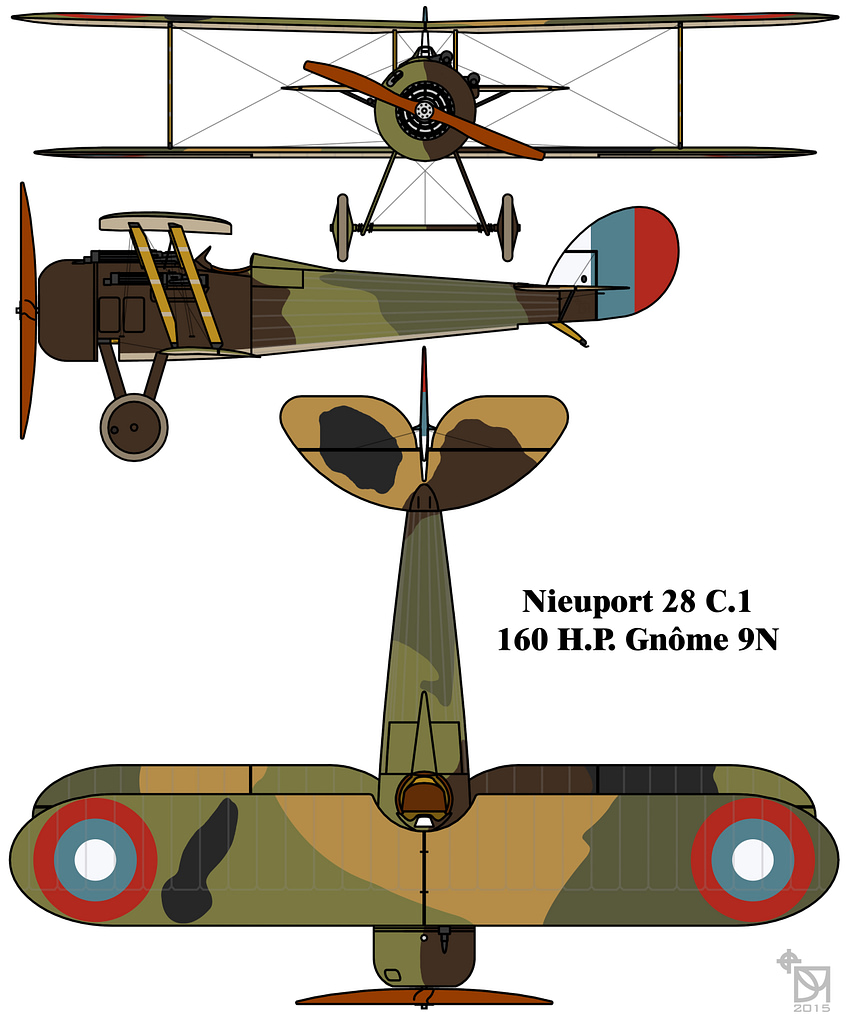
The Nieuport 28 in the air
The sole airworthy original Nieuport 28 takes to the air after its 2023 restoration. Footage from the American Heritage Museum / Collings Foundation official channel — one of the most authoritative sources on this aircraft, showing the actual 1918 fighter flying again.
Where the Nieuport 28 flew
Designed and built in France, rejected by the French, and flown into combat almost entirely by the United States Air Service over the Western Front in 1918 — the Nieuport 28 also served after the war with the U.S. Navy for shipboard trials and with Switzerland and Argentina. Toggle the categories to see its French origin, its American wartime service, its post-war operators, and where surviving airframes are preserved today.
The record the Nieuport 28 left behind
The Nieuport 28 was a front-line American fighter for only a few months in 1918 before the SPAD S.XIII replaced it, so it has no long combat ledger. Its significance is historical rather than statistical: it was the machine on which the United States Air Service first fought, and first won, in the air. Victory tallies for individual pilots vary between sources and mix Nieuport 28 and later SPAD claims.
Nieuport 28: your questions answered
Can I fly in a Nieuport 28?
Why did American squadrons fly a French fighter that France had rejected?
Was the Nieuport 28 a good fighter?
What was the Nieuport 28’s wing problem?
Which famous pilots flew the Nieuport 28?
How many Nieuport 28s survive, and can I see one?
You can’t fly the Nieuport 28.
These, you can.
Some legends only live in museums — others are fuelled and waiting. MiGFlug has put civilians in real military jet cockpits since 2004.
 Fly the L-39 AlbatrosThe world’s most-flown jet trainer — aerobatics included
 Fly the F-104 Starfighter“The missile with a man in it”
 Fly the MiG-21The Cold War’s most-produced jet
 Leťte s T-33 Shooting StarAmerica’s first jet trainer
 Fly the DH VampireA piece of early jet history
 Fly the S.211Agile Italian jet trainer
 Fly the MB-326The classic Aermacchi jet
 Fly the MiG-15The Soviet legend of the Korean War
Explore more of the collection
Every fact, checked
- Smithsonian National Air and Space Museum — Nieuport 28C.1Museum collection record for the preserved original and its U.S. service history.
- National Naval Aviation Museum, PensacolaDocuments the U.S. Navy Nieuport 28s and the battleship flying-off trials.
- American Heritage Museum / Collings FoundationRestoration and 2023 return-to-flight of the sole airworthy original.
- Národní muzeum letectva Spojených státůBackground on the AEF pursuit squadrons and Eddie Rickenbacker.
- Naval History and Heritage CommandNaval Nieuport 28 record and post-war platform experiments.
- Eddie Rickenbacker, “Fighting the Flying Circus”First-hand memoir describing flying the Nieuport 28 with the 94th Aero Squadron.
- Imperial War MuseumsContext on Western Front air fighting in 1918.
- Fliegermuseum Dübendorf & Swiss Museum of TransportRecords of the Swiss Nieuport 28 fleet and preserved airframes.
- Contemporary squadron historiesUsed to cross-check dates, pilots and unit assignments.
- Figures hedged throughoutProduction, speed and cost values for a 1917–18 aircraft are approximate.