
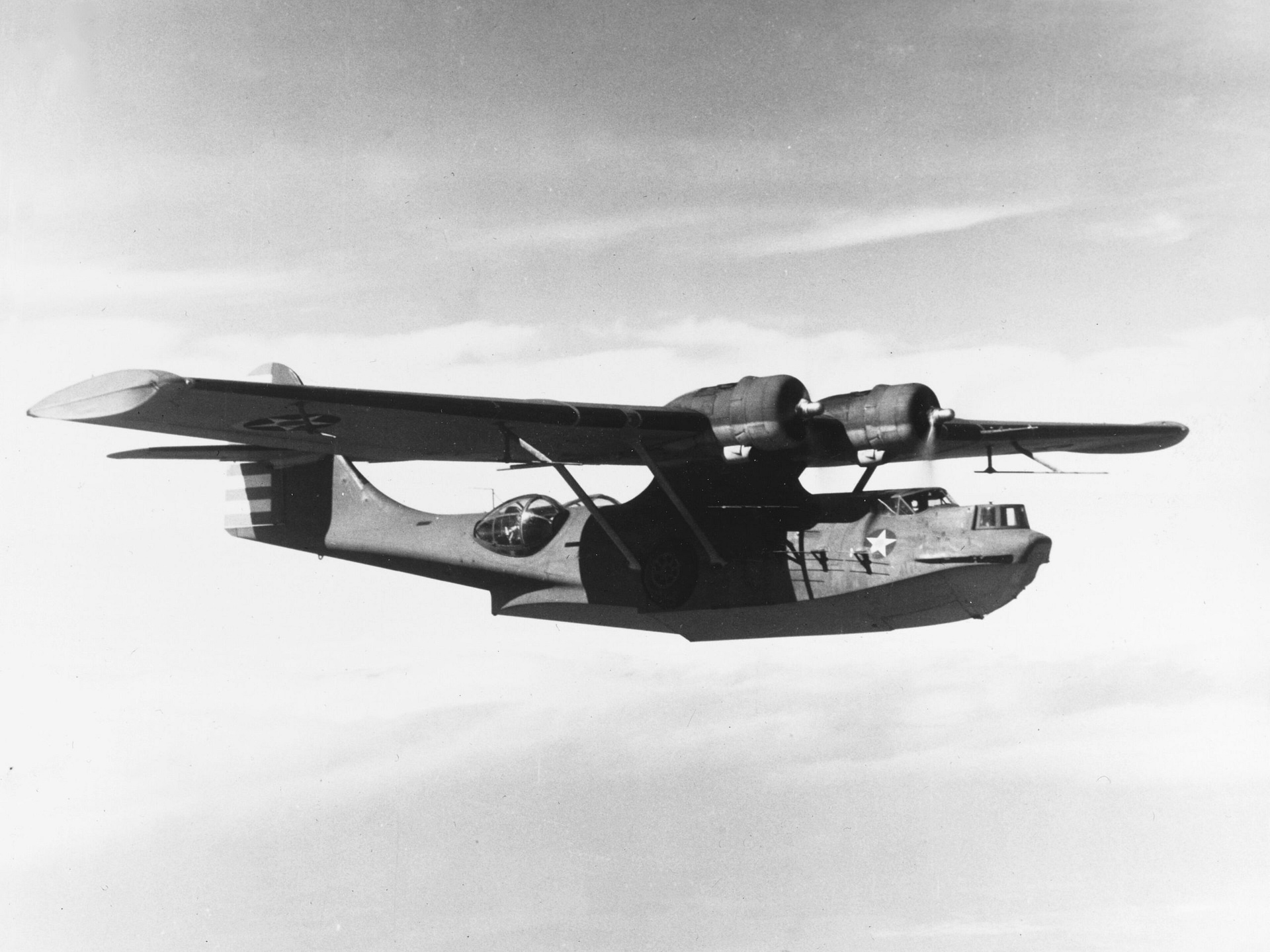
Consolidated PBY
Catalina
A slow, ungainly twin-engine flying boat that became one of the most important aircraft of the Second World War — the scout that shadowed the Bismarck, the patrol plane that found the Japanese fleet before Midway, the radar-guided Black Cat that hunted by night, and the Dumbo that plucked thousands of downed airmen from the open sea.
The Catalina: the flying boat that did everything
In the early 1930s the US Navy wanted a patrol flying boat that could range far out over empty ocean, find an enemy fleet and shadow it for hours. Consolidated Aircraft’s chief engineer Isaac Laddon answered with the Model 28: a big, twin-engined monoplane with a high parasol wing braced on a single pylon, carrying two Pratt & Whitney Twin Wasp radials. Its cleverest trick was a pair of wingtip floats that retracted in flight to become the wingtips themselves, cutting drag and stretching range. It first flew in 1935 and entered service in 1936.
It was never fast — barely 200 mph flat out, often cruising at little more than half that — and it was lightly built and lightly armed. But it could stay airborne for the better part of a day, cross oceans, and set down on the open sea. Britain’s Royal Air Force adopted it too and gave it the name that stuck: Catalina. Built under licence in the Soviet Union as the GST and assembled in Canada as the Canso, it was produced in enormous numbers — commonly cited at more than 3,300 airframes, making it one of the most widely produced flying boats in history.
The Catalina’s war was extraordinary in its range of jobs. In May 1941 a Catalina relocated the German battleship Bismarck after the Royal Navy had lost her, helping seal her fate. A year later, PBYs flying long patrol arcs out of Midway spotted the approaching Japanese fleet, handing the US Navy the opening it needed. Catalinas hunted submarines across the Atlantic, Mediterranean and Pacific, sinking or sharing in the destruction of numerous U-boats. Painted flat black, the “Black Cat” squadrons stalked Japanese shipping at night by radar. And as “Dumbo” rescue aircraft they landed in open water under fire to save downed aircrew and shipwrecked sailors — thousands of them by war’s end.
Slow, patient and almost impossible to kill off, the Catalina outlived the war by decades. Surplus aircraft became airliners, survey planes and, above all, water-bombing firefighters — a role some flew into the 21st century. Few aircraft have been loved by so many air forces, or asked to do so many different things so well.
01Why the PBY Catalina mattered so much: range, patience and versatility
The Catalina’s value was never in speed or firepower — it was in reach and endurance. A single PBY could fly a patrol arc of well over a thousand miles, loiter for many hours, and return, covering areas of ocean that faster aircraft could only glimpse. That made it the ideal scout, convoy escort and submarine deterrent: a U-boat that had to stay submerged to avoid a circling Catalina could not race ahead of a convoy. The same qualities — long range, the ability to land on water, and a roomy hull — let the type reinvent itself as a night raider and a rescue aircraft. Versatility, not performance, is why the PBY is remembered as one of the war’s decisive aircraft.
What makes the PBY Catalina special
A flying boat built to stay up all day
The Catalina’s high parasol wing and clean, lightly loaded airframe gave it exceptional range and endurance — a ferry range around 4,000 km and patrols of 20 hours or more. Wingtip floats that folded up into the wingtips in flight cut drag. It was slow, but it could cross oceans and loiter over a target long after other aircraft had gone home.
The ‘Black Cats’ — radar-guided night hunters
From 1942, matte-black PBYs fitted with ASV search radar prowled the Pacific at night, bombing Japanese shipping that felt safe in darkness. These “Black Cat” squadrons, together with radar- and MAD-equipped anti-submarine Catalinas in the Atlantic and Mediterranean, sank or helped sink large amounts of enemy shipping and numerous U-boats.
‘Dumbo’ — the rescue plane that saved thousands
Because it could land on the open sea, the Catalina became the war’s great air-sea rescue aircraft — call-sign “Dumbo.” PBY crews set down amid swells, often under fire, to lift downed airmen and shipwrecked sailors to safety. One such mission near Kavieng in 1944 earned pilot Nathan Gordon the Medal of Honor.
02The PBY Catalina’s retractable wingtip floats: a neat piece of engineering
Most flying boats of the era carried fixed stabilising floats under each wing to keep the aircraft level on the water — and paid for them in drag. Consolidated’s design let each float swing up and outward in flight until it formed the streamlined wingtip, and swing back down for landing on water. It was a simple, robust mechanism that shaved drag and helped give the Catalina its remarkable range. The parasol wing, mounted above the hull on a central pylon, kept the propellers and engines clear of spray while leaving the deep hull free for fuel, crew and payload.
03The PBY Catalina at war: from the Bismarck to Midway to the Black Cats
On 26 May 1941 a Catalina of RAF Coastal Command relocated the Bismarck after contact had been lost — a US Navy officer, Ensign Leonard “Tuck” Smith, was at the controls as a “special observer.” The sighting let the Royal Navy close in for the kill. Thirteen months later, on 3–4 June 1942, PBYs on long patrols from Midway found the Japanese carrier force and even pressed home a night torpedo attack on a tanker — the first blows of a battle that turned the Pacific war. From late 1942 the black-painted Black Cat squadrons made the night their own, while Dumbo rescue crews saved airmen who would otherwise have been lost. No other aircraft type touched so many pivotal moments of the naval war.
Full specifications: Consolidated PBY-5A Catalina
Airframe & Performance
- Posádka
- 8–10 (pilots, navigator, radio, gunners)
- Délka
- ~19.46 m (63 ft 10 in)
- Rozpětí křídel
- ~31.70 m (104 ft)
- Výška
- ~6.15 m (20 ft 2 in)
- Max takeoff weight
- ~16,000 kg (35,300 lb)
- Max speed
- ~314 km/h (196 mph)
- Cestovní rychlost
- ~200 km/h (125 mph)
- Rozsah
- ~4,000 km (2,500 mi) ferry
- Endurance
- ~20+ hours on patrol
- Servisní strop
- ~4,500 m (14,700 ft)
Propulsion, Armament & Programme
- Engines
- 2 × Pratt & Whitney R-1830 Twin Wasp
- Power (each)
- ~1,200 hp
- Offensive load
- Up to ~1,800 kg (4,000 lb): bombs, depth charges or torpedoes
- Defensive guns
- .30 & .50 cal MGs (nose, waist blisters, tunnel)
- Variant shown
- PBY-5A amphibian (retractable landing gear)
- First flight
- 28 March 1935 (XP3Y-1 prototype)
- Built
- ~3,300+ (all variants, 1936–1945)
- Unit cost
- ~$90,000 (wartime, rough estimate)
- Cost per flight hour
- No reliable public figure
04The PBY Catalina’s cost: what a wartime flying boat was worth
The Catalina was a mass-produced wartime aircraft, and firm dollar figures are scarce and inconsistent. Period sources put the flyaway cost of a wartime PBY very roughly in the region of $90,000 — cheap by the standards of a large multi-engine aircraft, which was part of the point: it was affordable enough to build in the thousands. No credible cost-per-flight-hour figure exists in open sources for the type, and any precise modern-dollar number you see should be treated as an estimate rather than a documented figure.
From patrol boat to legend — and firefighter
Design begins
Consolidated’s Isaac Laddon designs the Model 28 to a US Navy requirement for a long-range patrol flying boat.
First flight
The XP3Y-1 prototype flies on 28 March, introducing the retractable wingtip floats and parasol wing.
Enters service
The PBY joins the US Navy with patrol squadron VP-11F; Britain later adopts it as the “Catalina.”
The amphibian
The PBY-5A adds retractable landing gear, letting the flying boat operate from land as well as water.
Finding the Bismarck
On 26 May a Coastal Command Catalina relocates the German battleship Bismarck, helping the Royal Navy close in.
Midway and the Black Cats
PBYs spot the Japanese fleet before Midway; late in the year the radar-equipped Black Cat night squadrons form.
Dumbo rescues
Black Cat night raids and “Dumbo” air-sea rescue reach their peak across the Pacific and Atlantic.
Production ends
More than 3,300 Catalinas have been built across the US, Canada and the Soviet Union.
The water bomber
Surplus Catalinas become airliners, survey aircraft and firefighting water-bombers — some flying into the 2000s.
From the crews: twelve Catalina stories
A boat designed to stay out
Isaac Laddon’s Model 28 traded speed for reach — and it changed naval patrol.
Read the full story
How it became the “Catalina”
The Americans called it the PBY. The British gave it the name that stuck.
Read the full story
The Catalina that found the Bismarck
After the Royal Navy lost contact, a Catalina found the battleship again — with an American at the controls.
Read the full story
Eyes before Midway
Long PBY patrols found the approaching Japanese fleet — and one pressed a night torpedo attack.
Read the full story
Birth of the Black Cats
Painted flat black and fitted with radar, PBYs turned the night into a hunting ground.
Read the full story
The Dumbo that saved fifteen
Under fire near Kavieng, Nathan Gordon landed his Catalina on the open sea three times.
Read the full story
The Mad Cats
With magnetic detectors, Catalinas hunted U-boats where they thought they were safe.
Read the full story
Twenty hours aloft
A Catalina’s war was often measured not in speed but in the hours it could stay up.
Read the full story
A flying boat for a dozen air forces
American, British, Soviet, Australian, Canadian, Dutch and other crews all flew the Catalina.
Read the full story
The long mining missions
RAAF Catalinas flew some of the longest, most dangerous sorties of the Pacific war.
Read the full story
From warplane to water bomber
Surplus Catalinas found a second career fighting fires from the air.
Read the full story
The most useful flying boat ever built
Slow and plain, the Catalina outlasted faster, prettier aircraft by decades.
Read the full story
The Catalina in pictures
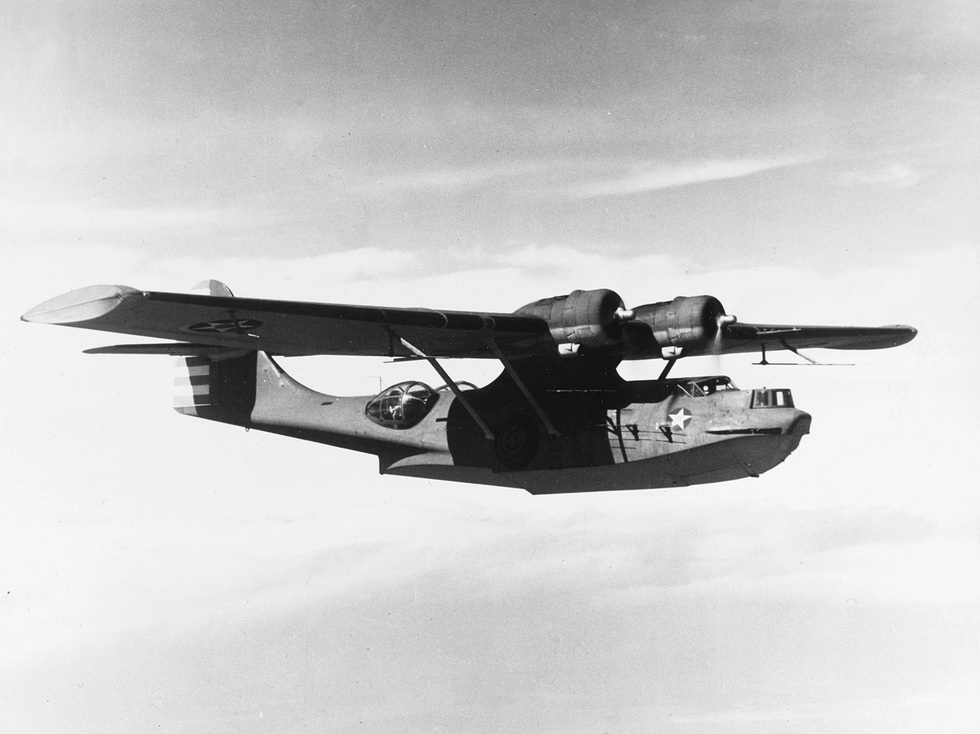
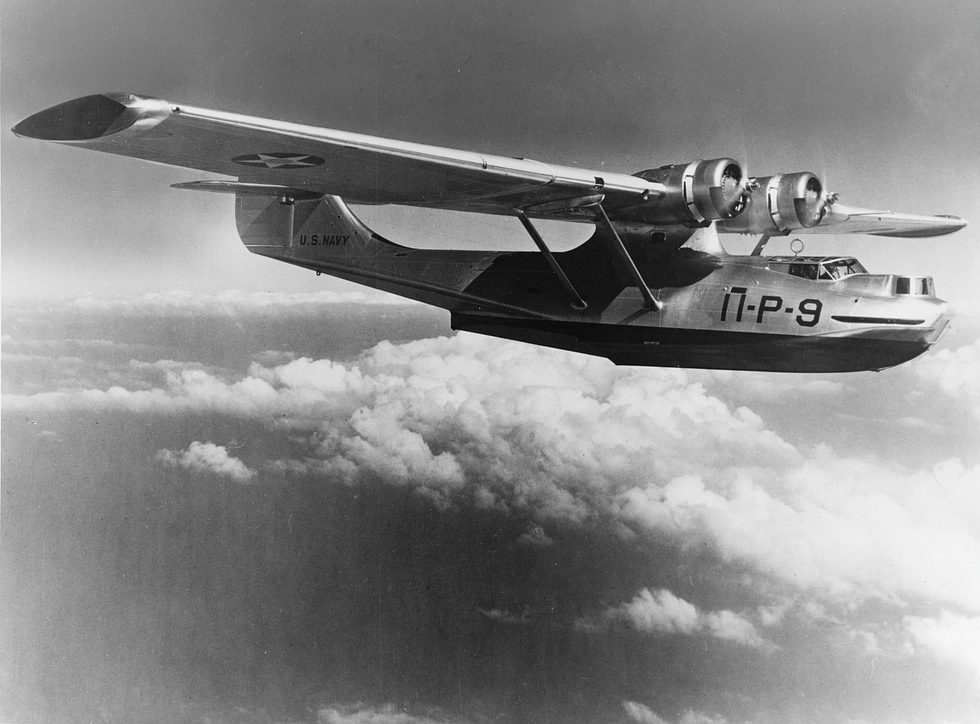
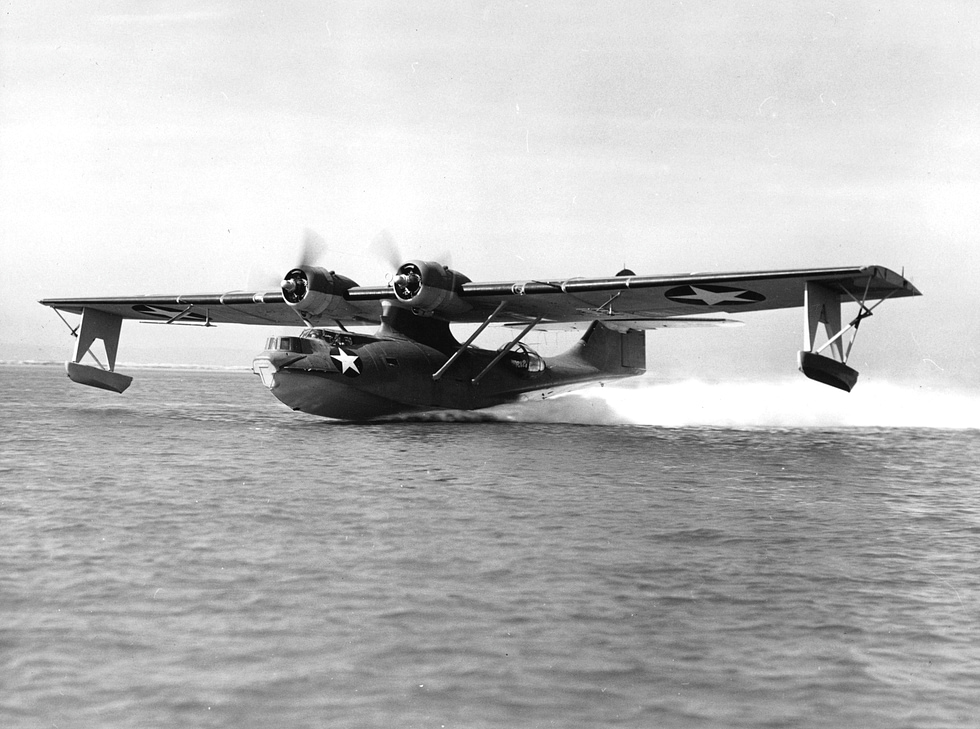
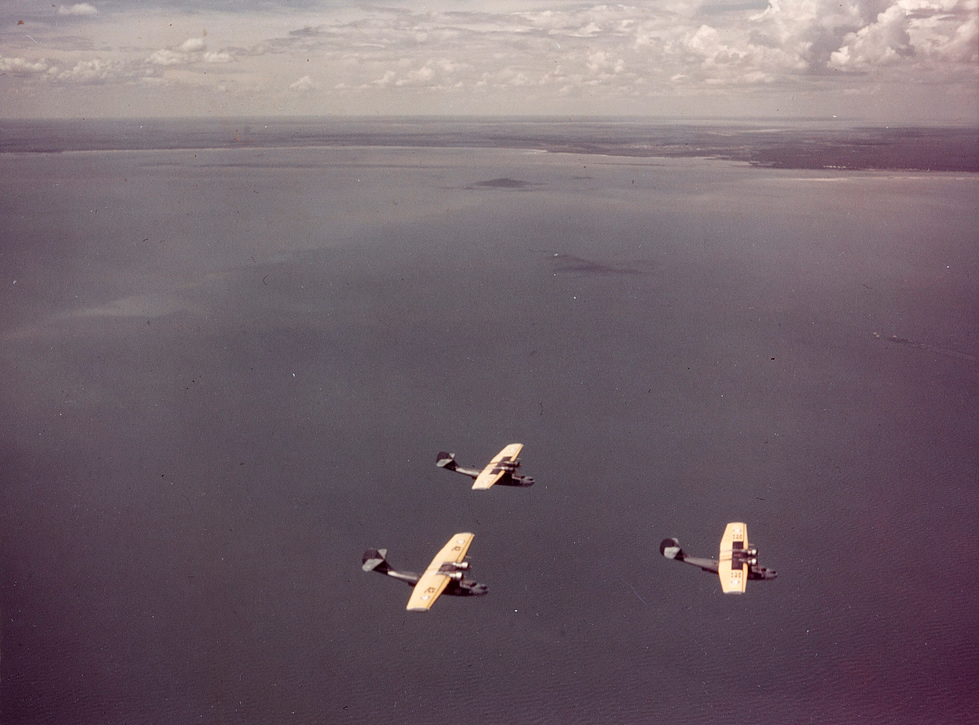
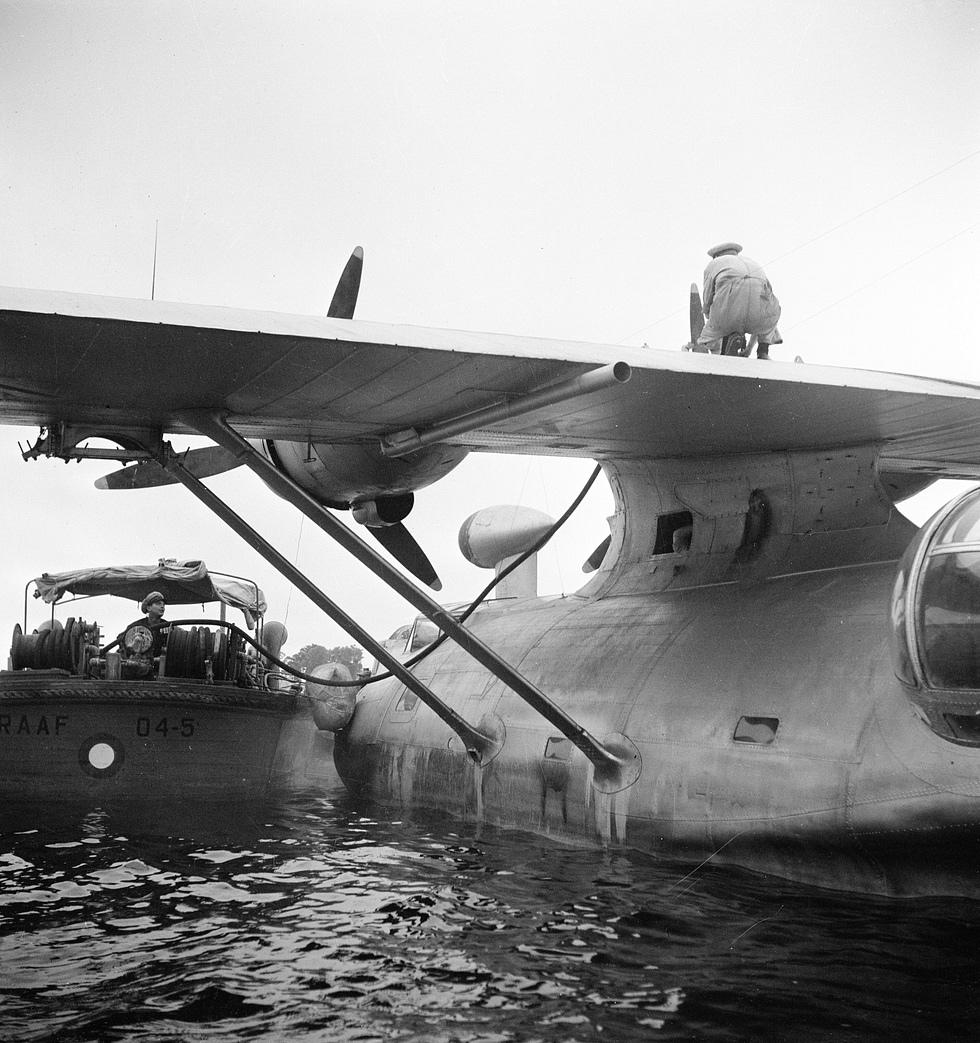
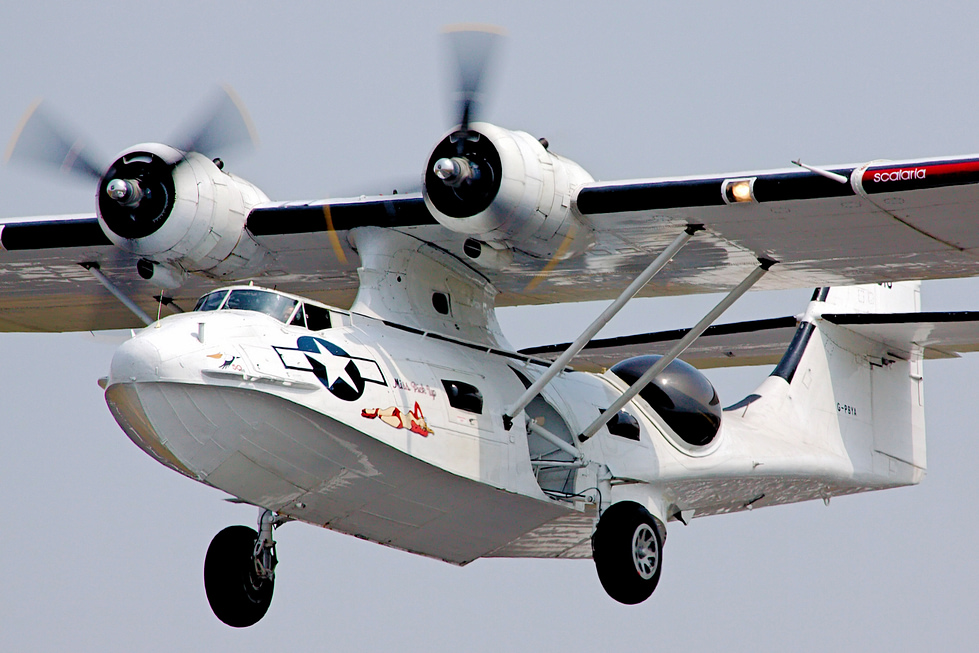
The Catalina in motion
A hand-picked Catalina documentary is on its way — video coming soon. In the meantime, explore the gallery above and the twelve crew stories for the full picture of the PBY’s war.
Where the Catalina flew
The record that defines the Catalina
The Catalina’s record is not measured in dogfight kills — it was a patrol boat, not a fighter. Its victories are the fleets it found, the submarines it forced under, the shipping the Black Cats sank by night, and above all the aircrew it pulled alive from the sea. Few aircraft can claim so decisive a hand in so many battles.
Compare the combat record of every military aircraft. Figures as of July 2026.
Everything people ask about the PBY Catalina
Can I fly in a PBY Catalina?
Why is the PBY Catalina so famous?
What does “PBY” stand for?
How fast was the PBY Catalina?
Did the Catalina really find the Bismarck?
What were the “Black Cats” and “Dumbos”?
How many PBY Catalinas were built?
Are any Catalinas still flying?
You can’t fly the Catalina.
These, you can.
Some legends only live in museums — others are fuelled and waiting. MiGFlug has put civilians in real military jet cockpits since 2004.
 Fly the L-39 AlbatrosThe world’s most-flown jet trainer — aerobatics included
 Fly the F-104 Starfighter“The missile with a man in it”
 Fly the MiG-21The Cold War’s most-produced jet
 Leťte s T-33 Shooting StarAmerica’s first jet trainer
 Fly the DH VampireA piece of early jet history
 Fly the S.211Agile Italian jet trainer
 Fly the MB-326The classic Aermacchi jet
 Fly the MiG-15The Soviet legend of the Korean War
Continue the tour
Every fact, checked
- The National WWII Museum — The PBY Catalina in World War IIOverview of the PBY’s roles at Midway, the Black Cat campaign, anti-submarine work and Dumbo rescues.
- Naval History and Heritage Command — Catalina in DetailUS Navy history of the type: design, parasol wing, retractable floats and service.
- Smithsonian National Air and Space Museum — Consolidated PBY-5 CatalinaMuseum reference on the Catalina’s design, development and wartime service.
- Defense Media Network — The American Who Helped Sink the BismarckAccount of Ensign Leonard Smith and the Catalina that relocated the Bismarck in May 1941.
- Smithsonian Magazine — Legends of an Ocean-Crossing SeaplaneFeature on the Catalina’s long career, from wartime patrol to postwar water-bomber.
- Navy Times — Cat Tales: the story of WWII’s PBY flying boatNarrative history of the PBY’s wartime service and its crews.
- National Naval Aviation Museum — PBY-5 CatalinaReference on specifications, variants and preserved airframes.
- The Catalina Preservation SocietyDetailed history of the type’s variants, operators and surviving aircraft.