
Sud Aviation Vautour II
France’s versatile 1950s twin-jet — one swept-wing airframe built as attacker, radar night-fighter and light bomber — and, in Israeli hands, a hard-worked deep-strike aircraft of the Six-Day War.
Příběh
The Sud Aviation Vautour II: one airframe, three jobs, two air forces
The Sud Aviation Vautour II is a fascinating example of Cold War aircraft design: a single, adaptable twin-jet airframe that France turned into three quite different combat aircraft — a ground-attacker, a radar-equipped night fighter, and a light bomber — and that went on to a hard-fought second career in the Israeli Air Force, where it became one of the most important aircraft of the 1960s. Its name, French for “vulture,” suited a big, purposeful machine built to strike.
The Vautour was designed in the early 1950s by SNCASO, the French state aircraft company that soon merged into Sud Aviation. The prototype, the SO.4050, first flew in October 1952, at a time when France was rebuilding its aviation industry and its air force after the Second World War. The clever idea at the heart of the programme was commonality: rather than design three separate aircraft for three separate missions, France would build one basic swept-wing, twin-jet airframe and produce it in three closely related versions, sharing most of their structure and systems. It was an efficient approach for a nation with limited resources, and it gave the French Air Force a family of capable jets from a single design effort.
Getting the Vautour into service took time. The SO.4050 emerged from a French requirement for a multi-role jet, and after the first prototype flew in 1952 the design was refined through further prototypes and pre-production aircraft before the definitive Vautour II was ready. By the time it reached squadron service in the second half of the 1950s, France finally had a modern, home-built combat jet in useful numbers — a real milestone for a national aircraft industry that had been rebuilding almost from scratch since 1945.
“One airframe, three aircraft: the single-seat IIA attacker, the radar-nosed IIN night fighter, and the glass-nosed IIB bomber.”— the Vautour’s one-design, three-role concept
The three versions each had a clear job. The Vautour IIA was a single-seat ground-attack aircraft, armed with cannon and able to carry bombs and rockets. The Vautour IIN was a two-seat all-weather night fighter and interceptor, with a radar in its nose and a radar operator behind the pilot to work it — the aircraft that would guard French airspace after dark. And the Vautour IIB was a two-seat light bomber, with a glazed nose for a bombardier to aim through and an internal bomb bay to carry the load. Same wings, same engines, same fuselage in essence — three different noses and missions.
Power for all three came from a pair of SNECMA Atar turbojets, the French engine family that would go on to power the Mirage fighters. The swept wing gave the Vautour high-subsonic performance, good for its day. But its most distinctive engineering feature was hidden underneath: because the thin swept wing and the podded engines left no good place for conventional wing-mounted landing gear, the Vautour used a bicycle undercarriage — two main gear units in tandem under the fuselage, one behind the other, with small outrigger wheels near the wingtips to keep the aircraft balanced on the ground. It was the same solution used by aircraft like the B-47 and the U-2, and it gave the Vautour an unusual, slightly ungainly stance on the runway.
In French service the Vautour equipped the Armée de l’air from the mid-1950s. The IIN night fighters stood watch over France, the IIA attackers and IIB bombers gave the air force a strike capability, and for a period the bomber version was part of France’s early nuclear-strike thinking before dedicated nuclear aircraft took over. The Vautours served steadily, if without great drama, through the 1960s and 1970s, with the last French examples — used for reconnaissance, electronic warfare and trials — not retiring until around 1979.
That long tail of specialist service was itself a testament to the design. Even after the front-line fighter and bomber versions were withdrawn, the Vautour’s size and load-carrying ability kept it useful: some French aircraft were converted for photographic reconnaissance and for electronic-warfare and radar-calibration work, jobs that suited a roomy, twin-engined airframe. It was in these quiet roles that the type saw out its days — a fitting end for an aircraft whose whole career had been about adapting one basic design to whatever the air force needed.
But the Vautour’s most intensive and famous career was not French at all. In the late 1950s Israel, then closely allied with France, bought a small number of Vautours — examples of all three versions — and they immediately became among the most capable aircraft in the Israeli Air Force. Israel was surrounded by potential adversaries and needed to be able to strike hard and, crucially, to strike far; the Vautour, with its good range and useful bomb load, gave the young air force a genuine long-range attack and bombing capability it had never had before. Through the early 1960s the Vautour was Israel’s principal strike aircraft and also served as a night fighter.
The French connection was the key. In the late 1950s France was Israel’s principal arms supplier, and a close military relationship brought a string of French aircraft — the Ouragan and Mystère fighters, and then the Vautour — into Israeli service. For Israel the Vautour was a particular prize: unlike the nimble but short-legged day fighters, it could carry bombs a long way, and for a small country facing several neighbours at once, the ability to reach deep into hostile territory was strategically priceless. The Israelis flew their Vautours hard and maintained them meticulously, wringing far more use out of a handful of aircraft than their numbers alone would suggest.
That capability mattered enormously in June 1967. At the opening of the Six-Day War, the Israeli Air Force launched Operation Focus, a surprise attack that struck Arab air forces on their airfields and destroyed much of them on the ground in the first hours of the war. The Vautour’s long reach made it especially valuable: it could hit distant airfields that Israel’s shorter-ranged fighters could not reach, and Vautours were used in strikes against far-off targets during the campaign. It was the high point of the type’s combat career, and it cemented the Vautour’s place in Israeli aviation history.
The Vautour’s front-line days were numbered even so. The aircraft that replaced it — the Dassault Mirage and, later, the American F-4 Phantom and A-4 Skyhawk — were faster, more modern and more capable, and Israel retired its Vautours in the early 1970s as those types took over. France, too, wound down its Vautours through the 1970s. Only around 140 were ever built, and the type was flown operationally by just two nations, France and Israel. But the Vautour is remembered as a genuinely clever piece of design — one airframe stretched to do three jobs — and as an aircraft that, in Israeli hands, punched well above its modest numbers. Several survive today, preserved in museums in France and at the Israeli Air Force Museum at Hatzerim, where the big vultures still stand as reminders of a resourceful Cold War design.
01The Vautour’s origins: France rebuilds its air power+
The Vautour was born from France’s post-war effort to rebuild a modern aviation industry and re-equip the Armée de l’air with home-grown jets. It was designed by SNCASO (the Société nationale des constructions aéronautiques du Sud-Ouest), one of the nationalised French aircraft firms, which merged into Sud Aviation in 1957.
The prototype SO.4050 Vautour first flew in October 1952. From the start the programme was conceived around a single, adaptable airframe that could be built in several versions for different missions — a pragmatic way to get maximum capability from one design effort. After development and testing, the Vautour II entered French service in the second half of the 1950s.
02One airframe, three variants: IIA, IIN and IIB+
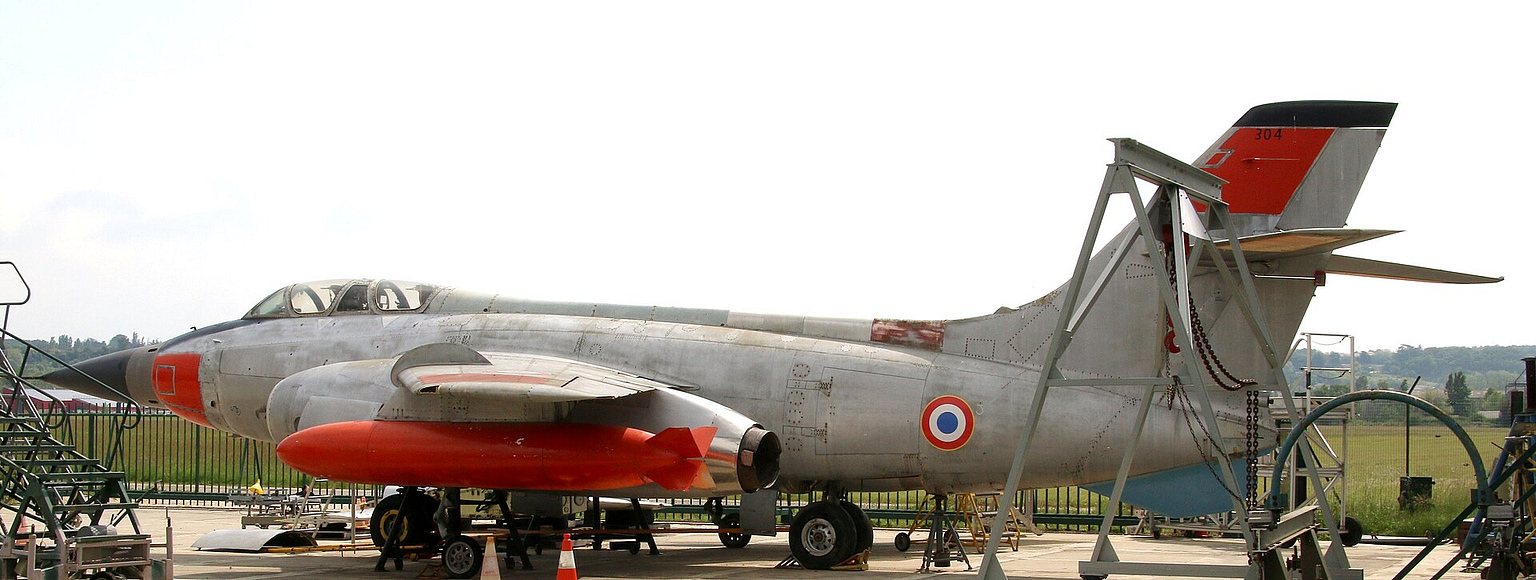
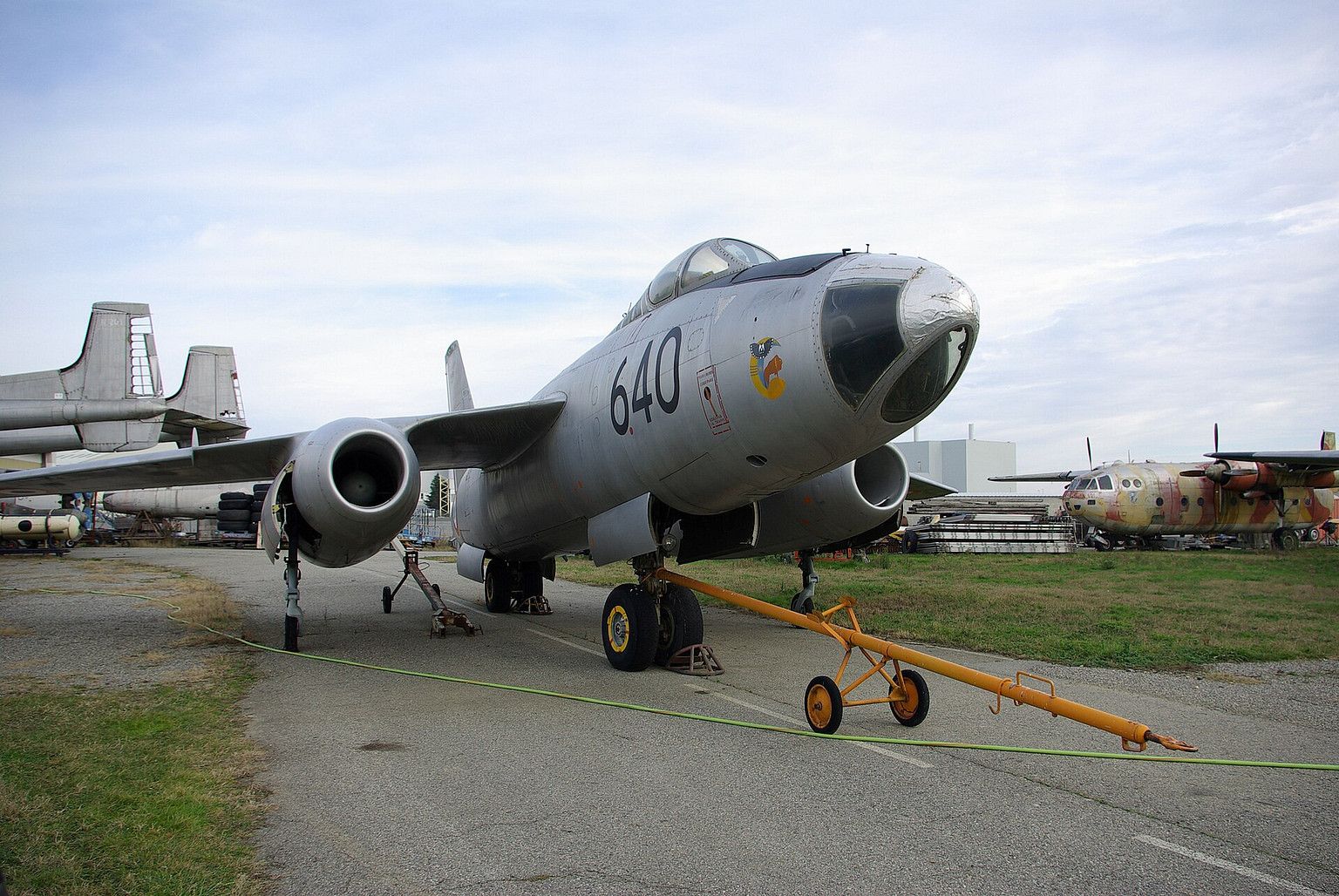
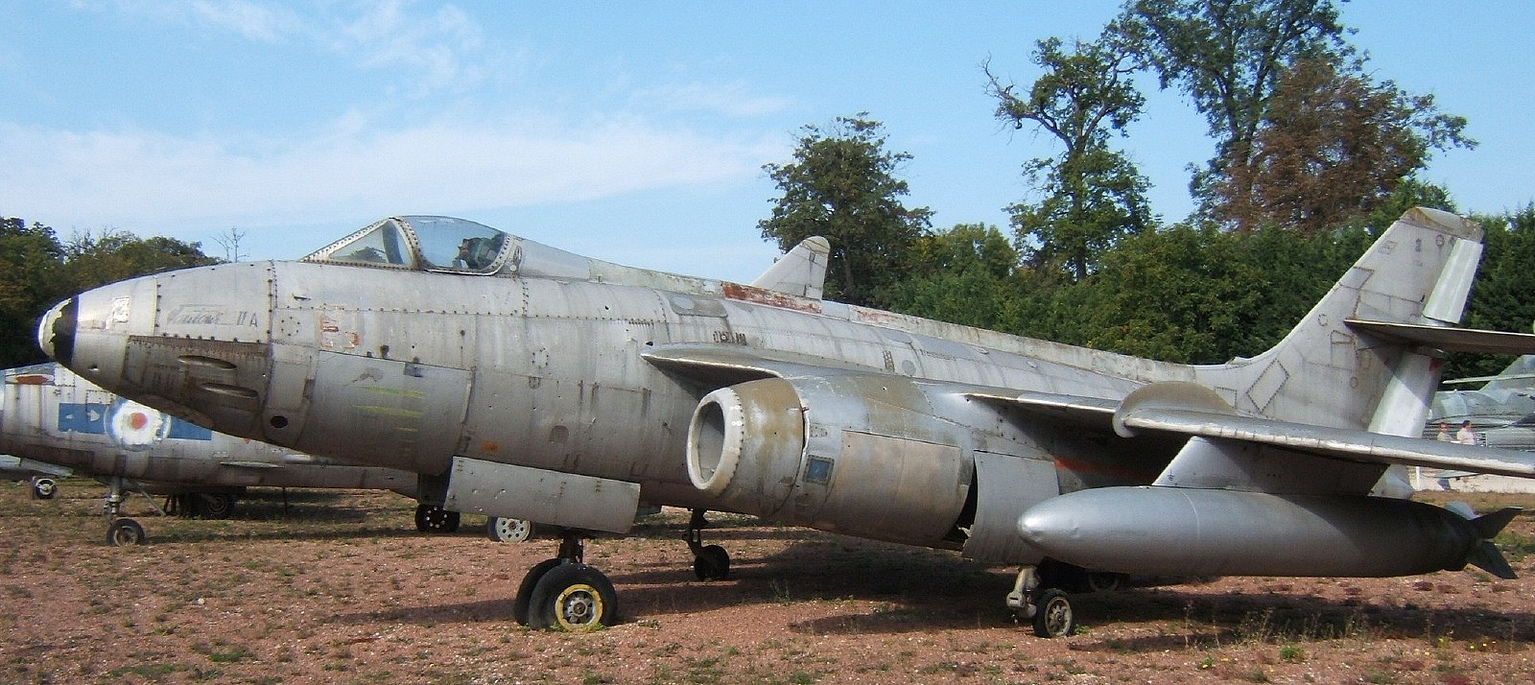
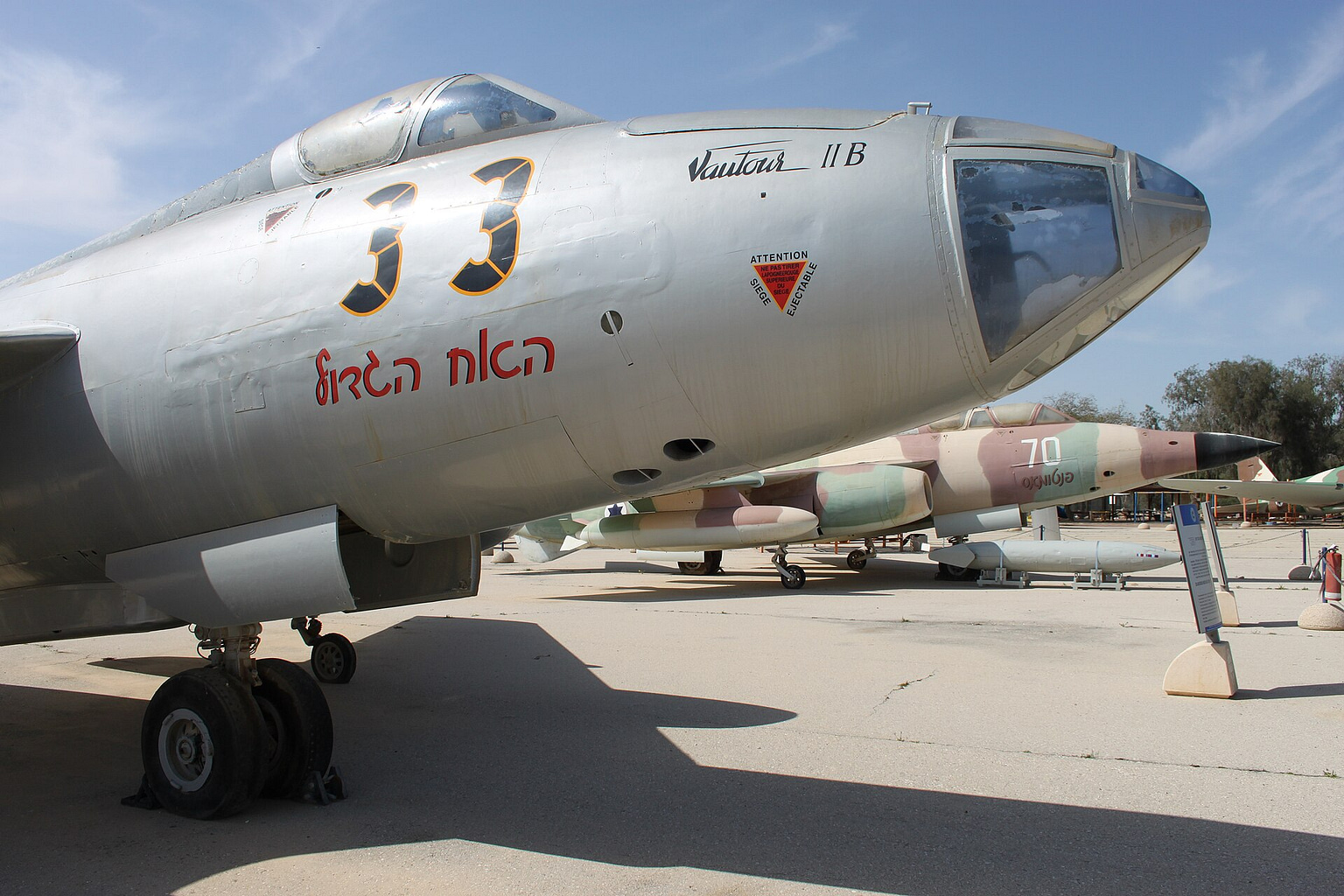
The defining feature of the Vautour programme was that three distinct combat aircraft were built from essentially one airframe. The Vautour IIA was a single-seat ground-attack aircraft; the Vautour IIN was a two-seat, radar-equipped all-weather night fighter and interceptor; and the Vautour IIB was a two-seat light bomber with a glazed nose and an internal bomb bay.
All three shared the same swept wing, the same twin-Atar powerplant and essentially the same fuselage, differing mainly in the nose and the crew arrangement. This commonality kept development and production efficient and gave the French Air Force attack, interception and bombing capability from a single design — an elegant answer to the needs of an air force rebuilding on a budget.
03The Vautour IIA: single-seat ground-attack+
The Vautour IIA was the single-seat ground-attack member of the family. With the pilot alone in the cockpit and no need for a radar operator or bombardier, it was the simplest of the three versions, optimised for striking targets on the ground with cannon, bombs and rockets.
Relatively few IIAs were built compared with the night-fighter version, and in French service the type had a limited career. But the single-seat attacker was an important part of the concept — showing how the basic airframe could be tailored right down to a lean, pilot-only strike aircraft — and IIAs were among the Vautours that served with distinction in Israeli hands.
04The Vautour IIN: the radar night fighter+
The Vautour IIN was the two-seat all-weather night-fighter and interceptor version, and it was the most numerous of the three. It carried an interception radar in its nose and a second crew member — a radar operator — seated behind the pilot to find targets in darkness or cloud and guide the aircraft to them.
Armed with cannon and, in due course, guided missiles, the IIN gave the French Air Force a genuine all-weather air-defence capability for the first time, standing guard over French skies through the late 1950s and 1960s. It was the version that best expressed the Vautour’s value as a large, roomy airframe able to carry the bulky radar equipment of the era.
05The Vautour IIB: the glass-nosed light bomber+
The Vautour IIB was the light-bomber version, distinguished by a glazed nose through which a bombardier could aim, and an internal bomb bay to carry the load. With two crew — a pilot and a bombardier/navigator — it gave the French Air Force a jet bomber able to deliver a useful weight of bombs over a good range.
For a period the IIB was bound up with France’s early thinking about nuclear strike, before purpose-designed nuclear aircraft such as the Mirage IV took over that role. In Israeli service the bomber Vautours were especially prized for their reach, and the IIB and its variants were central to the type’s hard-hitting combat career in the Middle East.
06The SNECMA Atar engines and swept wing+
All three Vautour versions were powered by a pair of SNECMA Atar turbojets, mounted in nacelles under the swept wing. The Atar was the French jet-engine family of the era, and it would go on to power the whole line of Dassault Mirage fighters — so the Vautour flew behind the same basic engines that defined French air power for decades.
The moderately swept wing gave the Vautour high-subsonic performance, good enough for its strike, interception and bombing roles, though the aircraft was not a supersonic dogfighter. Two engines gave power and a measure of safety for long-range work over sea or hostile territory — a quality that made the Vautour particularly attractive for Israel’s deep-strike needs.
07The bicycle undercarriage and wingtip outriggers+
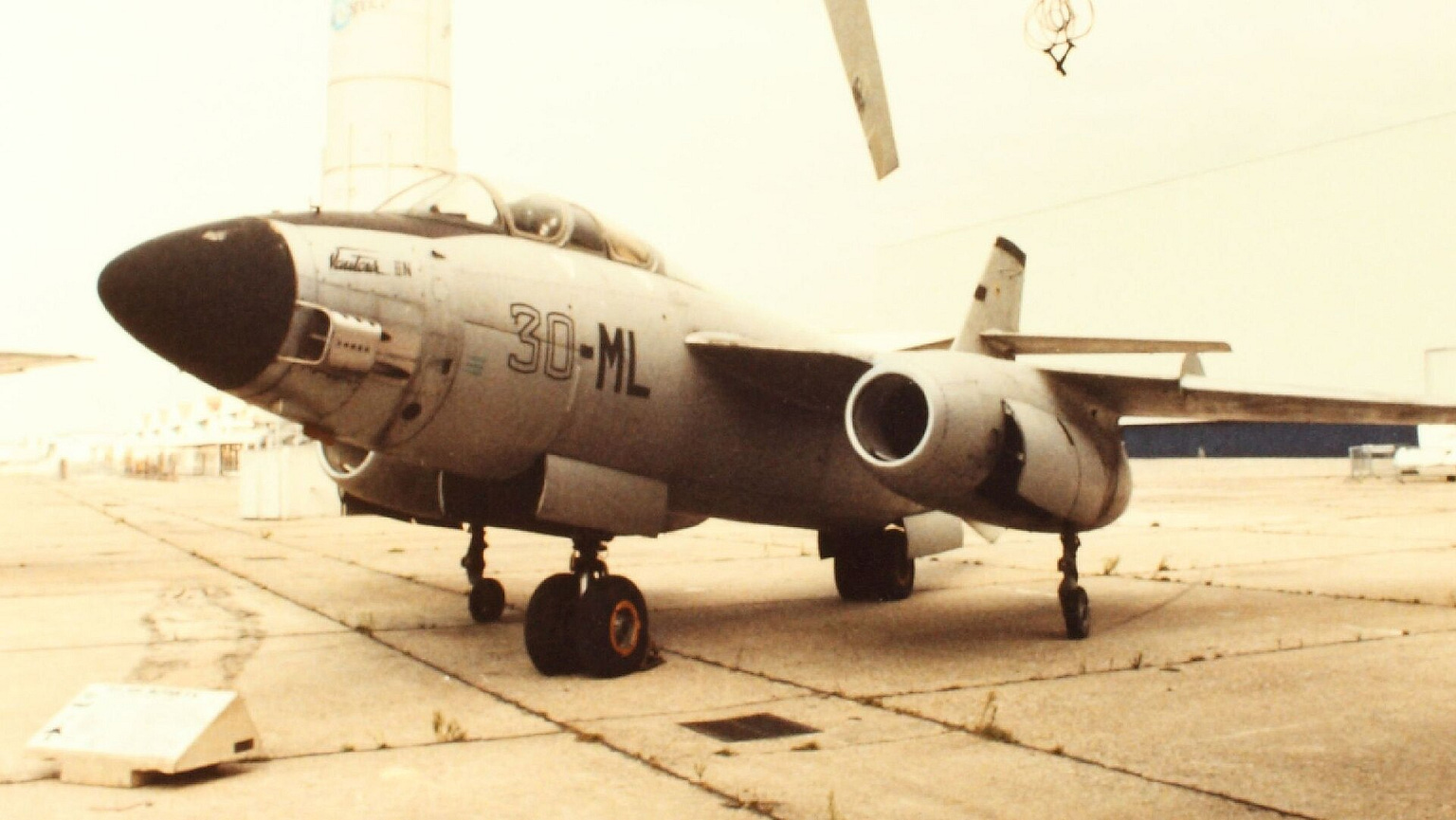
One of the Vautour’s most distinctive features was its landing gear. Because the thin swept wing and the underslung engine nacelles left no convenient place for conventional wing-mounted main gear, the Vautour used a bicycle (or tandem) undercarriage: two main units mounted one behind the other under the fuselage centreline, with small outrigger wheels near the wingtips to steady the aircraft on the ground.
This was the same solution adopted by other aircraft with thin, highly loaded wings, such as the Boeing B-47 and the Lockheed U-2. It gave the Vautour an unusual stance and demanded careful handling on the runway, but it was the logical answer to the problem of where to put the wheels on a swept-wing jet of that layout.
08French Air Force service+
The Vautour served the French Air Force (Armée de l’air) from the mid-1950s. The IIN night fighters equipped all-weather interception squadrons that stood watch over France; the IIA attackers and IIB bombers provided strike and bombing capability; and for a time the bomber version featured in France’s early nuclear-strike plans before dedicated aircraft took over that mission.
French Vautours never fought a major war, and their service was steady rather than dramatic. Later in their careers some were adapted for reconnaissance, electronic warfare and test duties, and it was in these specialised roles that the last French Vautours soldiered on, not finally retiring until around 1979 — a respectable career of more than two decades.
09The Israeli Vautour: a hard-worked strike aircraft+
The Vautour’s most intensive career was in Israeli service. In the late 1950s Israel, then closely allied with France, acquired a small number of Vautours in all three versions, and they at once became among the most capable aircraft in the Israeli Air Force. What Israel valued above all was reach: the Vautour could carry a worthwhile load over a long distance, giving the young air force a genuine long-range strike and bombing capability for the first time.
Through the early 1960s the Vautour was Israel’s principal strike aircraft, and it also served as a night fighter and for reconnaissance. Flown hard in a demanding operational environment, the Israeli Vautours earned a reputation as versatile, dependable workhorses — the aircraft the air force turned to when it needed to hit a target far away.
Design & Engineering
How the Vautour was built: one design, stretched three ways
The Vautour was engineered around commonality — a single swept-wing, twin-jet airframe adaptable into attacker, night fighter and bomber — with a bicycle undercarriage as its most distinctive quirk.
One airframe, three roles
A single swept-wing, twin-Atar design built as the single-seat IIA attacker, the radar-nosed two-seat IIN night fighter, and the glass-nosed two-seat IIB bomber.
Atar power
Two SNECMA Atar turbojets under a swept wing gave high-subsonic performance and the twin-engine reach that made the Vautour valuable for long-range strike.
Bicycle undercarriage
Tandem main gear under the fuselage with wingtip outrigger wheels — the same thin-wing solution used by the B-47 and U-2.
Specifikace
Sud Aviation Vautour II specifications: dimensions, performance and cost
| Typ | Twin-jet attack / all-weather night fighter / light bomber |
| Posádka | 1 (IIA) or 2 (IIN, IIB) |
| Délka | ~15.6 m (51 ft) — approx. |
| Rozpětí křídel | ~15.1 m (49 ft 6 in) — approx. |
| Výška | ~4.5 m (14 ft 9 in) — approx. |
| Prázdná hmotnost | ~10,000 kg (~22,000 lb) — approx. |
| Max takeoff weight | ~20,000 kg (~44,000 lb) — approx. |
| Engines | 2 × SNECMA Atar 101 turbojet (~3,500 kgf each) |
| Undercarriage | Bicycle (tandem) main gear + wingtip outriggers |
| Vyzbrojení | 4 × 30 mm DEFA cannon (IIA/IIN); bombs, rockets, missiles; internal bomb bay |
| Max speed | ~1,100 km/h (~685 mph) — est. |
| Rozsah | Long-ranged for its class — valued for deep strike (varies by variant) |
| Servisní strop | ~15,000 m (~49,000 ft) — est. |
| First flight | 16 October 1952 (SO.4050 prototype) |
| Introduced | mid-1950s (French Air Force) |
| Retired | ~1979 (France); early 1970s (Israel) |
| Number built | ~140 |
| Main variants | IIA (attack), IIN (night fighter), IIB (bomber); plus recon/EW conversions |
| Operators | France (Armée de l’air) and Israel (Israeli Air Force) |
| Unit cost | not reliably recorded (Cold War procurement) |
| Cost per flight hour | not reliably recorded |
10The Vautour in the Six-Day War, 1967+
The Vautour’s combat high point came at the start of the Six-Day War in June 1967. The Israeli Air Force opened the war with Operation Focus, a carefully planned surprise attack on Arab air forces that struck their airfields and destroyed a large part of them on the ground in the opening hours — a decisive blow that gave Israel air superiority for the rest of the war.
The Vautour’s particular contribution was its range. Israel’s more numerous fighters were relatively short-legged, but the Vautour could reach distant airfields that they could not, and the type was used against far-off targets during the campaign. It was demanding, high-stakes work, and it represented the culmination of the Vautour’s value to Israel as the air force’s long-reach striking arm before more modern aircraft arrived.
11The Sud Aviation Vautour’s operating costs: what the records show+
As with most Cold War military aircraft, there is no single reliable, transparent public figure for the Vautour’s unit cost, cost per flight hour or total programme cost. It was procured in modest numbers in the 1950s, in three variants, through government channels rather than at a published list price, and consistent lifetime cost data is not available. Any single figure quoted for it should be treated with caution.
The whole logic of the Vautour, however, was economy of effort: by building three combat types from one basic airframe, France spread its development and production costs across attack, interception and bombing roles rather than funding three separate aircraft. Rather than invent numbers, we list the cost fields here as “not reliably recorded.”
12Replacement by the Mirage and Phantom generation+
Capable as it was, the Vautour belonged to the first post-war generation of jets, and it was overtaken by the rapid advance of aviation. In both French and Israeli service it was superseded by newer, faster and more capable aircraft: the delta-winged Dassault Mirage III, and, for Israel, the American McDonnell Douglas F-4 Phantom and A-4 Skyhawk that arrived at the end of the 1960s.
Israel retired its Vautours in the early 1970s as these modern types took over the strike and interception roles, and France wound its own fleet down through the 1970s, keeping a handful in specialised reconnaissance and electronic-warfare use until around 1979. The Vautour had bridged the gap between the early jet age and the modern combat aircraft that followed.
13Surviving Vautours in France and Israel+
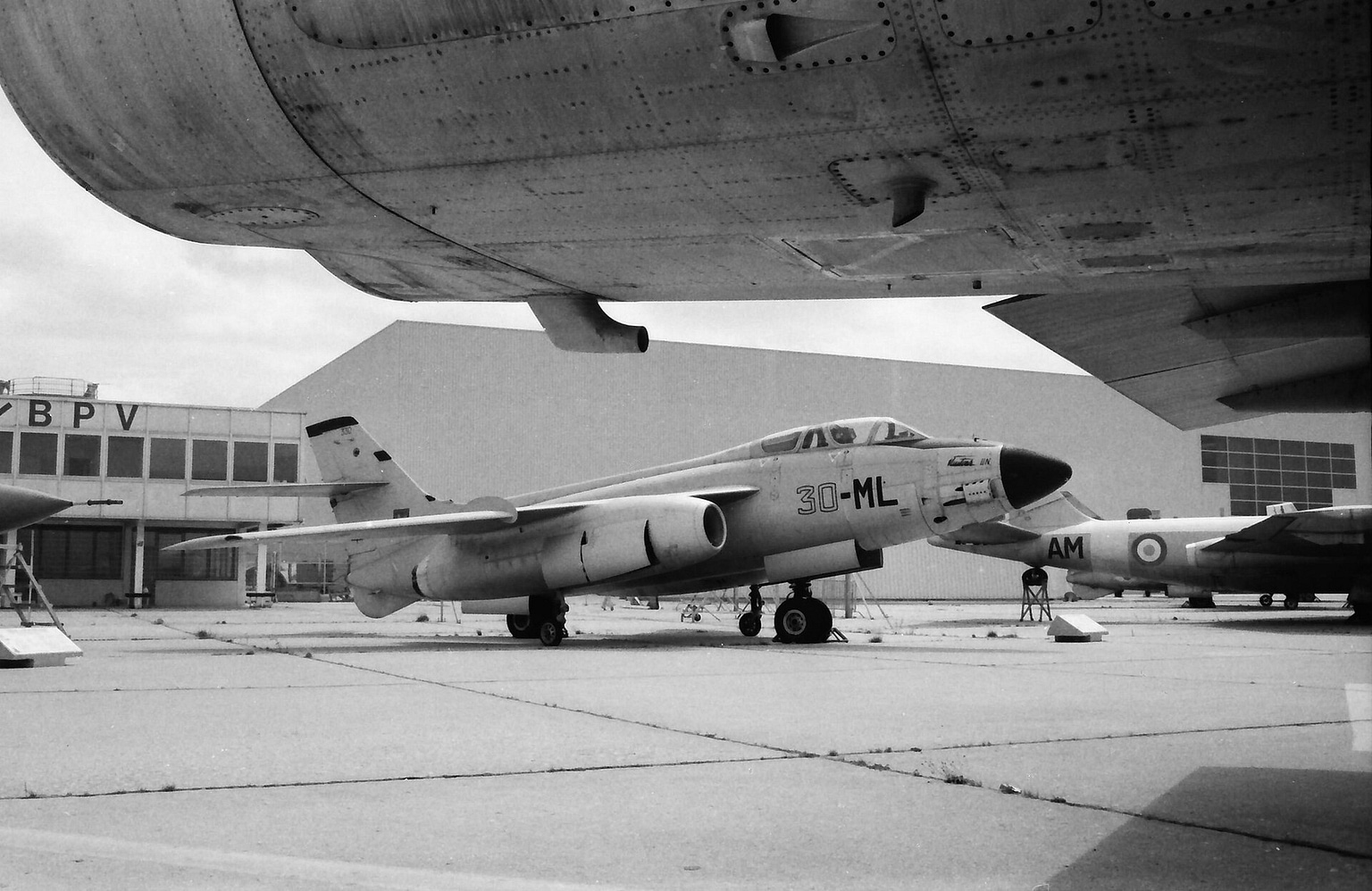
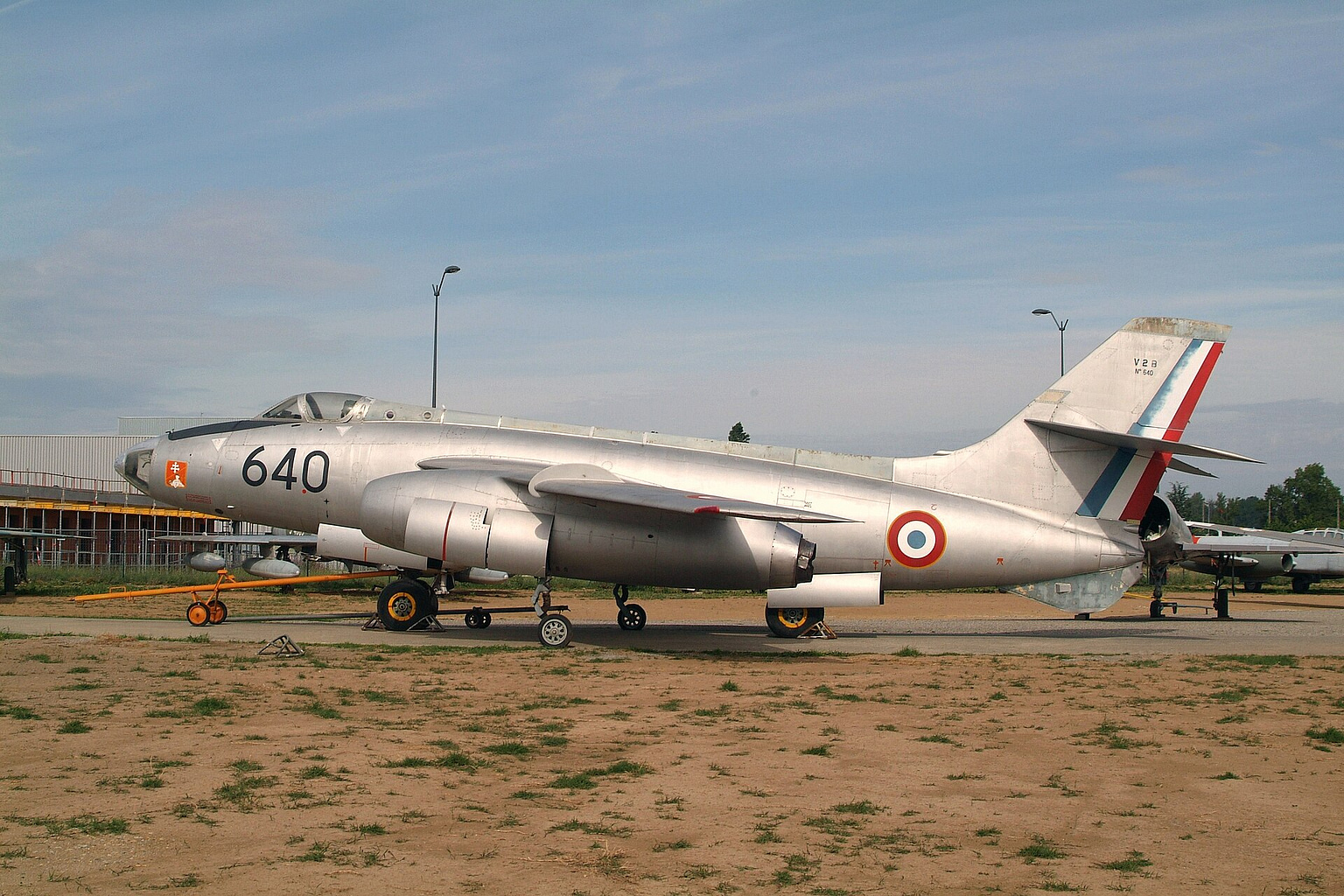
Because only around 140 Vautours were built and the type served just two air forces, survivors are not numerous — but a good number are preserved, fittingly in the two countries that flew it. In France, examples are held at the Musée de l’Air et de l’Espace at Le Bourget and other collections, representing the different variants.
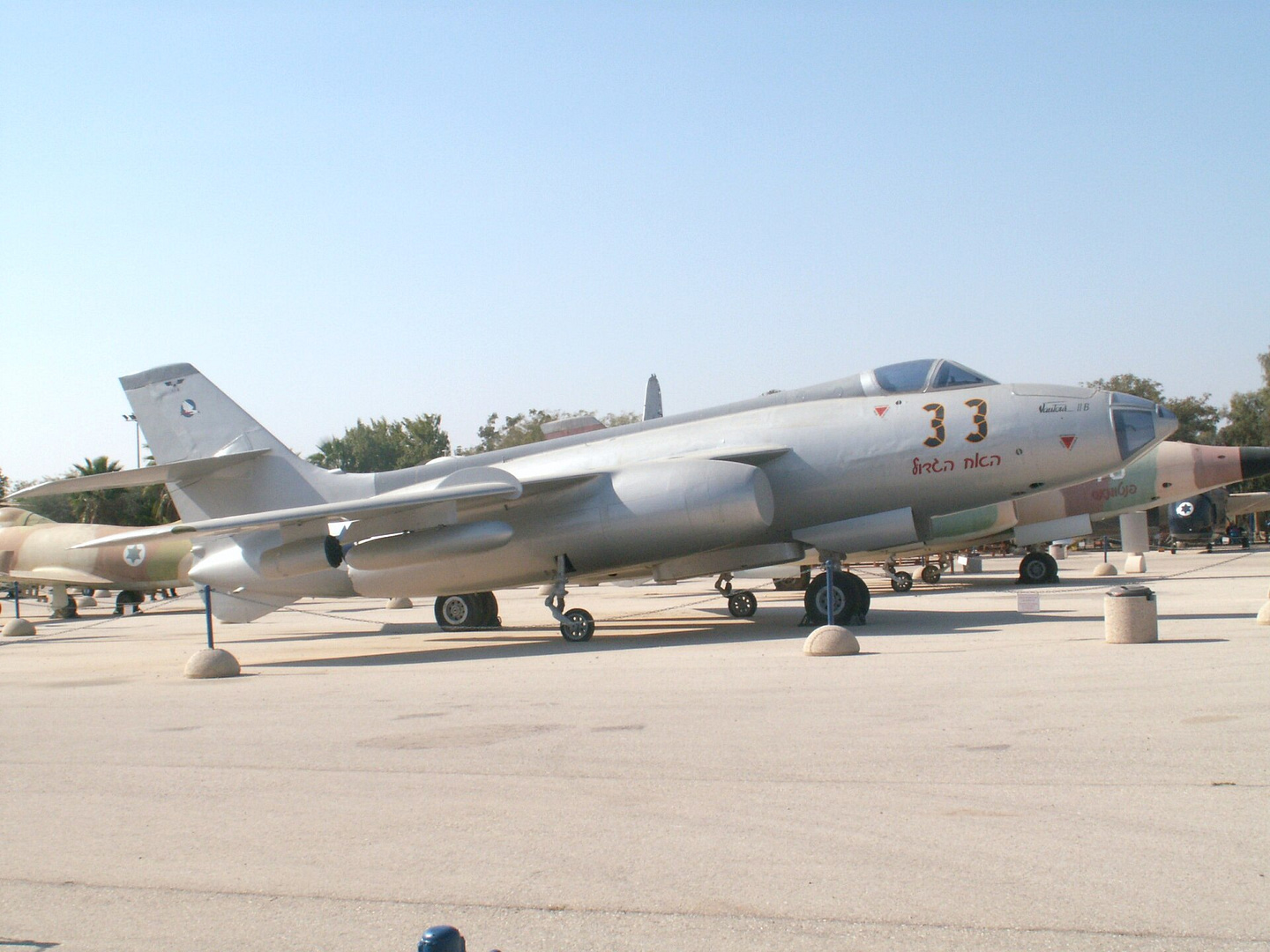
In Israel, Vautours are preserved at the Israeli Air Force Museum at Hatzerim, where they stand as monuments to the aircraft’s intensive combat career and its part in the Six-Day War. Between them, the French and Israeli survivors keep alive the memory of a resourceful design that did three jobs from one airframe and served two nations well.
Timeline
The Sud Aviation Vautour II through the years
The SNCASO SO.4050 Vautour prototype flies on 16 October 1952, a swept-wing twin-jet designed to be built in several versions.
The Vautour II enters Armée de l’air service in its three variants — the IIA attacker, the IIN night fighter and the IIB bomber.
SNCASO merges into Sud Aviation, the company name most associated with the Vautour.
Israel, allied with France, buys Vautours in all three versions, gaining a long-range strike and bombing capability for the first time.
The Vautour becomes the Israeli Air Force’s main strike and bomber aircraft, and also serves as a night fighter.
Israeli Vautours take part in Operation Focus, using their long range to strike distant Arab airfields in the opening blows of the war.
Newer aircraft — the Mirage III, and for Israel the F-4 Phantom and A-4 Skyhawk — begin to supersede the Vautour.
The Israeli Air Force withdraws its Vautours as modern American and French jets take over its strike and interception roles.
France keeps a few Vautours in reconnaissance, electronic-warfare and trials roles as the main fleet winds down.
The last French Vautours are retired, ending a service career of more than two decades.
Stories & Eyewitnesses
The Sud Aviation Vautour II in stories: the moments that defined it
One airframe turned into three aircraft, a bicycle undercarriage, French night-defence duty, and a hard-worked Israeli combat career culminating in the Six-Day War — the Vautour’s history told through the moments that stuck.
One Design, Three Aircraft
The commonality idea
France built three combat types from one airframe.
Rather than design three separate aircraft, France built one basic swept-wing, twin-jet airframe and produced it as an attacker, a night fighter and a bomber — sharing most structure and systems.
It was an efficient way to give the air force three capabilities from a single design effort.
The Name
“Vulture”
Vautour is French for vulture.
The aircraft’s name, Vautour, is simply the French word for “vulture” — a fitting name for a big, purposeful machine built to circle and strike.
It sat in a French tradition of naming combat aircraft after birds and forces of the air.
The IIA
Single-seat attacker
The leanest version carried one pilot.
The Vautour IIA was the single-seat ground-attack version — no radar operator, no bombardier, just a pilot and a load of cannon, bombs and rockets for striking targets on the ground.
It showed how far the basic airframe could be pared down for a pure attack role.
The IIN
Radar in the nose
The night-fighter version was the most numerous.
The Vautour IIN was a two-seat all-weather night fighter, carrying an interception radar in its nose and a radar operator behind the pilot to hunt targets in darkness or cloud.
It gave the French Air Force a real all-weather air-defence capability, standing guard over France after dark.
The IIB
The glass-nosed bomber
The bomber had a glazed nose and a bomb bay.
The Vautour IIB was the light-bomber version, with a glazed nose for a bombardier to aim through and an internal bomb bay to carry the load over a good range.
Its reach made it especially valuable to Israel, and the bomber Vautours were central to the type’s combat career.
Bicycle Gear
Wheels in tandem
The Vautour’s landing gear was unusual.
With no room in the thin swept wing for conventional gear, the Vautour used a bicycle undercarriage — two main units in tandem under the fuselage, with small outrigger wheels near the wingtips.
It was the same solution used by the B-47 and U-2, and it gave the Vautour its distinctive stance.
Atar Power
The engines of the Mirage
Two Atar turbojets powered every Vautour.
All three Vautour versions flew behind a pair of SNECMA Atar turbojets — the same engine family that would go on to power the Dassault Mirage fighters for decades.
The swept wing and twin engines gave high-subsonic performance and the reach that made the type valuable for long-range strike.
Guarding France
The night-defence years
French IIN Vautours stood watch after dark.
In French service the radar-equipped IIN night fighters equipped all-weather interception squadrons that guarded French airspace through the late 1950s and 1960s.
Their service was steady rather than dramatic — the quiet, essential work of air defence.
Israel’s Long Arm
Reach above all
Israel valued the Vautour for its range.
When Israel acquired the Vautour in the late 1950s, it gained a genuine long-range strike and bombing capability for the first time — the ability to carry a worthwhile load to a distant target.
Through the early 1960s the Vautour was the Israeli Air Force’s principal strike aircraft.
Operation Focus
The Six-Day War, 1967
Vautours struck distant airfields in 1967.
At the opening of the Six-Day War, Israeli Vautours took part in Operation Focus, the surprise strikes that destroyed much of the Arab air forces on the ground on the first morning.
The Vautour’s long reach let it hit far-off airfields that shorter-ranged fighters could not — its combat high point.
Night Fighter Too
Israel’s all-weather Vautour
Israel used Vautours as night fighters as well.
Besides its strike role, the Israeli Air Force flew radar-equipped Vautours as night fighters and interceptors, and used the type for reconnaissance — getting the most from its small, hard-worked fleet.
It was a versatile aircraft that Israel turned to for many demanding jobs.
Overtaken
The Mirage and Phantom era
Modern jets superseded the Vautour.
By the end of the 1960s the Vautour was being overtaken by faster, more modern aircraft — the Mirage III, and for Israel the F-4 Phantom and A-4 Skyhawk.
Israel retired its Vautours in the early 1970s, and France wound its own fleet down through the decade.
The Survivors
Preserved in two nations
Vautours survive in France and Israel.
Fittingly, the surviving Vautours are preserved in the two countries that flew them — in French museums such as Le Bourget, and at the Israeli Air Force Museum at Hatzerim.
They keep alive the memory of a clever design that did three jobs from one airframe.
Photo Gallery
The Sud Aviation Vautour II in photographs
French Air Force, Israeli and museum photographs of the Vautour and its three variants, each credited to its source and licence. Click any photo to enlarge.
On Film
The Sud Aviation Vautour II on video: a documentary history
A documentary on the Vautour — its one-airframe-three-variants design, its French service and its intensive combat career with the Israeli Air Force.
“The Plane that No One Dared to Face” by Dark Skies (approx. 400,000 views at time of writing; running time ~12 minutes) — a documentary on the Sud Aviation Vautour, its design and its service with France and Israel.
Operations Overview
Where the Sud Aviation Vautour flew: an operator map
Designed and built in France for the Armée de l’air, and flown intensively in combat by the Israeli Air Force — the Vautour served just these two nations, so this is deliberately a small, two-country map. Hover or tap a country for detail.
Categories: Design, Manufacture & French Air Force (France) · Combat Operator (Israel) · Surviving Airframes (France and Israel). The Vautour was flown operationally by only these two nations.
Service Record
The Vautour’s record: a resourceful design, hard-worked in combat
The Vautour’s significance lies in its clever one-airframe-three-roles concept and in its intensive Israeli combat career.
Questions & Answers
Sud Aviation Vautour II: your questions answered
Can I fly in a Sud Aviation Vautour?
No — there is no bookable Vautour flight experience, and MiGFlug does not offer one. Only around 140 were built, all retired decades ago, and the survivors are static museum exhibits in France and Israel rather than flying aircraft. If what you actually want is the real thing — strapping into a genuine military jet and flying it — you very much can do that today in other types. MiGFlug arranges flights in real fighter jets and warbirds around the world. Start here: migflug.com/flights-prices.
What were the three Vautour variants?
The Vautour II was built in three closely related versions from essentially one airframe: the Vautour IIA, a single-seat ground-attack aircraft; the Vautour IIN, a two-seat all-weather night fighter and interceptor with a radar in its nose; and the Vautour IIB, a two-seat light bomber with a glazed nose for a bombardier and an internal bomb bay. All three shared the same swept wing, twin Atar engines and basic fuselage, differing mainly in the nose and crew.
Why did the Vautour have a bicycle undercarriage?
The Vautour’s thin swept wing and its underslung engine nacelles left no convenient place for conventional wing-mounted main landing gear. The solution was a bicycle (tandem) undercarriage: two main gear units mounted one behind the other under the fuselage centreline, with small outrigger wheels near the wingtips to steady the aircraft on the ground. It was the same approach used by aircraft such as the Boeing B-47 and the Lockheed U-2, which had similarly thin, highly loaded wings.
What was the Vautour’s role in the Six-Day War?
At the start of the Six-Day War in June 1967, the Israeli Air Force launched Operation Focus, a surprise attack that struck Arab air forces on their airfields and destroyed much of them on the ground in the opening hours. The Vautour’s special value was its range: it could reach distant airfields that Israel’s shorter-ranged fighters could not, and Vautours were used against far-off targets during the campaign. It was the high point of the type’s combat career.
Who operated the Sud Aviation Vautour?
The Vautour was flown operationally by just two nations: France and Israel. France’s Armée de l’air used all three variants from the mid-1950s, with the last examples retiring around 1979. Israel acquired Vautours in the late 1950s and made the most intensive combat use of the type, flying it as its principal strike aircraft and as a night fighter through the 1960s before retiring it in the early 1970s.
Why was the Vautour so important to Israel?
When Israel acquired the Vautour in the late 1950s, it gave the young air force something it had never had: a genuine long-range strike and bombing capability, able to carry a worthwhile load to a distant target. In a region where Israel needed to be able to strike far as well as hard, the Vautour became the air force’s long-reach striking arm, and it played an important part in the deep strikes of the Six-Day War before more modern aircraft took over.
What replaced the Vautour?
The Vautour belonged to the first post-war jet generation and was overtaken by faster, more modern aircraft. In both French and Israeli service it was superseded by the delta-winged Dassault Mirage III, and for Israel by the American McDonnell Douglas F-4 Phantom and A-4 Skyhawk that arrived at the end of the 1960s. Israel retired its Vautours in the early 1970s, and France wound its fleet down through the decade.
Was the Sud Aviation Vautour a good aircraft?
Yes — it was a genuinely clever and useful design, even if it was never a world-beater. Its great strength was the efficient one-airframe-three-roles concept, which gave France attack, interception and bombing capability from a single design, and its good range made it a valuable long-range striker — a quality Israel exploited to great effect. It was overtaken by the rapid advance of jet technology, but in its day, and especially in Israeli hands, the Vautour did important work well.
Fly For Real
You can’t fly the Vautour — but these, you can
No Vautour is a bookable ride today. The urge behind it — to strap into a real military aircraft and actually fly — is very much still bookable. MiGFlug puts you in genuine fighters and warbirds around the world.
Fighter Jet Flights
Take the controls of a real ex-military jet with an experienced pilot.
All flights are operated by MiGFlug’s vetted partners with professional pilots. Browse every option and current pricing at migflug.com/flights-prices. MiGFlug does not operate Sud Aviation Vautour flights — no bookable example exists.
Related Aircraft
If the Sud Aviation Vautour interests you, explore these
Sources & Further Reading
Where this Sud Aviation Vautour history comes from
Note on figures: dimensions, performance and production numbers for the Vautour vary between sources and by variant, and are hedged here as approximate. Cost fields are listed as not reliably recorded because trustworthy Cold War procurement cost data is not consistently available. The Vautour’s Israeli combat history, including the Six-Day War, is presented here in summary and with due care; detailed operational accounts should be sought in specialist histories. Several Vautours survive in museums in France and Israel.