
Sud Aviation Vautour II
France’s versatile 1950s twin-jet — one swept-wing airframe built as attacker, radar night-fighter and light bomber — and, in Israeli hands, a hard-worked deep-strike aircraft of the Six-Day War.
The Story
The Sud Aviation Vautour II: one airframe, three jobs, two air forces
The Sud Aviation Vautour II is a fascinating example of Cold War aircraft design: a single, adaptable twin-jet airframe that France turned into three quite different combat aircraft — a ground-attacker, a radar-equipped night fighter, and a light bomber — and that went on to a hard-fought second career in the Israeli Air Force, where it became one of the most important aircraft of the 1960s. Its name, French for “vulture,” suited a big, purposeful machine built to strike.
The Vautour was designed in the early 1950s by SNCASO, the French state aircraft company that soon merged into Sud Aviation. The prototype, the SO.4050, first flew in October 1952, at a time when France was rebuilding its aviation industry and its air force after the Second World War. The clever idea at the heart of the programme was commonality: rather than design three separate aircraft for three separate missions, France would build one basic swept-wing, twin-jet airframe and produce it in three closely related versions, sharing most of their structure and systems. It was an efficient approach for a nation with limited resources, and it gave the French Air Force a family of capable jets from a single design effort.
Getting the Vautour into service took time. The SO.4050 emerged from a French requirement for a multi-role jet, and after the first prototype flew in 1952 the design was refined through further prototypes and pre-production aircraft before the definitive Vautour II was ready. By the time it reached squadron service in the second half of the 1950s, France finally had a modern, home-built combat jet in useful numbers — a real milestone for a national aircraft industry that had been rebuilding almost from scratch since 1945.
“One airframe, three aircraft: the single-seat IIA attacker, the radar-nosed IIN night fighter, and the glass-nosed IIB bomber.”— the Vautour’s one-design, three-role concept
The three versions each had a clear job. The Vautour IIA was a single-seat ground-attack aircraft, armed with cannon and able to carry bombs and rockets. The Vautour IIN was a two-seat all-weather night fighter and interceptor, with a radar in its nose and a radar operator behind the pilot to work it — the aircraft that would guard French airspace after dark. And the Vautour IIB was a two-seat light bomber, with a glazed nose for a bombardier to aim through and an internal bomb bay to carry the load. Same wings, same engines, same fuselage in essence — three different noses and missions.
Power for all three came from a pair of SNECMA Atar turbojets, the French engine family that would go on to power the Mirage fighters. The swept wing gave the Vautour high-subsonic performance, good for its day. But its most distinctive engineering feature was hidden underneath: because the thin swept wing and the podded engines left no good place for conventional wing-mounted landing gear, the Vautour used a bicycle undercarriage — two main gear units in tandem under the fuselage, one behind the other, with small outrigger wheels near the wingtips to keep the aircraft balanced on the ground. It was the same solution used by aircraft like the B-47 and the U-2, and it gave the Vautour an unusual, slightly ungainly stance on the runway.
In French service the Vautour equipped the Armée de l’air from the mid-1950s. The IIN night fighters stood watch over France, the IIA attackers and IIB bombers gave the air force a strike capability, and for a period the bomber version was part of France’s early nuclear-strike thinking before dedicated nuclear aircraft took over. The Vautours served steadily, if without great drama, through the 1960s and 1970s, with the last French examples — used for reconnaissance, electronic warfare and trials — not retiring until around 1979.
That long tail of specialist service was itself a testament to the design. Even after the front-line fighter and bomber versions were withdrawn, the Vautour’s size and load-carrying ability kept it useful: some French aircraft were converted for photographic reconnaissance and for electronic-warfare and radar-calibration work, jobs that suited a roomy, twin-engined airframe. It was in these quiet roles that the type saw out its days — a fitting end for an aircraft whose whole career had been about adapting one basic design to whatever the air force needed.
But the Vautour’s most intensive and famous career was not French at all. In the late 1950s Israel, then closely allied with France, bought a small number of Vautours — examples of all three versions — and they immediately became among the most capable aircraft in the Israeli Air Force. Israel was surrounded by potential adversaries and needed to be able to strike hard and, crucially, to strike far; the Vautour, with its good range and useful bomb load, gave the young air force a genuine long-range attack and bombing capability it had never had before. Through the early 1960s the Vautour was Israel’s principal strike aircraft and also served as a night fighter.
The French connection was the key. In the late 1950s France was Israel’s principal arms supplier, and a close military relationship brought a string of French aircraft — the Ouragan and Mystère fighters, and then the Vautour — into Israeli service. For Israel the Vautour was a particular prize: unlike the nimble but short-legged day fighters, it could carry bombs a long way, and for a small country facing several neighbours at once, the ability to reach deep into hostile territory was strategically priceless. The Israelis flew their Vautours hard and maintained them meticulously, wringing far more use out of a handful of aircraft than their numbers alone would suggest.
That capability mattered enormously in June 1967. At the opening of the Six-Day War, the Israeli Air Force launched Operation Focus, a surprise attack that struck Arab air forces on their airfields and destroyed much of them on the ground in the first hours of the war. The Vautour’s long reach made it especially valuable: it could hit distant airfields that Israel’s shorter-ranged fighters could not reach, and Vautours were used in strikes against far-off targets during the campaign. It was the high point of the type’s combat career, and it cemented the Vautour’s place in Israeli aviation history.
The Vautour’s front-line days were numbered even so. The aircraft that replaced it — the Dassault Mirage and, later, the American F-4 Phantom and A-4 Skyhawk — were faster, more modern and more capable, and Israel retired its Vautours in the early 1970s as those types took over. France, too, wound down its Vautours through the 1970s. Only around 140 were ever built, and the type was flown operationally by just two nations, France and Israel. But the Vautour is remembered as a genuinely clever piece of design — one airframe stretched to do three jobs — and as an aircraft that, in Israeli hands, punched well above its modest numbers. Several survive today, preserved in museums in France and at the Israeli Air Force Museum at Hatzerim, where the big vultures still stand as reminders of a resourceful Cold War design.
01The Vautour’s origins: France rebuilds its air power+
The Vautour was born from France’s post-war effort to rebuild a modern aviation industry and re-equip the Armée de l’air with home-grown jets. It was designed by SNCASO (the Société nationale des constructions aéronautiques du Sud-Ouest), one of the nationalised French aircraft firms, which merged into Sud Aviation in 1957.
The prototype SO.4050 Vautour first flew in October 1952. From the start the programme was conceived around a single, adaptable airframe that could be built in several versions for different missions — a pragmatic way to get maximum capability from one design effort. After development and testing, the Vautour II entered French service in the second half of the 1950s.
02One airframe, three variants: IIA, IIN and IIB+
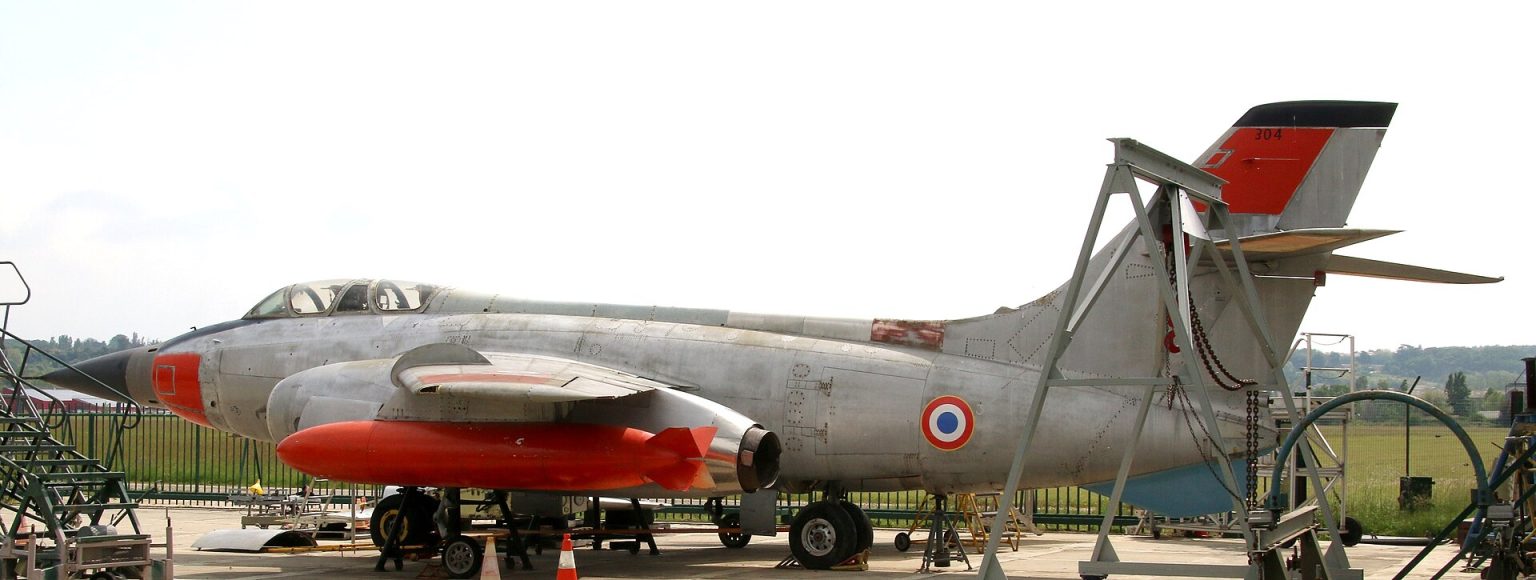
The defining feature of the Vautour programme was that three distinct combat aircraft were built from essentially one airframe. The Vautour IIA was a single-seat ground-attack aircraft; the Vautour IIN was a two-seat, radar-equipped all-weather night fighter and interceptor; and the Vautour IIB was a two-seat light bomber with a glazed nose and an internal bomb bay.
All three shared the same swept wing, the same twin-Atar powerplant and essentially the same fuselage, differing mainly in the nose and the crew arrangement. This commonality kept development and production efficient and gave the French Air Force attack, interception and bombing capability from a single design — an elegant answer to the needs of an air force rebuilding on a budget.
03The Vautour IIA: single-seat ground-attack+
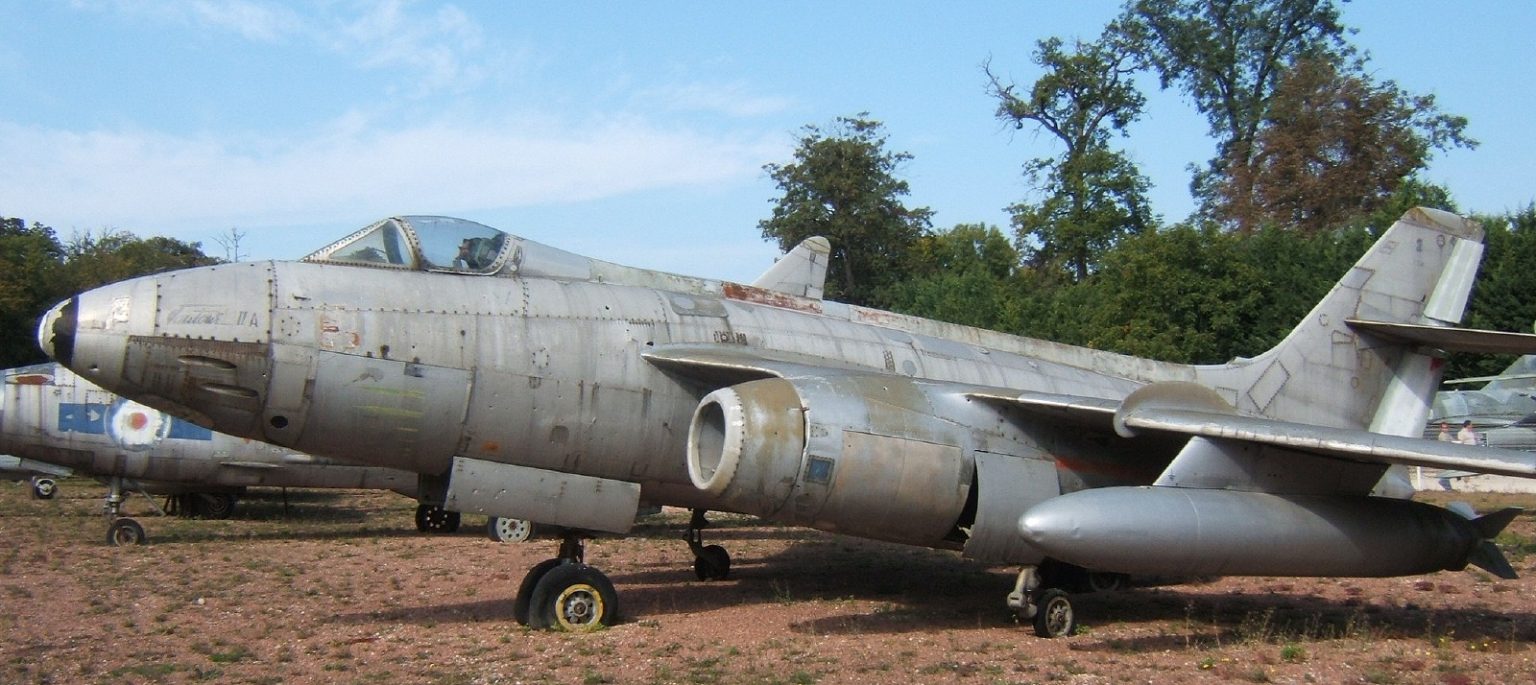
The Vautour IIA was the single-seat ground-attack member of the family. With the pilot alone in the cockpit and no need for a radar operator or bombardier, it was the simplest of the three versions, optimised for striking targets on the ground with cannon, bombs and rockets.
Relatively few IIAs were built compared with the night-fighter version, and in French service the type had a limited career. But the single-seat attacker was an important part of the concept — showing how the basic airframe could be tailored right down to a lean, pilot-only strike aircraft — and IIAs were among the Vautours that served with distinction in Israeli hands.
04The Vautour IIN: the radar night fighter+
The Vautour IIN was the two-seat all-weather night-fighter and interceptor version, and it was the most numerous of the three. It carried an interception radar in its nose and a second crew member — a radar operator — seated behind the pilot to find targets in darkness or cloud and guide the aircraft to them.
Armed with cannon and, in due course, guided missiles, the IIN gave the French Air Force a genuine all-weather air-defence capability for the first time, standing guard over French skies through the late 1950s and 1960s. It was the version that best expressed the Vautour’s value as a large, roomy airframe able to carry the bulky radar equipment of the era.
05The Vautour IIB: the glass-nosed light bomber+
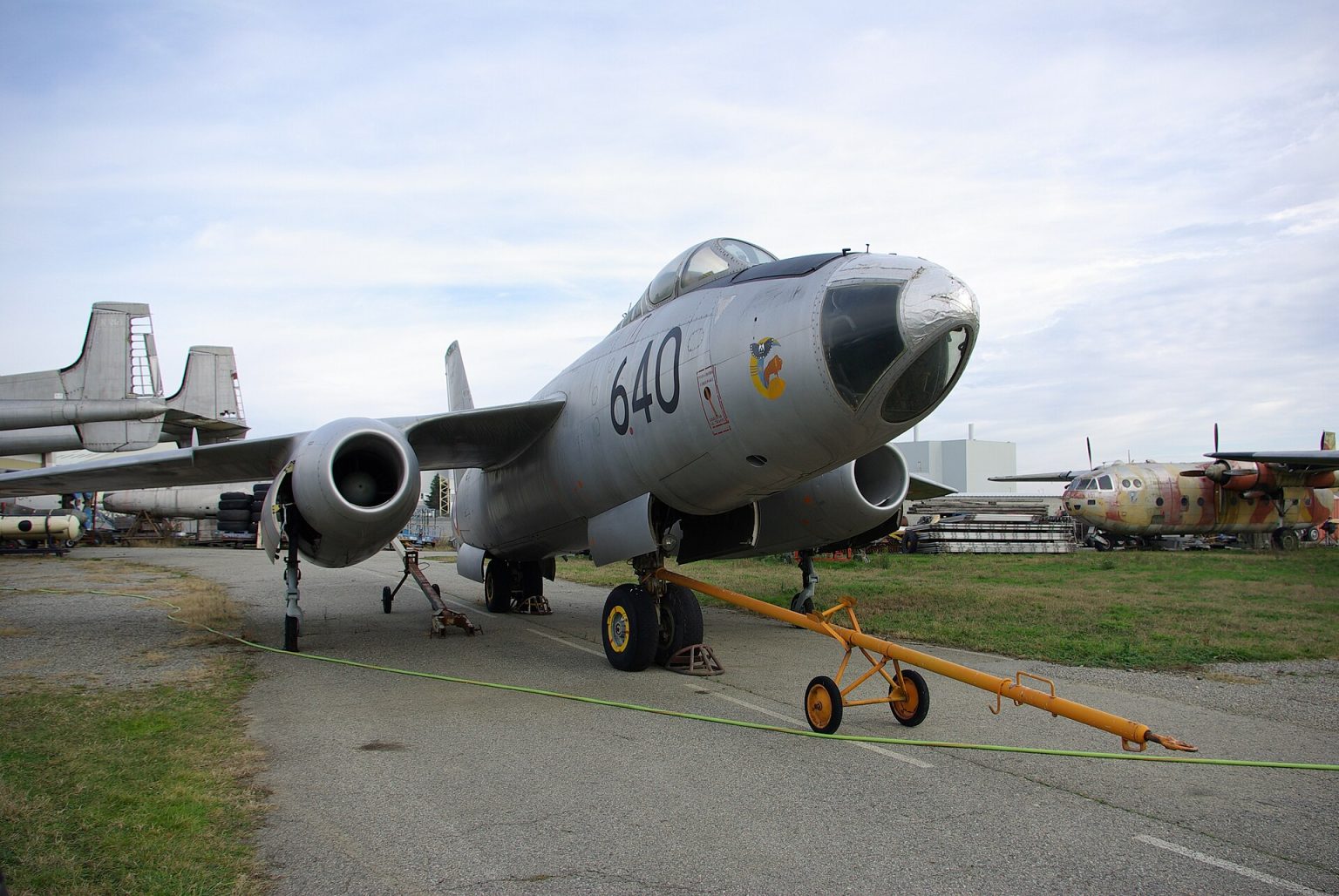
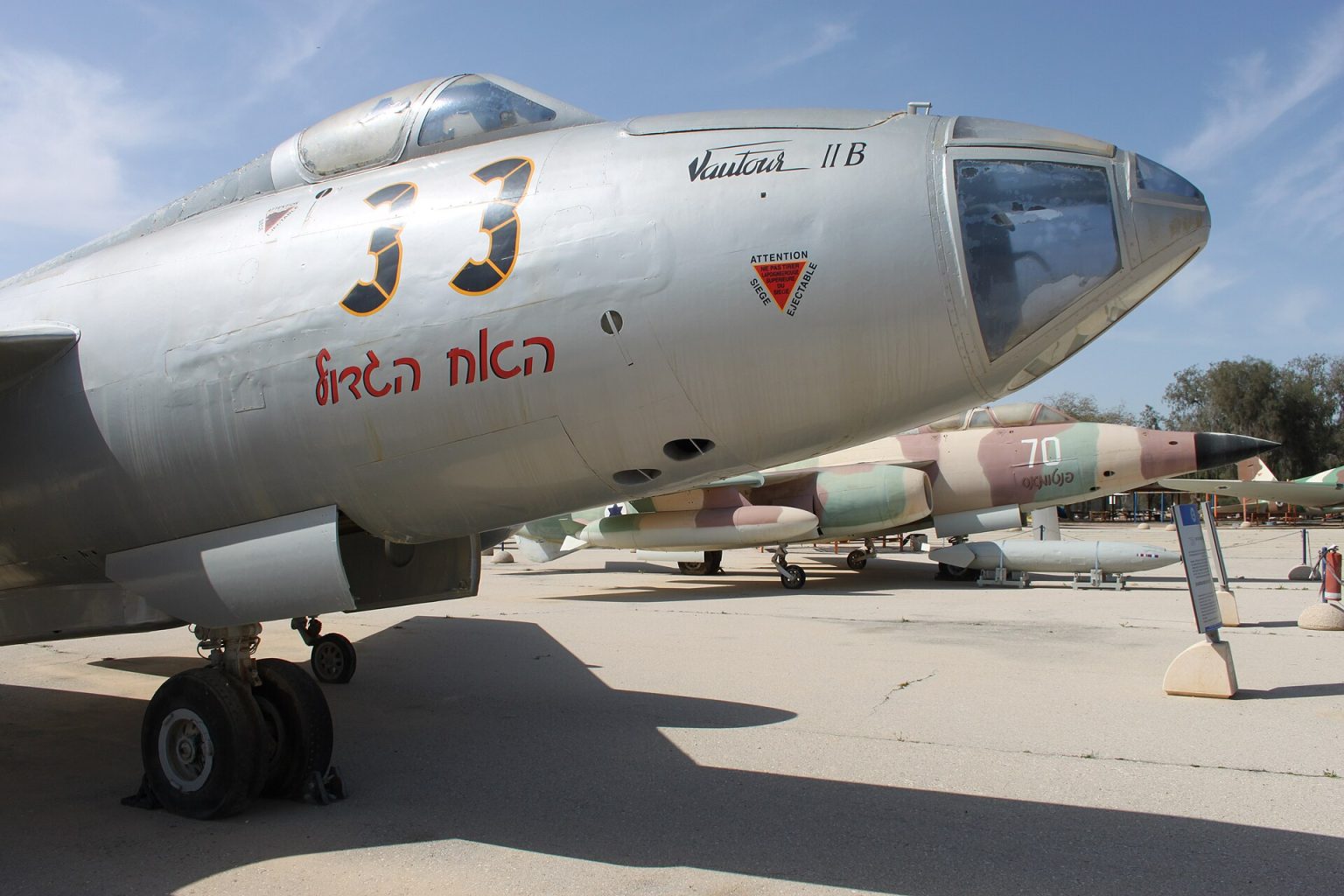
The Vautour IIB was the light-bomber version, distinguished by a glazed nose through which a bombardier could aim, and an internal bomb bay to carry the load. With two crew — a pilot and a bombardier/navigator — it gave the French Air Force a jet bomber able to deliver a useful weight of bombs over a good range.
For a period the IIB was bound up with France’s early thinking about nuclear strike, before purpose-designed nuclear aircraft such as the Mirage IV took over that role. In Israeli service the bomber Vautours were especially prized for their reach, and the IIB and its variants were central to the type’s hard-hitting combat career in the Middle East.
06The SNECMA Atar engines and swept wing+
All three Vautour versions were powered by a pair of SNECMA Atar turbojets, mounted in nacelles under the swept wing. The Atar was the French jet-engine family of the era, and it would go on to power the whole line of Dassault Mirage fighters — so the Vautour flew behind the same basic engines that defined French air power for decades.
The moderately swept wing gave the Vautour high-subsonic performance, good enough for its strike, interception and bombing roles, though the aircraft was not a supersonic dogfighter. Two engines gave power and a measure of safety for long-range work over sea or hostile territory — a quality that made the Vautour particularly attractive for Israel’s deep-strike needs.
07The bicycle undercarriage and wingtip outriggers+
One of the Vautour’s most distinctive features was its landing gear. Because the thin swept wing and the underslung engine nacelles left no convenient place for conventional wing-mounted main gear, the Vautour used a bicycle (or tandem) undercarriage: two main units mounted one behind the other under the fuselage centreline, with small outrigger wheels near the wingtips to steady the aircraft on the ground.
This was the same solution adopted by other aircraft with thin, highly loaded wings, such as the Boeing B-47 and the Lockheed U-2. It gave the Vautour an unusual stance and demanded careful handling on the runway, but it was the logical answer to the problem of where to put the wheels on a swept-wing jet of that layout.
08French Air Force service+
The Vautour served the French Air Force (Armée de l’air) from the mid-1950s. The IIN night fighters equipped all-weather interception squadrons that stood watch over France; the IIA attackers and IIB bombers provided strike and bombing capability; and for a time the bomber version featured in France’s early nuclear-strike plans before dedicated aircraft took over that mission.
French Vautours never fought a major war, and their service was steady rather than dramatic. Later in their careers some were adapted for reconnaissance, electronic warfare and test duties, and it was in these specialised roles that the last French Vautours soldiered on, not finally retiring until around 1979 — a respectable career of more than two decades.
09The Israeli Vautour: a hard-worked strike aircraft+
The Vautour’s most intensive career was in Israeli service. In the late 1950s Israel, then closely allied with France, acquired a small number of Vautours in all three versions, and they at once became among the most capable aircraft in the Israeli Air Force. What Israel valued above all was reach: the Vautour could carry a worthwhile load over a long distance, giving the young air force a genuine long-range strike and bombing capability for the first time.
Through the early 1960s the Vautour was Israel’s principal strike aircraft, and it also served as a night fighter and for reconnaissance. Flown hard in a demanding operational environment, the Israeli Vautours earned a reputation as versatile, dependable workhorses — the aircraft the air force turned to when it needed to hit a target far away.
Design & Engineering
How the Vautour was built: one design, stretched three ways
The Vautour was engineered around commonality — a single swept-wing, twin-jet airframe adaptable into attacker, night fighter and bomber — with a bicycle undercarriage as its most distinctive quirk.
One airframe, three roles
A single swept-wing, twin-Atar design built as the single-seat IIA attacker, the radar-nosed two-seat IIN night fighter, and the glass-nosed two-seat IIB bomber.
Atar power
Two SNECMA Atar turbojets under a swept wing gave high-subsonic performance and the twin-engine reach that made the Vautour valuable for long-range strike.
Bicycle undercarriage
Tandem main gear under the fuselage with wingtip outrigger wheels — the same thin-wing solution used by the B-47 and U-2.
Specifications
Sud Aviation Vautour II specifications: dimensions, performance and cost
Baseline: the Sud-Ouest S.O.4050 Vautour IIA as built between 1956 and February 1958 — single seat, two SNECMA Atar 101E-3 turbojets in underwing nacelles, four DEFA 30 mm cannon in the lower nose, a weapons bay five metres long — because it is the mark that did the fighting. All thirty were completed, seventeen went to Israel, and the Israeli IIA flew the deepest strikes of the 1967 war. Deltas for the two-seat IIB bomber with the glazed bomb-aimer’s nose, the two-seat IIN radar-equipped all-weather fighter, the prototypes and the reconnaissance and electronic-warfare conversions are in grey. Four warnings before the numbers. First, the production count. Three prototypes and six pre-production aircraft were followed by 140 series machines — 30 IIA, 40 IIB, 70 IIN — so the type total is 149 and the production total is 140. French sources routinely print 140 and English ones 149; both are right and they answer different questions. Second, the length. English-language specification tables almost universally give the Vautour IIA as 15.57 m long. That is the fuselage figure. Overall length, nose probe to tailcone, is 17.36 m for the IIA and 17.55 m for the IIB and IIN, and the aeroplane is therefore nearly two metres bigger than the tables suggest. Both figures are given below. Third, the performance is clean-airframe, standard-day data. An operational Vautour flew with two 1,300-litre drop tanks, two 1,500-litre bay tanks and a wing full of iron, and nobody in that configuration saw Mach 0.94. Fourth, the single most consequential number here is not a speed but a fuel figure: with tanks the aircraft held almost 11,000 litres, roughly 42 per cent of its gross weight, and that — not its guns, its radar or its bombsight — is why Israel bought it and why it mattered.
Dimensions & weights
- Crew
- 1 The IIN seated pilot and radar navigator in tandem under separate canopies. The IIB seated the pilot conventionally and put the navigator/bomb-aimer in a separate glazed nose cell entered from above, an arrangement that cost the bomber its guns because the cannon pack occupied exactly that volume.
- Length overall
- 17.36 m (56 ft 11 in) — IIB and IIN 17.55 m (57 ft 7 in); the shortened all-flying-tail marks 17.12 m (56 ft 2 in)
- Fuselage length
- 15.57 m (51 ft 1 in) — IIB and IIN 15.84 m (52 ft 0 in). This is the figure most reference books print as "length".
- Wingspan
- 15.10 m (49 ft 6 in) — identical on all three marks
- Height
- 4.94 m (16 ft 2 in) — Israeli data for the IIA gives 4.77 m (15 ft 8 in), probably a different weight-on-wheels condition
- Wing area
- 45.0 m² (484 sq ft)
- Sweep and aspect ratio
- 35° at quarter chord, aspect ratio 5.06 Shoulder-set wing, metal-bonded with honeycomb panels — advanced construction for 1952 and one of the reasons the airframe outlasted its own usefulness.
- Empty weight
- 10,000 kg (22,050 lb) — IIA basic empty 9,980 kg (22,000 lb). Equipped empty runs to about 10,750 kg for the IIA with pilot and gun pack, 11,100 kg for the IIN, 10,450 kg for the gunless IIB.
- Gross weight, clean
- 17,500 kg (38,580 lb) with full internal and bay fuel — IIN 17,100 kg, IIB 16,330 kg
- Maximum take-off weight
- 21,000 kg (46,300 lb) for the Israeli IIA with the full 3,500 kg external load — IIN 20,600 kg, French IIB 19,730 kg
- Internal fuel
- ~5,364 litres (1,180 imp gal) in 17 self-sealing cells — IIN roughly 4,426 litres and IIB roughly 4,300 litres, the difference being cockpit volume. Each engine drew from its own group of tanks and the pilot could cross-feed. Adding 3,000 litres in the bay and two 1,300-litre drop tanks gives a maximum of about 10,964 litres, some 8,770 kg (19,340 lb), near enough 42 per cent of gross weight.
- Weapons bay
- 5.0 × 1.0 × 1.0 m (16 ft 5 in long) — sized for bombs, rocket packs, two 1,500-litre tanks, a camera pallet or one free-fall nuclear weapon
- Undercarriage
- Retractable bicycle: twin-wheel units in tandem fore and aft of the bay, single-wheel outriggers in the engine nacelles The outriggers, called balancines, were the type’s standing mechanical nuisance — a stuck outrigger on landing dropped a wingtip onto the runway, and it happened often enough to have its own vocabulary in both air forces. Low-pressure tyres for rough strips, a braking parachute and a 5.5 g airframe limit completed the picture.
Performance
- Maximum speed, sea level
- 1,100 km/h (684 mph, 594 kt) — Mach 0.90, clean
- Maximum speed, altitude
- Mach 0.92–0.94, 975–1,000 km/h (606–621 mph) clean; with drop tanks about Mach 0.90. Limiting Mach in a dive was 1.05 below 11,000 m and 1.10 above: the first prototype went supersonic in a shallow dive on 30 June 1953, the first twin-engined two-seater in Europe to do it, and repeated the trick over the Paris show that July.
- Cruising speed
- 885 km/h (550 mph) — Mach 0.84, long-range cruise at height
- Rate of climb, clean
- 60 m/s (11,820 ft/min) for IIA and IIN; the gunless IIB managed 70.5 m/s (13,880 ft/min). Loaded with external stores, about 38 m/s.
- Time to altitude
- 5 min to 10,000 m, 7 min to 12,000 m The Avon-engined pre-production night fighter reached 12,000 m in 3 min 30 sec, which is the whole argument about the Atar in one line.
- Service ceiling
- 15,240 m (50,000 ft) — flights above 15,500 m were recorded; practical attack and photographic ceiling 12,200–13,700 m
- Combat radius
- ~1,200–1,250 km (745–775 miles) for the IIA low-level with 1,000 kg of bombs; IIN slightly less; the IIB flying high-high-high reached about 2,500 km and the photographic IIBR over 2,000 km
- Ferry range
- 5,900 km (3,665 miles) for the IIA, 5,400 km for IIN and IIB — until the F-4E arrived, the Vautour was the only aircraft Israel could fly home from Western Europe
- Endurance
- About 4 h armed, up to 6 h 30 min at optimum cruise The delivery flights from Tours via Bizerte to Israel took roughly 4 h 30 min of airborne time in two legs.
- Take-off and landing run
- 800–1,200 m to unstick; 1,100–1,200 m to stop, or 700–800 m with the brake chute (2,625–3,940 ft / 3,610–3,940 ft / 2,300–2,625 ft) — water injection was available to help the Atar off a hot runway at full load
- Wing loading
- 389 kg/m² (80 lb/sq ft) at 17,500 kg — 467 kg/m² at maximum take-off weight. The 403 kg/m² often quoted corresponds to about 18,135 kg and no standard condition anyone names.
- Thrust-to-weight
- 0.40 at gross weight Every criticism of the Vautour reduces to this number. Both air forces agreed it deserved engines of the 10,000 lbf class and never got them.
Propulsion & systems
- Engines
- 2 × SNECMA Atar 101E-3, 34.3 kN (3,500 kgp, 7,716 lbf) dry — 23 of the 30 IIA including all 17 Israeli aircraft, and every IIB as delivered
- Engine variants
- Atar 101D-3 of 27.6 kN (6,217 lbf) on six training IIA and the first two IIN; Atar 101E-5 of 36.3 kN (8,157 lbf) on the last 60 IIN and on IIB re-engined in service Prototypes and pre-production aircraft flew behind Atar 101B, C and D, two Rolls-Royce Avon RA.8/RA.14 of 44.5 kN (10,000 lbf) and two Armstrong Siddeley Sapphire 6. The British-engined machines were markedly better and none of them was the production standard.
- Engine description
- Single-shaft axial-flow turbojet, no afterburner, water injection for heavy take-offs The Atar 101 was France’s first indigenous production turbojet and, in 1956, still well behind the Avon and Sapphire in thrust, weight and fuel consumption.
- Installation
- Underwing nacelles at roughly one-third chord, well clear of the fuselage This kept the bay unobstructed and made engine changes easy; it also put the intakes where cannon gas could reach them, and firing all four guns at height could flame out an engine.
- Fire-control radar
- DRAC-25A on the first 45 IIN including all seven Israeli aircraft; DRAC-32A on the last 25 Search only, with no useful ground-mapping mode. The IIA and IIB carried no radar of any kind. Israeli crews photographed the navigator’s scope by hand to get night reconnaissance imagery before proper cameras were fitted.
- Sights
- Ferranti optical gunsight in IIA and IIN; Norden bombsight in the IIB nose A Second World War American optical bombsight, in a Mach 0.9 jet, in 1958. This one fact explains the type’s European reputation better than any performance figure.
- Tail
- Fixed tailplane with elevators (classique) on all 30 IIA, the first 10 IIB and the first 25 IIN; all-flying monobloc tailplane on the remainder, designated IIB.1 and IIN.1 Two French IIB were written off in crash landings on the same day in July 1958 after a hydraulic failure in the monobloc tail, and an identical failure damaged an Israeli aircraft on delivery. Most surviving French aircraft were later converted to the all-flying tail anyway.
- Escape system
- SNCASO E-96 ejection seats for pilot and IIN navigator, E-97 for the IIB bomb-aimer, minimum ejection height 610 m (2,000 ft) — replaced in French service by the Dassault E-101 with a 244 m (800 ft) minimum. A 2,000 ft floor on a low-level attack aircraft killed people, including an Israeli pilot who ejected below it in 1962.
- Fuel system
- 17 cells with automatic isolation of a punctured or burning tank and pilot-selectable cross-feed Genuinely advanced battle-damage tolerance for 1956, and Israeli crews credited it with bringing aircraft home from the Golan.
- Air refuelling
- None fitted to any production aircraft One French IIA, airframe 8, was converted as a trials tanker for Mirage IV development and a few others carried probes for the same programme. The buddy-refuelling scheme sometimes described as a Vautour capability belongs to those trials, not to squadron service.
- Reconnaissance fit
- Israeli IIBR: three K-18 or K-38 cameras and a Chase RMK mapping camera in the bay, a K-17 in the nose cell, later a Fairchild KA-52 panoramic camera for low-level work French IIBR carried their cameras beneath the navigator’s cockpit; nine French IIN were fitted with nose cameras in place of the gun pack.
- Electronic warfare fit
- Israeli IIN 66 and 70 carried two Yabelet jamming pods on the outer pylons, able to scan and jam 16 frequencies across the Egyptian and Syrian search and gun-laying bands French IIB conversions designated IIB-GE did the equivalent job in Europe. Details of both fits remain thin because the equipment changed constantly and stayed classified for decades.
10The Vautour in the Six-Day War, 1967+
The Vautour’s combat high point came at the start of the Six-Day War in June 1967. The Israeli Air Force opened the war with Operation Focus, a carefully planned surprise attack on Arab air forces that struck their airfields and destroyed a large part of them on the ground in the opening hours — a decisive blow that gave Israel air superiority for the rest of the war.
The Vautour’s particular contribution was its range. Israel’s more numerous fighters were relatively short-legged, but the Vautour could reach distant airfields that they could not, and the type was used against far-off targets during the campaign. It was demanding, high-stakes work, and it represented the culmination of the Vautour’s value to Israel as the air force’s long-reach striking arm before more modern aircraft arrived.
11The Sud Aviation Vautour’s operating costs: what the records show+
As with most Cold War military aircraft, there is no single reliable, transparent public figure for the Vautour’s unit cost, cost per flight hour or total programme cost. It was procured in modest numbers in the 1950s, in three variants, through government channels rather than at a published list price, and consistent lifetime cost data is not available. Any single figure quoted for it should be treated with caution.
The whole logic of the Vautour, however, was economy of effort: by building three combat types from one basic airframe, France spread its development and production costs across attack, interception and bombing roles rather than funding three separate aircraft. Rather than invent numbers, we list the cost fields here as “not reliably recorded.”
12Replacement by the Mirage and Phantom generation+
Capable as it was, the Vautour belonged to the first post-war generation of jets, and it was overtaken by the rapid advance of aviation. In both French and Israeli service it was superseded by newer, faster and more capable aircraft: the delta-winged Dassault Mirage III, and, for Israel, the American McDonnell Douglas F-4 Phantom and A-4 Skyhawk that arrived at the end of the 1960s.
Israel retired its Vautours in the early 1970s as these modern types took over the strike and interception roles, and France wound its own fleet down through the 1970s, keeping a handful in specialised reconnaissance and electronic-warfare use until around 1979. The Vautour had bridged the gap between the early jet age and the modern combat aircraft that followed.
13Surviving Vautours in France and Israel+
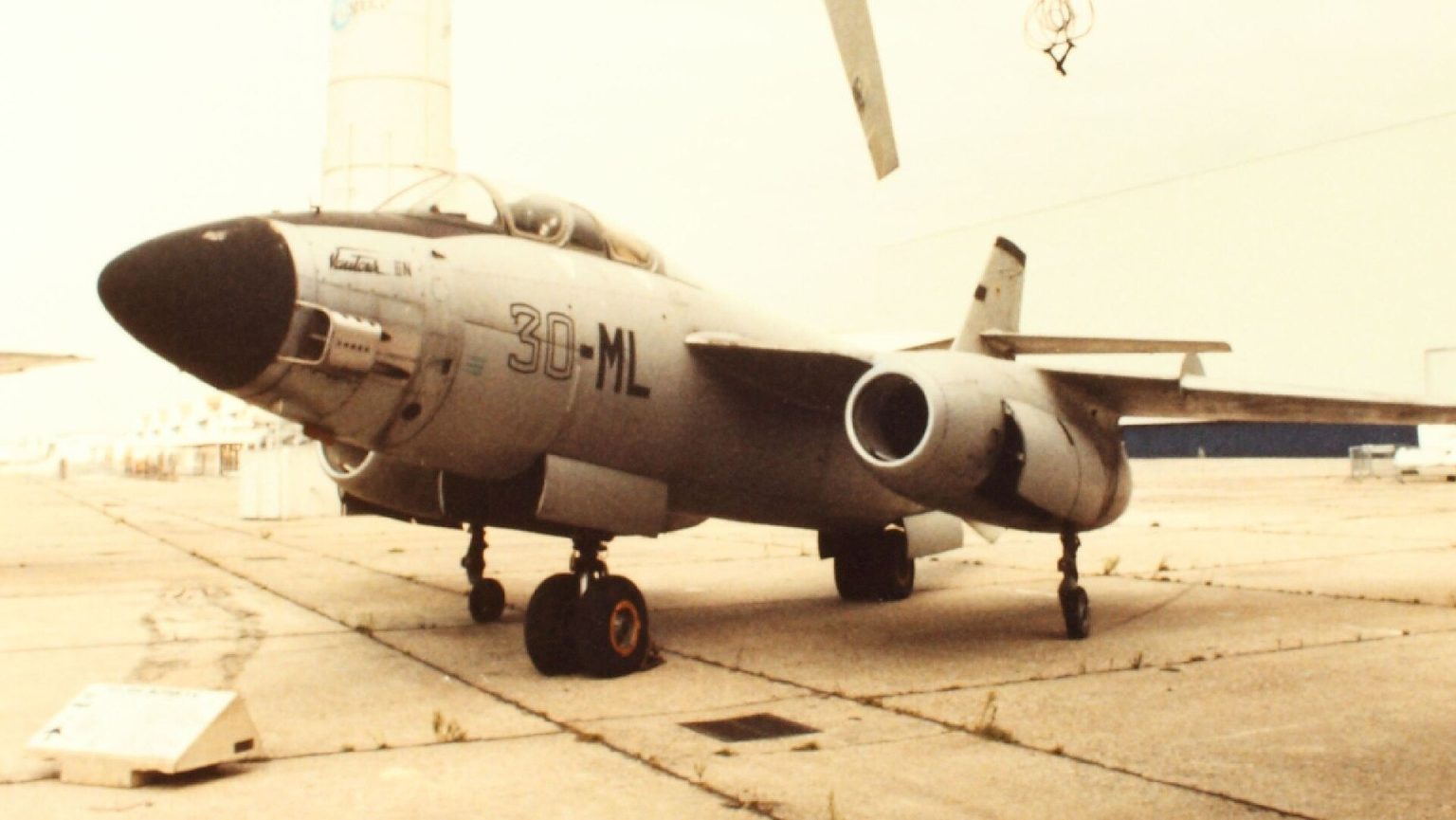
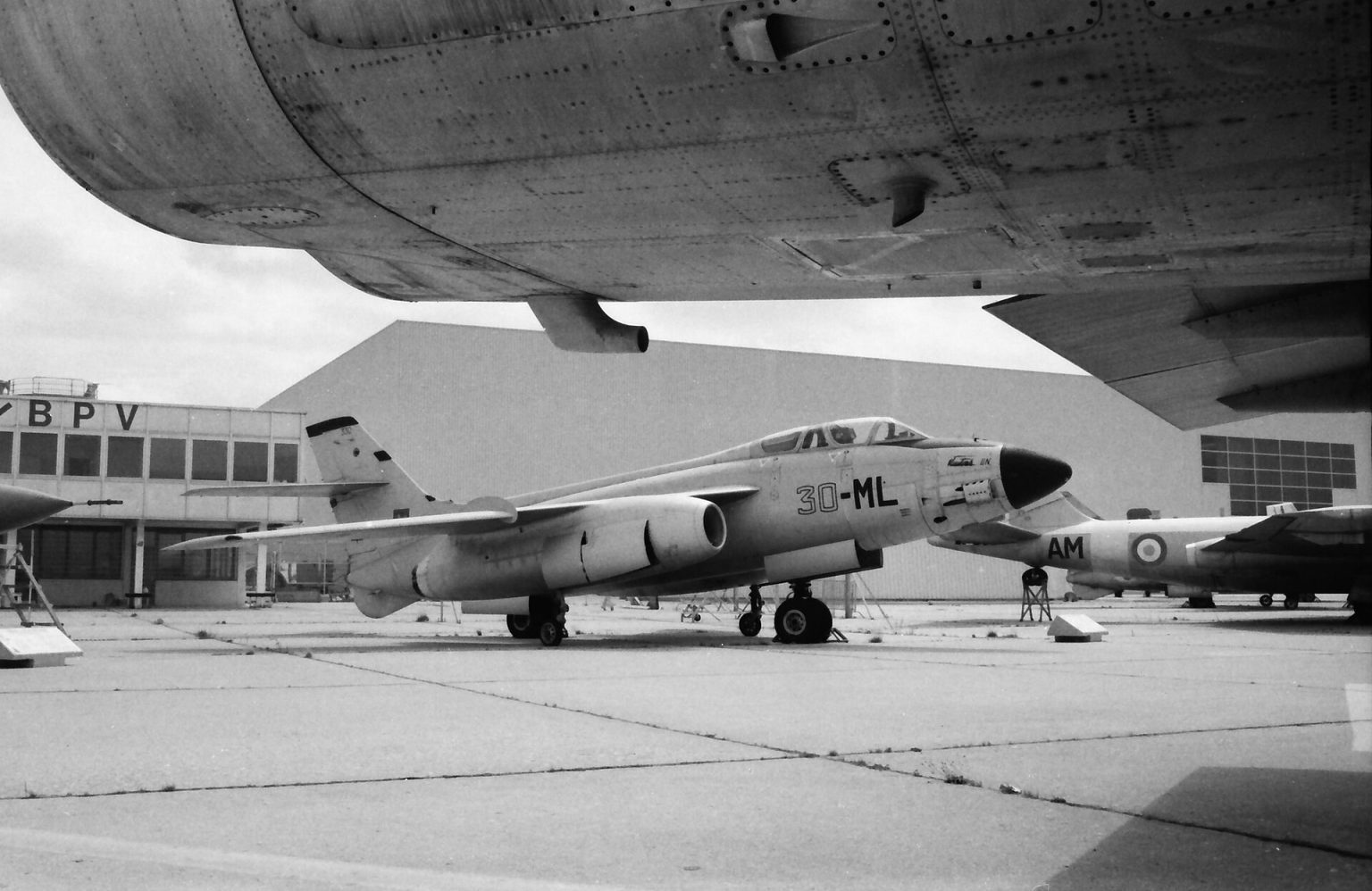
Because only around 140 Vautours were built and the type served just two air forces, survivors are not numerous — but a good number are preserved, fittingly in the two countries that flew it. In France, examples are held at the Musée de l’Air et de l’Espace at Le Bourget and other collections, representing the different variants.
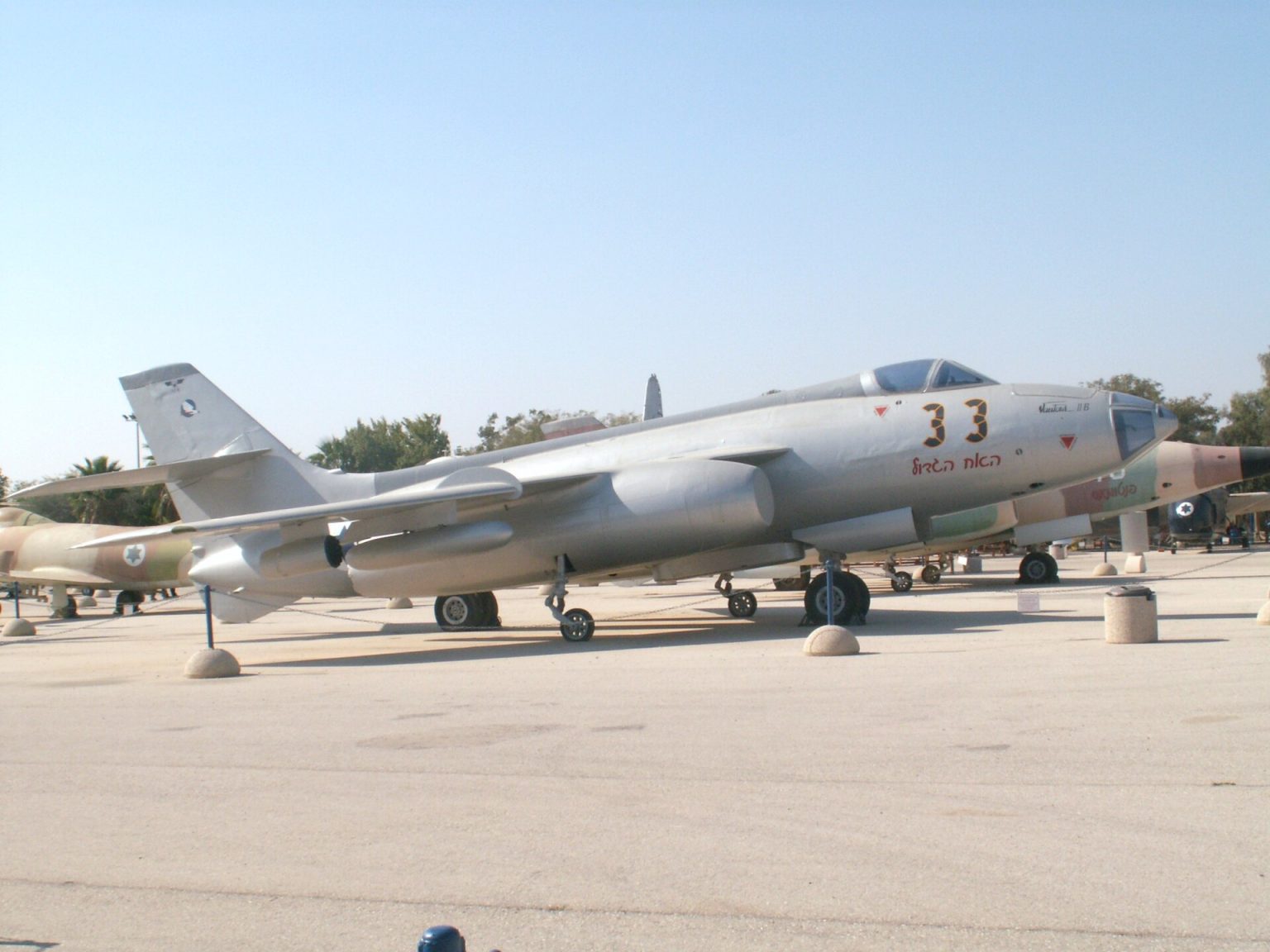
In Israel, Vautours are preserved at the Israeli Air Force Museum at Hatzerim, where they stand as monuments to the aircraft’s intensive combat career and its part in the Six-Day War. Between them, the French and Israeli survivors keep alive the memory of a resourceful design that did three jobs from one airframe and served two nations well.
Armament & payload
The Vautour could lift its own empty weight in fuel and ordnance, and had almost nothing with which to aim it
The load figures are startling even now. A Vautour IIA weighed about 10,000 kg empty and could take off at 21,000 kg; the difference was fuel and bombs in roughly equal measure. Short-range, it carried 4,400 kg of bombs, more than a Second World War Lancaster took to Berlin. Long-range, it carried 1,000 kg to a target 1,200 km away and came back. Four DEFA 30 mm cannon with 100 rounds each gave it a heavier burst than most contemporary fighters, and Israeli pilots reported it was a match for the Mystère IV in a turn.
What it did not have was any means of putting that load accurately on a target. The IIB bomber aimed with a Norden optical bombsight of 1943 vintage. The IIA had a Ferranti reflector sight and the pilot’s eye. There was no attack radar, no Doppler, no computing sight, no radio altimeter worth the name. In clear Middle Eastern daylight against a visible airfield this hardly mattered and the Vautour was devastating; over northern Europe in cloud, against a target the crew could not see, it was very nearly useless, and the French Air Force knew it from the first year of service. The first Israeli ground attack, against Syrian artillery at Tawafiq in March 1962, missed the battery by 200 metres.
The guns had their own history. The original DEFA 551 was unreliable and was replaced by the DEFA 552 and finally the 552A; the whole four-gun pack was removable and a practised Israeli crew could change one in five to seven minutes. Firing all four at altitude could extinguish an engine or damage the IIN radome, so Israeli armourers habitually loaded only two guns and matched the ammunition to the sortie. Israel Military Industries eventually made the barrels and rounds under licence and, crucially, replaced the French Hispano-Suiza fuzes with short-delay Oerlikon fuzes after discovering that shells were passing clean through fighter-sized targets and exploding on the far side. Fits varied enormously between the two operators and across fifteen years. The French IIN carried guided air-to-air missiles that the Israeli IIN never had; the Israeli aircraft carried Israeli bombs, racks, fuzes, tanks and jamming pods that no French Vautour ever saw. Treat any single armament table for this type as a snapshot of one air force in one year.
Gun
- Four DEFA 552/552A 30 mm revolver cannon in a removable pack in the lower nose, 100 rounds per gun, 400 rounds total, cyclic rate about 1,200 rounds per minute per barrel
- Early aircraft carried the troublesome DEFA 551, which was replaced in service
- Fitted to the IIA and IIN only. The IIB and the IIBR carried no gun at all: the bomb-aimer’s nose cell occupied the volume the pack needed, and the aircraft was designed on the assumption that fighters would escort it
- Israeli practice was frequently to load only two of the four guns, because a full four-gun burst at height risked an engine flame-out and, on the IIN, damage to the radome
- Barrels and 30 mm ammunition were made under licence by IMI from 1958, with short-delay Oerlikon-pattern fuzes standard from 1964 after the original French fuzes proved to over-penetrate fighter targets
Air-to-air
- Matra R.511 semi-active radar homing missile — 3.1 m, 180 kg, Mach 1.8, effective between roughly 1 and 7 km; two or four carried by the French IIN from 1958. This was the aircraft’s principal interception weapon
- Nord 5103 (AA-20) radio-command guided missile — 2.6 m, 133 kg, Mach 1.7, about 4 km; the usual alternative, and mixed pairs of R.511 and AA-20 were flown
- Nord 5104 (AA-25) was tested and not adopted; the Matra R.530 was trialled on French and Israeli IIN in 1963–64 and went to the Mirage III instead
- Israeli Vautours never carried a French air-to-air missile. Israel waited for the indigenous Rafael Shafrir 1 — 2 m, 81 kg, infrared, nominally 4 km but realistically 1.5 km from a 30° rear cone. It was a poor missile and every Israeli mark tested it
- Two Shafrir 1 were carried operationally after 1967 by the gunless photographic Vautour as its only self-defence, which tells you how thin that defence was
Air-to-surface guided
- None ever entered service on any Vautour, in either air force. This card exists to say so plainly
- The Nord AS-20 and the larger radio-command Nord AS-30 — 3.9 m, 510 kg, about 9.5 km — were both trialled on French IIN airframes, and the AS-30 was partly developed on the Vautour, but neither was adopted for it
- The AS-20 was considered for the Israeli IIA and rejected because a single-seat aircraft cannot fly the aeroplane and steer a command-guided missile at the same time
- A powered guided bomb designated B-10 was developed in the mid-1950s for the IIA and IIB and never reached operational status; the Durandal runway-piercing weapon was likewise developed but not fielded on the type
- The Israeli Mal’ach, an early domestic air-to-surface missile, was trialled from Vautours and did not enter service either
Bombs
- Weapons bay: six bombs in two triplets, up to 2,725 kg (6,008 lb) — typically six 450 kg or 340 kg weapons in French service, six 250 kg or 400 kg in Israeli service. The practical bay load was usually 1,500–2,100 kg
- Underwing: four pylons, inner stations stressed to 1,500 kg and outer to 500 kg, a theoretical 4,000 kg and a practical 3,500 kg. Maximum demonstrated total load 4,400 kg (9,700 lb) of bombs
- IMI quadruple carriers, used on all four Israeli stations, allowed clusters of light bombs in place of single heavy ones — typically eight 70 kg or 100/120 kg weapons on the outer pylons
- The 70 kg IMI runway-piercing bomb was the decisive weapon of 5 June 1967: 1.58 m long, a 48 kg warhead, released from 100 m, retarded by parachute, turned through 60°, rocket-boosted into the concrete and fuzed to detonate six seconds later, leaving a crater 5 m across and 1.6 m deep. One bomb in eight carried a delay of up to ninety minutes to hinder repair
- Nuclear: the IIB bay could take one free-fall weapon. The AN-11 that eventually armed the force de frappe weighed 1,500 kg and yielded about 60 kt, but did not enter service until 1964 — see the caveat below
- Napalm: two or four 458-litre tanks underwing, about 450 kg each; later tanks had tail fins so they could be released from a safer height as Arab anti-aircraft fire improved
Rockets
- SNEB type 22 68 mm folding-fin rockets throughout, in Matra 116E nineteen-round pods; up to four pods underwing on the IIN
- The design intent was far more ambitious: two internal Matra 104A packs of 116 rockets each, 232 rounds fired from the bay, in the manner of the F-86D and CF-100
- Firing trials went badly. Rockets ignited too close to the belly and damaged the launching aircraft; the load was cut from 232 to 205 to 112, and then a trials aircraft was destroyed by an exploding rocket and both crew were killed. Sources disagree on which airframe was lost, one naming a pre-production night fighter and another a production IIN, serial 348
- What survived was a single forward pack of 116 (some sources 104) rockets in the French IIN only, with a fuel tank in the rear bay. Israel abandoned internal rockets entirely, while displaying them at ground shows in what looks very much like deliberate misdirection
- The IIA had provision for 24 × 120 mm rockets in four six-round clusters, and the 105 mm T-10 was carried for practice; the Israeli IMI 82 mm anti-armour rocket was trialled from Vautours but only became operational in 1973, after the type had gone
Pods & other stores
- Drop tanks: 1,300-litre tanks on the inner pylons, roughly 1,250 kg full, made in France and from 1962 also by IMI; 600/625-litre tanks used late in Israeli service, sometimes four at once on the camera aircraft to make up for the fuel the cameras displaced
- Bay fuel: two 1,500-litre tanks, or one tank and a camera pallet on the reconnaissance aircraft
- Yabelet jamming pods, two on the outer pylons of Israeli IIN 66 and 70, covering 16 frequencies in the Egyptian and Syrian search and fire-control bands, operational from 1966
- Camera pallets: three K-18 or K-38 vertical and oblique cameras plus a Chase RMK mapping camera in the bay, a K-17 in the nose, and from the mid-1960s a Fairchild KA-52 panoramic camera for horizon-to-horizon coverage from 150–300 m, adopted because the SA-2 had made high-altitude photography lethal
- Flares for night attack and night photography, carried in underwing dispensers; chaff packs were initially taped inside the airbrakes and shed by cracking the brakes open for an instant, which is as improvised as it sounds
Three typical loadouts
- Operation Moked, first wave, 5 June 1967 — Vautour IIA
- Eight 70 kg runway-piercing bombs on IMI quadruple racks under the outer pylons, two 1,300-litre drop tanks inboard, both 1,500-litre bay tanks full, 400 rounds of 30 mm. Flown at 30 m over the sea at 450 kt in radio silence to Beni Suef, 1,000 km away; two bombing passes and three strafing passes; roughly 1 h 55 min airborne. Nine Tu-16 destroyed on the first attack alone.
- Long-range airfield strike at maximum radius — Vautour IIA
- The Ras Banas mission of the same evening: full internal fuel, 3,000 litres in the bay, two 1,300-litre drop tanks, a light bomb load, guns loaded. Target 965 km out on the Red Sea coast, take-off about 16:45, weapons away at 18:00, landing around 19:15 — 2 h 30 min, and beyond the reach of every other aircraft in the Israeli inventory.
- Maximum ordnance, short radius — Vautour IIA
- Six 400 kg bombs in the bay and four 500 kg bombs underwing: 4,400 kg of ordnance, no external fuel, take-off weight 19,500 kg. The heaviest conventional load the type ever lifted, and usable only against targets close to base.
Weapon-by-weapon detail for this type comes overwhelmingly from two places: French official documentation for the IIN and IIB, and Israeli squadron and industry records for the Israeli aircraft. The two barely overlap, and figures for the internal bomb load in particular are quoted variously as 2,100 kg, 2,700 kg and 2,725 kg depending on whether the source is describing a practical service load, a metric bomb set or a theoretical maximum. On the nuclear question, be careful: the Vautour IIB was designed with a nuclear bay and 40 of them were earmarked as the interim delivery aircraft for the French deterrent, but the AN-11 bomb did not enter service until 1964, by which time the Mirage IVA was itself arriving, and the standard reference on the weapon says only that "some reports" credit the Vautour with the capability. No French Vautour is known to have stood nuclear alert with a live weapon. The type’s actual nuclear work was quite different and entirely real: from 1960 Vautours flew through the clouds of French atmospheric tests in the Sahara and later at Mururoa with sampling probes under the wings, and after eight test campaigns the five most contaminated airframes — 317, 604, 607, 611 and 625 — were sunk in deep water in 1975 because nothing else could be done with them.
Variants
Three aeroplanes with ninety per cent commonality, ordered in hundreds and delivered in dozens
The Vautour was conceived in July 1951 as one airframe answering three requirements at once — single-seat tactical attack, two-seat all-weather interception, two-seat bombing — and the design team under Jean Parot and Jean Weil achieved it, with roughly ninety per cent structural commonality between the three. That was the aircraft’s real technical achievement and it is why Israel, which bought all three, could shuffle roles between them for fifteen years.
The programme then collapsed under politics rather than engineering. The initial French requirement contemplated 480 or more aircraft, 300 of them the IIA attack version. Budget cuts took it to 360, then 160, then 140. The decisive blow was an American offer of 200 F-84F and RF-84F at knock-down prices, which France accepted and which removed the need for the IIA entirely. Not one Vautour IIA ever equipped a French front-line squadron; the thirteen France kept went to training and trials units, and seventeen of the thirty were sold cheaply to Israel, where they became the most-used mark of all.
- S.O.4000 (1951, 1 built)
- The ancestor, not a Vautour II: a much larger two-seat twin-Nene bomber with a four-unit main undercarriage. It flew once, on 15 March 1951, was underpowered and unstable, and was abandoned — but the redesign of it produced the S.O.4050.
- S.O.4050-01, -02, -03 (1952–54, 3 built)
- One prototype for each role. 01 was the two-seat night-fighter shape, first flown 16 October 1952 by Jacques Guignard on Atar 101B, and became the first twin-engined two-seater in Europe to exceed Mach 1, in a dive, on 30 June 1953; it added the ventral fin and dorsal spine that became standard, and was lost to a flat spin in May 1956. 02 was the single-seat attack aircraft, first flown 16 December 1953. 03 was the glazed-nose bomber with the all-flying tail, first flown 5 December 1954 on Armstrong Siddeley Sapphires.
- Pre-production 04 to 09 (1955–56, 6 built)
- One B, two A and three N, flown behind an assortment of Atar 101D and E, Rolls-Royce Avon and Sapphire engines. Aircraft 09, on 10,000 lbf Avons, climbed to 12,000 m in half the time of any Atar-powered Vautour and was the standing proof of what the type could have been.
- Vautour IIA (1956–58, 30 built)
- Single-seat attack: four DEFA cannon, bay and four underwing pylons, no radar. Thirteen to France for training, armament trials and Mirage IV tanker experiments; seventeen to Israel, where they did the bulk of the fighting. Two more French airframes were quietly acquired by Israel after 1967 to replace combat losses.
- Vautour IIB and IIB.1 (1957–59, 40 built)
- Two-seat bomber with a glazed nose cell for the navigator/bomb-aimer, no guns, Norden bombsight, and provision for one nuclear weapon in the bay. Thirty-six to France, where they equipped the 92e Escadre de Bombardement at Cognac and later Bordeaux-Mérignac; four to Israel. All were built or converted to the all-flying monobloc tail as the IIB.1.
- Vautour IIN and IIN.1 (1956–60, 70 built)
- Two-seat all-weather fighter with DRAC-25A or DRAC-32A search radar in the nose, four cannon, R.511 or AA-20 missiles and rocket pods. The largest production batch: sixty-three to France, where it was the backbone of the 30e Escadre de Chasse Tout Temps until the Mirage III arrived; seven to Israel, delivered with the earlier radar.
- Vautour IIBR and IINR (conversions, 12 French and 3 Israeli)
- Photographic reconnaissance with the bombing capability retained. Israel converted three IIB from 1958 and progressively fitted heavier camera pallets; these three aircraft photographed the Egyptian airfields on which Operation Moked was built. Nine French IIN also had nose cameras fitted in place of the gun pack.
- Vautour IIB-GE and Israeli IIN(E) (conversions, 7 French and 2 Israeli)
- Electronic warfare. Seven French IIBR were reworked as IIB-GE for jamming while keeping their bomb bays. Israel converted IIN 66 and 70 to carry Yabelet pods; 70, later fitted with cameras in the nose and bay as well, became the most heavily modified Vautour of all and served until 1972.
- Vautour IIB-TT and radar test-beds (conversions, late 1960s to 1991)
- Target tugs at Cazaux, and four IIN rebuilt by the Centre d’Essais en Vol with pointed noses to carry Mirage radars. These aircraft tested the Cyrano series and then, decades later, the radar of the Mirage 2000; the last flew in 1991 wearing a Mirage F1 nose, nearly forty years after the prototype’s first flight. About sixty airframes had earlier passed through the Jouventour refurbishment programme of 1967–71.
- S.O.4060 Super Vautour and the Israeli Spey proposal (1956 and 1964, none built)
- Sud Aviation’s stretched supersonic development, offered against the requirement that produced the Mirage IV and rejected. In 1964 Yoash Tsiddon of the Israeli Air Force staff separately agreed a scheme with the manufacturer for a deep-penetration Vautour with Rolls-Royce Spey engines, clipped wings and a proper navigation and attack system, to be built partly in Israel. Israeli Air Force opposition and a competing Dassault proposal killed both.
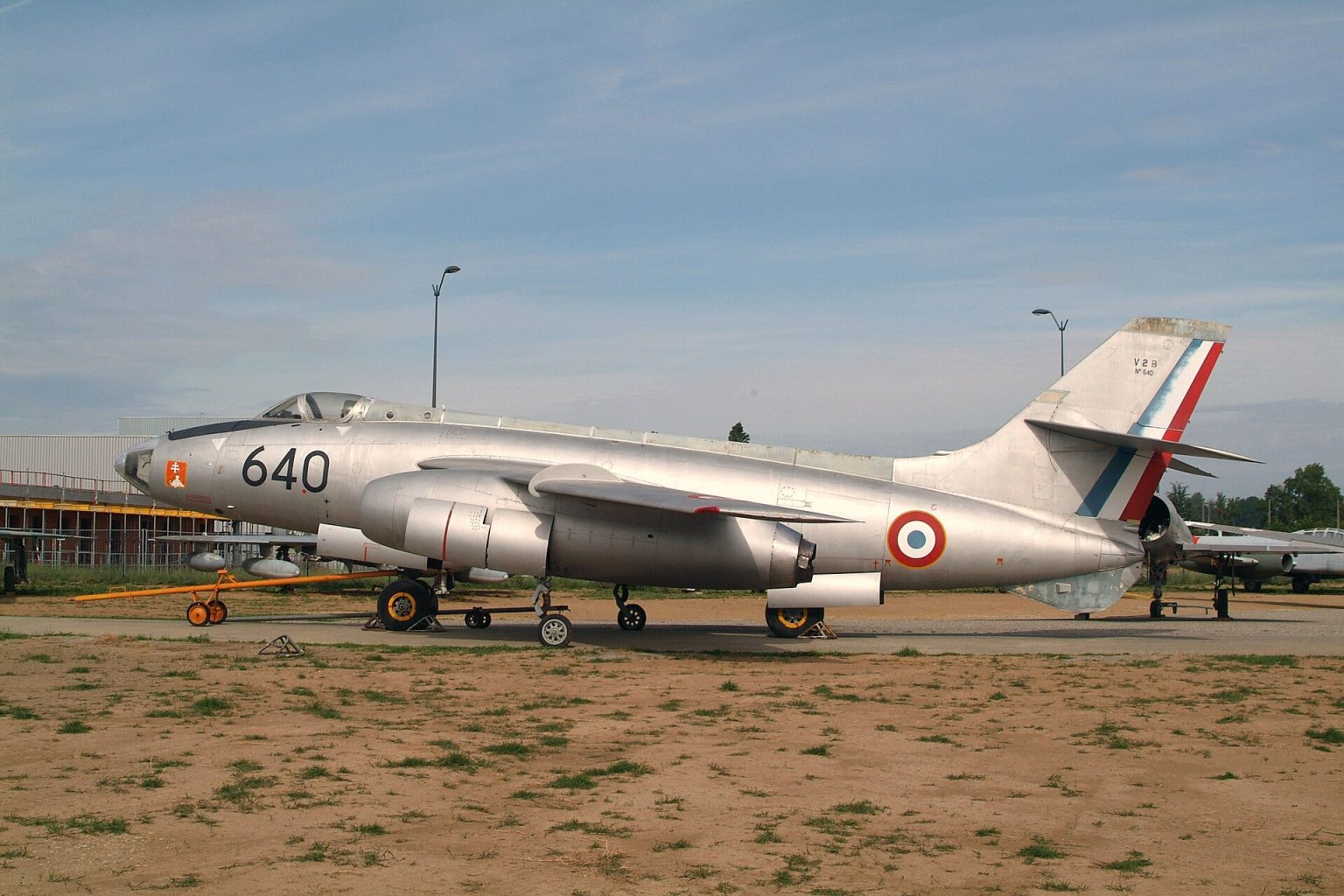
A correction worth making explicitly, because the error is widespread: English-language sources including Wikipedia state that Israel lost 15 Vautours in combat. It did not. Israel wrote off 17 airframes in total, of which two were rebuilt and returned to service, giving a net loss of 15 from all causes across fifteen years — and of those, six were lost to enemy action and eleven to accidents, most of them in the difficult early years. Combat losses were: IIA 07 to Syrian anti-aircraft fire over Dumayr on 5 June 1967; IIA 08 to Syrian guns on 6 June, the pilot ejecting over the Galilee; IIA 14 and IIN 65 to Iraqi Hawker Hunters over H-3 on 7 June, in which Shlomo Keren and Alexander Inbar-Meltzer were killed; IIBR 31, the photographic aircraft named Little Brother, to Egyptian anti-aircraft fire over the Suez Canal on 1 December 1967, its crew Yitzhak Artzi and Elhanan Raz still missing; and IIA 03 to Jordanian guns on 23 April 1969, killing Naftali Porat. Eight aircrew died flying the Vautour in Israeli service. Against that, a single air-to-air victory: Ben-Zion Zohar destroyed an Iraqi Hunter over H-3 on 6 June 1967. Israel took 31 Vautours altogether — 28 on the April 1957 contract (17 IIA, 7 IIN, 4 IIB), one IIN received in 1964 in exchange for an aircraft returned to France for missile trials, and two further IIA acquired after 1967 to replace losses. Survivors are precisely countable and all are original airframes; no Vautour reproduction exists and none is airworthy, the last flyable example, ex-348 registered F-AZHP, having stopped flying in 1996. In Israel, three are held by the Israeli Air Force Museum at Hatzerim — IIA 09 Hamashhit, IIB 33 Big Brother and IIN 70 Phantomas — with a fourth on a memorial to Naftali Porat at Kibbutz Kfar Giladi and two more held at Ramat David and the air force technical school. In France about a dozen survive: IIN 304 at Montélimar, 307 and 330 in store at the Musée de l’Air et de l’Espace, 308 and IIB 615 with CANOPEE at Châteaudun, 337 outside the Safran museum at Villaroche, 347 at Saint-Dizier, 358 at Orange, 364 at Mont-de-Marsan, 370 at Solenzara, IIB 634 in store at Le Bourget, IIB 640 with Ailes Anciennes at Toulouse, and a IIA in the private collection at the Château de Savigny-lès-Beaune. Note that 330 is the aircraft Israel returned to France in 1964, so one of the Israeli-operated night fighters survives in a French museum store rather than in Israel. Lists published before about 2005 include several airframes since scrapped and should not be trusted.
Timeline
The Sud Aviation Vautour II through the years
The SNCASO SO.4050 Vautour prototype flies on 16 October 1952, a swept-wing twin-jet designed to be built in several versions.
The Vautour II enters Armée de l’air service in its three variants — the IIA attacker, the IIN night fighter and the IIB bomber.
SNCASO merges into Sud Aviation, the company name most associated with the Vautour.
Israel, allied with France, buys Vautours in all three versions, gaining a long-range strike and bombing capability for the first time.
The Vautour becomes the Israeli Air Force’s main strike and bomber aircraft, and also serves as a night fighter.
Israeli Vautours take part in Operation Focus, using their long range to strike distant Arab airfields in the opening blows of the war.
Newer aircraft — the Mirage III, and for Israel the F-4 Phantom and A-4 Skyhawk — begin to supersede the Vautour.
The Israeli Air Force withdraws its Vautours as modern American and French jets take over its strike and interception roles.
France keeps a few Vautours in reconnaissance, electronic-warfare and trials roles as the main fleet winds down.
The last French Vautours are retired, ending a service career of more than two decades.
Stories & Eyewitnesses
The Sud Aviation Vautour II in stories: the moments that defined it
One airframe turned into three aircraft, a bicycle undercarriage, French night-defence duty, and a hard-worked Israeli combat career culminating in the Six-Day War — the Vautour’s history told through the moments that stuck.
One Design, Three AircraftThe commonality idea
France built three combat types from one airframe.
Rather than design three separate aircraft, France built one basic swept-wing, twin-jet airframe and produced it as an attacker, a night fighter and a bomber — sharing most structure and systems.
It was an efficient way to give the air force three capabilities from a single design effort.
The Name“Vulture”
Vautour is French for vulture.
The aircraft’s name, Vautour, is simply the French word for “vulture” — a fitting name for a big, purposeful machine built to circle and strike.
It sat in a French tradition of naming combat aircraft after birds and forces of the air.
The IIASingle-seat attacker
The leanest version carried one pilot.
The Vautour IIA was the single-seat ground-attack version — no radar operator, no bombardier, just a pilot and a load of cannon, bombs and rockets for striking targets on the ground.
It showed how far the basic airframe could be pared down for a pure attack role.
The IINRadar in the nose
The night-fighter version was the most numerous.
The Vautour IIN was a two-seat all-weather night fighter, carrying an interception radar in its nose and a radar operator behind the pilot to hunt targets in darkness or cloud.
It gave the French Air Force a real all-weather air-defence capability, standing guard over France after dark.
The IIBThe glass-nosed bomber
The bomber had a glazed nose and a bomb bay.
The Vautour IIB was the light-bomber version, with a glazed nose for a bombardier to aim through and an internal bomb bay to carry the load over a good range.
Its reach made it especially valuable to Israel, and the bomber Vautours were central to the type’s combat career.
Bicycle GearWheels in tandem
The Vautour’s landing gear was unusual.
With no room in the thin swept wing for conventional gear, the Vautour used a bicycle undercarriage — two main units in tandem under the fuselage, with small outrigger wheels near the wingtips.
It was the same solution used by the B-47 and U-2, and it gave the Vautour its distinctive stance.
Atar PowerThe engines of the Mirage
Two Atar turbojets powered every Vautour.
All three Vautour versions flew behind a pair of SNECMA Atar turbojets — the same engine family that would go on to power the Dassault Mirage fighters for decades.
The swept wing and twin engines gave high-subsonic performance and the reach that made the type valuable for long-range strike.
Guarding FranceThe night-defence years
French IIN Vautours stood watch after dark.
In French service the radar-equipped IIN night fighters equipped all-weather interception squadrons that guarded French airspace through the late 1950s and 1960s.
Their service was steady rather than dramatic — the quiet, essential work of air defence.
Israel’s Long ArmReach above all
Israel valued the Vautour for its range.
When Israel acquired the Vautour in the late 1950s, it gained a genuine long-range strike and bombing capability for the first time — the ability to carry a worthwhile load to a distant target.
Through the early 1960s the Vautour was the Israeli Air Force’s principal strike aircraft.
Operation FocusThe Six-Day War, 1967
Vautours struck distant airfields in 1967.
At the opening of the Six-Day War, Israeli Vautours took part in Operation Focus, the surprise strikes that destroyed much of the Arab air forces on the ground on the first morning.
The Vautour’s long reach let it hit far-off airfields that shorter-ranged fighters could not — its combat high point.
Night Fighter TooIsrael’s all-weather Vautour
Israel used Vautours as night fighters as well.
Besides its strike role, the Israeli Air Force flew radar-equipped Vautours as night fighters and interceptors, and used the type for reconnaissance — getting the most from its small, hard-worked fleet.
It was a versatile aircraft that Israel turned to for many demanding jobs.
OvertakenThe Mirage and Phantom era
Modern jets superseded the Vautour.
By the end of the 1960s the Vautour was being overtaken by faster, more modern aircraft — the Mirage III, and for Israel the F-4 Phantom and A-4 Skyhawk.
Israel retired its Vautours in the early 1970s, and France wound its own fleet down through the decade.
The SurvivorsPreserved in two nations
Vautours survive in France and Israel.
Fittingly, the surviving Vautours are preserved in the two countries that flew them — in French museums such as Le Bourget, and at the Israeli Air Force Museum at Hatzerim.
They keep alive the memory of a clever design that did three jobs from one airframe.
Photo Gallery
The Sud Aviation Vautour II in photographs
French Air Force, Israeli and museum photographs of the Vautour and its three variants, each credited to its source and licence. Click any photo to enlarge.
On Film
The Sud Aviation Vautour II on video: a documentary history
A documentary on the Vautour — its one-airframe-three-variants design, its French service and its intensive combat career with the Israeli Air Force.
“The Plane that No One Dared to Face” by Dark Skies (approx. 400,000 views at time of writing; running time ~12 minutes) — a documentary on the Sud Aviation Vautour, its design and its service with France and Israel.
Operations Overview
Where the Sud Aviation Vautour flew: an operator map
Designed and built in France for the Armée de l’air, and flown intensively in combat by the Israeli Air Force — the Vautour served just these two nations, so this is deliberately a small, two-country map. Hover or tap a country for detail.
Categories: Design, Manufacture & French Air Force (France) · Combat Operator (Israel) · Surviving Airframes (France and Israel). The Vautour was flown operationally by only these two nations.
Service Record
The Vautour’s record: a resourceful design, hard-worked in combat
The Vautour’s significance lies in its clever one-airframe-three-roles concept and in its intensive Israeli combat career.
Questions & Answers
Sud Aviation Vautour II: your questions answered
Can I fly in a Sud Aviation Vautour?
No — there is no bookable Vautour flight experience, and MiGFlug does not offer one. Only around 140 were built, all retired decades ago, and the survivors are static museum exhibits in France and Israel rather than flying aircraft. If what you actually want is the real thing — strapping into a genuine military jet and flying it — you very much can do that today in other types. MiGFlug arranges flights in real fighter jets and warbirds around the world. Start here: migflug.com/flights-prices.
What were the three Vautour variants?
The Vautour II was built in three closely related versions from essentially one airframe: the Vautour IIA, a single-seat ground-attack aircraft; the Vautour IIN, a two-seat all-weather night fighter and interceptor with a radar in its nose; and the Vautour IIB, a two-seat light bomber with a glazed nose for a bombardier and an internal bomb bay. All three shared the same swept wing, twin Atar engines and basic fuselage, differing mainly in the nose and crew.
Why did the Vautour have a bicycle undercarriage?
The Vautour’s thin swept wing and its underslung engine nacelles left no convenient place for conventional wing-mounted main landing gear. The solution was a bicycle (tandem) undercarriage: two main gear units mounted one behind the other under the fuselage centreline, with small outrigger wheels near the wingtips to steady the aircraft on the ground. It was the same approach used by aircraft such as the Boeing B-47 and the Lockheed U-2, which had similarly thin, highly loaded wings.
What was the Vautour’s role in the Six-Day War?
At the start of the Six-Day War in June 1967, the Israeli Air Force launched Operation Focus, a surprise attack that struck Arab air forces on their airfields and destroyed much of them on the ground in the opening hours. The Vautour’s special value was its range: it could reach distant airfields that Israel’s shorter-ranged fighters could not, and Vautours were used against far-off targets during the campaign. It was the high point of the type’s combat career.
Who operated the Sud Aviation Vautour?
The Vautour was flown operationally by just two nations: France and Israel. France’s Armée de l’air used all three variants from the mid-1950s, with the last examples retiring around 1979. Israel acquired Vautours in the late 1950s and made the most intensive combat use of the type, flying it as its principal strike aircraft and as a night fighter through the 1960s before retiring it in the early 1970s.
Why was the Vautour so important to Israel?
When Israel acquired the Vautour in the late 1950s, it gave the young air force something it had never had: a genuine long-range strike and bombing capability, able to carry a worthwhile load to a distant target. In a region where Israel needed to be able to strike far as well as hard, the Vautour became the air force’s long-reach striking arm, and it played an important part in the deep strikes of the Six-Day War before more modern aircraft took over.
What replaced the Vautour?
The Vautour belonged to the first post-war jet generation and was overtaken by faster, more modern aircraft. In both French and Israeli service it was superseded by the delta-winged Dassault Mirage III, and for Israel by the American McDonnell Douglas F-4 Phantom and A-4 Skyhawk that arrived at the end of the 1960s. Israel retired its Vautours in the early 1970s, and France wound its fleet down through the decade.
Was the Sud Aviation Vautour a good aircraft?
Yes — it was a genuinely clever and useful design, even if it was never a world-beater. Its great strength was the efficient one-airframe-three-roles concept, which gave France attack, interception and bombing capability from a single design, and its good range made it a valuable long-range striker — a quality Israel exploited to great effect. It was overtaken by the rapid advance of jet technology, but in its day, and especially in Israeli hands, the Vautour did important work well.
Fly For Real
You can’t fly the Vautour — but these, you can
No Vautour is a bookable ride today. The urge behind it — to strap into a real military aircraft and actually fly — is very much still bookable. MiGFlug puts you in genuine fighters and warbirds around the world.
Fighter Jet Flights
Take the controls of a real ex-military jet with an experienced pilot.
All flights are operated by MiGFlug’s vetted partners with professional pilots. Browse every option and current pricing at migflug.com/flights-prices. MiGFlug does not operate Sud Aviation Vautour flights — no bookable example exists.
Related Aircraft
If the Sud Aviation Vautour interests you, explore these
Sources & Further Reading
Where this Sud Aviation Vautour history comes from
Note on figures: dimensions, performance and production numbers for the Vautour vary between sources and by variant, and are hedged here as approximate. Cost fields are listed as not reliably recorded because trustworthy Cold War procurement cost data is not consistently available. The Vautour’s Israeli combat history, including the Six-Day War, is presented here in summary and with due care; detailed operational accounts should be sought in specialist histories. Several Vautours survive in museums in France and Israel.