
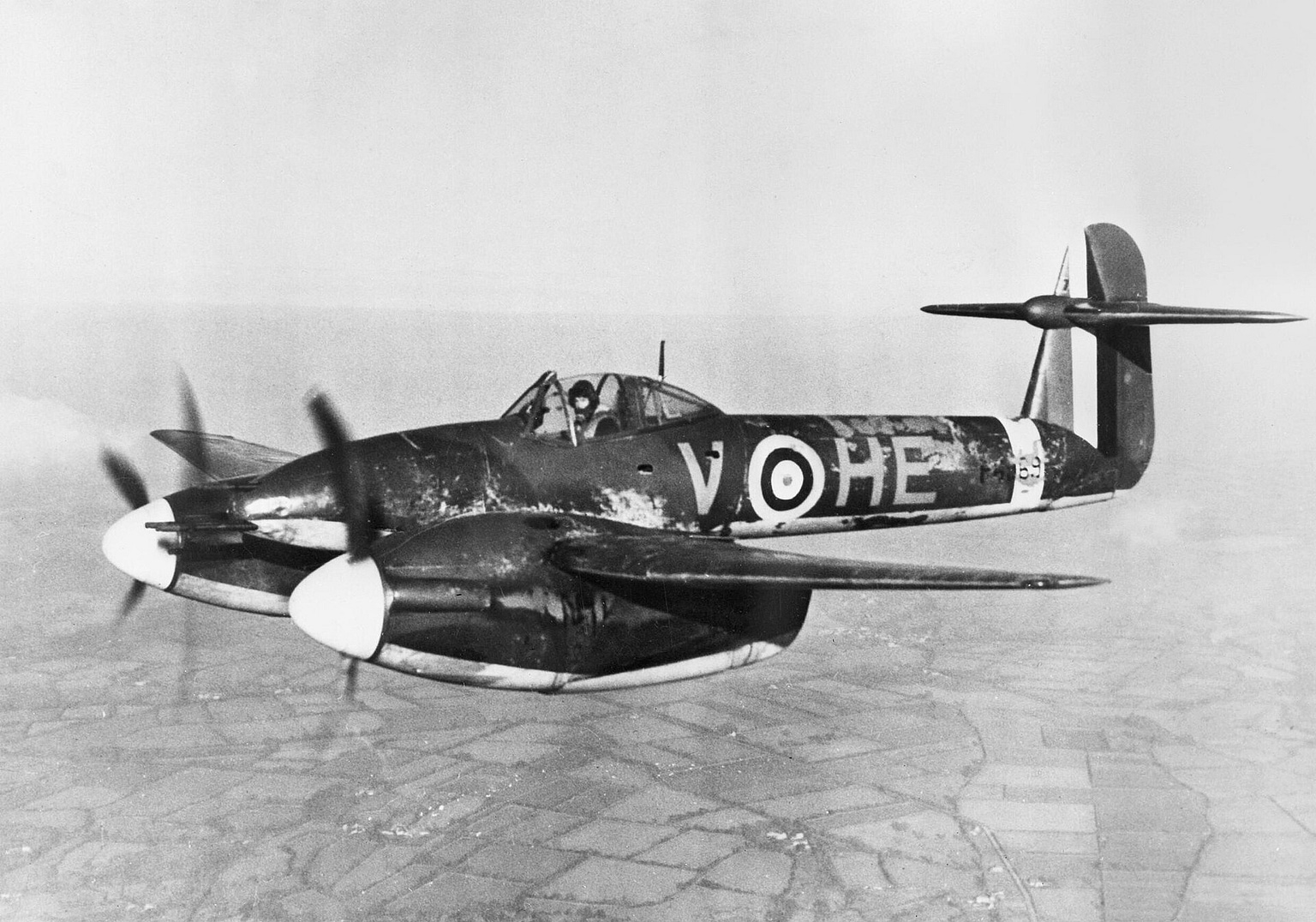
Westland Whirlwind
“Whirlibomber”
Britain’s first single-seat, twin-engine cannon fighter — four 20 mm guns grouped in the nose, deadly at low level in 1940, and doomed by an engine nobody would finish.
The Westland Whirlwind: Britain’s brilliant, tragic first cannon fighter
In the mid-1930s the Royal Air Force went looking for something new: a fighter that did not rely on rifle-calibre machine guns but carried cannon — guns heavy enough to smash a bomber in a single firing pass. The answer, to specification F.37/35, came from an unlikely place. Westland Aircraft of Yeovil was known for slow army co-operation machines, but its young technical director, W. E. W. “Teddy” Petter, produced one of the most advanced fighters in the world.
The Whirlwind was radical. It was the RAF’s first single-seat, twin-engine, cannon-armed fighter, and it concentrated four 20 mm Hispano cannon in the nose — no wing guns, no convergence problems, just a devastating cone of fire straight ahead. It was small, clean and, at low and medium altitude, genuinely fast: roughly 360 mph (about 580 km/h), comparable with the Spitfires of the day. It first flew on 11 October 1938 and reached the squadrons in 1940.
And then the story turns. The Whirlwind was built around two Rolls-Royce Peregrine engines — and the Peregrine was an orphan. Rolls-Royce poured everything into the Merlin, the engine that powered the Spitfire, Hurricane, Lancaster and Mosquito. The Peregrine was never fully developed, was troublesome in service, and was cancelled. With no engine, the airframe had no future.
Only about 114 Whirlwinds were built, and just two squadrons — No. 263 and No. 137 — ever flew it. Hampered at altitude and tricky to land on small wartime airfields, it found its niche low down: as a long-range fighter, escort, and, as the bomb-carrying “Whirlibomber”, on cross-Channel strikes against airfields, trains and shipping, where its speed and firepower told. It was withdrawn late in 1943 as the Hawker Typhoon took over the low-level role.
What lingers is the sense of waste. The Whirlwind was not a failure of design or of courage — it was a failure of priorities, an excellent aircraft starved of the one thing it could not do without. In the alternate history where the Peregrine gets another year of development, or where the airframe is redesigned around a pair of Merlins, the RAF might have had a superb long-range cannon fighter years before the Mosquito and Beaufighter matured. Instead the Whirlwind flew its brief war with two under-strength squadrons, did good work at low level, and vanished so completely that today not one intact example remains. It endures in photographs, in a few salvaged relics, and in the memory of everyone who has ever looked at that four-cannon nose and wondered what might have been.
01Why the Westland Whirlwind is remembered as a “what-if” aircraft
The tragedy of the Whirlwind is that almost everything about the airframe was right and almost everything about the engine was wrong. Petter’s design was aerodynamically clean, structurally advanced, and armed more heavily than any single-seat fighter of 1940. Test pilots liked its handling and its stability as a gun platform. Had it received a mature, high-altitude engine — a Merlin-class powerplant with a proper supercharger for height — it might have been a formidable all-round fighter.
Instead it was tied to the Peregrine, and when that engine was cancelled the Whirlwind was frozen: no development engine meant no development airframe. It is one of the clearest cases in aviation history of a promising design killed not by the enemy but by industrial priorities at home. Figures for its exact performance vary between sources, so treat the numbers here as commonly cited estimates rather than absolutes.
The “what-if” is not just idle nostalgia. The Whirlwind demonstrated ideas — concentrated nose cannon, a clean twin-engine single-seater, long range with heavy hitting power — that the RAF would spend the rest of the war chasing in other aircraft. The Bristol Beaufighter and the de Havilland Mosquito both eventually delivered heavy twin-engine firepower, but they were bigger, two-crew aircraft that arrived later. A matured Whirlwind might have filled the single-seat long-range cannon-fighter niche years earlier. That it did not is down to a decision made in a Rolls-Royce boardroom, not on any airfield or battlefield — which is exactly why the aircraft fascinates historians and enthusiasts to this day.
How the Westland Whirlwind was built — and what went wrong
The Westland Whirlwind’s four-cannon nose: firepower ahead of its time
The Whirlwind grouped four 20 mm Hispano cannon in the nose, firing straight ahead with no need to harmonise wing guns to a single convergence point. For 1940 this was crushing firepower — several times the throw-weight of the eight rifle-calibre guns in a Spitfire or Hurricane — concentrated exactly where the pilot aimed.
The Rolls-Royce Peregrine: the orphan engine that doomed the Whirlwind
Two Rolls-Royce Peregrine V-12s, each around 885 hp, powered the type. The Peregrine was a development of the older Kestrel, but Rolls-Royce concentrated on the Merlin and the big Griffon and Vulture. The Peregrine was never matured, suffered reliability problems, and was cancelled — leaving the Whirlwind with no engine to grow into.
Petter’s clean airframe: small, fast and low down
Designer “Teddy” Petter gave the Whirlwind a slim fuselage, a low-drag radiator layout buried in the wing centre-section, and a bubble-type canopy with excellent forward view. It was quick at low and medium altitude and stable enough to be an accurate gun platform — but it needed a long run to land and lost performance badly as it climbed.
02The Westland Whirlwind’s engines in detail: why the Peregrine was never enough
The Peregrine was a compact, 21-litre V-12 producing roughly 860–885 hp depending on the source and rating. On paper two of them gave the Whirlwind adequate power; in practice the engine was under-developed and its supercharging was optimised for low and medium altitude. Above about 15,000 ft the Whirlwind’s performance fell away, which mattered enormously in 1940–41 when much of the air war was fought high.
Rolls-Royce had finite engineering capacity, and the Merlin — needed for the Spitfire, Hurricane, Lancaster, Mosquito and more — came first, second and third. The Peregrine was quietly dropped, and with it any chance of a better-engined Whirlwind. A proposed re-engining with Merlins (which would have needed a substantially new aircraft, and became the very different Welkin high-altitude fighter) was not pursued for the Whirlwind itself. Exact power and altitude figures vary between references and should be read as estimates.
There was also the matter of the installation itself. Packaging two liquid-cooled V-12s, their radiators, coolant, oil and exhaust into a small fighter is a genuinely hard engineering problem, and Petter’s solution — burying the radiators in the thick wing centre-section between fuselage and engine — was elegant but demanding to build and maintain. Early aircraft suffered cooling and exhaust troubles that took time to resolve, and every hour spent nursing an immature engine was an hour the tiny fleet was not flying. None of these problems were unsolvable; they were the normal teething troubles of an advanced aircraft. What the Whirlwind never got was the time and the engineering investment to solve them — because the engine at the heart of it all had already been condemned.
03The Westland Whirlwind’s handling: a fast, heavy gun platform with a catch
Pilots generally praised the Whirlwind’s speed at low level, its concentrated firepower and its stability in the aim. The catch was the landing: the aircraft came in fast — its high wing loading and the demands of its Fowler flaps gave it a notably high landing speed — which made it a handful on the short, rough grass airfields of the day and drove up the accident rate. Combined with weak high-altitude performance and a tiny production run, this limited where and how the type could be used, and it settled into the low-level fighter and fighter-bomber roles where it was genuinely effective.
Visibility from the cockpit was good for the era — the pilot sat high under a framed bubble canopy with a clear view forward over the short nose, an advantage for both gunnery and low-level flying. The controls were generally liked, and the aircraft was a steady platform in the dive and the firing pass. Twin engines also brought a genuine safety margin over water: a Whirlwind could, in principle, limp home on one engine from a Channel sortie where a single-engine fighter would have gone into the sea. Against these virtues stood the demanding circuit, the altitude limitation, and the sheer scarcity of aircraft and spares. The overall verdict of most who studied or flew it is consistent: a very good aeroplane asked to fight with one hand tied behind its back by its powerplant.
It is worth being clear about how much of the “difficult” reputation is fair and how much is exaggerated. Much of it traces back to the landing characteristics and to the fact that pilots came to the Whirlwind straight from docile trainers or from single-engine fighters, with little twin time. Once converted, many pilots were enthusiastic about the aircraft and defended it robustly. The Whirlwind was not a widow-maker; it was a demanding thoroughbred that punished carelessness and rewarded skill. Given a mature engine, better altitude performance and enough airframes to build up experience across more squadrons, it is entirely plausible that its reputation would today be that of a formidable early-war heavy fighter rather than a fascinating failure — which is precisely why it remains one of the most debated aircraft of its generation.
Westland Whirlwind specifications: dimensions, engines, performance and cost
Airframe & powerplant
- Posádka
- 1 (pilot)
- Délka
- 32 ft 3 in (9.83 m)
- Rozpětí křídel
- 45 ft 0 in (13.72 m)
- Výška
- 11 ft 7 in (3.53 m)
- Plocha křídla
- ~250 sq ft (23.2 m²)
- Pohonná jednotka
- 2 × Rolls-Royce Peregrine I, liquid-cooled V-12
- Power
- ~885 hp (660 kW) each (commonly cited)
- Loaded weight
- ~10,350 lb (4,700 kg)
Performance, armament & cost
- Max speed
- ~360 mph / ~580 km/h at ~15,000 ft (estimated)
- Rozsah
- ~800 mi (~1,290 km)
- Servisní strop
- ~30,000 ft (~9,150 m) — weak at height
- Vyzbrojení
- 4 × 20 mm Hispano Mk I cannon (nose)
- Bomb load
- 2 × 250 lb, later 2 × 500 lb (“Whirlibomber”)
- Number built
- ~114, incl. 2 prototypes (sources vary, 114–116)
- Unit cost
- Not reliably recorded (WWII)
- Cost per flight hour
- Not applicable — no surviving/airworthy example
04The Westland Whirlwind’s costs: why there is no price-per-hour for this aircraft
Unlike modern warbirds, the Whirlwind has no meaningful operating-cost figure today for one simple reason: no complete example survives and none is airworthy. There is nothing to fuel, insure or maintain, so a cost-per-flight-hour cannot be quoted — we mark it “not applicable” rather than invent a number.
Its original wartime unit cost is likewise not reliably recorded in the sources we trust; production was tiny (about 114 aircraft) and spread over 1940–42, and wartime accounting figures for such a small run are inconsistent. Where you see money attached to the Whirlwind, treat it with caution. What can be said is that the type’s věrný cost was strategic: an advanced airframe wasted because its engine was never funded to maturity.
For comparison and context only — not as a Whirlwind figure — it is worth remembering how the economics of warbirds work today. A surviving, airworthy WWII fighter such as a Spitfire or Mustang typically costs many thousands of pounds per flight hour to operate, once fuel, specialist maintenance, insurance and the amortised cost of a multi-million-pound restoration are counted, which is why flights in original piston fighters are so rare and so expensive. The Whirlwind sits outside even that world: with no airframe to restore, there is simply no operating economy to describe. If you want the experience of flying a genuine fast military aircraft, the realistic modern route is a jet — which is exactly what MiGFlug arranges — rather than any Whirlwind, which exists today only in photographs, film and relics.
Westland Whirlwind timeline: from cannon-fighter spec to withdrawal
A cannon fighter is requested
Air Ministry specification F.37/35 calls for a single-seat fighter armed with four 20 mm cannon — a radical break from rifle-calibre guns. It reflected a growing worry that machine-gun fighters simply could not do enough damage in the split second they held a fast bomber in their sights.
Petter’s Westland design is chosen
Teddy Petter’s twin-engine proposal is selected and a prototype ordered from Westland at Yeovil. It was a bold choice: a firm known for slow army co-operation aircraft was being trusted with one of the most advanced fighter concepts in the world.
First flight
The prototype (L6844) makes its maiden flight on 11 October 1938 — one of the most advanced fighters in the world at that moment, with performance to match the best single-engine types and far heavier firepower.
Into RAF service
No. 263 Squadron becomes the first unit to receive the Whirlwind, working up on the new and unfamiliar type through the summer while production dribbled slowly out of Yeovil and spares were scarce.
Combat debut
The Whirlwind flies its first operational sorties late in the year — convoy patrols and interceptions from bases in the west of England — and begins to show both its low-level speed and its high-altitude limitations.
Second — and last — squadron; engine cancelled
No. 137 Squadron forms on the type. Meanwhile Rolls-Royce ends Peregrine production, capping the Whirlwind at about 114 aircraft and quietly guaranteeing there would be no third squadron and no improved variant.
The “Whirlibomber”
Bomb racks are fitted and the Whirlwind turns to low-level cross-Channel strikes on airfields, trains and shipping. In the fighter-bomber role the aircraft finds a genuine purpose that plays to its speed and firepower.
Withdrawn
By December 1943 both squadrons re-equip — largely with Hawker Typhoons — and the Whirlwind is retired from operations. Within a few years every airframe is scrapped, leaving no complete survivor.
Westland Whirlwind stories: the engine, the guns and the two squadrons
The orphan Peregrine
An advanced fighter tied to an engine Rolls-Royce would not finish.
Read the full account
Teddy Petter’s first fighter
The man behind the Whirlwind later shaped some of Britain’s greatest jets.
Read the full account
Four cannon in the nose
No wing guns, no convergence — just a wall of 20 mm straight ahead.
Read the full account
Specification F.37/35
The RAF asks for a cannon fighter — and Westland answers.
Read the full account
No. 263 Squadron
The first — and for a while only — Whirlwind unit.
Read the full account
No. 137 Squadron
The second and last Whirlwind squadron.
Read the full account
The “Whirlibomber”
Bombs turned the cannon fighter into a low-level striker.
Read the full account
Rhubarbs and Ramrods
Cross-Channel raids where speed and firepower paid off.
Read the full account
A fast, tricky landing
High landing speed made small airfields a challenge.
Read the full account
Out of breath up high
The Peregrine’s supercharging left it weak at altitude.
Read the full account
Train-busting and shipping strikes
Down on the deck, the Whirlwind was in its element.
Read the full account
No complete Whirlwind left
Only relics survive — and a reproduction is being built.
Read the full account
Westland Whirlwind photos: the fighter, its squadrons and its cockpit
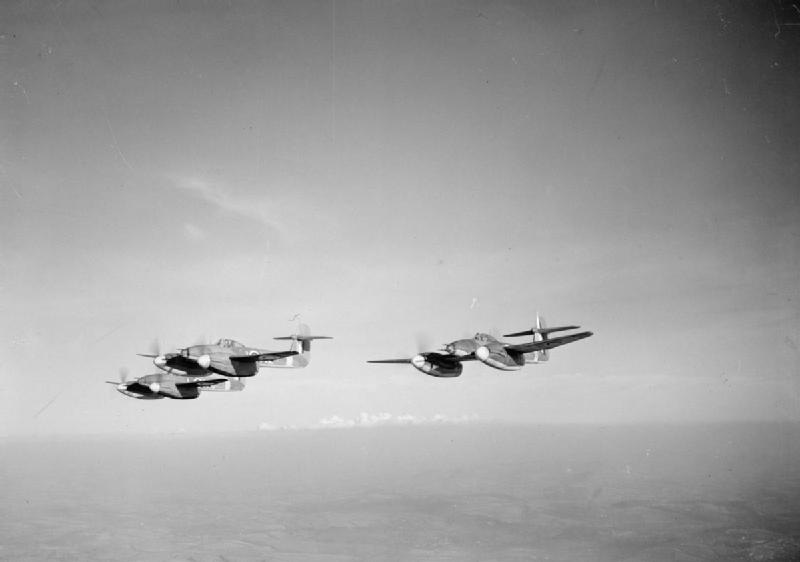
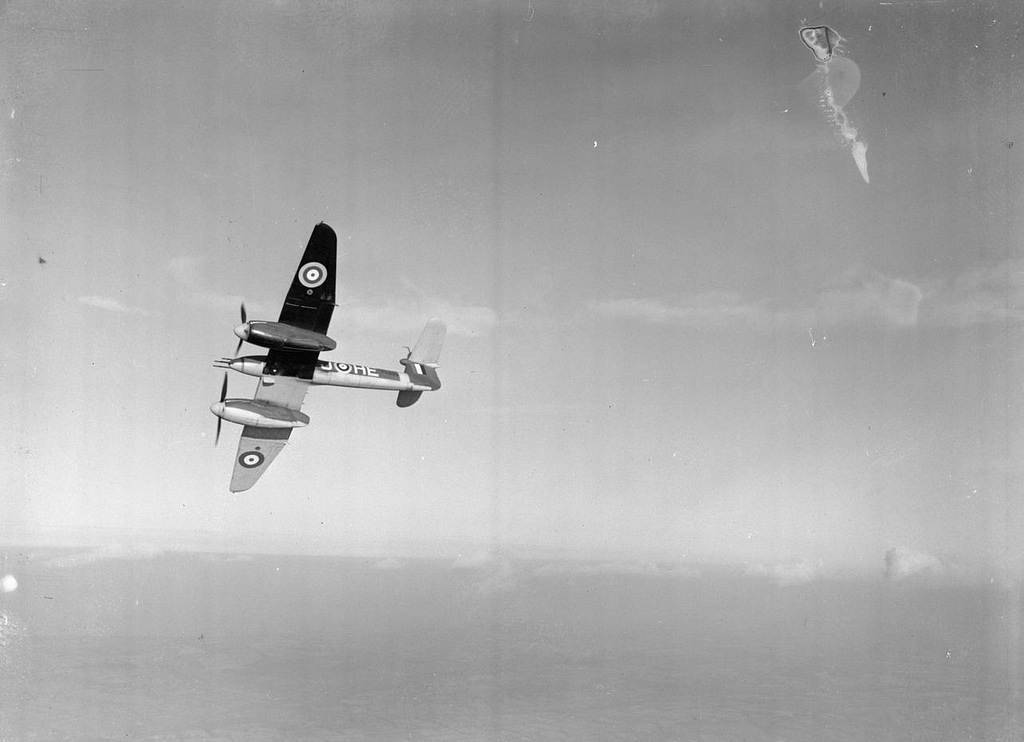
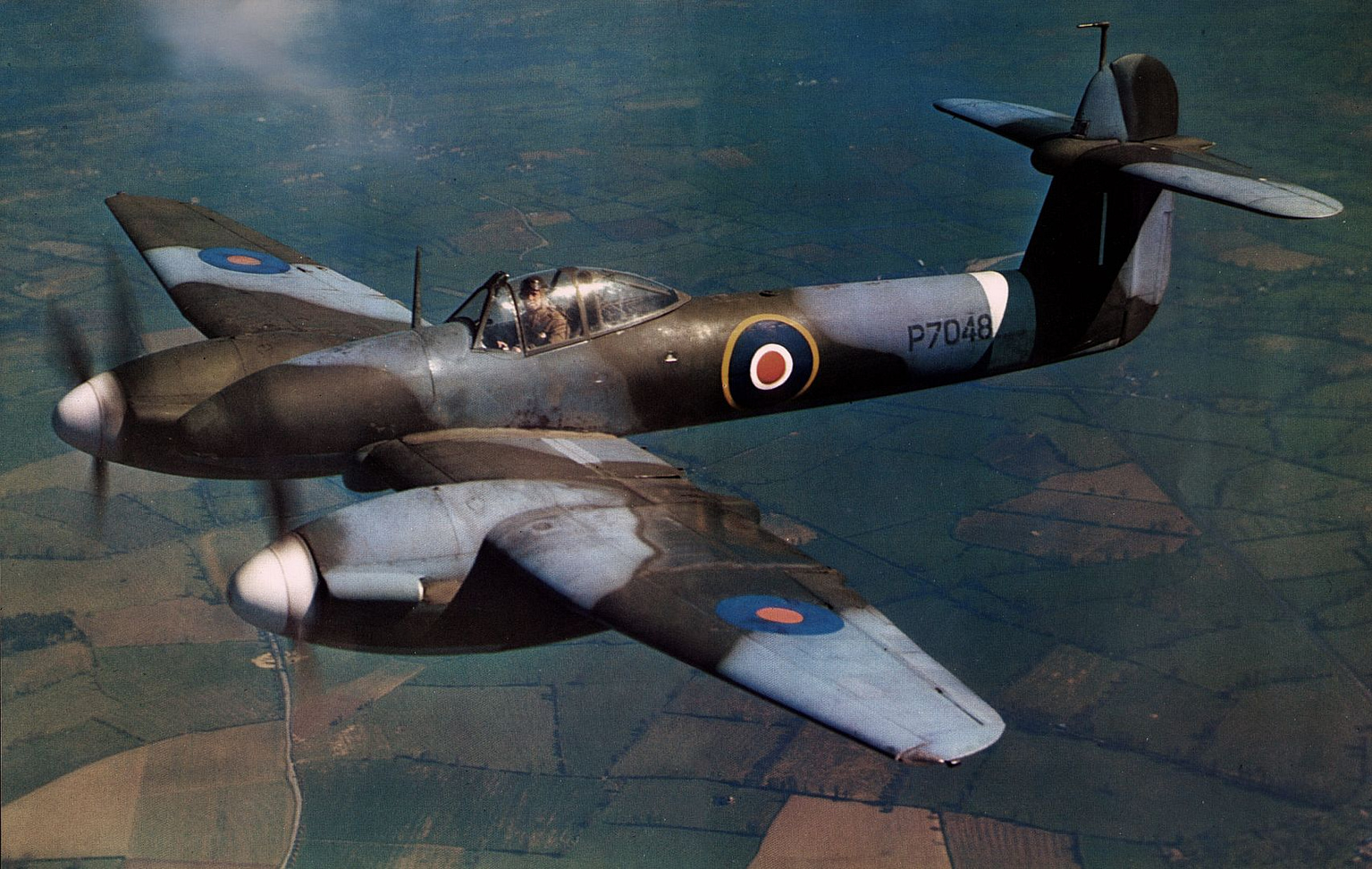
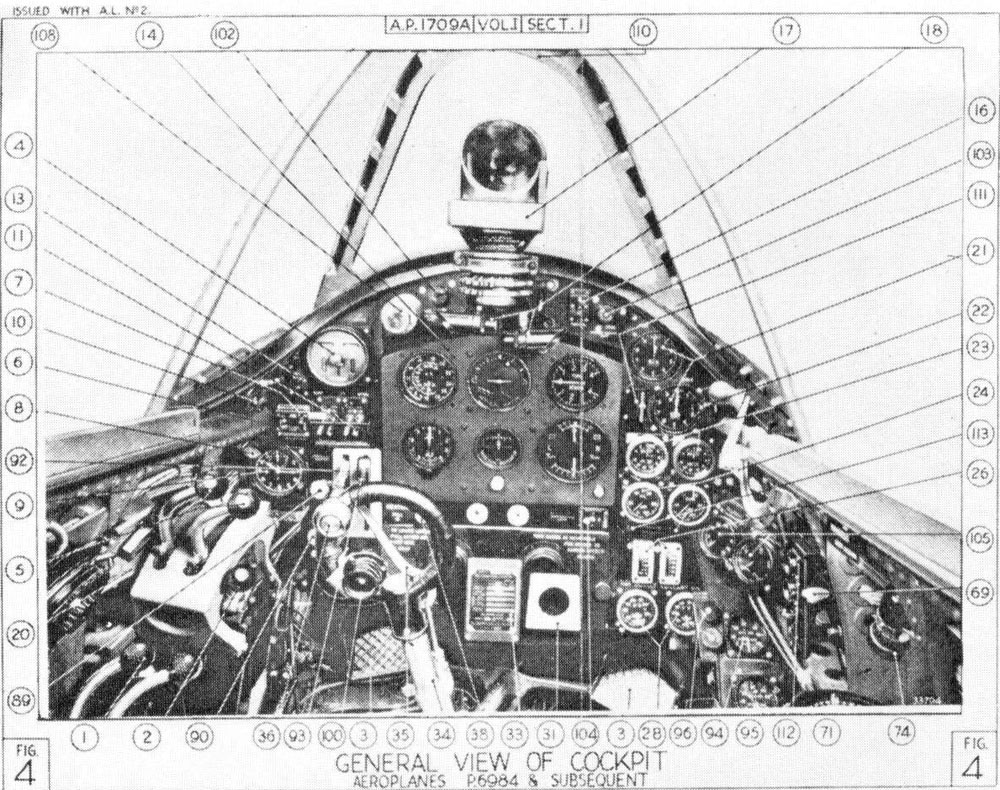
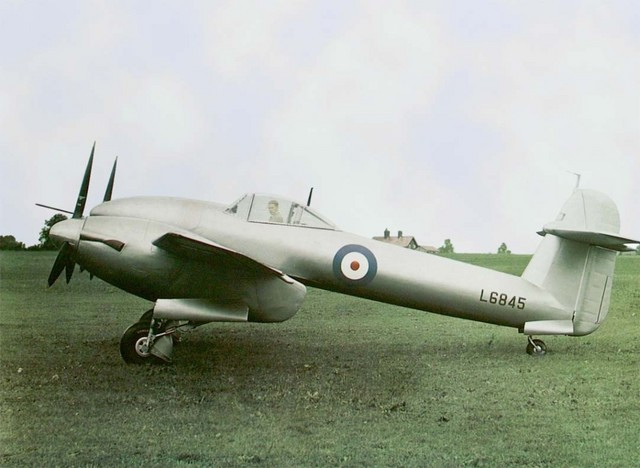
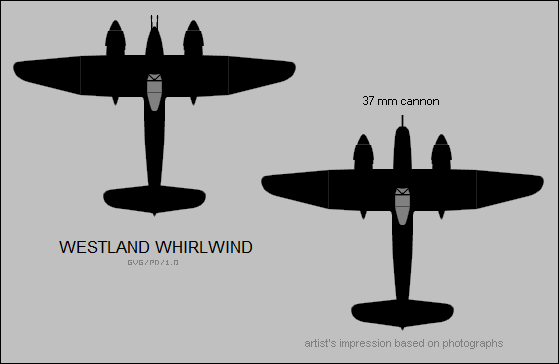
The Westland Whirlwind on film: genuine 1943 squadron footage
Rare wartime newsreel of an operational Whirlwind squadron, from the British Pathé archive — one of the few moving-image records of the type in RAF service, showing the aircraft being run up, taxied and flown as it was in 1943. Because no complete Whirlwind survives today, footage like this is as close as anyone will get to seeing the real aircraft in motion. British Pathé, “Whirlwind Fighter Squadron” (1943); approximately 209,000 views on YouTube.
Where the Westland Whirlwind served: origin, RAF combat and surviving relics
The Whirlwind never left British service — it was never exported, so the “Foreign Operators” layer is deliberately empty. Blue marks its British origin; the camouflage layer marks the theatres of RAF Whirlwind operations; grey marks where surviving relics remain.
The Westland Whirlwind’s record: small numbers, real impact
The Whirlwind’s combat career was limited by its tiny numbers, but its low-level fighter and fighter-bomber work over the Channel and occupied France was genuinely effective — and its concentrated cannon armament pointed the way that fighters would go. Judged on scale it barely registers: two squadrons, three years, roughly a hundred airframes. Judged on ideas, it is one of the most influential British fighters that almost nobody got to fly.
Its legacy runs in two directions. Technically, the Whirlwind helped prove the case for heavy cannon armament and for the fast, low-level twin — concepts the RAF would pursue with the Beaufighter, the Mosquito and, in the single-seat ground-attack role, the Typhoon that directly replaced it. Institutionally, it became a cautionary tale about the danger of building an aircraft around a single, un-prioritised engine: a lesson that shaped how Britain thought about engine-airframe planning for the rest of the war. Designers pointed to the Whirlwind for years afterwards as the example of what happens when the powerplant is allowed to become the weak link.
And then there is the human legacy. The pilots of 263 and 137 flew a demanding aircraft on some of the most dangerous sorties of the war — low, alone, deep over enemy territory — and made it work despite every handicap the supply chain and the Peregrine could throw at them. That the aircraft is remembered so fondly, decades after the last one was scrapped, is a tribute as much to them as to Petter’s design. The figures below are best read as commonly cited approximations; wartime records for so small a fleet are not always consistent.
See the Hawker Typhoon — the aircraft that took over the Whirlwind’s low-level role
Westland Whirlwind: frequently asked questions
Can I fly in a Westland Whirlwind?
Why was the Westland Whirlwind cancelled after so few were built?
How many Westland Whirlwinds were built, and which squadrons flew it?
What made the Westland Whirlwind’s firepower special?
What was a “Whirlibomber”?
Was the Westland Whirlwind actually a good fighter?
Are there any surviving Westland Whirlwinds?
Who designed the Westland Whirlwind?
You can’t fly the Westland Whirlwind
— but these, you can
No complete Whirlwind survives, so no one can put you in one. But MiGFlug can put you in the cockpit of a genuine military jet today. Pick your aircraft and fly.
 Fly the L-39 AlbatrosThe world’s most-flown jet trainer — aerobatics included
 Fly the F-104 Starfighter“The missile with a man in it”
 Fly the MiG-21The Cold War’s most-produced jet
 Leťte s T-33 Shooting StarAmerica’s first jet trainer
 Fly the DH VampireA piece of early jet history
 Fly the S.211Agile Italian jet trainer
 Fly the MB-326The classic Aermacchi jet
 Fly the MiG-15The Soviet legend of the Korean War
Aircraft related to the Westland Whirlwind
Westland Whirlwind: sources & further reading
- Imperial War Museums — wartime photographs of Whirlwind squadrons (CH-series) and collections context.
- Royal Air Force Museum — RAF service history, squadrons and aircraft records.
- British Pathé — original 1943 newsreel footage of an operational Whirlwind squadron.
- Flight / FlightGlobal archive — contemporary technical reporting on the Whirlwind and the Peregrine engine.
- Key Aero / Aeroplane — aviation-history features on the type’s design and operations.
- Smithsonian National Air and Space Museum — wider context on the move to cannon-armed fighters.
- Rolls-Royce Heritage Trust — background on the Peregrine engine and Rolls-Royce production priorities.
- MiGFlug Afterburner — related features on WWII fighters and flying real military jets today.