
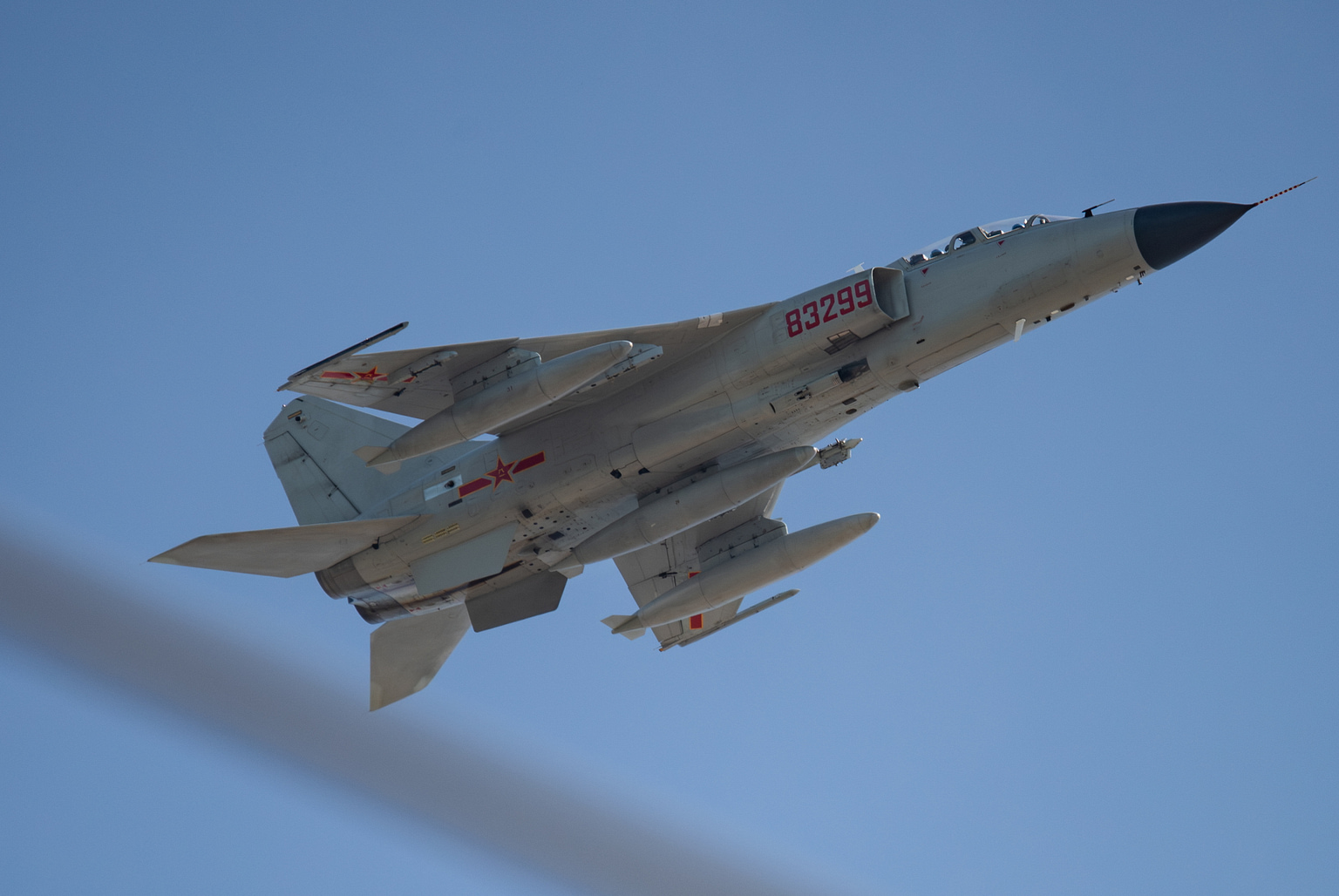
Xian JH-7
“Flying Leopard”
China’s twin-engine, two-seat, all-weather fighter-bomber — a dedicated maritime-strike and ground-attack aircraft built around licence-built Rolls-Royce Spey engines, still in front-line PLA service after more than three decades.
The JH-7 Flying Leopard: China’s dedicated strike jet
Ten/Ta/To Xian JH-7 (Jian Hong-7, “fighter-bomber 7”), known in China as the Flying Leopard and offered for export as the FBC-1, is a twin-engine, two-seat, all-weather fighter-bomber developed by the Xian Aircraft Industrial Corporation. Where most of China’s Cold-War-era combat aircraft were interceptors and day fighters derived from Soviet designs, the JH-7 was conceived as something the People’s Liberation Army lacked: a purpose-built strike aircraft able to carry a heavy weapons load over long distances, in poor weather, and against ships at sea.
Development traces back to a 1970s requirement for a replacement for the ageing H-5 (Il-28) and Q-5 attack fleets. Progress was slow — China’s aviation industry was recovering from the upheavals of the era — and the first prototype did not fly until 14 December 1988. The early JH-7 entered limited service with the PLA Naval Air Force in the early-to-mid 1990s as an anti-ship platform, carrying YJ-8-series sea-skimming missiles. It was, by most accounts, a capable but troubled first attempt, produced only in modest numbers.
The aircraft that made the type a mainstay was the much-improved JH-7A, which entered service from around 2004. A substantially reworked design — with digital fly-by-wire controls, a partial glass cockpit, a lighter and stronger airframe, extra hardpoints and a modern fire-control radar — the JH-7A could deliver precision-guided munitions and a wider range of missiles. This time both the Naval Air Force and, after initially declining the original JH-7, the PLA Air Force adopted it in quantity.
Powering the Flying Leopard is one of its most distinctive features: a pair of turbofans descended from the British Rolls-Royce Spey, licence-built in China as the WS-9 Qinling. The engine was acquired in the 1970s but took decades to fully localise, and it links this modern Chinese strike jet to a 1960s British design. More than three decades after its first flight, the JH-7 remains in front-line service — a workhorse of Chinese maritime and land-attack aviation rather than a headline air-superiority fighter.
01The JH-7 and JH-7A: how the second version rescued the programme
It is easy to treat “JH-7” as a single aircraft, but the difference between the original JH-7 and the later JH-7A is large. The first-generation JH-7, fielded by the Navy from the early 1990s, was produced only in small numbers and is widely described as having had reliability and systems shortcomings. The JH-7A, in service from about 2004, was a comprehensive redesign: a reinforced yet lighter airframe with more composite structure, digital fly-by-wire flight controls, a glass cockpit, additional weapons pylons and a new fire-control radar able to cue precision-guided weapons. Most Flying Leopards in service today are JH-7A or later, and it is this variant that turned a promising but limited prototype-era aircraft into a mainstay of Chinese strike aviation.
What makes the JH-7 Flying Leopard notable
A British engine, built in China
The Flying Leopard is powered by two WS-9 Qinling turbofans — a licence-built version of the Rolls-Royce Spey Mk 202, the same engine family used in the British F-4K Phantom. China acquired the Spey in the mid-1970s but took decades to fully domesticate its manufacture, and reliable local production is generally dated to the mid-2000s. Each engine produces roughly 54 kN dry and about 91 kN with afterburner, giving the twin-engine JH-7 the thrust to lift a heavy weapons load over long range.
Built for maritime strike
The JH-7 was designed first and foremost to sink ships. Its core weapon is the YJ-8 (Yingji-8) family of sea-skimming anti-ship missiles, later joined by the longer-ranged YJ-83. Paired with a surface-search and fire-control radar, and a two-seat crew that splits flying and weapons duties, the aircraft gave the PLA Naval Air Force a genuine stand-off maritime-strike capability — able to launch missiles from beyond a ship’s close-in defences.
Two seats, all weather, long legs
Unlike China’s single-seat day fighters of the era, the JH-7 carries a crew of two in tandem — a pilot and a dedicated weapons systems officer — and was built for all-weather operations. With a combat radius commonly cited at over 1,700 km and a large external weapons load across nine (JH-7) or eleven (JH-7A) hardpoints, it was intended to reach targets far beyond the range of shorter-legged Chinese tactical aircraft.
02The JH-7’s Spey engine: a 1960s British design at the heart of a Chinese jet
In 1975 China contracted with Rolls-Royce to licence-produce the Spey Mk 202 turbofan, a design already in British service. A batch was assembled from British-supplied parts, but fully indigenous production — under the designation WS-9 Qinling — proved difficult and dragged on for many years, with reliable Chinese manufacture generally reported only in the mid-2000s. The long delay is often cited as one reason the original JH-7 was produced in such small numbers, and why the mature JH-7A arrived well over a decade after the type first flew. It is a striking example of how hard it can be to fully absorb a foreign engine technology.
03The JH-7’s weapons: from anti-ship missiles to precision strike
The early JH-7 was essentially an anti-ship platform, carrying YJ-8K missiles and little else in the way of guided weapons. The JH-7A broadened this considerably: reporting credits it with the longer-ranged YJ-83 anti-ship missile, the YJ-91 anti-radiation missile for suppressing enemy air defences, laser- and satellite-guided bombs, unguided bombs and rockets, plus short-range PL-5 a PL-8 air-to-air missiles for self-defence. A twin-barrel 23 mm cannon is fitted for close-in work. The exact loadouts and missile performance figures come largely from Chinese sources and defence-analysis outlets, and specific numbers should be read as reported rather than confirmed.
Full specifications
Figures below are drawn from open defence-reference sources and refer chiefly to the JH-7A. China has released little official data, so dimensions, weights and performance should be treated as widely cited estimates rather than confirmed values.
Airframe & Performance
- Posádka
- 2 (pilot + weapons officer, tandem)
- Délka
- ~22.3 m
- Rozpětí křídel
- ~12.7 m
- Výška
- ~6.2 m
- Prázdná hmotnost
- ~14,500 kg
- Max takeoff weight
- ~28,500 kg
- Max speed
- ~Mach 1.75 · ~1,800 km/h
- Bojový rádius
- ~1,760 km
- Ferry range
- ~3,700 km
- Servisní strop
- ~16,000 m
Propulsion, Systems & Programme
- Engines
- 2 × Xian WS-9 Qinling (Rolls-Royce Spey Mk 202 licence)
- Thrust (each)
- ~54 kN dry · ~91 kN afterburner
- Radar
- Multi-mode fire-control radar (JH-7A)
- Gun
- 1 × 23 mm twin-barrel cannon
- Závěsné body
- 9 (JH-7) · 11 (JH-7A)
- Key weapons
- YJ-8K / YJ-83 anti-ship, YJ-91 anti-radiation, PGMs, PL-5/PL-8 AAMs
- First flight
- 14 December 1988
- Unit cost
- No reliable public figure
- Cost per flight hour
- No reliable public figure
04The JH-7’s cost: why no reliable price exists
There is no reliable public unit-cost or cost-per-flight-hour figure for the JH-7. It is a Chinese state programme built for the PLA rather than sold on an open market, and Beijing has disclosed neither procurement prices nor operating costs. The export FBC-1 was marketed internationally but attracted no confirmed foreign buyers, so even an export price point is speculative. Production totals are likewise uncertain: open-source estimates commonly range from around 200 to more than 270 aircraft across all variants, but these are inferences, not official data.
From 1970s requirement to front-line workhorse
Requirement issued
China defines a need for a dedicated all-weather fighter-bomber to replace the H-5 and Q-5 in the strike and anti-ship roles; Xian is assigned the programme.
Spey engine licensed
China contracts with Rolls-Royce to licence-produce the Spey Mk 202 turbofan — the engine that, as the WS-9 Qinling, will eventually power the JH-7.
First flight
The first JH-7 prototype makes its maiden flight on 14 December, after a long and repeatedly delayed development.
Enters naval service
The early JH-7 begins limited service with the PLA Naval Air Force as an anti-ship platform, carrying YJ-8-series missiles, in modest numbers.
FBC-1 shown at Zhuhai
The export-oriented FBC-1 Flying Leopard is unveiled at the Zhuhai Airshow, though it attracts no confirmed foreign orders.
JH-7A enters service
The heavily improved JH-7A — fly-by-wire, glass cockpit, extra hardpoints, precision weapons — enters service; the PLA Air Force adopts the type alongside the Navy.
Fatal airshow crash
A JH-7 crashes at an airshow near Pucheng, Shaanxi; the incident is widely reported and one crew member is killed, the other ejecting safely.
Exercises and upgrades
JH-7As feature in major Chinese and joint Russia-China exercises such as Vostok 2018 and Aviadarts, and electronic-warfare and upgraded variants are reported as the type stays in front-line service into the mid-2020s.
Twelve things to know about the JH-7 Flying Leopard
Why “Flying Leopard”
The JH-7 carries an unusually evocative Chinese nickname for a strike aircraft.
Read the full story
Filling a strike-aircraft gap
China had interceptors and day fighters, but lacked a modern dedicated strike jet.
Read the full story
Fourteen years to first flight
The programme began in the 1970s but the prototype did not fly until December 1988.
Read the full story
A Spey at its heart
The JH-7 is powered by a Chinese-built version of a 1960s British Rolls-Royce engine.
Read the full story
Built to sink ships
The Flying Leopard’s original reason for being was anti-ship warfare.
Read the full story
The version that mattered
The improved JH-7A transformed a limited aircraft into a mainstay.
Read the full story
Navy first, air force later
The PLA Air Force initially passed on the JH-7, then adopted the improved version.
Read the full story
Beyond the anti-ship missile
The JH-7A broadened the type from ship-killer to multi-role striker.
Read the full story
A very public accident
A JH-7 came down at an airshow in 2011 in a widely seen incident.
Read the full story
The FBC-1 that found no buyers
China marketed an export Flying Leopard, but no foreign customer is confirmed.
Read the full story
A regular at big drills
JH-7As appear frequently in major Chinese and joint exercises.
Read the full story
A three-decade workhorse
More than 30 years after its first flight, the JH-7 remains in front-line use.
Read the full story
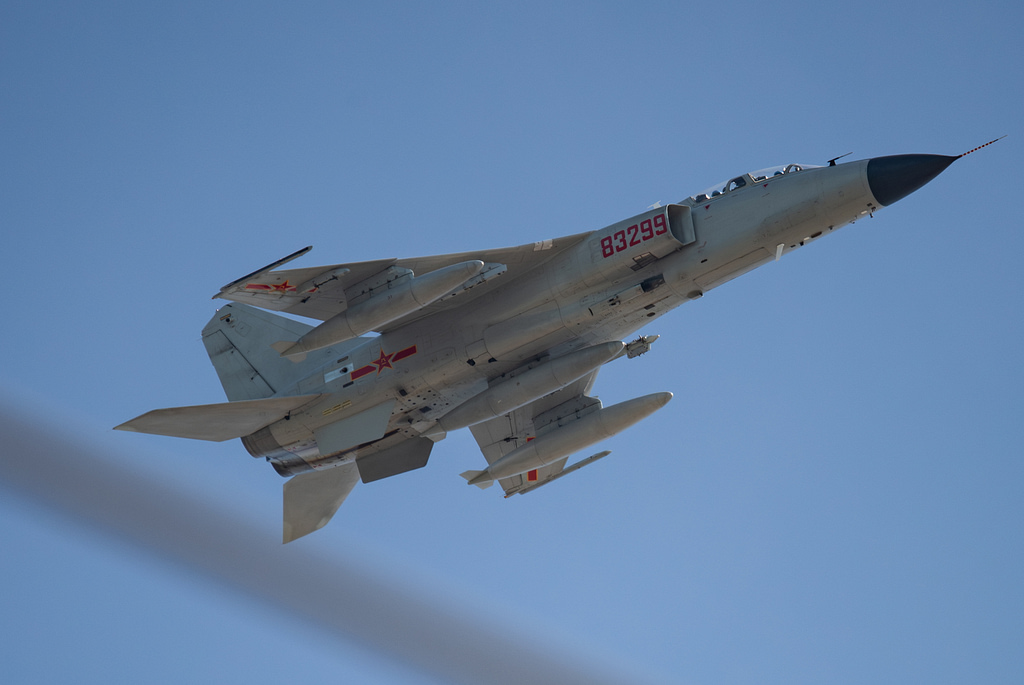
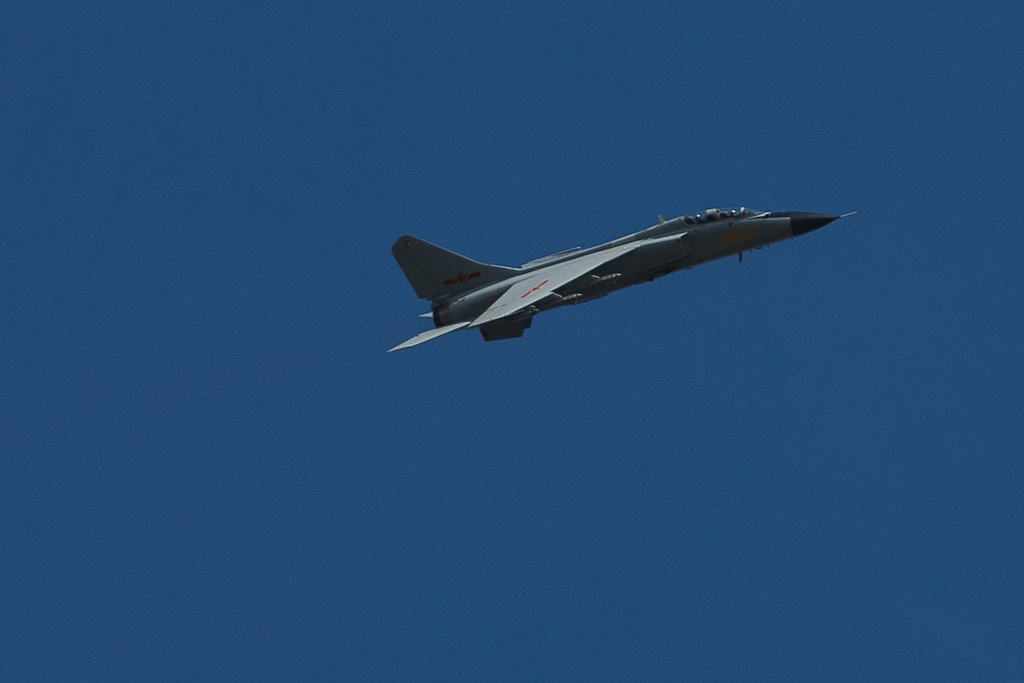
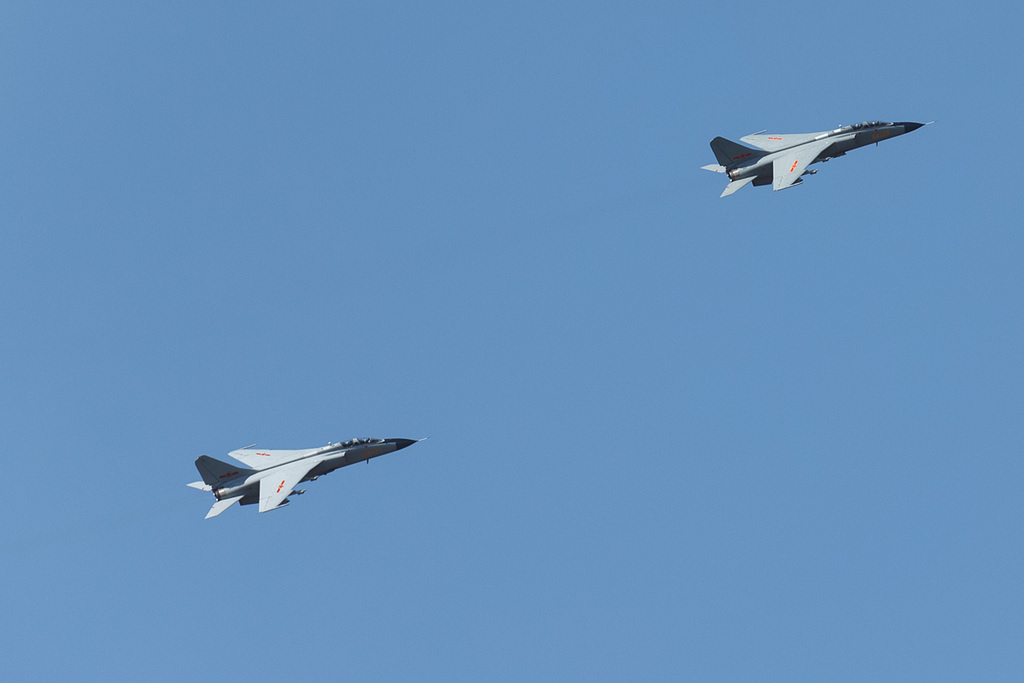
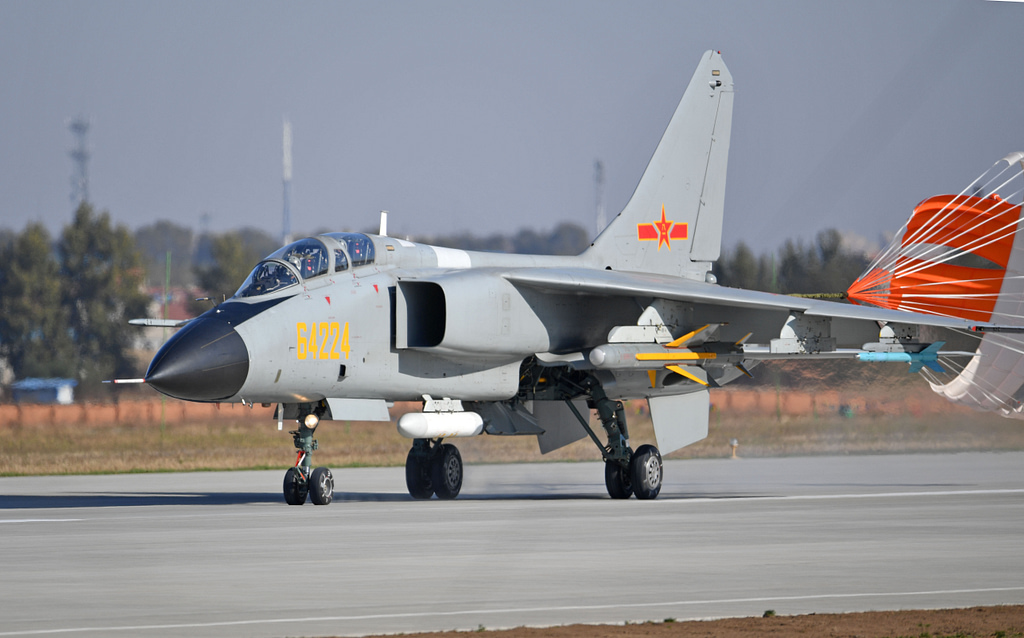
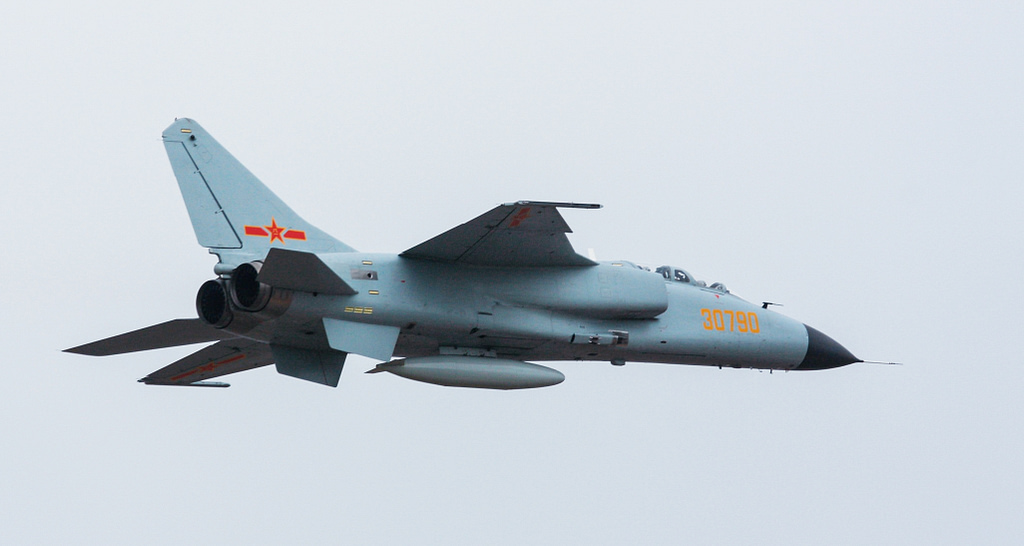
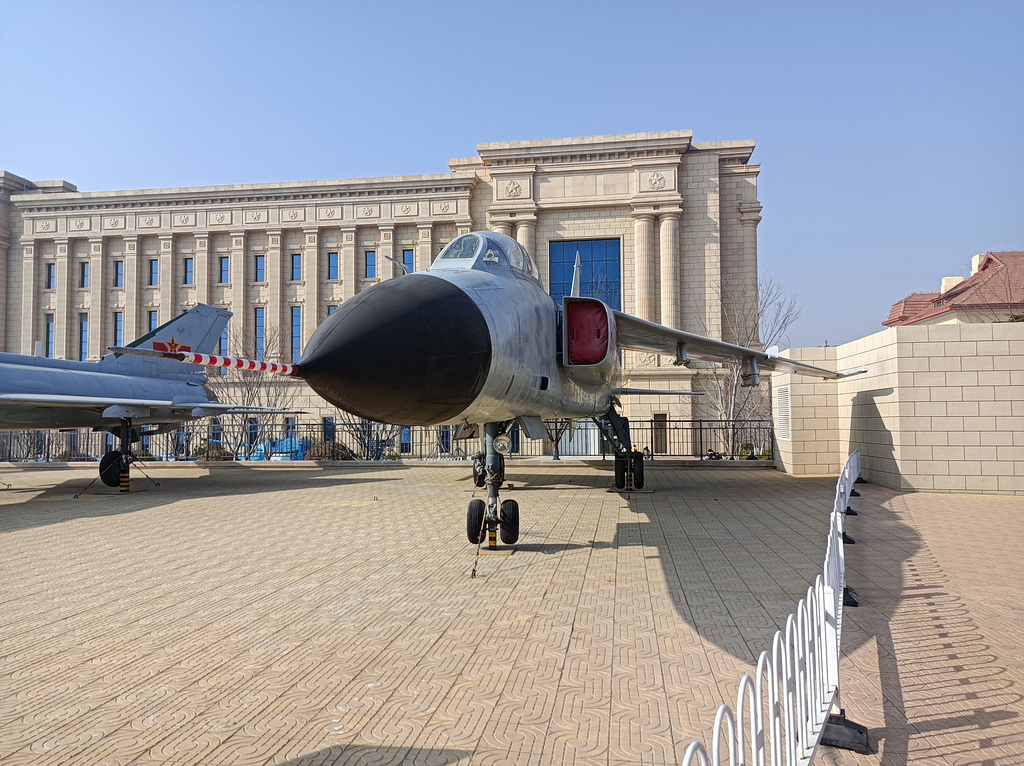
The Flying Leopard in pictures
Where the JH-7 Flying Leopard operates
A strike aircraft in service, untested in war
The JH-7 has served for more than three decades as a maritime-strike and ground-attack platform, but it has no confirmed record of air-to-air combat. Its career has been one of deterrent patrols, weapons trials and large-scale exercises rather than shooting wars. What can be said is deliberately narrow, and Chinese-source figures should be read with caution.
Compare the combat record of every military aircraft. Figures as of July 2026; JH-7 data is largely reported or estimated.
Everything people ask about the JH-7
Can I fly in a JH-7?
What is the JH-7 Flying Leopard?
What is the difference between the JH-7 and JH-7A?
What engines does the JH-7 use?
How fast is the JH-7 and how far can it fly?
What weapons does the JH-7 carry?
Is the JH-7 still in service?
Did any other country buy the JH-7?
You can’t fly the JH-7.
These, you can.
Some legends only live in museums — others are fuelled and waiting. MiGFlug has put civilians in real military jet cockpits since 2004.
 Fly the L-39 AlbatrosThe world’s most-flown jet trainer — aerobatics included
 Fly the F-104 Starfighter“The missile with a man in it”
 Fly the MiG-21The Cold War’s most-produced jet
 Leťte s T-33 Shooting StarAmerica’s first jet trainer
 Fly the DH VampireA piece of early jet history
 Fly the S.211Agile Italian jet trainer
 Fly the MB-326The classic Aermacchi jet
 Fly the MiG-15The Soviet legend of the Korean War
Continue the tour
Every fact, checked
- Airforce Technology — Xian JH-7 Fighter BomberReference overview of the type’s development, variants, engines, dimensions, radar and weapons.
- Military Factory — Xian JH-7 / FBC-1 Flying LeopardSpecifications, first-flight and service dates, and JH-7 versus JH-7A differences.
- Fly a Jet Fighter — Xian JH-7 (Flounder)Background on the aircraft’s role, nickname and operational history.
- The DiplomatAnalysis of Chinese naval aviation and the JH-7’s maritime-strike role in PLA service.
- 19FortyFiveDefence commentary on the Flying Leopard’s capabilities, engines and place in the PLA.
- The AviationistCoverage of JH-7 appearances at exercises such as Aviadarts and Vostok, and incidents.
- JanesDefence-reference material on Chinese combat aircraft, weapons and service status.
- The National InterestFeature articles placing the JH-7 within China’s wider strike and anti-ship strategy.