
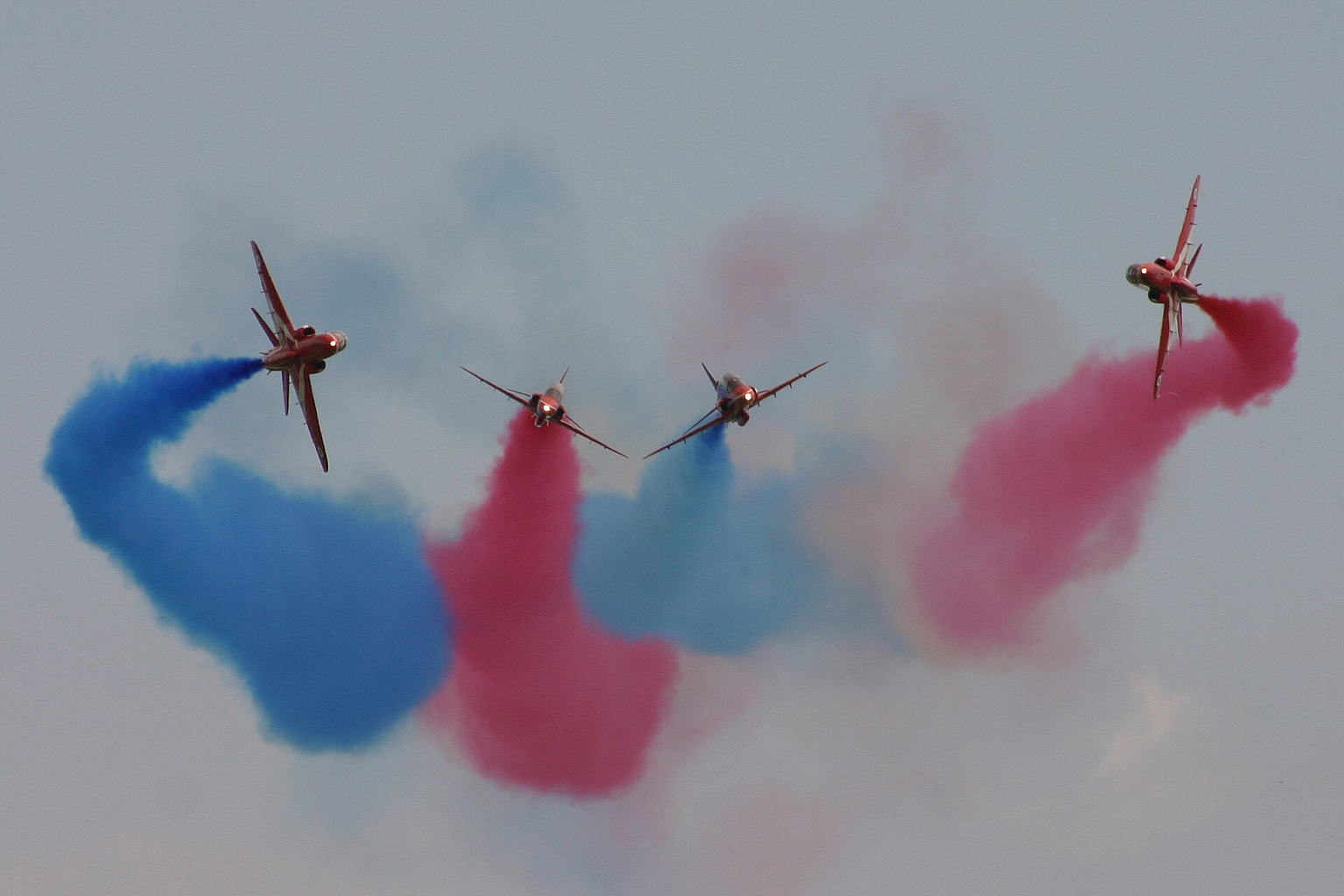
BAE Systems Hawk
The world’s trainer
The docile-but-deadly British jet that has taught more than 20 air forces to fly fast — mount of the RAF Red Arrows, carrier tutor of the US Navy as the T-45 Goshawk, and a light-attack fighter in its own right.
The trainer that taught the world to fly fast
By the late 1960s the Royal Air Force needed a single, affordable jet to replace two ageing trainers — the Folland Gnat and the Hawker Hunter — and take a pilot all the way from basic flying to the edge of front-line readiness. Hawker Siddeley’s answer was the HS.1182, a clean, tandem-seat monoplane with a single Rolls-Royce Turbomeca Adour turbofan. It first flew from Dunsfold on 21 August 1974 in the hands of chief test pilot Duncan Simpson, and it was so trouble-free that it entered RAF service barely two years later, in 1976.
Named the Hawk, it was designed to be forgiving enough for a student on his first fast-jet sortie yet honest enough to teach real airmanship — and strong enough to carry guns, bombs and missiles when asked. That combination turned a modest training requirement into one of the most successful jet programmes Britain ever built. When Hawker Siddeley became British Aerospace, and later BAE Systems, the Hawk went with it, selling to air force after air force around the world.
In 1979 the Red Arrows traded their little Gnats for the Hawk, and the jet became the shape the world pictures when it thinks of British aerobatics. The US Navy chose a navalised version — the T-45 Goshawk — to teach its pilots carrier landings. India builds it under licence. Fifty years after that first flight, the Hawk is still in service, still training the pilots who go on to fly Typhoons, F-35s and Super Hornets.
01From Gnat replacement to global bestseller: how the BAE Hawk conquered the trainer market
The Hawk was born from RAF Air Staff Target 397, a 1970 requirement for a cheap, reliable jet trainer. Hawker Siddeley deliberately kept it simple: one proven engine, a strong airframe stressed for hard use, and handling qualities that were honest rather than tricky. That discipline paid off — the prototype flew in 1974 with almost no drama, and the type matured fast.
What turned a national trainer into a world one was its stretch. The same airframe could be armed for weapons training, uprated into the combat-capable Hawk 100 and single-seat Hawk 200, navalised into the T-45 Goshawk, and licence-built in India. Roughly 1,000 Hawks have been produced for more than twenty operators — and with the 220-odd T-45s, the family comfortably passes 1,200 airframes. Few post-war British aircraft have sold on that scale.
What makes the Hawk special
Docile to fly, honest to learn on
The Hawk’s genius is its handling. A modestly swept wing and a single, responsive Adour turbofan give it benign low-speed manners and no vicious habits — a student can be flown safely to the edge of the envelope — yet it is agile enough to teach genuine fast-jet skills and pull up to 8 g. It is the rare trainer that is easy to fly and hard to master, which is exactly what an instructor wants.
A trainer that can bite
From the start the Hawk was stressed to carry weapons. RAF T1As held a wartime point-defence role armed with Sidewinders and a 30 mm ADEN gun pod. The dedicated combat models went much further: the single-seat Hawk 200 added an APG-66 multi-mode radar and seven hardpoints for missiles, bombs and rockets — a genuine light fighter wrapped around a trainer’s airframe.
The Hawk that goes to sea
The US Navy’s T-45 Goshawk is a Hawk rebuilt for the carrier: a strengthened structure, an arrestor hook, catapult-capable nose gear, wider-track landing gear and revised aerodynamics for the brutal low-speed precision of a deck landing. It is the only foreign-designed aircraft the US Navy adopted as its standard jet trainer — and it still qualifies naval aviators today.
02The Adour engine and the Hawk’s benign aerodynamics: why students survive their mistakes
The Hawk is powered by a single Rolls-Royce Turbomeca Adour, a non-afterburning turbofan shared in reheated form with the Jaguar strike jet. In the trainer it delivers around 23–26 kN of thrust — enough for lively performance without the fuel-thirst or complexity of an afterburner. Crucially the engine is docile at low speed and quick to spool, so a student who mishandles the throttle on approach is not immediately punished.
The airframe matches that philosophy. The wing is thick enough to stay controllable deep into the stall, the controls are well harmonised, and the aircraft gives clear warning before it departs. That forgiving nature is deliberate engineering: the Hawk was designed so that trainees could explore the limits of fast-jet flight and live to debrief it.
03Hawk 100 and Hawk 200: how a jet trainer became a light-attack fighter
The two-seat Hawk 100 added a combat wing, more hardpoints and modern avionics, turning the trainer into a capable weapons platform. The single-seat Hawk 200, first flown on 19 May 1986, went the whole way: it deleted the second cockpit, fitted a Northrop Grumman APG-66 radar, and offered seven weapon stations for AIM-9 and AIM-120 missiles, Maverick, laser-guided bombs and rockets.
The result was an affordable multi-role light fighter for nations that could not justify a Typhoon or an F-16. Indonesia, Malaysia and Oman all bought it — and Indonesia used its single-seat Hawks in the ground-attack role during the 2003–04 Aceh offensive, one of the few times the type has been flown in anger.
Full specifications
Airframe & Performance (Hawk T1)
- Multitud
- 2 (instructor & student, tandem)
- Longitud
- ~11.96 m
- Envergadura
- ~9.39 m
- Altura
- ~3.98 m
- Peso vacío
- ~3,650 kg
- Max takeoff weight
- ~5,700 kg (T1) · up to ~9,100 kg (Hawk 200)
- Max speed
- ~1,030 km/h · Mach 0.84
- Never-exceed
- ~Mach 1.2 (dive)
- Techo de servicio
- ~13,565 m
- Ferry range
- ~2,520 km
Propulsion, Armament & Systems
- Motor
- 1 × Rolls-Royce Turbomeca Adour
- Empuje
- ~23–26 kN (non-afterburning)
- Gun
- 1 × 30 mm ADEN pod (centreline)
- Puntos duros
- Up to 5 (T1) · 7 (Hawk 200)
- Missiles
- AIM-9 Sidewinder, ASRAAM, AIM-120 (armed variants)
- Radar (Hawk 200)
- Northrop Grumman APG-66H
- First flight
- 21 August 1974
- Built
- ~1,000 Hawks (~1,200+ with T-45)
- Unit cost
- ~USD 20–30 million (modern variants, estimate)
04What a BAE Hawk costs: purchase price and cost per flight hour
Because the Hawk sells in many marks to many customers, there is no single sticker price. A modern advanced trainer such as the Hawk T2 or a new-build export airframe is generally reckoned in the region of USD 20–30 million each once support and systems are included — a fraction of a front-line fighter, which is the whole point of the aircraft.
Operating cost is the Hawk’s real selling point: it is far cheaper to fly than the jets its graduates go on to. No fully authoritative public cost-per-flight-hour figure exists, and quoted numbers vary widely with variant and country, but credible estimates put it in the low tens of thousands of dollars per hour — well below the running cost of a Typhoon, F-35 or Super Hornet. Any precise figure you see should be treated as an estimate.
Fifty years of the Hawk
The requirement
RAF Air Staff Target 397 calls for a cheap, reliable jet trainer to replace the Gnat and Hunter. Hawker Siddeley offers the HS.1182.
First flight
The prototype Hawk flies from Dunsfold on 21 August, piloted by Duncan Simpson — and proves remarkably trouble-free.
Enters RAF service
The Hawk T1 reaches RAF Valley, quickly becoming the backbone of British advanced flying training.
The Red Arrows convert
The RAF aerobatic team swaps its Folland Gnats for the Hawk — the jet it still displays today.
The Hawk 200
The single-seat, radar-equipped light-combat Hawk 200 makes its first flight, extending the family into the fighter role.
T-45 Goshawk
The navalised Goshawk first flies in 1988 and enters US Navy carrier-training service in 1991.
India signs on
India orders 66 Hawk 132s, most licence-built by HAL — the start of a fleet that grows past 100 aircraft.
Fifty years airborne
The Hawk marks half a century since its first flight; Canada retires its CT-155 fleet as the type soldiers on elsewhere.
Twelve stories of the Hawk
The trouble-free prototype
The Hawk flew from Dunsfold in August 1974 and was so honest it barely needed fixing.
Read the full story
The shape of British aerobatics
Since 1979 the Red Arrows have flown the Hawk, and it has become the jet the world pictures trailing red, white and blue smoke.
Read the full story
A British jet on American carriers
The T-45 Goshawk became the US Navy’s standard jet trainer — the only foreign design chosen for the job.
Read the full story
Built under the Indian sun
India licence-builds the Hawk at HAL and flies it with both the Air Force and Navy — and the Surya Kiran display team.
Read the full story
The Hawk that went to war
Indonesian single-seat Hawks flew ground-attack sorties during the 2003–04 Aceh offensive.
Read the full story
Hawks over the Congo
Zimbabwe committed its Hawk Mk 60s to the Second Congo War, flying strike sorties far from home.
Read the full story
The engine it shares with the Jaguar
The Hawk’s Adour turbofan is a de-rated cousin of the Jaguar strike jet’s engine — minus the afterburner.
Read the full story
A fighter in a trainer’s clothes
The single-seat Hawk 200 added radar and seven hardpoints, turning the trainer into an affordable light fighter.
Read the full story
The Midnight Hawks
Finland has flown the Hawk for over forty years and displays it with the Midnight Hawks team.
Read the full story
Britain’s reserve fighters
In the Cold War, armed RAF Hawks were assigned a wartime point-defence role alongside the Phantom and Tornado.
Read the full story
Glass cockpit, fifth-gen prep
The Hawk T2 gained a fully digital cockpit to prepare pilots for the Typhoon and F-35.
Read the full story
Fifty years and counting
Half a century after its first flight, the Hawk is still training the pilots of the world’s air forces.
Read the full story
The Hawk in pictures
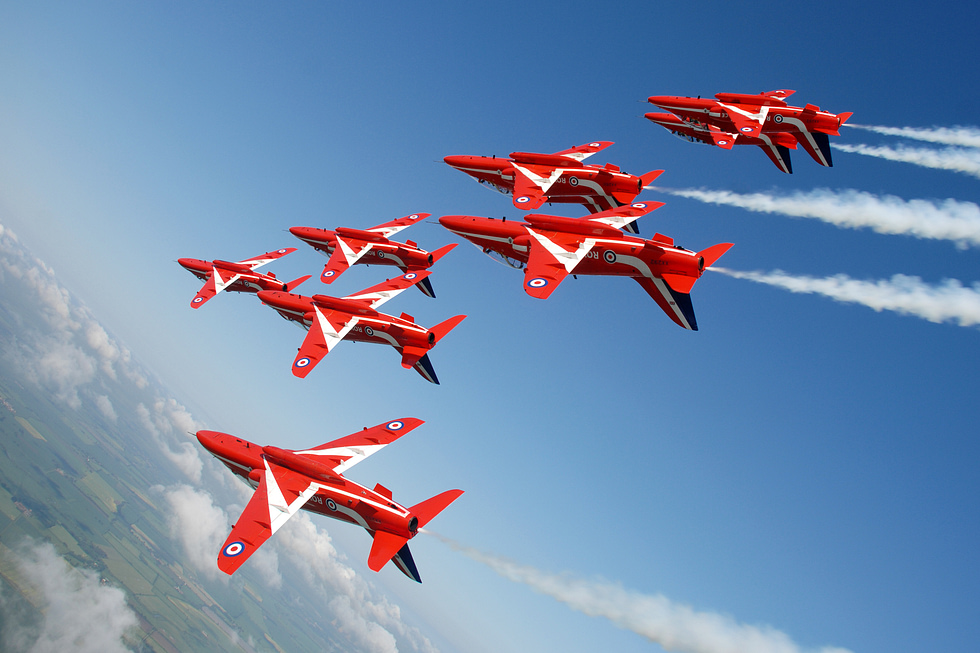
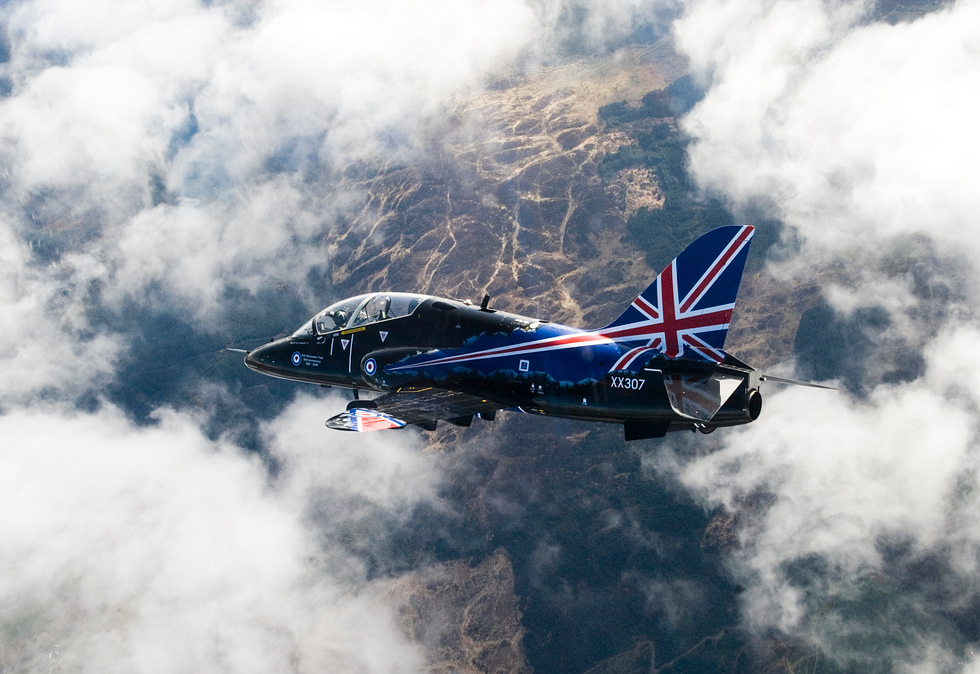
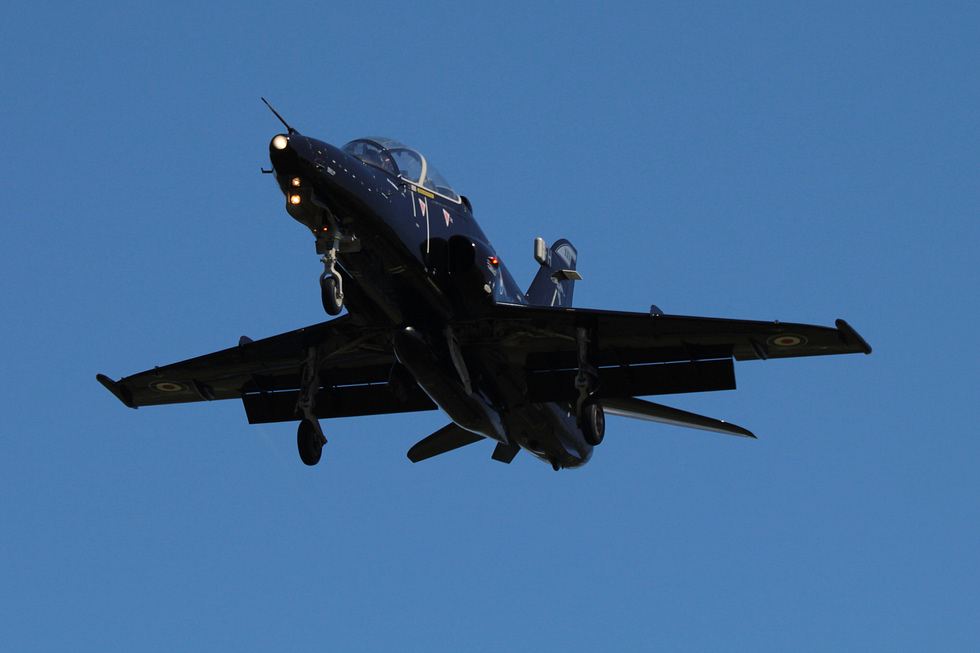
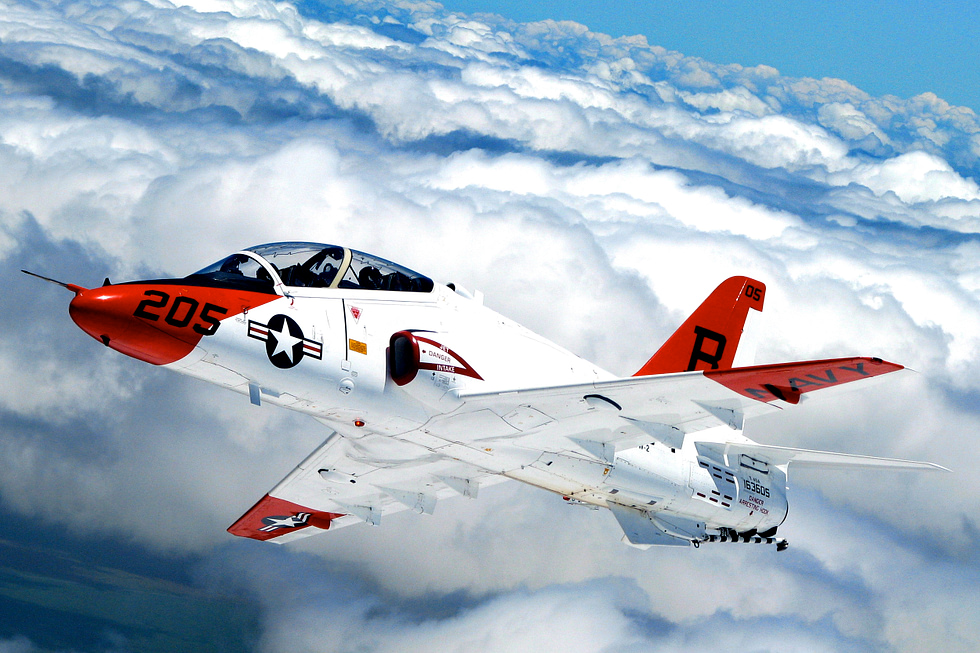
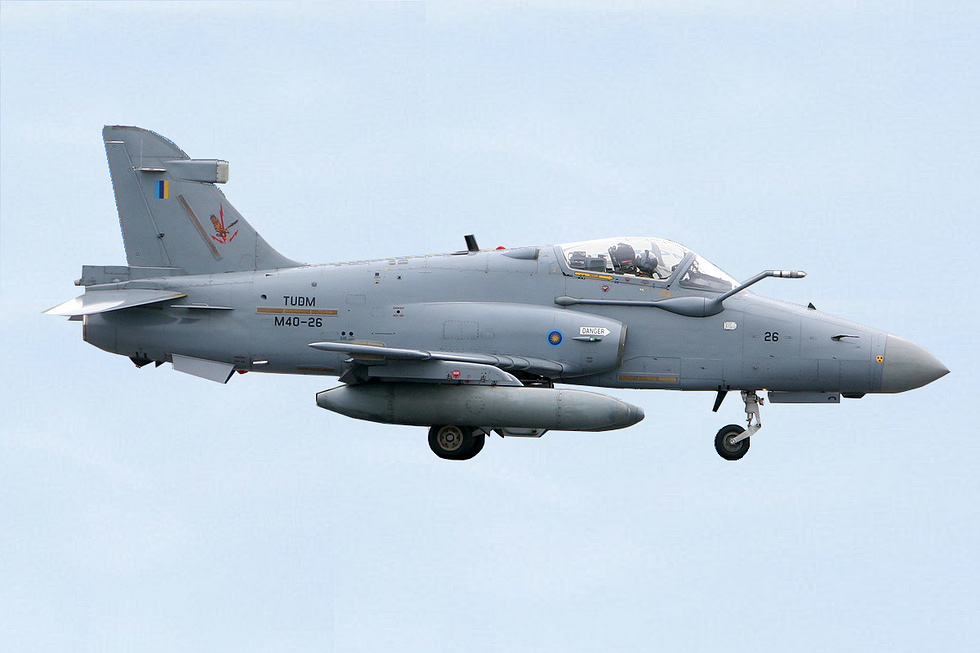
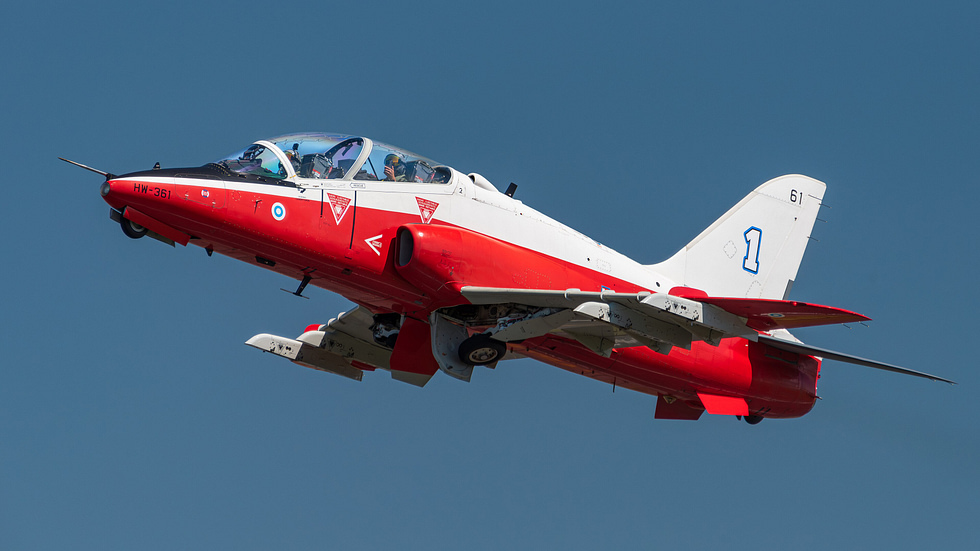
The Hawk in motion
A dedicated video feature for the BAE Systems Hawk is coming soon. In the meantime, explore the gallery and the twelve stories above — or catch the Red Arrows displaying the Hawk live at an RAF airshow this summer.
Where the Hawk flies
The score that defines it
The Hawk’s legacy is written mostly in the tens of thousands of pilots it has trained, not in air-to-air kills — it has never claimed one. But armed Hawks have flown in real conflicts: Indonesian single-seaters struck ground targets in Aceh, and Zimbabwean Hawk Mk 60s flew combat sorties in the Second Congo War. Those cases are genuine but poorly documented, and should be read with caution.
Compare the combat record of every military aircraft. Figures as of July 2026.
Everything people ask about the BAE Hawk
Can I fly in a BAE Hawk?
How fast is the BAE Hawk?
Is the BAE Hawk still in service?
What is the T-45 Goshawk?
Do the Red Arrows fly the Hawk?
Has the Hawk ever seen combat?
Who makes the BAE Hawk?
What is the difference between the Hawk 100 and Hawk 200?
You can’t fly the Hawk.
These, you can.
Some legends only live in museums — others are fuelled and waiting. MiGFlug has put civilians in real military jet cockpits since 2004.
 Fly the L-39 AlbatrosThe world’s most-flown jet trainer — aerobatics included
 Fly the F-104 Starfighter“The missile with a man in it”
 Fly the MiG-21The Cold War’s most-produced jet
 Vuela el T-33 Shooting StarAmerica’s first jet trainer
 Fly the DH VampireA piece of early jet history
 Fly the S.211Agile Italian jet trainer
 Fly the MB-326The classic Aermacchi jet
 Fly the MiG-15The Soviet legend of the Korean War
Continue the tour
Every fact, checked
- BAE Systems — HawkManufacturer overview of the Hawk family, variants and operators.
- Airforce Technology — HawkDevelopment history, Hawk 50/60/100/200 variants, radar and export operators.
- NAVAIR — T-45 GoshawkUS Navy programme page for the navalised carrier trainer.
- Royal Air Force — Red ArrowsOfficial page on the RAF aerobatic team and its Hawk aircraft.
- FlightGlobalThe Hawk’s 50th anniversary, production wind-down and career overview.
- The AviationistCanada’s 2024 retirement of the CT-155 Hawk fleet.
- Defense AdvancementHawk T1/T2 specifications, Adour engine and armament data.
- Naval History and Heritage CommandT-45 Goshawk service history and navalisation detail.