
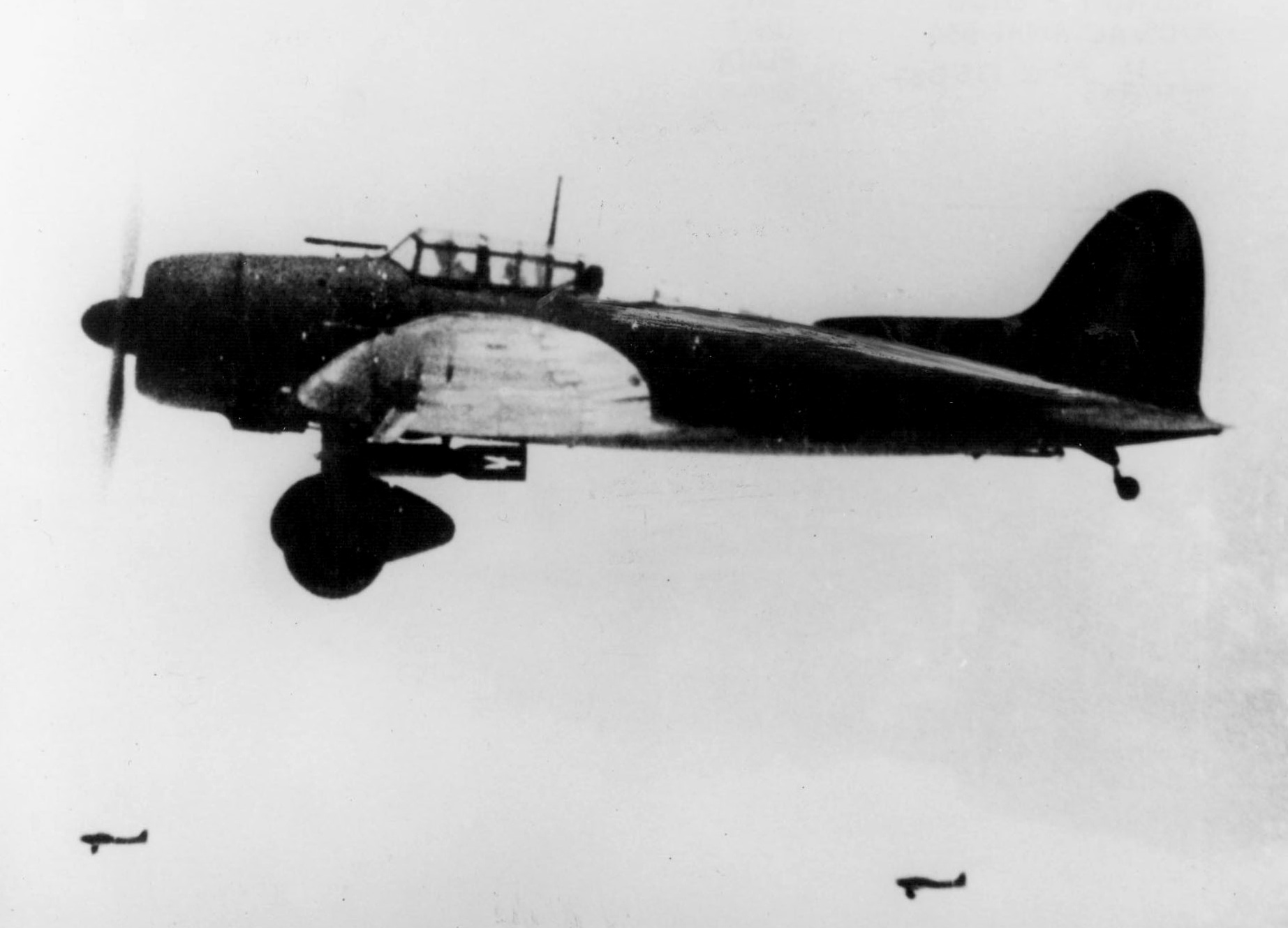
Aichi D3A
“Val”
The Imperial Japanese Navy’s carrier dive bomber — fixed-wheeled and old-fashioned to look at, yet in 1941–42 the most accurate and destructive dive bomber in the Pacific.
Old-fashioned, and deadly accurate
By the late 1930s the Imperial Japanese Navy wanted a modern carrier dive bomber to replace its biplanes. Aichi’s answer, first flown in January 1938, looked oddly conservative even when new: a low-wing monoplane with a smoothly tapered, near-elliptical wing and, most strikingly, fixed landing gear in streamlined trouser fairings. The design owed an acknowledged debt to German practice — Aichi had close ties to Heinkel, and the wing planform echoed the elegant Heinkel He 70. Retractable gear would have added weight and complexity for little gain in a machine built to dive; the fixed, spatted undercarriage was simple, strong and stable in the dive. Allied intelligence later gave it the reporting name “Val.”
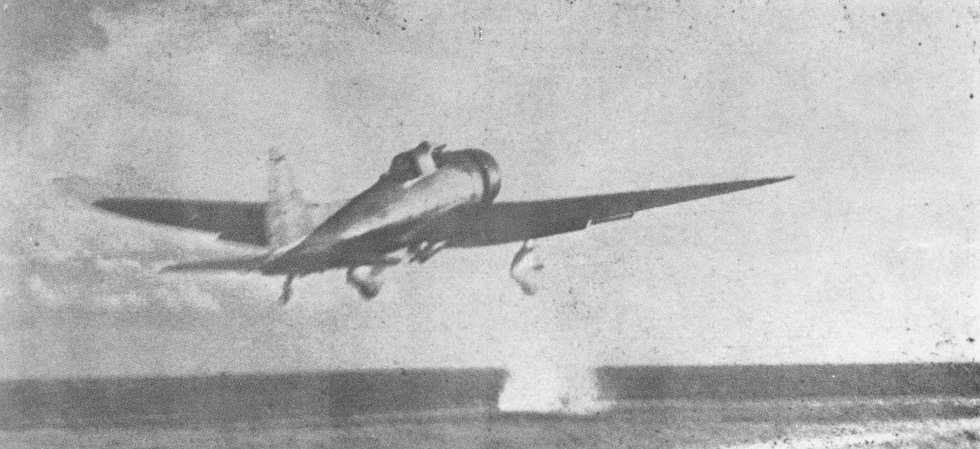
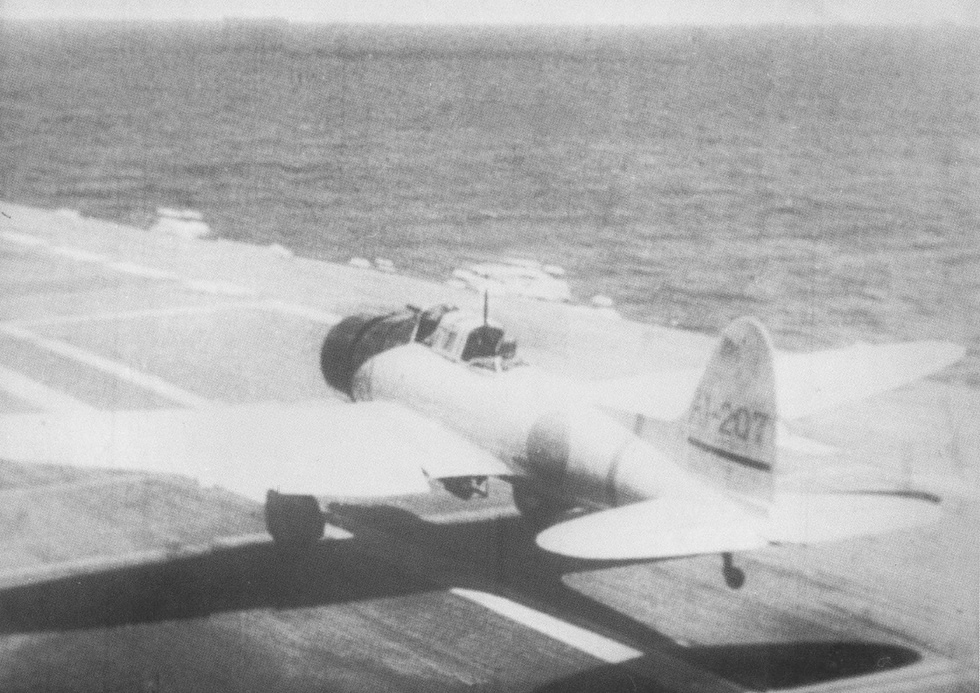
In service from 1940, the D3A became the main Japanese dive bomber at the outbreak of the Pacific war. Its crews were superbly trained, and the aircraft was steady and precise in a dive. D3As were among the aircraft that struck Pearl Harbor on 7 December 1941, and over the following months they ranged across the Pacific and Indian Oceans with remarkable results. In the Indian Ocean raid of April 1942, D3As sank the British aircraft carrier HMS Hermes and the heavy cruisers HMS Cornwall y HMS Dorsetshire — reportedly scoring a very high proportion of hits, often cited at around 80 per cent, though such figures should be treated with caution.
By some accounts the D3A went on to sink more Allied warships than any other Axis aircraft of the war — a striking claim that is widely repeated but hard to verify precisely. What is certain is that the type’s dominance was brief. Heavy losses at Midway in June 1942 gutted the veteran aircrews, and the fixed-gear D3A was soon outclassed by faster Allied fighters and superseded by the sleek, retractable-gear Yokosuka D4Y Suisei. Relegated to land bases and training, surviving D3As ended the war flown in kamikaze attacks. Around 1,495 were built; the type served only with the Imperial Japanese Navy, and no complete example flies today.
01The Aichi D3A Val’s fixed landing gear: why Japan’s best dive bomber kept its wheels down
To modern eyes the D3A’s fixed, trousered undercarriage looks like a step backwards — by 1941 most front-line aircraft retracted their gear. But for a dedicated dive bomber the trade was deliberate. Retracting gear meant extra weight, hydraulics and structure, all for a modest speed gain the Navy was willing to forgo. Fixed gear was light, robust and could double as a rough dive reference, and the aircraft was never intended to outrun fighters.
Combined with large dive brakes and a very steady handling character, the fixed-gear layout helped make the D3A an exceptionally precise dive-bombing platform in the hands of well-trained crews. The same conservatism that made it look dated also made it simple to build and maintain, and forgiving to fly — qualities that mattered in the intense carrier operations of 1941–42. The penalty came later, when the type’s low speed left it desperately vulnerable to the improving Allied fighters of 1943 onward.
What makes it special
Fixed gear, built for the dive
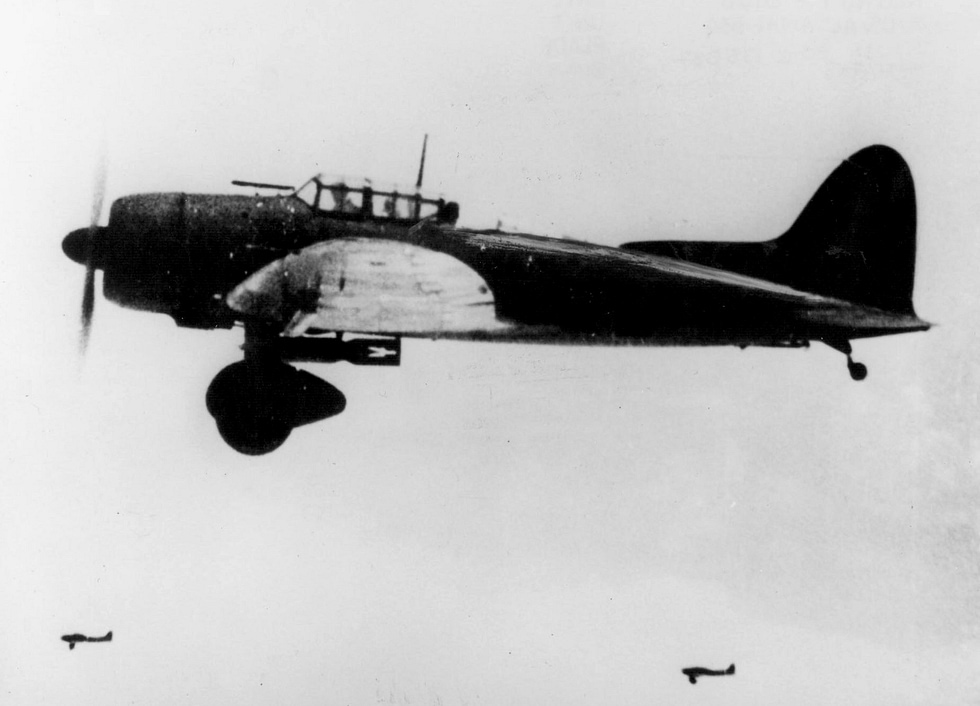
Unusually for 1941, the D3A kept fixed, spatted landing gear. For a dive bomber the choice was sound: lighter and simpler than retractable gear, strong enough for carrier work, and paired with large dive brakes that let a steady pilot hold a precise near-vertical dive. In the hands of veteran crews the result was exceptional bombing accuracy in 1941–42.
An elliptical wing with Heinkel heritage
The D3A’s smoothly tapered, near-elliptical low wing reflected Aichi’s close links to Germany’s Heinkel firm and echoed the graceful Heinkel He 70. It gave good lift and gentle handling, helping the aircraft stay controllable and stable through the stresses of a dive — an old-looking shape that hid a genuinely capable design.
The carrier striker that opened the war
Flown by a crew of two behind a single Mitsubishi Kinsei radial, the D3A carried one 250 kg bomb under the fuselage and two 60 kg bombs under the wings. As the IJN’s principal dive bomber it struck at Pearl Harbor and sank Allied warships from the Java Sea to the Indian Ocean in the opening months of the Pacific war.
02The Aichi D3A Val’s engine and armament: the Kinsei radial and a modest gun fit
Early D3A1s used a Mitsubishi Kinsei radial of around 1,000 hp; the later D3A2 fitted the more powerful Kinsei 54 of roughly 1,300 hp, lifting top speed to about 430 km/h and extending range. Offensive load stayed modest by later standards — a single 250 kg bomb on a swing-out crutch that cleared the propeller in the dive, plus two 60 kg bombs on wing racks. Defence rested on two fixed forward-firing 7.7 mm machine guns and a single flexible 7.7 mm gun for the observer. It was never heavily armed; the D3A relied on accuracy, escort fighters and the skill of its crews rather than on firepower or protection.
03The Aichi D3A Val at the Indian Ocean raid: the accuracy claim, examined
The most cited demonstration of the D3A’s accuracy came in early April 1942, when carrier air groups struck British forces around Ceylon. On 5 April D3As overwhelmed the heavy cruisers HMS Cornwall and HMS Dorsetshire, sinking both within minutes; on 9 April they sank the carrier HMS Hermes and her escort. Accounts of the raid frequently quote an extraordinary hit rate — commonly given as around 80 per cent or higher against the cruisers — and the episode is often used to argue that the D3A sank more Allied warships than any other Axis aircraft. Both the precise percentage and the “most warships” claim are repeated widely but rest on wartime estimates and should be read as impressive-but-approximate rather than exact. What is not in doubt is that, against ships without air cover, the D3A and its trained crews were devastatingly effective in the spring of 1942.
Full specifications
Airframe & Performance
- Multitud
- 2 (pilot + observer/gunner)
- Longitud
- ~10.2 m
- Envergadura
- ~14.4 m
- Altura
- ~3.8 m
- Peso vacío
- ~2,570 kg
- Max takeoff weight
- ~3,800 kg (D3A2)
- Max speed
- ~430 km/h (267 mph)
- Rango
- ~1,350 km
- Techo de servicio
- ~10,500 m
Propulsion & Systems
- Motor
- 1 × Mitsubishi Kinsei radial
- Power (D3A2)
- ~1,300 hp
- Landing gear
- Fixed, spatted (non-retractable)
- Bomb load
- 1 × 250 kg + 2 × 60 kg
- Defensive armament
- 3 × 7.7 mm machine guns
- First flight
- January 1938
- Service entry
- 1940
- Built
- ~1,495 (all variants)
- Operator
- Imperial Japanese Navy only
- Cost per flight hour
- No reliable public figure
04The Aichi D3A Val’s cost: why no reliable price exists
The D3A was a wartime Japanese state product, built by Aichi for the Imperial Japanese Navy and never sold on an open market. No dependable flyaway unit price or cost-per-flight-hour figure survives in the public record, and wartime Japanese industrial accounting was disrupted by the collapse of 1945. What is well documented is the scale of production — roughly 1,495 airframes across the D3A1 and D3A2 variants. Any precise monetary figure attached to a D3A today should be read as an estimate, not a sourced fact.
From carrier striker to kamikaze
The requirement
The Imperial Japanese Navy issues a specification for a modern monoplane carrier dive bomber to replace its biplanes; Aichi’s design draws on its Heinkel links.
First flight
The prototype flies in January, its near-elliptical wing and fixed, spatted landing gear marking a deliberately simple, dive-optimised design.
Enters service
The D3A joins carrier air groups as the Navy’s principal dive bomber and sees early action over China.
Pearl Harbor
D3As are among the aircraft that strike the U.S. Pacific Fleet at Pearl Harbor on 7 December, opening the Pacific war.
Indian Ocean raid
D3As sink the carrier HMS Hermes and the cruisers HMS Cornwall and HMS Dorsetshire, reportedly with an exceptionally high hit rate.
Midway
Heavy losses of aircraft and veteran aircrew at Midway blunt the D3A’s edge as Allied fighters improve.
Outclassed
The slow, fixed-gear D3A is increasingly outmatched and begins to be superseded by the faster Yokosuka D4Y Suisei.
Land bases and kamikaze
Relegated to shore bases and training, surviving D3As end the war in kamikaze attacks. Production totals roughly 1,495 aircraft.
From the war: twelve Val stories
The dive bomber Japan built next
A 1936 Navy requirement for a modern monoplane dive bomber gave Aichi its opening.
Read the full story
Wheels down on purpose
The fixed, trousered undercarriage looked dated but suited a dedicated dive bomber.
Read the full story
A wing borrowed from Heinkel
The Val’s elegant elliptical wing echoed the German Heinkel He 70.
Read the full story
Over Pearl Harbor
D3As were among the aircraft that opened the Pacific war at Pearl Harbor.
Read the full story
Cornwall and Dorsetshire
Two British heavy cruisers were overwhelmed and sunk in minutes.
Read the full story
The sinking of HMS Hermes
The world’s first purpose-built carrier fell to D3A dive bombers.
Read the full story
More ships than any Axis aircraft?
A striking, much-repeated claim — and one worth hedging.
Read the full story
Why the Val hit so hard
Training, steady handling and dive brakes combined into precision.
Read the full story
The reckoning at Midway
Midway cost Japan carriers, aircraft and the irreplaceable veteran crews.
Read the full story
Outrun by the war
A fixed-gear dive bomber could not survive against 1943’s fighters.
Read the full story
The last sorties
Relegated and obsolete, surviving Vals ended the war in kamikaze attacks.
Read the full story
The Val that no longer flies
Of some 1,495 built, no complete example survives airworthy.
Read the full story
The Val in pictures
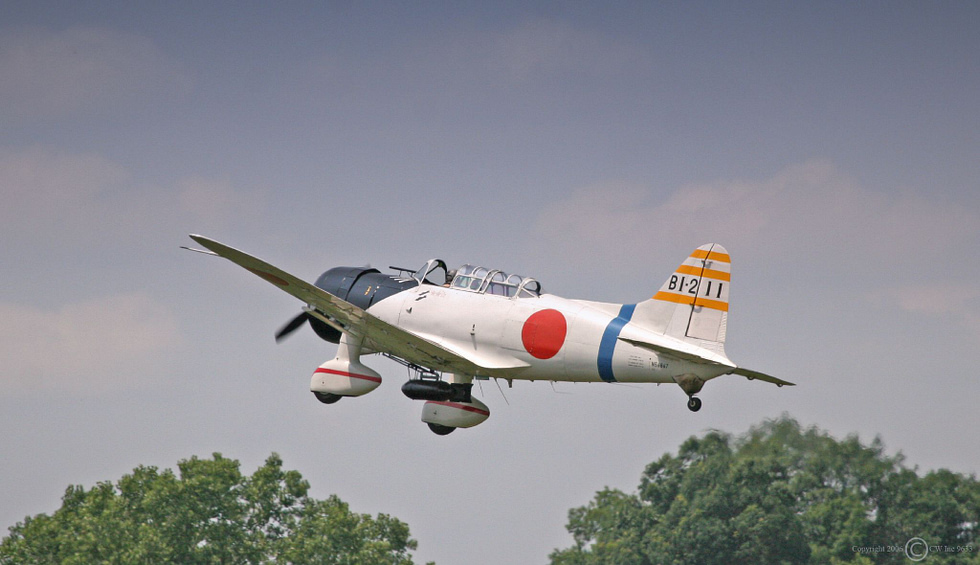
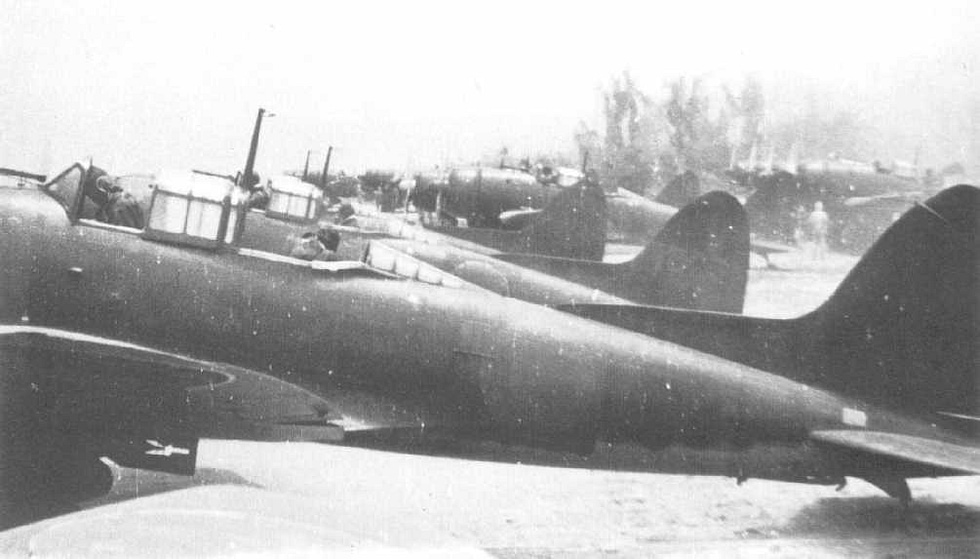
The Val in motion
Video coming soon — we are sourcing a high-authority archival film of the Aichi D3A “Val” for this exhibit.
Where the Val flew
The score that defines it
The D3A’s combat record is concentrated in a brief, brilliant window. In the opening months of the Pacific war it was the most effective dive bomber in the theatre, sinking Allied warships with a precision that has become legendary — though the exact figures are hard to verify. It served only with the Imperial Japanese Navy, and after Midway its edge faded as it was outrun by better fighters.
Compare the combat record of every military aircraft. Figures as of July 2026.
Everything people ask about the D3A Val
Can I fly in a D3A Val?
Why did the D3A have fixed landing gear?
Was the Val influenced by a German design?
Did the D3A really sink HMS Hermes?
How accurate was the Val at the Indian Ocean raid?
Did the D3A sink more warships than any other Axis aircraft?
How many D3As were built, and do any survive?
You can’t fly the Val.
These, you can.
Some legends only live in museums — others are fuelled and waiting. MiGFlug has put civilians in real military jet cockpits since 2004.
 Fly the L-39 AlbatrosThe world’s most-flown jet trainer — aerobatics included
 Fly the F-104 Starfighter“The missile with a man in it”
 Fly the MiG-21The Cold War’s most-produced jet
 Vuela el T-33 Shooting StarAmerica’s first jet trainer
 Fly the DH VampireA piece of early jet history
 Fly the S.211Agile Italian jet trainer
 Fly the MB-326The classic Aermacchi jet
 Fly the MiG-15The Soviet legend of the Korean War
Continue the tour
Every fact, checked
- Naval Encyclopedia — Aichi D3A “Val”Design, Heinkel He 70 influence, elliptical wing and D3A2 specifications.
- 19FortyFive — Meet the Aichi D3A ValPearl Harbor role, the Indian Ocean hit-rate claim and production totals.
- The Pacific War Online EncyclopediaDetailed service history and technical data for the D3A.
- World War II DatabaseVariant data, dimensions and operational summary.
- History of WarDevelopment from the 1936 requirement and combat career.
- Pacific WrecksSurviving and recovered D3A airframes and their fates.
- National Museum of the Pacific WarReference for preserved D3A airframes held in the United States.
- Naval History and Heritage CommandContext for the April 1942 Indian Ocean raid and the loss of HMS Hermes.