
Kawasaki Ki-45 Toryu
“Nick”
Japan’s first operational twin-engine heavy fighter — the “Dragon Slayer” that hunted ships and ground targets across Asia, then became the Army’s last-ditch night hunter of the B-29 over the Home Islands.
Kawasaki Ki-45 Toryu: from heavy fighter to night-time B-29 hunter
In 1937 the Imperial Japanese Army, watching Europe field twin-engine “destroyers” such as the Messerschmitt Bf 110, issued a requirement for a long-range twin-engine heavy fighter. Kawasaki’s answer, first flown in January 1939, was underpowered and troubled — its Nakajima Ha-20 engines never delivered. Only after a thorough redesign, re-engined with Nakajima Ha-25 and then Mitsubishi Ha-102 radials and reborn as the Ki-45 KAI, did the aircraft come good. It entered service in 1942 and drew its name Toryu — “Dragon Slayer” — and, from the Allies, the reporting name “Nick.”
As a heavy fighter the Toryu proved a flexible workhorse. It escorted bombers and intercepted them, flew anti-shipping strikes, strafed and bombed ground targets, and hunted lumbering B-24 Liberators over China, Burma, New Guinea and the Philippines. Some variants carried a hand-loaded 37 mm cannon; one experimental version mounted a 75 mm gun. Where nimble single-seat fighters struggled to carry heavy weapons and fuel, the two-seat Toryu could.
Its defining chapter came late. When the B-29 Superfortress began raiding Japan in 1944, the Ki-45 became the Army’s principal home-defence night fighter — by most accounts the only Japanese Army night fighter to see significant action. The definitive KAI Hei carried a nose 37 mm cannon and a pair of obliquely-mounted, upward-firing 20 mm cannon, the same idea as the Luftwaffe’s Schräge Musik, letting a Toryu slide beneath a bomber and fire up into its belly.
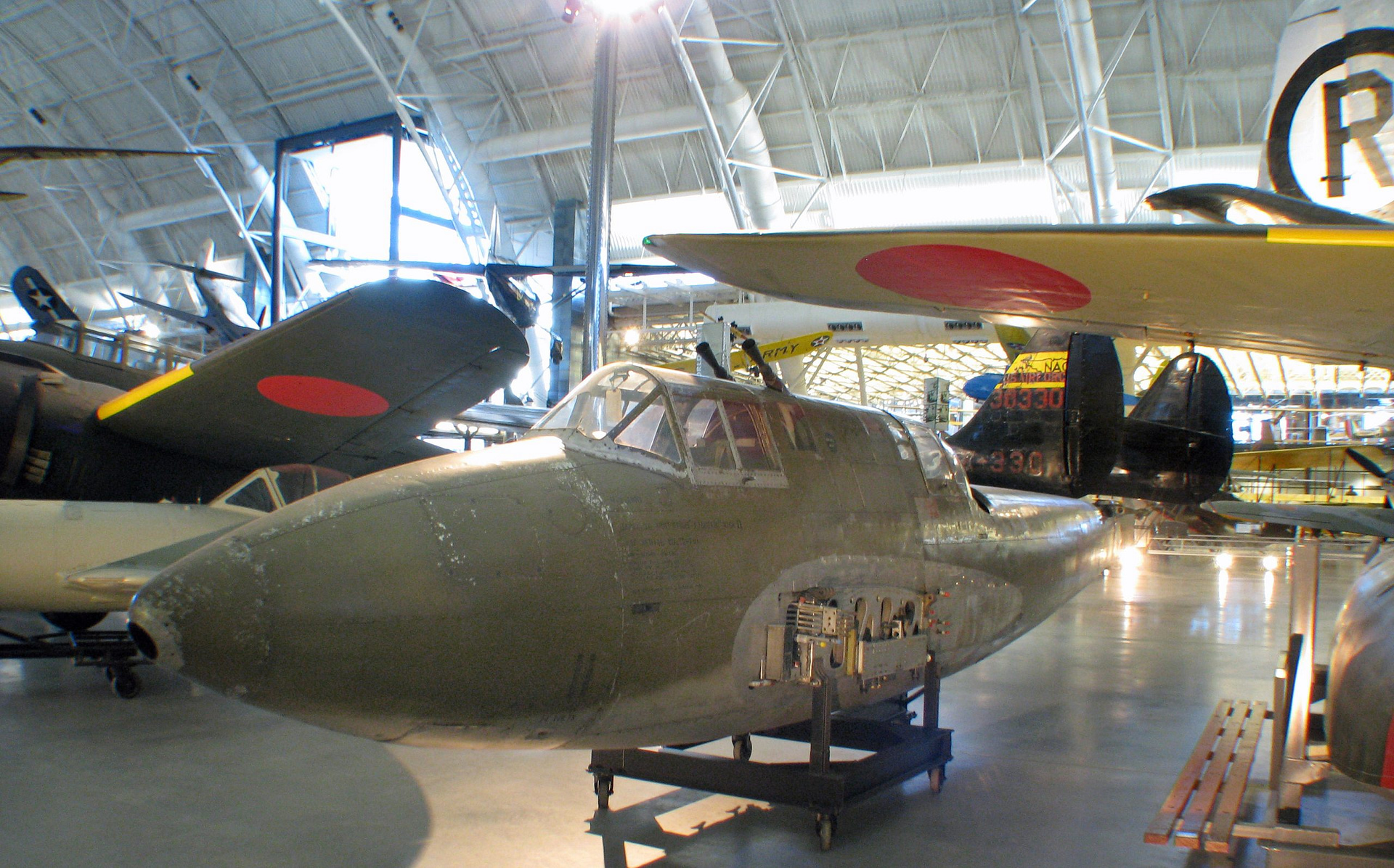
As B-29s flew higher and faster, and as radar sets never arrived in reliable numbers, interception grew desperate. Some units turned to taiatari — deliberate ramming. Of roughly 1,700 Toryu built, exactly one complete aircraft survives today, at the Smithsonian: the last Dragon Slayer.
01The Kawasaki Ki-45 Toryu’s troubled birth: why the first design nearly failed
The original Ki-45 was a disappointment. Its Nakajima Ha-20 engines were underpowered and unreliable, the nacelles created drag, and performance fell short of the Army’s hopes. Rather than abandon the concept, Kawasaki’s team — led by Takeo Doi — reworked the aircraft almost completely: cleaner nacelles, better cooling, and progressively more powerful radials, first the Nakajima Ha-25 and finally the Mitsubishi Ha-102 of roughly 1,050–1,080 hp each. The rebuilt Ki-45 KAI (“modified”) flew in 1941 and reached squadrons in 1942. The lesson of the Toryu is that its success was not in the first design but in the willingness to fix it.
What made the Ki-45 Toryu special
Japan’s first operational twin-engine heavy fighter
The Toryu gave the Army something its single-seaters could not: two engines, two crew and the reach to escort, intercept and strike far from base. A pilot flew and fought while a rear crewman worked the radio and a flexible machine gun. That capacity for heavy weapons and long range is what made the type so adaptable across so many roles.
A 37 mm nose gun — and upward-firing cannon
Toryu variants carried heavy, ship- and bomber-killing armament: a nose 37 mm Ho-203 cannon, 20 mm guns, and a rear-firing machine gun. The night-fighter KAI Hei added two obliquely-mounted 20 mm cannon firing upward and forward — Japan’s equivalent of the German Schräge Musik — so a fighter could attack a bomber from directly below.
Built for the night war over Japan
From 1944 the Toryu became the Army’s main home-defence night fighter against the B-29. Airborne and ground radar were intended but never reliably fitted, so crews hunted largely by eye, searchlight and ground control. It was, by most accounts, the only Japanese Army night fighter to see significant action — effective at first, then outpaced as the bombers climbed higher.
02The Kawasaki Ki-45 Toryu’s oblique cannon: Japan’s answer to Schräge Musik
The definitive night fighter, the Ki-45 KAI Hei (Model C), mounted two 20 mm cannon obliquely in the upper fuselage, angled upward and forward. The tactic mirrored the Luftwaffe’s Schräge Musik installations: rather than chase a bomber into the fire of its tail and dorsal guns, the fighter formed up in the bomber’s blind spot below and behind, then raked the wings and fuselage from beneath. Against the B-29 — heavily defended and fast — getting into that position at night was the hard part, but when it worked the oblique guns were devastating. A nose-mounted 37 mm cannon gave the same aircraft a heavy forward punch.
03The Kawasaki Ki-45 Toryu as night fighter: hunting the B-29 in the dark
When XX Bomber Command opened the strategic campaign against Japan in June 1944, the Army had no purpose-built night fighter ready — so it pressed the Toryu into the role. Dedicated night-fighter Sentai defended the industrial heartland, the Kanto plain and the approaches to Tokyo. Early results against B-29s flying at medium altitude were encouraging; the type’s top B-29 killer, Captain Isamu Kashiide of the 4th Sentai, was credited with a large personal tally (claims that, as with all such figures, exceed confirmed losses). But the plan depended on radar that never arrived in numbers, and as the B-29s switched tactics and pressed home low-level fire raids, the ageing Toryu was increasingly overwhelmed.
Kawasaki Ki-45 Toryu: full specifications
Airframe & Performance
- Multitud
- 2 (pilot & radio operator/gunner)
- Longitud
- ~11.0 m (sources vary, ~10.6–11.0 m)
- Envergadura
- 15.02 m
- Altura
- 3.70 m
- Max takeoff weight
- ~5,500 kg
- Max speed
- ~540 km/h (~335 mph) at 6,000 m
- Techo de servicio
- ~10,000 m
- Rango
- ~2,000 km
- First flight
- January 1939 (Ki-45 KAI: 1941)
- Service entry
- 1942 (first combat, Burma)
Propulsion, Armament & Cost
- Engines
- 2 × Mitsubishi Ha-102 radials
- Power (each)
- ~1,050–1,080 hp
- Armament (night fighter)
- 1 × 37 mm nose cannon; 2 × 20 mm oblique cannon; 1 × 7.92 mm rear MG
- Allied reporting name
- “Nick”
- Built
- ~1,700 (commonly cited 1,675–1,701)
- Production
- 1939–1945 (Gifu & Akashi)
- Unit cost
- No reliable public figure
- Cost per flight hour
- No reliable public figure (period estimate unavailable)
04The Kawasaki Ki-45 Toryu’s cost: why no reliable price survives
The Toryu was a wartime product of the Japanese state, built for the Imperial Japanese Army and never traded on any open market. No dependable flyaway unit price — in yen or dollar-equivalent — survives in the public record, and no credible cost-per-flight-hour figure exists for the type. Any precise number attached to a Ki-45 today should be treated as an estimate at best. What can be said is that the twin-engine Toryu was more expensive and material-hungry than a single-seat fighter, one reason Japan also fielded cheaper single-engine interceptors alongside it.
From heavy-fighter dream to last-ditch night defender
The requirement
The Imperial Japanese Army calls for a long-range twin-engine heavy fighter in the class of the Bf 110. Kawasaki takes on the design.
First flight
The original Ki-45 flies in January but proves underpowered and unreliable with its Nakajima Ha-20 engines.
The KAI redesign
A thoroughly reworked, re-engined Ki-45 KAI flies, finally delivering the performance the Army wanted.
Into service
The Toryu enters service and sees first combat over Burma, then spreads to China, New Guinea and the Philippines.
The B-29 arrives
XX Bomber Command opens the raids on Japan; Toryus scramble against the Superfortress and the type shifts to home defence.
The first ram over Japan
Sergeant Shigeo Nobe of the 4th Sentai deliberately rams a B-29 during the Yawata raids — credited with bringing down two bombers.
Night hunter
KAI Hei night fighters with oblique 20 mm cannon defend the Home Islands; dedicated ramming flights are formed as losses mount.
War’s end
Production ends with roughly 1,700 built. Today a single complete Ki-45 survives, preserved at the Smithsonian.
From the cockpit: twelve Toryu stories
The destroyer Japan wanted
The Army watched Europe field twin-engine heavy fighters and demanded one of its own.
Read the full story
The engines that never delivered
The first Ki-45 was underpowered and unreliable — and nearly killed the whole programme.
Read the full story
Reborn as the KAI
A near-total rework with Mitsubishi Ha-102 radials turned a failure into a workhorse.
Read the full story
First blood over Burma
The Toryu opened its account in the skies over Burma in 1942.
Read the full story
Hunting the Liberator
The heavy, steady Toryu proved a capable destroyer of Allied four-engine bombers.
Read the full story
Ships, tanks and troops
Beyond air combat, the Toryu strafed, bombed and struck shipping.
Read the full story
When the B-29 came
With no purpose-built night fighter ready, Japan turned to the Toryu.
Read the full story
Guns that fired upward
The night-fighter Toryu carried oblique cannon to strike bombers from below.
Read the full story
The first ram over Japan
On 20 August 1944, Sergeant Shigeo Nobe deliberately rammed a B-29.
Read the full story
Captain Kashiide’s war
The Toryu’s leading B-29 killer flew with the 4th Sentai.
Read the full story
The ramming flights
As losses mounted, whole flights were told to ram.
Read the full story
Sole survivor
Of roughly 1,700 Toryu, exactly one complete aircraft survives.
Read the full story
The Ki-45 Toryu in pictures
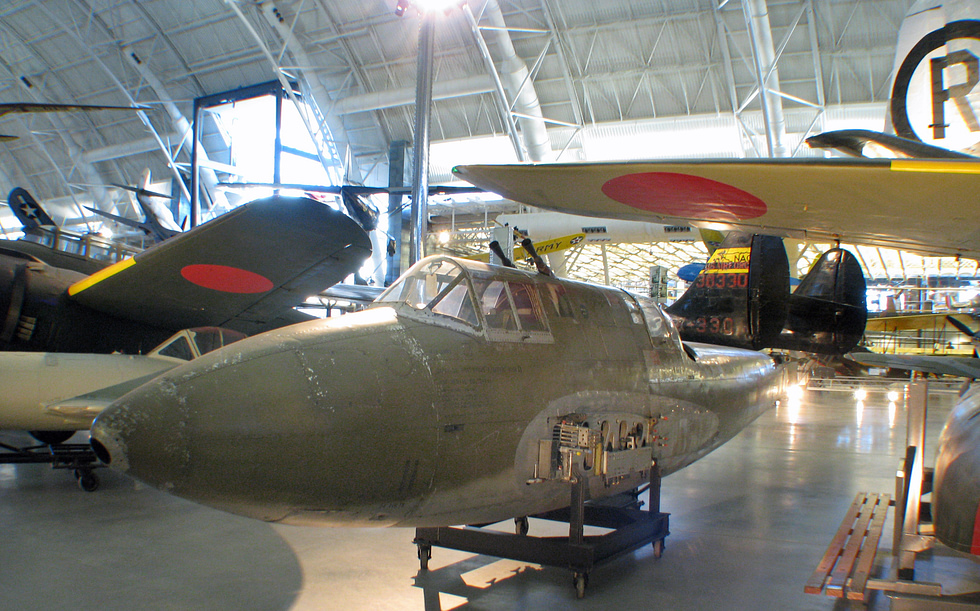
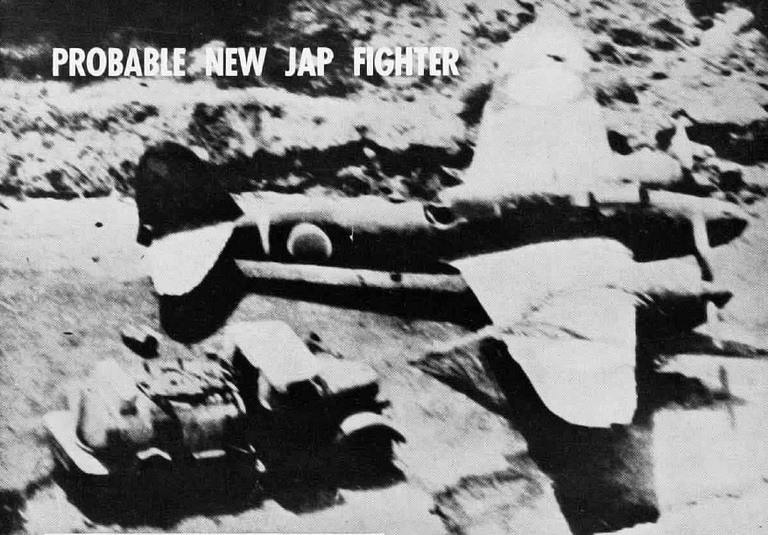
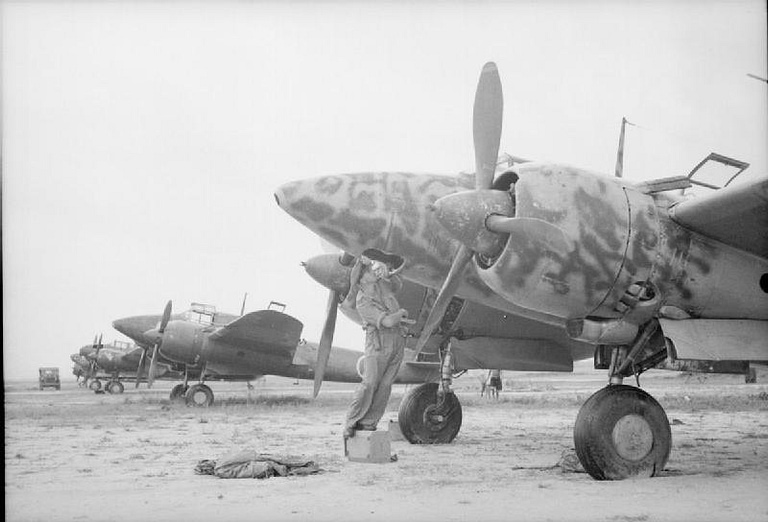
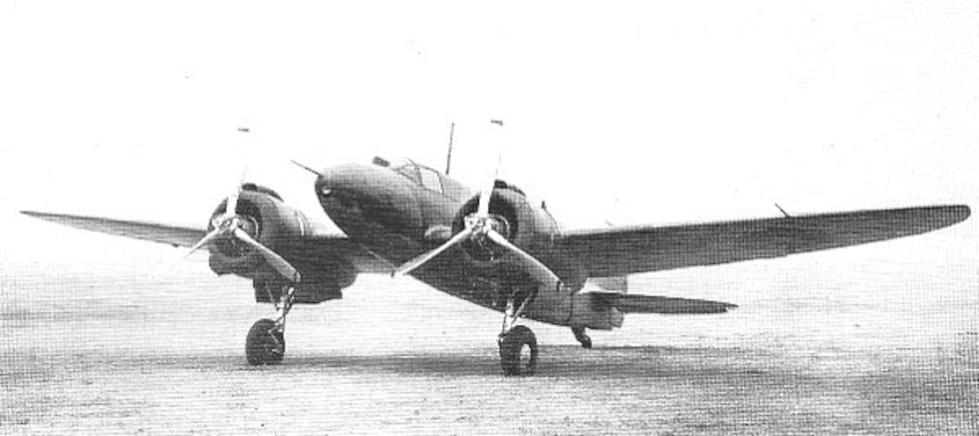
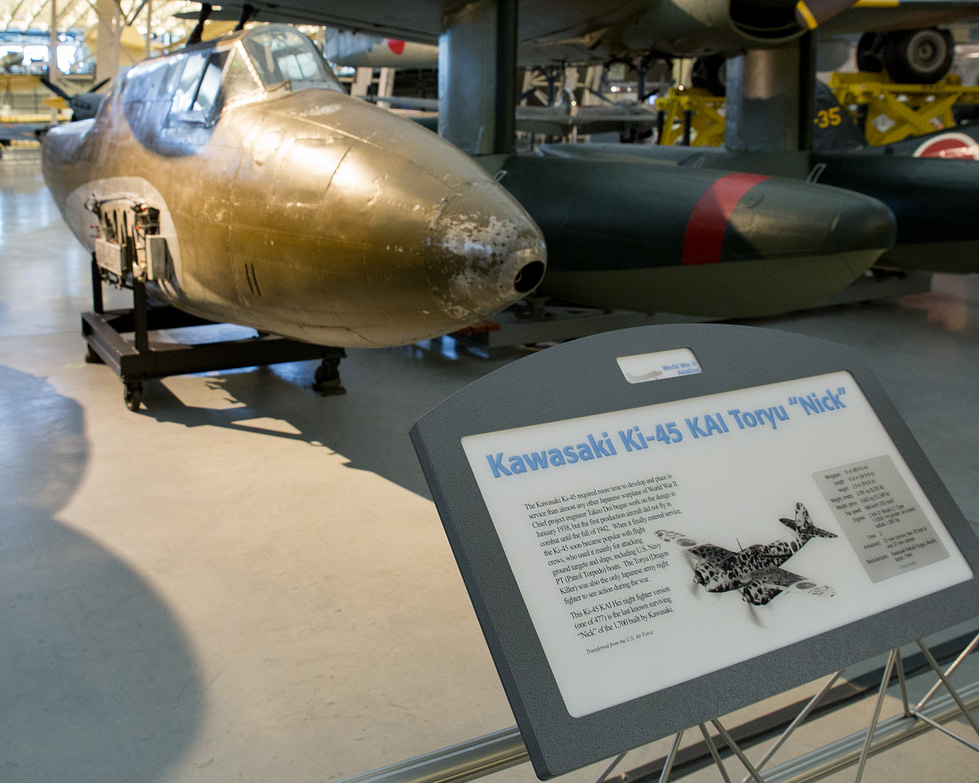
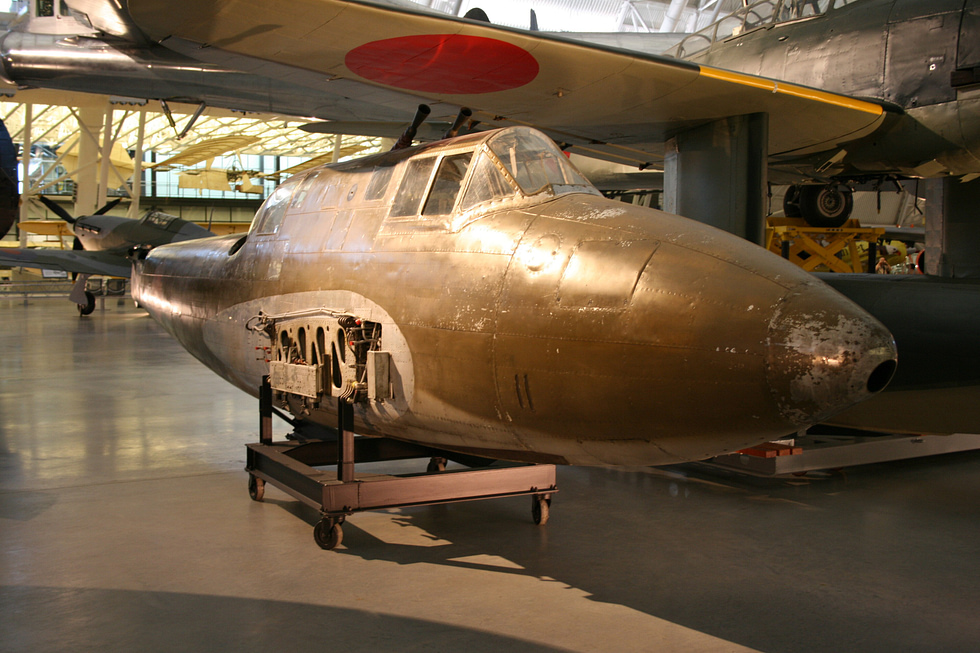
The Ki-45 Toryu in motion
AeroDepth: a 25-minute documentary on the Kawasaki Ki-45 Toryu — its troubled birth, its many roles and its final, desperate service as a night hunter of the B-29 — from an established aviation-history channel.
Where the Ki-45 Toryu flew
The Ki-45 Toryu: the score that defines it
The Toryu’s record is not a tidy tally of dogfight kills but a story of a heavy fighter pressed into ever-harder work — from bomber-hunting over Asia to the night defence of Japan itself. Its most famous moments came against the B-29, in the dark and, when all else failed, by ramming.
Compare the combat record of every military aircraft. B-29 “kill” figures for the type are claims and generally exceed confirmed Allied losses.
Everything people ask about the Ki-45 Toryu
Can I fly in a Kawasaki Ki-45 Toryu?
What does “Toryu” mean?
Why was the Ki-45 called “Nick”?
Was the Ki-45 a good night fighter?
Did Ki-45s really ram B-29s?
What were the oblique cannon?
How many Ki-45s were built, and do any survive?
You can’t fly the Kawasaki Ki-45 Toryu.
These, you can.
Some legends only live in museums — others are fuelled and waiting. MiGFlug has put civilians in real military jet cockpits since 2004.
 Fly the L-39 AlbatrosThe world’s most-flown jet trainer — aerobatics included
 Fly the F-104 Starfighter“The missile with a man in it”
 Fly the MiG-21The Cold War’s most-produced jet
 Vuela el T-33 Shooting StarAmerica’s first jet trainer
 Fly the DH VampireA piece of early jet history
 Fly the S.211Agile Italian jet trainer
 Fly the MB-326The classic Aermacchi jet
 Fly the MiG-15The Soviet legend of the Korean War
Continue the tour
Every fact, checked
- Smithsonian National Air and Space Museum — Ki-45 KAI Hei “Toryu”Primary reference for the sole surviving airframe, its armament and the “Dragon Killer” translation.
- History of War — Kawasaki Ki-45 ToryuDevelopment history, the troubled Ha-20 origin, the KAI redesign and variant armament.
- Pacific Wrecks — Sgt Shigeo NobeThe 20 August 1944 ramming over Yawata, and its two credited B-29s.
- Aviation of Japan — 53rd Hiko SentaiThe night-fighter Sentai, home-defence organisation and ramming flights.
- Military Factory — Kawasaki Ki-45 ToryuSpecifications, engines, production and variant data.
- Aeropedia — Kawasaki Ki-45 ToryuProduction figures and the Kashiide B-29 claims.
- National Museum of the US Air ForceReference for the B-29 strategic campaign the Toryu was raised to counter.
- René J. Francillon — Japanese Aircraft of the Pacific WarThe standard scholarly reference behind the differing ~1,675–1,701 production totals.