
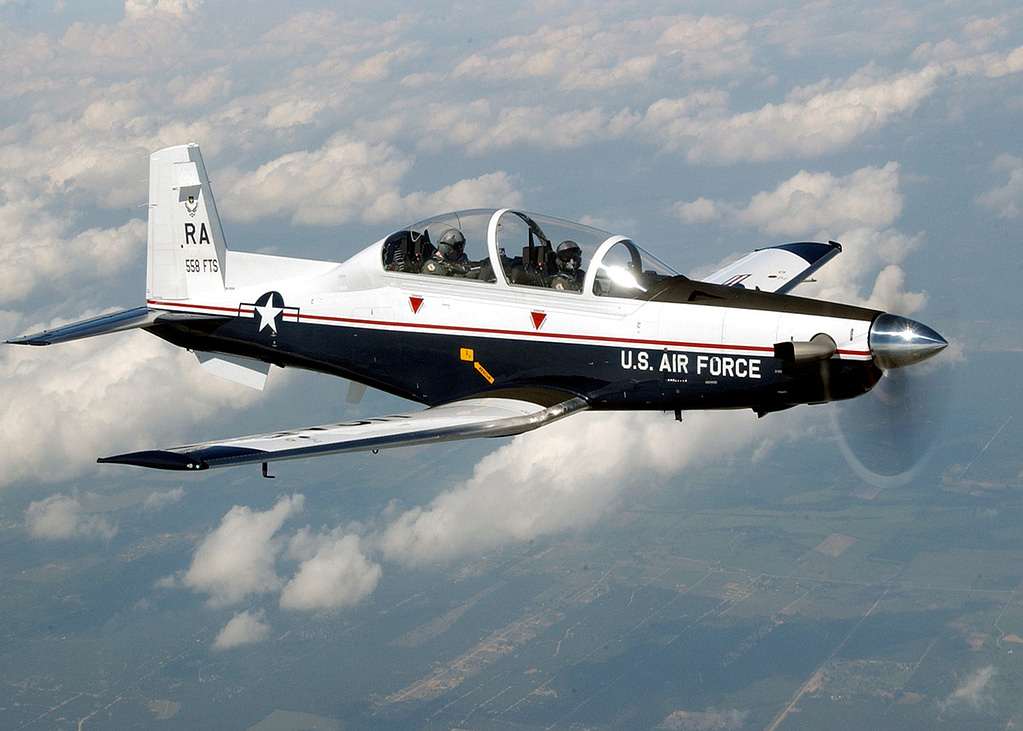
Beechcraft T-6
“Texan II”
The turboprop trainer that teaches almost every new American military pilot to fly — a pressurised, ejection-seat, 1,100-horsepower machine derived from the Pilatus PC-9, now the primary trainer for the U.S. Air Force, U.S. Navy and a dozen allied air forces.
The T-6 Texan II: a Swiss trainer, Americanised, that teaches a generation to fly
In the early 1990s the U.S. Air Force and U.S. Navy were flying two separate fleets of ageing primary trainers — the Cessna T-37 and the Beechcraft T-34C — and wanted a single, modern aircraft to replace both. The competition was the Joint Primary Aircraft Training System (JPATS), and in 1995 it was won not by a clean-sheet American design but by an Americanised version of a proven European one: the Pilatus PC-9 from Switzerland, offered by Raytheon (Beech) as the Beechcraft-built T-6.
The aircraft that emerged was far more than a re-badged PC-9. Raytheon and Pilatus reworked the airframe extensively for the demanding JPATS specification — a stronger structure, a pressurised cockpit, Martin-Baker ejection seats, an onboard oxygen system, a bird-strike-resistant canopy and a more powerful, flat-rated Pratt & Whitney Canada PT6A-68 turboprop of about 1,100 shaft horsepower. The production-configured T-6A first flew on 15 July 1998 and entered service in 2000, taking the historic name of the T-6 Texan, the tail-dragging radial trainer that had checked out a generation of Second World War pilots. It became, formally, the Texan II.
Since then the T-6 has become the aircraft nearly every new American military pilot meets first. USAF and Navy student aviators fly it in primary training before they ever touch a jet; the later glass-cockpit T-6B modernised the avionics, and the export T-6C added hardpoints and a wider fuel and mission fit. Overseas it flies as the CT-156 Harvard II in Canada and simply as the Texan II in Greece, Israel, Iraq, Morocco, Mexico, New Zealand, the United Kingdom and beyond. A light-attack armed derivative, the AT-6 Wolverine, took the trainer to war. More than a thousand have been built, and the worldwide fleet has flown over five million hours.
01The T-6 Texan II’s origin: how a Swiss PC-9 became America’s primary trainer
The T-6 exists because of JPATS — a mid-1990s programme to replace both the Air Force’s Cessna T-37 “Tweet” and the Navy’s Beechcraft T-34C Turbo Mentor with one common turboprop trainer. Rather than design a new aircraft, several bidders offered developed versions of existing proven trainers. Raytheon Aircraft (which owned Beech) partnered with Pilatus of Switzerland and offered a heavily modified PC-9, and that entry won the contract in 1995.
Calling the T-6 “just a PC-9” understates the change. To meet the U.S. specification the airframe was substantially redesigned — commonly cited as only a minority of parts remaining common with the PC-9 — gaining a pressurised cockpit, ejection seats, a stronger structure cleared for higher g and bird strike, a digital cockpit and the uprated PT6A-68 engine flat-rated to deliver full power across a wide altitude band. The result was a genuinely new aircraft with Swiss DNA: robust, docile enough for a first solo, yet powerful and modern enough to prepare a student for a front-line jet.
What makes the T-6 Texan II special
A trainer with a fighter’s safety kit
Unusually for a primary trainer, the T-6 gives students the survival equipment of a combat jet from day one: a pressurised cockpit, Martin-Baker Mk US16LA ejection seats in both tandem positions, an on-board oxygen-generating system and a canopy hardened against bird strike. Students learn ejection-seat and pressurised-flight discipline early, so nothing about a front-line jet’s cockpit is unfamiliar later.
1,100 flat-rated horsepower
Power comes from a single Pratt & Whitney Canada PT6A-68 turboprop delivering about 1,100 shaft horsepower, driving a four-blade constant-speed propeller. The engine is flat-rated — deliberately de-tuned so it delivers the same full power from sea level up to altitude — giving the student brisk, consistent performance and the kind of climb and energy that teaches real jet-style handling.
Glass cockpit and the T-6B leap
The original T-6A had conventional instruments; the T-6B and export T-6C introduced a modern glass cockpit with head-up display and multifunction displays, so students train from the start on the digital avionics and symbology they will use in an F-16, F/A-18 or F-35. The T-6C adds underwing hardpoints for weapons training and ferry tanks.
02The T-6 Texan II’s PT6 turboprop: why the engine is deliberately held back
The PT6A-68 fitted to the T-6 can produce well over 1,100 horsepower, but it is flat-rated to about 1,100 shp — the fuel scheduling limits it so that it delivers that same figure whether the aircraft is at sea level on a hot day or several thousand metres up. For a trainer this is exactly right: the student gets predictable, repeatable performance everywhere, strong enough to demonstrate real energy management, aerobatics and stall behaviour, without the engine’s output falling away with altitude the way an un-boosted piston’s would. A Hartzell four-blade constant-speed propeller and a power-management system smooth the torque so a low-hours student is not overwhelmed.
03The AT-6 Wolverine: how the T-6 trainer was turned into a light-attack aircraft
Beechcraft — and its successor Textron Aviation — developed an armed derivative of the Texan II, the AT-6 Wolverine, for the light-attack and armed-reconnaissance market. It keeps the T-6’s airframe and PT6 turboprop but adds a strengthened wing with multiple hardpoints, a sensor/targeting turret, a mission computer and a data-link, letting it carry guns, rockets, precision-guided bombs and missiles. Aimed at counter-insurgency and close air support — missions where a cheap, rugged, long-loiter turboprop can do work that an expensive fast jet does poorly — the AT-6 has been evaluated by the U.S. Air Force and ordered by export customers including Thailand and Tunisia. It is the modern echo of an old idea: a good trainer makes a natural light-attack aircraft.
Beechcraft T-6 Texan II: full specifications
Airframe & Performance (T-6A)
- Multitud
- 2 (student & instructor, tandem)
- Longitud
- 10.16 m (33 ft 4 in)
- Envergadura
- 10.19 m (33 ft 5 in)
- Altura
- 3.23 m (10 ft 7 in)
- Max takeoff weight
- ~2,950 kg (6,500 lb)
- Max speed
- ~510 km/h (316 mph, 275 kn)
- Techo de servicio
- 31,000 ft (9,449 m)
- Rango
- ~1,660 km (900 nmi)
- First flight
- 15 July 1998
- Built
- 1,000+ (delivered since 2000)
Propulsion, Systems & Cost
- Motor
- 1 × Pratt & Whitney Canada PT6A-68 turboprop
- Power
- ~1,100 shp (flat-rated)
- Propeller
- Hartzell 4-blade constant-speed
- Cockpit
- Pressurised; Martin-Baker Mk US16LA ejection seats
- Avionics (T-6B/C)
- Glass cockpit, HUD, multifunction displays
- Armament (T-6C / AT-6)
- Underwing hardpoints (export & light-attack)
- Unit cost
- ~$4.3 million (USAF fact sheet)
- Cost per flight hour
- ~$1,000–2,200 (published figures vary; hedged)
04The T-6 Texan II’s operating costs: what it costs to fly a primary trainer
The T-6 was chosen partly because it is cheap to buy and run compared with a jet trainer — that affordability is the whole point of doing primary training in a turboprop. The U.S. Air Force fact sheet lists a unit cost of about $4.3 million, and Textron reported delivering the 1,000th aircraft in 2022 with the global fleet passing five million flight hours.
Cost-per-flight-hour figures for the T-6 are published but vary widely with what they include. A U.S. Department of Defense reimbursable rate reported in 2013 put the T-6A near $2,235 per flight hour, a figure that bundles in a great deal of overhead; leaner direct-operating estimates run lower, in the four-figure range. Any single number should be read as an order-of-magnitude guide, not a precise price — real cost swings with fuel, utilisation and how the accounting is done.
The T-6 Texan II: from JPATS contract to global trainer
The JPATS requirement
The USAF and USN launch the Joint Primary Aircraft Training System to replace the T-37 and T-34C with one common trainer.
The PC-9 entry wins
Raytheon (Beech) and Pilatus win JPATS with an Americanised, heavily modified Pilatus PC-9 — designated the T-6.
First flight
The production-configured T-6A Texan II first flies on 15 July 1998, with ejection seats and a pressurised cockpit.
Enters service
The T-6A enters USAF service at Randolph AFB from 2000 and begins replacing the T-37 and T-34C in primary training.
Goes global
Greece, Canada (as the CT-156 Harvard II), Morocco, Israel, Iraq and others adopt the Texan II for pilot training.
The glass-cockpit T-6B
The T-6B, with a modern digital glass cockpit and HUD, enters U.S. Navy and Air Force service; the export T-6C follows.
The AT-6 Wolverine
Beechcraft develops an armed light-attack derivative, the AT-6 Wolverine, later ordered by Thailand and Tunisia.
1,000th Texan II
Textron Aviation delivers the 1,000th T-6, with the worldwide fleet passing five million flight hours.
From the flight line: twelve T-6 Texan II stories
Replacing two fleets with one
JPATS set out to replace both the USAF T-37 and the Navy T-34C with a single common trainer.
Read the full story
From Pilatus PC-9 to Texan II
The T-6 is a deeply reworked Pilatus PC-9, not a clean-sheet American design.
Read the full story
Why “Texan II”
The aircraft revives the name of the WWII-era T-6 Texan that trained a generation of pilots.
Read the full story
The first aircraft every pilot flies
Nearly every new U.S. Air Force and Navy pilot begins in the T-6.
Read the full story
Ejection seats from day one
The T-6 puts student pilots on live ejection seats in a pressurised cockpit.
Read the full story
The engine that never fades
The PT6A-68 is flat-rated so its power stays constant with altitude.
Read the full story
The glass-cockpit T-6B
The T-6B swapped analogue dials for a digital cockpit matching the front-line fleet.
Read the full story
The T-6C goes worldwide
The export T-6C added hardpoints and range, and sold across the globe.
Read the full story
The Harvard II
Canada flies the Texan II as the CT-156 Harvard II, reviving another historic name.
Read the full story
The AT-6 Wolverine goes to war
Beechcraft armed the trainer into a light-attack aircraft with sensors and weapons.
Read the full story
A five-million-hour fleet
Over a thousand Texan IIs have flown more than five million hours worldwide.
Read the full story
The pilot maker of a new century
Like the Texan and Harvard before it, the T-6 defines a generation of aviators.
Read the full story
The T-6 Texan II in pictures
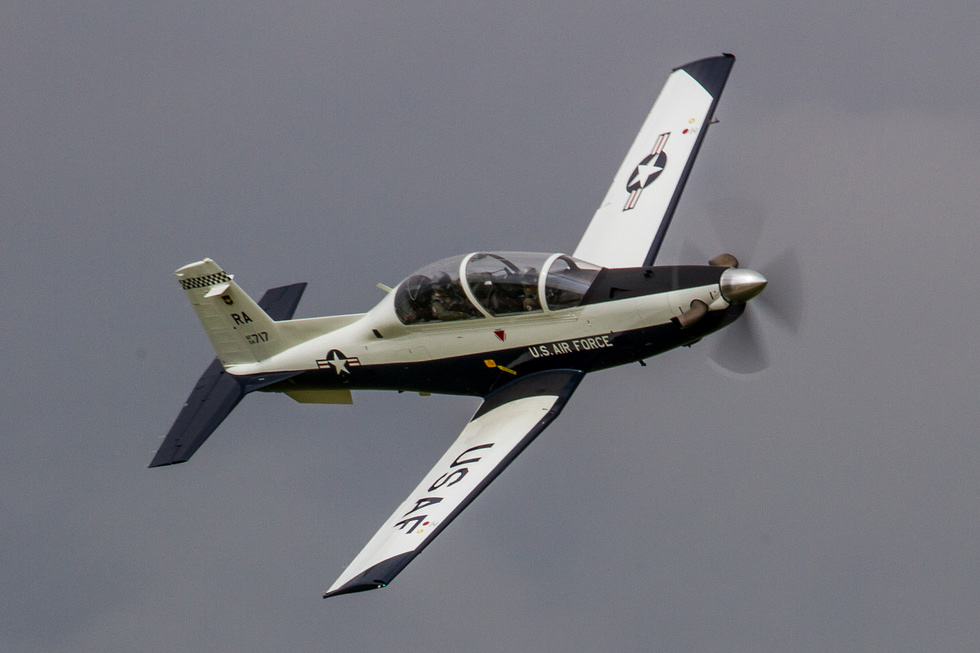
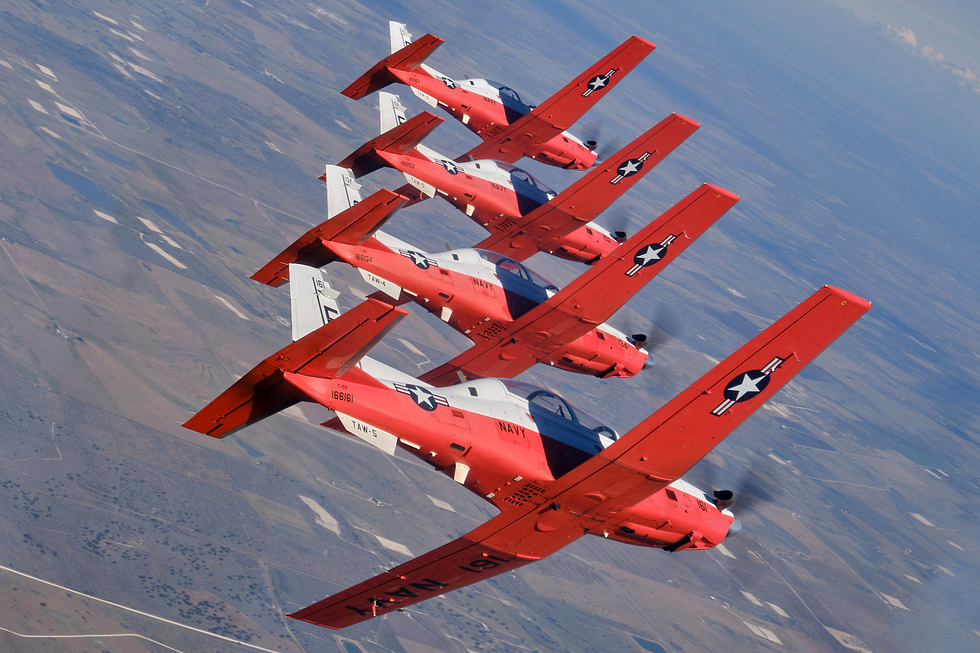
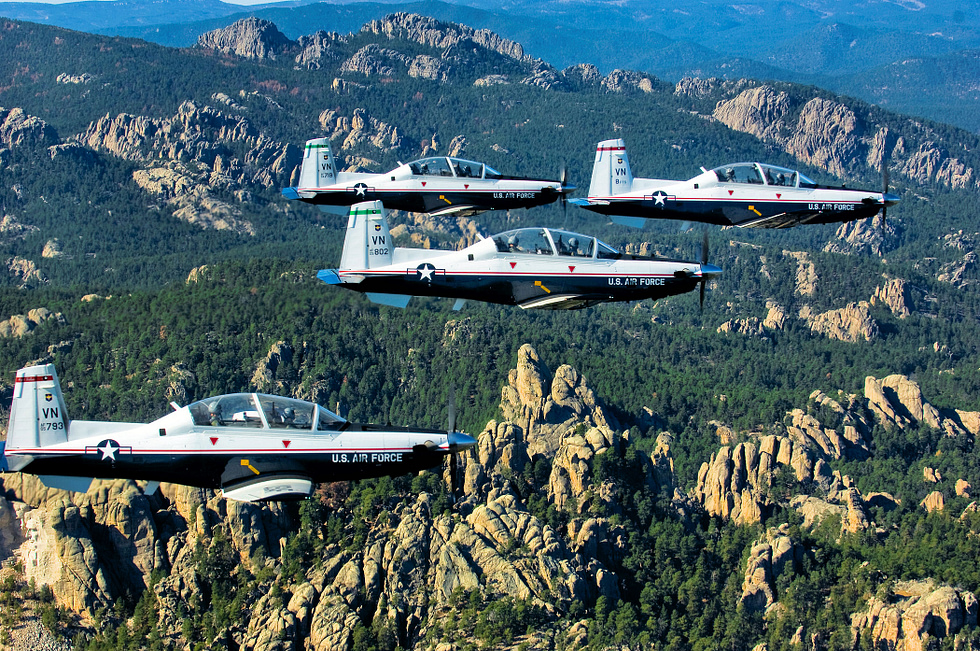
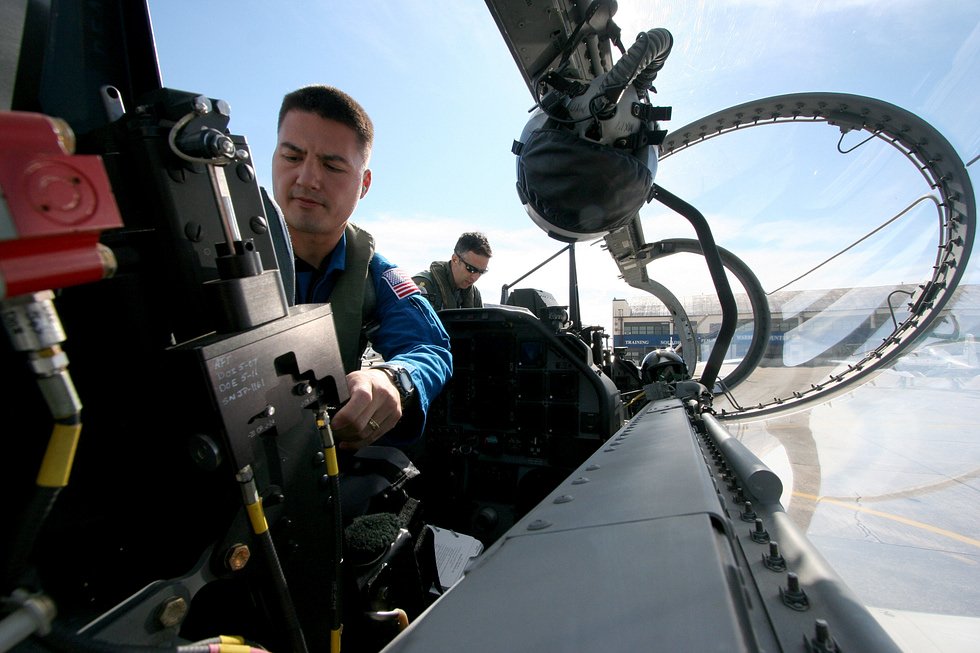
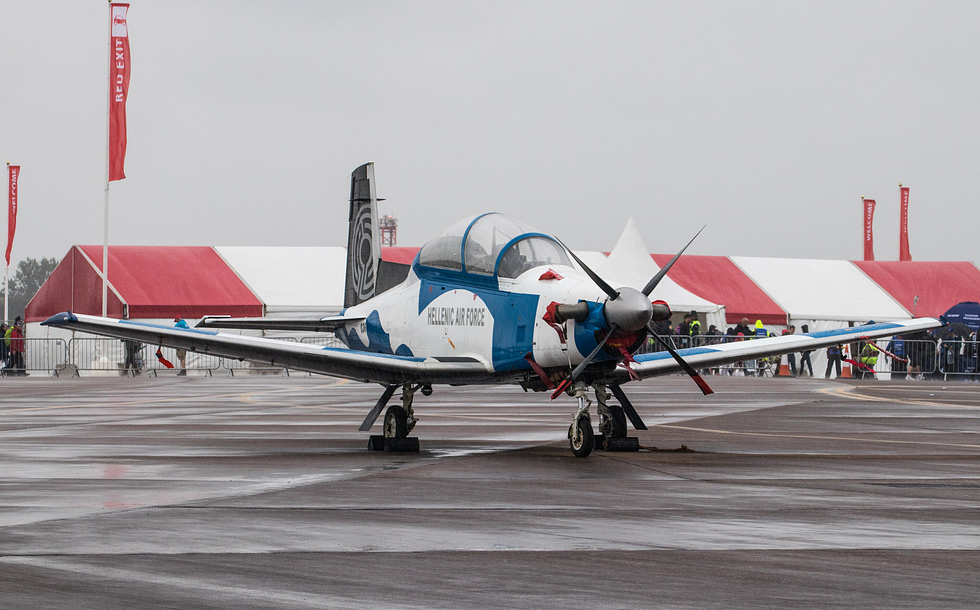
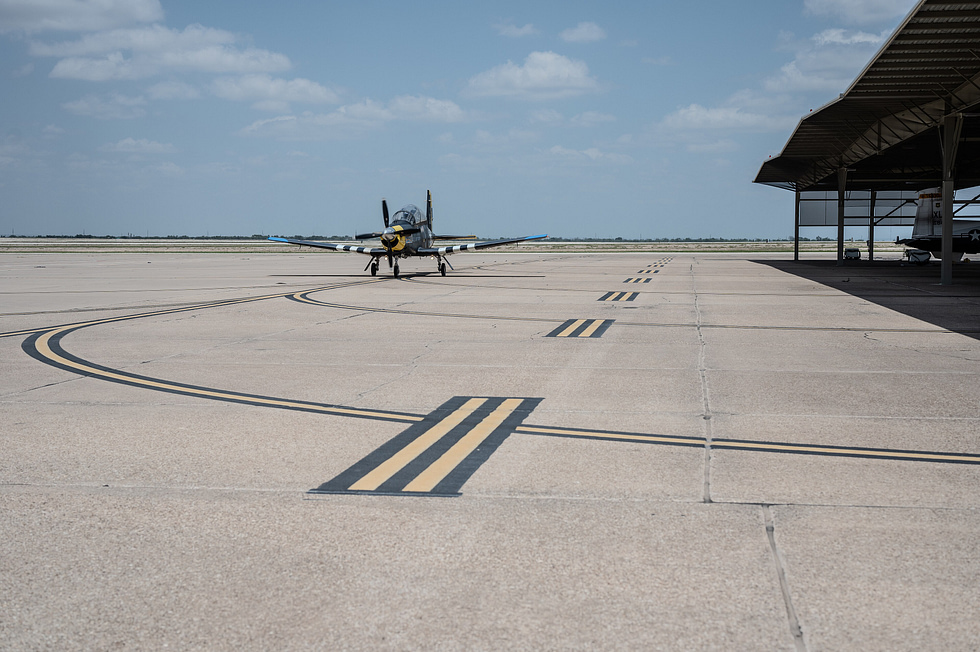
The T-6 Texan II in motion
A look at the T-6 Texan II — the turboprop primary trainer that starts almost every U.S. and allied military pilot on their way, with cockpit and flight-line footage. Verify current view count on YouTube.
Where the T-6 Texan II flies
The T-6 Texan II’s record: the pilot pipeline’s foundation
The Texan II is a trainer, not a fighter, so its record is measured in pilots made rather than aircraft shot down. It is the aircraft in which the United States and more than a dozen allied nations teach new aviators the fundamentals of military flying. Its armed derivative, the AT-6 Wolverine, has taken the airframe into the light-attack role, but the T-6’s own achievement is scale and reliability — the quiet foundation on which every front-line pilot is built.
Compare the combat record of every military aircraft. Figures as of 2026.
Everything people ask about the T-6 Texan II
Can I fly in a T-6 Texan II?
What is the T-6 Texan II used for?
Is the T-6 Texan II the same as the WWII T-6 Texan?
Is the T-6 Texan II a Pilatus PC-9?
What engine does the T-6 Texan II have?
What is the AT-6 Wolverine?
Which countries fly the T-6 Texan II?
You can’t fly the T-6 Texan II.
These, you can.
Some legends only live in museums — others are fuelled and waiting. MiGFlug has put civilians in real military jet cockpits since 2004.
 Fly the L-39 AlbatrosThe world’s most-flown jet trainer — aerobatics included
 Fly the F-104 Starfighter“The missile with a man in it”
 Fly the MiG-21The Cold War’s most-produced jet
 Vuela el T-33 Shooting StarAmerica’s first jet trainer
 Fly the DH VampireA piece of early jet history
 Fly the S.211Agile Italian jet trainer
 Fly the MB-326The classic Aermacchi jet
 Fly the MiG-15The Soviet legend of the Korean War
Continue the tour
Every fact, checked
- U.S. Air Force — T-6A Texan II fact sheetOfficial specifications, engine, unit cost and service history.
- NAVAIR — T-6A Texan IIU.S. Navy programme page for the Texan II primary trainer.
- Airforce Technology — T-6A JPATSProgramme history, PC-9 lineage and the JPATS competition.
- Air & Space Forces Magazine — T-6Overview of the type, its variants and its role in pilot training.
- Pilatus PC-9 backgroundThe Swiss PC-9 lineage from which the T-6 was developed.
- Textron Aviation / BeechcraftManufacturer; 1,000th-aircraft delivery and five-million-hour fleet milestone (2022).
- Royal Canadian Air ForceThe CT-156 Harvard II and NATO Flying Training in Canada at Moose Jaw.
- TIME — Costly Flight HoursPublished U.S. DoD cost-per-flight-hour reimbursable rates, including the T-6A.