
Quick Facts
- Date: 25 April 2026
- Target: Shagol airfield, Chelyabinsk Oblast, Russia
- Distance: ~1,700 km from Ukrainian-controlled territory
- Damage confirmed: 2× Su-57, 1× Su-34, 1× unidentified aircraft
- Estimated value destroyed: $300–400 million
- Executed by: Ukrainian Unmanned Systems Forces
The Deep Strike
Robert Brovdi, commander of Ukraine’s Unmanned Systems Forces, confirmed the strike and released imagery showing damage to the aircraft. Shagol is not a frontline base. It sits in the southern Urals, east of the Ural Mountains — a location Russian planners clearly considered beyond the reach of Ukrainian weapons. That assumption proved catastrophically wrong. The strike demonstrates that Ukraine’s long-range drone capability has matured far beyond the modified commercial drones of 2022-2023. These are purpose-built systems with navigation, endurance, and precision sufficient to hit specific aircraft on a ramp nearly two thousand kilometres away.What Was Hit
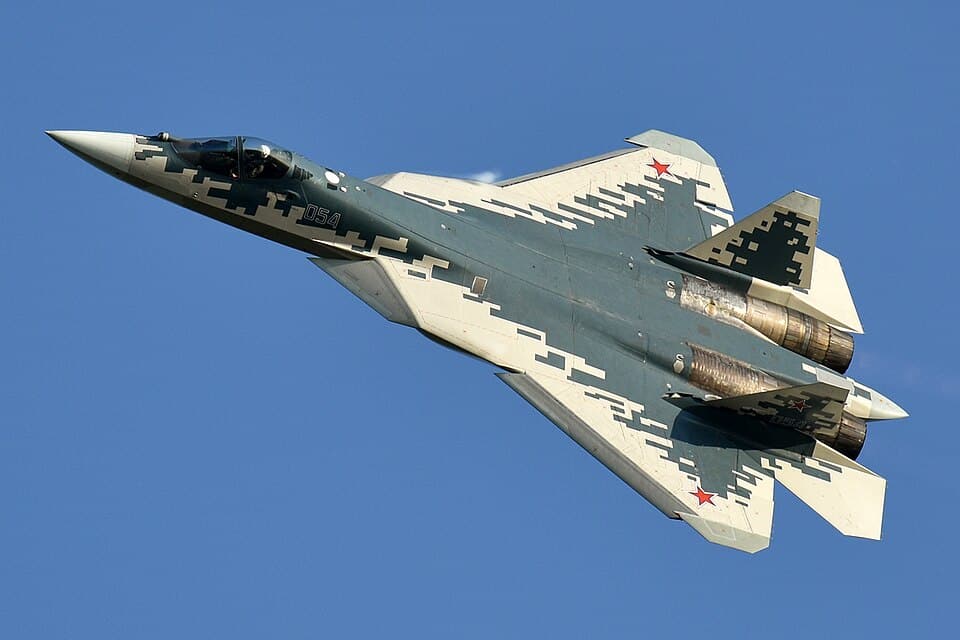
The Su-57 Felon is Russia’s only fifth-generation fighter — a twin-engine stealth aircraft designed for air superiority and deep strike. Russia has reportedly produced fewer than 30 of them, making each airframe irreplaceable on any near-term timeline. The Su-34 Fullback is a twin-seat strike fighter valued at $35–50 million, used extensively for bombing missions in Ukraine. Satellite imagery published after the strike shows blast damage and debris consistent with drone detonations near parked aircraft. The Ukrainian General Staff confirmed the destruction, and Brovdi stated the damage was more extensive than initially reported.The Range Revolution
Before this strike, the longest confirmed Ukrainian drone attacks had reached approximately 1,200–1,300 km into Russian territory. The Shagol strike extends that envelope by roughly 400 km — a leap that puts virtually every military installation in European Russia, and many in western Siberia, within theoretical range. For Russia’s military planners, this creates an impossible dispersal problem. Moving aircraft further east means they’re further from the front — reducing their operational utility. Hardening shelters costs billions and takes years. And no distance has yet proven safe from Ukrainian innovation.Asymmetric Warfare Perfected
The economics of this strike are staggering. A long-range Ukrainian drone costs an estimated $100,000–500,000 depending on the variant. The targets it destroyed are worth $300–400 million combined. That’s a return on investment of roughly 1,000:1 — the kind of exchange ratio that makes traditional air power doctrine obsolete. This is the new reality of modern air warfare: the most expensive, most advanced aircraft in a nation’s inventory can be destroyed on the ground by systems that cost less than a luxury car. The Shagol strike will be studied at war colleges for decades.Sources: Kyiv Independent, Ukrinform, United24 Media, Defence Blog, Military Watch Magazine

 English
0 Comments