
Quick Facts
- Total drone/counter-drone budget (FY27): $74 billion
- DAWG budget increase: $225.9M → $54.6B (24,000%)
- Counter-drone spending: ~$20 billion
- Overall defence budget: $1.5 trillion
- Key programmes: CCA drone wingmen, Replicator-successor, counter-UAS
- New commands: SOUTHCOM Autonomous Warfare Command established
The DAWG Rises
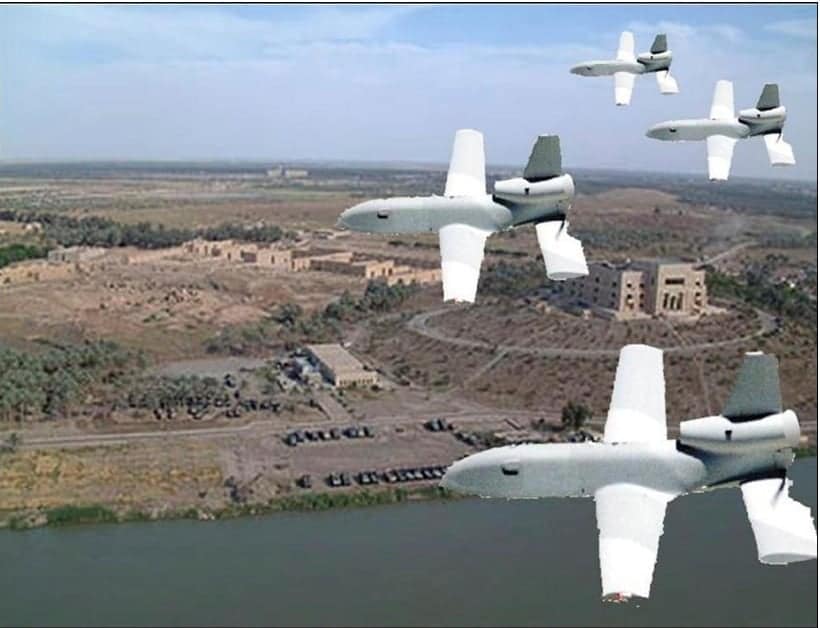
The Defense Autonomous Warfare Group was launched as a successor to the Biden-era Replicator initiative — itself a programme designed to rapidly field thousands of autonomous systems to counter China’s numerical advantage in the Pacific. DAWG takes Replicator’s concept and supercharges it with funding that would have been unthinkable two years ago. The $54.6 billion request covers development, procurement, and deployment of autonomous systems across all military domains: air, land, sea, subsurface, space, and cyber. The Pentagon envisions thousands of expendable drones operating in coordinated swarms, loyal wingmen flying alongside manned fighters, autonomous submarines patrolling contested waters, and AI-enabled command systems orchestrating it all.Why Now
Three converging factors explain the budget explosion: Ukraine proved that cheap drones can destroy expensive conventional forces at exchange ratios that make traditional military economics obsolete. A $500 FPV drone destroying a $5 million tank changes everything about how you plan a defence budget. The Iran campaign demonstrated that drone and missile swarms can overwhelm expensive air defence systems. Shooting down a $50,000 drone with a $2 million interceptor is economically unsustainable at scale. The Pentagon needs both cheaper interceptors (hence the $20 billion counter-drone allocation) and its own offensive drone mass. China is producing military drones at industrial scale. The PLA is fielding autonomous systems faster than the United States — a gap that this budget is explicitly designed to close.What $74 Billion Buys
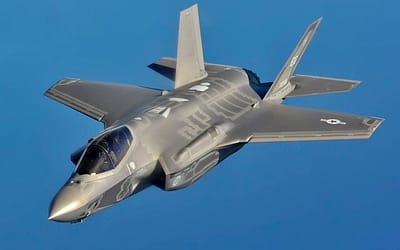
The budget breaks into several major categories. Collaborative Combat Aircraft — the autonomous wingmen that will fly alongside F-22s, F-35s, and F-47s — receive continued development and initial production funding. Anduril, General Atomics, and Northrop Grumman all benefit. Counter-UAS systems — weapons designed to shoot down enemy drones cheaply — receive approximately $20 billion. This includes directed-energy weapons (lasers and microwaves), electronic warfare systems, and low-cost interceptors like Anduril’s Roadrunner. The remaining funding covers everything from small tactical drones for infantry units to large autonomous submarines, space-based ISR drones, and the AI software that ties autonomous systems into coherent military operations.The Industrial Challenge
Requesting $74 billion and actually spending it productively are two different things. The American defence industrial base is not currently configured to produce autonomous systems at the scale this budget implies. Factories need to be built. Supply chains need to be established. Workforces need to be trained. Companies like Anduril are racing to build capacity (Arsenal-1 in Ohio is a direct response), but the gap between budget authority and industrial reality will take years to close. The Pentagon’s $74 billion drone bet is the clearest signal yet: the future of American military power is unmanned, autonomous, and produced in quantities that would make today’s force planners’ heads spin. Whether industry can deliver at that scale remains the trillion-dollar question.Sources: DefenseScoop, Defense One, Military.com, Fox News, Task and Purpose, CS Monitor

 English
0 Comments