
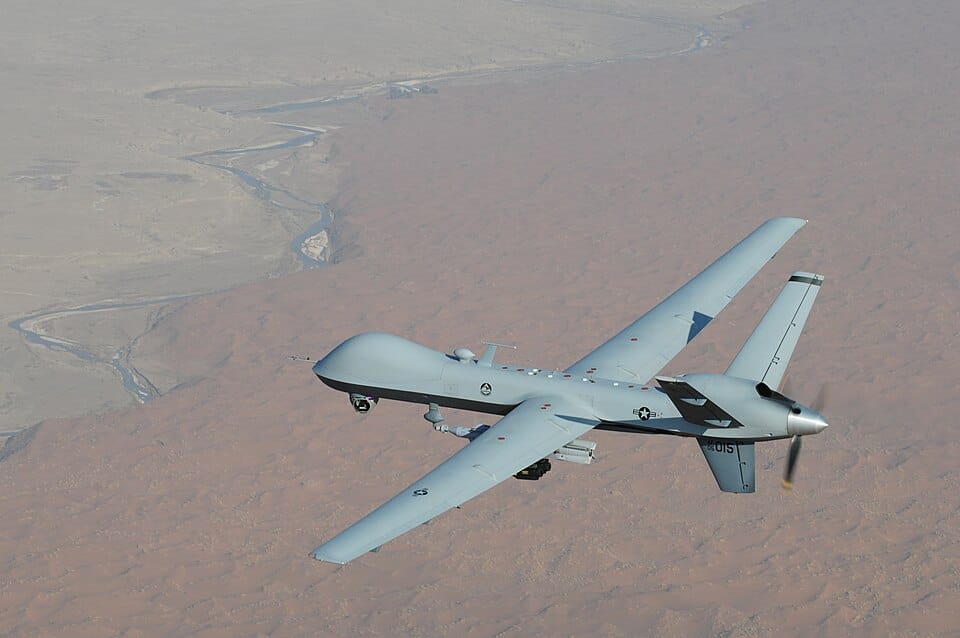
In roughly six weeks of Operation Epic Fury, the United States Air Force lost 24 MQ-9 Reaper drones over Iran. At approximately $30 million per airframe, that is $720 million in hardware swatted out of the sky by an adversary the Reaper was never designed to fight. It is the most expensive month in the history of American unmanned aviation—and it exposes a problem the Pentagon has been slow to acknowledge: the drone that defined the War on Terror is hopelessly outmatched by a real air defense network.
The story of what happened, and what it means for the future of American airpower, is equal parts cautionary tale and strategic reckoning. Because even as Reapers fell from the sky at a rate that would make any procurement officer weep, the Air Force Chief of Staff stood before Congress and called the MQ-9 the campaign’s most valuable player.
🚩 24 MQ-9 Reapers lost during Operation Epic Fury over Iran
💰 Approximately $720 million in total hardware losses
📈 ~13% of the entire MQ-9 inventory destroyed in ~6 weeks
✈ Fleet fell below the 189-aircraft operational minimum
🏆 Air Force Chief still called MQ-9 the “Most Valuable Player”
🚀 Next-generation replacement now being fast-tracked
A Drone Built for the Wrong War
The MQ-9 Reaper entered service in 2007, purpose-built for the post-9/11 era. Its mission was straightforward: loiter for hours over Afghanistan, Iraq, or Yemen, find targets that couldn’t shoot back, and eliminate them with Hellfire missiles or GPS-guided bombs. For nearly two decades, it was perfect for the job.
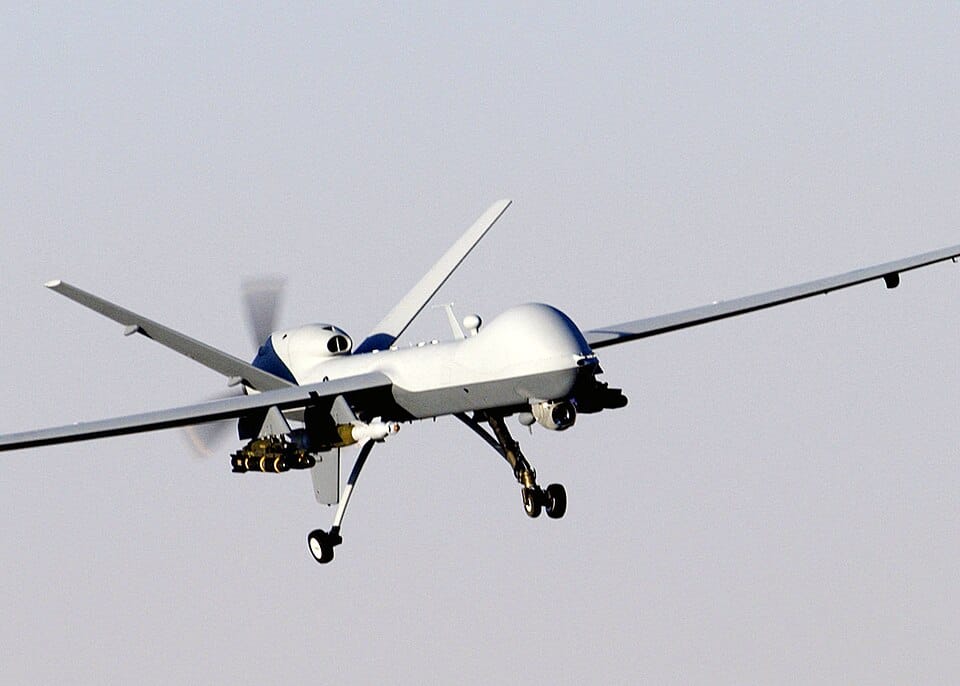
What the Reaper was not designed for was flying into contested airspace defended by modern integrated air defense systems. It cruises at roughly 230 miles per hour—slower than a Cessna Citation. It operates at medium altitude, typically between 15,000 and 25,000 feet. Its radar cross-section is substantial. Against an adversary with real surface-to-air missiles, the MQ-9 is a slow-moving target the size of a small business jet with no meaningful ability to evade.
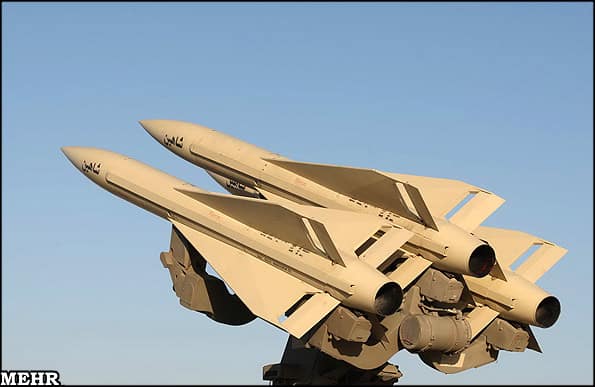
Iran has an extensive and surprisingly capable air defense network. And it treated Reapers as target practice.
The Losses Mount
The timeline is remarkable for its pace. Within the first two weeks of operations, 11 Reapers had been shot down. By late March, the count reached 16. By mid-April, 24 aircraft were gone—roughly 13% of the entire MQ-9 fleet, destroyed in a month and a half.
The Air Force’s fleet dropped below the previously identified operational minimum of 189 aircraft, falling to approximately 135 operational Reapers. Before Epic Fury, the service had around 180 MQ-9s. Losing 24 in one regional conflict is not a blip—it is a structural blow to the fleet.
Each loss followed a similar pattern: the Reaper would enter Iranian airspace for ISR or strike missions, and Iran’s ground-based air defense network would detect and engage it. The MQ-9 has no defensive countermeasures worth mentioning against modern SAMs. It can’t outrun them. It can’t out-turn them. It simply absorbs the hit.

The MVP Paradox
Despite losing $720 million in airframes, Air Force Chief of Staff General Kenneth Wilsbach appeared before the House Armed Services Committee and called the MQ-9 the campaign’s most valuable player. This is not as contradictory as it sounds.
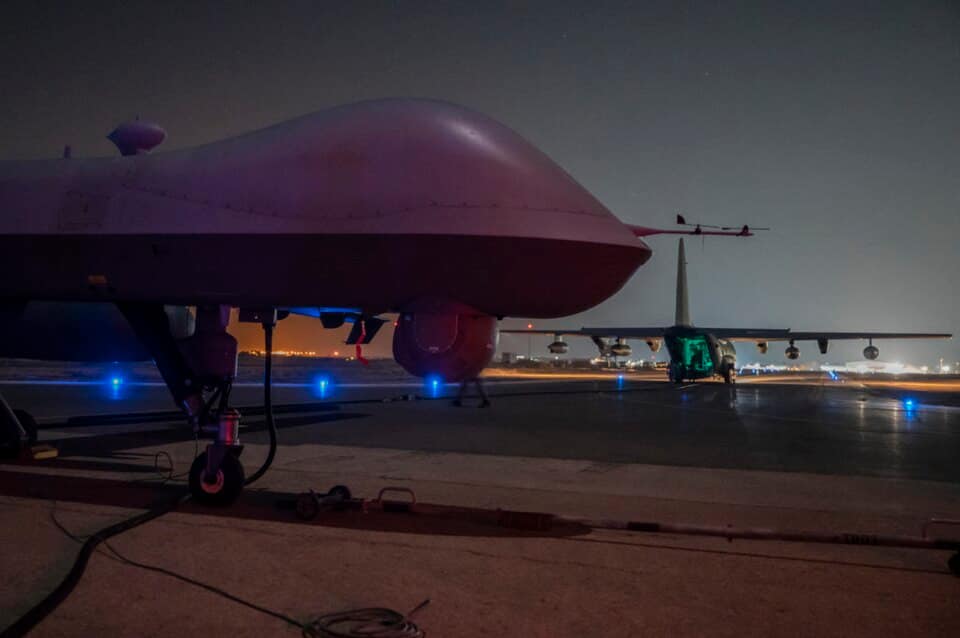
The Reaper is expendable in a way that manned aircraft are not. When an MQ-9 gets shot down, hardware is destroyed. When an F-15E Strike Eagle gets shot down, hardware is destroyed and two irreplaceable aircrew are killed or captured. The math is grim but clear: if you need eyes and weapons in heavily defended airspace, better to lose robots than people.
The Reapers that survived delivered critical intelligence and carried out strikes that shaped the campaign. The ones that didn’t survive still provided data on Iranian air defense positions, capabilities, and response times—information that proved valuable for planning subsequent operations with stealth platforms and standoff weapons.
The Houthi Warning Nobody Heeded
The Iran losses didn’t come without warning. In 2024 and early 2025, at least seven MQ-9 Reapers were shot down by Houthi rebels in Yemen—a non-state actor armed with Iranian-supplied air defense systems. If Houthi militias with relatively basic SAMs could reliably bring down Reapers, what would happen against Iran’s full integrated air defense network?
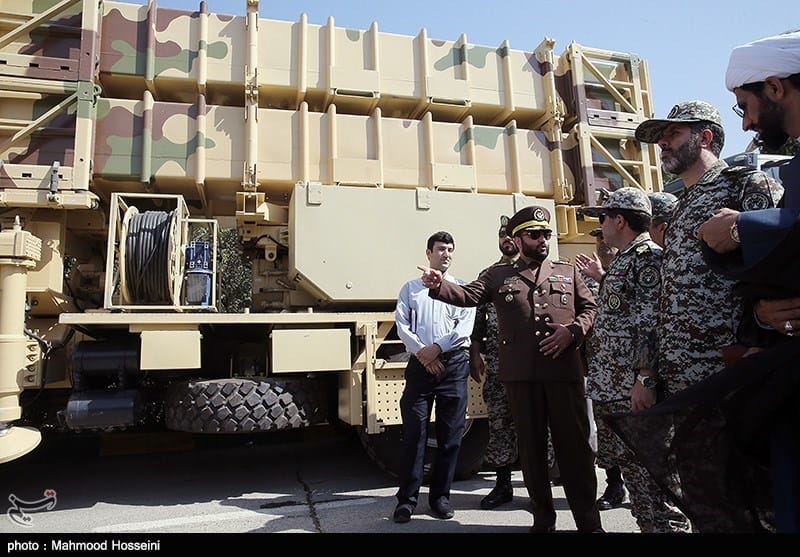
The answer: exactly what happened. Twenty-four aircraft lost in six weeks. The irony writes itself: America’s most successful drone program, the one that reshaped modern warfare, was exposed as fundamentally vulnerable the moment it encountered the kind of adversary it was never built to face.
What Comes Next: MQ-Next
The losses have accelerated what was already an ongoing conversation. The Air Force has formally greenlit requirements for an MQ-9 replacement, receiving over 50 industry responses to its request for information. The replacement needs to be fundamentally different.
The key design requirement is blunt: the next-generation drone needs to be cheap enough to lose. Not invulnerable, not necessarily stealthy enough to avoid all threats, but affordable enough that commanders can accept attrition without wincing at the budget. Think the opposite of the F-35 philosophy: instead of one expensive aircraft that does everything, build many inexpensive ones that do enough.
This is distinct from the Collaborative Combat Aircraft program developing autonomous “loyal wingman” drones for fighter escorts. MQ-Next will fill the Reaper’s core role—long-loiter ISR and strike—but in environments where getting shot at is the expectation, not the exception.
The $720 million in losses over Iran will be studied at war colleges for decades. It demonstrates that unmanned does not mean invulnerable, that capable does not mean survivable, and that the weapons built for the last war rarely survive first contact with the next one.
The Reaper earned its MVP title. It also earned its retirement notice. Both things are true.
Sources: Air & Space Forces Magazine, DroneXL, Task & Purpose, Breaking Defense, The War Zone, Eurasian Times, Defence Security Asia.
Related Posts


 English
0 Comments