
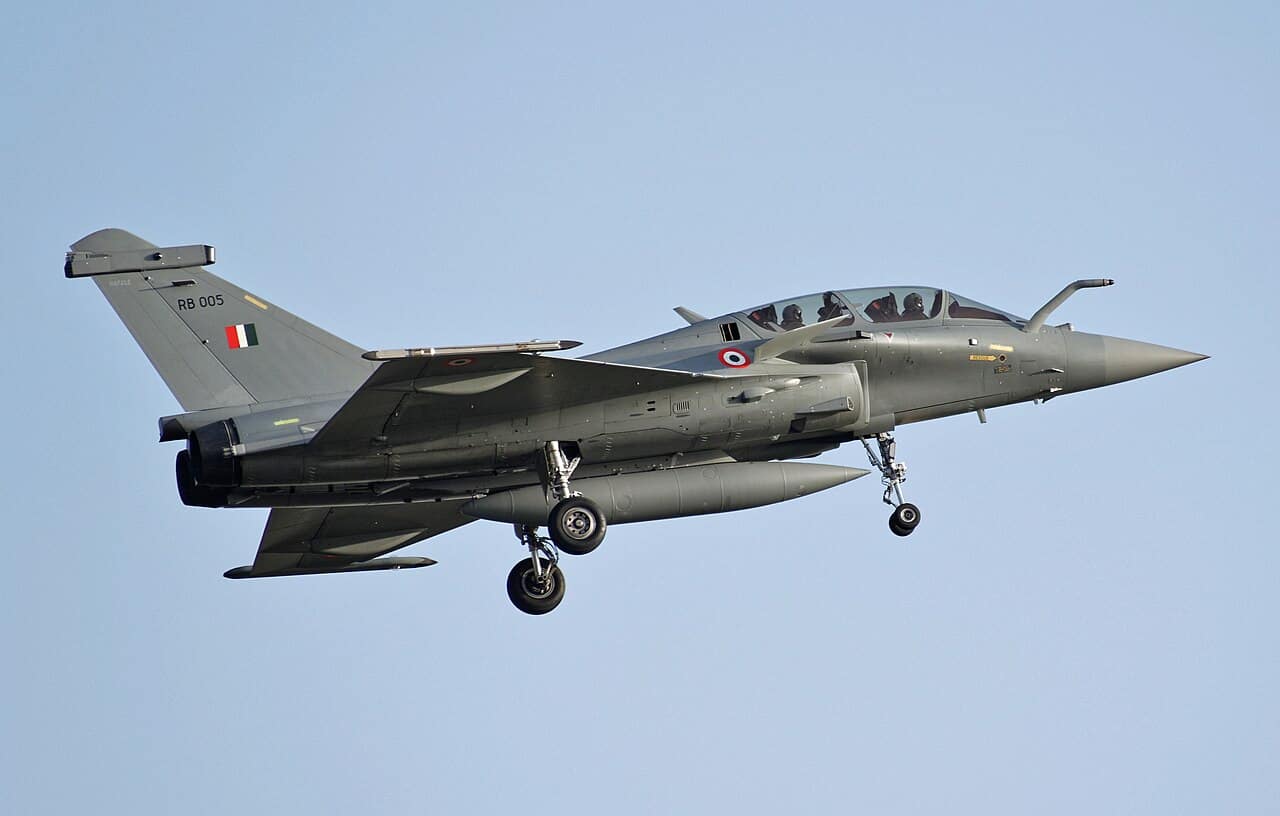
France has made its move. On 6 August 2026, Dassault Aviation handed New Delhi a formal techno-commercial proposal for 114 Rafale fighters — the long-awaited answer to India’s Multi-Role Fighter Aircraft (MRFA) tender, and one of the largest single fighter contests anywhere on Earth.
The numbers are staggering even by defence standards. Indian outlets put the package at roughly ₹3.25 lakh crore — reported across the press at somewhere between $34 and $39 billion — and it comes wrapped in a heavy “Make in India” mandate. Only a first tranche, reported as 18 jets, would arrive fly-away from France. The remaining 96 would be assembled in India by a local industrial partner.
For the Indian Air Force, this is not a shopping spree. It is triage. The service is down to roughly 30 fighter squadrons against a sanctioned strength of 42, and the gap widens every year as Soviet-era jets retire faster than replacements arrive.
Quick Facts
| Programme | MRFA — Multi-Role Fighter Aircraft |
| Aircraft | 114 Dassault Rafale (F4 standard) |
| Proposal filed | 6 August 2026 |
| Reported value | ~₹3.25 lakh crore (about $34–39 billion) |
| Build split | ~18 flown in from France, ~96 built in India |
| Partners | Dassault, Safran, Thales, MBDA; Tata, L&T (India) |
| Already flying | 36 Rafale F3R with the IAF since 2020 |
The biggest fighter contest on the planet
India already operates 36 Rafales in the F3R standard, delivered from 2020 and split between Ambala and Hasimara. The MRFA jets would step up to the newer F4 standard, and this time the aircraft would be built on Indian soil. Dassault has proposed drawing in its core partners — engine-maker Safran, sensors house Thales and missile specialist MBDA — alongside Indian industry.
That Indian footprint is already taking shape. Tata Advanced Systems has begun producing complete Rafale fuselages in Hyderabad, and Larsen & Toubro and others are lined up to share in an order that Indian estimates suggest could funnel well over a lakh crore of rupees into the domestic supply chain.
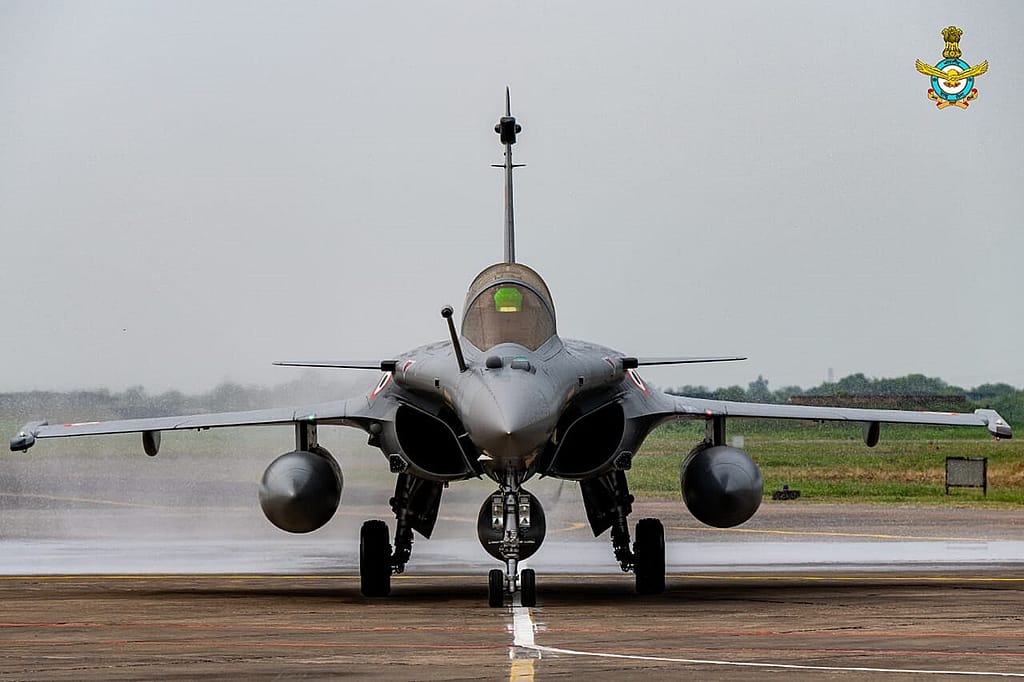
New Delhi’s negotiators are studying the offer closely, and the sticking points are familiar ones: how much of the aircraft will genuinely be Indian-made, and whether Dassault will let India bolt its own weapons — notably homegrown Astra air-to-air missiles — onto a French airframe. Indian sources say indigenous content is meant to climb from around 30 percent early on to more than 60 percent as the line matures.
A fleet running on empty
The urgency is real. With its squadron count sliding and neighbours fielding new stealth and fourth-generation types, the IAF cannot wait a decade for an all-new indigenous fighter to mature. A proven, combat-tested Rafale line — built at home, feeding an Indian workforce — is the pragmatic bridge, even if it is an expensive one.
Dassault chief Eric Trappier has said publicly he believes a deal of this scale could be signed within 2026. That would be fast for a programme this size. But after years of false starts and a cancelled earlier tender, both sides have reason to close quickly — France to lock in its second global Rafale hub, India to stop the bleeding in its fighter fleet.
The proposal is on the table. Now the hard part begins: turning a ₹3.25 lakh crore ambition into signatures, and 114 aircraft into squadrons that actually fly.
Sources: Aerospace Global News; Free Press Journal; Global Defense Corp; The Aviationist; Airforce Technology; meta-defense.fr. Figures on deal value and build split vary between outlets and are reported here as such.
0 Comments