
In January 1942, a month after Pearl Harbor, a Pennsylvania dentist named Lytle S. Adams sat down and wrote a letter to the White House. His plan to win the war was simple: strap tiny incendiary bombs to a million bats and drop them on Tokyo.
It should have gone straight into a wastebasket. Instead, President Franklin Roosevelt read it, and scribbled a note to the head of America’s new spy agency. The bat bomb was about to become a real, government-funded weapon.
What followed was one of the strangest research programmes of the Second World War — a project that worked far better than anyone expected, and still lost its race against a very different kind of bomb.
Quick Facts
| Weapon | Bat bomb — later “Project X-Ray” |
| Conceived by | Dr. Lytle S. Adams, dental surgeon, January 1942 |
| Payload | ~1,040 Mexican free-tailed bats, each with a napalm capsule |
| Target | Wood-and-paper Japanese cities |
| Famous mishap | Escaped bats burned down a New Mexico airfield, 15 May 1943 |
| Cost | ~$2 million (roughly $35 million today) |
| Cancelled | 1944 — overtaken by the atomic bomb |
A dentist, a cave, and a very strange idea
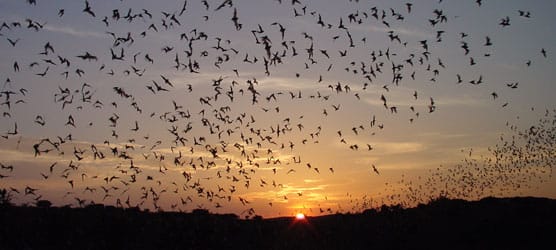
Adams had recently visited Carlsbad Caverns in New Mexico, home to millions of Mexican free-tailed bats. He knew two things: the bats were astonishingly strong for their size, and they instinctively sought out dark, hidden crevices to roost before dawn. Japanese cities, he also knew, were built largely of wood and paper.
Put those facts together and you get Adams’ grim insight: release thousands of bats over a city at first light, each carrying a delayed incendiary, and they would vanish into the eaves and attics of thousands of buildings before their tiny bombs ignited — starting fires in exactly the places firefighters could not reach.
Roosevelt forwarded the letter to William “Wild Bill” Donovan, head of the Office of Strategic Services, with a note that has become famous.
The documentary below lays out how a dentist’s letter turned into a classified weapons programme.
How to build a bat bomb
The engineering was genuinely clever. Each bat would carry a small napalm capsule — the incendiary designed by Harvard chemist Louis Fieser, the man who invented napalm itself. To transport the animals, the team kept them in forced hibernation, chilling them in ice-cube trays so they slept through the journey.
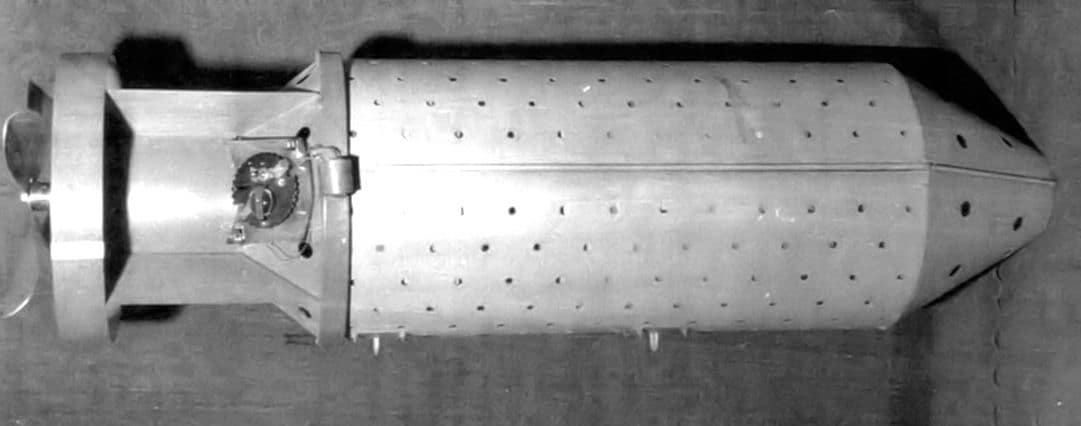
The delivery device was a sheet-metal canister about five feet long, packed with twenty-six stacked trays. Folded inside were more than a thousand bats. Dropped from a bomber, the canister would fall, pop a parachute, and split open at altitude, releasing 1,040 bats to scatter across the target.
The day the bats burned down the airfield
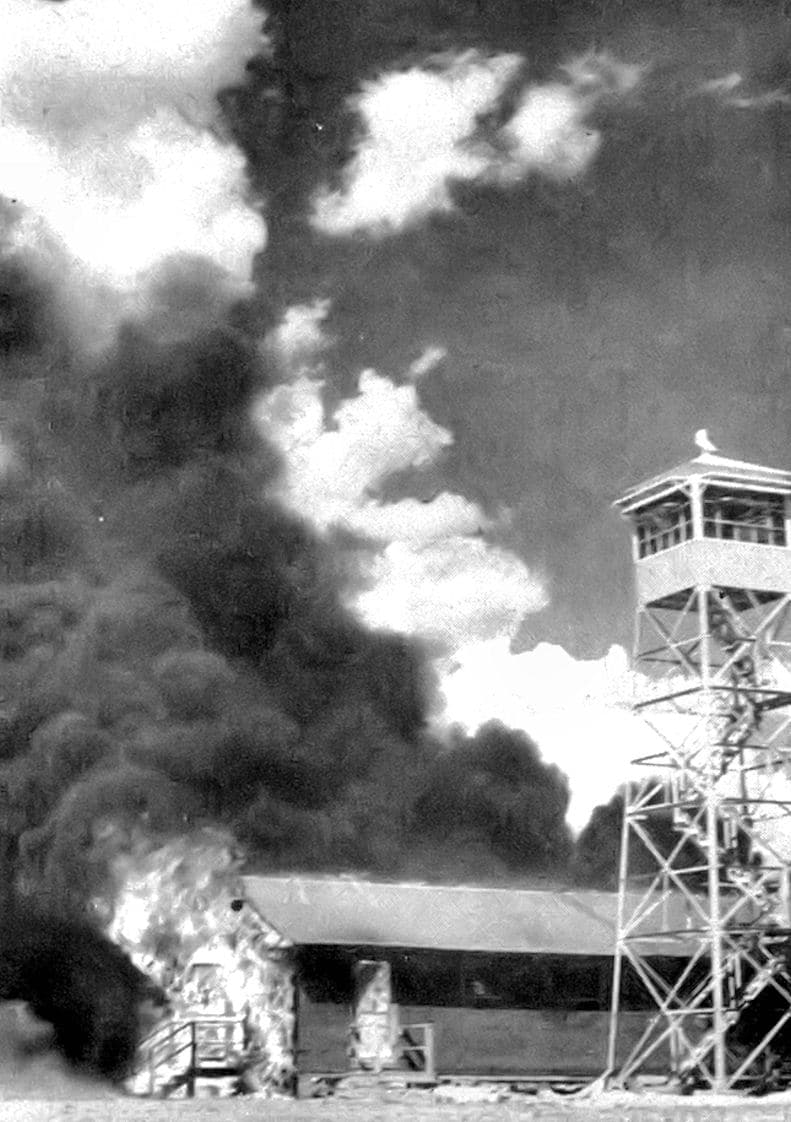
On 15 May 1943, during testing at a Carlsbad Army Airfield auxiliary base, a batch of armed bats got loose. They did exactly what they had been designed to do — they flew off and roosted in the nearest structures, including under a fuel tank. Then their incendiaries went off.
The test base burned to the ground. It was, in a bleak way, a spectacular proof of concept: the weapon worked so well it torched its own airfield.
Even the men running it saw the dark comedy. The OSS research chief later dubbed the whole affair “Die Fledermaus Farce” — the bat farce — yet the results kept saying otherwise. Adams never doubted it would have worked.
Effective — but too late
The Navy took the project over in August 1943, renamed it Project X-Ray, and handed it to the Marine Corps. The definitive test came at a mock “Japanese Village” built at Dugway Proving Ground in Utah. The verdict was blunt: one observer concluded “X-Ray is an effective weapon.” By one estimate, a load of bat bombs would start between 3,600 and 4,700 fires — against 167 to 400 for a conventional incendiary bomb.
It was, on paper, one of the most efficient fire-starting weapons the United States had. But it was slow. When Fleet Admiral Ernest King learned the bats would not be combat-ready until mid-1945, he cancelled the programme. Some $2 million had been spent. The race to end the war had already been won by another project working quietly in the desert — the atomic bomb.
The bat bomb never saw combat. But it remains one of history’s great what-ifs: a weapon dreamed up by a dentist, blessed by a president, and beaten to the finish line by the most fearsome bomb ever built.
Sources: Bat bomb (Wikipedia); Jack Couffer, “Bat Bomb: World War II’s Other Secret Weapon”; The Atlantic (Alexis Madrigal); Air & Space Forces Magazine (C. V. Glines).
0 Comments