
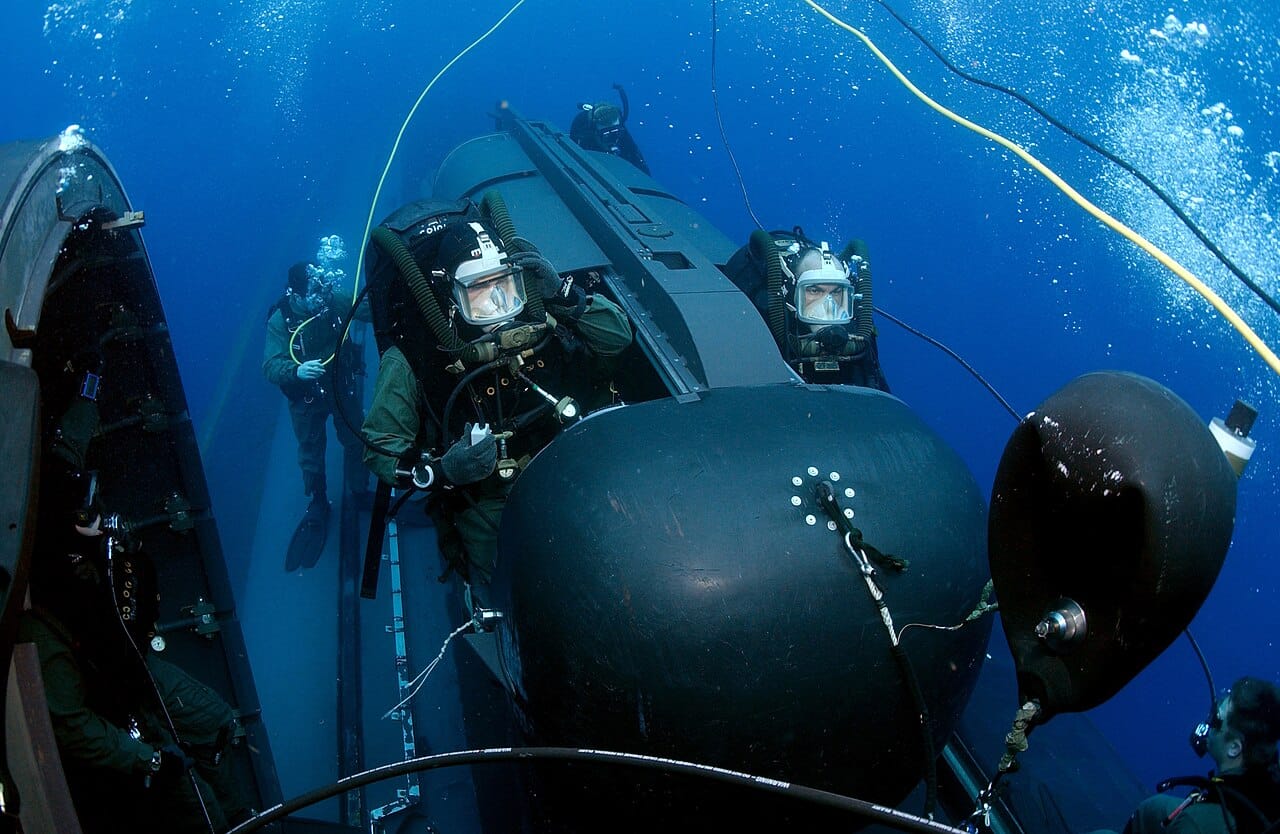
The Navy SEAL underwater raid has not fundamentally changed in fifty years. Eight operators in a six-metre swimmer delivery vehicle, breathing through rebreathers, no propeller noise above the threshold, no radio emissions, no daylight. They infiltrate, do the job, and exit before anyone above the surface notices they were there. It is one of the most demanding and least visible missions in the entire U.S. military.
What is changing — quietly, the way these things always do in the special operations world — is that the SEALs are no longer going alone. They are going with a swarm of autonomous robots underneath them, ahead of them, and around them. The Navy has confirmed it is actively building the teaming concept now.
Quick Facts
Crewed platform: Shallow Water Combat Submersible (SWCS) — successor to the Mark 8 SDV
Operators: Two SEALs (pilot, navigator) plus a small assault team
Uncrewed platform: Various small-to-medium Uncrewed Underwater Vehicles (UUVs)
Concept: Crewed SWCS works alongside autonomous UUVs that scout, jam, decoy, or strike
Roles for the UUVs: Forward reconnaissance, mine clearance, electronic warfare, target marking, weapon delivery
Why now: Cheap autonomous underwater drones have matured rapidly; SEAL teams want to push into more contested water
Operating environment: Littoral waters, harbours, coastal infrastructure — increasingly contested by Chinese and Russian sensors
Status: Concept actively in development at Naval Special Warfare Command
The mission that hasn’t changed in fifty years
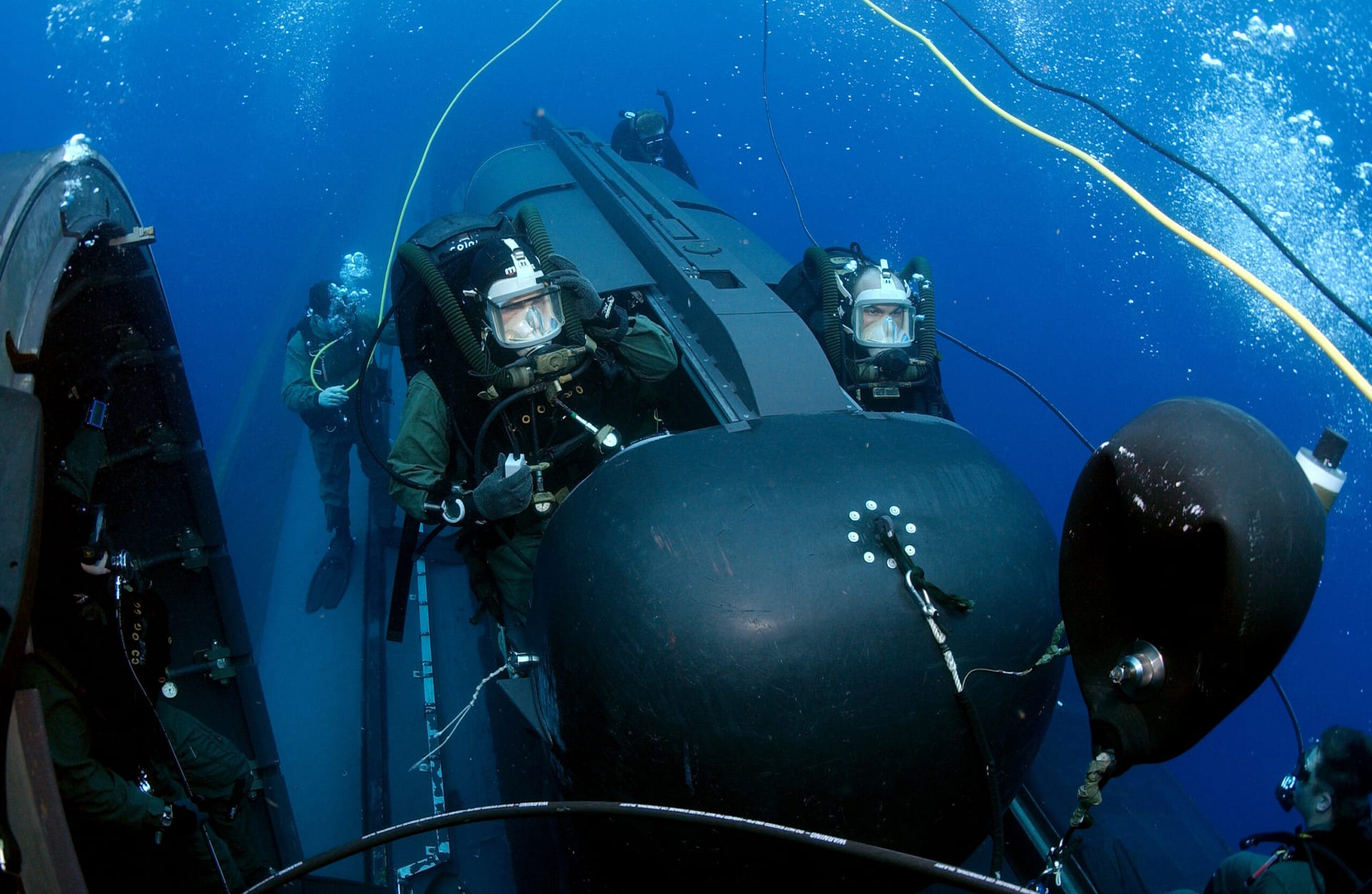
The Vietnam-era Mark 8 SDV — Swimmer Delivery Vehicle — was an open, wet, free-flooding submersible. SEALs sat in it breathing from their own rebreathers, took it through the surf zone, parked it offshore from the target, swam in, did the job, swam back, and rode home. The Mark 8 was retired in 2018, replaced by the Shallow Water Combat Submersible (SWCS) — slightly bigger, slightly faster, longer range, but conceptually the same machine. Two pilots up front, a four-to-six-person SEAL team in back, no protection from cold water, no protection from sonar.
The problem for 2026 is that the targets the SEALs would want to hit — Chinese naval bases, Russian Black Sea ports, North Korean coastal infrastructure — are surrounded by sensor nets that did not exist in 1968. Magnetic anomaly detectors. Pressure sensors. Active sonar arrays. AI-driven acoustic classifiers. The SWCS is quiet. It is not invisible.
The UUV teaming concept
The fix is to send robots first. Small, cheap, deniable autonomous UUVs in the four-to-six-metre class can swim ahead of a SWCS at higher speed, map the harbour, identify the security sensors, and either avoid them, jam them, or destroy them — well before the crewed submersible enters the threat envelope.
Other roles the Navy is exploring: a UUV armed with a small warhead can complete the actual strike mission while the SEALs stay safely offshore. A UUV configured as an electronic warfare platform can act as a decoy, drawing sonar attention to a different patch of seabed while the real assault team moves elsewhere. A swarm of small UUVs can lay a barrier of acoustic chaff that masks the SWCS’s noise signature.
None of these missions individually are new. What is new is doing them all simultaneously, controlled by a small crewed submersible six metres long, in real time, underwater, where every form of radio communication ends at the surface.
The communication problem
The hardest engineering challenge is talking to your robot teammates underwater. Radio waves do not propagate through salt water. Sonar does — but loud, omnidirectional, and easily detected. The Navy is exploring a combination of low-power acoustic comms, blue-green lasers, and pre-programmed autonomous mission profiles where each UUV operates with substantial independence between brief communication windows.
It is the underwater equivalent of what the Air Force is doing with its Collaborative Combat Aircraft and the Army with its ground robots: small, cheap, semi-autonomous teammates that extend the reach and reduce the risk of the crewed platform at the centre of the formation. The catch is that underwater everything is harder. Lower bandwidth. Worse navigation. No GPS.
Sources: The War Zone (Trevithick & Altman); Naval Special Warfare Command public statements; US Navy programme briefings.
 English
0 Comments