

For three days in July, something kept flying over the most sensitive fighter base in Australia, and nobody could say what, or whose. Between July 11 and 13, multiple unidentified drones slipped into restricted airspace above RAAF Base Williamtown in New South Wales, home to most of the Royal Australian Air Force's F-35A Lightning II fleet. Staff were reportedly told to close the window blinds.
On its own, a few drones over a base sounds minor. The context is what stings: new figures surfaced this month showing Australian defence sites logged 147 drone breaches in 2024-25, up from 60 the year before and just 21 the year before that. Whatever is going on, it is accelerating, and Australia still cannot reliably say who is holding the controller.
Quick Facts
| Base | RAAF Base Williamtown, NSW |
| Why it matters | Houses most of the RAAF F-35A fleet, plus E-7A Wedgetail, Hawk 127 and PC-21 |
| The incident | Multiple drones in restricted airspace, July 11-13, 2026 |
| Bigger picture | 147 breaches at defence sites in 2024-25 (60 the prior year, 21 in 2022-23) |
| Response | Referred to NSW Police Counter-UAS Unit; investigation now complete |
| Attribution | None. No public evidence links the flights to any foreign government |
| First reported | The Daily Telegraph |
Three Days of Uninvited Guests
Williamtown sits about 20 miles north of Newcastle and shares its runway with the civilian Newcastle Airport. It is the beating heart of Australian air power: the F-35As are based there, along with E-7A Wedgetail early-warning jets, Hawk 127 lead-in fighter trainers and PC-21 turboprops. It is exactly the sort of place you do not want strangers taking photographs.
According to Australian media, the drones appeared repeatedly across the three days before the incidents were referred to the New South Wales Police Counter-UAS Unit. None was recovered. None was publicly identified. Defence Industry Minister Pat Conroy confirmed the broad reporting was accurate, and said on August 10 that the police investigation had wrapped up, without revealing what it found.
Reassuring words, but Conroy declined to say whether the flights disrupted operations, or what counter-drone measures, if any, were used. That silence is doing a lot of heavy lifting.
Cheap Drones, Expensive Problem
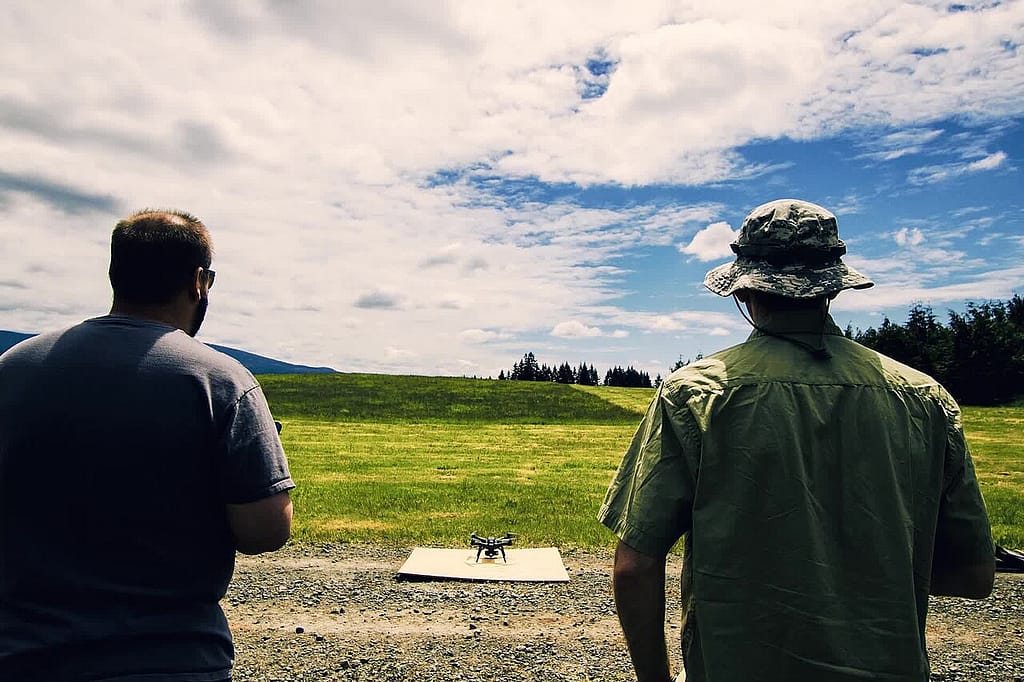
This is the asymmetry that keeps defence planners up at night. A fifth-generation stealth fighter costs the better part of $100 million. The thing loitering over it might cost a few hundred dollars at an electronics shop. A small quadcopter can carry a camera to photograph tail numbers and hangars, map a base's layout, or, in the worst case, carry something more dangerous.
Australia's spy chief has been blunt about the stakes. ASIO Director-General Mike Burgess has repeatedly warned that Australian Defence Force personnel and bases are standing targets for foreign intelligence collection. Nobody has publicly tied the Williamtown flights to any government, and officials have been careful not to point fingers without proof, but the pattern of ever-more incursions is precisely what an intelligence-gathering effort would look like.
Australia Is Trying to Catch Up
Canberra is not standing still. Last year it changed its Defence Regulations to give military personnel legal authority to seize, disable or destroy drones, and Conroy says the government is investing heavily in technology to detect and defeat them. The trouble is that counter-drone systems are a fast-moving arms race, and the defenders are, for now, a step behind the hobby-shop threat.
The uncomfortable truth is that a base built to defend against enemy fighters and missiles is now being probed by machines a teenager could fly. Until Australia can reliably spot, track and bring down small drones, the blinds at Williamtown will keep coming down, and the questions will keep going up.
Sources: AeroTime; FlightGlobal; Newcastle Herald; The Daily Telegraph; ABC Newcastle; Global Defense Corp. Attribution of the flights remains unestablished.
0 Comments