
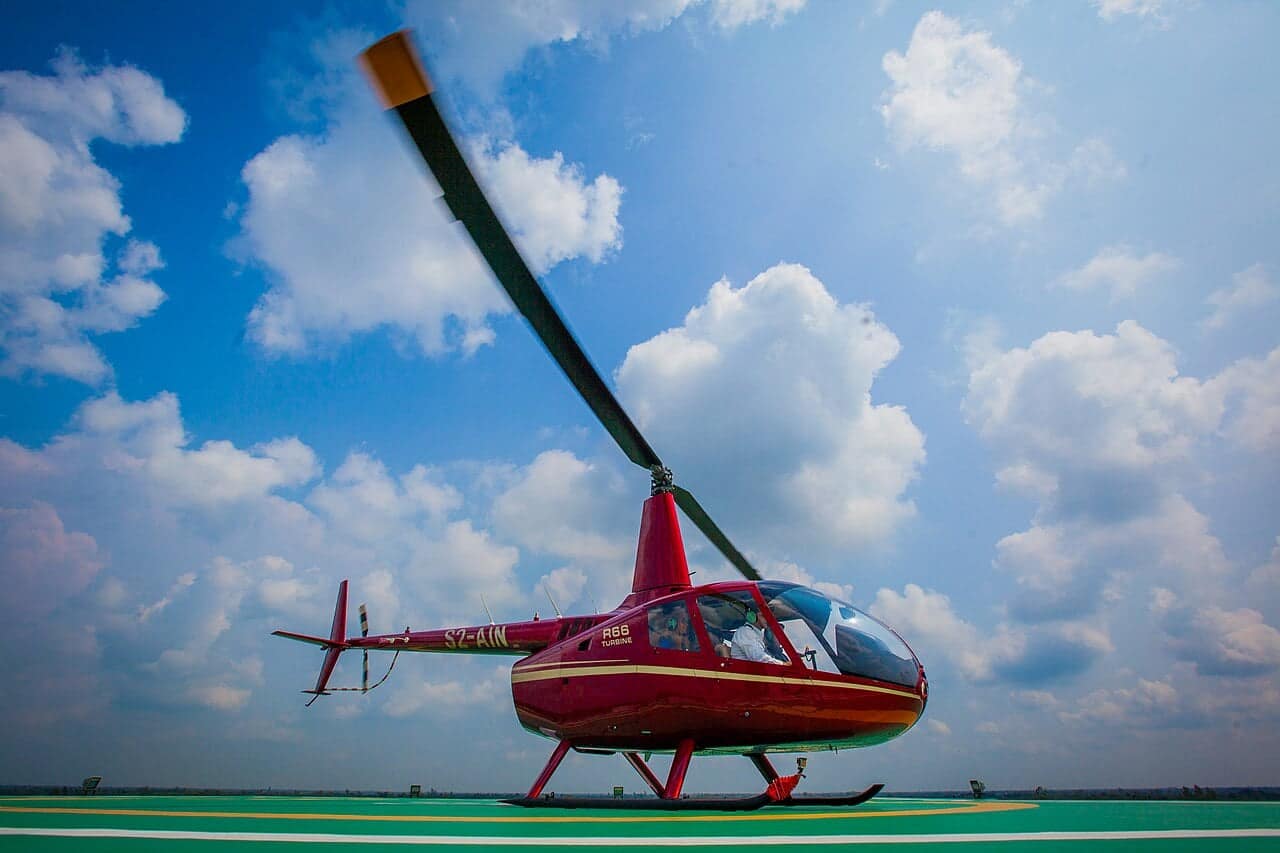
The world's most powerful army just decided its next combat pilots will learn to fly on a helicopter you could, in principle, buy off a dealer's lot. On August 13, the U.S. Army picked M1 Support Services and its partner Robinson Helicopters to run Flight School Next, its overhaul of rotary-wing training, on the back of the little five-seat Robinson R66 turbine. The contract is worth up to $10 billion and could run 26 years.
The R66 will replace the twin-engine Airbus UH-72 Lakota that has trained Army aviators at Fort Rucker since 2015. And here is the twist that has aviation people talking: a decade ago the Army moved up from a simple single-engine trainer to the sophisticated twin-engine Lakota. Now it is deliberately moving back down to a single engine, and it is doing it to save money.
Quick Facts
| Program | U.S. Army Flight School Next (FSN) |
| Winner | M1 Support Services (Team M1), partnered with Robinson |
| Contract | Firm-fixed-price IDIQ, up to $10 billion, up to 26 years |
| New trainer | Robinson R66 (single-engine turbine; military designation TH-66 Sage) |
| Replaces | Airbus UH-72 Lakota (twin-engine; trainer since 2015) |
| Where | Fort Rucker, Alabama |
| Output | Up to 1,500 new pilots a year (from ~1,250) |
| Announced | August 13, 2026 |
A Civilian Helicopter Goes to War College
The R66 is about as commercial as an aircraft gets. Robinson has built more than 1,500 of them since 2011, they are flown by private owners, charter outfits and flight schools all over the world, and the type is powered by a single Rolls-Royce RR300 turbine. For the Army role it wears the designation TH-66 Sage. It is cheap to buy, cheap to run, and utterly conventional, which is exactly the point.
Under the new model, M1 will own and operate the fleet, a "contractor-owned, contractor-operated" arrangement, and train up to 1,500 aviators a year, up from around 1,250 today. Graduates then move on to the real hardware: the AH-64E Apache, UH-60M Black Hawk, CH-47F Chinook and the Army's future MV-75 tiltrotor.
M1 is not a newcomer to the flight line. The company already provides training, simulation and maintenance across the Army's Apache, Black Hawk, Chinook and Lakota fleets, plus the Air Force's TH-1s. Its winning bid, branded "Flight School First," wraps the R66 in an AI-driven adaptive learning system, advanced simulators and a glass cockpit with a 4K camera for student debriefs.
Why Ditch the Lakota?
The UH-72 Lakota is a fine machine, so good, in fact, that the Army now says it is the problem. Officials argue the twin-engine Lakota is too advanced and too expensive for teaching the basics, a role better filled by something simpler. The Lakota only just passed one million training flight hours in December 2025. Airbus, which builds it, has publicly pushed back on the Army's characterization.
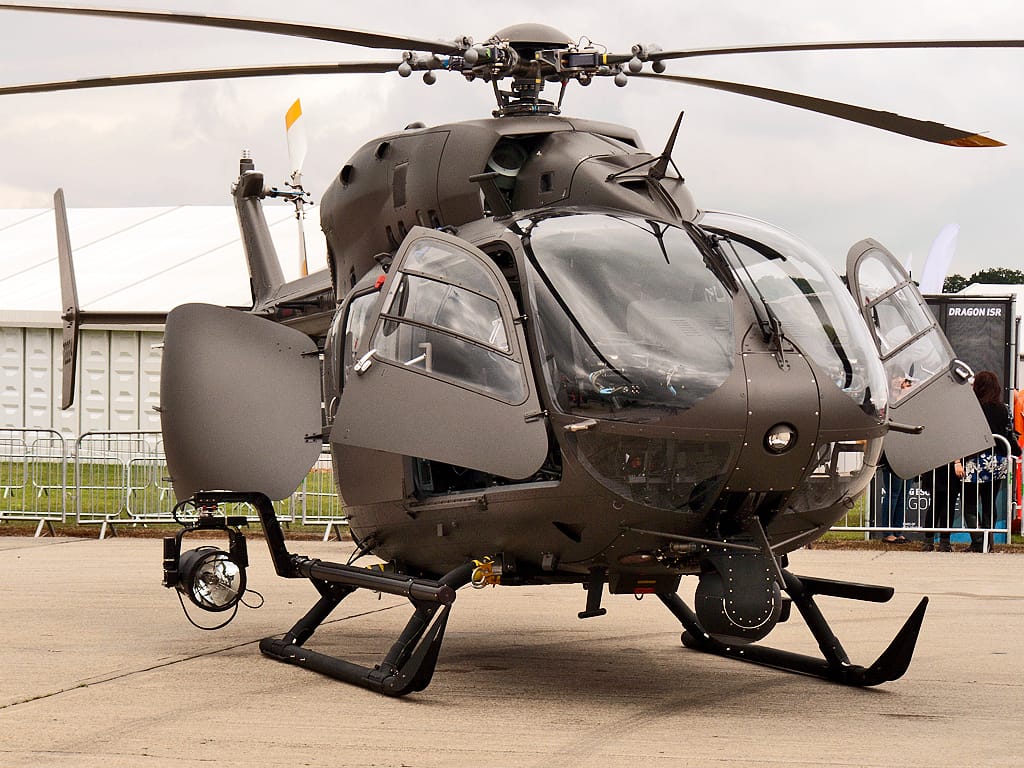
M1 and Robinson lean hard on that cost argument, and on the sheer ubiquity of the little Robinson.
To see what the Army is buying into, it helps to watch the R66 fly. Here is a walkaround and flight review of the type.
Back to Basics, on Purpose
M1 beat out Bell, which had offered its 505 light single, for the award. The requirement this time explicitly called for a single-engine helicopter, a quiet reversal of the 2015 logic. The thinking now is that students should master the fundamentals, terrain flight, navigation, night operations, on a cheap, honest airframe before graduating to complex combat machines.
It is a striking bet: that the future of American Army aviation runs through a modest civilian turbine helicopter, and that the way to build better warfighting pilots is to make the first aircraft they touch as simple, and as affordable, as possible. Whether the Lakota was really the villain or just the expensive scapegoat, the little Robinson now has 26 years to prove the point.
Sources: U.S. Army; The Aviationist; Defense One; Defense Daily; FlightGlobal; M1 Support Services; Robinson Helicopter Company.
0 Comments