
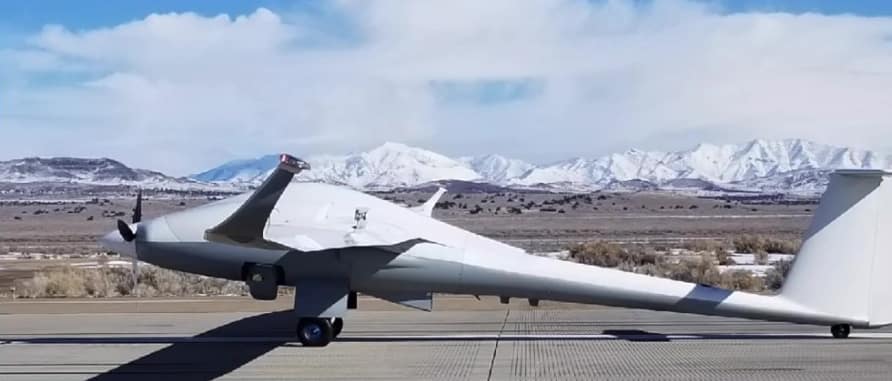
It looks like a motor glider. It practically is a motor glider. The DZYNE Technologies ULTRA — the Unmanned Long-endurance Tactical Reconnaissance Aircraft — has a 28-foot wing, a single turbocharged piston engine, no pilot, and the kind of slender white fuselage you would expect at a soaring club. And the US Air Force is about to push it into the most contested airspace it operates.
According to a 25 May report from The War Zone, a new turbocharged variant of the ULTRA is heading to the Middle East for an operational evaluation. The reason is straightforward: the Air Force has lost too many MQ-9 Reapers over Iran and Yemen, the Reaper fleet is down to roughly 135 jets after Operation Epic Fury, and the service needs persistent surveillance capability that does not cost $30 million a copy.
Quick Facts
Aircraft: DZYNE Technologies ULTRA (Unmanned Long-endurance Tactical Reconnaissance Aircraft)
Variant: New turbocharged version (higher altitude than baseline)
Deployment: Operational evaluation, US Central Command area, 2026
Endurance: 80+ hours on station, claimed
Why now: MQ-9 Reaper fleet down to ~135 after Iran war attrition
A glider with binoculars
DZYNE Technologies — a small Irvine, California firm — built ULTRA as an answer to a US Special Operations Command requirement. The brief was deliberately niche: a long-endurance ISR drone that could be hand-launched-class small, took off from short unprepared strips, and could stay on station for days at a time over a target. Conventional ISR drones — Reaper, Predator, Global Hawk — are expensive, large, and need full airfield infrastructure. ULTRA looks more like the Diamond DA20 it borrows aerodynamics from.
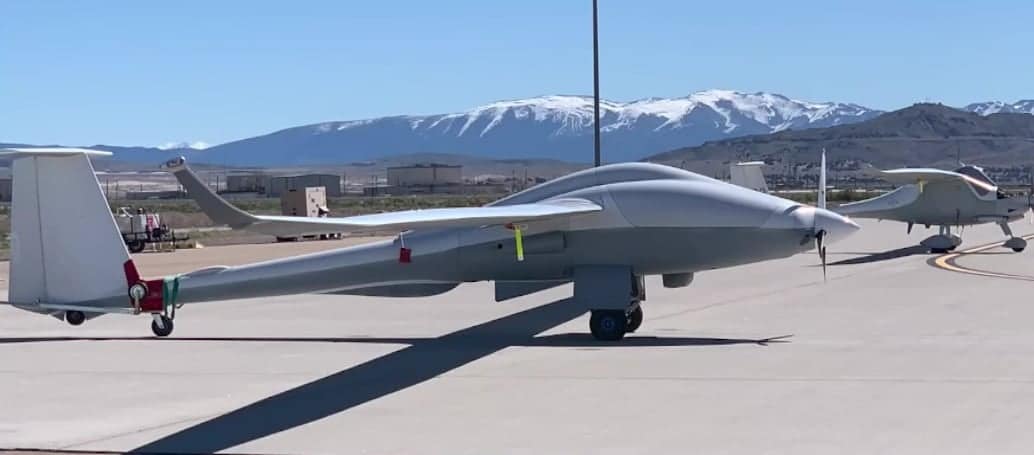
The baseline ULTRA cruises at around 22,000 feet — too low for the Iranian SAM threat ring that brought down four MQ-9s during Epic Fury, and within reach of even modest air defences. The new turbocharged variant pushes the operating ceiling significantly higher. The Air Force has not published a number, but defence press reports place it well above 35,000 feet — into Reaper territory, but at a tiny fraction of the cost.
Why glide-class ISR matters now
The Reaper has been the workhorse of every American ISR mission since 2007. It has also become impossible to use in any genuinely contested airspace. Russian S-300 derivatives in Syria, Houthi SA-6 launchers in Yemen, and the layered Iranian air defence umbrella that downed multiple Reapers during Epic Fury have all but ended the MQ-9’s reign as a permissive-airspace platform.
What the Air Force needs — and what ULTRA promises — is a drone cheap enough to lose. Glider-class ISR aircraft, with their high aspect-ratio wings, can stay aloft for tens of hours on a single tank of avgas. They have small radar cross-sections, low IR signatures, and they can drift through commercial airspace without anyone noticing. They cannot carry Hellfires. They do not need to.
The cheap-and-numerous doctrine
ULTRA’s deployment to CENTCOM lands in the middle of a broader Pentagon turn toward attritable, low-cost airpower. The same week the Air Force announced ULTRA was heading east, Anduril won a $500 million counter-drone IDIQ; Northrop signed a contract to arm 200,000 suicide drones; and the House Armed Services Committee draft NDAA included multi-billion-dollar provisions for short-range cruise missiles and CCA drones. The MQ-9 era is ending. The era of the air-launched, container-launched, glider-class, swarm-class drone has formally arrived.
ULTRA may not be the most dramatic aircraft in that turn. It is, arguably, the most representative one. A small motor glider, painted white, with a sensor turret. And the Air Force can buy a dozen of them for the price of a single Reaper.
Sources: The War Zone, US Air Force.

 English
0 Comments