
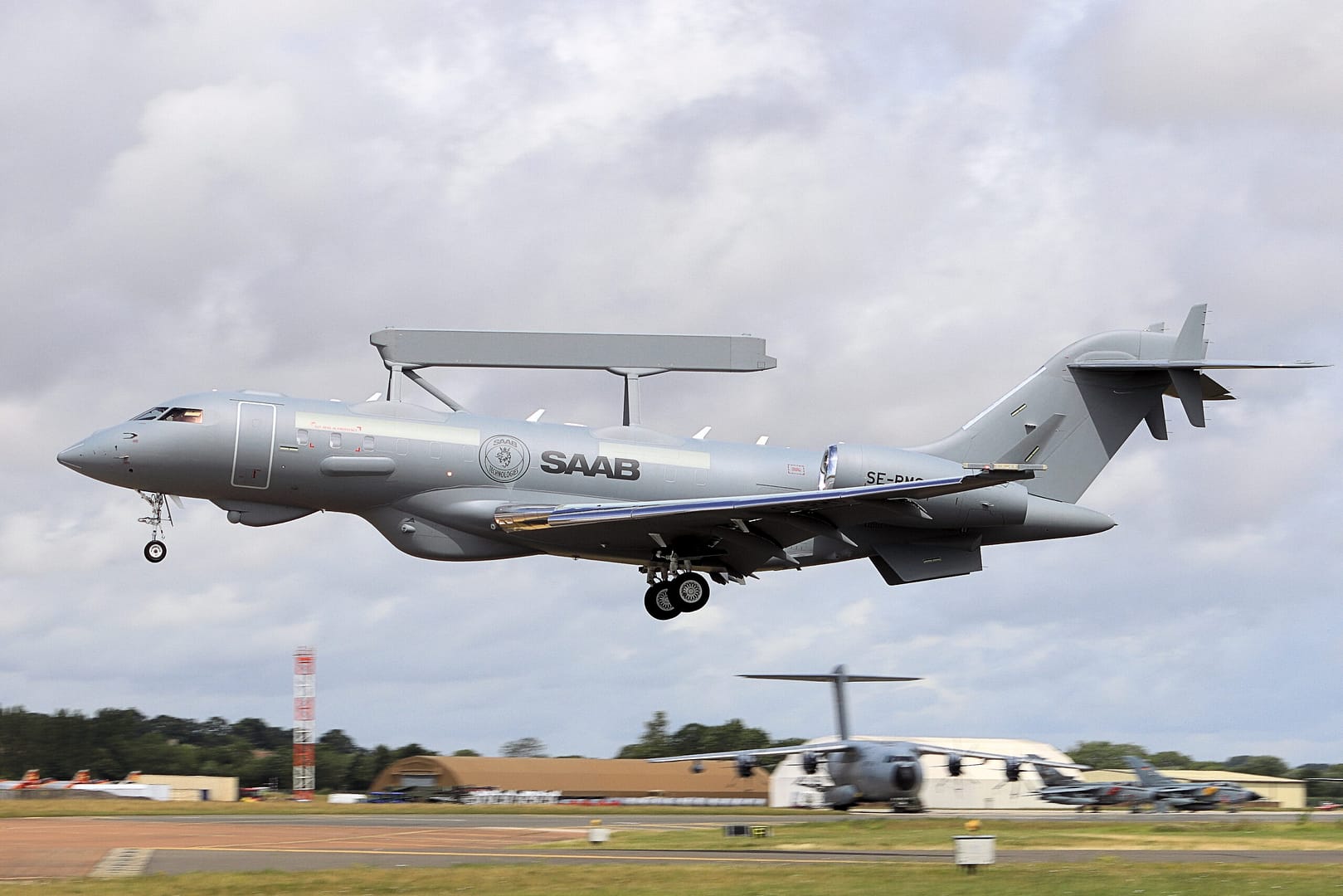
For the second time in two weeks, Boeing has been beaten by a Swede with a radar plank on its back. NATO chose the Saab GlobalEye over the E-7 Wedgetail for its alliance-wide airborne early-warning replacement on 19 May. On 27 May, the Royal Canadian Air Force confirmed that Ottawa has entered formal talks with Saab to do exactly the same — replacing Canada’s geriatric AEW capability with the Erieye Extended Range system mounted on a Bombardier Global 6000 business jet.
It is a Canadian airframe carrying a Swedish radar over Canadian Arctic skies. For Ottawa and Stockholm, it is the kind of industrial-and-strategic alignment both governments have been quietly building for years. For Boeing, it is two losses in 11 days.
Quick Facts
Buyer: Royal Canadian Air Force
Aircraft: Saab GlobalEye AEW&C (Erieye ER radar on Bombardier Global 6000)
Manufacturer (radar): Saab — Linköping, Sweden
Manufacturer (airframe): Bombardier — Toronto, Canada
Beaten: Boeing E-7A Wedgetail (737-700 platform)
A Canadian airframe with Swedish ears
The GlobalEye is unusual among modern AEW platforms: it uses a corporate jet — the Bombardier Global 6000 — rather than a re-engined airliner. The endurance numbers are the giveaway. The Global 6000 cruises at Mach 0.85, climbs faster than most narrow-body airliners, and can stay aloft for over 11 hours unrefueled. Mount the Erieye ER radar dorsal “ski beam” on top and you have a sensor platform that can patrol a third of the Canadian Arctic on a single sortie.
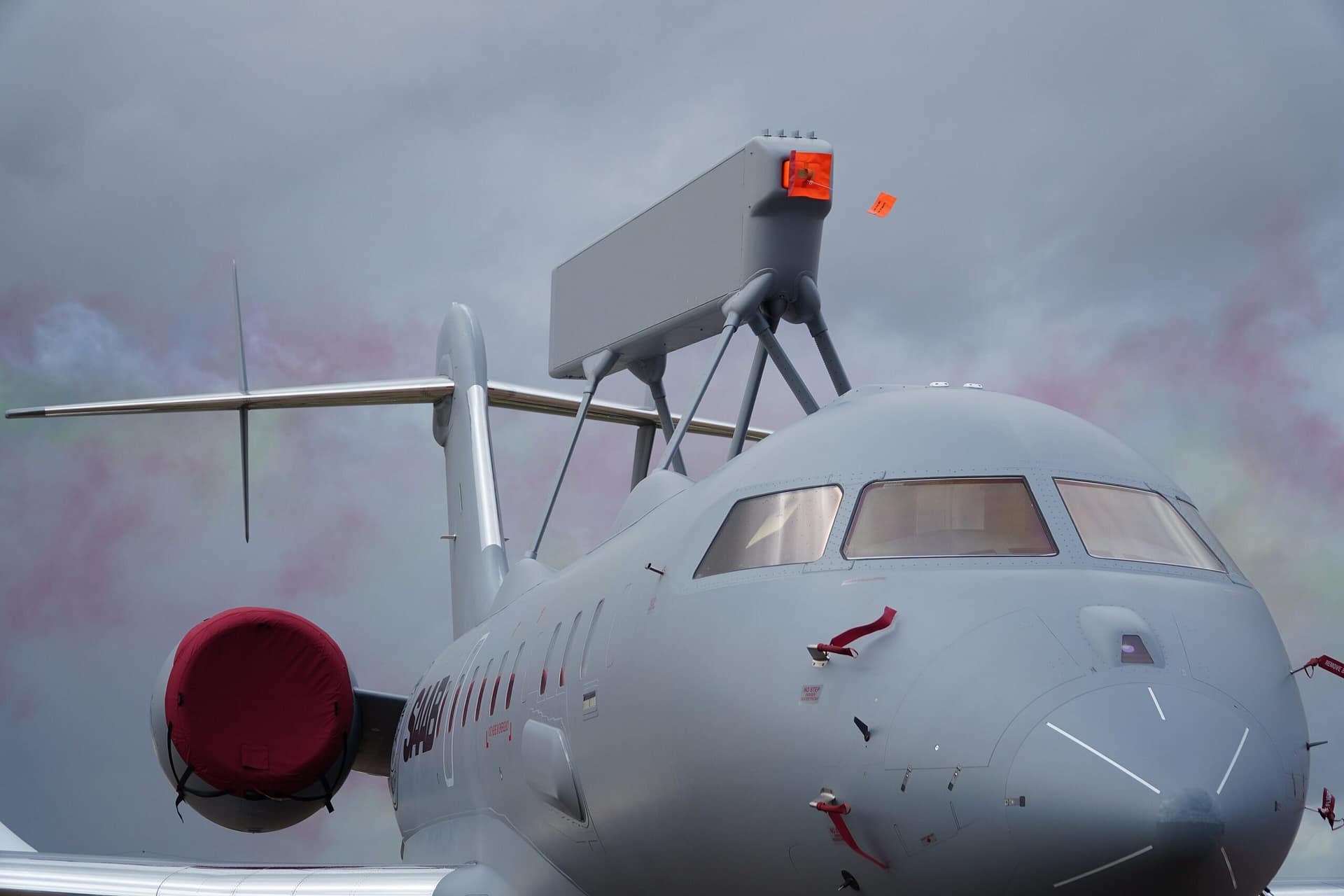
The Erieye Extended Range radar is the system that NATO bought 19 May. It is one of the few Western AEW radars built around modern Gallium-Nitride active electronically scanned array (AESA) technology. Saab claims a 70 percent improvement in detection range against modern stealth aircraft compared to legacy AEW platforms, and the GlobalEye also carries maritime-surveillance and ground-tracking modes that the Wedgetail does not.
Why Canada — and why now
Canada’s airborne-early-warning gap has been a chronic problem. The RCAF retired its CF-18 air defence radar pickets in the 1990s and never replaced them. NORAD’s airborne warning coverage of the Arctic depends on USAF E-3 Sentries that are themselves heading for retirement. With Russia flying Bear-H bombers along the Canadian ADIZ on a near-monthly basis since 2023, and with the United States announcing that it expects allies to contribute more to continental defence, the political pressure for a Canadian AEW platform has been growing since 2024.
The industrial calculus
The Bombardier link is what makes this a political slam-dunk in Ottawa. The Global 6000 is built in Toronto. Saab is willing — in fact, eager — to do final assembly of any Canadian GlobalEyes in Canada, with substantial Bombardier and Canadian-supplier content. The same offer that just won Sweden the NATO contract works again in Ottawa: pick GlobalEye, get domestic industrial work, and avoid being one more Boeing customer.
The number of aircraft has not been finalised. Saab and the Canadian Department of National Defence are negotiating between four and six platforms. The first delivery would not happen before 2028. But Canada is now formally inside the GlobalEye programme — and Boeing’s defence side, which has watched the F-47, the KC-46 recovery plan and now AEW contracts slip away from it in 2026, has had one of the worst Mays in its corporate history.
Sources: Breaking Defense, Royal Canadian Air Force, Saab AB.
 English
0 Comments