
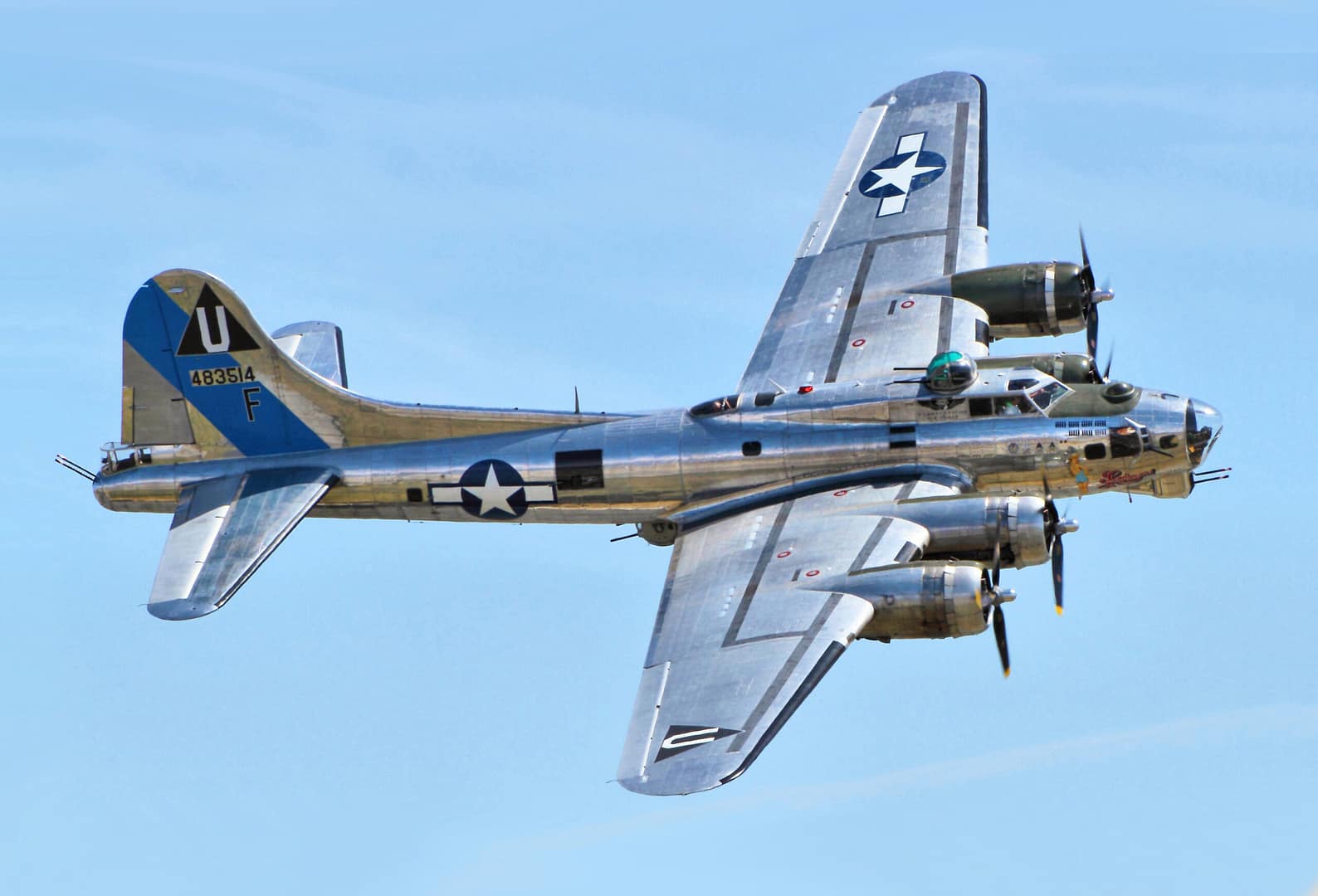
A .30 calibre bullet hits a fuel tank at 800 metres per second. The aluminium skin punctures. A jet of avgas blows out under pressure, into the slipstream, towards a hot turbocharger exhaust. The aircraft, on most tanks built before 1939, is now thirty seconds from being a fireball.
Drop the same bullet into a tank built with a self-sealing liner, and what happens next is one of the strangest things in 20th-century aviation engineering. The hole closes. The rubber inside the tank wall touches the fuel, swells, and seals itself shut — sometimes in under five seconds. The aircraft keeps flying. The pilot lands. The hole, when the maintainers find it the next morning, looks like nothing happened at all.
Quick Facts
First patent: George J. Murdock, "War Aeroplane Fuel Tanks," 7 February 1917
Patent granted: US patent 1,386,791, August 1921 — delayed by a wartime secrecy order
WWII implementations: US Rubber Company (Eger, 1941); Firestone (Hanson, 1941); Goodyear; Dunlop UK
Typical construction: Vulcanised rubber outer / untreated natural rubber inner / fuel-resistant inner liner
Mechanism: Untreated rubber absorbs leaking fuel, swells, closes the hole
Effective against: .30 calibre rifle rounds; partial protection against 20mm cannon
A 1917 problem, a 1917 patent
The problem appeared as soon as aircraft started carrying machine guns. By 1917, the SE5a, the Sopwith Camel and the Fokker Dr.I were all routinely shooting each other through the wing tanks. The pilot, sitting in front of those tanks, was being soaked in petrol and burned alive at a rate that was killing experienced pilots faster than they could be trained.
A US Army Air Service engineer named George J. Murdock filed the first known patent for the concept in February 1917 — "War Aeroplane Fuel Tanks." A wartime secrecy order kept the invention under wraps until late 1918, and the patent was finally granted only in August 1921. Early versions were, by modern standards, primitive — metal tanks covered inside or outside with materials that expanded when pierced. They worked, in the sense that a rifle round did not produce a runaway fuel leak. They did not work, in the sense that aircraft of that era could hardly afford the weight penalty.
Self-sealing tanks saw only limited early use — military aircraft built by the Glenn L. Martin Company adopted Murdock's design — and the idea was largely neglected through the inter-war years. The next war brought them back. By 1939 the British Air Ministry was specifying self-sealing tanks on every new RAF type. By 1940 the US Navy and US Army Air Corps had followed. By 1941 the four big American rubber companies — Goodyear, Firestone, Goodrich and US Rubber (later Uniroyal) — were each producing their own design under separate patents.
How the rubber actually seals
The modern self-sealing tank is built around three rubber layers. The outermost is structural — a thick layer of vulcanised, fuel-resistant rubber that gives the tank its shape and strength. The middle layer is the magic — untreated natural rubber that is held in a deliberately starved state, not yet exposed to the fuel inside the tank. The innermost layer is an additional fuel-resistant barrier that keeps the untreated rubber dry until it is needed.
When a bullet punches through the tank, it carves a clean hole through all three layers. Fuel begins to drain out. Some of that fuel comes into contact with the previously dry untreated-rubber middle layer. The untreated rubber begins to absorb the fuel — and as it absorbs, it swells. Within five to thirty seconds, depending on the design, the swelling closes the puncture from the inside. The leak stops. The aircraft, if its pilot has any time at all, keeps flying.
The Zero, the Wildcat, the difference
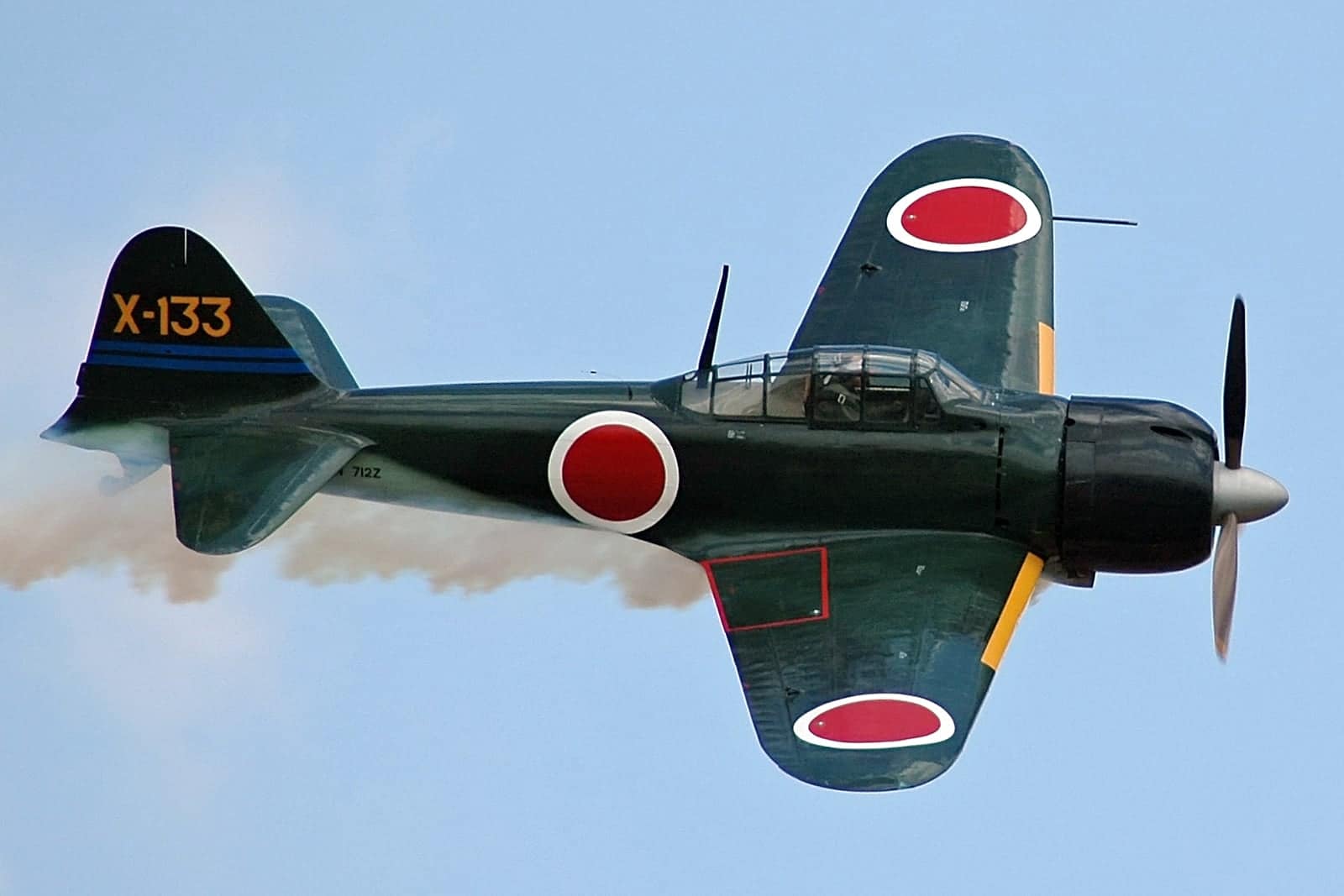
The starkest demonstration of the technology's value happened in the Pacific. The Mitsubishi A6M Zero, designed for extreme range and dogfighting agility, was built without self-sealing tanks to save weight. Its designer, Jiro Horikoshi, was working to an Imperial Japanese Navy specification that prized range and agility above all — and that left no weight margin for pilot armour or tank protection. The result was a Japanese fighter that could outturn the F4F Wildcat at low altitude and that died in a single firing pass when caught by one.
By 1943 American fighter pilots had developed the boom-and-zoom tactic specifically to exploit it: one burst into the Zero's wing tanks, and the Japanese aircraft burned. The Wildcat, the Hellcat and the Corsair all had self-sealing tanks. American pilots came home in aircraft that, by Zero pilot standards, should have been on fire. They were not. The kill ratio shifted accordingly.
2026 — same technology, different threats
Self-sealing tanks have not been substantially redesigned since the 1950s. They are still rubber-based, still rely on the swelling principle, and still cope with rifle-calibre projectiles. They cope less well with 23mm and 30mm cannon rounds, which leave holes that are simply too big for the rubber to close. Against 30mm explosive rounds, the tank itself is destroyed before any swelling can occur.
A newer generation of self-sealing materials — the US Army Research Laboratory has been publishing work in this area since the late 2010s — uses fast-reacting polymers that cure on contact with fuel, with the aim of sealing far larger holes within seconds. Rotorcraft fuel cells are the most obvious first application.
It is a remarkable longevity for a 1917 patent. The fundamental insight — that an aircraft can be made to heal its own bullet holes by exploiting the chemistry of fuel and untreated rubber — was correct then and is still correct now. Almost every fast jet, every Black Hawk, every Apache, and every armed drone flying today carries some version of it. It is one of those pieces of aviation technology that almost nobody thinks about — and which has, quietly, kept a very large number of pilots alive.
Sources: Self-sealing fuel tank Wikipedia entry; US Naval Institute Proceedings, "The Story of the Self-Sealing Tank" (February 1946); Defense Systems Information Analysis Center, "Advances in Self-Sealing Fuel Tank Technology"; Patriots Point Naval & Maritime Museum.
Related Questions
How does a self-sealing fuel tank work?
A self-sealing fuel tank has a layer of untreated natural rubber inside it. When a bullet pierces the tank, leaking fuel soaks into that rubber, which swells and closes the hole — stopping dangerous fuel loss and fires after the tank is shot.
What is a self-sealing fuel tank?
It's a fuel tank designed to automatically plug bullet holes, widely used on combat aircraft. Typically built with a vulcanised rubber outer layer, an untreated rubber middle layer and a fuel-resistant liner, it lets an aircraft keep flying after its tanks are hit.
When was the self-sealing fuel tank invented?
The first patent, George J. Murdock's "War Aeroplane Fuel Tanks," was filed on 7 February 1917, though a wartime secrecy order delayed its grant until 1921. Self-sealing tanks then became vital equipment on World War II aircraft.
Why are self-sealing fuel tanks important?
Because fuel tanks are a deadly vulnerability — a single bullet can cause leaks or fires. By automatically sealing punctures, self-sealing tanks dramatically improved aircraft survivability in combat, helping crews make it home after taking hits that would otherwise be fatal.
What are self-sealing fuel tanks made of?
A typical design layers a vulcanised rubber outer skin, a core of untreated natural rubber, and a fuel-resistant inner liner. The untreated rubber is the key: it absorbs escaping fuel and swells to seal the hole when the tank is punctured.

0 Comments