
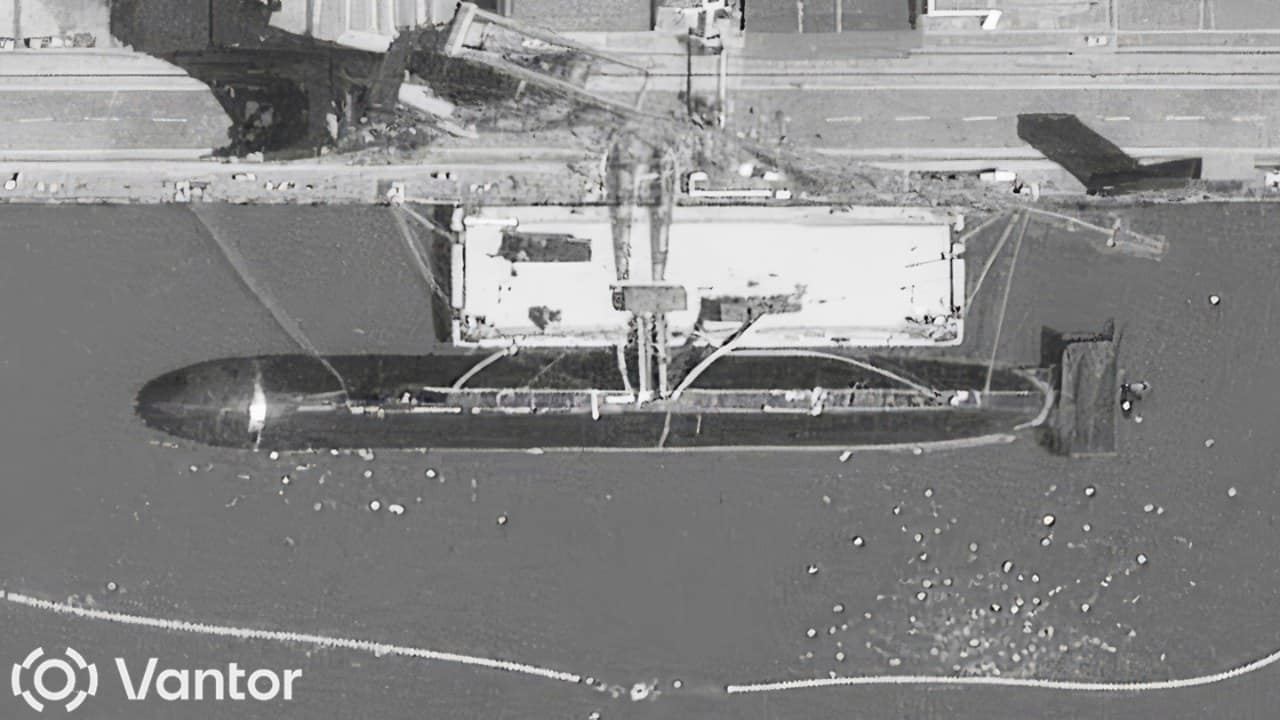
Something is missing from the submarine that appeared at Shanghai’s Jiangnan Shipyard at the end of May: the sail. Satellite imagery captured on June 1 by Vantor shows a boat roughly 120 metres long — longer than most nuclear attack submarines — with a hull so smooth it looks unfinished. It isn’t. The conning tower simply isn’t there.
Naval analysts have never seen anything quite like it at this scale. The design was first reported by Naval News, whose analyst H.I. Sutton assesses the mystery boat at about 120 metres long and 10 to 11 metres across — for comparison, a U.S. Navy Virginia-class attack submarine is 115 metres. The War Zone, which obtained the imagery, suggests it could be China’s answer to a high-speed underwater interceptor.
Quick Facts
- Spotted: JN (Jiangnan) Shipyard, Shanghai — satellite imagery from late May / June 1, 2026
- Size: ~120 m long, 10–11 m beam (per analyst H.I. Sutton) — longer than a Virginia-class SSN
- Signature feature: no traditional sail; X-form rudders; possibly a shrouded pumpjet propulsor
- Precedent: the same yard launched a ~45 m ‘sailless’ demonstrator in 2018
- Name/designation: unknown; propulsion unconfirmed, though nuclear is considered most likely given the size
Why Delete the Sail?
A submarine’s sail is pure drag. Removing it streamlines the hull, cuts acoustic signature, and frees the design to be optimised for speed and manoeuvrability at depth — useful for a boat meant to race out and intercept threats far from base. The imagery also shows an X-form rudder arrangement, a feature that first appeared on a Chinese submarine in 2024 and improves agility and safety over conventional cruciform sterns.
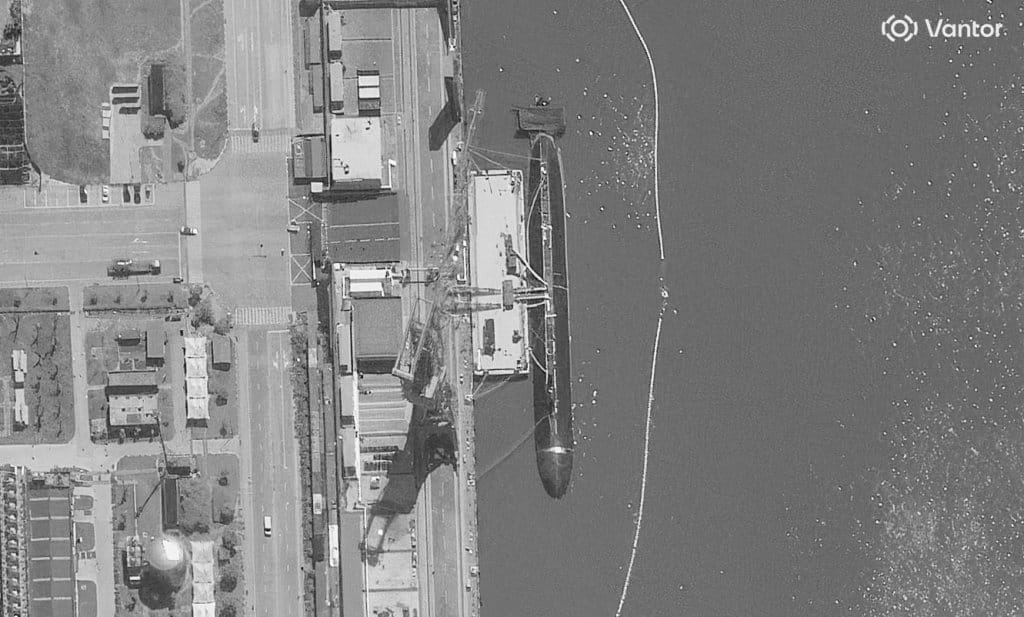
But the sail exists for good reasons. It carries periscopes, communication masts and snorkels; it gives the crew somewhere to stand for surface navigation; hardened, it can punch through Arctic ice. Deleting it imposes real constraints — which is why low-profile designs have mostly stayed on paper in the West. The U.S. Navy went as far as soliciting concepts for an inflatable sail in 2021 to square the circle.
Confusion briefly reigned online, because a second new submarine — with a conventional sail, possibly the next-generation attack boat unofficially dubbed Type 095 — was launched at Bohai Shipyard in the same window. Analysts were quick to separate the two:
Not China’s First Try
JN Shipyard launched a much smaller sailless submarine — roughly 45 metres — back in 2018, widely read as a technology demonstrator. And at the 2024 Zhuhai Airshow, state shipbuilder CSSC displayed a model of an unprecedentedly large uncrewed underwater vehicle with a strikingly similar hull form, pitched for missions from minelaying to special operations to mothership duty for smaller drones.
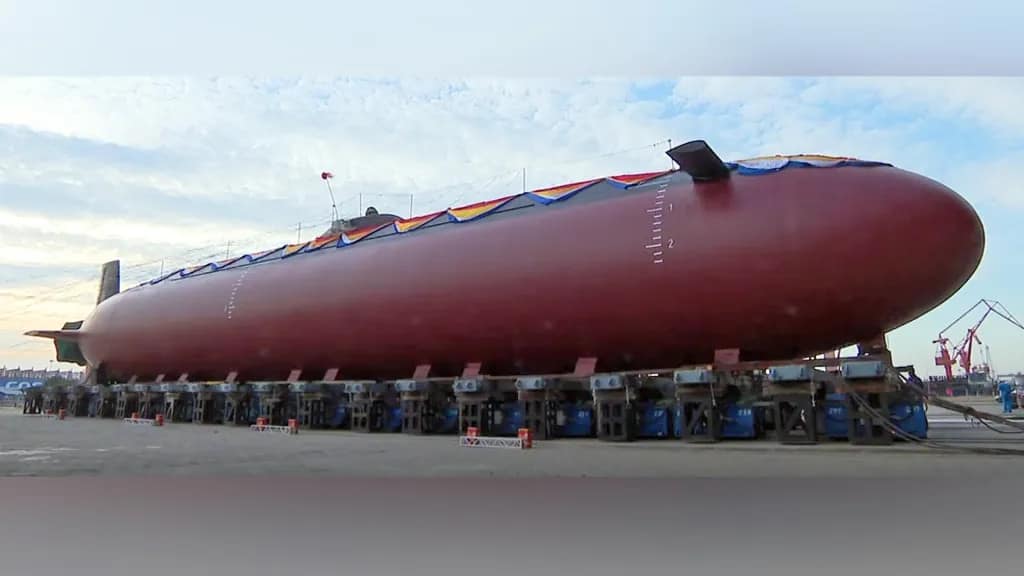
Whether the new boat is crewed, uncrewed or optionally crewed is unknown, though at this size a crew seems likely. What is certain is the tempo. China has produced roughly 15 to 20 submarines across eight classes in five years, and the U.S. Office of Naval Intelligence says the PLA Navy is executing “a significant strategic shift from diesel-electric to all-nuclear construction.”
One satellite pass rarely settles anything. But a 120-metre submarine with no sail, an X-stern and a possible pumpjet is not an experiment China is hiding — it is sitting in the open at the country’s most prominent shipyard. The undersea balance in the Pacific keeps getting more interesting.
Sources: The War Zone, Naval News, Interesting Engineering, U.S. Office of Naval Intelligence testimony
 English
0 Comments