
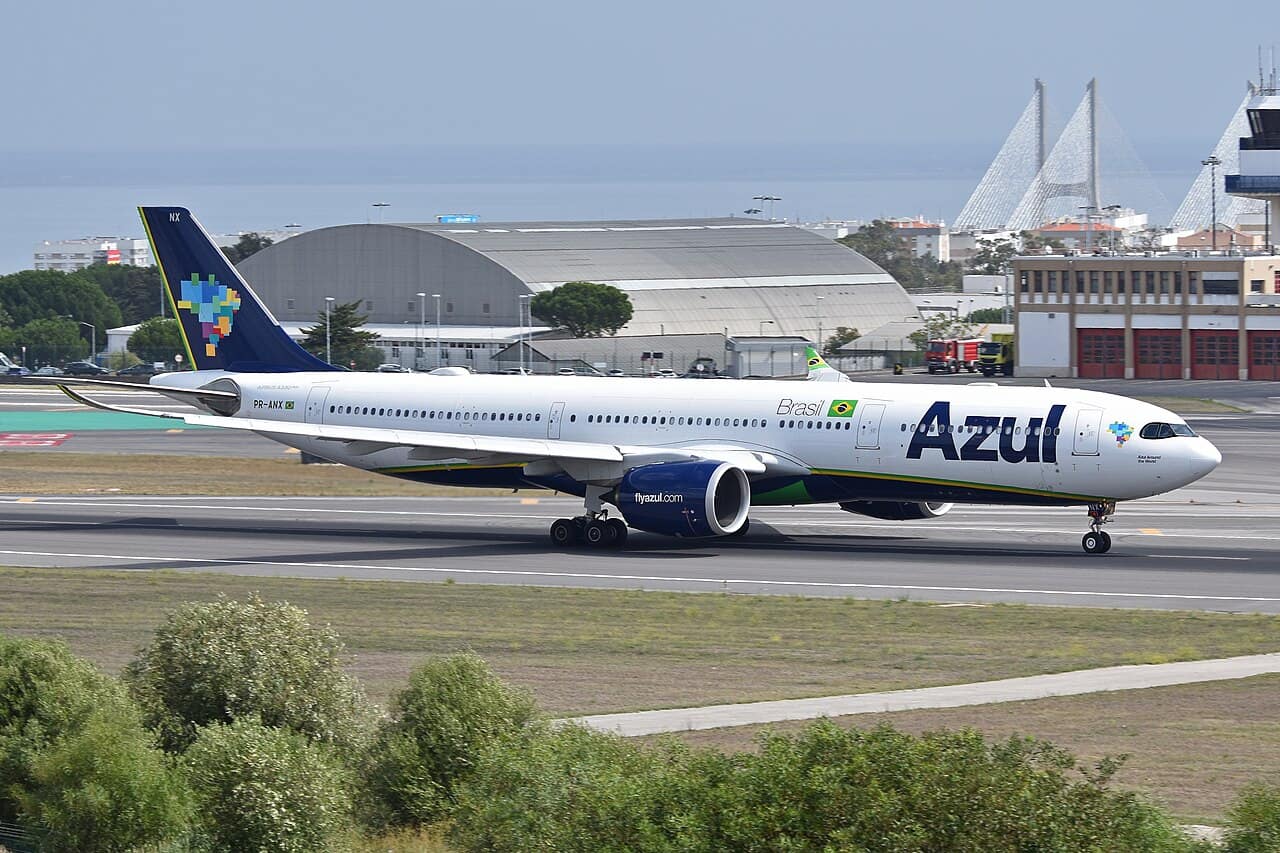
While American carriers agonise over whether to order Airbus widebodies, a Brazilian airline has quietly answered the question for itself. Azul has signed for four more Airbus A330-900neos — doubling down on the jet that has become the backbone of its long-haul ambitions.
Four aircraft is not a headline-grabbing megadeal. But for an airline that has spent the past year fighting to stabilise its finances, choosing to grow its most modern widebody fleet is a statement of confidence — and of where Azul thinks its future lies.
• Airline: Azul Linhas Aéreas (Brazil)
• The order: Four additional Airbus A330-900neo widebodies
• Role: Azul’s flagship long-haul aircraft, used to the US and Europe
• Why it matters: A vote of confidence in widebody growth from a carrier that has been restructuring
The jet that opened the world for Azul
Azul built its name on domestic Brazilian flying, but the A330neo is what let it reach across oceans. With strong fuel economy and a comfortable wide cabin, the type has carried the airline’s long-haul push to North America and Europe. Adding four more is less about explosive expansion than about deepening a bet that is already paying off.

A telling contrast
The timing is striking. Just as US giants debate the A330neo as a possible widebody choice, a smaller, leaner operator is simply getting on with flying it. Azul’s decision is a reminder that the A330neo has found a comfortable niche: right-sized, affordable, and available now — exactly the qualities that make it so tempting to airlines that do not need a fleet of jumbos.
For Azul, the message is simple. The airline has had a turbulent stretch on the balance sheet, but it still sees its long-haul widebody network as a place worth investing. Four more A330neos is how it is saying so.
Sources: Airbus orders & deliveries, Aviation Week.
Related Questions
What is the Airbus A330neo?
The Airbus A330-900neo is a modernised, re-engined version of the A330 widebody, offering improved fuel economy and a comfortable wide cabin. It is built for medium- and long-haul routes and serves as the flagship long-haul aircraft for carriers such as Brazil's Azul on services to the US and Europe. It competes with ultra-long-range jets like the Airbus A350-1000ULR.
What did Azul order in this deal?
Azul, the Brazilian airline, signed for four additional Airbus A330-900neo widebodies, expanding the fleet that underpins its long-haul network. Though modest in size, the order signals confidence in widebody growth from a carrier that has spent the past year restructuring and stabilising its finances.
Why is the A330neo important for Azul?
The A330neo is the aircraft that let Azul expand from domestic Brazilian flying to intercontinental routes. Its strong fuel economy and wide, comfortable cabin make long-haul services to the United States and Europe economically viable, which is why Azul has chosen to grow this fleet despite financial pressures.
Is the A330neo good for long-haul flights?
Yes. The A330-900neo is well suited to long-haul flying, combining a spacious twin-aisle cabin with new-generation engines and aerodynamic refinements that cut fuel burn. This efficiency lets airlines serve transcontinental and intercontinental routes profitably, which is why it has become a backbone widebody for several carriers.
Why do airlines still buy widebodies when narrowbodies can fly far?
Airlines still buy widebodies because long, dense routes need the seat count and cargo capacity single-aisle jets cannot match. While narrowbodies like the Airbus A321XLR open thin transatlantic city-pairs, widebodies such as the A330neo carry far more passengers and freight on high-demand corridors, complementing rather than replacing each other.



0 Comments