
Quick Facts
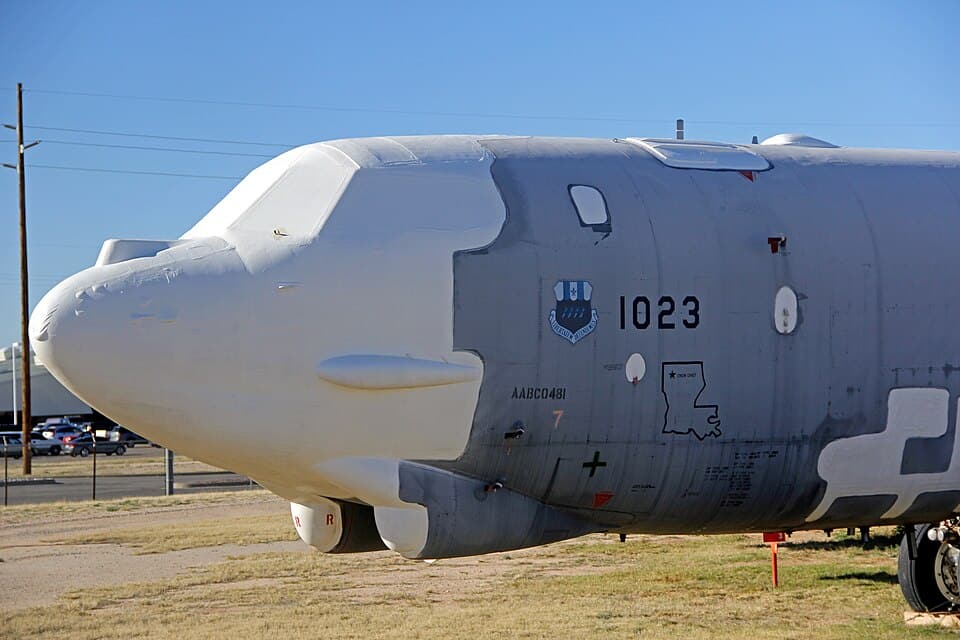
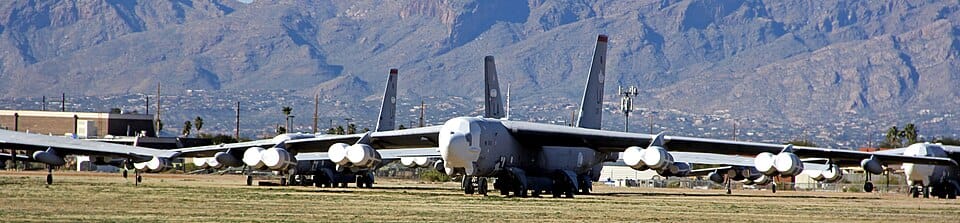
- AMARG (USA): ~4,000 aircraft on 2,600 acres at Davis-Monthan AFB, Tucson, Arizona
- Mojave Air & Space Port (USA): Major civilian airliner storage; 747s, A340s, MD-11s
- Teruel (Spain): Europe's largest aircraft storage facility — climate ideal for preservation
- Chateaudun (France): French military aircraft storage and disposal
- Shymkent (Kazakhstan): Former Soviet fighter graveyard; MiG-31s, MiG-27s, MiG-29s and Su-24s — 117 airframes went to auction in 2023
- Zhukovsky (Russia): Prototype and experimental aircraft from Soviet era
- Why Arizona: Low humidity (under 10%), minimal rainfall, alkaline soil — perfect for metal preservation
AMARG: The Desert Library
AMARG sits on the edge of Davis-Monthan Air Force Base in Tucson, Arizona — chosen in 1946 because the Sonoran Desert offers the driest, most stable climate in the continental United States. Low humidity means minimal corrosion. Hard, alkaline soil means aircraft can sit on their landing gear for decades without sinking. Abundant sunshine means the facility operates year-round.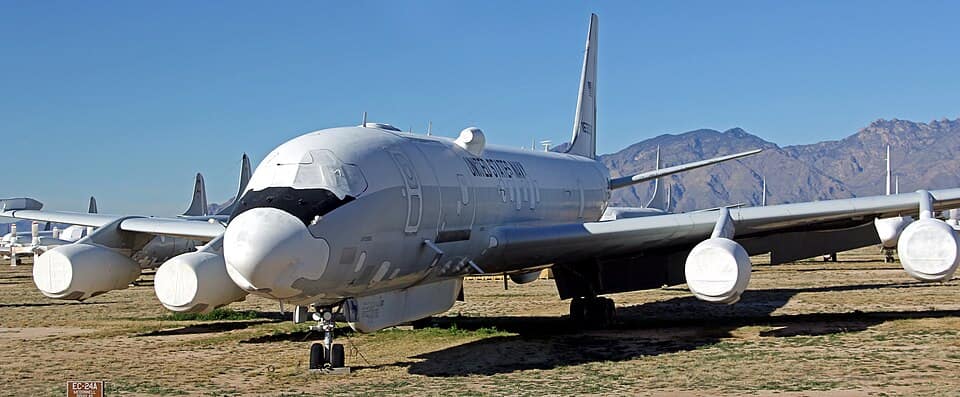
The Graveyards You Never Hear About
AMARG is famous because it is enormous and American. But aircraft graveyards exist on every continent. Mojave Air and Space Port in California stores hundreds of retired airliners — 747s, A340s, 767s — parked in the desert by airlines that cannot fill them and cannot sell them. During the COVID pandemic, Mojave's population of grounded widebodies swelled to record levels. In Europe, Teruel Airport in Spain has become the continent's largest aircraft storage facility. Its high-altitude desert climate (1,000 metres above sea level, semi-arid) provides preservation conditions almost as good as Arizona. Chateaudun Air Base in France stores retired French military aircraft: Mirages, Jaguars, Alpha Jets. And in the former Soviet Union, the boneyards are wilder: abandoned airfields in Kazakhstan, Ukraine, and the Russian Far East where MiG-21s, Tu-22s, and Su-7s rust in the open, untended, slowly being consumed by vegetation and weather.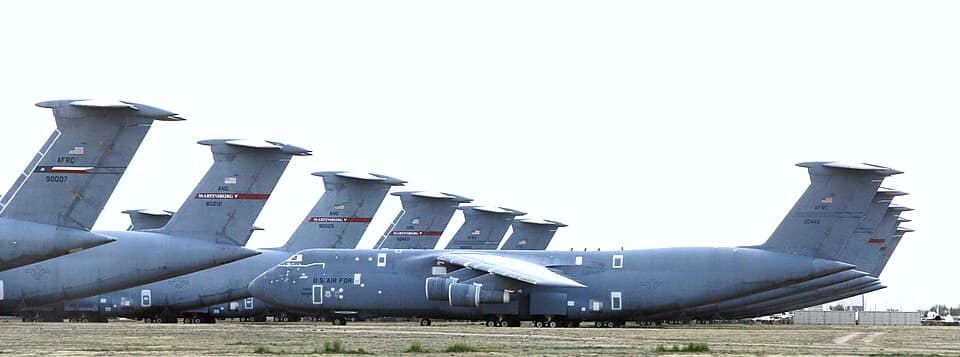
The Second Life
Not everything at AMARG dies. During the wars in Iraq and Afghanistan, the facility regenerated hundreds of aircraft: pulling stored F-16s, C-130s, and UH-60 Black Hawks out of preservation, restoring them to flight status, and shipping them to combat units. The QF-16 programme converts retired F-16s into unmanned target drones — a fitting final mission for a fighter. Iran has kept its F-14 Tomcats flying for decades using parts allegedly sourced (some say smuggled) from AMARG. AMARG sees itself as a strategic reserve rather than a graveyard — aircraft are preserved so they can be returned to service or harvested for parts. The economics are compelling. Storing an aircraft at AMARG costs a fraction of what it would cost to build a new one. For the Pentagon, the boneyard is not a landfill — it is an insurance policy against a future where production lines cannot deliver fast enough. From the geometric rows of AMARG to the overgrown fields of Central Asia, aircraft graveyards are the final resting places of some of the most extraordinary machines ever built. They are museums without curators, warehouses without shopkeepers, and — occasionally — sources of resurrection. The desert keeps them. The desert gives them back. Sources: AMARG / 309th Group, Pima Air & Space Museum, Simple Flying, AeroTime, WikipediaRelated Questions
What is an aircraft graveyard?
An aircraft graveyard, or boneyard, is a large facility where retired and surplus aircraft are stored, preserved or scrapped. Some jets are kept in flyable condition for possible return to service, others are stripped for spare parts, and the rest are recycled for their valuable aluminium and metals.
Where is the largest aircraft boneyard in the world?
The largest is AMARG, the 309th Aerospace Maintenance and Regeneration Group, at Davis-Monthan Air Force Base in Tucson, Arizona. It holds around 4,000 aircraft spread across roughly 2,600 acres of desert, making it effectively a vast outdoor library of military aviation history.
Why are aircraft stored in the desert?
Deserts like Arizona offer ideal preservation conditions: humidity under 10%, minimal rainfall and hard, alkaline soil that supports heavy aircraft without paving. The dry air dramatically slows corrosion, so airframes can sit for years or decades and still be returned to service or harvested for parts.
How many aircraft are stored at AMARG?
AMARG stores roughly 4,000 aircraft on about 2,600 acres at Davis-Monthan Air Force Base near Tucson, Arizona. The collection ranges from fighters and bombers to transports and helicopters, and the facility both preserves valuable airframes and supplies spare parts to keep active fleets flying.
Where is Europe's largest aircraft storage facility?
Europe's largest aircraft storage site is at Teruel in Spain, whose dry, stable climate is well suited to preserving parked airliners. Other notable sites include the Mojave Air and Space Port in California for civilian jets and Chateaudun in France for military aircraft.
Are there Soviet aircraft graveyards?
Yes. One of the best known is at Shymkent in Kazakhstan, a former Soviet fighter graveyard holding types such as the MiG-31, MiG-27, MiG-29 and Su-24 — 117 airframes there went to auction in 2023. Russia's Zhukovsky also stores Soviet-era prototypes and experimental aircraft.
What happens to old fighter jets?
Retired fighters may be preserved in boneyards, sold abroad, displayed in museums, used as targets, or scrapped for metal. A few even reach civilian owners — which is why people often ask how much a MiG-29 flight costs. Some air forces also keep ageing jets barely active, like North Korea's ghost fleet.
0 Comments